Introduction
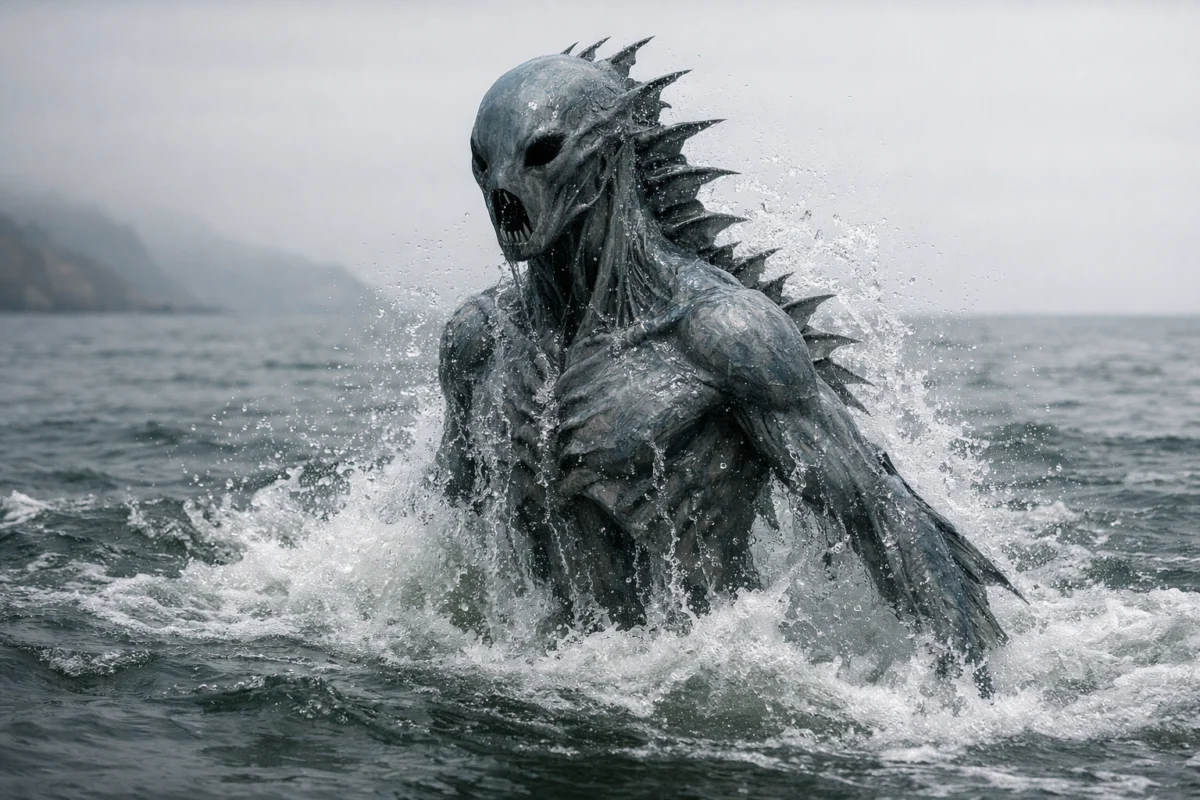
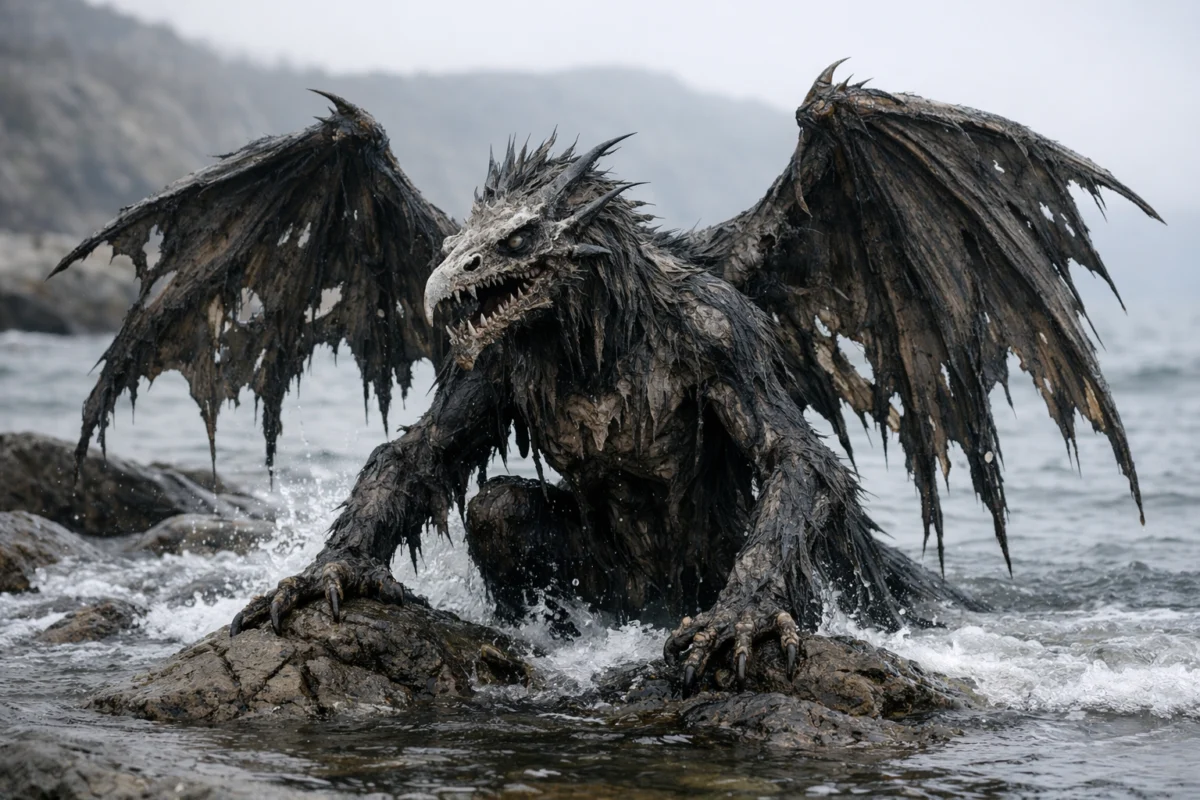
The Dingonek is a reported aquatic beast associated with the Maggori River, now usually called the Migori, in East Africa’s Lake Victoria region. Its best-documented form combines leopard markings, downward-projecting fangs, a broad scaled back, and a finned tail.
The central account concerns hunter John Alfred Jordan, whose alleged encounter was published by Edgar Beecher Bronson in 1910. This is a historical record of an extraordinary animal claim, rather than a specimen-based description or an independently recorded traditional narrative.
No remains, photographs, preserved tracks, or other physical evidence accompanied the published story.
A second report, published by C. W. Hobley in 1913, concerns an animal seen on the flooded Mara River.
Although it shared the spotted, scaled appearance of Jordan’s creature, its otter-like head and unreported fangs make it a distinct descriptive variant rather than straightforward confirmation of the same animal.
The Dingonek occupies an uncertain boundary between encounter narrative, regional water-monster lore, and later cryptozoology. Nearby discussions of a lake-being called Luquata or Lukwata provide relevant cultural context, but they do not establish that the two names refer to the same being.
History/Origin
The earliest substantial published account recovered is in Bronson’s In Closed Territory, issued in 1910. It recounts Jordan’s claimed encounter near the Maggori River, generally dated to about 1907, during conditions described as a flood.
The date of the alleged event and the date on which readers first encountered it in print must therefore be distinguished.
The account reaches readers through several layers of testimony. Jordan’s trackers reportedly noticed the strange animal first; Jordan then claimed to have observed it himself.
Bronson subsequently presented the hunter’s story in his book rather than publishing a direct field transcript, a zoological report, or an independent investigation of the encounter.
This chain of transmission matters because the familiar description is not a collective eyewitness record. The trackers’ alarm, Jordan’s observation, and Bronson’s written presentation form successive parts of one narrative.
Even when the account quotes speech or supplies precise physical comparisons, its published form remains Bronson’s retelling of Jordan.
The narrative connects the name Dingonek with people identified by the historical label Lumbwa. That association belongs to the early published record, but it does not establish how long the name had circulated, whether every participant used it in the same way, or how widely the creature was recognized beyond this particular account.
In 1913, Hobley’s article On Some Unidentified Beasts recorded another man’s claimed sighting at a Mara River frontier crossing during high flood. The witness described a large animal travelling downstream on a log, with its tail extending into the water.
Unlike Jordan’s story, this episode began with the animal already being carried past the observer by the flooded river.
This second report shares an aquatic setting, large estimated size, spots, and scales with Jordan’s story, but it is not a repeat observation at the same place. Its witness supplied a different head shape and did not report the conspicuous long fangs central to Jordan’s description.
The overlap is sufficient for comparison, but not for concluding that both witnesses saw one species.
Bronson and Hobley also discussed reports concerning a great lake-being called Luquata or Lukwata. Later retellings can make this material appear to belong to a single Dingonek tradition, yet the early record does not demonstrate that equivalence.
The Jordan-Bronson creature is most securely defined by the Maggori encounter, while the Luquata material concerns broader beliefs reported second-hand by colonial writers.
Later summaries brought the encounter reports together within the literature of unidentified animals. The modern reference A Book of Creatures distinguishes their descriptions and discusses possible zoological explanations.
Such interpretations form a later stage of the Dingonek’s history, not evidence of its original identity or of an unknown species.
Name Meaning
No reliable translation of “Dingonek” is established by the available historical or linguistic evidence. The name can be traced to the early encounter literature, but its presence there does not supply a word-by-word meaning or a securely identified linguistic derivation.
Bronson’s retelling associates the name with the Lumbwa and includes it as the designation applied to the reported creature. This is useful evidence about how the name entered the published story, not a linguistic analysis.
It provides neither an explanation from a named speaker nor the lexical information needed to verify an etymology.
Luquata and Lukwata occur in related discussions of a large lake-being. They should not be presented as confirmed translations, spelling variants, or alternative names for Dingonek.
The historical accounts place these beings in adjacent discussions without demonstrating that their names are interchangeable.
The safest usage therefore retains Dingonek as the recorded name of Jordan’s reported river creature. Its geographical association, alleged appearance, and publication history are better documented than its meaning, and none of those features independently explains the word’s origin.
Appearance
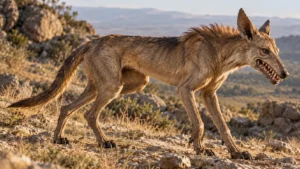
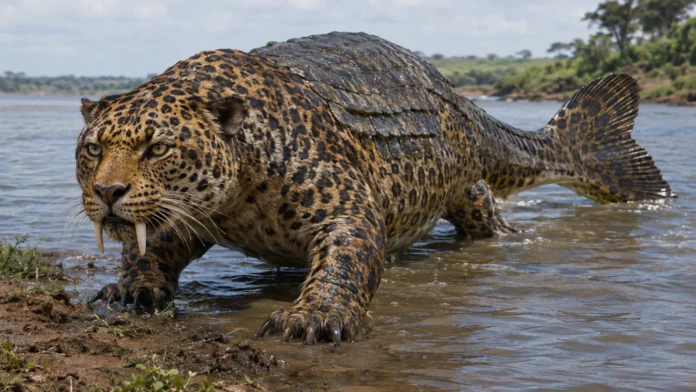
Jordan estimated the creature’s length at fourteen or fifteen feet, approximately 4.3 to 4.6 metres. His description emphasized an exceptionally broad body rather than a slender water serpent.
The resulting image is a large, low river animal with conspicuous feline and reptilian-looking features.
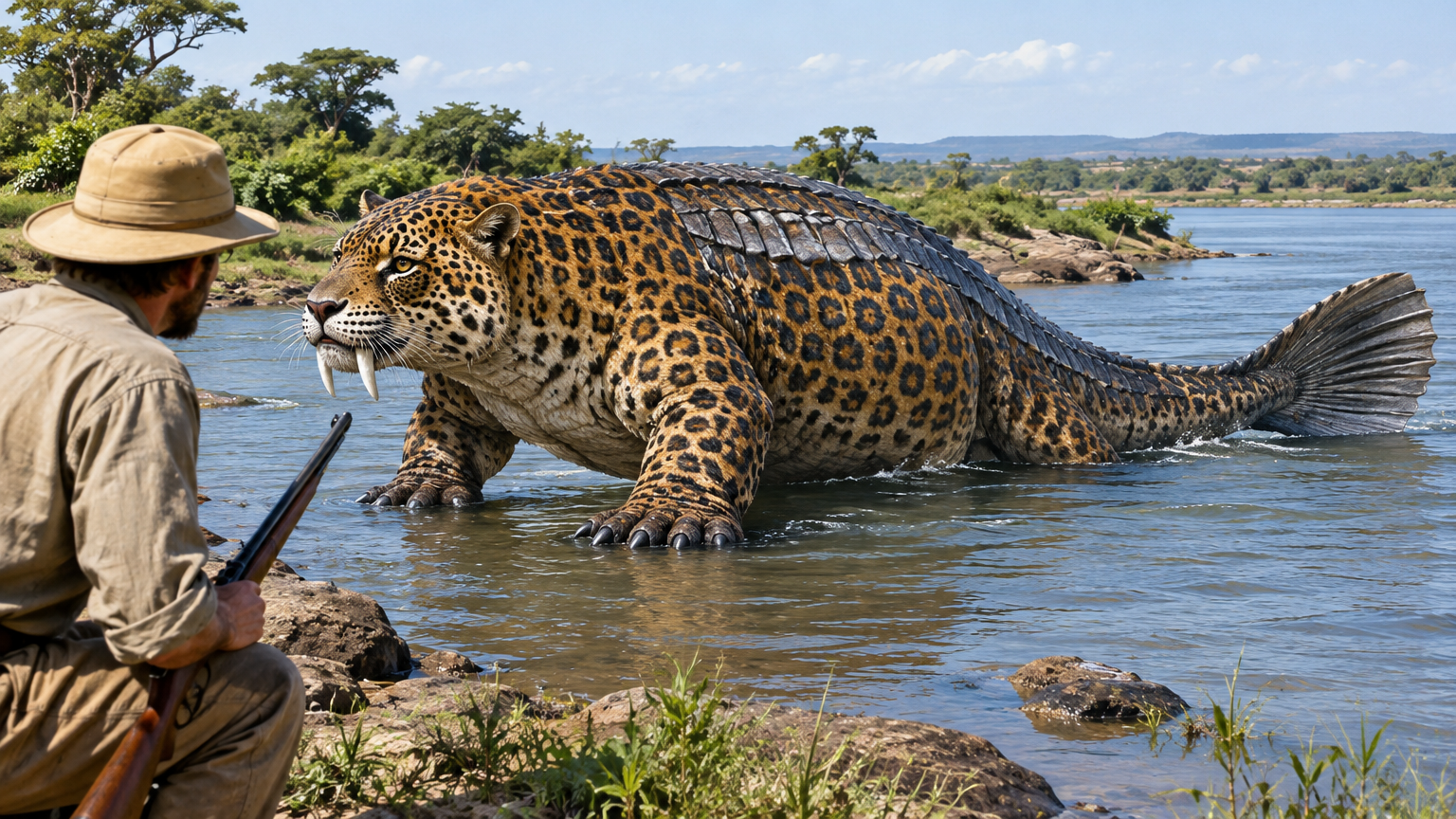
Its head was reportedly as large as a lioness’s, but shaped and marked like a leopard’s. Two long white fangs projected straight downward from the upper jaw.
These teeth are among the most distinctive features of the Jordan version, rather than a detail shared by both early reports.
The back was compared with a hippopotamus’s for breadth and an armadillo’s for its scaled covering. Leopard-like colouring and markings reportedly continued across it.
Each comparison addresses a different visible quality: the hippopotamus conveys width, the armadillo suggests a plated or scaled surface, and the leopard supplies the pattern. They do not establish an anatomical relationship with any of those animals.
A broad finned tail completed the description. Jordan also reported clawed footprints as wide as a hippopotamus’s, suggesting substantial feet as well as a massive body.
The tracks belong to his testimony, not to a preserved cast, photograph, measurement, or independently examined physical record.
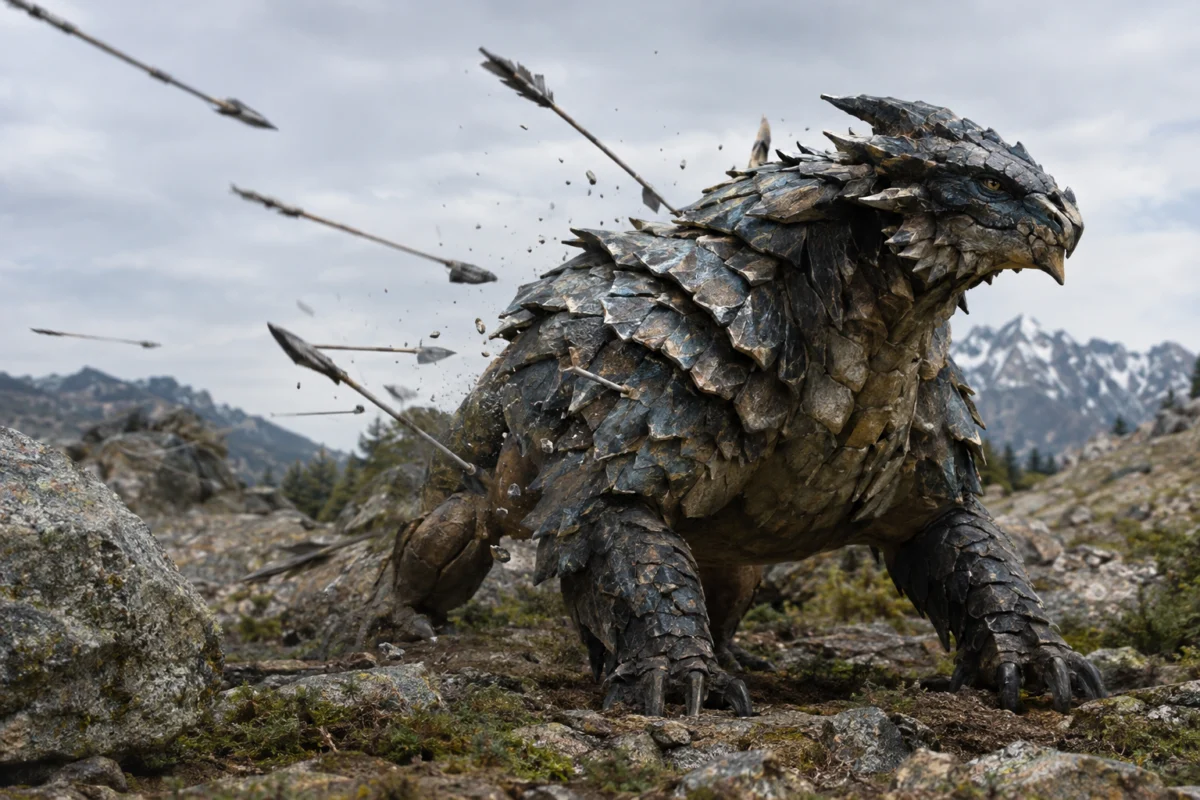
Because the description combines comparisons with several familiar animals, the Dingonek is often imagined as a chimera. In the early account, however, those comparisons function as eyewitness vocabulary: they are Jordan’s means of conveying an unfamiliar outline and surface.
Adding horns, a stinger, or explicitly dinosaur-like anatomy would go beyond the recovered description.
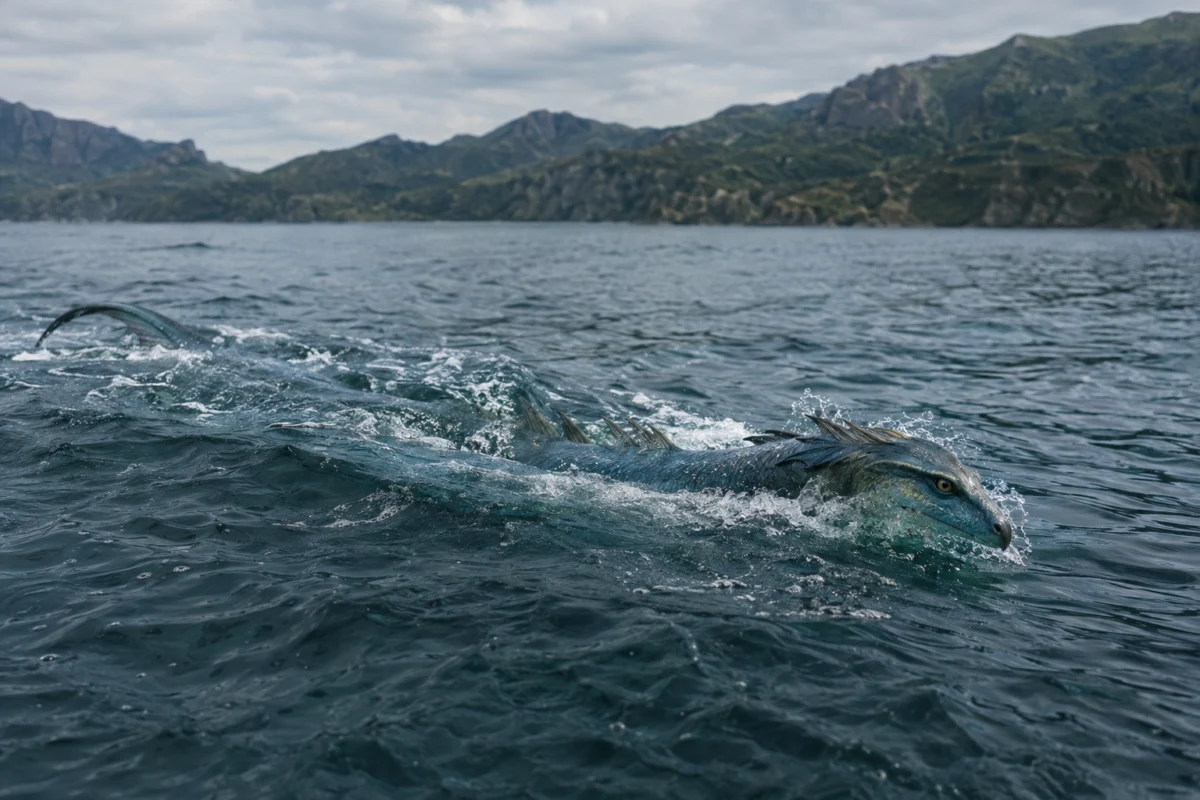
The Mara River witness described an animal approximately sixteen feet long, about 4.9 metres, with its tail in the water. It was spotted like a leopard and covered with scales, but its head was compared with an otter’s rather than a large cat’s.
The partly submerged tail and moving log also made this a different viewing situation from Jordan’s claimed observation.
These differences should remain visible in any reconstruction. An illustration based on Jordan’s account can include the downward fangs, broad back, large clawed feet, and finned tail, while the Mara variant requires an otter-like head and lacks recorded fangs.
Combining every reported feature would create a composite that neither witness actually described.
Background Story
The Dingonek’s documented background is a colonial-era encounter narrative, not a continuous mythological biography. Its surviving form was shaped by hunters’ testimony, descriptions of unfamiliar animals, and publication in travel writing and discussions of unidentified beasts.
These circumstances are more securely documented than any older origin tradition.
The trackers have an important role in the Maggori episode: they first identify something extraordinary at the river and bring it to Jordan’s attention. They reportedly returned alarmed and told him of a strange beast on the riverbank.
Yet their observations survive through Jordan and Bronson rather than as separately recorded accounts in the trackers’ own words.
After Jordan challenged them to show him the animal, the trackers returned and reported that it was exposed in midstream. Jordan then claimed to have watched it closely enough to describe its head, fangs, markings, back, and tail.
The narrative’s detailed image of the Dingonek belongs to this stage of the episode.
The story then shifts from observation to confrontation. Jordan claimed that he fired a .303 round behind the animal’s ear.
The creature sprang from the water, and Jordan ran into the surrounding bush rather than remaining beside the river to determine whether his shot had struck it.
The episode did not end with the flight. Jordan reportedly searched the shore for two days but found neither the creature nor its tracks during that later effort.
This failed search is important to the story’s conclusion: the encounter produced a memorable description but no recoverable evidence with which to test it.
Floodwater also connects the two early reports. In Jordan’s story, the creature was exposed in midstream; in the Mara account, an animal rode a floating log during high water.
Rivers are therefore the actual setting of the testimony, not merely a symbolic association supplied by later retellings. At the same time, each report describes a different event, observer, and body shape.
A separate background strand concerns Luquata or Lukwata, a large lake-being discussed by Bronson and Hobley in connection with local beliefs and offerings. Those passages help explain the broader setting in which European writers grouped reports of unusual water creatures, but they cannot supply the Dingonek with an otherwise undocumented religious identity, sacred biography, or ritual tradition.
Famous Folklore Stories
The surviving narrative record centers on two reported encounters rather than authenticated, traditionally titled folktales. Their sequences deserve separate treatment: Jordan’s Maggori River account supplies the best-known Dingonek story, while the later Mara River report describes a noticeably different animal.
The headings below are descriptive editorial labels.
Jordan’s reported Maggori River encounter
Published in Edgar Beecher Bronson’s In Closed Territory in 1910, this encounter account concerns hunter John Alfred Jordan. His trackers reportedly returned alarmed after seeing an unfamiliar beast beside the river.
Jordan challenged them to show him where it was.
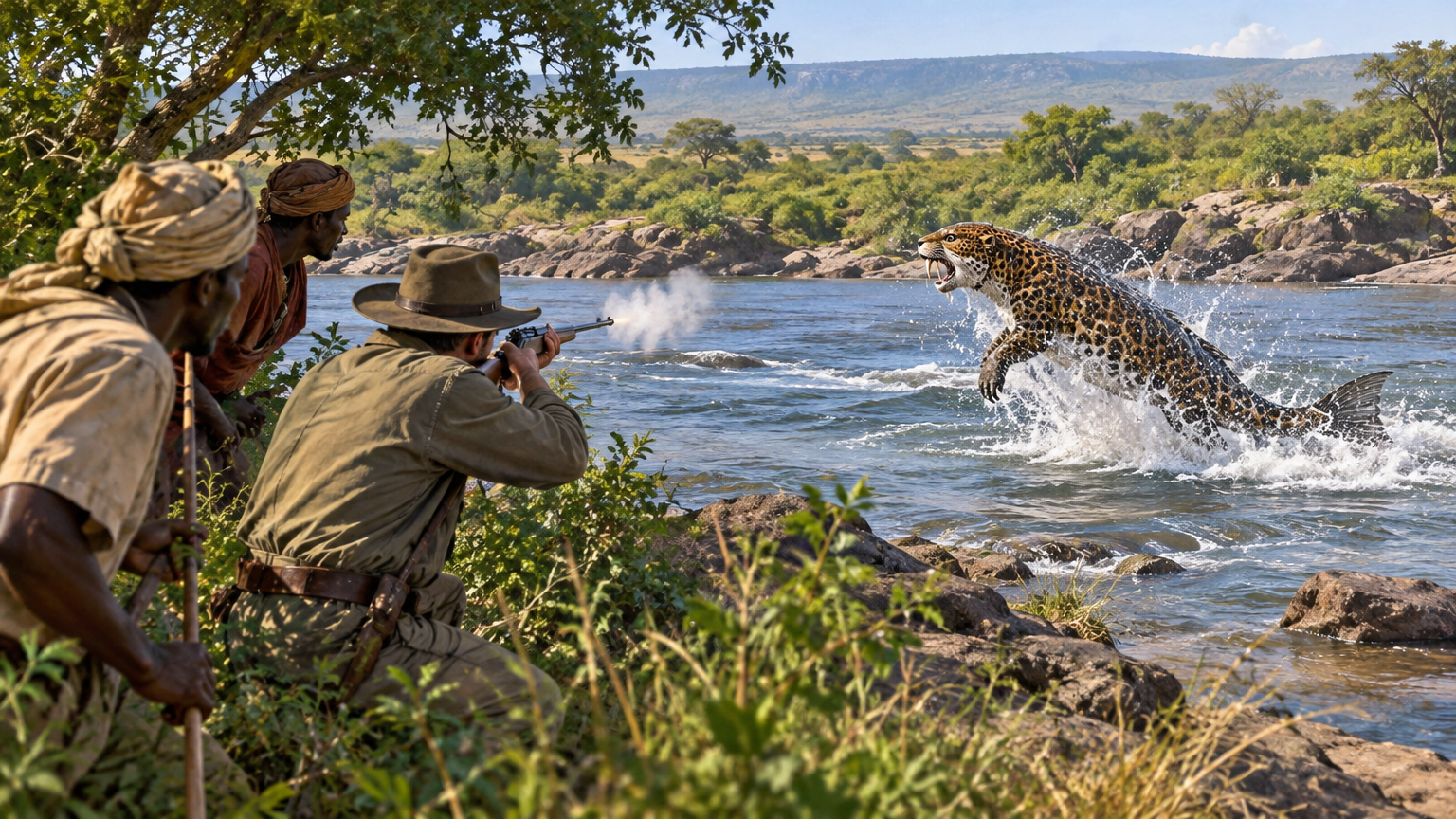
The trackers subsequently reported that the animal lay exposed in midstream. Jordan said he watched the large, leopard-marked creature, then fired a .303 round behind its ear.
When it sprang from the water, he fled into the surrounding bush rather than remaining to investigate.
The episode ended without a recovered animal. Jordan reportedly searched the shore for two days but found neither the creature nor its tracks during that search.
Although his broader description mentioned enormous clawed footprints, the later search produced nothing that could establish the animal’s identity or confirm that it had been wounded.
The reported Mara River animal on a log
A separate encounter appeared in C. W. Hobley’s 1913 article On Some Unidentified Beasts. During high flood at a Mara River crossing, a witness reportedly saw a large animal coming downstream on a log, with its tail extending into the water.
The witness described leopard-like spotting, scales, and an otter-like head, estimating a length of about sixteen feet. He fired at the animal and believed he had hit it.
The creature then slid from the log into the river and was not seen again.
This is another encounter report, not a named traditional tale or a continuation of Jordan’s story. Its most important difference is anatomical: the witness did not report Jordan’s conspicuous downward fangs.
Shared spotting, scales, size, and river habitat do not establish that both men encountered the same kind of animal.
Cultural Impact
The Dingonek’s clearest documented cultural afterlife lies in the passage from hunter’s testimony into published mystery-animal literature. The 1910 narrative preserved a striking composite beast, while the 1913 report added a separate aquatic encounter that later readers could compare with it.
Together they supplied the basic material from which modern summaries reconstruct the creature.
The historical record is less secure as evidence of a widely shared local Dingonek tradition. Jordan’s trackers participate in the encounter narrative, and the name is associated with the Lumbwa in Bronson’s text, but their voices reach readers through the hunter and his recorder.
That mediation limits what can be concluded about their own understanding of the creature or the extent of any tradition surrounding it.
Nearby discussions of Luquata introduce a different cultural dimension. Bronson reported beliefs among Baganda, Wasoga, and Kavirondo communities that connected the appearance of that lake-being with crops, herds, or sleeping sickness.
These reports are colonial-era, second-hand testimony rather than independent documentation from the communities concerned.
Most importantly, those associations concern the named Luquata in Bronson’s account, not an established symbolic or religious role for Jordan’s Dingonek. Treating the two beings as identical would turn contextual material into an unsupported Dingonek tradition.
The creature’s unusual anatomy has also encouraged a lasting visual interpretation as a chimera: feline markings and fangs appear beside scales, a broad semi-aquatic body, and a finned tail. That memorable combination comes from one encounter description.
The otter-headed Mara animal demonstrates how later Dingonek imagery can become misleading if separate reports are blended without attribution.
Modern reference writing has continued to examine the accounts as animal-identification problems. The 2019 A Book of Creatures treatment distinguishes the two descriptions and advances a monitor-lizard interpretation for the Mara report.
This is a modern explanatory approach, not evidence of an older indigenous classification.
Similar Beasts
Mokele-mbembe
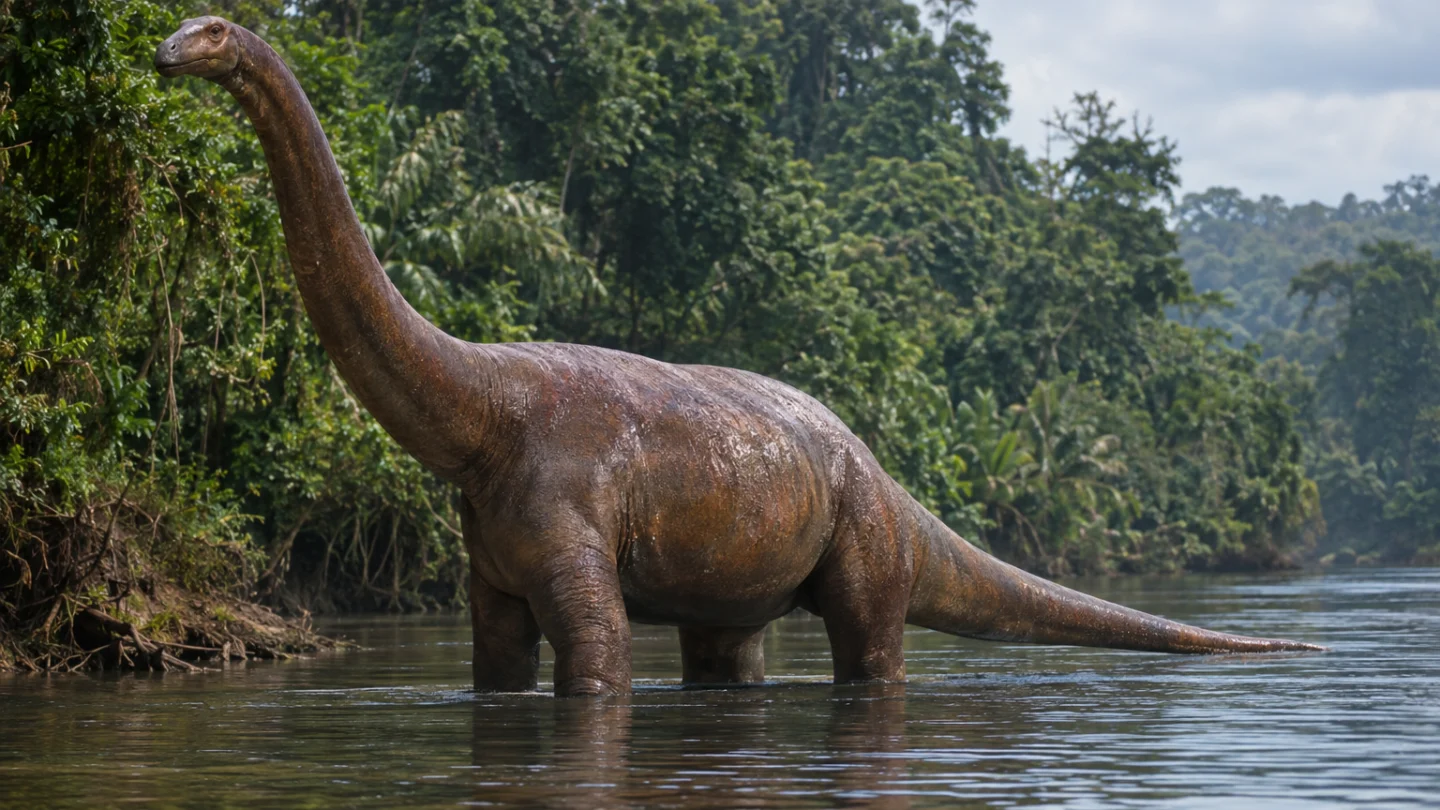
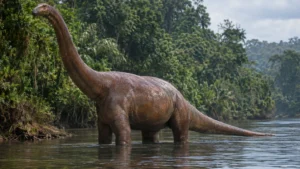
Mokele-mbembe is an unverified creature associated with rivers and swamps of the Congo Basin. Prominent in twentieth-century cryptozoological writing, it is commonly described in those accounts as a large, long-necked animal resembling a sauropod.
Both Mokele-mbembe and Dingonek appear in accounts of unidentified animals inhabiting African freshwater environments. Their reported anatomy differs substantially: Mokele-mbembe is usually presented as long-necked and dinosaur-like, whereas Dingonek descriptions emphasize a tusked, spotted, scaled beast.
Mamlambo

Mamlambo is a river-associated being in southern African folklore, including Zulu traditions. Representations vary, and modern monster accounts describe composite aquatic forms combining reptilian and fishlike features; these should not be assumed to represent one uniform traditional description.
Mamlambo offers a close comparison through its river habitat and composite animal appearance. Unlike Dingonek’s presentation in early published encounter reports as an unidentified animal, Mamlambo also belongs to traditions of supernatural river beings.
Similar anatomy does not establish a shared identity or origin.
Loch Ness Monster

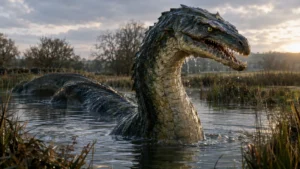
The Loch Ness Monster is an unverified aquatic creature said to inhabit Loch Ness in Scotland. Its modern fame developed during the 1930s, with widely circulated reports and images often portraying a large animal with a long neck and a bulky body.
Like Dingonek, the Loch Ness Monster is discussed through disputed eyewitness accounts of a large freshwater animal. The comparison concerns habitat and the interpretation of sightings, not matching anatomy: the familiar long-necked Nessie differs from Dingonek’s reported tusked, spotted form.
Read more about Loch Ness Monster
Bunyip
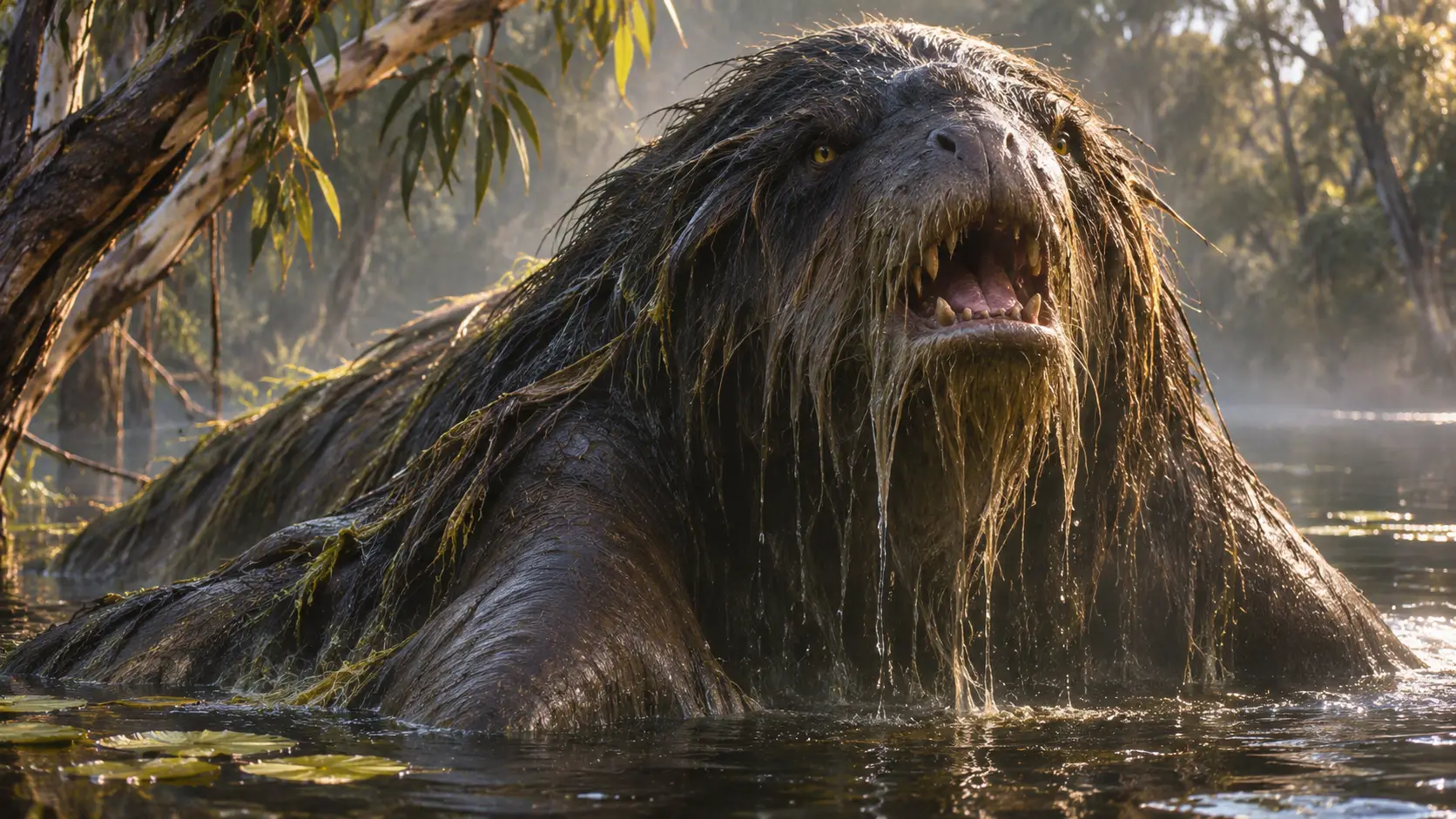
The Bunyip is a water-dwelling being associated with billabongs, swamps, and creeks in Aboriginal Australian traditions. Its appearance and behavior vary among communities.
Nineteenth-century settler accounts also recast such stories as reports of an unknown animal.
Bunyip accounts resemble Dingonek reports in placing an unfamiliar, potentially dangerous creature in inland waters. They also illustrate how colonial writers interpreted stories about unusual beings.
Unlike Dingonek’s limited published encounter record, Bunyip traditions encompass diverse community-specific narratives rather than one consistent animal description.
Lukwata (Luquata)
Lukwata, also written Luquata, is a large lake reptile or water-being mentioned in colonial-era reports concerning the Lake Victoria region. Those reports include references to local beliefs and offerings, although the surviving descriptions do not establish a single precise zoological identity.
Lukwata shares Dingonek’s regional freshwater setting and its appearance in colonial discussions of unfamiliar aquatic beings. Its association with beliefs and offerings differs from the animal-encounter emphasis of Dingonek reports.
The surviving evidence does not establish Lukwata as another name for Dingonek or as the same being.
Scientific or Rational Explanations
The basic scientific limitation is the absence of a physical specimen in these accounts. Both narratives end with the animal disappearing, and neither supplies recovered remains for examination.
They document claims about encounters but cannot establish a new species or confirm the reported combination of features.
A later naturalistic proposal identifies the Mara River animal as an exaggerated sighting of a Nile monitor lizard. This suggestion appears in A Book of Creatures and should remain a hypothesis.
A large monitor could provide a known scaled, spotted, semi-aquatic animal against which the report might be compared, but the proposal is not supported by a captured specimen from the event.
That explanation must also be kept specific to the description it addresses. The Mara witness’s scaled, spotted animal had an otter-like head and lacked reported long fangs.
An explanation advanced for that sighting does not automatically account for Jordan’s broad-backed, fanged creature with its unusually elaborate combination of traits.
Flood conditions are a documented feature of the encounters, especially the Mara episode involving a floating log and a partly submerged tail. Such circumstances matter when assessing estimates of size and body outline.
Water can conceal parts of an animal, while a moving log complicates the visual separation of body, tail, and support, although the surviving account cannot establish precisely how those conditions affected the witness.
The length estimates likewise came from observation rather than subsequent measurement. Jordan’s fourteen or fifteen feet and the Mara witness’s approximately sixteen feet are reported judgments made during brief encounters.
Without a body, reliable scale reference, or preserved trackway, they cannot be checked.
The language of Jordan’s description also requires care. Comparisons with a lioness, leopard, hippopotamus, and armadillo communicate perceived size, markings, breadth, and covering.
They are descriptive analogies within a retold encounter, not anatomical observations made from a captured animal. The apparent chimera may therefore reflect the vocabulary used to describe an uncertain sighting as much as the form of the alleged creature.
The absence of evidence after Jordan’s two-day search is also significant, though not decisive by itself. He reported finding neither the beast nor its tracks, despite having previously described very large clawed impressions.
Consequently, the footprint claim cannot be assessed independently or connected securely with a known animal.
Finally, the reports have different witnesses and reach readers through different recorders. Treating their overlapping details as independent confirmation would overlook their substantial differences and the absence of material evidence.
The defensible conclusion remains limited: unusual aquatic animals were alleged, but neither the Dingonek’s existence as described nor its zoological identity has been established.
Modern Cultural References
African folklore Bestiary: Vol 2, Dingonek, tabletop game
This tabletop bestiary presents Dingonek as a medium monstrosity with a spotted leopard’s body, a crocodile’s scaly tail, and a rhinoceros-like horn.
It ambushes victims from beneath river water and is sometimes regarded as a guardian of forgotten places.
Source
Dingonek: A Kenyan Chimera, Greg’s Cryptid Corner episode 68, episode
A podcast discussion about the Dingonek, described as a cryptid associated with Kenya’s Migori River.
The hosts discuss a reported early-1900s sighting, local lore, and descriptions of the creature; this is a discussion, not a fictional adaptation.
Source
Conclusion
The Dingonek is best understood through a particular reported encounter, not as a securely reconstructed religious figure or an identified animal. Its distinctive combination of leopard markings, downward fangs, scales, broad back, and finned tail comes from Jordan’s testimony as retold by Bronson in 1910.
That narrative gives the creature its recognizable form but not zoological confirmation.
Hobley’s separate Mara River report belongs alongside it as a comparison, with differences preserved rather than treated as details of one established species. The spotted and scaled animal on the log had an otter-like head, and no long fangs were reported.
Similarity made the accounts attractive to later mystery-animal writers; variation prevents them from serving as simple mutual confirmation.
The Dingonek’s lasting interest lies in the boundary between an unfamiliar animal, an extraordinary encounter, and the stories through which uncertain observations become memorable. The flooded river setting and composite appearance give that uncertainty a vivid shape.
Yet the same appeal makes careful distinctions essential: Luquata or Lukwata beliefs cannot simply become Dingonek rituals, and later animal identifications remain proposals. Read with those boundaries intact, the Dingonek remains a striking example of how colonial-era testimony passes into modern mystery-animal storytelling without resolving its original uncertainties.
Further Reading
Edgar Beecher Bronson, In Closed Territory; account accessible through opened transcription, En.wikipedia
Bronson recounts Jordan’s story: trackers reported a strange riverbank beast; Jordan went to look and said he saw it exposed in midstream.
He watched it, fired behind its ear, and fled when it sprang from the water. He later searched but reported finding neither the animal nor its tracks.
(en.wikipedia.org)
C. W. Hobley, “On Some Unidentified Beasts”, Journals.co
Hobley recounted a second man’s claim that, during a flood at the Mara frontier crossing, he saw a spotted, scaled animal on a log, fired at it, and watched it slip into the water and disappear.
(journals.co.za)
Dingonek, A Book of Creatures
Modern reference that summarizes Bronson and Hobley and distinguishes their descriptions while presenting later zoological interpretations and naming claims.
(abookofcreatures.com)