Knowledge Keeper – an Overview
Knowledge Keeper is a comparative taxonomy label for beings, places, or forces whose defining mythological role involves preserving, guarding, transmitting, or authorizing consequential knowledge within a particular tradition.
The label is modern analytical vocabulary, not a demonstrated universal category used by historical communities. Its application therefore requires evidence that knowledge preservation is central, rather than incidental, to an entity’s identity.
Traditional recognition may appear through named guardians, restricted teachings, prophetic authority, remembered genealogies, or knowledge-bearing locations. These forms differ substantially, so classification depends on documented context rather than resemblance alone.
This function is distinct from supernatural knowledge in general. A deity’s occasional insight, a hero’s cleverness, or a magical object’s information does not establish a keeper role without sustained custodial significance.
Manifestation and Constraints
How Knowledge Keeper Is Expressed
Mythological evidence makes custodianship observable through narrative outcomes, such as access being granted, withheld, recovered, or interpreted. Such outcomes identify knowledge’s social or cosmological consequence, not a hidden mechanism.
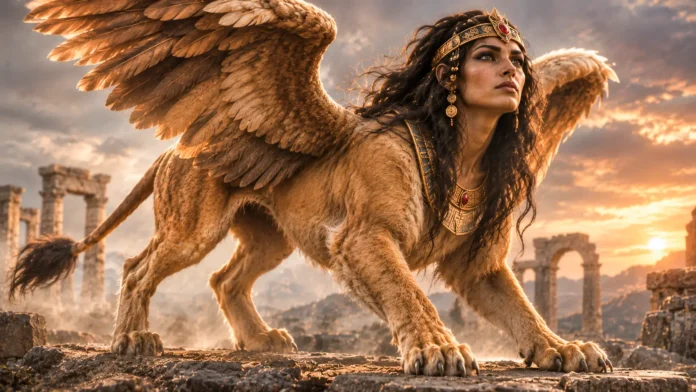
In Greek accounts of the Sphinx, a riddle governs passage and survival at Thebes. The creature’s narrative function makes knowledge a boundary test, rather than a general store of wisdom.
Buddhist traditions concerning nāgas sometimes connect them with the custody of teachings or texts. These accounts present preservation as a narrative attribution, although details differ among textual and regional traditions.
Environmental or cosmic changes count as evidence only when sources explicitly connect them to knowledge custody. Unexplained storms, transformations, or disruptions cannot responsibly be assigned this function by analogy.
Limits and Conditions
Custodianship is commonly limited by access, audience, or narrative circumstance. A guarded teaching is not thereby universally available; its restricted circulation may itself distinguish authorized transmission from ordinary information.
Greek Sphinx narratives impose a sharply bounded condition: solving the riddle determines passage through a specific encounter. This localized test should not be generalized into a universal Greek doctrine of knowledge.
In Buddhist nāga narratives, the preservation of teachings is shaped by particular accounts of transmission. No single, uniform rule governs every nāga tradition or every representation of sacred learning.
When historical evidence does not specify custodial limits, claims about moral eligibility or environmental conditions must remain unasserted. No verified sources describe this for this context.
Mythological Role and Meaning
Symbolic and Cultural Significance
Knowledge custody can mark the difference between possession of information and socially recognized authority. Traditions may place learning under divine, ancestral, or communal protection, depending on their own institutions.
In Greek Sphinx narratives, knowledge takes the form of a dangerous interpretive test. Its moral framing concerns successful understanding in a particular story, not a general condemnation of ignorance.
Buddhist accounts of nāgas preserving teachings place emphasis on continuity and transmission. This differs from the Sphinx’s testing function because preservation, rather than an individual’s answer, organizes the narrative role.
Such contrast prevents a single symbolic interpretation from covering every example. A keeper may sustain teaching, police access, or make knowledge consequential, but those meanings require separate evidence.
Knowledge Keeper in Myth and Folklore
The Sphinx belongs to Greek mythic narratives associated with Thebes, where its riddle structures a crisis of interpretation. Knowledge Keeper is central to this episode because the riddle controls narrative passage.
Nāgas appear across South Asian religious traditions, including Buddhist literature, with varied identities and functions. In accounts where they guard teachings, custody explains their relevance more precisely than a generic serpent classification.
The Iranian epic tradition’s Simurgh is represented as a wise bird who guides and instructs. Knowledge is significant to its narrative identity, although describing it strictly as a keeper may overstate custodianship.
These examples do not establish a shared creature type. Their narrative roles diverge: the Sphinx tests, certain nāgas preserve, and the Simurgh advises within Iranian epic tradition.
Beasts with Knowledge Keeper
Sphinx
The Greek Sphinx, especially in Theban myth, makes guarded interpretation central through its riddle. Without Knowledge Keeper, classification would miss how knowledge structures the creature’s boundary-setting narrative role.
Nāgas
Nāgas occur in Hindu, Buddhist, and Jain traditions, with distinct local and textual meanings. Buddhist accounts linking nāgas with preserved teachings justify this classification only for those specific narratives.
Simurgh
The Simurgh belongs to Iranian literary and mythological tradition, notably the Shahnameh. Its teaching and guidance make knowledge central, but evidence supports a wise instructor more securely than a strict custodian.
Cultural Interpretations and Regional Emphasis
Greek Theban material frames knowledge through a perilous riddle and a bounded encounter. The narrative’s emphasis is interpretive testing, not the institutional preservation of a religious teaching.
Some Buddhist accounts instead associate nāgas with safeguarding teachings across periods of transmission. This custodial emphasis differs from Greek testing, although Buddhist traditions themselves contain substantial variation.
Iranian epic representations of the Simurgh foreground instruction and counsel. That role diverges from both guarded access and riddle-solving, demonstrating why advisory wisdom should not automatically mean custody.
These regional distinctions matter because similar associations with wisdom do not prove shared historical origins. Comparison identifies functional differences; it cannot establish contact or common belief without additional evidence.
Similar or Related Mythological Functions
Prophetic functions are adjacent because they mediate knowledge unavailable to ordinary people. They remain analytically distinct when a figure predicts events without preserving, guarding, or authorizing knowledge.
Trickster functions may involve secret acquisition or disclosure. Their defining emphasis is disruption or boundary-crossing, rather than sustained custody, unless a specific tradition supplies stronger evidence.
Teacher figures transmit knowledge to particular recipients. They overlap with custodians when preservation matters, but instruction alone does not establish guardianship or restricted access.
Threshold guardians resemble Knowledge Keepers when passage depends on knowledge. Their primary classification remains boundary enforcement if sources show no independent role in preserving or transmitting teachings.
Historical Interpretation and Evidence Limits
Knowledge Keeper is best treated as a comparative classification, not an ancient universal office. Historical sources name particular beings and actions; the taxonomy groups evidence cautiously across separate traditions.
Symbolic interpretation may describe knowledge as authority, danger, or continuity, but such readings are analytical proposals. They should not replace literal narrative claims where sources present guardianship directly.
Surviving accounts often come through literary or religious compilations whose dates, audiences, and transmission histories vary. Their record cannot automatically represent every local practice or popular belief.
For the Sphinx, nāgas, and Simurgh, evidence supports different knowledge-related roles, not one consistent category recognized by their originating cultures. The taxonomy therefore signals comparison, not native equivalence.
Where sources do not document a creature’s custodial function, inclusion would depend on unsupported inference. No verified sources describe this for this context, so the classification must remain limited.