Introduction
Mapinguari is an Amazonian being known through Indigenous accounts, regional encounter narratives, and Brazilian popular storytelling. Its identity varies between communities: it may appear as a dangerous forest monster, while some contemporary versions make it a guardian that drives away people who threaten the forest.
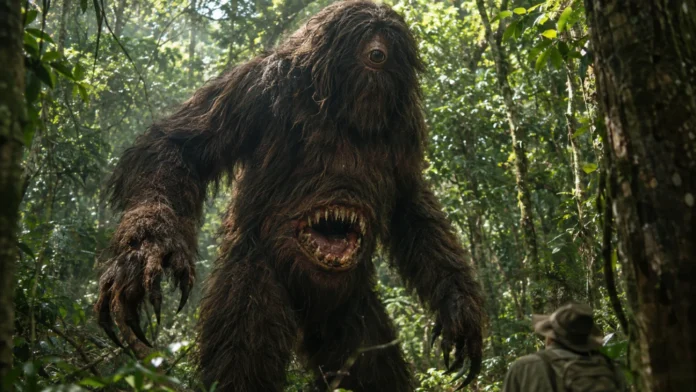
No single description represents all these traditions. A giant, hairy body is familiar in popular portrayals, but the striking combination of one eye and a mouth at the navel belongs to a particular circulated version, not an anatomy shared by every account.
Among the Karitiana of Rondônia, the being called Mapinguari in Portuguese is associated with the names Owojo and Kida harara. These accounts concern encounters and a being understood within Karitiana life, rather than simply a character borrowed from a national collection of monsters.
This distinction matters because Mapinguari also attracts speculation about surviving giant ground sloths. That proposal is a hypothesis, not an established identification.
The figure’s importance lies in its varied Amazonian contexts, which cannot be reduced either to a zoological mystery or to one standardized legend.
History/Origin
The documented material does not establish a single birthplace, origin date, or earliest narrative for Mapinguari. Its history involves several overlapping settings: Indigenous accounts, stories about dangerous encounters in the forest, regional folklore collections, and later educational adaptations.
These strands should not be treated as one continuous, fully reconstructed history.
Nineteenth-century collections provide background for the recording of Amazonian storytelling. João Barbosa Rodrigues’s Poranduba amazonense, published in 1890, belongs to that collecting history.
However, the available evidence does not verify a Mapinguari passage in it, so its publication cannot establish the being’s earliest written appearance.
A more specific historical lead connects an encounter narrative with João da Silva Campos’s collecting work of 1928. The episode involves Sunday hunting and an attack on a forest worker.
Its association with that collection is reported through later reference material, leaving the original wording and precise transmission uncertain.
The Sunday setting introduces a Christian moral dimension into this particular narrative. It suggests that at least some regional tellings could connect forest danger with prohibited conduct.
That does not establish a Christian origin for Mapinguari or explain the being’s significance in Indigenous communities.
Felipe Ferreira Vander Velden’s 2016 anthropological study documents a different perspective through Karitiana accounts in southwestern Amazonia. Here, the important historical issue is not merely how a legend spread, but how local understandings encounter outside classifications such as folklore, fantasy, and an animal awaiting scientific discovery.
Later educational versions add another layer. A Universidade Federal do Amazonas account published in 2023 emphasizes a forest-protector role, contrasting with predatory narratives.
Such differences demonstrate the figure’s continuing reinterpretation, but they do not establish which role came first or that one displaced the other.
Name Meaning
The name Mapinguari circulates in Portuguese-language accounts of Amazonian beings; Mapinguary is an alternative spelling. A secure literal translation cannot be established from the evidence considered here.
Assigning a precise meaning would therefore imply more linguistic certainty than the available specialist documentation supports.
The strongest linguistic evidence concerns local usage rather than the Portuguese name’s derivation. Vander Velden records Owojo and Kida harara in the Karitiana context, alongside Mapinguari in Portuguese.
These names identify a specific relationship between languages and accounts, not a universal Amazonian vocabulary.
Owojo and Kida harara should consequently remain identified as Karitiana terms. Treating them as interchangeable names used throughout the Amazon would erase the community context that makes them meaningful.
Their documentation also does not, by itself, establish a translation or etymology for Mapinguari.
The distinction between naming and meaning is especially important here. A Portuguese label can connect accounts in regional discussion without proving that every speaker describes the same body, behavior, or category of being.
Shared naming is not evidence of a single underlying tradition.
Appearance
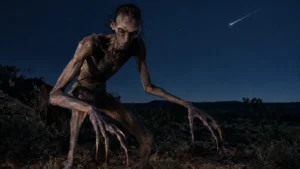
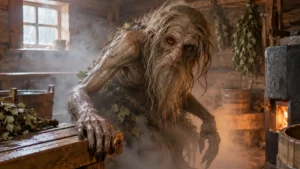
Mapinguari has no securely established, universal body plan. Several popular and educational portrayals show an enormous, hairy forest figure with a roughly humanlike outline.
Size and shaggy hair provide a recognizable general image, but more unusual anatomical details belong to particular descriptions.
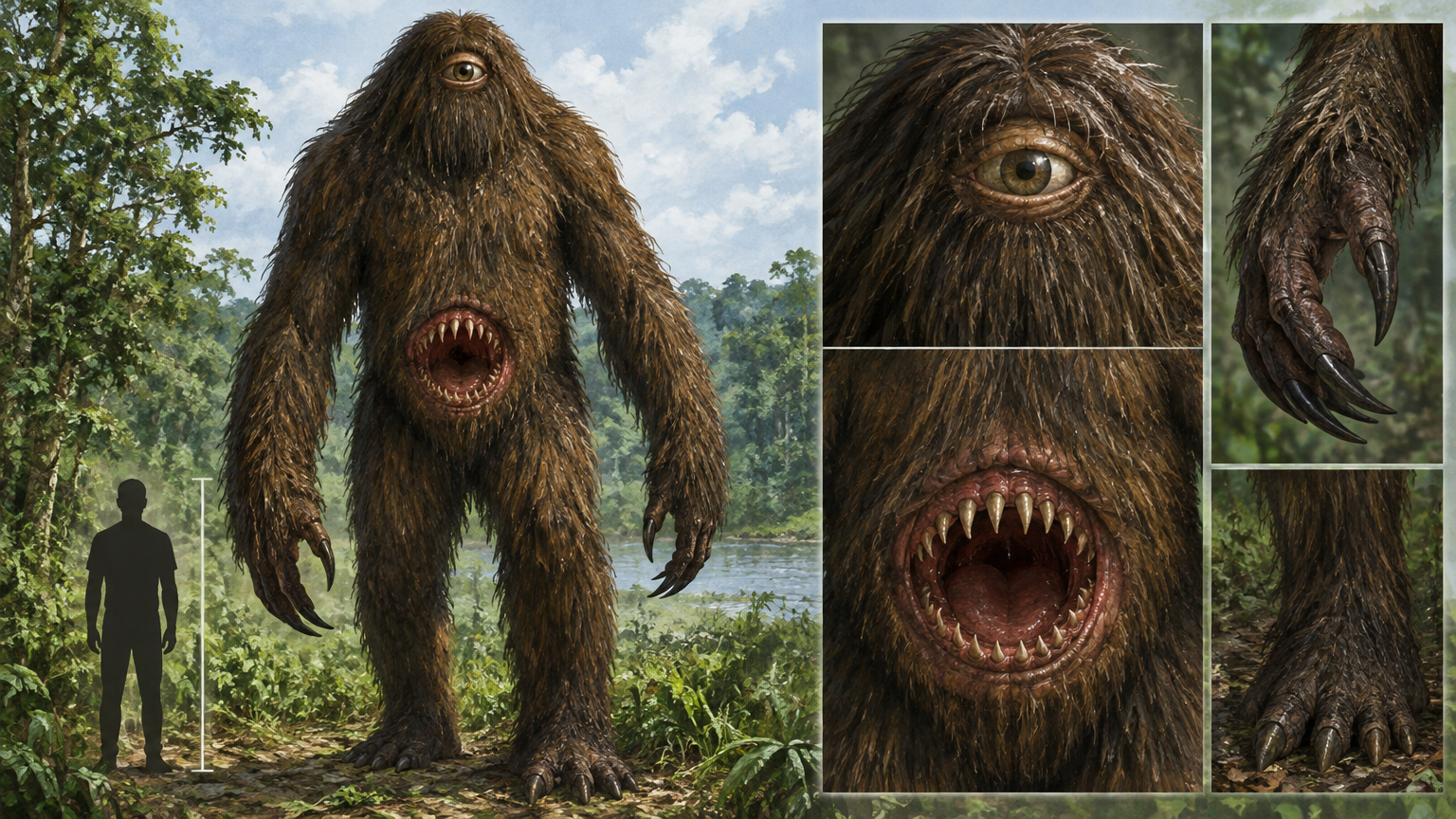
In the version presented by MultiRio’s 2017 educational account, the creature has one eye, long arms, claws, and a large mouth at the navel. Together these features produce a distinctly monstrous figure rather than merely an oversized animal.
This is a documented popular depiction, not a template for every community’s accounts.
The mouth’s position is especially distinctive: it places the threat of being devoured on the torso itself. Within this depiction, the one-eyed face and torso-mouth form separate visual features.
They should not be silently added to descriptions whose sources establish only a large, hairy being.
A contemporary university-hosted account from Amazonas also presents a giant, hairy forest figure, but gives it a protective role. This difference shows why appearance alone cannot determine character.
A frightening body may belong to a predator in one telling and a defender of the forest in another.
Karitiana accounts require separate treatment rather than automatic illustration through this popular monster design. Vander Velden’s study centers local encounters and understandings; it does not justify making the educational version’s single eye and belly-mouth compulsory features of Owojo or Kida harara.
The giant-ground-sloth proposal introduces yet another visual association. It should not replace the varied descriptions with a reconstructed prehistoric mammal.
A proposed explanation for some accounts is different from evidence that all storytellers imagine the same animal, or that the tradition began with one.
Background Story
Mapinguari’s background is better understood through relationships between people and the forest than through an invented biography. The accounts considered here place encounters within forest life, including hunting and forest work.
Their meanings differ according to who tells them and how the being’s actions are understood.
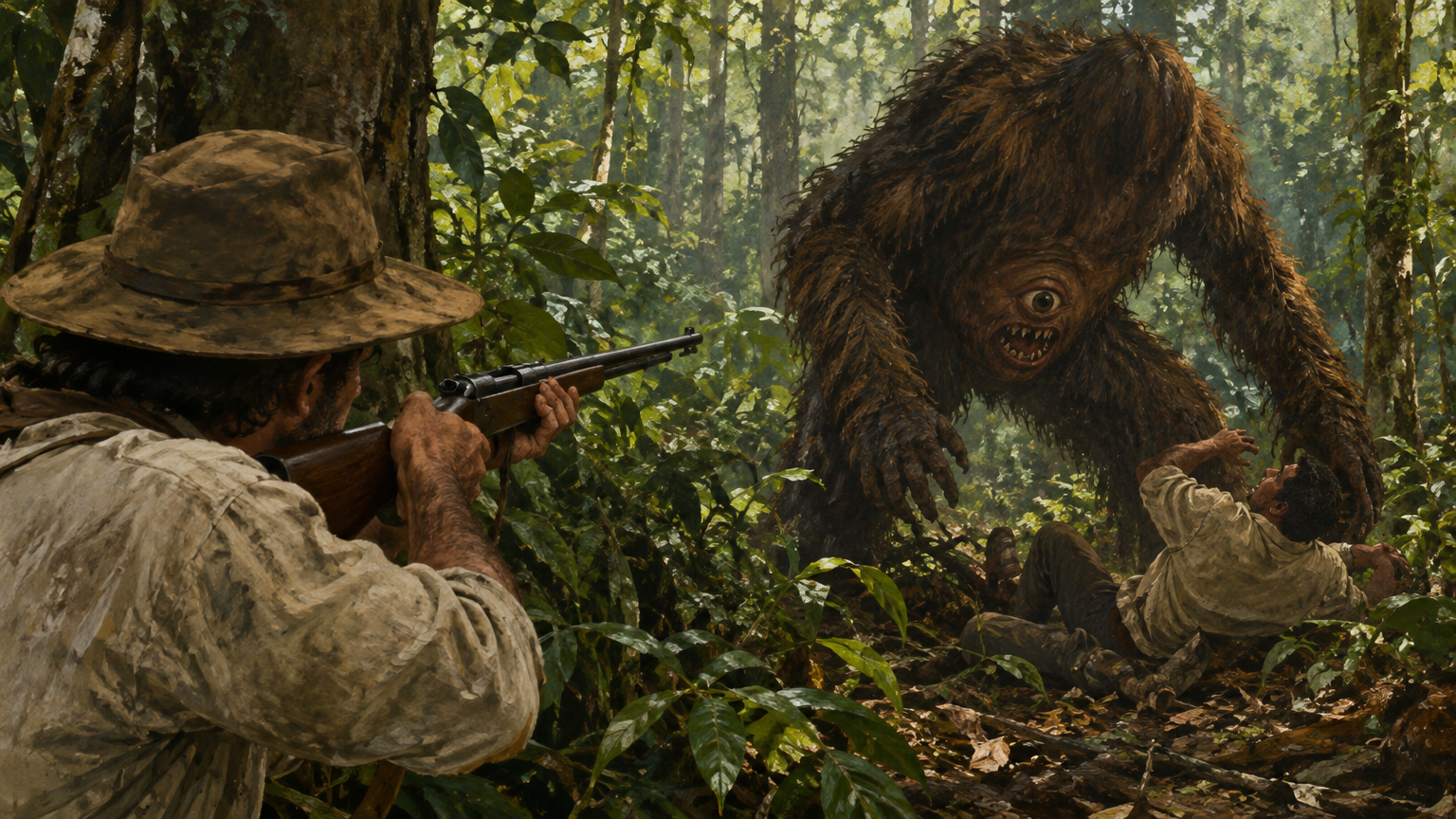
Predatory narratives make the forest a place where human activity can meet an overwhelming danger. The reported Sunday-hunting episode adds a particular moral setting: a worker hunts despite his companion’s objection and later finds that companion being attacked.
The episode combines an encounter with a warning about conduct.
The Christian interpretation belongs to that narrative version, not to Mapinguari as a whole. It offers an example of how regional storytelling can connect a dangerous being with Sunday observance.
It does not establish a shared religious explanation for Indigenous accounts or other forest encounters.
A different background shapes the 2019 TV Brasil adaptation in Um conto em cada ponto. There, a powerful warrior or tribal king dies in battle and is reborn through nature as a forest guardian.
His roar frightens hunters and loggers away from the forest.
This adaptation gives the guardian an explicit transformation story and a protective purpose. It should be understood as that published retelling, rather than a universal account of Mapinguari’s birth.
Its emphasis also differs substantially from stories in which the being attacks people without being presented as their forest’s defender.
The Karitiana material complicates both approaches. The being’s place in local life cannot be exhausted by identifying a moral lesson or an environmental symbol.
Vander Velden’s analysis preserves the distinction between Indigenous understandings and outside explanations, including the attempt to make scientific confirmation the measure of an account’s validity.
Famous Folklore Stories
Mapinguari narratives include dangerous encounters and markedly different accounts of forest guardianship. The headings below describe documented episodes rather than authenticated traditional tale titles.
A regional hunting narrative and a modern television adaptation should remain separate, since they give the being different roles.
The Sunday-Hunting Encounter
In a reported encounter account, a forest worker goes hunting on Sunday despite his companion’s objection. The two become separated, and the hunter subsequently finds his companion being attacked by a Mapinguari.
The danger emerges within an ordinary forest expedition rather than a heroic quest.
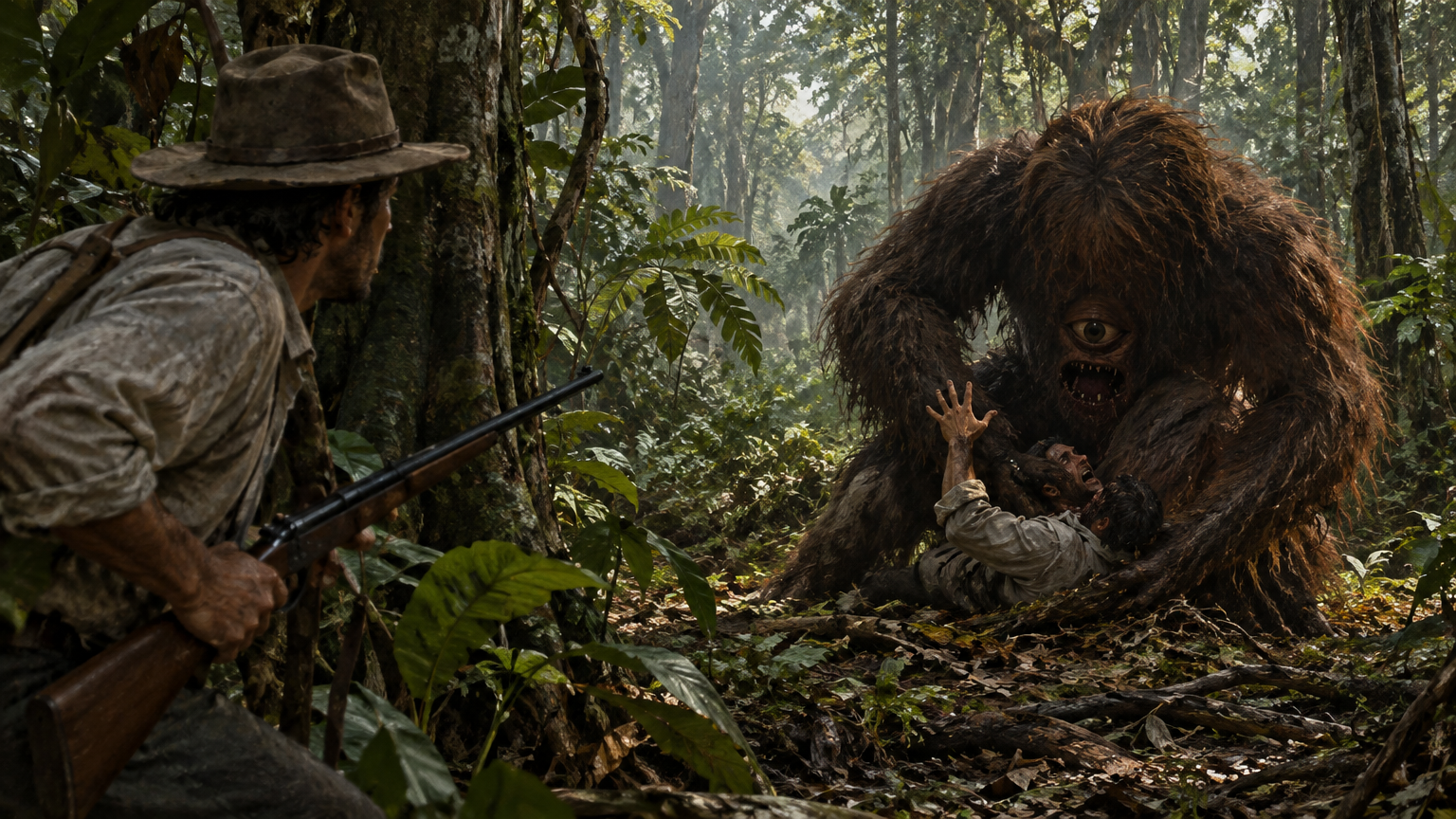
The episode is associated in modern reference literature with João da Silva Campos’s 1928 collection and later retellings. Because this evidence is indirect, its broad sequence is more secure than finer narrative details.
This is an encounter account, not a folktale with an established title.
The Sunday setting gives this version a possible Christian moral dimension: disregarding a religious restriction precedes catastrophe. That interpretation belongs to this particular narrative.
It does not establish that Mapinguari generally punishes Sabbath-breaking, or that other communities understand encounters through the same religious framework.
The Warrior Reborn as a Guardian
A different narrative appears in the 2019 TV Brasil adaptation for Um conto em cada ponto. A powerful warrior or tribal king dies in battle and is reborn through nature as a forest guardian.
His roar drives hunters and loggers away from the forest.
Here, frightening humans serves a protective purpose rather than simply expressing predatory violence. The episode is a documented contemporary retelling, not proof of a shared ancient origin story.
Its transformation narrative should therefore remain distinct from both the Sunday-hunting encounter and Karitiana accounts.
Cultural Impact
Mapinguari’s cultural importance extends beyond a recognizable monster design. Regional encounter narratives connect the being with the dangers of entering and working in the forest.
The hunting episode also shows how a forest encounter can carry a moral warning within a particular storytelling setting.
Among the Karitiana, accounts concern a being known as Owojo or Kida harara, called Mapinguari in Portuguese. These names belong to a specific cultural context.
Their use does not make Karitiana understandings interchangeable with the monster familiar from Brazilian educational summaries.
Popular education has helped circulate a striking visual version: a hairy giant with one eye and a mouth at the navel. That image is prominent in MultiRio’s educational presentation, but its recognizability should not obscure accounts that describe the being differently.
Modern environmental retellings give Mapinguari another public role. A university-hosted account from Amazonas presents a forest protector, while children’s animation likewise uses guardianship as a narrative theme.
These portrayals emphasize protection, unlike accounts in which hunters and forest workers become victims.
Contemporary representation spans illustrated books, animation, games, and public storytelling projects. Scholarly attention adds a different contribution: Felipe Ferreira Vander Velden’s work preserves the distinction between Karitiana understandings, regional folklore classifications, and scientific speculation, rather than treating them as interchangeable explanations of one standardized creature.
Similar Beasts
La Patasola
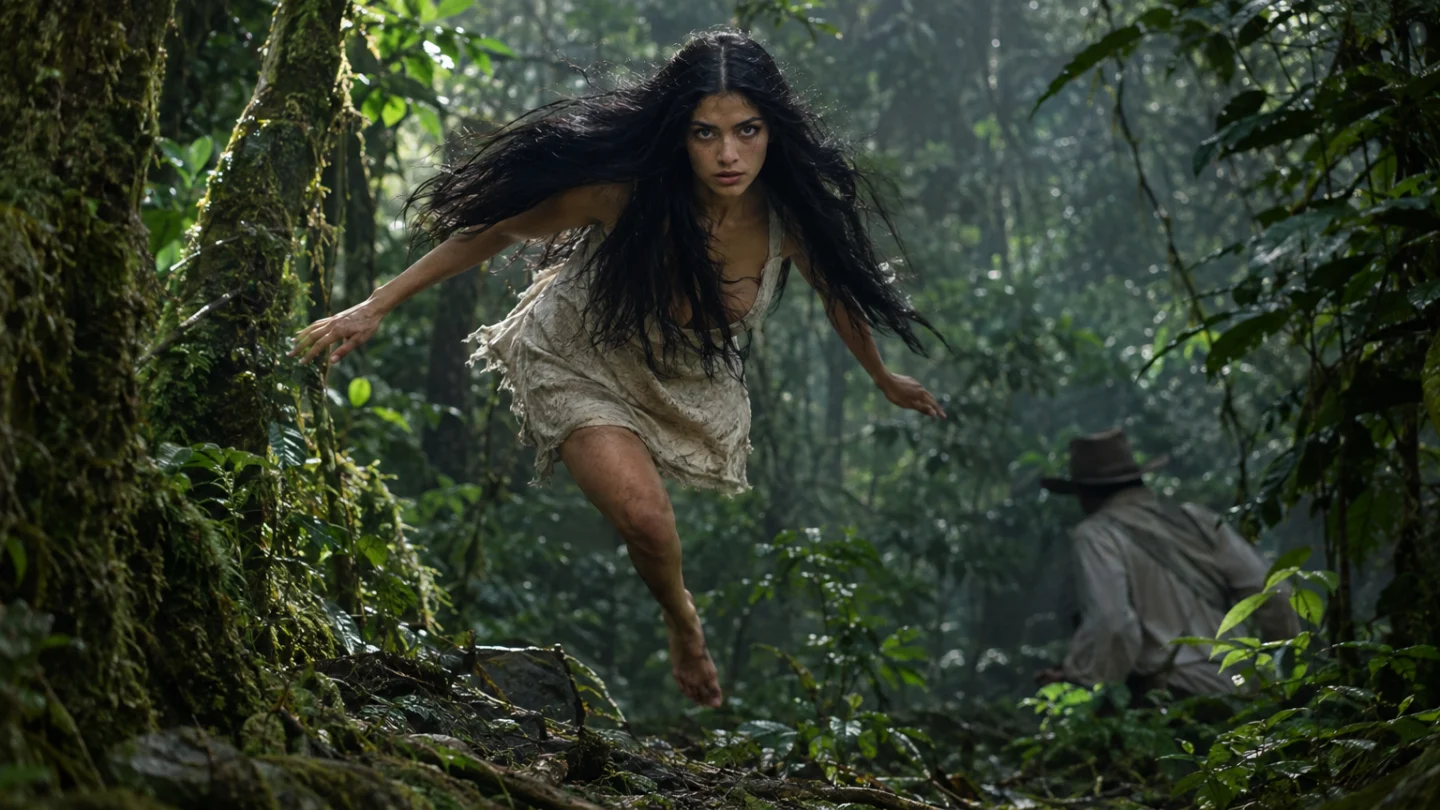
La Patasola is a forest predator spirit associated with Colombian folklore. Her relevance here lies in the relationship between a dangerous supernatural being and people entering forest environments.
She resembles predatory Mapinguari accounts through habitat and narrative danger, not through a shared anatomy. Neither figure should be treated as the other's regional name.
Ghoul
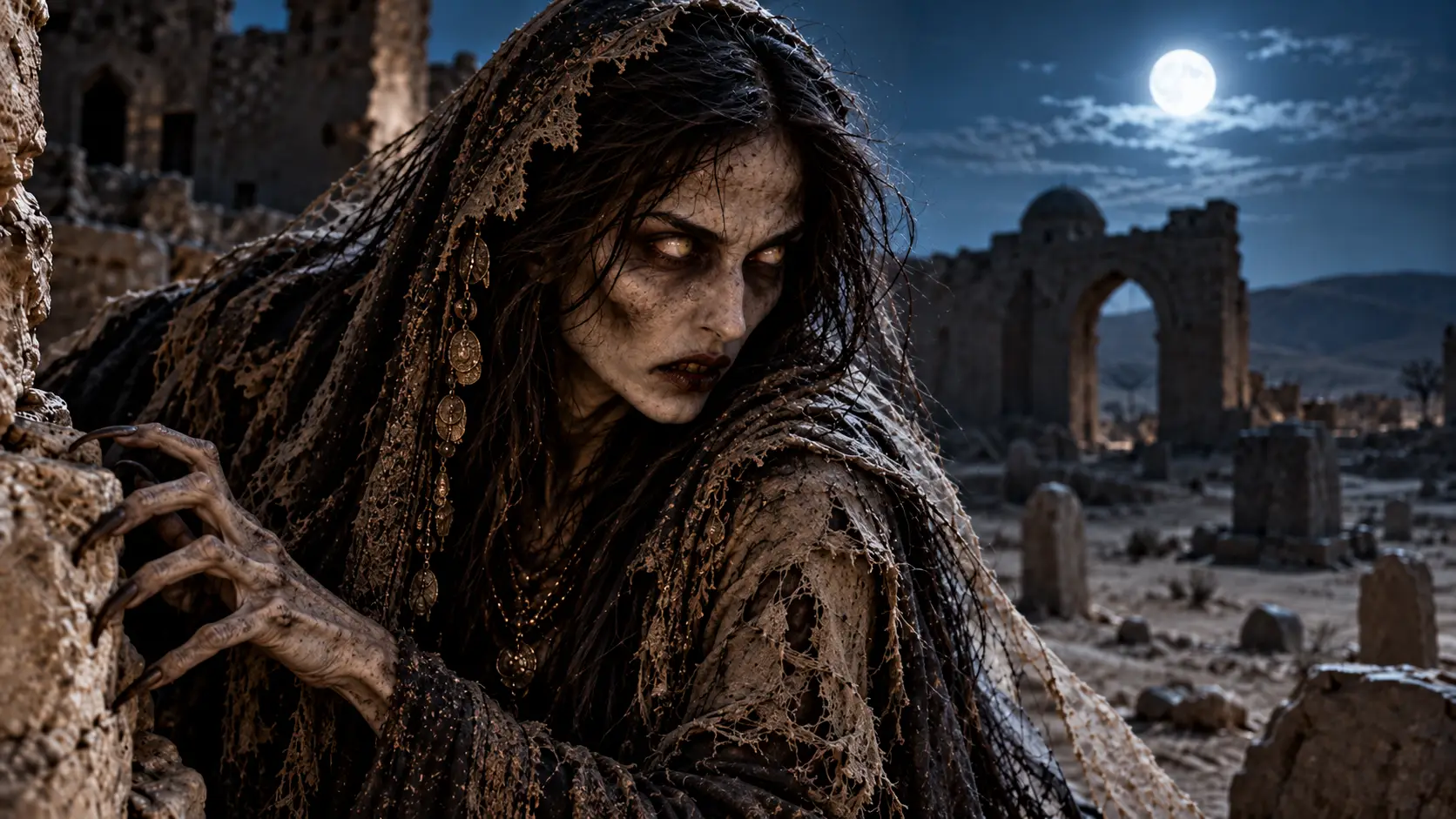
The ghoul is a being of Arabic folklore associated with wilderness, deception, and attacks on travelers. Some accounts give it the ability to change shape and mislead people.
Its comparison with Mapinguari concerns encounters beyond familiar human spaces. Shapeshifting and deceptive guidance, however, are not established universal characteristics of Mapinguari in the reviewed material.
Kishi
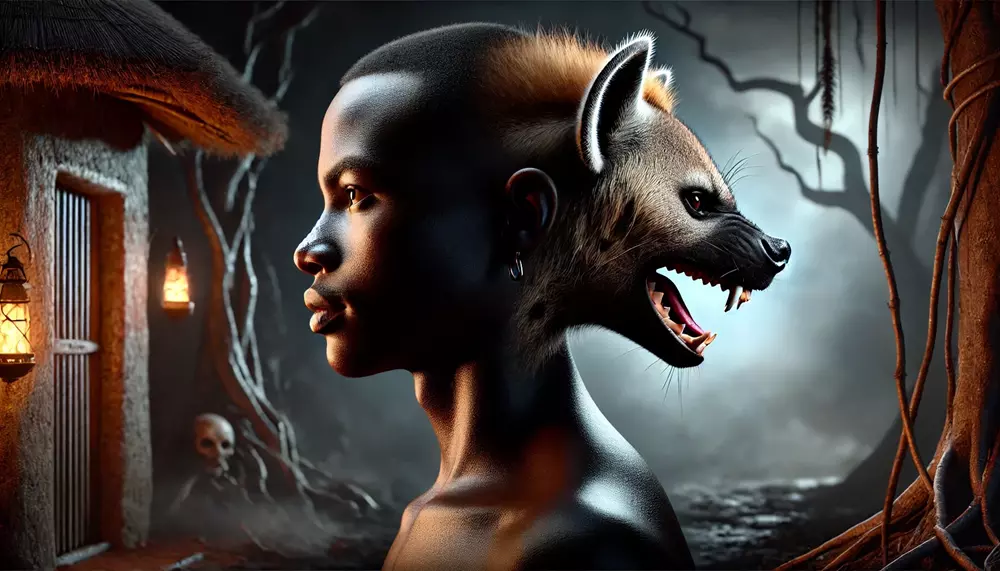
The Kishi is an Angolan folkloric being with a handsome human front and a hyena visage behind. It attracts victims through charm before attacking with its animal jaws.
The useful parallel is monstrous anatomy associated with predation. This is a thematic comparison, not evidence that Kishi influenced the torso-mouthed Mapinguari depiction.
Curupira
Curupira is a distinct Brazilian forest being associated with backward-facing feet. Its place in forest folklore makes it a closer regional comparison than many superficially similar monsters.
Luís da Câmara Cascudo reportedly compared backward-facing feet in certain Mapinguari descriptions with Curupira. That comparison concerns particular variants, not a feature shared by every Mapinguari account.
Quibungo
Quibungo is a distinct Afro-Brazilian folkloric being included in comparisons with Mapinguari. The relevant accounts connect it with a large mouth located on the body rather than ordinary facial anatomy.
This offers a specific parallel for torso-mouthed Mapinguari portrayals. Shared imagery alone does not establish an identical being, a single origin, or a demonstrated direction of borrowing.
Religion/Ritual
The reviewed evidence does not establish a dedicated Mapinguari cult, offering practice, ceremony, or ritual calendar. Karitiana accounts document the being’s place in local understandings and encounters, but they do not justify inventing a standardized system of worship or protection.
The Sunday-hunting encounter contains a narrower religious element: an objection to hunting on a Christian holy day. Its moral framing can be discussed within that version, but it should not be generalized into a prohibition observed across Amazonian communities or attributed to Karitiana tradition.
Scientific or Rational Explanations
The best-known zoological proposal connects Mapinguari with giant ground sloths. Associated with David C. Oren, this cryptozoological hypothesis seeks an animal explanation for encounter reports.
It remains a proposed identification, not a confirmed living species or an established explanation of the tradition.
Two claims must be distinguished: that narratives preserve memories of extinct animals, and that an animal resembling an extinct ground sloth survives today. Neither follows automatically from resemblance between a description and a reconstruction.
The reviewed evidence does not demonstrate either proposition.
Variation also limits attempts to identify one animal behind every account. A hairy forest giant, a one-eyed being with a torso-mouth, and a reborn guardian do not constitute one consistent anatomical description.
Selecting only animal-like features would leave important parts of the narratives unexplained.
An anthropological approach asks different questions: how encounters are understood locally, how names move between languages, and what changes when an account becomes classified as folklore or cryptozoology. Vander Velden’s 2016 study makes these competing interpretations central to its treatment of Karitiana testimony.
In that context, acknowledging an Indigenous account does not require first translating it into a scientific species claim. Equally, documenting testimony does not by itself confirm a zoological identification.
These are different kinds of inquiry, with different questions and standards of evidence.
The strongest conclusion is therefore not a single rational solution, but a distinction among documented traditions, modern adaptations, and biological hypotheses. Mapinguari is securely documented as a culturally significant Amazonian being; its proposed identification with a surviving ground sloth remains unconfirmed.
Modern Cultural References
Modern adaptations place Mapinguari in graphic novels, animation, games, and documentary television. These works make different choices about its character: some emphasize danger, others forest protection or adventure.
Their portrayals are individual reinterpretations, not interchangeable records of a single Amazonian tradition.
Mapinguari, graphic novel (2020)
Written by André Miranda and illustrated by Gabriel Góes, this 160-page graphic novel follows a contemporary Amazon community. It incorporates Mapinguari into that community’s narrative.
(lumisfera.com.br)
Tunche, video game (2021)
LEAP Game Studios’ game incorporates Amazonian legendary figures into its fictional adventure. Mapinguari appears as a boss character, with its adaptation discussed in the official development blog.
(steamcommunity.com)
Um conto em cada ponto: Mapinguari, animated television episode (2019)
This children’s animation retells a warrior’s transformation into a forest guardian. Its Mapinguari frightens hunters and loggers, presenting a protective role specific to this televised adaptation.
(tvbrasil.ebc.com.br)
Contos Mirabolantes – O Olho do Mapinguari, animated film
This animation by Andrei Miralha and Petronio Medeiros centers on a search for Mapinguari’s lost eye. It develops the one-eyed depiction into a distinct narrative adventure.
(pgo.academiabrasileiradecinema.com.br)
Mapinguari: Fearsome Beast and Protector of the Amazon, television episode
Hosted by Emily Zarka, this Monstrum installment examines Mapinguari as its principal subject. Its framing brings both threatening and protective interpretations to an educational television audience.
(rmpbs.org)
Nightmare of the Amazon, television episode (2011)
This Beast Hunter episode follows Pat Spain investigating Mapinguari in the Brazilian Amazon. Its expedition format presents the being through a modern search for an unidentified animal.
(iconfilms.co.uk)
Conclusion
Mapinguari is best understood as an Amazonian being whose appearance and significance change across communities and tellings, rather than as a monster with one fixed identity. Predatory encounters, supernatural bodily features, and protective interpretations belong to particular accounts, not a universal description.
The Karitiana names Owojo and Kida harara likewise belong within their specific cultural setting. Keeping these distinctions visible preserves the differences between Indigenous understandings, regional storytelling, educational summaries, and creative adaptations for wider audiences.
Its lasting significance lies partly in the different ways these accounts represent encounters with the forest and its dangers. Modern guardian portrayals add an explicit protective emphasis, while television investigations often foreground the possibility of an unknown animal.
Neither approach should replace the diversity of local accounts. The giant-ground-sloth connection remains a hypothesis, not a demonstrated identity or origin.
Mapinguari’s cultural importance therefore does not depend on resolving every version into either a zoological discovery or a single standardized legend.
Further Reading
Mapinguari article, citing João da Silva Campos (1928) and later retellings, En.wikipedia
In a reported encounter narrative, a forest worker goes hunting on Sunday despite his companion's objection. After the two become separated, he returns to find the companion being.
(en.wikipedia.org)
TV Brasil, Um conto em cada ponto, Tvbrasil.ebc.com
A 2019 Brazilian children's television episode dramatizes a version in which a strong warrior or tribal king dies in battle, is reborn by nature as a forest guardian.
(tvbrasil.ebc.com.br)
Tunche, steamcommunity.com
video game 2021 The game's official development blog identifies Mapinguari as a boss character and discusses the game's adaptation of the figure.
(steamcommunity.com)
Contos Mirabolantes – O Olho do Mapinguari, pgo.academiabrasileiradecinema.com.br
animated film The Brazilian Cinema Academy page describes an animated story centered on the one-eyed Mapinguari and a quest to find its lost eye.
(pgo.academiabrasileiradecinema.com.br)
Mapinguari: Fearsome Beast and Protector of the Amazon, rmpbs.org
television episode A dedicated Monstrum episode about the Mapinguari; the official listing identifies it as Season 4, Episode 6 and provides a playable video.
(rmpbs.org)
Nightmare of the Amazon, iconfilms.co.uk
television episode 2011 The episode investigates the Mapinguari in the Brazilian Amazon. An episode synopsis from the production company describes Spain following the creature’s trail.
(iconfilms.co.uk)
Flying Dinosaur & Sloth Monster, imdb.com
television episode 2008 The episode listing says the team travels to the Amazon to investigate the Mapinguary, described there as a giant sloth-like monster.
(imdb.com)
Riders of the Mapinguari, books.google.com
novel 2009 A published science-fiction novel in which giant Mapinguari beasts feature in the story; publisher material and the book catalog identify it as fiction.
(books.google.com)