Introduction
Hel is the female ruler of a realm of the dead in Norse mythology, and Hel is also the realm’s name. She is a mythological person rather than an animal or hybrid beast, embodying the authority of the world that receives the departed.
The most detailed surviving portrait appears in Snorri Sturluson’s Gylfaginning, part of the medieval Icelandic Prose Edda. There, Hel is Loki’s daughter, appointed by Odin to govern those sent to her, particularly people who die through sickness or old age.
Her realm should not be confused with a Christian hell devoted to punishing sinners. Norse traditions preserve several destinations for the dead, including Valhalla.
Hel belongs to this varied afterlife landscape, not to a single universal system of reward and condemnation.
The distinction between ruler and realm is essential, but their historical relationship remains debated. Hel may preserve an older divine personality, a personification of death’s domain, or elements of both.
Her familiar appearance and family relationships are most securely understood as features of Snorri’s account.
History/Origin
Hel belongs to the Germanic and Scandinavian vocabulary of death, but the history of the female ruler is harder to reconstruct than the history of the name. Earlier poetic material uses Hel in ways that can evoke a destination, death itself, or a receiving figure.
Such language does not always distinguish sharply between place and person. A poem’s image of someone entering Hel’s possession can personify death without supplying the complete mythology familiar from later prose.
Consequently, individual poetic references cannot automatically establish every detail of an independent goddess.
The fullest narrative synthesis survives in Gylfaginning, composed in Christian-era Iceland during the thirteenth century. Snorri assembled inherited stories and poetic knowledge within a literary account of the gods.
His work preserves indispensable evidence, but also organizes traditions that may originally have been less consistent.
In this account, Hel is one of the children of Loki and the giantess Angrboða, alongside the wolf Fenrir and the world-serpent Jörmungandr. The gods anticipate danger from these offspring.
Odin sends Hel into Niflheim and grants her authority over those assigned to her.
Her jurisdiction is associated especially with death through illness and old age. This is an important feature of Snorri’s arrangement, rather than proof that every Scandinavian community classified the dead identically.
Other narratives, including Baldr’s arrival in Hel, resist an overly rigid division by manner of death.
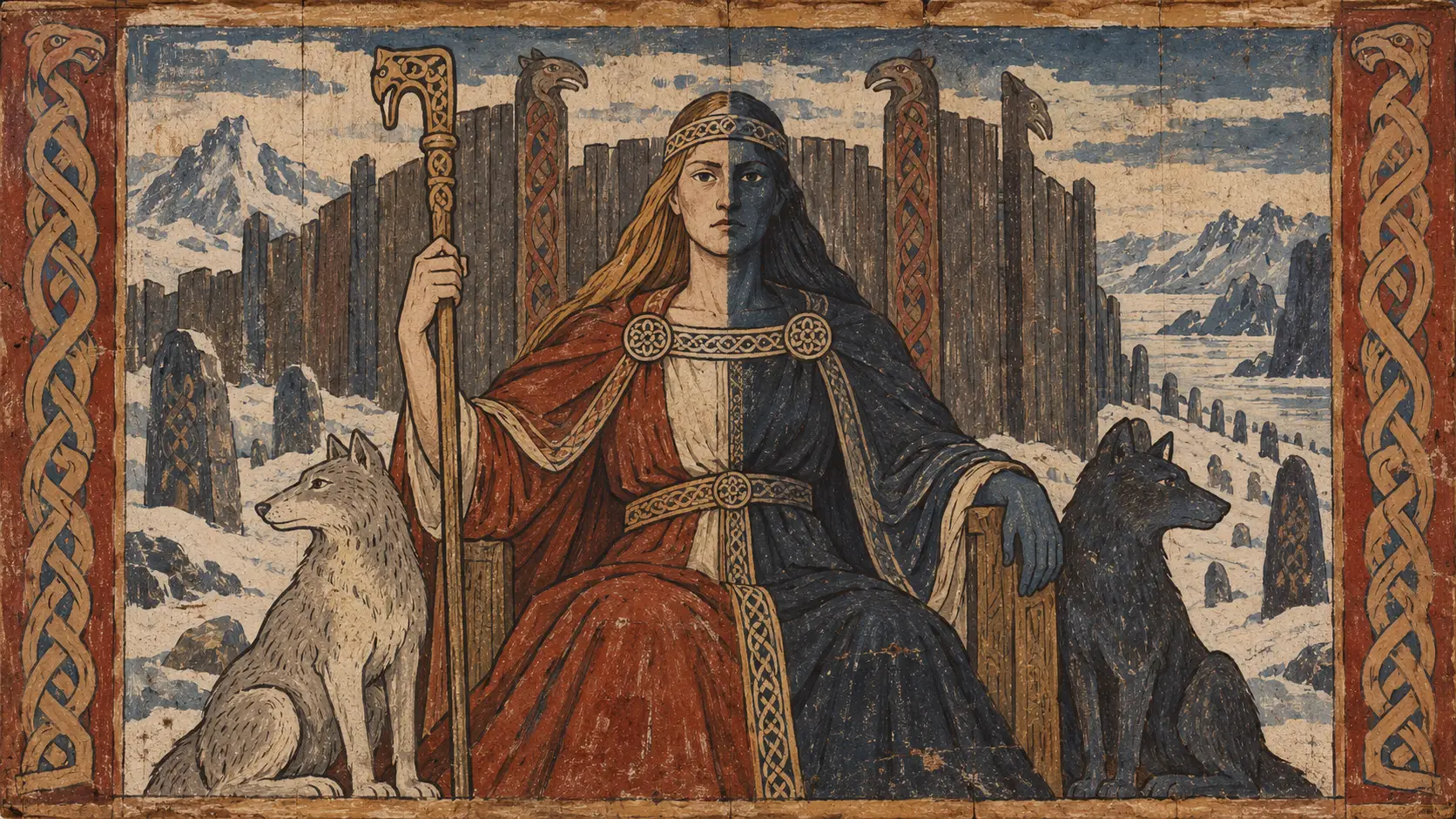
Specialist scholarship, including Frog’s discussion of Hel as a ruler of death, treats the relationship between the place-name and its female agent as a historical problem. The surviving evidence supports both uses, but does not establish precisely when they became joined in the familiar narrative figure.
Name Meaning
Old Norse Hel is related to Germanic words for the abode of the dead, including English hell. This linguistic relationship does not make the Norse realm identical to the Christian concept.
Related words can acquire different religious meanings as the societies using them change.
The conventional etymology connects Hel with a Germanic root associated with covering or concealing. On this interpretation, the name evokes a concealed place or hidden domain.
The association suits an unseen realm of the departed, although that suitability alone cannot prove the derivation.
The etymology is not entirely uncontested. The Danish reference work Lex.dk records a newer proposal involving a Finnic borrowing.
This should be recognized as an alternative scholarly explanation, not substituted for the conventional derivation as though the question had been conclusively resolved.
The shared name also creates difficulties in translation: Hel may mean the ruler or the destination. Helheim, commonly used today for the realm, is not a separate goddess’s name.
Hela occurs in later usage and adaptations, but Hel remains the standard Old Norse form.
Appearance
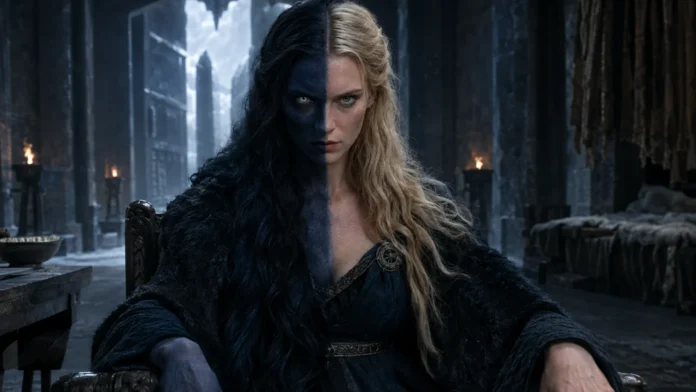
In Snorri’s Gylfaginning, Hel is half blue-black and half flesh-coloured. This contrast is her strongest directly attested visual characteristic.
The same passage gives her a fierce, forbidding aspect, presenting an imposing female figure whose appearance suits her authority over the dead.
The description establishes two contrasting halves, but does not provide a detailed anatomical diagram. A sharply divided face or body is a reasonable artistic interpretation, not a complete portrait supplied by the text.
The exact placement of the colour boundary should therefore remain an illustrative choice.
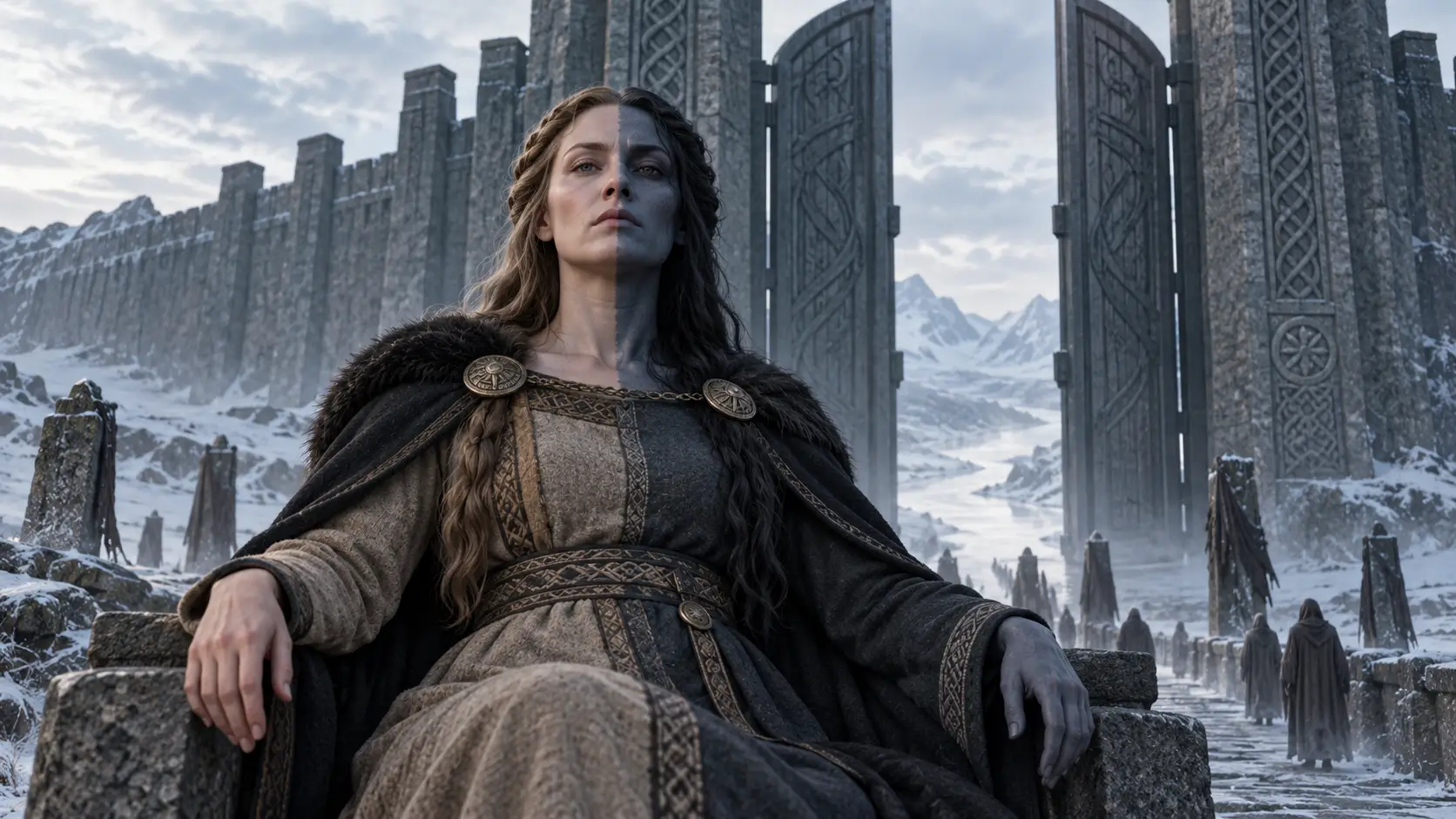
Blue-black colouring can suggest the lifeless body, while flesh colouring suggests ordinary human appearance. Read together, the halves invite an interpretation linking the living and the dead.
That symbolism is an interpretation of the description, however, rather than an explanation explicitly given by Snorri.
The passage does not require horns, exposed bones, or an animal form. Nor does it establish a universal costume or distinctive weapon.
Turning Hel into a skeletal monster or horned devil would replace the surviving description with imagery drawn from different traditions or later invention.
Her surroundings reinforce the portrait. Gylfaginning places her in Niflheim and describes an extensive enclosure with high walls and great gates.
These architectural features express separation and controlled access, but belong to her domain rather than to her bodily appearance.
The household’s objects carry ominous names: her dish is Hunger, her knife Famine, and her bed Disease; its hangings are rendered as Gleaming Bale in the supplied English translation. These furnishings build an atmosphere of deprivation and mortality without turning the realm into a Christian punishment chamber.
Background Story
Hel’s background is shaped by the problem of giving death a place and an authority. The shared name allows the destination of the dead to become a figure who receives them, governs their residence, and can respond when someone asks for their return.
This personification belongs within a varied Norse afterlife landscape. The dead could be associated with divine halls, the sea, or burial mounds as well as Hel.
Modern Norwegian scholarship emphasizes that her realm was not originally equivalent to a place of punishment for moral wrongdoing.
Snorri’s family grouping gives her another narrative context. Hel, Fenrir, and Jörmungandr are linked through parentage and the gods’ apprehension about them, but their roles differ.
Hel’s position concerns the custody of the dead, rather than simply duplicating her siblings’ destructive relationships with the gods.
The Baldr episode reveals why such custody matters. In Gylfaginning, Hermóðr travels to Hel to request Baldr’s release.
Her response makes return conditional upon universal mourning: all things must weep for him. Divine affection alone cannot override the authority governing his continued residence among the dead.
The condition fails when Þökk refuses to weep. Snorri reports the belief that this figure was Loki in disguise.
The episode connects Hel’s authority with the limits of collective action: even the gods’ attempt to recover Baldr depends on a condition they cannot fully enforce.
These stories reach us through a medieval literary framework, not an untouched record of pre-Christian religion. Snorri’s presentation gives Hel a clear genealogy, appearance, household, and jurisdiction.
Those details form a powerful surviving portrait, while leaving the earlier development of the ruler and realm partly unresolved.
Famous Folklore Stories
Hel’s clearest surviving narrative role belongs to the story of Baldr’s death and attempted return. The fullest account appears in Snorri Sturluson’s Gylfaginning.
The heading below describes that episode; it is not an authenticated traditional title for an independent folktale.
Hermóðr’s Ride to Hel and Baldr’s Attempted Return
After Baldr dies, Hermóðr undertakes a journey to the realm of the dead, riding Odin’s horse Sleipnir. He travels through dark valleys and crosses the bridge over the river Gjöll before reaching Hel’s enclosure.
Inside, he finds Baldr occupying a seat of honour.
Hermóðr asks Hel to let Baldr return, explaining the grief his death has caused among the gods. She makes release conditional upon universal mourning: everything, living and dead, must weep for him.
Her answer turns an appeal for mercy into a test of whether that grief is truly shared.
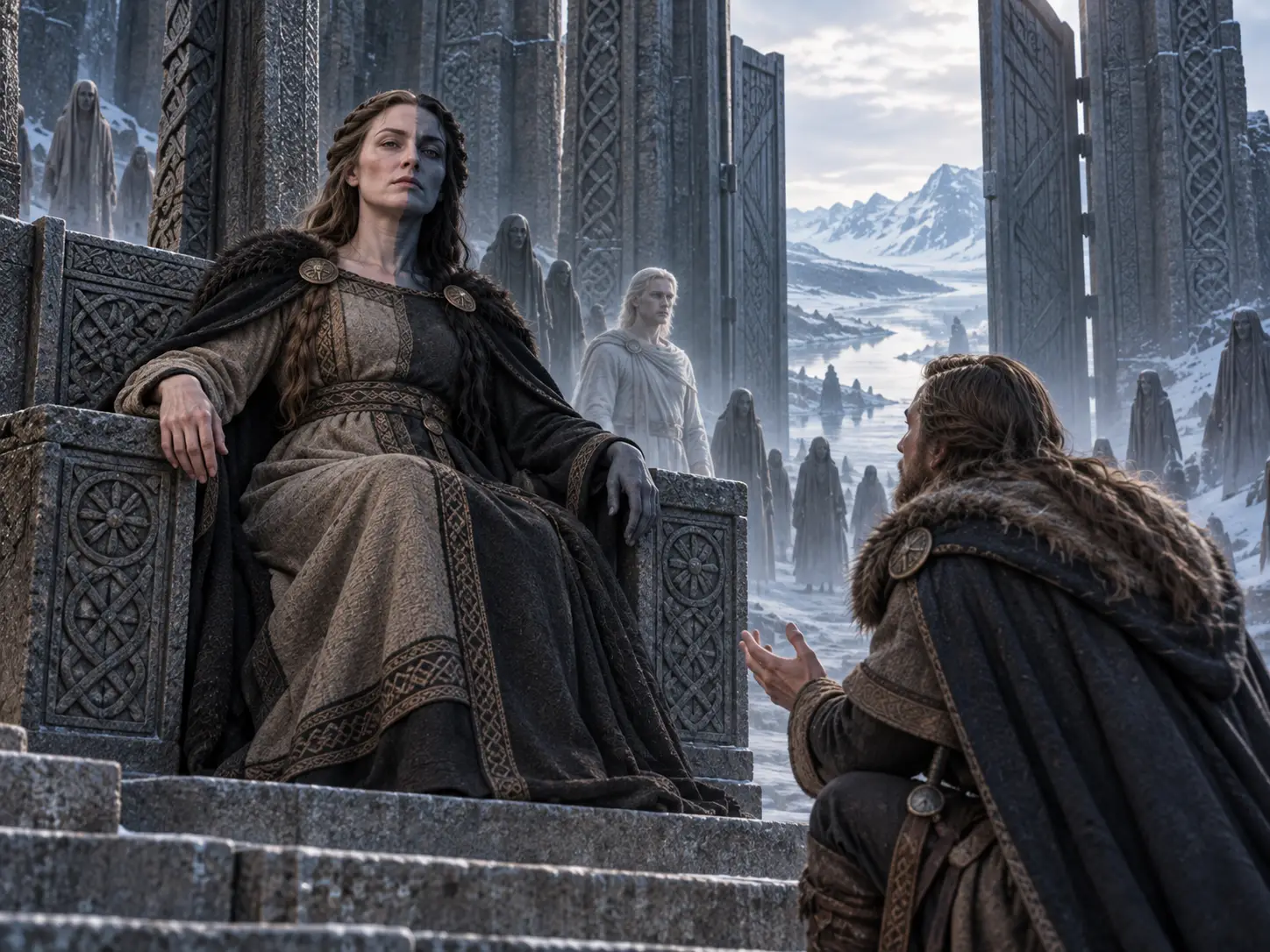
The gods send messengers throughout the world, and the response appears overwhelming until the woman Þökk refuses to weep. Baldr therefore remains with Hel.
Snorri connects Þökk with Loki in disguise, making the failed rescue another expression of Loki’s hostility rather than simply Hel’s arbitrary cruelty.
The episode distinguishes the ruler from her realm even though both bear the same name. Hermóðr travels to Hel as a destination and negotiates with Hel as a person.
It also shows that divine status does not automatically exempt Baldr from the boundary separating the living and the dead.
Cultural Impact
Hel gives death both a location and an agent within surviving Norse mythology. That double identity makes expressions involving her name potentially geographical, personal, or both.
Readers must distinguish a journey into the realm from an encounter with its ruler rather than treating every occurrence as interchangeable.
The Baldr episode expresses the limits of divine power through a failed recovery. Even the gods cannot secure an unconditional return from death.
Universal mourning becomes the measure of Baldr’s importance, while one refusal is enough to prevent restoration, giving the story a striking image of irreversible loss.
The relationship between Old Norse Hel and English hell has also shaped later understanding. Related vocabulary does not establish identical religious meanings.
Reading the Norse realm through familiar Christian punishment imagery can obscure its role as a destination for many dead rather than exclusively for the wicked.
Modern scholarship has consequently questioned the easy classification of Hel as a fully established goddess with a uniform ancient biography. Her significance lies partly in the unresolved relationship between place and personification.
This approach preserves the literary figure without assuming that every surviving detail belonged to shared pre-Christian belief.
Modern entertainment has made the adapted name Hela widely recognisable. Marvel’s comic-book character and the version in Thor: Ragnarok draw upon Norse material but reshape it for their own fictional worlds.
Their visibility should not turn adapted costumes, relationships, or powers into evidence about the medieval Hel.
Similar Beasts
These comparisons concern supernatural roles rather than a shared species or proven historical connection. Hel is a female ruler or personification of a realm, not an animal monster.
Underworld guardians, death-associated deities, and mourning spirits illuminate different aspects of her role while remaining distinct figures.
Cerberus
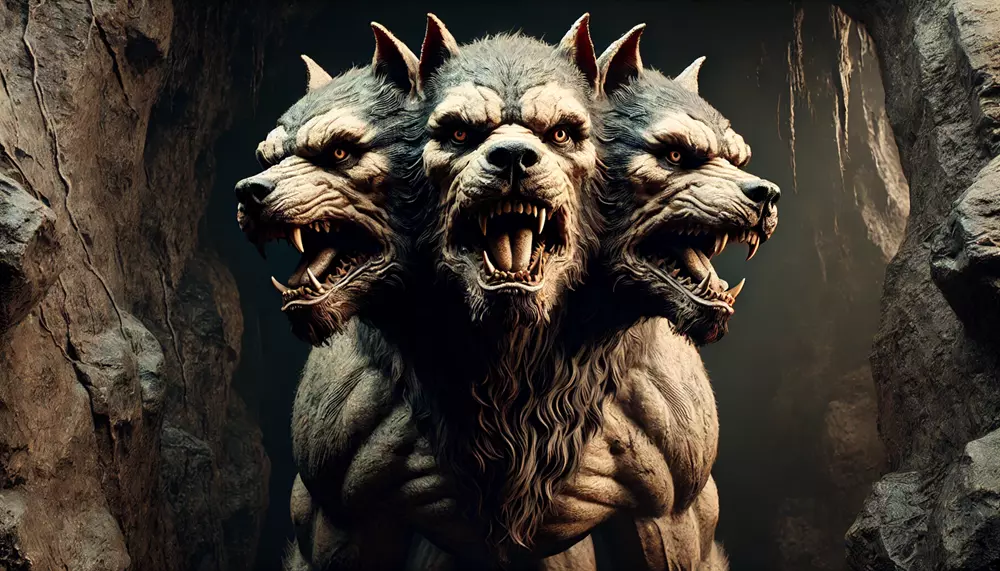
Cerberus is the multi-headed guardian of the Greek underworld, associated with Hades. His role is to prevent the dead from escaping and discourage entry by the living.
Like Hel in the Baldr episode, Cerberus represents a boundary against return from death. He guards that boundary, however, rather than ruling the realm.
Read more about Cerberus
Mórrígan
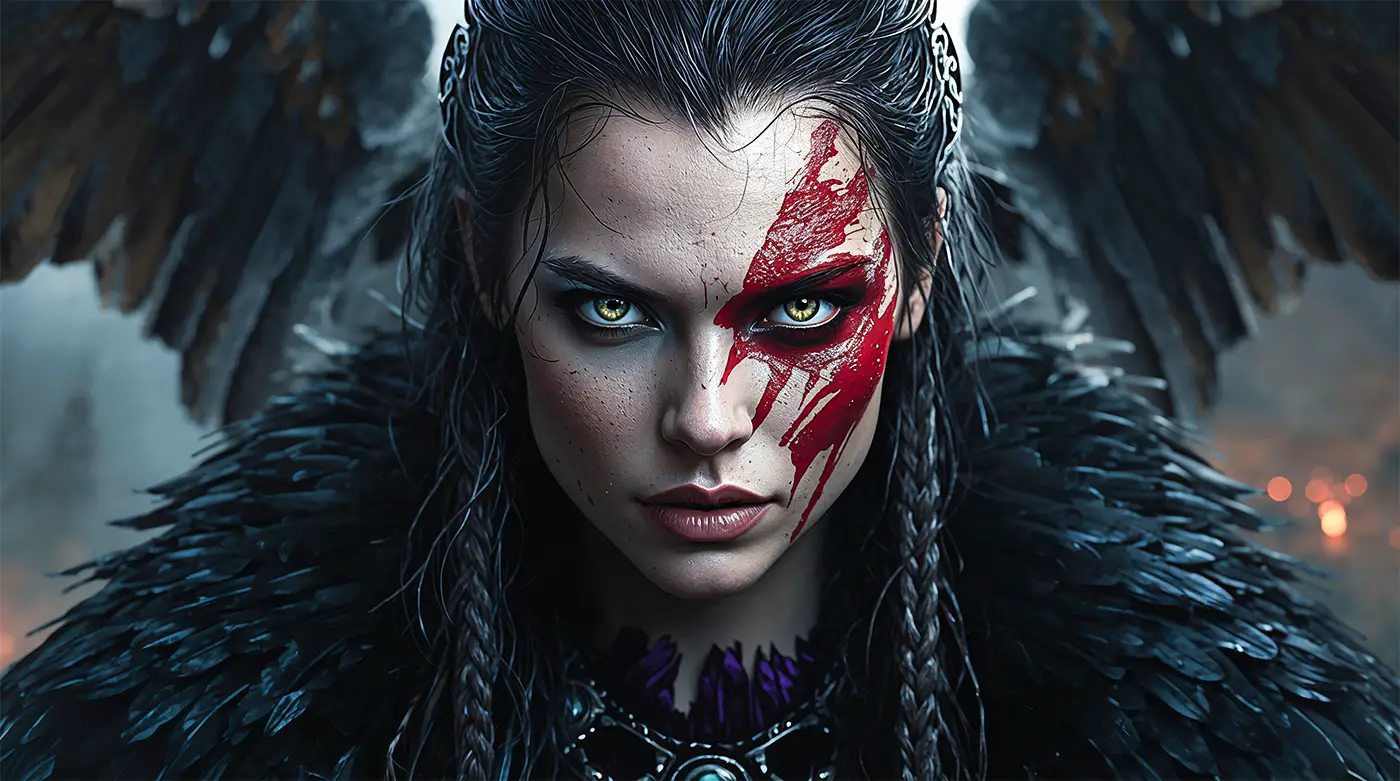
The Mórrígan is a complex figure in Irish mythology associated with war, fate, sovereignty, and death. Her narrative identity extends beyond a single function as a death-associated deity.
Both figures connect female supernatural authority with mortality. The Mórrígan’s battlefield and sovereignty associations differ from Hel’s authority within a destination for the dead.
Read more about Mórrígan
Hades
Hades is the Greek god associated with rule over the underworld. His name can also designate that realm, creating a linguistic overlap between a supernatural ruler and place.
This shared naming pattern closely parallels Hel’s dual identity. It is a comparison of mythological functions, not evidence that the figures are aliases or historically identical.
Religion/Ritual
The evidence supplied here does not establish a specific historical cult, offering system, festival, or rite dedicated to Hel as a female ruler. Her presence in mythological literature is not sufficient proof of organised worship, and the narrative of Baldr’s attempted release should not be treated as ritual instructions.
Her realm nevertheless belongs within a varied Norse religious understanding of death. Other destinations include Valhalla, Fólkvangr, the sea, and burial mounds.
These traditions should not be forced into one universal system, nor should residence in Hel automatically be interpreted as punishment for moral wrongdoing.
Scientific or Rational Explanations
Hel is a mythological and religious figure, not a reported animal species. Zoological identification therefore offers no useful explanation of her identity.
The relevant questions concern language, literary transmission, religious history, and the ways a destination for the dead could acquire a recognisable ruling personality.
One scholarly question is whether the female ruler developed through personification of the realm. Frog’s discussion of Hel as a ruling agent examines this relationship rather than assuming an independent goddess must always have preceded the place-name.
The possibility remains an interpretation of historical development, not a demonstrated origin story.
Shared naming alone cannot settle that question. A place may acquire a personified ruler, but a ruler’s name can also become associated with a domain.
Establishing the direction requires attention to the age, wording, and context of surviving evidence rather than reasoning solely from the later narrative.
Source criticism is especially important because the most detailed account survives in a Christian-era literary work. Snorri organised inherited mythological material for medieval readers.
His presentation may preserve older traditions while also arranging, explaining, or reshaping them, so narrative coherence is not proof of uniform earlier belief.
A related interpretive problem is the projection of Christian hell onto Norse Hel. Similar vocabulary can encourage readers to import eternal punishment and demonic imagery into passages that do not require them.
Separating these religious frameworks makes the evidence clearer without denying that later transmission occurred within Christian societies.
The Baldr story also supports a literary reading centred on grief and the difficulty of reversing death. Hel’s condition makes restoration depend upon unanimous acknowledgement of loss.
This explains the episode’s narrative force, but it does not prove that the story originated as a psychological allegory or prescribed mourning practice.
Modern Cultural References
Thor: Ragnarok, film (2017)
Marvel Studios’ film presents Hela as a central threat to Asgard. This cinematic adaptation draws on Hel’s name and association with death while substantially changing her mythological identity.
(marvel.com)
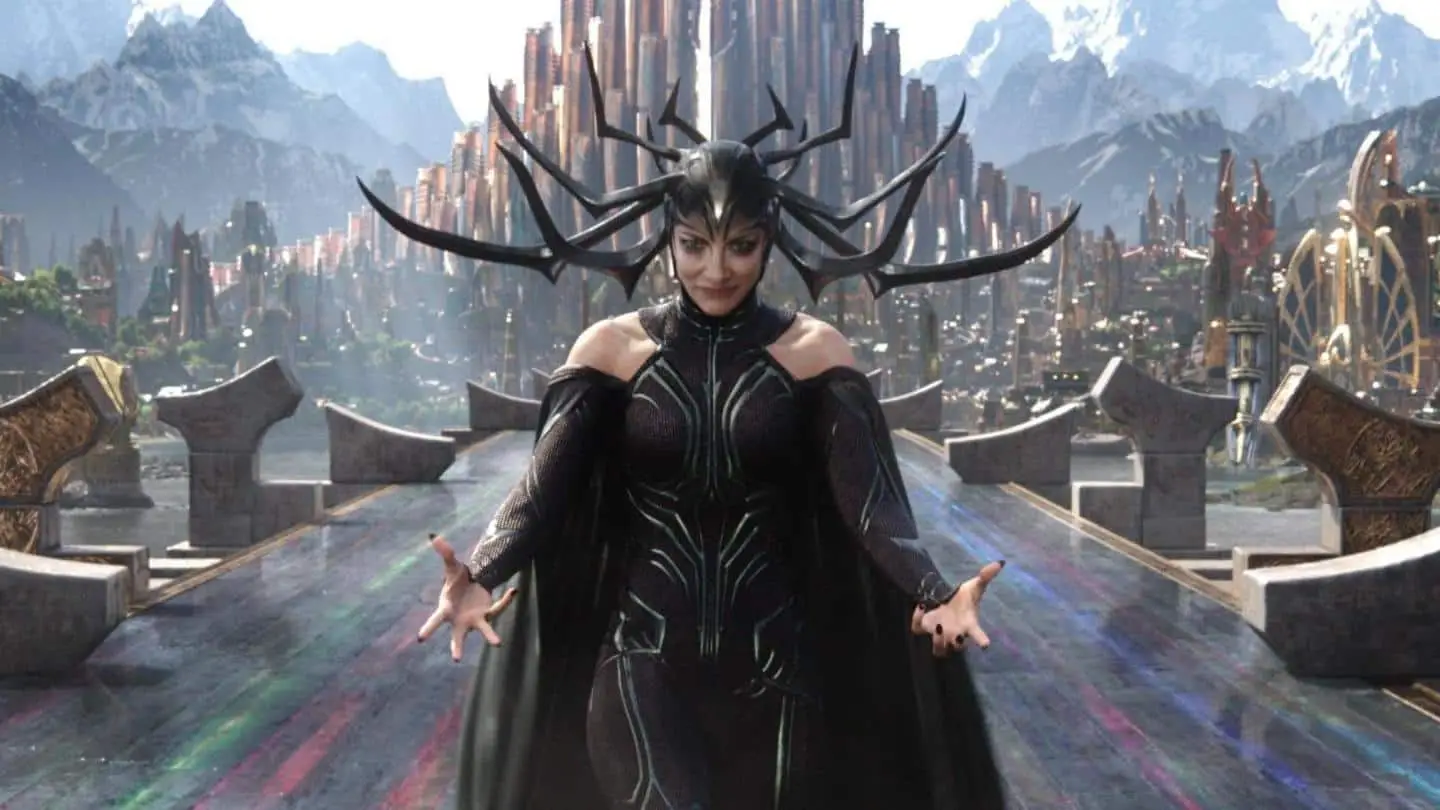
Marvel Comics Hela, comic-book character (1964)
Hela first appeared in Journey into Mystery #102 and became a recurring Marvel character.
Her connection to Hel and its dead transforms Norse material into superhero fiction.
(marvel.com)
Dark Currents, novel (2012)
Jacqueline Carey’s first Agent of Hel novel introduces a contemporary fantasy setting presided over by Hel.
The goddess’s authority becomes part of an invented supernatural community.
(penguinrandomhouse.com)
Poison Fruit, novel
Jacqueline Carey’s Agent of Hel series continues with a conflict involving the goddess’s sovereignty. Hel functions within an original fantasy narrative rather than a retelling of medieval mythology.
(penguinrandomhouse.com)
Immortal Battlegrounds: Hel card illustration, artwork
David Sanhueza created this Hel illustration for the strategy game Immortal Battlegrounds.
The artwork explicitly portrays the Norse figure, documenting her adaptation into contemporary fantasy gaming imagery.
(sanhueza.artstation.com)
Age of Pantheons: Hel, artwork
Federica Costantini’s portfolio presents a depiction of Hel created for Age of Pantheons.
The image treats the Norse goddess as the direct subject of contemporary mythological art.
(federicacostantini.artstation.com)
Conclusion
Hel occupies a distinctive position in Norse mythology because her name identifies both a realm of the dead and its female ruler. That shared identity connects a destination beyond life with an agent who exercises authority over it.
Snorri’s Gylfaginning supplies the fullest surviving portrait, including her divided colouring and her role in Baldr’s attempted return. These details make her memorable, but their medieval literary setting remains essential when distinguishing the surviving account from the varied beliefs of earlier communities.
Her symbolic importance rests less on punishment than on the boundary between the living and the dead. The failed effort to recover Baldr gives that boundary narrative force, while the existence of other afterlife destinations prevents Hel from representing every Norse experience of death.
Modern fiction and art continue to reinterpret her authority and appearance. Appreciating those adaptations requires keeping them separate from traditional evidence, and recognising that the historical relationship between the named realm and its personified ruler remains a question rather than a settled origin story.
Further Reading
Gylfaginning, Snorri Sturluson, Internet Sacred Text Archive
English translation of the medieval account underlying Hel’s genealogy, divided colouring, household, and authority over the dead.
Includes Hermóðr’s journey and the failed attempt to recover Baldr.
Source
Hel, Store norske leksikon
Norwegian encyclopedia overview of Hel and the realm of the dead, with context for Baldr’s story and the distinction between Norse afterlife traditions and later punishment imagery.
Source
Hel, Lex.dk
Reference entry addressing the shared name of ruler and realm, alongside competing etymological proposals. Useful for understanding why the name’s derivation requires careful qualification.
Source
Retrospect and Prospect in the Study of Old Norse Mythology and Religion, University of Helsinki
Specialist research collection containing discussion of Hel as both a realm and a ruling agent.
Provides context for the debated historical development of her personified identity.
Source
Hel, Encyclopedia Mythica
Accessible reference entry covering the ruler, her realm, and the Baldr episode. Includes passages from Gylfaginning and references to eddic and skaldic material for further exploration.
Source
The Origin of Hela, Goddess of Death, Marvel
Official background on Marvel’s comic-book Hela, who first appeared in Journey into Mystery #102 in 1964.
Documents a superhero adaptation rather than evidence for medieval Norse belief.
Source
Agent of Hel, Jacqueline Carey, Penguin Random House
Publisher’s guide to the fantasy series beginning with Dark Currents (2012).
Its contemporary setting places Hel within an invented supernatural community, distinct from the surviving medieval narratives.
Source
Immortal Battlegrounds: Hel Card Illustration, David Sanhueza, ArtStation
Artist’s portfolio entry for a Hel illustration created for the strategy game Immortal Battlegrounds.
Documents a specific modern visual adaptation of the Norse figure.
Source