Introduction
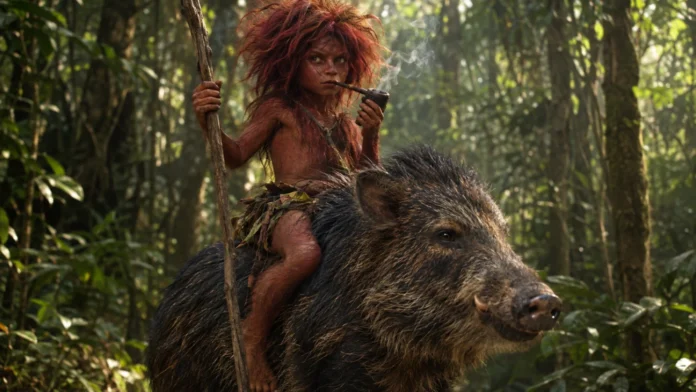
Caipora is a forest spirit in Brazilian folklore, best known for protecting wild animals and confronting people who threaten them. Often described as a humanoid guardian, the figure belongs to traditions in which entering the woods means encountering powers beyond ordinary human control.
Reference works commonly associate Caipora with misleading hunters, frustrating their pursuits, and defending the forest. A wild-pig mount is a recurring feature, but neither that image nor any single physical description defines every account.
Size, gender, coloring, and temperament vary considerably between sources.
The tradition extends beyond the Amazon. Southern Brazilian literature and rural testimony from Paraná preserve distinctive accounts, while contemporary educational publications introduce Caipora to children throughout Brazil.
These sources reveal a figure that can be protective, frightening, mischievous, or closely associated with persistent misfortune.
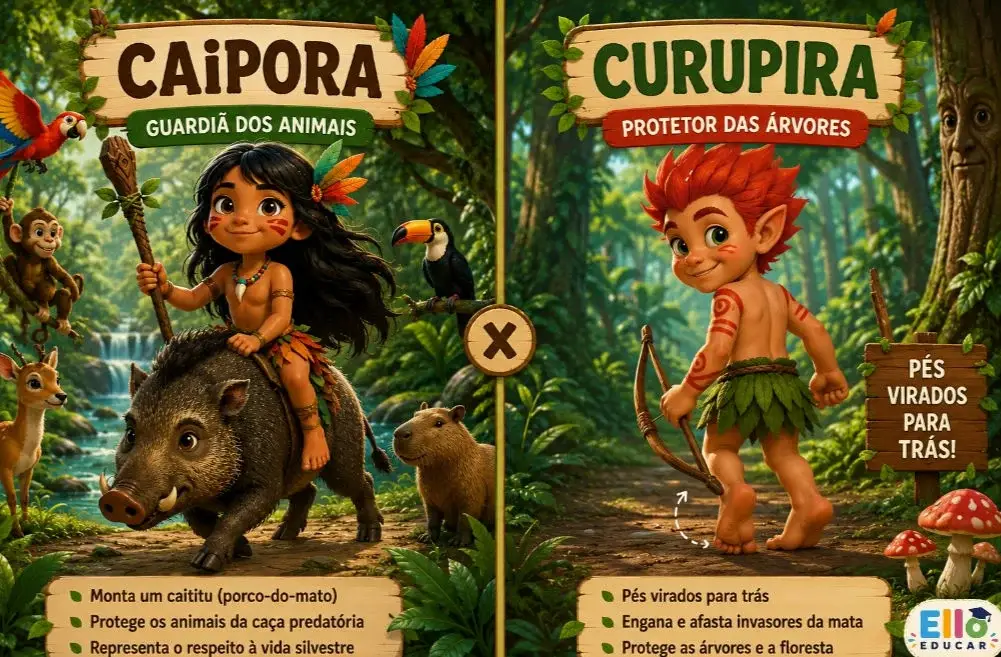
Caipora also overlaps with Curupira, another Brazilian forest guardian. Some accounts confuse or combine them; others distinguish them clearly.
Understanding Caipora therefore requires attention to local descriptions rather than treating Brazilian folklore as a single system with fixed characters, appearances, and rules.
History/Origin
Caipora’s name has a Tupi linguistic foundation, connecting the figure to Brazil’s Indigenous cultural inheritance. That connection does not establish a precise beginning for every surviving belief.
The available records support an Indigenous-rooted tradition, but not one securely dated origin narrative shared across Brazil.
An important historical witness is Lendas do Sul, published in 1912. Its account of the Caapora preserves a southern version markedly different from the small guardian familiar in many educational summaries.
Here the spirit is a giant, hairy male associated with wild-pig herds and misfortune.
This literary record matters because it demonstrates that variation is not simply a recent invention by illustrators or entertainment producers. A substantially different Caapora already appeared in an early twentieth-century regional folklore collection.
Nevertheless, its literary presentation should not be mistaken for an unchanged transcription of ancient belief.
Rural oral evidence adds another perspective. The study Crendices populares paranaenses: o caso do caipora, published in Boitatá, examines material from 130 rural informants recorded through the Atlas Linguístico do Paraná.
It places Caipora within documented regional speech and belief rather than only within literary collections.
Contemporary ethnographic work also addresses Caipora-related encounters in Bahia. The Mana article Comendo com(o) Caipora examines local understandings in the sertão, broadening the evidence beyond familiar forest illustrations.
Together, these regional sources show that the figure belongs to several cultural settings, not exclusively to Amazonian storytelling.
Later educational treatments, including Ciência Hoje das Crianças and the Chamber of Deputies’ Plenarinho resource, foreground the forest-protector role. They make the tradition accessible to new audiences, but should be read alongside regional records whose emphasis may fall more heavily on fear, hunting failure, or bad luck.
Name Meaning
Caipora is commonly explained as a Tupi-derived name meaning “inhabitant of the forest” or “inhabitant of the bush.” Ciência Hoje das Crianças gives the latter interpretation.
These translations express the same central association: a being whose place of residence is the wooded landscape.
The usual explanation connects the name with elements conventionally rendered as ka’a, referring to forest or vegetation, and pora, referring to an inhabitant. English “bush” here means wooded or uncultivated country, not merely an individual shrub.
“Forest dweller” is therefore a useful concise translation.
Caapora and Kaapora are documented spelling variants, while Lendas do Sul uses the accented form Caapóra. Different written forms should not automatically be treated as names for separate creatures.
In these sources, they identify related traditions even when the descriptions attached to them differ.
The word also acquired a Brazilian Portuguese association with bad luck, reflected in lexicography and the southern folklore account. This later sense differs from the forest-dweller etymology.
It connects the spirit’s name with the misfortune supposedly suffered by someone who encounters it.
Appearance
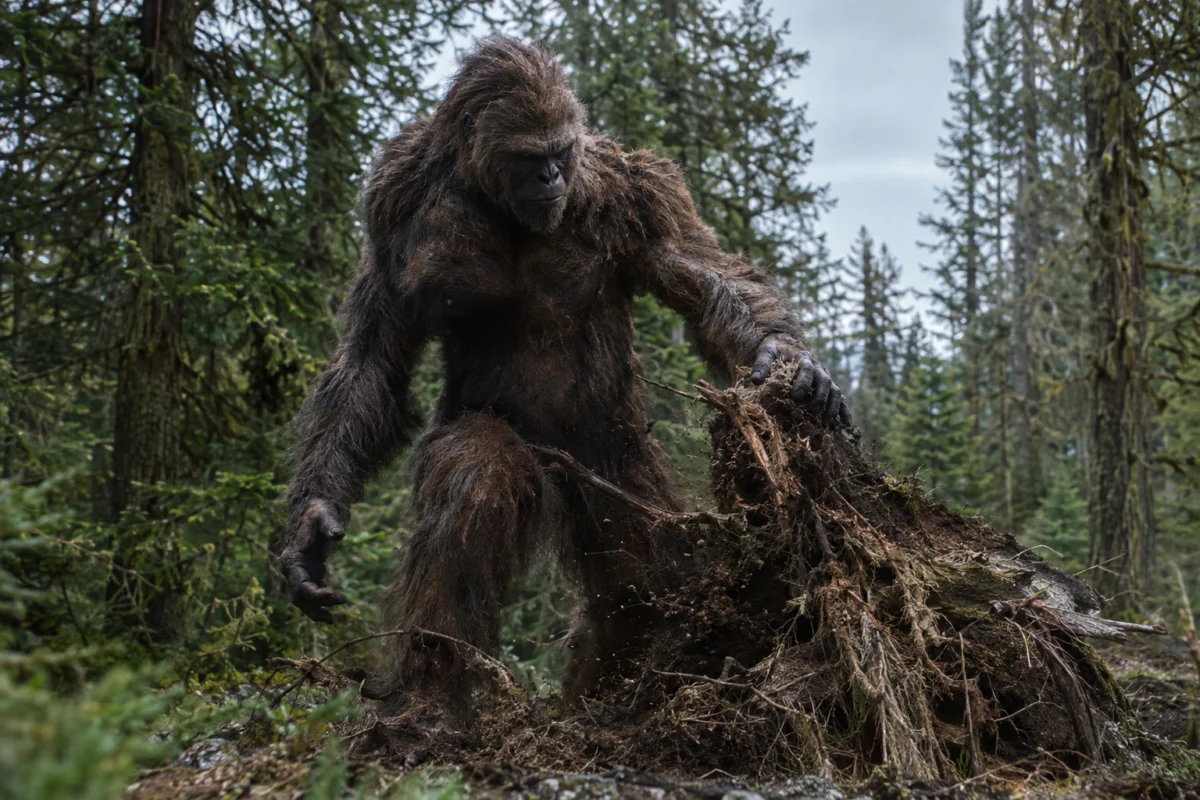
Caipora is generally humanoid rather than an animal-human hybrid, but the body is far from standardized. Widely circulated descriptions present a small forest figure with a hairy or wild-looking appearance.
Other accounts make the spirit large or gigantic, changing its visual character considerably.
Escola Kids summarizes versions that differ in gender, stature, and coloring, including the small Indigenous woman with red hair familiar from many retellings. Such descriptions belong to particular portrayals.
They are not evidence for one universal appearance, costume, or representation of Indigenous peoples.
Ciência Hoje das Crianças offers a particularly distinctive version: a small, hairy, red-skinned Caipora with one eye. The one-eyed feature should remain attached to that account rather than becoming a defining characteristic.
Other sources in the briefing do not consistently repeat it.
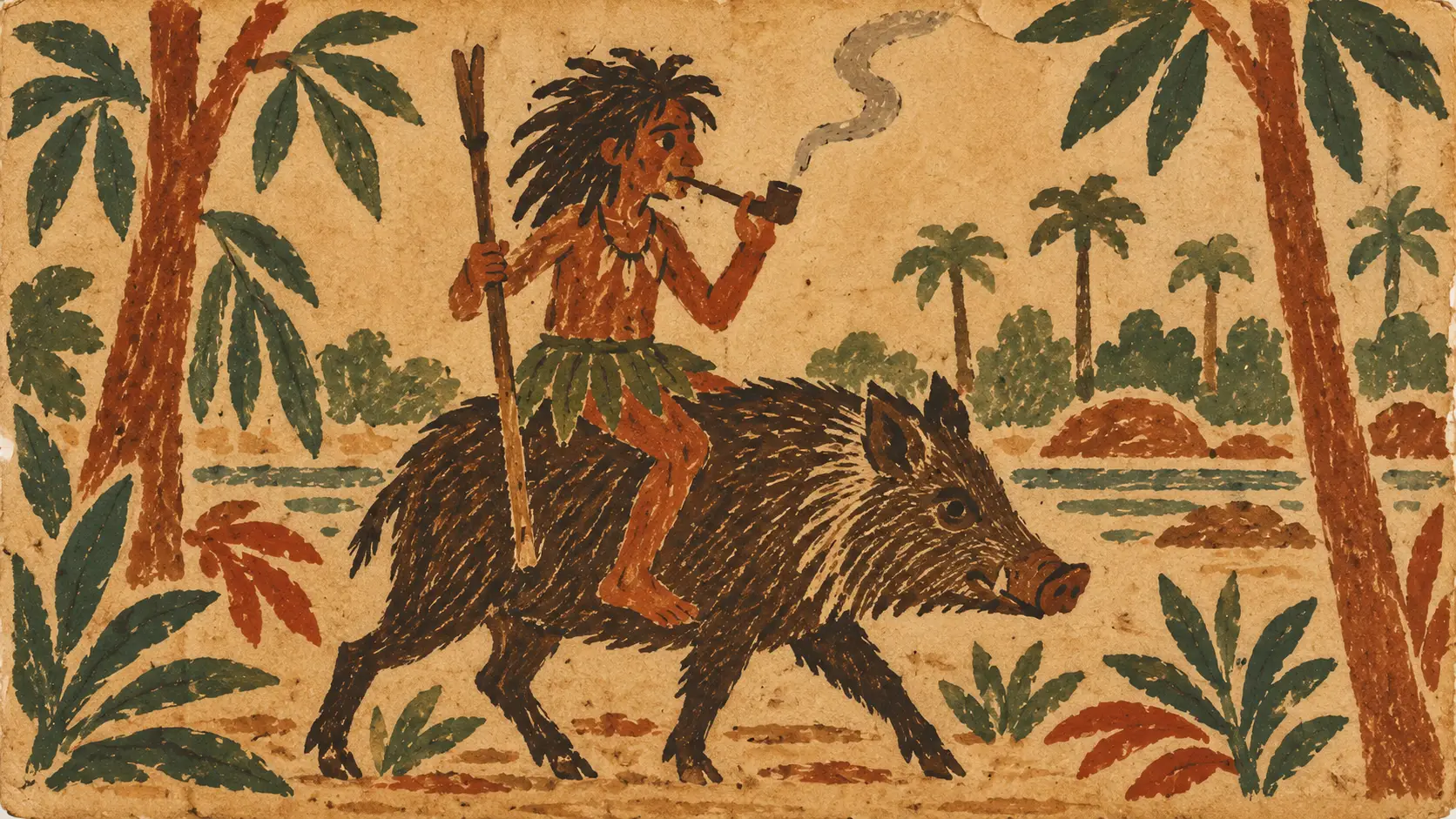
In contrast, the Caapora of Lendas do Sul is a giant, hairy, melancholy male spirit. This is not merely a larger version of the cheerful guardian sometimes imagined for children.
His imposing body and somber characterization accompany a threatening association with enduring bad luck.
The wild pig, also described in summaries as a peccary, supplies one of the most recognizable recurring images. Plenarinho and Escola Kids include the mounted figure, while Lendas do Sul links him with entire pig herds.
The animal connection is better established than any fixed hair color.
A staff and smoking pipe appear in some descriptions, complementing Caipora’s tobacco association. Escola Kids also records a one-footed version, another non-universal trait.
Curupira’s famous backward-facing feet should not be transferred automatically to Caipora simply because the two guardians sometimes overlap in popular accounts.
Background Story
Caipora’s background is a network of relationships between people, animals, and places rather than a personal biography. Hunting is central to that network.
The forest contains resources people seek, but the guardian introduces another authority capable of resisting, restricting, or overturning human intentions.
In protective accounts, animals are not entirely at the hunter’s disposal. Caipora can interfere with pursuit or punish harmful conduct.
One documented explanation allows hunters a day’s reprieve after a tobacco offering, provided they avoid pregnant females. Permission is conditional, rather than an unrestricted right to kill.
These motifs lend themselves to an environmental interpretation, especially where animal reproduction receives explicit protection. However, the guardian should not be reduced to a modern conservation mascot.
Tobacco exchanges, supernatural authority, and fear of misfortune belong to a more complex relationship with the woods.
The southern account makes that complexity especially clear. Its Caapora commands pig herds, but an encounter also causes unsuccessful hunting or fishing and everyday losses.
The narrative extends beyond protecting particular animals: contact with the spirit can disturb a person’s wider livelihood and ordinary good fortune.
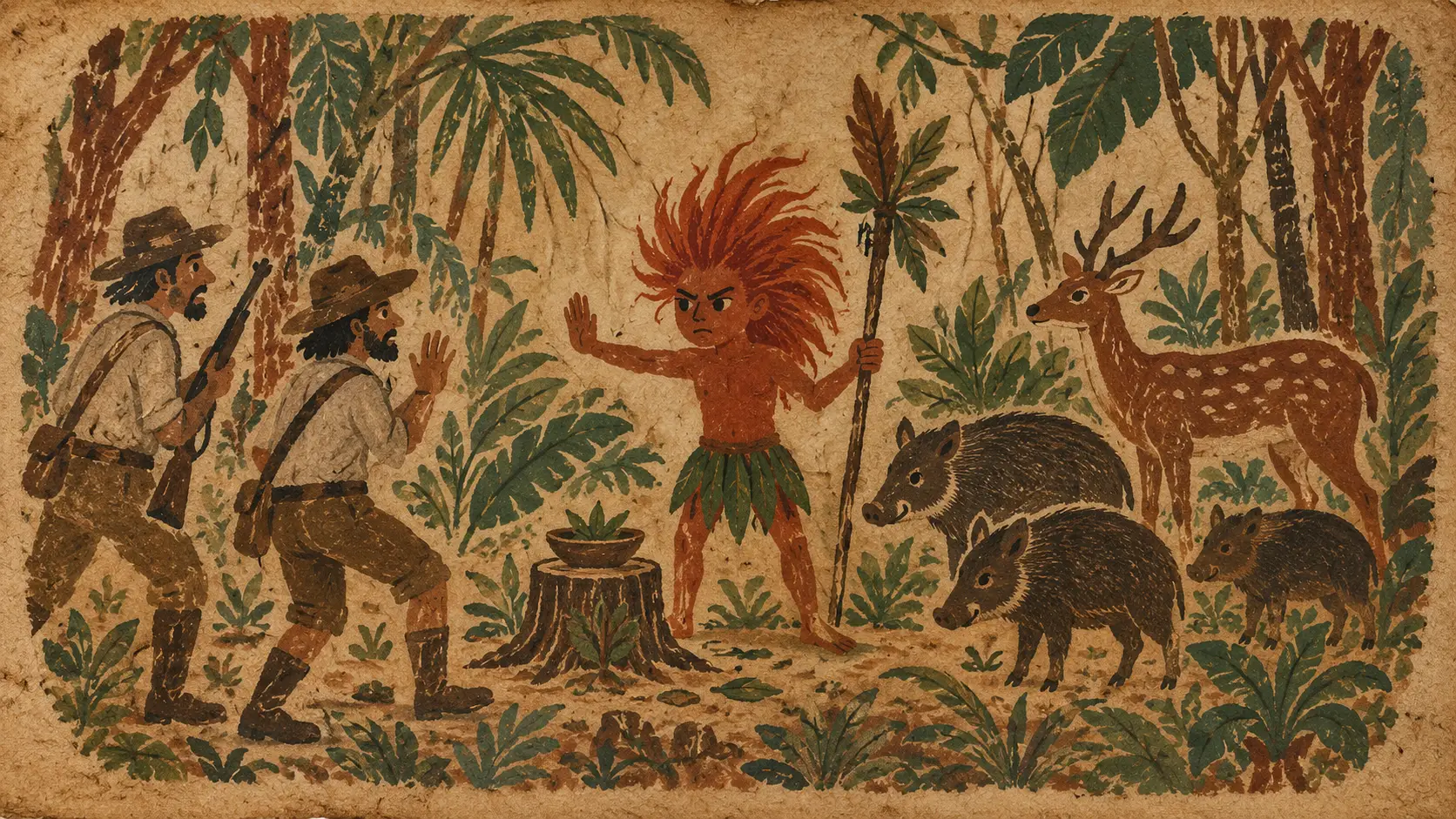
The children’s narrative in Ciência Hoje das Crianças reshapes the emphasis. Caipora senses disorder and rides out, while the boy Cauê retreats to his village and promises not to wander away again.
The episode connects forest authority with boundaries, caution, and a child’s relationship to his community.
The overlap with Curupira further helps explain Caipora’s changing identity. Shared forest-protection roles make the figures easy to combine, while regional narratives preserve distinctions.
Read together, literary collections, rural testimony, and educational retellings reveal continuing reinterpretation without requiring an invented genealogy or a single foundational story.
Famous Folklore Stories
Caipora survives through regional encounter accounts, warnings, and educational retellings rather than one continuous narrative. The examples below include a southern literary record and a children’s narrative.
Their subsection headings are descriptive labels, not authenticated titles of traditional folktales.
The Southern Encounter and Lasting Misfortune
The Caapora passage in the 1912 collection Lendas do Sul presents a giant, hairy, melancholy spirit who commands wild-pig herds and rides one of the animals. This regional account emphasizes the consequences of encountering him, rather than a confrontation ending in a hunter’s escape.
Meeting Caapora brings misfortune that extends beyond the forest. The affected person becomes unsuccessful at hunting or fishing and experiences ordinary mishaps, including losing things.
The encounter therefore explains a continuing condition of bad luck, not merely the failure of one expedition.
This account differs from versions in which Caipora primarily punishes excessive hunting or accepts an offering. Its emphasis falls on the dangerous encounter itself.
As a published regional folklore record, it preserves a particular interpretation, not a rule applying to every Brazilian tradition.
The Boy Who Retreats from the Forest
Ciência Hoje das Crianças presents a narrative episode involving the boy Cauê. Caipora detects disorder in the forest and sets out on a wild pig.
Sensing the guardian’s approach, the frightened boy retreats to his village rather than remaining in the woods.
Cauê promises not to wander away from his people again. The episode places a child’s response at its center, making the approaching guardian a warning about leaving familiar surroundings.
It does not reproduce the southern account’s pattern of misfortune following someone throughout life.
This is a documented children’s retelling, not evidence that Cauê belongs to an ancient, widely shared tale cycle. Its educational framing matters: Caipora’s presence connects forest protection with a lesson about safety, while the southern record stresses an encounter’s enduring consequences.
Cultural Impact
Caipora gives the forest a presence capable of answering human intrusion. In hunting traditions, animals are not simply available for unrestricted taking: a supernatural guardian can obstruct pursuit.
This cultural meaning joins practical encounters with wildlife to questions of permission, restraint, and consequences.
The figure also left a mark on Brazilian Portuguese. Michaelis records the association of caipora with an unlucky person or bad luck.
The southern encounter account illustrates that connection narratively, although it cannot by itself establish when or how the colloquial meaning developed.
Published collections such as Lendas do Sul carried regional beliefs into literary circulation. Their value includes preserving versions that differ from familiar schoolbook images.
The giant, melancholy Caapora shows why the historical record should not be reduced to a single standardized national character.
Brazilian educational institutions continue to present Caipora as part of the country’s folklore. Plenarinho, the Chamber of Deputies’ children’s resource, and Ciência Hoje das Crianças introduce the figure to young readers.
Their presentations make forest guardianship accessible while selecting particular details from a variable tradition.
Modern scholarship approaches these beliefs as subjects of linguistic and ethnographic research. The Paraná informant study and the Mana article concerning encounters in Bahia extend attention beyond illustrated folklore summaries.
Modern conservation readings are useful interpretations, but should not replace the meanings expressed in individual communities.
Similar Beasts
Curupira
Curupira is another Brazilian forest guardian associated with protecting animals. Folklore presentations sometimes distinguish him from Caipora, while also acknowledging that the two figures are frequently confused.
Their strongest connection is shared guardianship and interference with hunters. Nevertheless, overlap between traditions does not make Curupira an automatic alternative name for Caipora.
Ghillie Dhu

The Ghillie Dhu is a solitary forest spirit in Scottish folklore, described as clothed in moss and kind to children. Woodland surroundings are central to his identity.
Like Caipora, he gives the forest a humanoid supernatural presence. His kindness contrasts with Caipora’s capacity to frighten visitors or bring misfortune in some accounts.
Read more about Ghillie Dhu
Green Man

The Green Man is a figure associated with nature and rebirth, commonly represented as a face surrounded by leaves. His recognizable form combines human features with vegetation.
The comparison concerns the personification of nature, not a shared narrative tradition. Unlike Caipora’s hunting encounters, the supplied Green Man description is primarily symbolic and visual.
Adnei haSadeh

The Adnei haSadeh are feral humanoids in Hebrew lore, living apart from civilization. They embody wilderness and isolation through a humanlike existence outside ordinary settled society.
They resemble Caipora’s hairy humanoid variants through their wilderness association. However, that resemblance does not establish the same animal-protecting role or any historical relationship between traditions.
Comadre Fulozinha
Comadre Fulozinha is a distinct forest entity associated with northeastern Brazil. Regional accounts connect her with protecting the woods and acknowledge confusion between her identity and Caipora’s.
Her comparison rests on an explicitly documented regional overlap in guardianship. Similar functions can encourage identification, but the names should not be treated as universally interchangeable.
Religion/Ritual
The clearest ritual evidence concerns tobacco offerings made by hunters. Brazilian folklore resources describe tobacco being left for Caipora, sometimes near a tree trunk.
The offering belongs to accounts of negotiating passage or hunting success in a forest understood to have a supernatural guardian.
One recorded version makes the arrangement conditional: Caipora spares the hunter for the day provided that pregnant females are not hunted. This combines an offering with a restriction on taking animals.
It should remain identified as one version, not a universal hunting code.
Tobacco’s appearance as an offering connects with the smoking motif found in some descriptions of Caipora. The record supports that association, but does not establish a single prescribed quantity, spoken formula, officiant, or ceremony.
Such details cannot be supplied from the general motif alone.
These sources document local belief and folk practice rather than one standardized religion organized around Caipora. The ethnographic material concerning Bahia reinforces the importance of local encounters and understandings.
A national folklore summary cannot substitute for evidence about how a particular community observes these practices.
Scientific or Rational Explanations
The available evidence establishes Caipora as a documented folkloric being, not a zoologically identified species. Literary records, educational accounts, and interviews demonstrate that people describe and discuss the spirit.
They do not provide biological evidence for a forest humanoid matching those descriptions.
The study Crendices populares paranaenses: o caso do caipora examines material supplied by 130 rural informants through the Atlas Linguístico do Paraná. Its evidence concerns reported beliefs and descriptions.
Such research helps document the tradition’s distribution and variation without turning testimony into zoological confirmation.
An environmental interpretation is possible where accounts discourage hunting pregnant females or describe interference with hunters. These motifs can express limits on exploiting wildlife.
That reading follows the documented restrictions, but does not prove that the tradition originated as a deliberate system of conservation.
The southern misfortune account supports a different interpretive emphasis: Caapora provides a narrative explanation for repeated failure and everyday losses. This is an analysis of what the story does.
The source does not establish a psychological diagnosis or a natural cause for every reported encounter.
The Mana study of Caipora-related encounters in Bahia adds an ethnographic perspective centered on local understandings. Regional testimony is therefore important alongside printed tales.
A careful rational discussion distinguishes cultural meaning from biological verification without reducing every account to either an animal misidentification or an invented story.
Modern Cultural References
Caipora appears in animated television, Brazilian children’s programming, independent games, and poetry. These adaptations select different aspects of the tradition, especially forest guardianship.
Their character designs and storylines belong to particular creative works, rather than establishing a single authoritative version of the spirit.
Legend Quest: Masters of Myth: “Caipora”, animated television episode (2019)
This Netflix animated adventure features the team hunting Caipora in Brazil.
The episode identifies the being as a jungle protector, adapting forest guardianship into its supernatural adventure format.
https://www.imdb.com/title/tt11074376
Castelo Rá-Tim-Bum, television series (1994–1997)
TV Cultura’s children’s series includes a recurring Caipora character portrayed by Patrícia Gaspar.
The broadcaster’s anniversary publication documents this appearance, connecting Brazilian folklore with children’s television.
https://www.imdb.com/title/tt0331732
Caapora Adventure – Ojibe’s Revenge, video game
Vortex Games presents an adventure built around Brazilian mythology, documented through its Steam listing.
Its title uses the Caapora spelling, placing the name within contemporary interactive entertainment.
(store.steampowered.com)
Caipora Jump, video game
This independent game makes Caipora its protagonist, depicted as a small, red-haired Indigenous girl.
Her protection of forest animals directly adapts the guardian role described in folklore.
(ivo-the-hedgehog.itch.io)
Caipora, a Guardiã das Florestas, video game
Théo Fazion dos Santos presents a new Caipora story in a world damaged by human actions.
The premise connects the forest guardian with a contemporary environmental narrative.
(theofazion.itch.io)
A Voice in the Woods, podcast episode (2020)
This episode of The Cryptonaturalist includes a “Hidden Lore” poetry segment.
Its transcript preserves Holly Day’s poem “Caipora,” making the folkloric figure a direct subject of contemporary poetry.
(static1.squarespace.com)
Conclusion
Caipora’s importance lies less in a fixed appearance than in the relationship the spirit expresses between people, animals, and the forest. Across the accounts considered here, hunting and forest travel bring humans into contact with a power they cannot simply control.
Protection, misdirection, offerings, and misfortune belong to that relationship, although their details vary. The small guardian of familiar retellings and the giant, hairy figure of southern tradition should therefore remain distinct expressions of a varied folklore, not competing claims to one definitive portrait.
The tradition is well documented, but its documentation does not produce a universal biography, standardized ritual, or zoological identity. Regional narratives, educational presentations, and studies of local belief reveal different emphases, including an uneven relationship with Curupira.
Modern television, games, and poetry continue to reshape those inherited materials for new audiences. Read together, these sources show why Caipora remains culturally significant: the figure gives narrative form to limits on human conduct in the woods while retaining the diversity of Brazilian storytelling.
Further Reading
O Caapóra, Lendas do Sul via Wikisource
A southern Brazilian folklore account describing a giant, hairy, melancholy Caapora who commands wild-pig herds and rides a pig.
Encounters bring lasting misfortune, including unsuccessful hunting and fishing.
Source
Crendices populares paranaenses: o caso do caipora, Boitatá
A study of Caipora beliefs and descriptions drawn from 130 rural informants recorded through the Atlas Linguístico do Paraná.
Useful evidence for regional variation and orally reported tradition.
Source
Comendo com(o) Caipora: Encontros que “encantam” o sertão na Bahia, Mana
An academic examination of Caipora-related encounters and local understandings in Bahia.
Its ethnographic perspective broadens the discussion beyond familiar illustrated accounts of a forest guardian.
Source
O Caipora, Ciência Hoje das Crianças
A children’s retelling in which Caipora detects disorder in the forest and rides out on a wild pig.
The frightened boy Cauê returns to his village and promises not to wander away again.
Source
Personagens do folclore brasileiro, Plenarinho
The Brazilian Chamber of Deputies’ educational resource summarizes Caipora’s regional variation, wild-pig mount, tobacco offerings, and relationship with Curupira.
A useful introduction to widely circulated folklore motifs.
Source
Caipora: o que diz a lenda e as versões existentes, Escola Kids
An accessible overview of differing Brazilian portrayals, including variations in size, gender, and appearance.
It also discusses animal protection and the pig-riding figure without establishing one universal description.
Source
Caipora, Michaelis
A Brazilian Portuguese dictionary entry useful for the word’s association with an unlucky person or bad luck. It complements folklore accounts in which encountering Caapora causes continuing misfortune.
Source