Introduction
The Borrego Sandman is a Bigfoot-like creature of Southern California desert legend, associated with Borrego Valley, Borrego Sink, and the wider Anza-Borrego region. Accounts describe a large, upright, ape-like being, but its appearance varies considerably between printed reports, regional retellings, and illustrations.
California State Parks includes the creature among local legends in its Ocotillo Wells Visitors Guide. That treatment establishes its place in regional storytelling, not its existence as an animal.
The guide presents an enormous desert humanoid broadly resembling the familiar image of Bigfoot.
An important early printed account is Victor Stoyanow’s “Abominable Sandman of Borrego,” published in Desert Magazine in July 1964. Its central mystery concerns unusual tracks near Harper’s Well, rather than a securely documented encounter with the creature that supposedly made them.
The Sandman belongs most clearly to modern local folklore and cryptozoology, the investigation of alleged unknown animals. Its interest lies in how desert exploration, prospectors’ stories, ambiguous footprints, and later regional publications combined to give Southern California a distinctive desert wild-man legend.
History/Origin
The July 1964 Desert Magazine article provides a firm documentary point in the legend’s history. Stoyanow described finding large tracks near Harper’s Well while exploring the Superstition Hills area in connection with a lost-mine investigation.
The discovery placed the creature within an existing landscape of desert mysteries.
Stoyanow’s article treated the tracks as a question to investigate, not conclusive proof of an unknown species. This distinction matters because later summaries sometimes make the episode sound more settled, particularly when discussing photographs or alleged casts associated with the investigation.
Local historian Charles Spratley’s travel writing in San Diego Family likewise places “Abominable Sandman” stories in the 1960s and mentions alleged casts of tracks from 1964. This regional account helps document the story’s continued circulation, while remaining separate from the original magazine report.
Modern compilations also assign the legend a nineteenth-century history. Weird California recounts an encounter attributed to prospector Turner Helm near Deadman’s Hole in 1876, followed by a claimed killing involving Charles Cox and Edward Dean in March 1888.
These dates belong to later retellings without supplied contemporary corroboration.
A separate account attributes a July 1968 Borrego Sink sighting to prospector Harold Lancaster. Cryptomundo’s 2007 discussion reproduces material associated with Warren Smith but explicitly questions aspects of his sourcing and reporting.
Lancaster’s episode therefore remains an attributed claim within the legend’s development.
The chronology consequently has two layers: a directly accessible mid-twentieth-century printed record and stories retrospectively set much earlier. The 1964 article demonstrates that the name was in print by then; it does not establish when the first oral story arose or authenticate the earlier encounters.
Name Meaning
“Borrego Sandman” combines a local geographical designation with a descriptive creature name. Borrego identifies the Southern California setting, especially the valley and sink associated with reports.
“Sandman” places the imagined humanoid in sandy desert country rather than the forests usually associated with Bigfoot.
The longer form, “Abominable Sandman of Borrego,” is securely attested in Stoyanow’s 1964 article title. Its resemblance to “Abominable Snowman,” the familiar English designation for the Himalayan Yeti, suggests a desert adaptation of that phrase.
This is a linguistic interpretation, not a documented account of the name’s invention.
The name should not be mistaken for evidence of a connection with the sleep-bringing Sandman of European storytelling. The Borrego sources concern tracks, prospectors, and alleged ape-like animals.
They do not describe a figure who sprinkles sleep-inducing sand or governs dreams.
Some accounts use the plural “Borrego Sandmen,” allowing the idea of multiple beings rather than one unique monster. That grammatical variation does not establish a population or species.
The available material identifies no original coiner of the name or separate traditional etymology.
Appearance
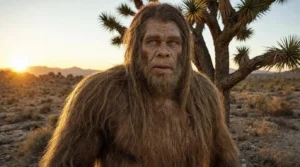
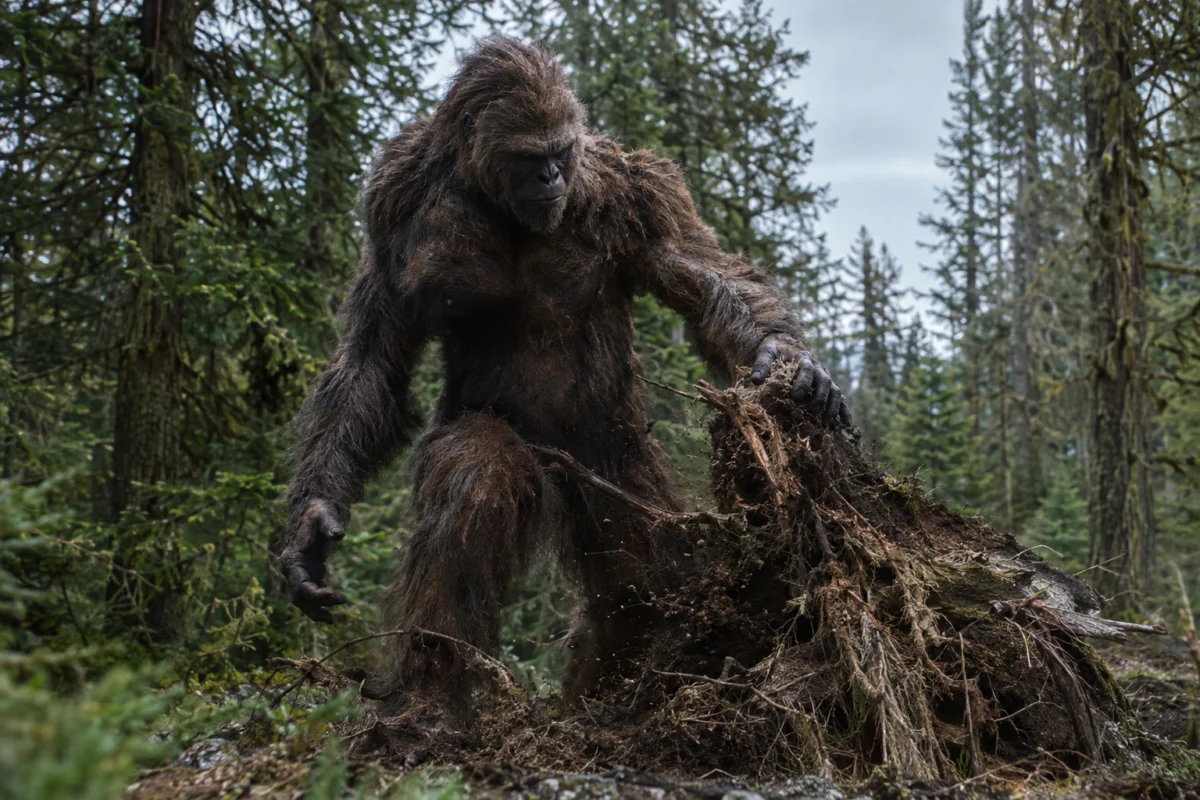
The most consistent feature is the general body plan: a large, upright, bipedal creature combining human-like posture with an ape-like appearance. Beyond that outline, descriptions diverge.
There is no single physical portrait shared by all the sources, and illustrations should be distinguished from alleged eyewitness descriptions.
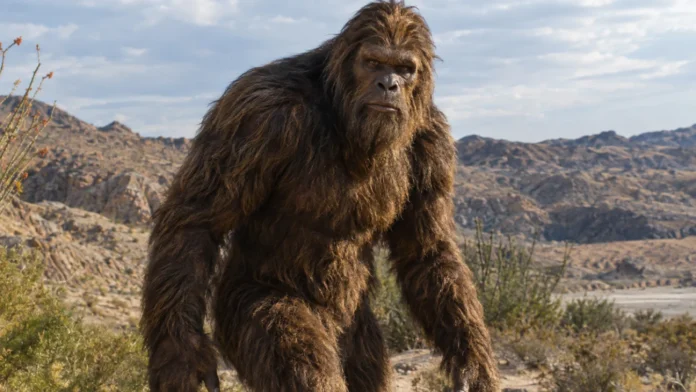
The Ocotillo Wells Visitors Guide describes the Sandman as eight feet tall and weighing more than 500 pounds. Its illustration shows a large, brown-furred, Bigfoot-like figure.
These details represent the guide’s presentation of local legend, rather than measurements obtained from an examined animal.
Weird California offers a contrasting image, characterizing the creature as an upright, white-furred, ape-like being. Some regional retellings also give it red or glowing eyes.
Those features belong to particular versions and should not be added automatically to the brown-furred figure shown in the state guide.
Cryptomundo preserves an older description of a reported creature near Warner as resembling both a man and a bear. Although discussed alongside Southern California Sandman claims, that animal should not simply be treated as an identical description of the Borrego creature.
Regional grouping can conceal meaningful differences.
Large humanoid footprints are another recurring feature, especially in material deriving from the 1964 investigation. Their reported measurements differ between retellings, making an exact footprint size unreliable as a defining trait.
The tracks contribute to the legend’s physical imagery without supplying a complete description of their maker.
Background Story
The Sandman’s background is a collection of exploration stories and alleged encounters, not a continuous mythic biography. Prospectors repeatedly occupy the role of witness: Stoyanow investigated a lost-mine mystery, Lancaster reportedly searched Borrego Sink, and later accounts identify Helm as a prospector near Deadman’s Hole.
This setting joins the creature to a broader narrative interest in what remote desert country might conceal. In Stoyanow’s account, the search for a lost mine and the discovery of unexplained tracks intersect directly.
The unknown animal becomes another possible mystery within an already mysterious landscape.
The “Abominable Sandman” wording also places the story within the vocabulary of twentieth-century unknown-animal reporting. Its apparent echo of the Abominable Snowman gives readers an immediate comparison, while the Borrego setting transforms the familiar hairy-humanoid idea into a specifically Southern California desert legend.
Later regional compilations expand that setting with confrontation, danger, and the alleged disappearance of a body after a claimed killing. These episodes make the legend more dramatic, but they do not establish its origin.
Claims that it derives from Indigenous tradition lack tribal or archival documentation in the available sources.
The legend also provides a framework for interpreting newer reports. A Bigfoot Field Researchers Organization account discusses ape-like whoops and knocks near Julian and refers to the Borrego Sandman as local lore.
Such associations show the story’s continuing influence, although that report describes sounds rather than a visual encounter.
Famous Folklore Stories
The Borrego Sandman survives through reported encounters and regional retellings rather than a clearly established collection of named traditional tales. The headings below describe documented narrative episodes, not inherited story titles.
Their sources range from a contemporary magazine account to much later folklore compilations.
Tracks near Harper’s Well
In the July 1964 Desert Magazine article “Abominable Sandman of Borrego,” Victor Stoyanow described finding unusual tracks near Harper’s Well while exploring the Superstition Hills area. His investigation concerned a lost mine, placing the discovery within the region’s overlapping traditions of prospecting and desert mysteries.
This encounter account centers on traces rather than a direct sighting. Stoyanow treated the tracks as a question requiring explanation, not conclusive evidence of an unknown animal.
That distinction matters because later summaries can make the episode sound more definitive than its original presentation.
Subsequent discussions associate the investigation with photographs and alleged footprint casts. Charles Spratley’s regional travel writing also mentions claimed casts from 1964.
These later references document the story’s circulation, but do not by themselves establish the tracks’ origin or authenticate a surviving specimen.
Harold Lancaster’s Borrego Sink Encounter
A separate encounter account attributed to prospector Harold Lancaster places him in Borrego Sink in July 1968. According to the version reproduced by Cryptomundo from Warren Smith’s reporting, Lancaster said he saw a giant ape-man while prospecting in the desert.
Unlike the Harper’s Well episode, this narrative supplies an alleged visual encounter rather than footprints alone. Its setting and witness occupation nevertheless follow a similar pattern: someone searching the desert for mineral wealth unexpectedly confronts something outside ordinary expectations of the landscape.
The account’s transmission is important to its interpretation. Cryptomundo’s 2007 discussion explicitly questions the reliability of some of Smith’s sourcing and reporting.
Lancaster’s encounter should therefore remain an attributed claim preserved through later publication, not an independently established event or verified zoological observation.
Nineteenth-Century Encounters and the Missing Body
Weird California and other regional retellings place an encounter involving prospector Turner Helm near Deadman’s Hole in 1876. In this version, Helm attempted to communicate with a large creature, then drove it away with his rifle after it became agitated.
A second episode, dated March 1888 by Weird California, concerns Charles Cox and Edward Dean. The retelling claims they shot a Sandman during a search connected with unexplained deaths.
Its alleged body was then arranged for shipment to San Diego, but supposedly disappeared in transit.
These are retrospective local-legend accounts, without contemporary corroboration supplied by the sources consulted. They also differ in emphasis: Helm’s story describes an attempted interaction, while the Cox and Dean episode uses a missing-body motif that leaves its claimed physical evidence unavailable for examination.
Cultural Impact
The Sandman’s documented cultural role lies primarily in Southern California desert storytelling. The 1964 magazine account connects it with exploration and lost-mine investigation.
Later narratives repeatedly feature prospectors, making the creature part of a landscape imagined through discovery, uncertainty, and encounters beyond settled communities.
Its inclusion in California State Parks’ Ocotillo Wells Visitors Guide gives the legend a place in public interpretation of the desert. The guide presents it among local legends.
This recognizes the story as regional cultural material, rather than providing official confirmation of an unknown species.
Charles Spratley’s “The Journey of Death Valley,” published by San Diego Family, similarly places the Sandman within Anza-Borrego-area lore. Such travel writing carries the story beyond cryptozoology enthusiasts, introducing it to readers encountering the desert through its history, destinations, and local anecdotes.
Modern cryptid websites have extended that circulation while also exposing problems in the evidence. Cryptomundo’s discussion is especially useful because it does not simply repeat dramatic claims.
It questions their reporting history, showing that modern interest can involve source criticism as well as fascination.
The 2019 Mysteries at the Museum episode featuring the Borrego Sandman demonstrates a further shift into television entertainment. This is a verified modern adaptation of regional lore, not evidence for its historical episodes.
The available record supports continued visibility, but not claims of widespread ceremonial or artistic influence.
Similar Beasts
Yucca Man
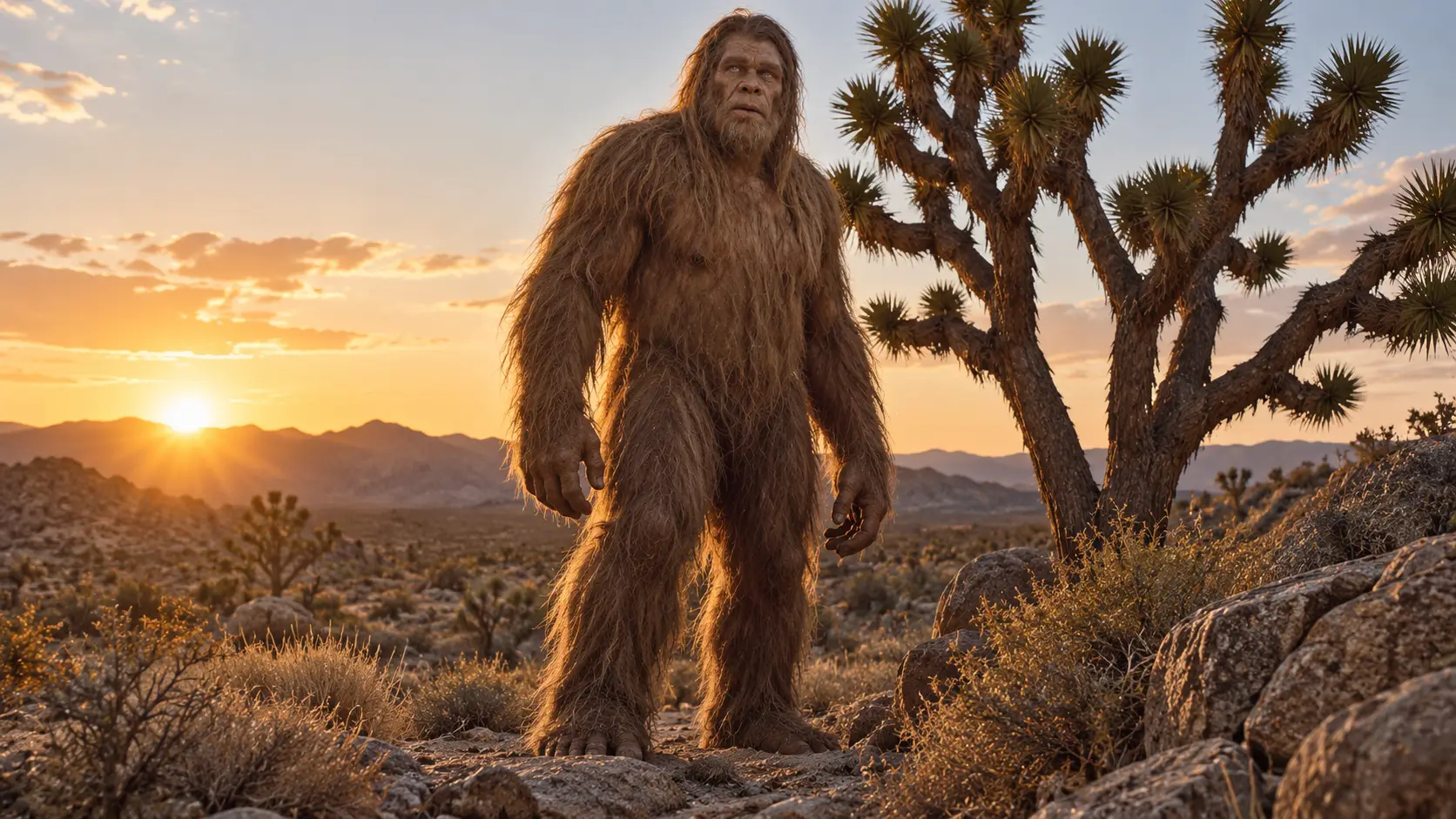
The Yucca Man belongs to a distinct Southern California desert Sasquatch tradition associated more broadly with the Mojave and other high-desert areas. Regional accounts preserve its own geographical identity.
Borrego Sandman compared to Yucca Man and Big Foot
| Aspect | Borrego Sandman | Yucca Man | Big Foot |
|---|---|---|---|
| Origin of legend | The legend originates from Southern California desert folklore. | The tale is rooted in Native American traditions. | The legend is widespread across North American folklore. |
| Physical description | Descriptions vary, but it is often ape-like and large. | Typically depicted as a tall, hairy humanoid figure. | Commonly described as a large, bipedal creature. |
| Sightings frequency | Sightings are infrequent and often anecdotal in nature. | Reported encounters are rare and often unverified. | Sightings are sporadic, with few credible reports. |
| Cultural significance | It holds cultural importance in local storytelling traditions. | Significant in regional folklore and cryptozoology discussions. | Represents a broader theme of mythical creatures in culture. |
| Associated locations | Linked to Borrego Valley and Harper's Well area. | Associated with various locations in Southern California. | Connected to multiple sites across the western United States. |
| Media representations | Featured in local guides and folklore publications. | Portrayed in various media, including books and articles. | Represented in illustrations and regional storytelling. |
Both figures adapt the ape-like wild-man image to desert settings. Some modern writers conflate them, but that overlap does not make Yucca Man a Borrego Sandman alias.
Speedway Monster
The Speedway Monster is a reported wild-man figure associated with Fontana Dragway and foothills near the San Bernardino Mountains. Its local setting distinguishes it from the Borrego Valley encounters.
Its similarity lies in the reported presence of a strange humanoid within Southern California. It provides a regional comparison, not corroboration of the Sandman’s alleged sightings.
Mojave Sasquatch
Mojave Sasquatch reports form another desert Bigfoot tradition, connected with Antelope Valley and sightings around Lancaster and Palmdale. Those accounts belong to a different locality from the Borrego Sink narratives.
The shared desert setting and Bigfoot-like interpretation make comparison useful. However, similar descriptions across separate report traditions do not establish that witnesses encountered one biological species.
Scientific or Rational Explanations
The evidence establishes that people have published and repeated Borrego Sandman stories. It does not establish an unknown biological species.
Stoyanow’s 1964 treatment of the tracks as an unresolved question preserves this distinction between documenting an unusual report and identifying the animal responsible.
Footprints require more than apparent resemblance to human feet before they can support a zoological conclusion. Here, measurements vary between retellings, and references to casts do not provide a securely documented specimen for evaluation.
Consequently, precise track dimensions cannot serve as a stable identifying feature.
Misidentified wildlife, mistaken tracks, deliberate fabrication, and narrative embellishment remain possible explanations. None is demonstrated for a particular Sandman episode by the consulted sources.
Naming a specific animal as the solution would therefore exceed the evidence just as surely as declaring the cryptid authentic.
Visual testimony presents a different evidentiary problem. Lancaster’s alleged sighting reaches readers through reporting whose reliability has been questioned.
Without independent corroboration, it cannot establish what he observed. Possible errors of perception or recollection remain hypotheses, not findings about the witness or his experience.
The nineteenth-century stories require historical scrutiny before zoological interpretation. A date within a later retelling does not establish that the narrative was recorded at that time.
Likewise, the alleged disappearance of a shipped body cannot substitute for shipping documentation, an examinable specimen, or independent confirmation.
A folklore interpretation focuses instead on how the narratives work: unusual traces invite investigation, prospectors encounter a wild humanoid, and claimed proof becomes unavailable. These patterns help explain the legend’s storytelling appeal without proving fabrication.
Its cultural persistence and its biological plausibility remain separate questions.
Modern Cultural References
Earthling Entertainment: The Sandman Cometh!, Borrego Sandman, episode
In the 2025 Earthling Entertainment podcast episode “The Sandman Cometh!”, hosts Joe Wakefield and Ryan Lang feature the Borrego Sandman alongside reptilian creatures as the central subjects of a monster-themed installment.
Source
Within The Mist: Borrego Sandman, Borrego Sandman, episode
In episode 135 of Within The Mist, Gary and GoldieAnn explore the Borrego Sandman legend.
The creature is portrayed as an eight-foot-tall, white-furred, red-eyed relative of Bigfoot roaming California’s Anza-Borrego Desert State Park.
Source
Cryptids Across the Atlas: The Legend of the Yucca Man: Southern California’s Desert Sasquatch, Borrego Sandman, episode
In the Cryptids Across the Atlas episode “The Legend of the Yucca Man: Southern California’s Desert Sasquatch,” the Borrego Sandman appears among the names associated with Southern California’s alleged Bigfoot-like desert creatures.
Source
Belief Hole: 6.20 | High Strangeness in the Borrego Triangle with Derek Hayes and David Flora, Borrego Sandman, episode
In Belief Hole’s “6.20 | High Strangeness in the Borrego Triangle with Derek Hayes and David Flora,” the Borrego Sandman is explored through alleged encounters, historical reports associated with Deadman’s Hole, and speculation about how a Bigfoot-like creature might survive in the desert.
Source
Conclusion
The Borrego Sandman is best understood as a documented Southern California legend rather than an established animal or a fully defined ancient mythological being. Its surviving accounts connect desert exploration, unusual tracks, and alleged encounters with the broader image of an elusive, upright wilderness creature.
The printed record provides a firmer foundation for studying the legend than the dramatic events attributed to it. Differences in appearance and inconsistencies between retellings remain part of its history, not details that can responsibly be resolved into one authoritative description.
Symbolically, the Sandman gives the desert a hidden inhabitant, suggesting that a landscape familiar to travelers may still conceal something unexpected. That reading fits the legend’s recurring emphasis on traces, brief encounters, and uncertain identification, without requiring belief in its biological existence.
Its inclusion in visitor literature and entertainment demonstrates continuing cultural interest. The most useful approach preserves that interest while separating contemporary documentation from later embellishment, allowing the Borrego Sandman to remain a distinctive regional story without presenting its unresolved claims as proven history.
Further Reading
“Abominable Sandman of Borrego,” Victor Stoyanow, Desert Magazine, July 1964
An early printed account of unusual tracks near Harper’s Well during a lost-mine investigation in the Superstition Hills.
It documents the report, not the existence of an unknown animal.
Source
“SoCal’s Abominable Sandpeople,” Cryptomundo, 2007
A discussion preserving Harold Lancaster’s alleged July 1968 Borrego Sink encounter through Warren Smith’s reporting.
Its warnings about Smith’s sourcing make it useful for assessing the account’s reliability.
Source
Ocotillo Wells Visitors Guide, California State Parks
An official recreation-area guide presenting the Borrego Sandman as a local legend, reportedly eight feet tall and over 500 pounds.
Its illustration documents regional imagery, not verified anatomy.
Source
“The Journey of Death Valley,” Charles Spratley, San Diego Family
Regional travel writing placing the Sandman within Anza-Borrego-area lore and discussing 1960s reports and alleged footprint casts.
Useful for tracing the legend’s circulation beyond cryptozoology publications.
Source
Borrego Sandman Accounts, Weird California
A later regional compilation recounting the alleged Turner Helm encounter in 1876 and the Cox and Dean episode in 1888.
These are retrospective retellings, not contemporary corroboration of those events.
Source
BFRO Report 63560: Whoops and Knocks at Campground near Julian, Bigfoot Field Researchers Organization, 2019
A witness report of unexplained sounds near Julian whose follow-up discussion connects the area with Borrego Sandman lore.
It documents a reported auditory experience, not a visual sighting or confirmed identification.
Source
“Borrego Sandman, Axeman of New Orleans and Arctic Ghost Ship,” Mysteries at the Museum, DIRECTV, 2019
A television episode listing naming the Borrego Sandman and describing an ape-like desert beast among its subjects.
Useful for documenting television coverage rather than authenticating the legend’s encounter claims.
Source
The Borrego Sandman Patch, Etsy
A commercial listing for a patch named after the creature. Relevant as an example of Sandman-themed merchandise, rather than a historical or zoological source.
Source