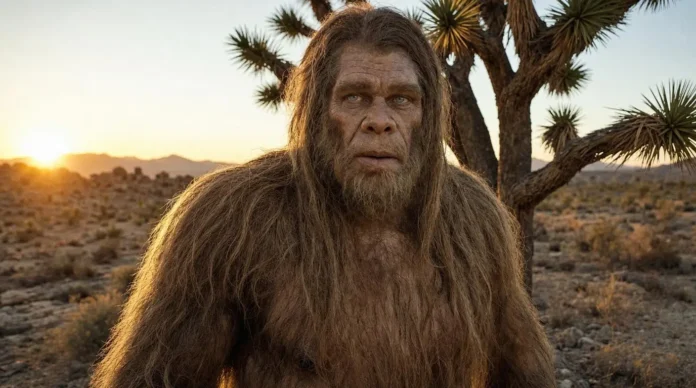
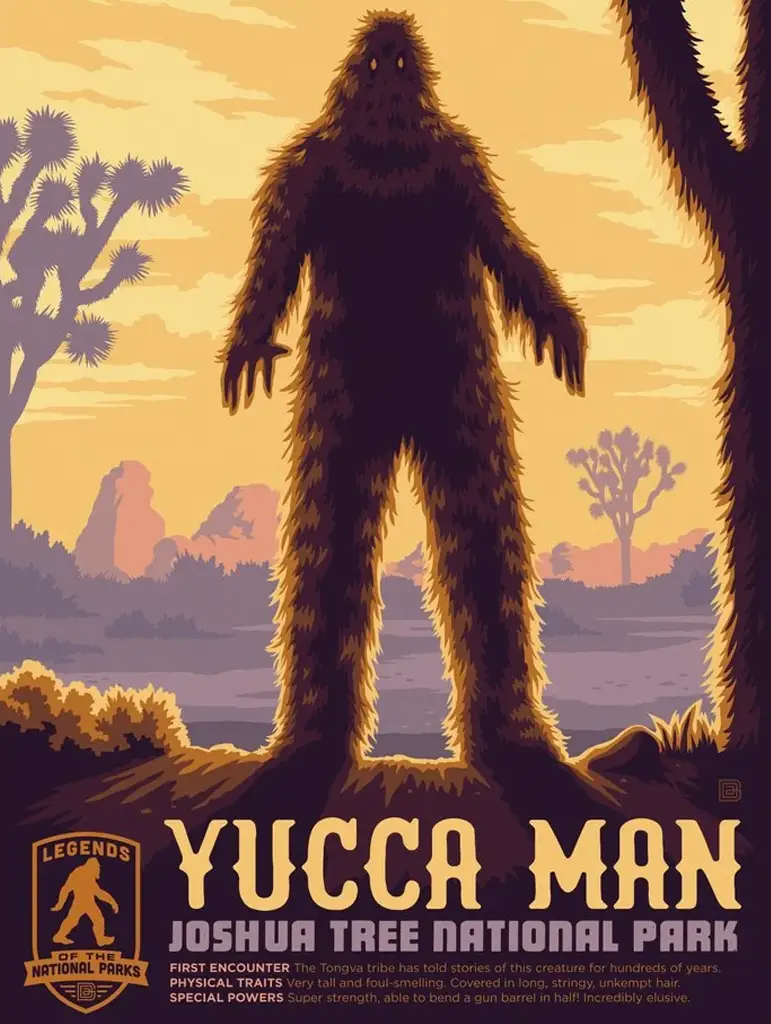
Yucca Man is a modern cryptid legend associated with the Mojave Desert and nearby communities of Southern California. Reports usually describe a very tall, hair-covered humanoid seen at night near desert roads, military installations, isolated homes, and wilderness areas around the high desert.
The creature is often compared with Bigfoot, but Yucca Man has developed a distinct regional identity shaped by heat, open desert, Joshua trees, military folklore, and stories from Antelope Valley. Accounts frequently emphasize glowing eyes, unusual speed, intimidating size, and a powerful foul odor.
Unlike an ancient myth preserved in a fixed text, Yucca Man comes from modern encounter stories, newspaper reports, local recollections, and later paranormal writing. The legend changes from place to place, so individual details should be treated as reported folklore rather than established biological facts.
Modern writers sometimes connect Yucca Man with older Indigenous stories about dangerous supernatural beings in Southern California. That comparison remains uncertain.
Traditions involving Tahquitz or Takwis belong to their own cultural settings, and available evidence does not prove that they describe the same being.
History/Origin
The clearest documented background lies in Southern California’s twentieth-century Bigfoot wave. Newspapers in the Antelope Valley reported large hairy humanoids during the early 1970s, while later writers collected military, roadside, and camping stories under the broader name Yucca Man or Mojave Bigfoot.
A famous version places an encounter at the Marine Corps base at Twentynine Palms in 1971. In the story, a night guard meets a huge hairy figure, loses consciousness, and is later found with a damaged rifle.
Independent confirmation of that episode remains unavailable.
In a June 1973 Daily Ledger-Gazette report, Chuck Wheeler wrote, “The creature likes to run around houses and leaving footprints.” The line matters because it documents how Antelope Valley reports had already formed a recognizable pattern around homes, tracks, and frightened residents.
Reports continued through the decade. Lancaster and Palmdale became recurring locations, while stories also spread through desert communities farther east.
The Lancaster Museum of Art and History now treats Yucca Man as a notable local cryptid tradition, presenting the encounters as claims and folklore.
Edwards Air Force Base developed its own related stories. Former security personnel remembered an entity called Blue Eyes, described as a local Yeti-like figure near South Base.
An official Air Force article confirms the existence of this folklore, not the creature itself.
In the official 2009 Edwards Air Force Base article, Lisa Camplin wrote, “Stories of Edwards urban legends surfaced as attendees traded memories of their bizarre experiences on patrol.” The account places Blue Eyes and other strange stories firmly inside the base’s remembered 1970s folklore.
Some modern sources push the legend further back by linking Yucca Man with Indigenous supernatural traditions. That connection should remain separate from the documented modern cryptid history.
I found no reliable source proving that the name Yucca Man, or this creature concept, predates twentieth-century reports.
Name Meaning
The name Yucca Man is modern English, not a surviving Indigenous name. Its meaning appears straightforward: a humanlike creature associated with desert yuccas and the Mojave landscape.
However, the exact person, publication, or community that first coined the label has not been reliably identified.
The plant connection fits the setting. Joshua trees are Yucca brevifolia, a defining plant of the Mojave Desert, and other yuccas also grow across the region.
The label therefore works as a regional nickname, similar to names that attach mysterious creatures to local landscapes.
Names such as Mojave Bigfoot describe the same general idea more directly. Sierra Highway Devil and Blue Eyes overlap with the wider Southern California hairy-creature tradition, but they should not automatically be treated as exact aliases because their reported features and locations sometimes differ.
Appearance
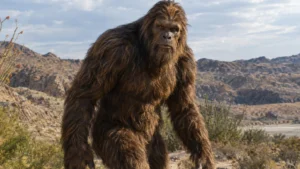
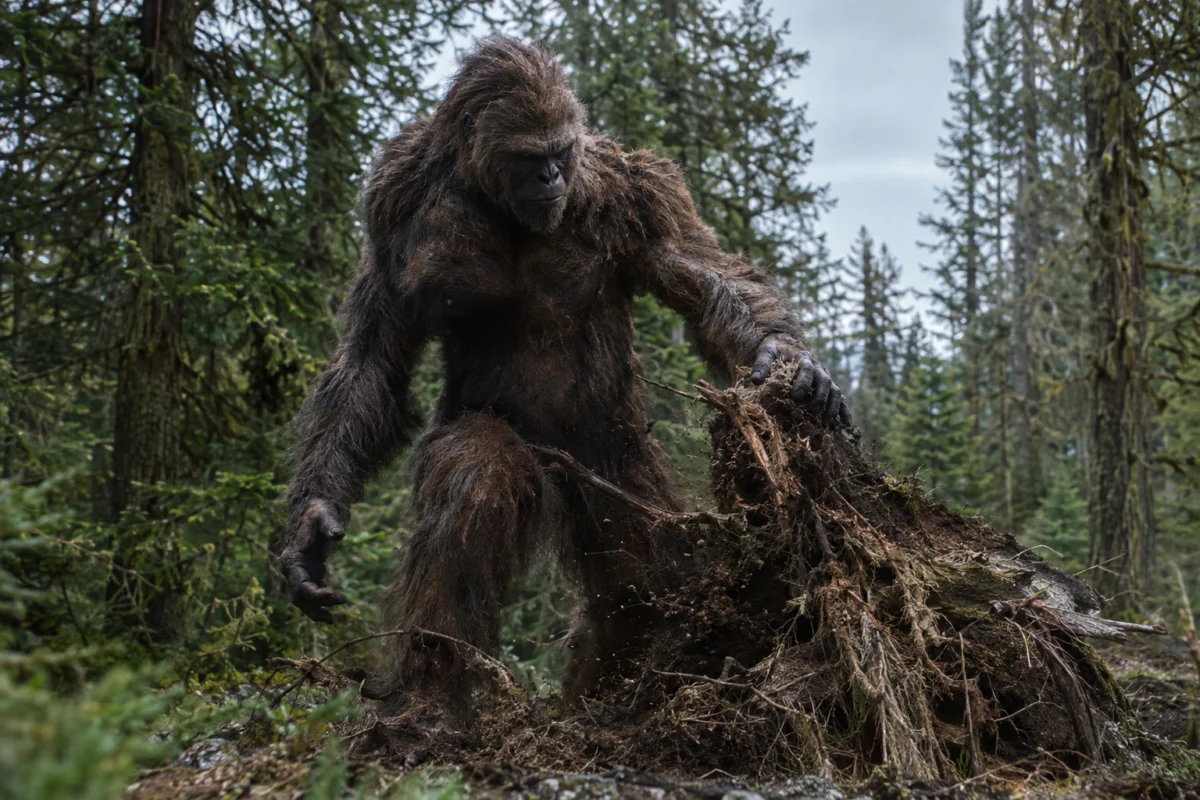
Yucca Man is usually described as a very large bipedal humanoid covered in hair. Reports vary on exact height and coloring, but the creature is generally portrayed as taller and broader than a human, with long arms and a heavy chest that creates an immediately threatening silhouette.
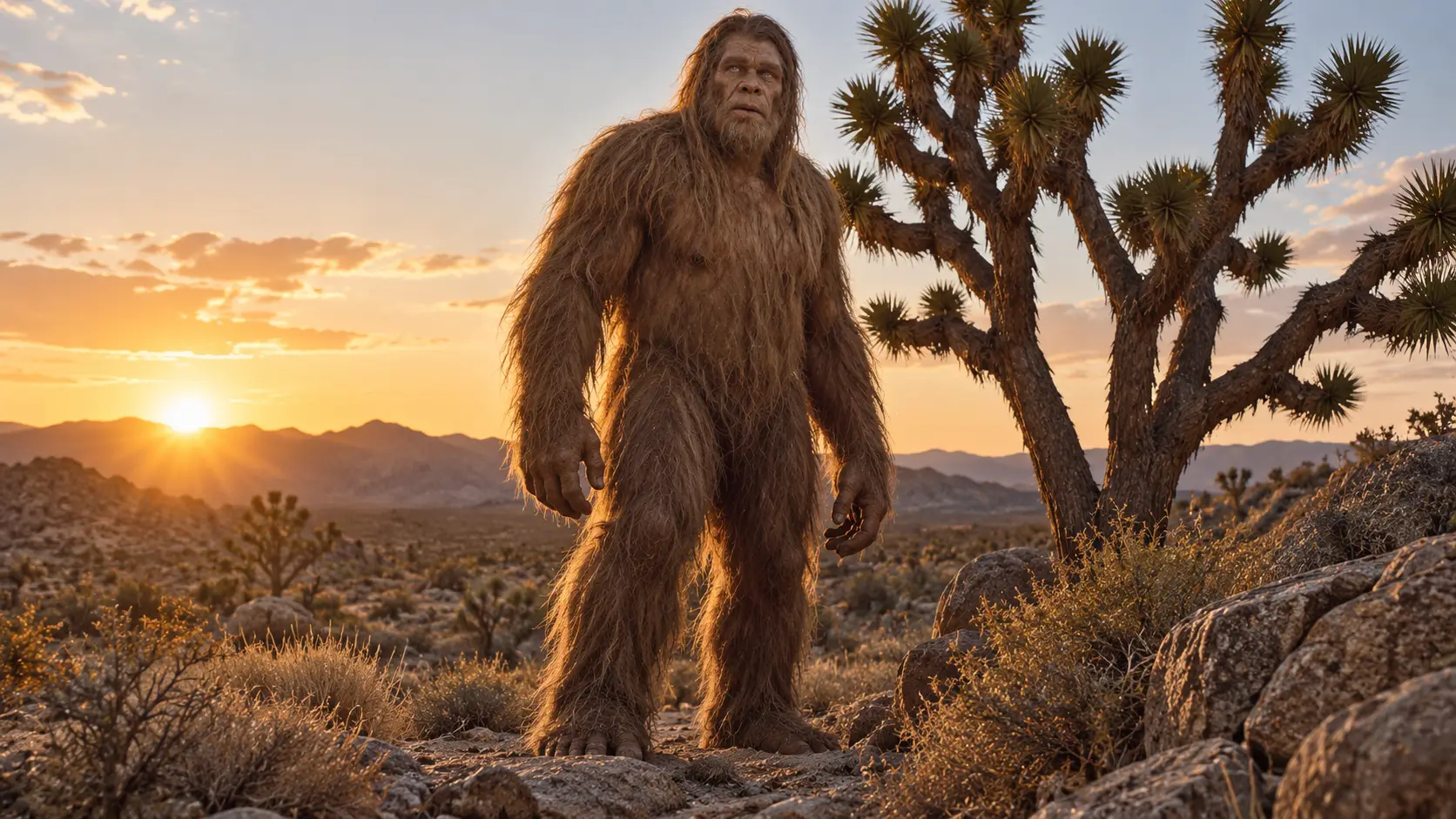
One 1979 Desert Hot Springs report described a hairy figure with a chest compared to a refrigerator, arms hanging below the knees, and long tan hair. Because this comes from an eyewitness-style cryptid account, those details describe the legend rather than verified anatomy.
Glowing eyes form another recurring feature. Red eyes appear frequently in later Yucca Man retellings, while Edwards Air Force Base personnel remembered Blue Eyes as a separate local Yeti-like figure.
These differences suggest that several desert creature traditions have gradually overlapped in modern retellings.
A strong unpleasant smell also appears repeatedly in the folklore, echoing a feature common in many American Bigfoot stories. Some reports describe shadowy forms with little visible anatomy beyond glowing eyes, showing that Yucca Man can shift from a physical wild-man image toward something more supernatural.
Background Story
Yucca Man has no single canonical background story. Instead, its legend works as an encounter cycle built from repeated situations: a lone guard hears something outside his post, a driver sees a huge figure cross a road, or campers discover signs of an unknown visitor.
Military settings became especially important to the legend. Twentynine Palms supplies the famous guard story, while Edwards produced Blue Eyes and other patrol tales.
Remote bases, restricted areas, darkness, and long night watches created an ideal environment for stories about something moving beyond the lights.
Antelope Valley stories added a suburban edge. Newspaper accounts described tracks around houses, scratching at doors, and frightened residents encountering a large furry figure near corrals or roads.
This moved the creature from distant wilderness into the uneasy boundary between expanding neighborhoods and open desert.
Later retellings increasingly connect Yucca Man with Joshua Tree National Park, where stories involve hikers, campers, strange nighttime movement, foul smells, and occasional alleged photographs or footprints. None provides scientific confirmation, but together they have turned Yucca Man into a lasting Mojave regional legend.
Famous Folklore Stories
Yucca Man folklore survives through modern encounter reports rather than ancient narrative texts. The two stories below are among the best documented and most repeated episodes, with each account kept clearly identified as reported folklore rather than established evidence of an unknown creature.
The Marine Guard at Twentynine Palms
The best-known Yucca Man story places a young Marine on night guard duty at the Twentynine Palms desert training base in 1971. Alone after dark, he reportedly heard a growling sound and heavy breathing moving around his isolated guard position.
As the story continues, the Marine stepped outside and confronted an enormous hairy figure. Later retellings describe the being as roughly eight feet tall, surrounded by a powerful stench, with eyes that seemed to shine red against the darkness of the desert.
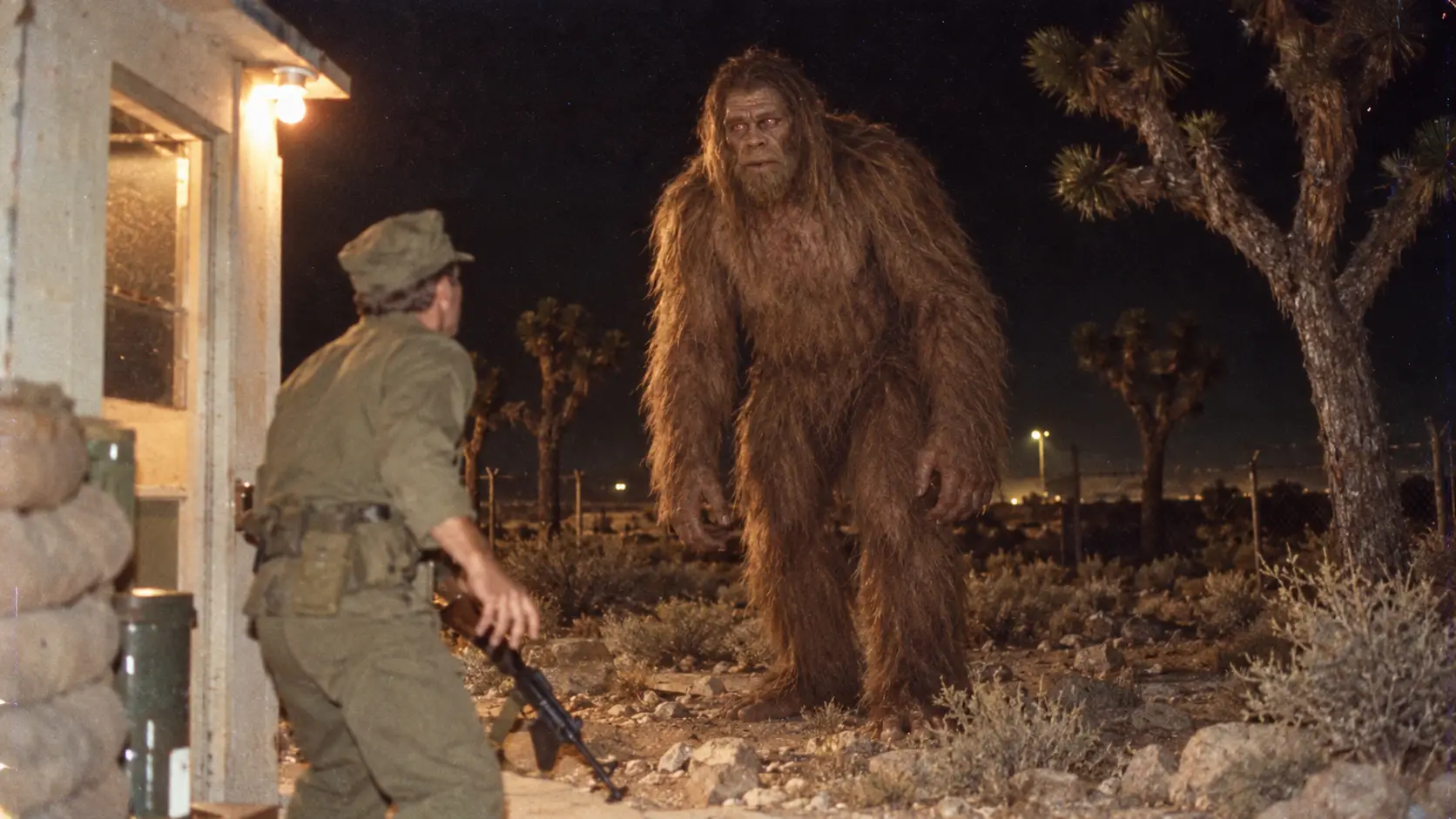
“There it stands: eight feet tall, an unbearable stench, the eyes glowing like red coals.” This description appears in Ken Layne’s Desert Oracle: Volume 1, chapter “The Known Unknown: Tales of Yucca Man,” published by MCD in 2020 as a printed collection.
Some versions say the creature attacked or overwhelmed the guard, leaving him unconscious until another shift found him. The most dramatic variant adds that his rifle had been bent in half, a detail that became central to later retellings of the encounter.
No military record currently confirms that this confrontation happened as described. Layne introduces it as the story most commonly heard about Yucca Man, which is important because the account functions as folklore transmitted through repetition rather than a documented military incident.
Its lasting power comes from the setting. A lone sentry, restricted desert ground, darkness, strange sounds, and an apparently unstoppable intruder combine military isolation with supernatural fear.
The bent rifle transforms the creature from a distant sighting into something physically dominant and dangerous.
The Boy at the Corral
A more firmly documented cluster of stories appeared in the Antelope Valley during 1973. Reporter Chuck Wheeler gathered eyewitness claims from Palmdale and East Lancaster, where residents described footprints around houses, nighttime disturbances, and a large furry figure moving close to homes.
One woman reportedly said the creature circled her house and scratched at the door. Another incident involved a boy sent to tell his father that supper was ready.
Hours later, adults found the child crying near a corral, apparently afraid to continue.
When questioned about why he had not returned, the boy gave a short explanation: “a big, furry man would not let him pass.” The line appears in Chuck Wheeler’s “Bigfoot Surfaces Again In Palmdale, Nine-Mile Canyon,” Daily Ledger-Gazette, June 1, 1973.
Wheeler’s article did not present these events as one continuous adventure. Instead, it grouped several reports that residents associated with a hairy creature.
Footprints around multiple houses helped create the impression that something repeatedly moved through the edges of expanding neighborhoods.
The corral episode became memorable because it placed the creature between a child and an ordinary family task. Unlike the military-base legend, there was no dramatic struggle.
The fear came from a familiar rural space suddenly blocked by an unidentified humanlike presence.
These reports shaped the Antelope Valley version of Yucca Man as a creature that approached homes instead of remaining deep in wilderness. The story shows how repeated local claims can merge into regional folklore even when no evidence establishes what witnesses encountered.
Cultural Impact
Yucca Man has become part of Mojave regional identity because the legend attaches a recognizable monster to a landscape shaped by isolation, military bases, desert travel, and strange nighttime experiences. Lancaster’s museum now presents Yucca Man as one of the Antelope Valley’s notable local cryptids.
The legend also demonstrates how modern folklore grows through newspapers, oral recollections, books, radio, and community events rather than through one authoritative text. Each retelling can shift details, yet the core image of a huge desert-dwelling hairy figure remains surprisingly stable.
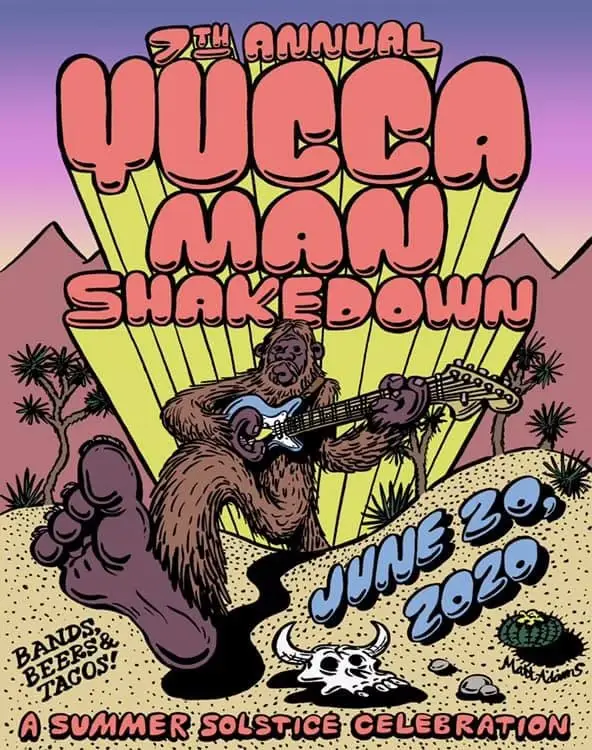
That flexibility has helped Yucca Man function as both a frightening encounter story and a playful regional symbol. In Yucca Valley, the annual Yucca Man Shakedown even turned the cryptid’s name into a community music celebration tied directly to High Desert culture.
Similar Beasts
Bigfoot
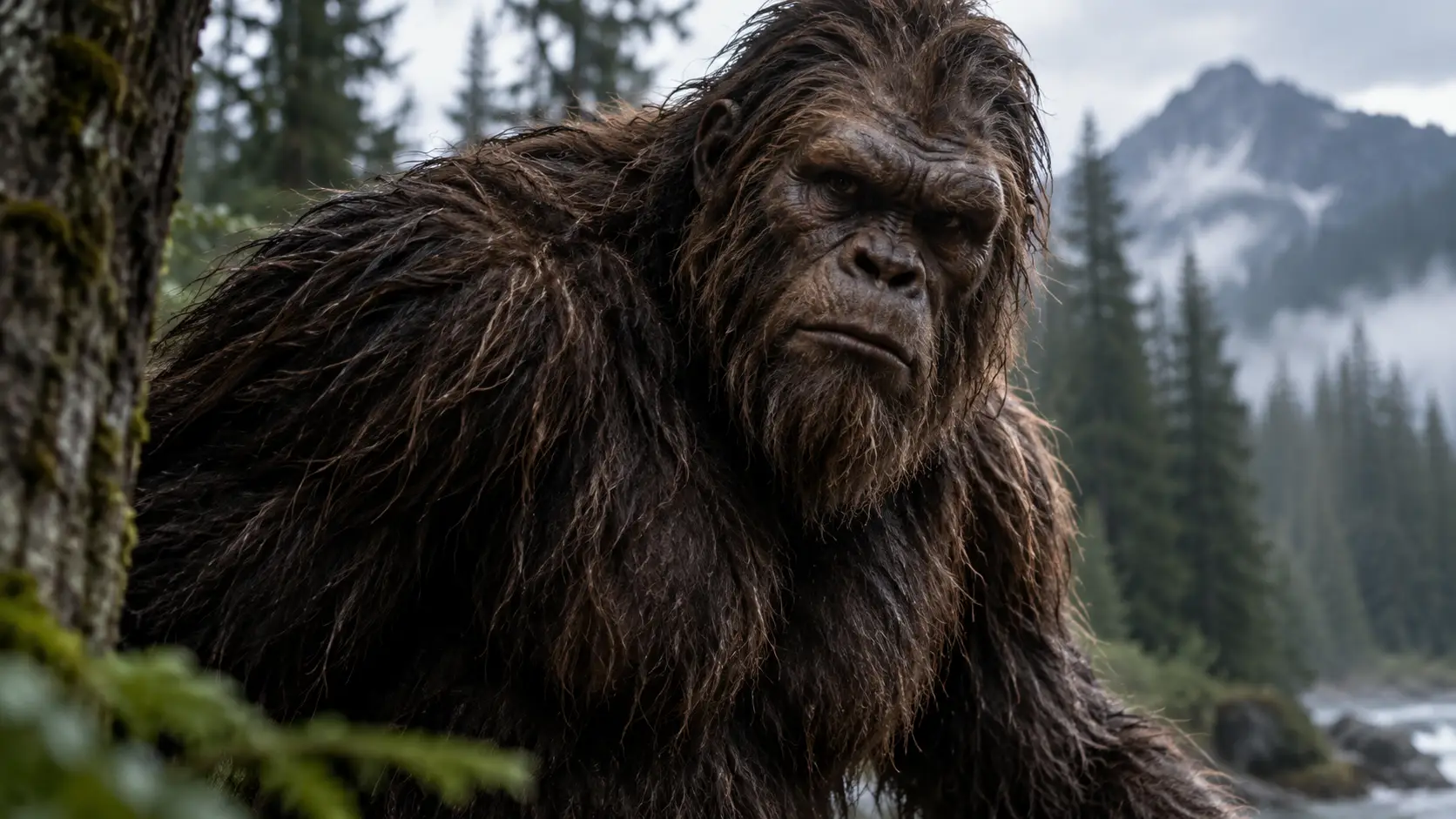
Bigfoot is the closest comparison. Both are described as large, hairy, humanlike beings reported around remote landscapes, yet Yucca Man belongs specifically to the Mojave and Southern California desert tradition rather than the forests most associated with Sasquatch.
Yeti
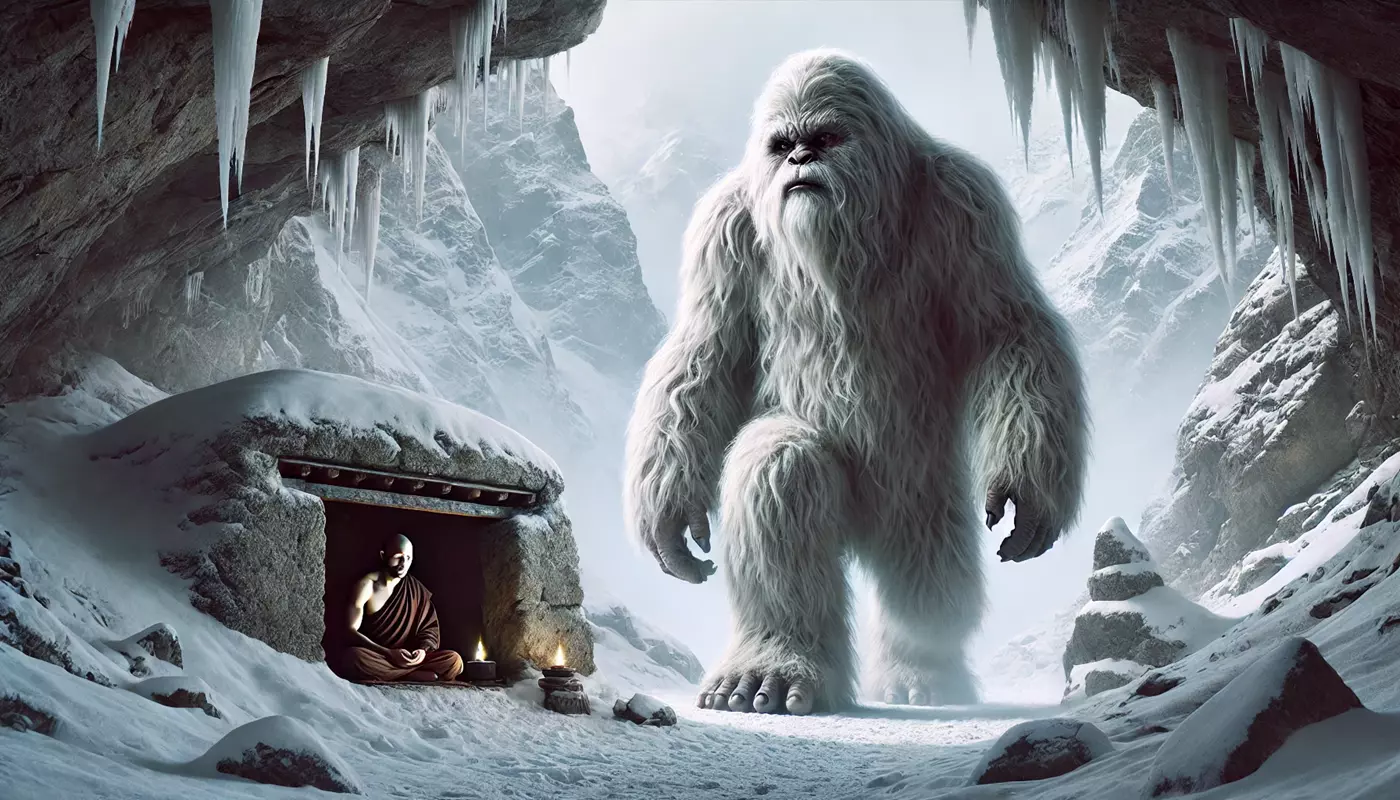
The Yeti is a legendary hairy humanoid associated with the Himalayas. Like Yucca Man, it belongs to a regional wild-man tradition shaped by remote landscapes, reported sightings, footprints, and stories of an elusive humanlike creature. Read More
Mogollon Monster
Arizona’s Mogollon Monster is another regional wild-man legend. Reports describe a tall, hairy, foul-smelling humanoid associated with wilderness areas, making it especially comparable to Yucca Man as a localized Southwestern variation of the broader American Bigfoot tradition.
Fouke Monster
Arkansas’s Fouke Monster became famous after 1971 reports described a large, hairy, red-eyed creature near homes. Like Yucca Man, the legend combines nighttime encounters, threatening proximity to people, unusual tracks, and a strong regional identity built through repeated storytelling.
Mothman
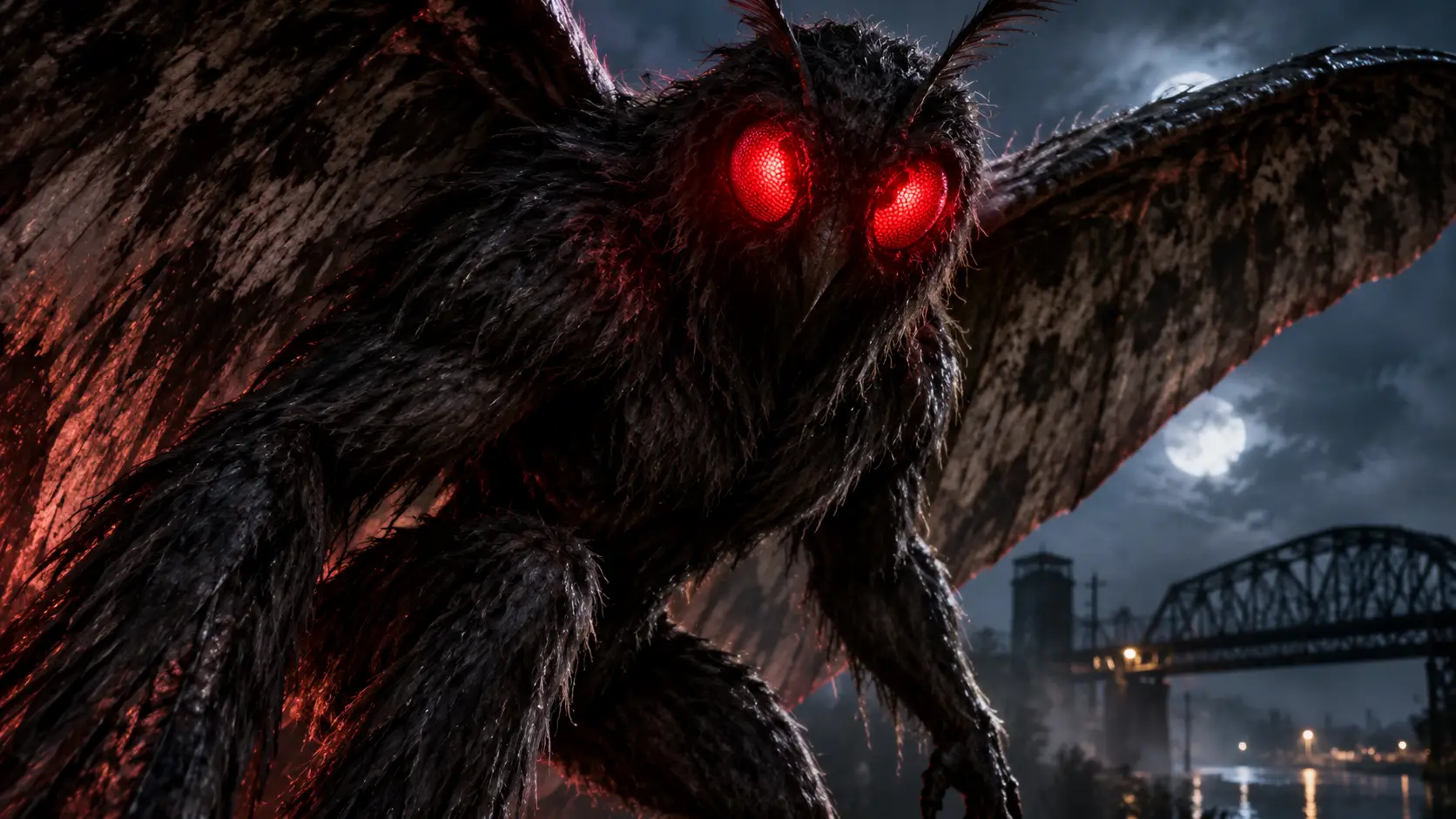
Mothman differs physically, yet the comparison is useful culturally. Both became modern American cryptids strongly attached to specific places, and both show how reported encounters can develop into local identity, tourism, festivals, media, and continuing community storytelling.
Religion/Ritual
No reliable evidence shows that Yucca Man belongs to a formal religion, organized ritual system, or established Indigenous ceremonial tradition. The available documented record places the creature within modern cryptid folklore, especially twentieth-century military, roadside, residential, and wilderness encounter stories.
Claims that Yucca Man directly continues older Indigenous beliefs should therefore be treated cautiously. Southern California Indigenous traditions contain many distinct supernatural beings, but similarity does not establish identity, and I found no reliable historical source showing ritual practices directed specifically toward Yucca Man.
Modern community activity around the creature is cultural rather than religious. Events, podcasts, storytelling, and local articles celebrate or investigate the legend, but these activities do not constitute worship.
They show how a recent cryptid can acquire symbolic importance without becoming a sacred figure.
Scientific or Rational Explanations
No physical specimen, verified body, or scientifically accepted evidence establishes Yucca Man as an unknown primate. The legend therefore remains a collection of reported experiences.
Ordinary explanations must be considered individually because different encounters may have arisen from different causes.
Joshua Tree National Park contains coyotes, foxes, bobcats, mountain lions, occasional black bears, and many nocturnal animals. Darkness, distance, sudden movement, and partial views can make identification difficult, especially when observers encounter wildlife unexpectedly in remote isolated terrain after sunset.
The broader Bigfoot tradition also provides a cultural explanation. Folklorists recognize large hairy wild-men as a recurring human idea, while Smithsonian discussions note how such figures reflect fears about wilderness and civilization.
Yucca Man may represent a desert-specific version of that durable pattern.
Modern Cultural References
Desert Oracle: Volume 1
Ken Layne’s Desert Oracle: Volume 1 includes “The Known Unknown: Tales of Yucca Man,” preserving the Twentynine Palms guard story and other Mojave accounts in a widely distributed book. It remains one of the clearest modern literary treatments devoted specifically to the legend.
Desert Oracle Radio
Desert Oracle Radio launched in 2017 with Episode #001 featuring “Tales of Yucca Man.” The program helped move the legend from local print and campfire storytelling into radio and podcast culture, connecting Yucca Man directly with Joshua Tree’s modern desert-mystery identity.
Desert Oracle Radio Episode #001
National Park Mysteries
The television series National Park Mysteries devoted Season 1, Episode 4 to Joshua Tree National Park in 2020. Its official episode description explicitly names Yucca Man as a powerful creature connected with the park’s mysteries, giving the cryptid a documented television appearance.
National Park Mysteries: Joshua Tree National Park
Yucca Man Shakedown
Yucca Man Shakedown is a recurring summer-solstice music event in Yucca Valley. Gatos Trail Recording Studio documented its ninth annual edition in 2024, showing how the cryptid’s name has moved beyond frightening folklore into local music, branding, and community celebration.
Monsters of California and the Southwest
Jessica Freeburg and Natalie Fowler’s 2026 book Monsters of California and the Southwest includes a section titled “Yucca Man of Desert Hot Springs.” The collection places Yucca Man among other Southwestern legendary creatures and presents the story to contemporary folklore and paranormal readers.
Monsters of California and the Southwest
Conclusion
Yucca Man works best as a modern regional legend rather than an ancient monster with a fixed mythology. Its strongest documented roots lie in twentieth-century Southern California encounter reports, especially stories connected with Twentynine Palms, Antelope Valley, Edwards Air Force Base, and Joshua Tree.
The creature’s familiar features, huge stature, hair, glowing eyes, odor, and nighttime appearances, connect it with the wider American wild-man tradition. What makes Yucca Man distinctive is the Mojave setting, where military landscapes, desert towns, and wilderness become part of the legend.
No verified evidence confirms an unknown species behind the reports, but the absence of proof has not ended the story. Books, television, radio, podcasts, museum writing, and community events continue reshaping Yucca Man into a lasting symbol of the strange Mojave.
Further Reading
Haunting the Mojave: The Yucca Man by Hannah Rogers, Lancaster Museum of Art and History, 2022.
A useful regional overview covering Antelope Valley sightings, the 1971 Twentynine Palms story, reported physical features, later encounters, and Yucca Man’s place in Mojave folklore.
The Known Unknown: Tales of the Yucca Man by Ken Layne, Desert Oracle / Longreads, 2015 and 2018.
A detailed narrative exploration of Yucca Man traditions, including the Marine guard story, glowing eyes, foul odor, Joshua Tree encounters, and the legend’s supernatural interpretations.
Desert Oracle: Volume 1 – Strange True Tales from the American Southwest by Ken Layne, MCD / Macmillan, 2020.
Layne’s collection places Yucca Man within the wider folklore of the Mojave Desert and preserves the best-known Twentynine Palms encounter alongside Joshua Tree reports.
‘Desert Rats’ Reunite 30 Years After Last Patrol by Lisa Camplin, Edwards Air Force Base, 2009.
An official U.S. Air Force article documenting remembered Edwards AFB folklore, including Blue Eyes, a local Yeti-like figure reportedly encountered by security personnel during 1970s patrols.
Los Angeles County, California – Reports & Articles, Bigfoot Field Researchers Organization.
An archive collecting reported Southern California Bigfoot encounters and historical Antelope Valley newspaper references from the 1970s, useful for tracing the broader regional environment surrounding Yucca Man stories.
Joshua Trees, U.S. National Park Service, Joshua Tree National Park.
An official natural-history source explaining Yucca brevifolia, its Mojave Desert habitat, ecology, and regional importance, providing environmental context for the landscape that shaped the Yucca Man legend.
Read the National Park Service guide