Introduction
A rusalka is a female spirit in East Slavic folklore, associated with water, the dead, and seasonal appearances around Pentecost or Trinity. The plural is rusalki.
Rather than a single creature with fixed characteristics, the name encompasses traditions that differ substantially by region.
In southern and south-western accounts, rusalki often appear as young women encountered near water, in woods, or among fields. Their presence belongs to a seasonal landscape, not simply an underwater realm.
Beliefs about untimely death help explain their connection with the living.
The familiar description of a rusalka as a drowned maiden preserves one important strand of belief, but not the whole tradition. Other accounts connect rusalki with unbaptized children, while some regional forms are frightening rather than beautiful.
A fish tail is not a defining feature.
These differences matter because the rusalka joins several areas of traditional life: mourning, sexuality, religious belonging, and the agricultural calendar. Her significance emerges from the relationship between those concerns, rather than from a universal story explaining how every rusalka came into existence.
History/Origin
The historical record distinguishes the name of a festival from the later name of a supernatural being. Rusalia, a seasonal observance associated with spring and Pentecost, is documented earlier than rusalka as a personified female spirit.
The two should not be treated as identical evidence.
Jiří Dynda’s specialist study reports the being-name from the seventeenth century. That is a dating of recorded terminology, not proof that every associated belief began then.
The available evidence does not establish a single moment when seasonal customs became stories about female spirits.
The tradition developed within an East Slavic setting shaped by both local customs and the Orthodox calendar. Pentecost and Trinity supplied an important seasonal framework.
Associations with water, woods, fields, and the dead nevertheless varied, rather than forming one uniform religious system across the region.
By the nineteenth century, collected accounts preserved several explanations for the beings’ origins. Some linked them with drowned people or women who died by suicide; others connected them with stillborn or unbaptized children.
These represent different local understandings of death, not successive stages in one biography.
W. R. S. Ralston’s 1872 The Songs of the Russian People preserves many such reports in English. It is a historical compilation drawing on earlier material, rather than a body of independently verified field testimony.
Its regional distinctions remain essential when using its descriptions.
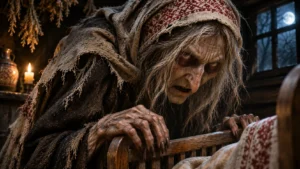
Comparison also reveals a geographical limit to the familiar portrait. Southern and south-western rusalki are often youthful and seasonally active, whereas northern Russian analogues may be solitary, elderly, and unattractive.
Some bear other local names, making their inclusion under rusalka a comparison rather than a straightforward equivalence.
Name Meaning
The leading scholarly explanation connects rusalka with rusalia, the name of a seasonal festival associated with Pentecost. This derivation places the word within the ritual calendar rather than explaining it solely through the spirit’s watery habitat or the appearance of her hair.
The festival term is ultimately connected with Latin rosalia, meaning a festival of roses. That linguistic connection concerns the history of the name.
It does not establish that every later East Slavic custom, appearance detail, or belief about rusalki descended unchanged from a Roman observance.
Max Vasmer’s etymological dictionary supports the festival derivation while recording a proposed influence from ruslo, meaning riverbed. Other explanations connect the name with rusyj, fair-haired, or rosa, dew.
These are alternative proposals or folk etymologies, not equally established accounts of the word’s origin.
The distinction helps prevent circular explanations: a water-associated spirit need not have a name originally meaning river creature. Likewise, descriptions of golden or green hair cannot settle the etymology.
The earlier festival term provides firmer linguistic grounding than attempts to derive the name from selected physical traits.
Appearance
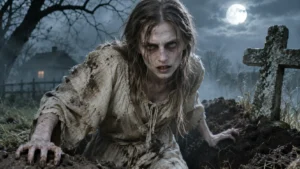
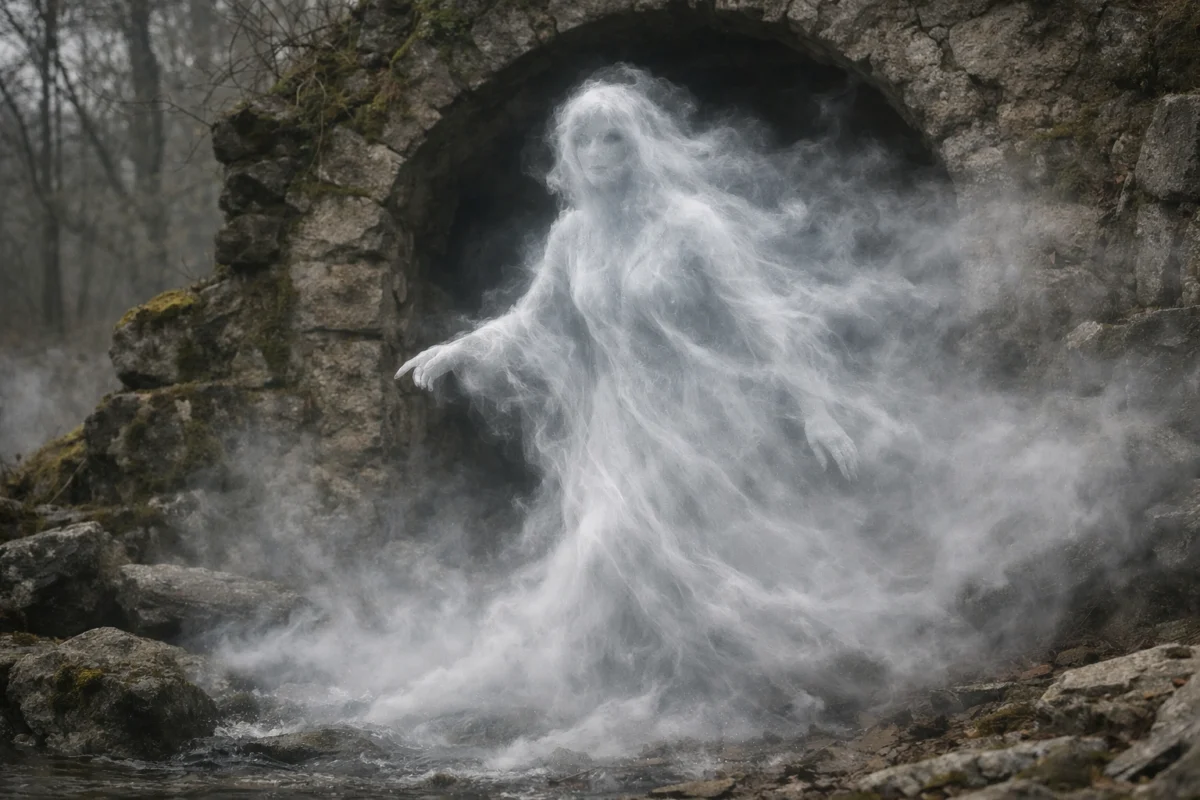
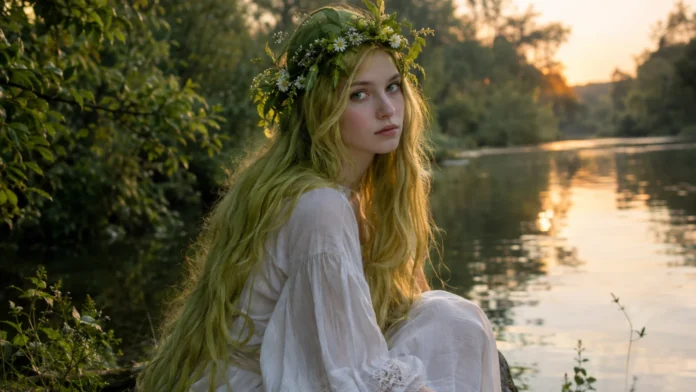
In southern traditions, rusalki commonly have the bodies of young women rather than the mixed anatomy of fish-tailed mermaids. Beauty and long hair recur, but neither supplies a complete universal portrait.
Even within this broad regional pattern, clothing, hair colour, and age can differ.
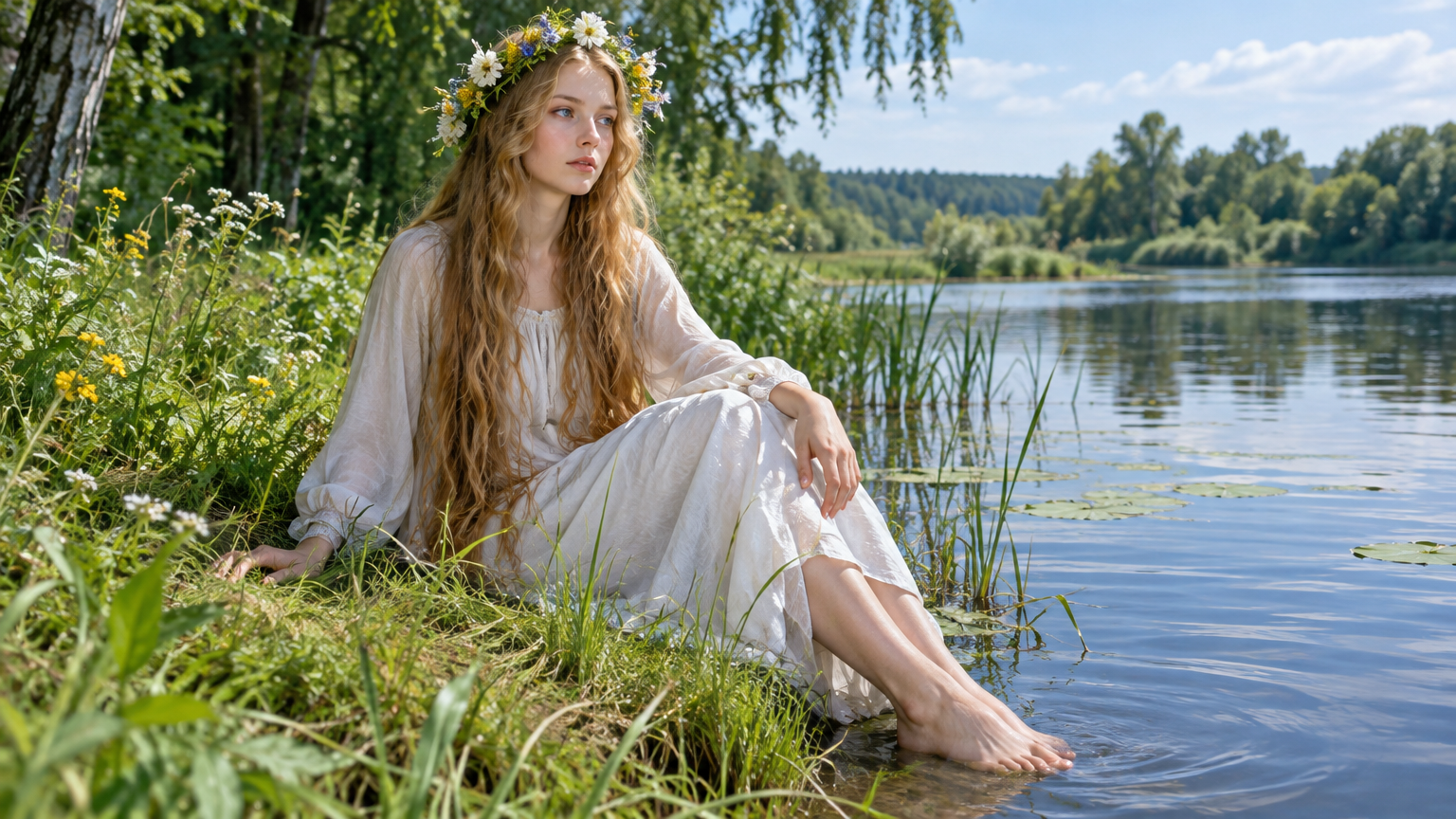
Southern descriptions include green, golden, or strawberry-blond hair, with figures appearing naked, dressed in white, or wearing wedding clothing. Ukrainian accounts also include long-haired young women and wreaths.
These details belong to documented regional portrayals, rather than a costume shared by every being called rusalka.
Nineteenth-century descriptions add pale faces, long limbs, small feet, leaf clothing, and loose white shifts. Such traits offer a recognizably human outline despite supernatural colouring or proportions.
The explicit presence of feet is particularly important: water association alone does not justify replacing the lower body with a fish tail.
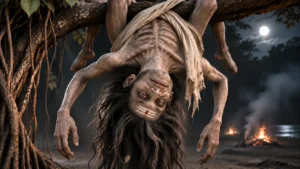
A sharply different Saratov-area account in Ralston’s compilation portrays hunchbacked, hairy beings with sharp claws. This is a specific local variant, not the representative southern appearance.
Northern analogues can likewise be elderly and frightening, but should not automatically be merged with either Saratov or youthful Ukrainian forms.
Childlike appearances introduce another distinction. Ralston records small rusalki resembling seven-year-old girls in beliefs concerning stillborn or unbaptized children.
Their appearance reflects a different account of who the spirits were, rather than establishing that rusalki generally pass through a childhood before becoming adult water spirits.
Background Story
The rusalka’s background is best understood through relationships among the dead, the seasonal landscape, and village life. In some traditions, rusalki become especially active around Pentecost, moving between waterside places, woods, and fields.
Their significance therefore extends beyond the dangers of rivers and lakes.
Untimely or religiously unresolved death provides one important connection among otherwise different accounts. Drowned young women, women who died by suicide, and children who died before baptism do not share a single life story.
In these beliefs, however, their deaths leave a troubled relationship with the living.
The child-spirit traditions make that relationship particularly explicit. Some accounts describe souls seeking baptism during successive Whitsuntide seasons, with spoken formulas or religious services offering possible salvation.
These are reported folk beliefs shaped by Christian concerns, not evidence for a uniform Orthodox teaching about rusalki.
Other encounters emphasize danger rather than assistance. Rusalki may lure people or kill them by tickling, although neither action defines every regional form.
The contrast between youthful beauty and a threatening encounter helps explain why attraction and fear can coexist within the same body of folklore.
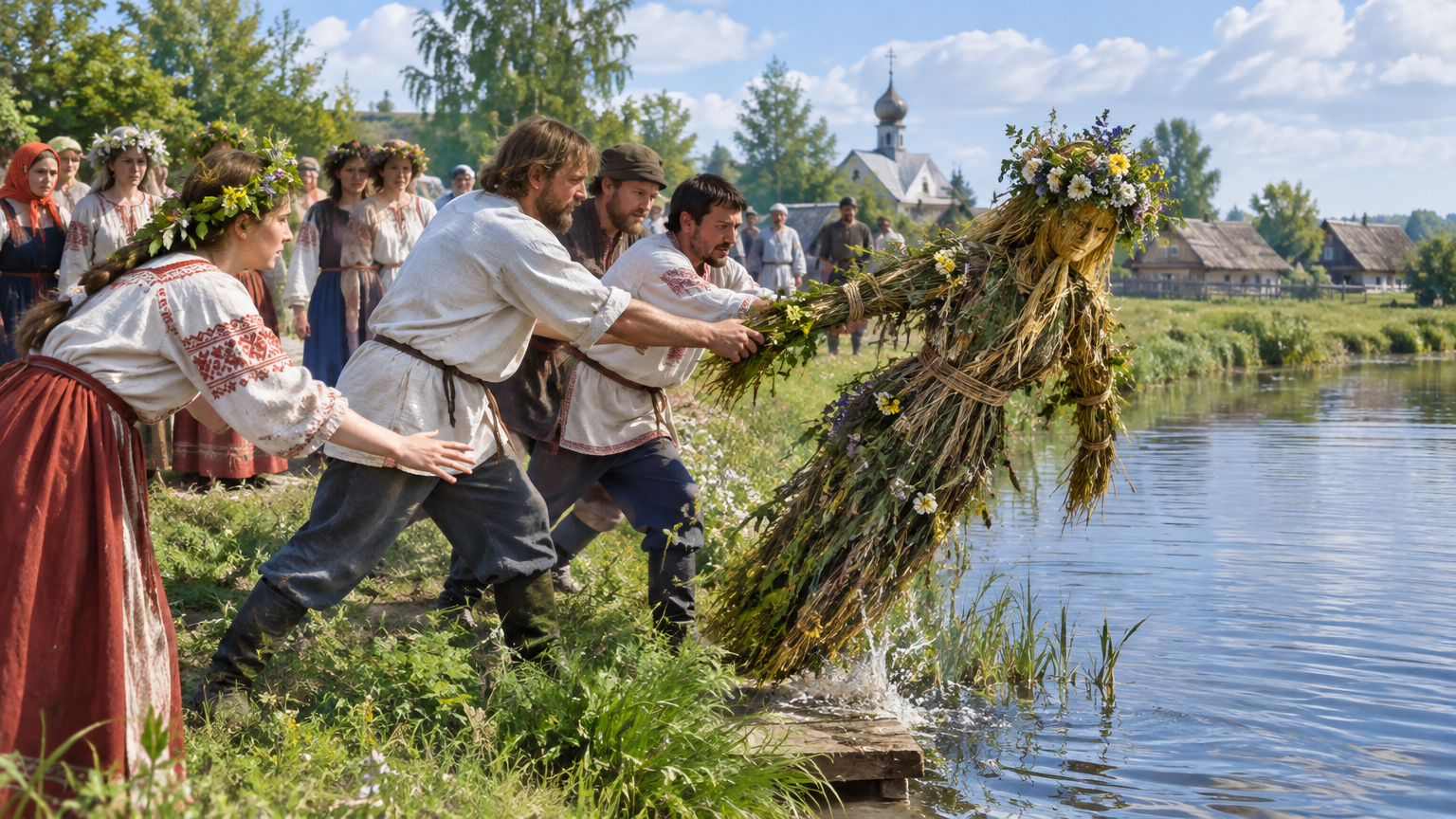
Seasonal rites also place the spirits within a recurring communal cycle. In particular localities, figures representing a rusalka were expelled, torn apart, or thrown into water.
Together with seasonal appearances, these customs support reading the tradition through ritual time, rather than inventing a single personal history for the being.
Famous Folklore Stories
Rusalka traditions include brief encounter accounts and recurring beliefs rather than a single authoritative narrative. The following descriptive headings identify documented motifs, not traditional tale titles.
Their details belong to particular collected accounts and should not be applied to every regional form.
The Saratov Wormwood-and-Parsley Encounter
A woodland encounter reported for the Saratov region turns on a question about plants. A person entering the wood may be asked whether they carry wormwood or parsley.
Answering wormwood brings safety; answering parsley exposes the person to fatal tickling by the supernatural being.
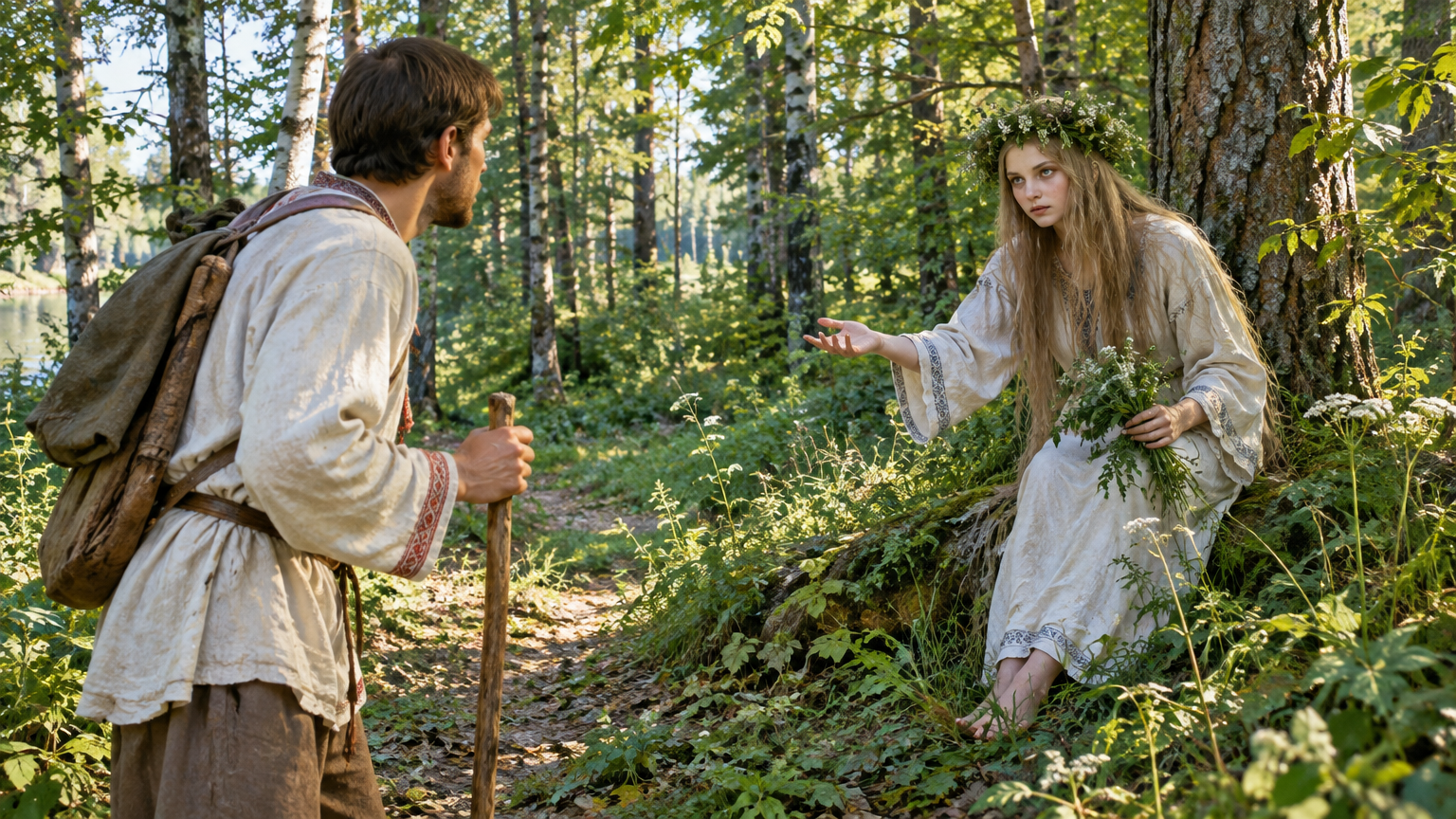
W. R. S. Ralston included this account in The Songs of the Russian People, published in 1872. It is a collected regional belief, not a named folktale with an established protagonist.
The surviving summary supplies the question and contrasting outcomes, but no longer adventure or subsequent rescue.
The episode makes knowledge of the correct response decisive. It also places danger in woodland rather than exclusively underwater.
Its fatal tickling belongs to a documented rusalka motif, but neither that method of attack nor the plant question defines the entire tradition.
Child Souls Seeking Baptism
Another belief recorded in Ralston’s compilation concerns children who died without baptism. During successive Whitsuntide seasons, their souls were said to ask for baptism.
A spoken baptismal formula or a religious service could provide the help they needed and secure their salvation.
The account gives these appeals a seven-year period. Failure to receive assistance was said to leave the souls among the rusalki.
This is a religiously framed narrative pattern about the dead, not an episode in which a drowned adult woman becomes an aquatic seductress.
Here the encounter calls for assistance rather than escape. A human response can change the spirit’s condition, making the relationship between living people and the dead central.
This child-soul tradition must remain distinct from accounts of adult rusalki who threaten travelers or bathers.
Cultural Impact
Historically, the rusalka mattered beyond storytelling because communities could represent the being in seasonal action. Recorded customs used straw figures that were expelled, torn apart, or thrown into water.
These were local forms of observance, not stages of one universal ceremony.
Such performances gave a visible form to an otherwise elusive presence. A figure could be carried away or destroyed collectively, bringing the seasonal encounter to an enacted close.
Interpreting every version as the survival of an identical ancient fertility rite would exceed the evidence.
In Ukrainian culture, the rusalka also became a subject of literature, music, painting, drama, and cinema. These artistic settings offered different possibilities from local belief: a communal seasonal presence could become an individual character, while a dangerous encounter could acquire emotional or symbolic emphasis.
Modern scholarship has challenged the reduction of this material to a beautiful water maiden. Jiří Dynda’s comparative study instead connects regional forms with seasonal time, death, and sexuality.
This approach treats their differences as meaningful evidence rather than imperfections in a supposedly original, uniform creature.
Similar Beasts
Vodyanoy

The Vodyanoy is a distinct male water spirit in Slavic folklore, associated with rivers and ponds. Accounts describe a dangerous presence capable of capturing unwary people.
Its aquatic setting overlaps with many rusalka accounts, but it is not a male synonym for rusalka. The two belong to distinct folkloric categories.
Leshy
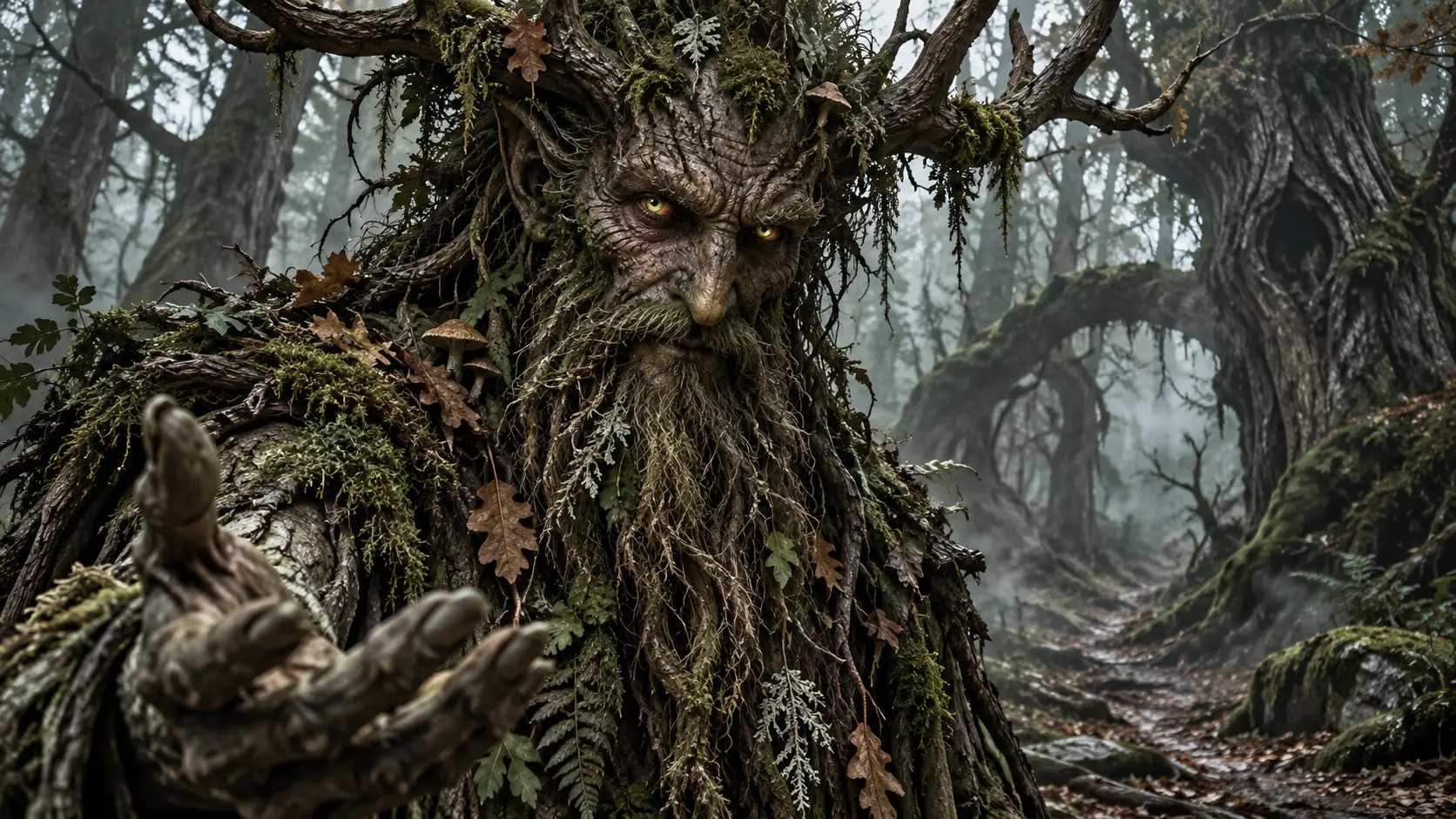
The Leshy is a forest spirit in Slavic folklore, associated with wild places and shapeshifting. It may confuse travelers or lead them astray in the woods.
Woodland encounters provide the clearest comparison: rusalki also appear away from water. Shared habitat, however, does not make their identities or seasonal associations interchangeable.
Näcken
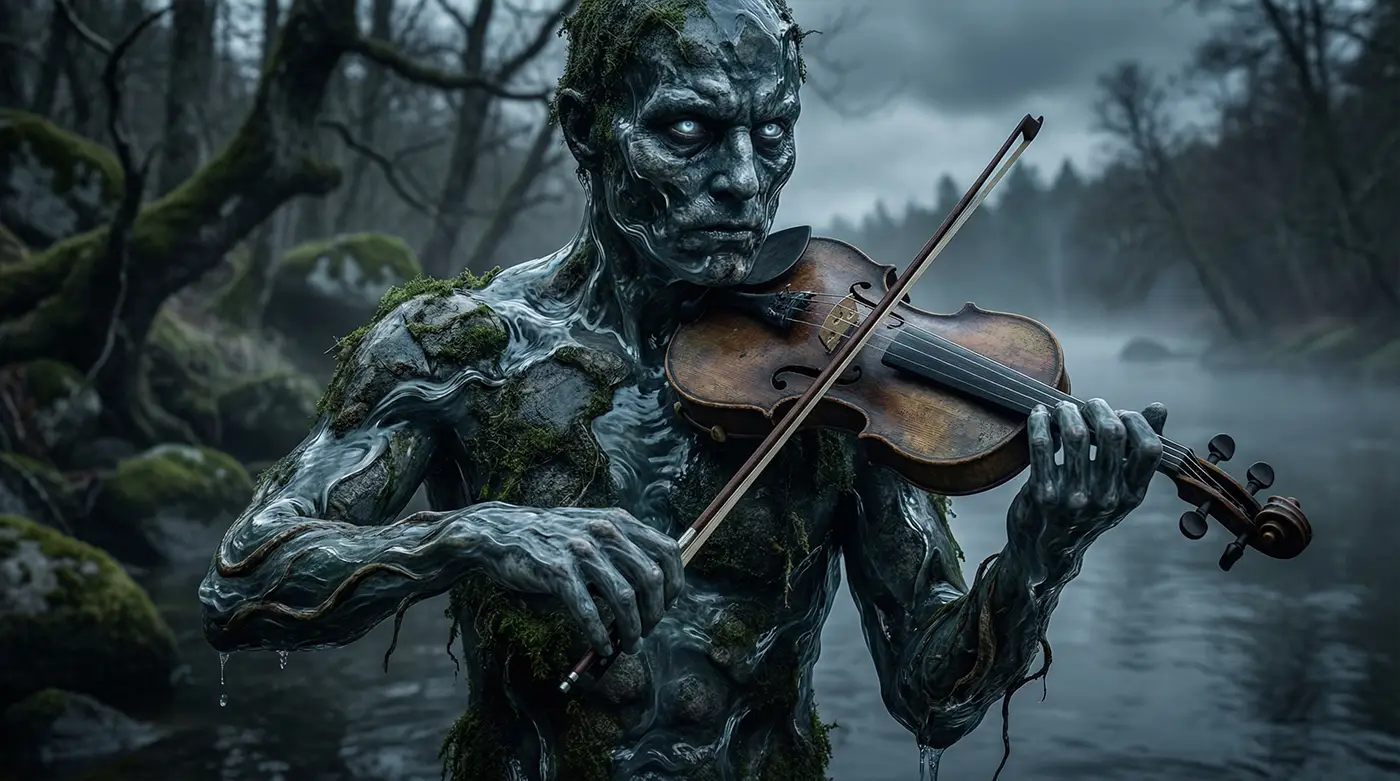
Näcken is a Scandinavian water spirit known for enchanting music and shapeshifting. Its association with water makes it a useful comparison within the wider folklore of supernatural encounters.
The parallel concerns water and supernatural attraction, not shared origins. Musical enchantment should not be transferred automatically from Näcken to every regional account of rusalki.
Drekavac
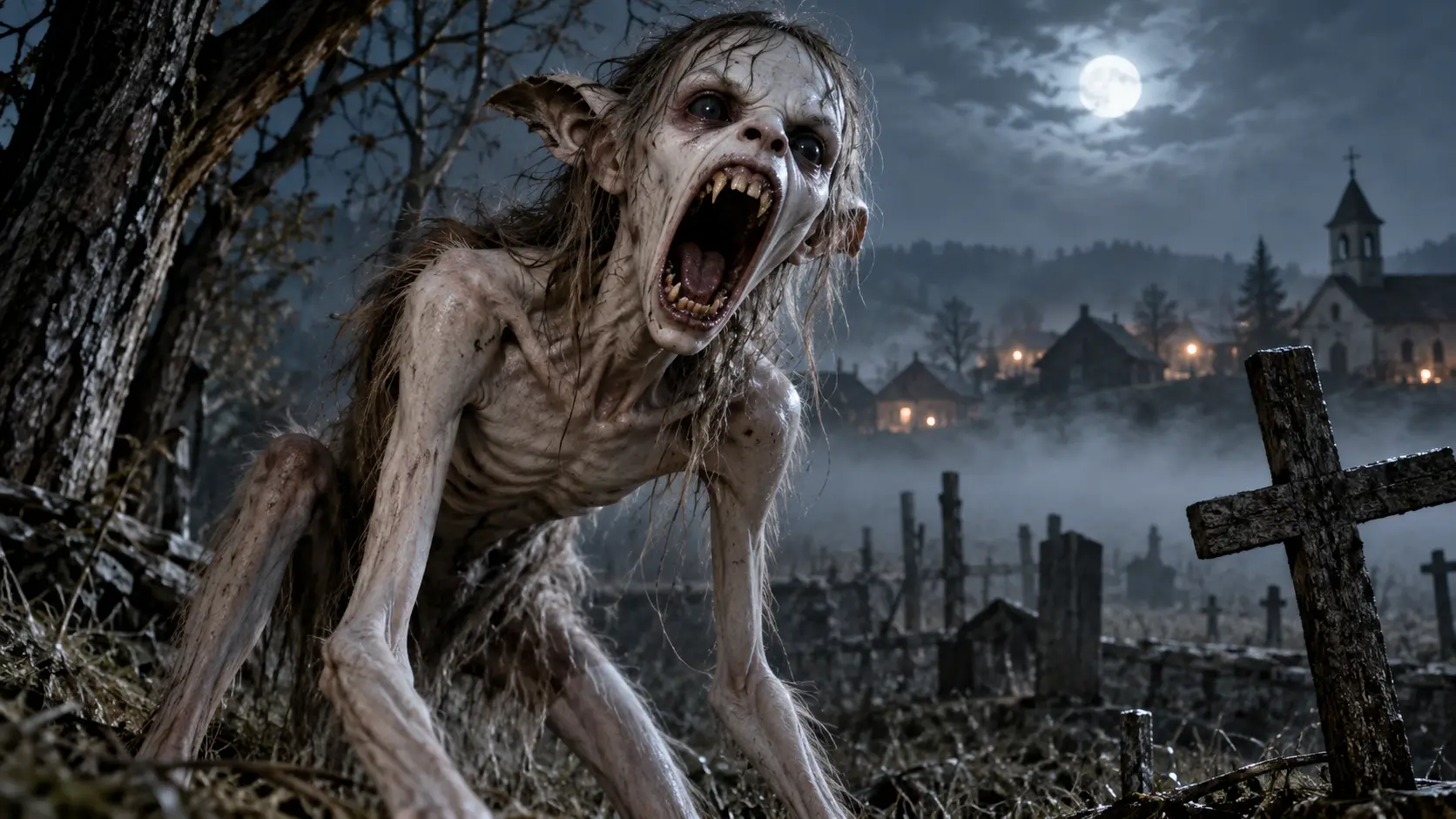
The Drekavac is a South Slavic spirit often understood as the restless soul of an unbaptized child. Its cries are associated with death or impending misfortune.
It resembles the child-soul strand of rusalka belief more closely than the aquatic-maiden image. That resemblance does not establish identical seasonal appearances or protective rites.
Religion/Ritual
Rusalka observances are closely connected with the Pentecost or Trinity season in the Orthodox calendar. The week following Pentecost is especially important in specialist interpretation, although regional schedules differ.
Seasonal timing is therefore part of the tradition itself, not merely background scenery.
Practices concerning unbaptized children brought Christian language into encounters with the restless dead. Prayers, baptismal formulas, and religious services were understood as possible means of assistance.
These reported folk beliefs do not establish an official Orthodox teaching that such souls became rusalki.
Protective practices and offerings addressed a different relationship with the beings: keeping danger at a distance or managing their seasonal presence. Wormwood appears in documented protective belief.
The Saratov plant-question account provides one specific example, but it does not prove an identical practice throughout East Slavic communities.
Seasonal expulsion customs likewise varied by locality. The destruction or removal of a straw representative could mark the departure of the rusalka, but the recorded actions differed.
These practices should be read alongside the local calendar and account, rather than assembled into a reconstructed universal ritual.
Scientific or Rational Explanations
The evidence establishes rusalki as subjects of folklore, ritual, and artistic representation, not as biological organisms. Scientific discussion is therefore most useful when it asks how these beliefs functioned and changed, rather than attempting to identify an animal behind every reported form.
An anthropological interpretation connects the beings with deaths regarded as untimely or religiously unresolved. Accounts involving drowned people and unbaptized children give narrative form to disrupted lives and uncertain relationships with the dead.
This explains an important strand, not every regional description.
Seasonal interpretation offers another approach. Their expected appearances around Pentecost connect encounters with a recurring communal calendar. Dynda’s analysis treats that timing as integral to their meaning: understanding when rusalki appeared can be as important as cataloguing their supposed physical traits.
Sexuality and interrupted life transitions also matter in specialist interpretation. Young female forms, wedding clothing, and associations with premature death can be examined together.
This is an analytical reading of documented motifs, however, not proof that every rusalka represents the same social anxiety.
Historical source criticism provides a further safeguard. Ralston’s nineteenth-century compilation preserves valuable regional reports, but it is not independent field testimony for each encounter.
Comparing its accounts with specialist research and Ukrainian reference material helps distinguish recorded variation from later simplification into a single mermaid-like figure.
Modern Cultural References
The Rusalka continues to influence literature, opera, music, cinema, and video games. Modern adaptations explore her connection with water, death, love, and supernatural vengeance, sometimes preserving traditional Slavic beliefs while introducing new interpretations of her origins and behavior.
Rusalka (1901), opera by Antonín Dvořák, libretto by Jaroslav Kvapil
This celebrated Czech opera follows a water nymph who sacrifices her supernatural existence to pursue love with a human prince, blending Slavic folklore with European fairy-tale traditions.
Source: https://www.metopera.org/learn/education/learning-library/educator-guides/rusalka/
Rusalka (1989), fantasy novel by C. J. Cherryh, Ballantine Books
Set in a fictionalized pre-Christian Russia, the novel follows Eveshka, a murdered young woman who becomes a Rusalka and drains life from her surroundings while her father seeks her resurrection.
Source: https://www.cherryh.com/www/univer.htm
Quest for Glory IV: Shadows of Darkness (1993), video game by Sierra On-Line
The adventure game features Elyssa, a Rusalka haunting a lake in Mordavia.
Players encounter her dangerous spirit and, as a Paladin, can uncover her history and free her.
Source: https://rpggamers.com/walkthrough/quest-for-glory-4-shadows-of-the-darkness-4
Rusalka, Rusalka / The Wild Rushes (2018), song by The Decemberists, I’ll Be Your Girl
This narrative song draws on Slavic water-spirit traditions, portraying a dangerous supernatural woman who lures men toward drowning through beauty and desire, combining folkloric horror with dramatic musical storytelling.
Source: https://pitchfork.com/reviews/albums/the-decemberists-ill-be-your-girl/
The Mermaid: Lake of the Dead (2018), Russian horror film directed by Svyatoslav Podgayevsky
Originally titled Rusalka: Ozero myortvykh, this supernatural horror film follows a young man who encounters a mysterious woman beside a forest lake and becomes trapped in her deadly curse.
Source: https://qsfilms.com/rusalka
Conclusion
Rusalka is best understood as a variable category of East Slavic female spirit rather than a single creature with one appearance or origin. Regional traditions connect rusalki with water, woods, fields, seasonal boundaries, untimely death, and the period surrounding Pentecost or Trinity.
Young women, unbaptized children, and frightening local forms all appear in the record, while the now-familiar fish-tailed image does not provide a dependable folkloric baseline.
The figure’s lasting power comes from its position between categories: life and death, land and water, cultivated fields and wild places, Christian observance and inherited seasonal custom. Literary, musical, cinematic, and podcast treatments have preserved the name while often reshaping its meanings.
Reading these portrayals beside regional folklore restores the rusalka’s complexity and reveals a tradition concerned not merely with aquatic danger, but also with memory, social boundaries, sexuality, and unsettled death.
Further Reading
W. R. S. Ralston, The Songs of the Russian People, Darwin Online.org
Ralston reports that a person entering a wood may be asked whether they carry wormwood or parsley: the wormwood response brings safety, while the parsley response leads to fatal tickling.
(darwin-online.org.uk)
Rusalki: Anthropology of Time, Death, and Sexuality in Slavic Folklore, Studia Mythologica Slavica
Specialist study comparing regional forms and interpreting the beings in relation to death, seasonal time, sexuality, and the Orthodox calendar.
(ojs.zrc-sazu.si)
Этимологический словарь русского языка, entry русалка, Фасмер etymological dictionary reproduction
Gives the festival-derived etymology and notes a proposed influence from русло; use with specialist discussion for context.
(terminy.info)
Rusalka, Encyclopedia of Ukraine
Concise account focused on Ukrainian beliefs, reported appearance, seasonal customs, and cultural presence.
(encyclopediaofukraine.com)