Introduction
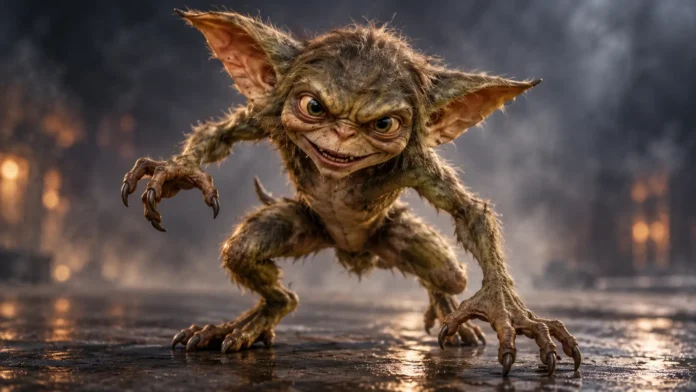
A gremlin is a mischievous supernatural troublemaker associated chiefly with aircraft in twentieth-century British aviation folklore. Aircrew blamed these imagined saboteurs for unexplained faults, damage, and breakdowns.
Their defining feature is interference with machinery rather than any single physical appearance.
The creature belongs especially to the Royal Air Force and the storytelling culture that spread during the Second World War. It is a machine-age folkloric figure, not an ancient European fairy with an established ancestry, fixed anatomy, or inherited cycle of legends.
Gremlin stories gave mechanical misfortune an intentional culprit. An aircraft had not simply developed a fault: something troublesome had interfered with it.
This explanation could operate as a joke, a shared superstition, or an imaginative response to the uncertainties of flying.
Roald Dahl helped bring this aircrew folklore to a wider readership through a magazine story in 1942 and an illustrated book in 1943. His characters and the accompanying Disney artwork shaped particular versions of the creature without establishing a universal traditional form.
History/Origin
Gremlins belong to twentieth-century aviation folklore, but their defining idea has older parallels. European stories had long imagined small, troublesome beings around households and workplaces.
Those similarities offer historical context without proving that British aircrews inherited a creature already called a gremlin.
Cornish miners, for example, told stories about Knockers, small supernatural beings that inhabited underground workings. During the Industrial Revolution, these traditions adapted to changing mining conditions.
However, no surviving evidence demonstrates that such spirits directly inspired the later aviation gremlin.
The earliest possible gremlin traditions reach back to the First World War. In 1943, W. E. Woosnam-Jones wrote that Royal Naval Air Service personnel encountered gremlins in 1917, with similar stories circulating after the Royal Air Force formed in 1918.
His account provides valuable testimony about an earlier tradition, but it appeared more than twenty years after the events described. Researchers have not identified a contemporary document from 1917 confirming supernatural gremlins.
The precise beginning of the aviation legend therefore remains uncertain.
The word itself appeared in print before the Second World War. A 1929 poem titled Flight-Lieutenant Hiawatha, published in The Aeroplane, used “gremlins” for lower-ranking RAF personnel.
However, this reference concerned people, not necessarily imaginary creatures responsible for machinery failures.
More convincing evidence appears in Pauline Gower’s 1938 book Women with Wings. She describes an established aviation legend involving small creatures that haunted dangerous flying conditions.
Armed with scissors, these troublesome beings supposedly tried to cut aircraft control wires when pilots encountered difficulties.
A March 1939 Daily Mail article offered another colorful account, claiming a squadron leader blamed gremlins after crashing his aircraft. The story also described strange little men appearing around pilots.
Its proposed explanation for the name remains unverified, however.
During the Second World War, gremlins became widely recognizable throughout British aviation culture. Their reputation spread through servicemen’s accounts, humorous articles, drawings, and wartime publications.
Pilots and ground crews gave the imaginary beings personalities that matched their frustrating and unpredictable working environment.
The creature’s international popularity grew further when Roald Dahl adapted RAF folklore into The Gremlins, published in Cosmopolitan in December 1942 and as an illustrated book in 1943. His contribution expanded an existing tradition rather than creating the gremlin from nothing.
Name Meaning
The origin of “gremlin” is unresolved. Its established meaning concerns a troublesome being blamed for mechanical faults, but that meaning does not reveal exactly how the word was coined.
The earlier RAF slang usage further complicates attempts to reconstruct a simple origin.
Oxford suggests that “goblin” may have influenced the formation. The resemblance suits the creature’s mischievous character, but a possible influence is not a demonstrated derivation.
It also does not establish that gremlins and goblins were historically the same kind of being.
Another proposal connects the name with Old English gremian, meaning “to vex.” The specialist study “The Gremlin: Transforming the Past’s Failures” discusses this explanation among competing origin claims.
Its semantic suitability is suggestive, but the historical connection has not been securely established.
Other explanations invoke combinations involving “goblin,” Fremlin beer, or Grimm’s Fairy Tales. These remain hypotheses rather than settled etymologies.
The strongest conclusion is narrower: the word circulated in RAF language before becoming widely familiar as the name of an imaginary mechanical saboteur.
Appearance
Gremlins have no single authoritative appearance. Many descriptions imagine small humanoid, imp-like, or gnome-like beings, but their identity rests primarily on what they do.
A creature interfering with an aircraft is more recognizably a gremlin than any particular face, costume, or body shape.
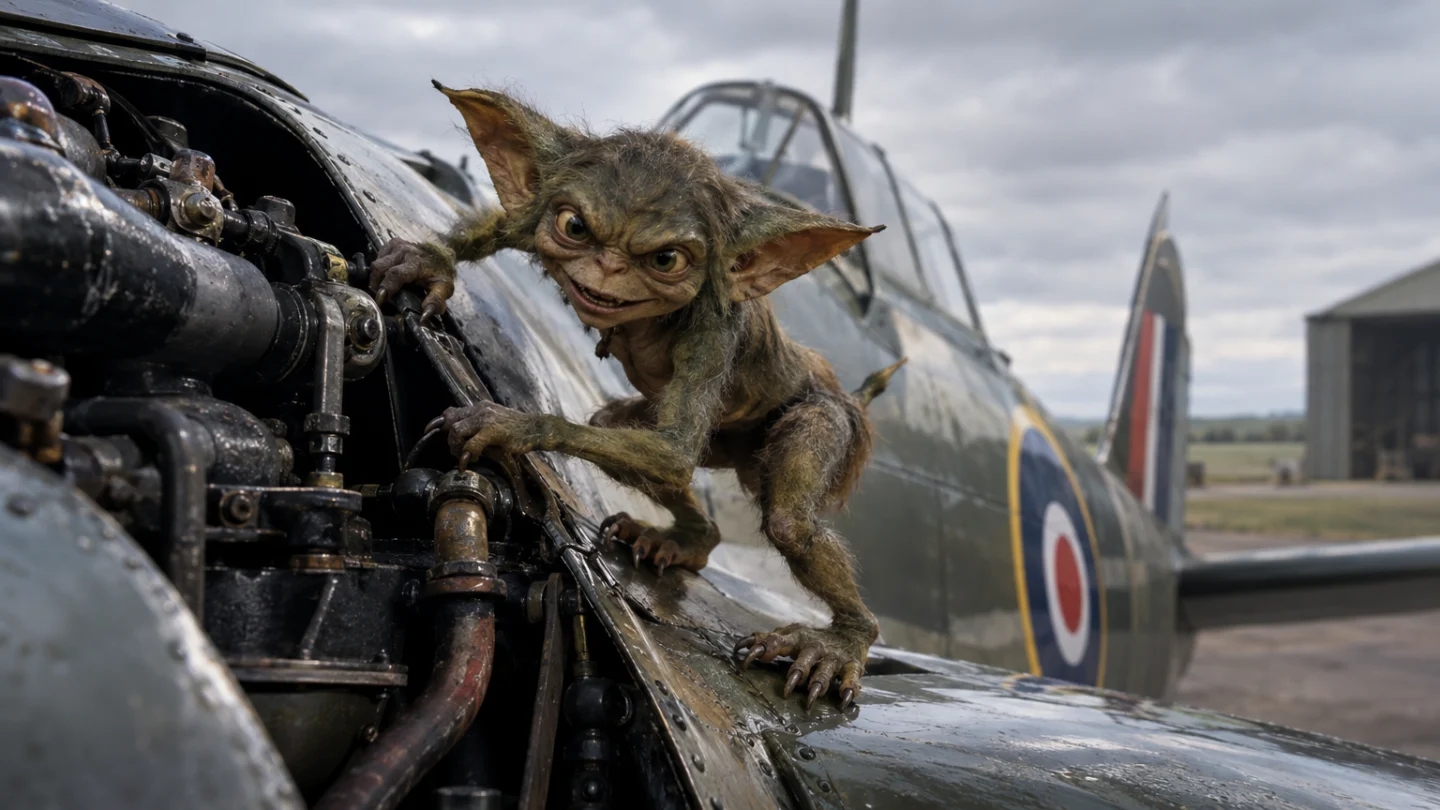
Smallness is a recurring feature rather than a precise measurement. It allows the creature to be pictured beside aircraft components or crawling over machinery.
The tradition does not provide a dependable standard height, and numerical specifications would give these variable descriptions a misleading biological precision.
Some portrayals place gremlins clinging to aircraft or moving across their surfaces. Others emphasize unseen interference, leaving the culprit’s appearance secondary to the resulting fault.
These approaches express the same central idea: machinery is being deliberately troubled by an elusive, mischievous presence.
Dahl’s book supplied a more concrete illustrated interpretation through Disney artists. Bill Justice and Al Dempster illustrated the 1943 volume, with a cover design by Mary Blair.
Their work belongs to a particular publishing collaboration rather than a visual record of one uniform RAF belief.
Wartime gremlin mascots likewise gave physical form to an otherwise elusive troublemaker. As good-luck objects carried by aircrew, they demonstrate that gremlins could be represented tangibly and affectionately.
They do not establish that every crew imagined an identical creature or assigned it identical features.
Later screen designs should remain separate from this variable aviation baseline. The creatures in the 1984 film Gremlins belong to that film’s fictional world.
Their recognizable appearance cannot be projected backward as the standard form of the beings discussed by wartime RAF personnel.
Background Story
Gremlin folklore imagines a hidden population of troublesome beings living alongside aircraft and the people who operate them. Unlike creatures with established mythological genealogies, gremlins have no universally accepted creator, ancestral kingdom, or legendary ruler.
Their world develops around their mischievous activities.
An entertaining account published by W. E. Woosnam-Jones describes gremlins living underground near airfields. Their dwellings supposedly have entrances resembling rabbit holes, allowing them to emerge unnoticed.
Once an aircraft becomes available, the creatures climb aboard and begin their troublesome adventures.
Although aircraft occupy the center of their activities, gremlins supposedly cannot fly independently. They travel as unwanted passengers, hiding in compartments or moving across the aircraft’s structure.
This unusual limitation makes them dependent on the very machines they delight in tormenting.
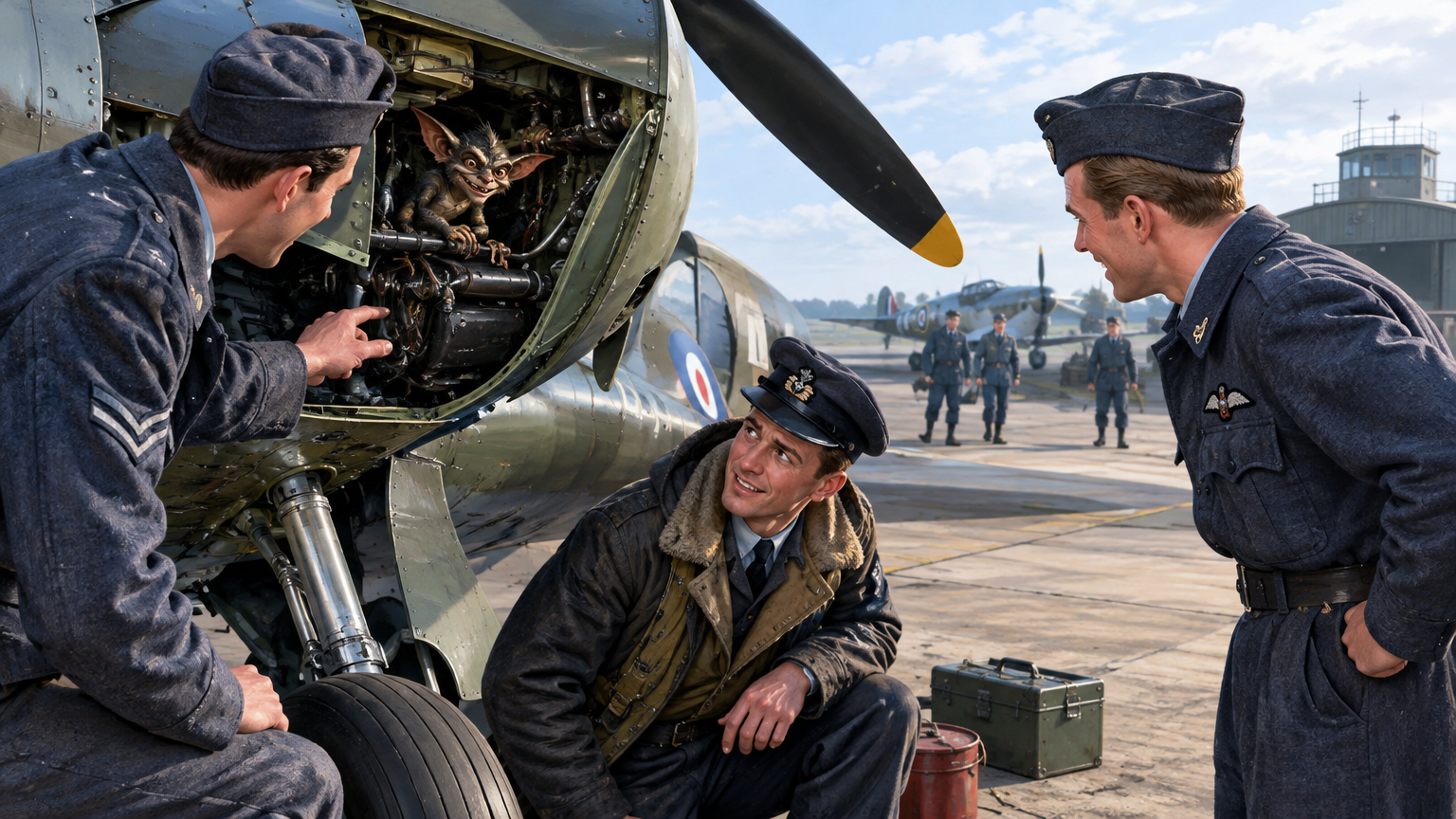 During World War II, English aircrew shared tales of the Gremlin while relying on complicated aircraft in dangerous working conditions.
Some versions give gremlins distinctive personal habits. They enjoy stealing food, disturbing equipment, and playing tricks on unsuspecting humans.
Their behavior resembles that of mischievous household spirits, although their activities involve engines, fuel tanks, flight instruments, and other technological inventions.
The creatures also demonstrate remarkable resourcefulness. Woosnam-Jones humorously describes gremlins traveling on seabirds and using their clothing to survive falls from aircraft.
These imaginative details belong to a particular published account, not to an established collection of universal supernatural powers.
Gremlins rarely appear as enemies pursuing a specific heroic victim. Instead, their stories revolve around brief encounters, unexpected disturbances, and humiliating practical jokes.
The absence of a single definitive narrative allowed different storytellers to invent new activities without contradicting an established mythology.
Famous Folklore Stories
Early aviation folklore produced numerous humorous explanations for unexpected flying difficulties. W. E. Woosnam-Jones preserved several detailed examples in The Spectator in January 1943.
These accounts present recognizable storytelling scenarios rather than documented incidents of supernatural intervention.
The Gremlin That Drank the Aircraft’s Fuel
A pilot flies toward his destination, confident that the aircraft carries enough petrol to complete the journey. However, the fuel supply begins disappearing far more quickly than expected.
According to gremlin folklore, the explanation lies somewhere deep inside the aircraft’s machinery.
A mischievous gremlin has discovered the fuel tank and decided to enjoy an enormous drink. Petrol supposedly ranks among its favorite refreshments, and the creature sees no reason to consider the pilot’s needs.
Its appetite continues until the aircraft faces serious trouble.
“drinking petrol, which is their favourite beverage.” (W. E. Woosnam-Jones, Gremlins, The Spectator, January 1, 1943.)
The unfortunate pilot must make an emergency landing before reaching the intended destination. The aircraft may suffer damage, making an already embarrassing situation considerably worse.
Instead of receiving sympathy, the pilot faces criticism from a commanding officer who suspects negligence or poor planning.
Meanwhile, the supposed troublemaker remains hidden inside the fuel tank, thoroughly intoxicated and delighted with the confusion it has created. Nobody discovers the real culprit because the creature has concealed itself where the investigators would never think to search for it.
The story transforms a potentially dangerous fuel shortage into an elaborate practical joke. Its humor depends on the contrast between the pilot’s professional responsibilities and an invisible creature behaving irresponsibly.
Woosnam-Jones presents the explanation playfully, not as evidence of genuine supernatural sabotage.
The Mysterious Knocking Above the Sea
Another tale concerns a pilot crossing open water in a single-engine aircraft. Far from a suitable landing place, the pilot depends completely on the engine’s continued operation.
Any unfamiliar noise could suggest an approaching mechanical failure with potentially disastrous consequences.
A gremlin supposedly recognizes this vulnerability and slips beneath the engine cowling. It begins tapping loudly against the structure, creating alarming sounds that reach the cockpit.
The pilot hears the knocking but cannot identify its source or inspect the machinery safely.
“the Gremlin just laughs himself sick.” (W. E. Woosnam-Jones, Gremlins, The Spectator, January 1, 1943.)
Believing that the engine might fail at any moment, the pilot struggles through an increasingly stressful journey. Eventually, the aircraft reaches an airfield safely.
The pilot immediately reports the disturbing noise and asks the maintenance personnel to investigate the apparent mechanical problem.
The mechanics examine the aircraft and run its engine, expecting to reproduce the reported sounds. Instead, the machinery operates perfectly.
Nothing appears broken, and no mysterious knocking interrupts the inspection. The pilot’s urgent complaint suddenly seems exaggerated or entirely mistaken.
The embarrassed airman withdraws while the imaginary gremlin enjoys its success. Unlike the fuel-tank story, this adventure involves no actual damage.
The creature merely creates fear and uncertainty, demonstrating how an unexplained sound could become the foundation of an entertaining aviation legend.
The Gremlin That Moved an Entire Airfield
Among the most extravagant gremlin stories is the tale of an entire airfield that moves unexpectedly. Woosnam-Jones describes an imaginary network of hydraulic jacks installed beneath training aerodromes, all controlled through a lever operated by a particularly mischievous duty gremlin.
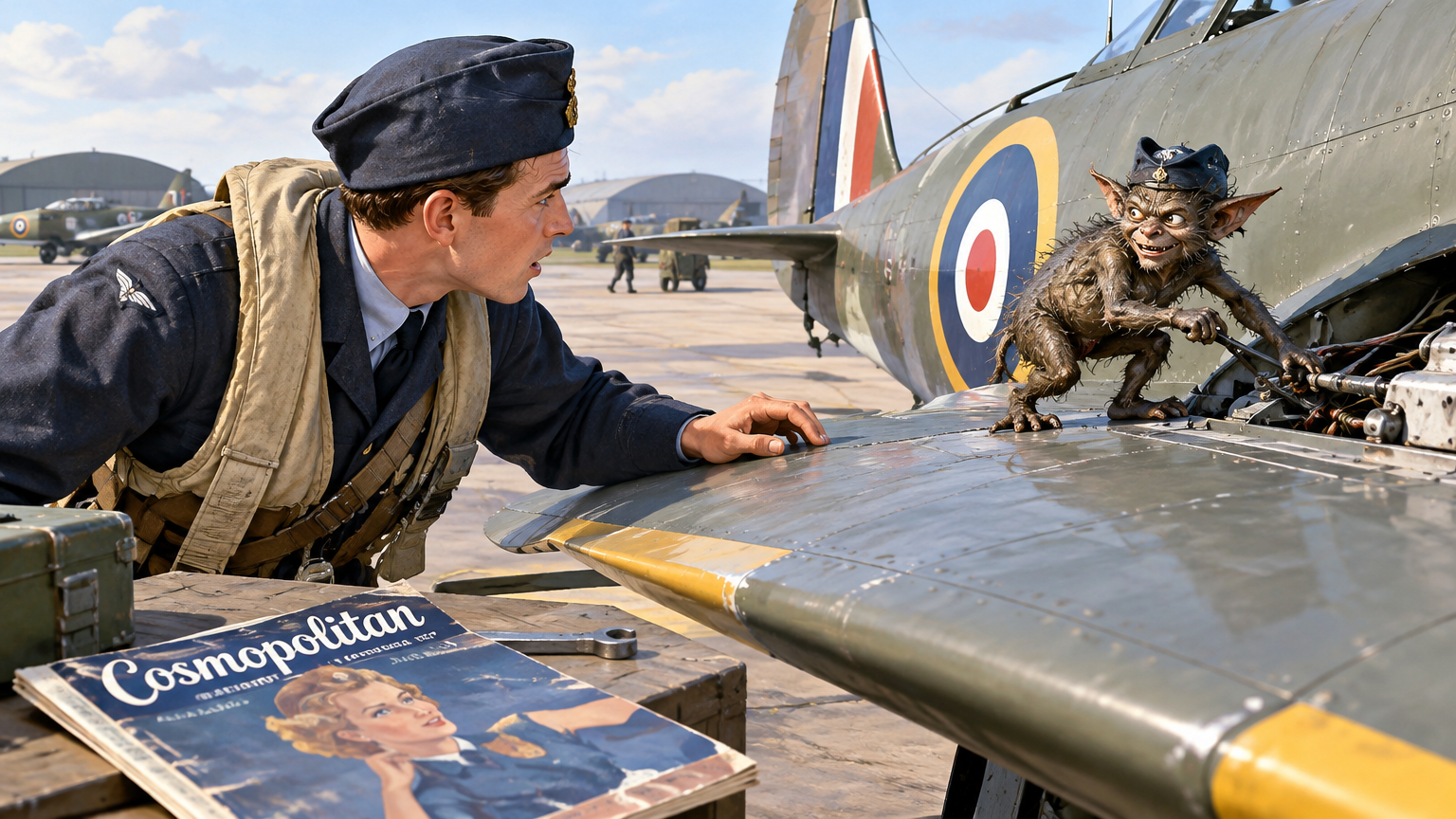
The creature waits for an inexperienced pilot to approach the runway. Landing requires careful judgment, and the student concentrates on positioning the aircraft correctly.
Just as the wheels approach the ground, the gremlin prepares to interfere with the final moments of descent.
“the whole aerodrome either sinks down ten feet” (W. E. Woosnam-Jones, Gremlins, The Spectator, January 1, 1943.)
With a sudden movement of the lever, the gremlin raises or lowers the entire airfield. The unsuspecting pilot either finds the runway unexpectedly distant or strikes it much sooner than anticipated.
A carefully prepared landing becomes an awkward and potentially damaging disaster.
Afterward, the instructor criticizes the student’s performance. The pilot insists that the airfield moved during the landing, but the explanation sounds ridiculous.
By then, the duty gremlin has restored everything to its original position, leaving no visible evidence of interference.
The tale concludes with the creature waiting eagerly for another unfortunate student. Its impossible engineering makes the story deliberately absurd, while the underlying frustration remains recognizable.
The gremlin becomes a comic explanation for failed landings and the embarrassment of inexperienced pilots.
Cultural Impact
Gremlins became recognizable symbols of British military aviation during the Second World War. Their images appeared in illustrations, humorous publications, and morale-related material.
They helped establish a distinctive form of service humor that combined technological danger with the familiar language of supernatural mischief.
The creatures also appeared in safety messages connected with wartime industrial production. Illustrators could depict careless behavior or preventable errors as the work of invisible troublemakers.
This gave the gremlin a practical role beyond entertainment, making abstract workplace hazards visually memorable.
Eventually, the word entered everyday language outside aviation. People began referring to unexplained faults in machinery and electronic devices as gremlins, often without suggesting genuine supernatural interference.
The expression preserved the creature’s identity while freeing it from its original military setting.
Similar Beasts
Trasgu
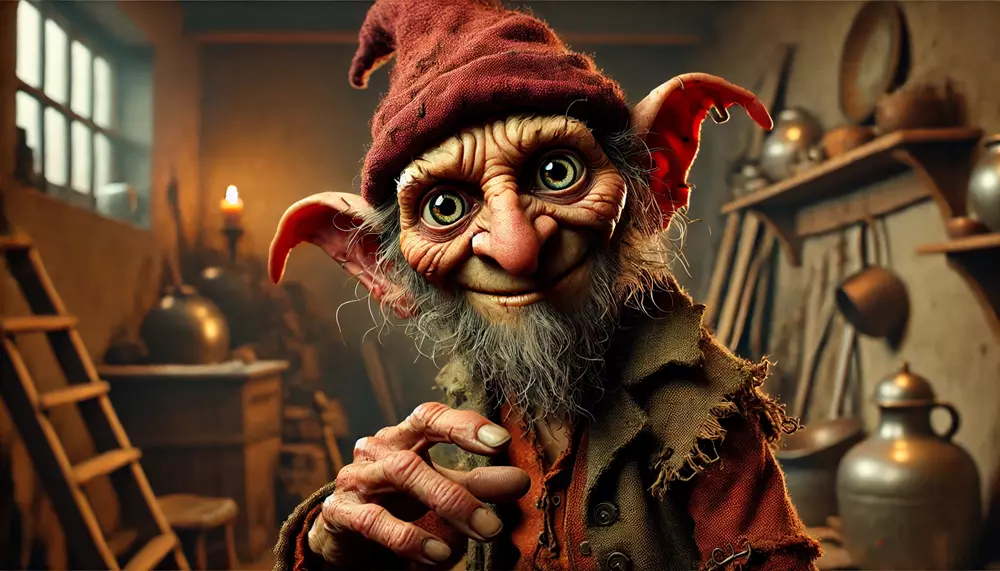
The Trasgu is a goblin-like prankster associated with domestic settings in Asturian folklore. Its characteristic place is the household, where supernatural mischief intrudes upon ordinary human routines.
Both figures make everyday disruption seem intentional. The comparison concerns their troublesome narrative role, not shared ancestry: the Trasgu’s domestic setting differs from the gremlin’s aircraft-centered world.
Kallikantzaros
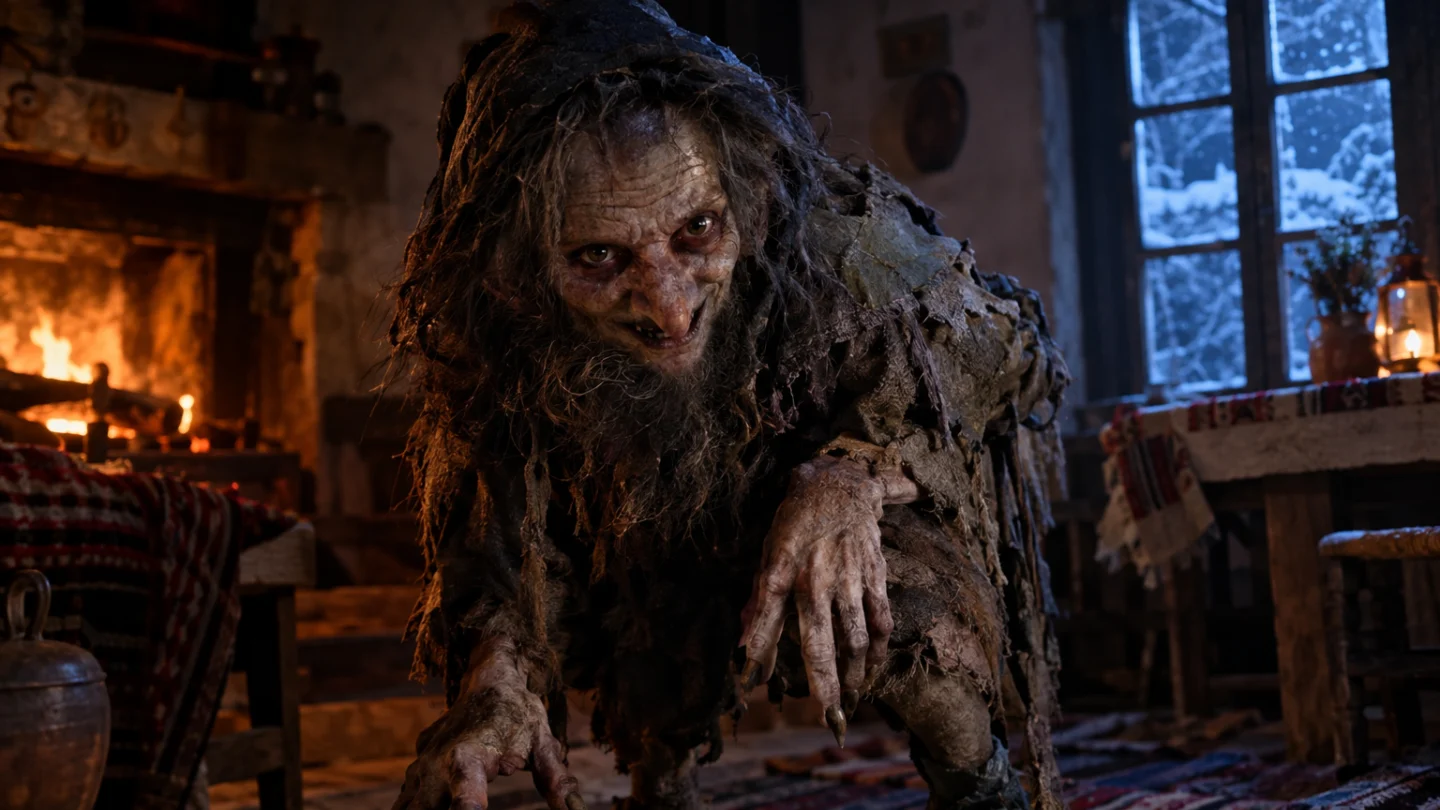
Kallikantzaros are mischievous goblin-like beings in Greek folklore, associated with an underground existence. They belong to a separate supernatural tradition rather than to the occupational storytelling of aircrews.
The resemblance lies in goblin-like mischief and disruption. It does not establish aircraft sabotage, a common origin, or a single appearance shared with gremlins.
Read more about Kallikantzaros
Knocker
Knockers are supernatural mining spirits from Cornish folklore, sometimes associated with mysterious tapping sounds, hidden mineral deposits, and warnings of danger. Like gremlins, they inhabit hazardous workplaces and provide supernatural explanations for unusual events, although their traditions developed independently.
Kobold
Kobolds are spirits from German folklore associated with homes, mines, and other working environments. Depending on the tradition, they may help workers or cause trouble.
Their resemblance to gremlins lies in their unpredictable behavior and their connection with human activity.
Trasgu
The Trasgu is a mischievous household spirit from Asturian folklore in northern Spain. It hides objects, disturbs domestic routines, and plays frustrating tricks on residents.
Like gremlins, its mischievous presence transforms unexplained everyday disturbances into the actions of an unseen creature.
Hobgoblin
Hobgoblins belong to British folklore and often appear as troublesome domestic spirits. Some help with household work, while others enjoy practical jokes.
Their unpredictable conduct resembles gremlin mischief, but traditional hobgoblins belong to older rural and household settings rather than aviation.
Religion/Ritual
No established worship or formal gremlin ritual is documented in the supplied evidence. The clearest associated practice is carrying lucky mascots.
These belong to wartime aircrew good-luck customs, not to a demonstrated religious system with prescribed ceremonies, offerings, or religious authorities.
Surviving examples in the RAF Museum’s collection give this custom a material basis beyond later recollection. A mascot documents the use of a gremlin image as a lucky object, but it cannot by itself establish how literally its owner understood the creature or its supposed powers.
Scientific or Rational Explanations
Aircraft develop mechanical problems through identifiable physical processes, including component wear, maintenance errors, structural damage, and environmental conditions. Early aviation involved substantial uncertainty, particularly during difficult weather or combat operations.
Gremlin stories offered memorable explanations when the actual causes of problems remained unclear.
Psychologically, personification can make unpredictable events seem more understandable. Giving a mechanical failure an imaginary personality turns frustration into a story with an identifiable antagonist.
Among aircrews, this shared humor may also have helped reduce tension and encourage camaraderie during dangerous operations.
Occupational folklore offers another explanation. Communities working in hazardous environments often develop distinctive stories about their surroundings, as Cornish miners did with Knockers.
The comparison helps explain the gremlin’s appeal, but it does not establish supernatural causes or prove direct historical descent.
Modern Cultural References
Gremlins have appeared in literature, animation, television, and cinema since the Second World War. Early adaptations preserved their connection with aircraft sabotage, while later productions developed independent monster identities.
These examples illustrate how the creature evolved from military folklore into popular entertainment.
The Gremlins by Roald Dahl, illustrated by Walt Disney artists, 1943, Children’s Book
Dahl adapts RAF folklore into an illustrated story involving a pilot named Gus and mischievous gremlins.
Disney artists illustrated the book after plans for an animated film stalled.
Source: https://www.waltdisney.org/blog/gremlins-and-tale-two-storytellers
Falling Hare, 1943, Animated Short Directed by Bob Clampett, Warner Bros.
Bugs Bunny encounters a mischievous gremlin attempting to sabotage a military aircraft.
The wartime cartoon preserves the creature’s original aviation connection while transforming dangerous sabotage into slapstick comedy.
Source: https://cartoonresearch.com/index.php/those-warner-bros-gremlin-cartoons/
The Twilight Zone: Nightmare at 20,000 Feet, 1963, Television Episode Directed by Richard Donner
William Shatner portrays an airline passenger who sees a gremlin interfering with an aircraft wing.
Other passengers doubt his claims, turning supernatural sabotage into psychological suspense.
Source: https://www.paramountplus.com/shows/video/2qB0psc8BfEqEijT47f8yH1cjqBoKosO/
Twilight Zone: The Movie, 1983, Film Segment Directed by George Miller
George Miller reimagines Richard Matheson’s airplane story with a more frightening creature and an increasingly desperate passenger, emphasizing visible mechanical sabotage, panic, and the uncertainty surrounding extraordinary claims.
Source: https://amblin.com/movie/twilight-zone-the-movie/
Gremlins, 1984, Film Directed by Joe Dante
This horror-comedy introduces destructive creatures that emerge when Mogwai undergo a dangerous transformation.
Unlike traditional aviation gremlins, these monsters unleash chaos throughout an American town.
Source: https://catalog.afi.com/Catalog/moviedetails/68263
Gremlins 2: The New Batch, 1990, Film Directed by Joe Dante
A new population of gremlins invades a New York high-rise, spreading destruction through offices, laboratories, and television studios.
The sequel emphasizes technology, corporate culture, and absurdist comedy.
Source: https://catalog.afi.com/Catalog/moviedetails/58529
Shadow in the Cloud, 2020, Film Directed by Roseanne Liang
A clawed gremlin attacks a military bomber during the Second World War.
The film returns to aviation folklore while transforming the mischievous saboteur into a physically dangerous horror creature.
Source: https://www.classification.gov.au/titles/shadow-cloud
Gremlins: Secrets of the Mogwai, 2023, Animated Television Series, Warner Bros. Animation
This animated prequel follows young Sam Wing and Gizmo through 1920s China, expanding the film franchise’s invented Mogwai mythology rather than portraying the original RAF saboteurs.
Source: https://press.wbd.com/na/media-release/hbo-max/gremlins-secrets-mogwai-premieres-may-23-max
Conclusion
The gremlin shows how supernatural folklore can develop around modern technology without requiring an ancient mythological origin. Although its closest documented traditions belong to British aviation, the underlying idea resembles older stories of troublesome spirits inhabiting places where people work.
Its early history remains partly uncertain, particularly the claims of First World War origins. Nevertheless, documented prewar accounts establish that supernatural gremlins existed before their Second World War popularity.
Later wartime publications transformed these relatively specialized stories into internationally recognizable cultural material.
What makes the gremlin distinctive is its ability to turn technical failure into imaginative storytelling. Whether hiding inside an engine, frightening a pilot, or appearing in modern fiction, it reflects a persistent human tendency to give unpredictable problems recognizable personalities
Further Reading
Gremlins by W. E. Woosnam-Jones, The Spectator, 1943.
A firsthand retrospective account of British aviation folklore, containing detailed gremlin stories and claims of First World War origins.
Source: https://archive.spectator.co.uk/article/1st-january-1943/7/gremlins
Gremlin by Dave Wilton, Wordorigins.org, 2024.
Investigates the word’s earliest documented appearances, Pauline Gower’s prewar descriptions, and the uncertainty surrounding proposed etymologies.
Source: https://www.wordorigins.org/big-list-entries/gremlin
Mischief in the Machine: The History of the Gremlin by Royal Aviation Museum of Western Canada, 2025.
Explores the development of gremlins in aviation folklore, wartime illustrations, their association with mechanical problems, and popular culture.
Source: https://www.royalaviationmuseum.com/gremlims/
Lucky Gremlins by Royal Air Force Museum, date unspecified.
Documents original wartime gremlin mascots carried by RAF bomber crews and explains their role as protective charms against mechanical misfortune.
Source: https://www.rafmuseum.org.uk/midlands/things-to-see-and-do/exhibitions-2/aviation-lucky-charms-mascots/lucky-gremlins/
Knockers, Tommyknockers and the Question of Ghosts by Ronald M. James, University of Exeter, date unspecified.
Examines traditional Cornish mining spirits, their changing roles during industrialization, and their transmission to mining communities overseas.
Source: https://www.exeter.ac.uk/research/centres/ics/research/cornish-diaspora/knockerstommyknockersandthequestionofghosts/
The Gremlin: Transforming the Past’s Failures by Bruce A. Rosenberg, Names: A Journal of Onomastics, 1975.
Analyzes the gremlin’s uncertain origins, its association with mechanical failure, and its transformation into a familiar commercial name.
Source: https://ans-names.pitt.edu/ans/article/download/796/795/1594
Ghosts in the Machine by Ellen Walker, JSTOR Daily, 2024.
Examines aviation superstitions, wartime psychological pressures, safety illustrations, and the broader history of personifying technological malfunctions.
Source: https://daily.jstor.org/ghosts-in-the-machine/
Roald Dahl, Author of Gremlins Book, Visits The Walt Disney Studios by Lucas O. Seastrom, The Walt Disney Family Museum, 2021.
Details Dahl’s collaboration with Walt Disney, the publication of his illustrated book, and the abandoned animated film project.
Source: https://www.waltdisney.org/blog/disney-and-the-gremlins-book