Introduction
The Leanan Sidhe belongs to Irish fairy tradition as a supernatural lover who becomes attached to a mortal. Usually presented as female, she is especially familiar as an inspirer of poets and musicians whose gifts may carry a dangerous personal cost.
Her identity is less uniform than the popular description of a life-draining muse suggests. Reference accounts preserve both an inspiring fairy companion and a threatening lover.
These roles overlap, but they should not be treated as one fixed character shared by every Gaelic tradition.
Two influential nineteenth-century collections helped establish her literary reputation. Jane Wilde associated the Leanan-Sidhe with life and artistic inspiration, while W. B. Yeats emphasized the consuming relationship between the fairy mistress and the poets who receive her favor.
The figure matters because she joins supernatural intimacy with the mystery of creative talent. Her best-known portrayal makes inspiration both a gift and a danger, while her broader fairy-lover identity places that tension within traditions of relationships between mortals and otherworldly beings.
History/Origin
The Leanan Sidhe emerges from the wider Gaelic conception of a fairy lover rather than from a securely established founding story. The sources assembled here document her most clearly in nineteenth-century printed accounts; they do not establish when the underlying belief first developed.
Jane Wilde’s Ancient Legends, Mystic Charms, and Superstitions of Ireland appeared in 1887. Her treatment connects the Leanan-Sidhe with inspiration for poets, singers, and musicians.
The published heading identifies her as a spirit of life, an emphasis that differs from the exclusively destructive creature of many later summaries.
W. B. Yeats’s Fairy and Folk Tales of the Irish Peasantry followed in 1888. Under the spelling Leanhaun Shee, he describes a fairy mistress whose chosen poets receive inspiration but waste away.
Their shortened lives become part of the explanation for the intensity of their creative work.
These collections are important historical witnesses, but they are also authored presentations of folklore. Their selection and phrasing helped shape the figure encountered by later readers.
Neither publication should automatically be treated as a transparent record of an unchanged ancient system of belief.
The Celtic Revival provided a setting in which fairy traditions could become powerful images of artistic identity. Yeats’s account especially lends itself to the fatal-muse interpretation: extraordinary creative achievement is linked to an intimate supernatural influence that exhausts the person receiving it.
Related names in Scottish Gaelic and Manx indicate a wider Gaelic fairy-lover vocabulary. That linguistic relationship does not prove that every region preserved Yeats’s doomed-poet motif.
The broader supernatural lover and the specifically consuming artistic muse must remain distinguishable when tracing the figure’s development.
Name Meaning
Leannán Sídhe is commonly translated as “fairy lover,” with “fairy mistress” frequent in descriptions of the female figure. Leannán means a lover or sweetheart.
The name therefore identifies a relationship with a mortal rather than a particular appearance, occupation, or supernatural power.
Sídhe belongs to the Irish vocabulary of fairy mounds and their otherworldly inhabitants. In this expression, “fairy” gives the clearest ordinary English sense.
The association with mounds supplies cultural background, but it does not establish a particular dwelling place for every Leanan Sidhe account.
English-language publications use several spellings, including Leanan-Sidhe, Leanhaun Shee, and Lianhan Shee. These reflect different ways of representing Gaelic words for English readers.
Yeats’s Leanhaun Shee is consequently a variant name, not evidence for a separate species of supernatural being.
The Celtic reference material hosted by Ancient Texts also records Scottish Gaelic leannan sìth and Manx lhiannan shee. Such forms demonstrate related naming across Gaelic languages.
“Fairy lover” remains the broader translation: neither the name itself nor its regional equivalents necessarily means a female, vampiric muse.
Appearance
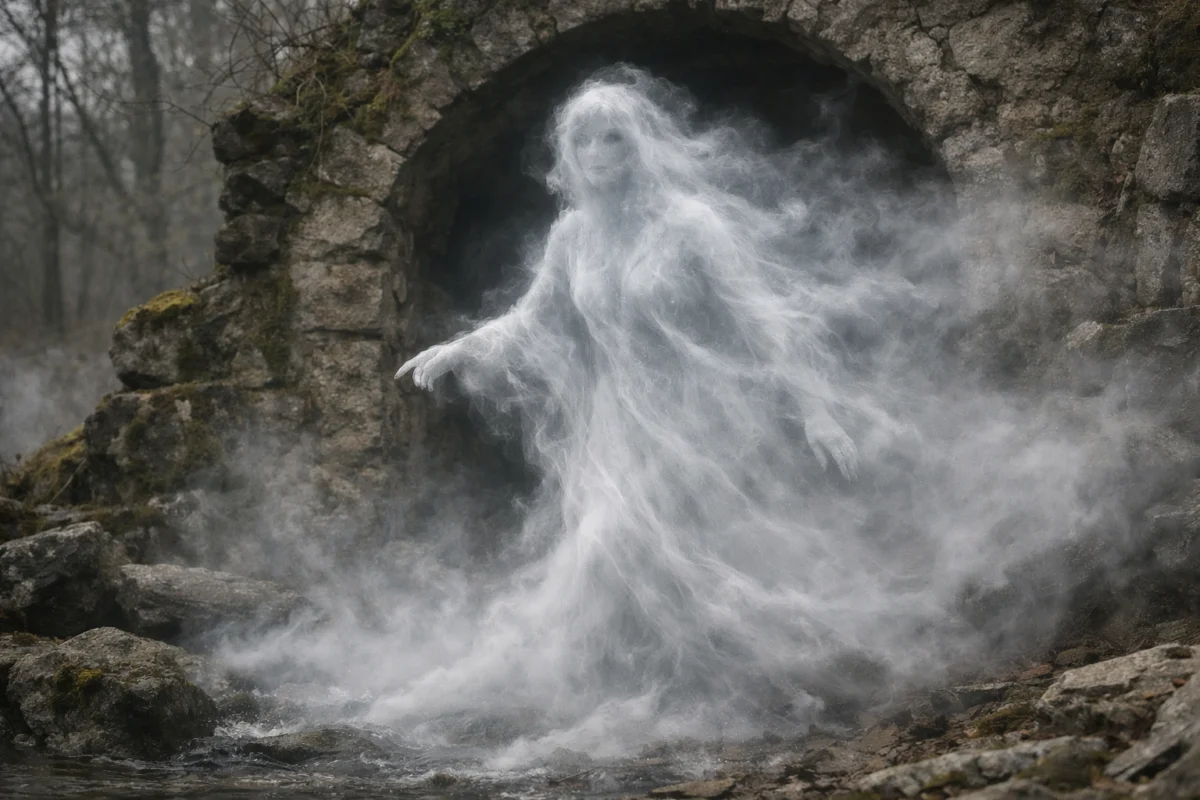
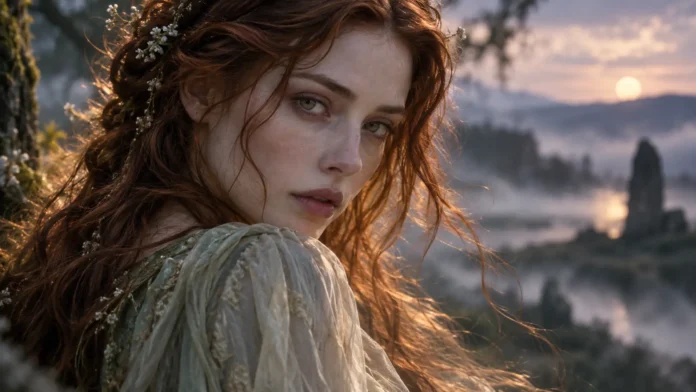
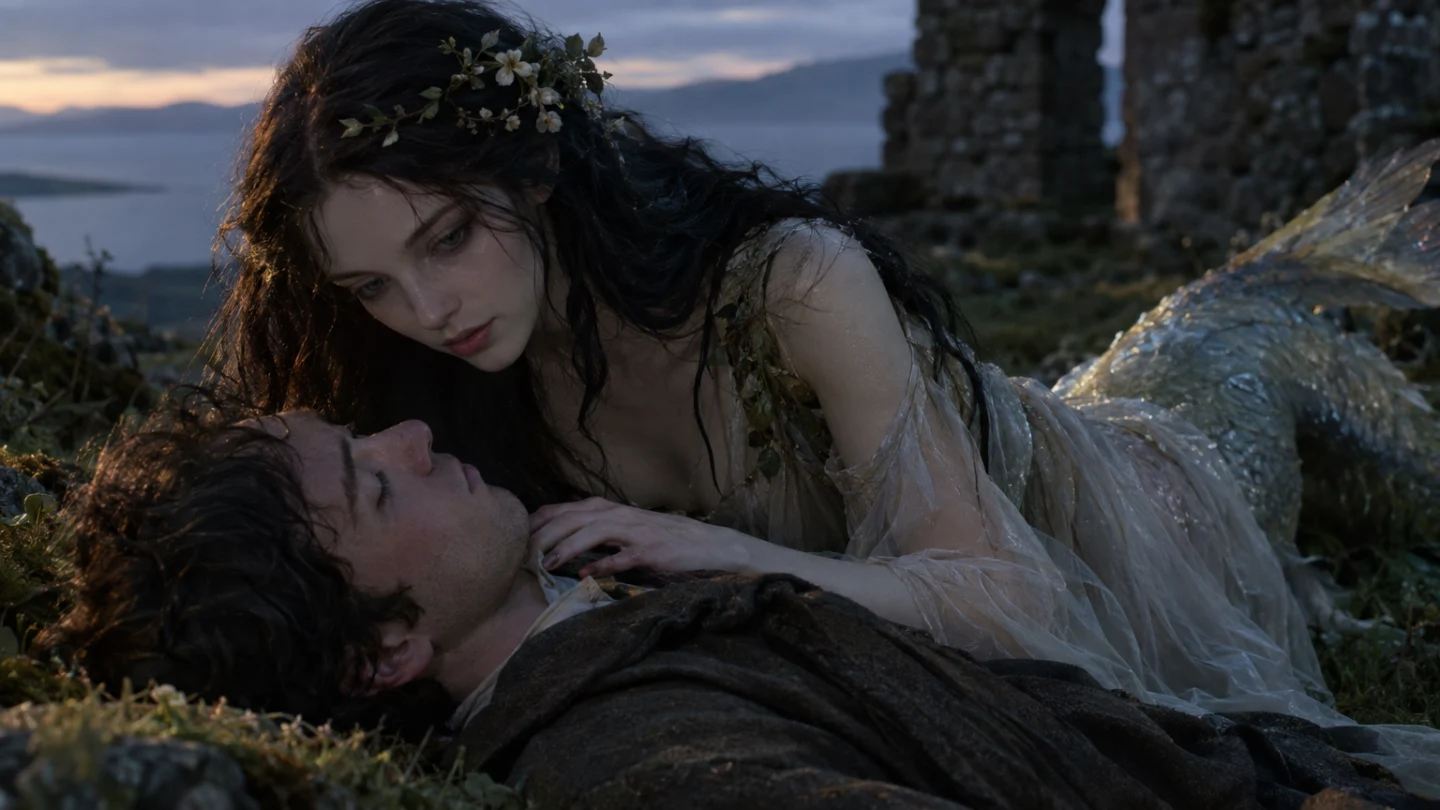
Reference works commonly present the Leanan Sidhe as a beautiful, humanlike woman. This suits her familiar role as a fairy mistress whose attraction draws a mortal into an intimate relationship.
Beauty is a recurring descriptive quality, rather than part of a detailed, standardized physical portrait.
The broader fairy-lover category is not exclusively female. Encyclopedia.com allows for male as well as female supernatural lovers, although the female presentation dominates the literary figure discussed here.
Gender therefore needs to be distinguished from the narrower image popularized through the artistic-muse tradition.
Wilde’s and Yeats’s accounts are more concerned with influence than anatomy. Inspiration, attachment, and the mortal’s fate provide the defining features.
Their descriptions do not support a fixed costume, hair color, eye color, age, or set of bodily characteristics by which the being could always be recognized.
Calling Yeats’s muse “vampiric” describes the consuming effect of her relationship, not an established physical resemblance to a vampire. His account of poets wasting away does not make fangs, literal blood-drinking, or batlike wings necessary features of the Leanan Sidhe’s appearance.
A beautiful humanlike fairy is therefore a defensible representative image, provided it is understood as an interpretation of the common literary depiction. Her otherworldliness is expressed most securely through her relationship with the mortal and its consequences, not through an identifiable monstrous body.
Background Story
The background of the Leanan Sidhe is a pattern of supernatural attachment, not a continuous personal biography. Her name places intimacy at the center of her identity.
The mortal encounters an otherworldly lover whose affection can alter ordinary life and expose the human partner to danger.
Within that wider pattern, artistic inspiration becomes a particular kind of supernatural gift. Wilde’s association with poets, singers, and musicians places exceptional expression under fairy influence.
The emphasis extends beyond written poetry to music and performance, making the figure an explanation for several forms of creative ability.
Wilde’s spirit-of-life framing gives this influence a different emphasis from Yeats’s consuming mistress. Her account foregrounds the power that animates artistic expression.
Yeats foregrounds the mortal cost. Read together, the two treatments show how inspiration and destruction could receive different weight within closely related literary presentations.
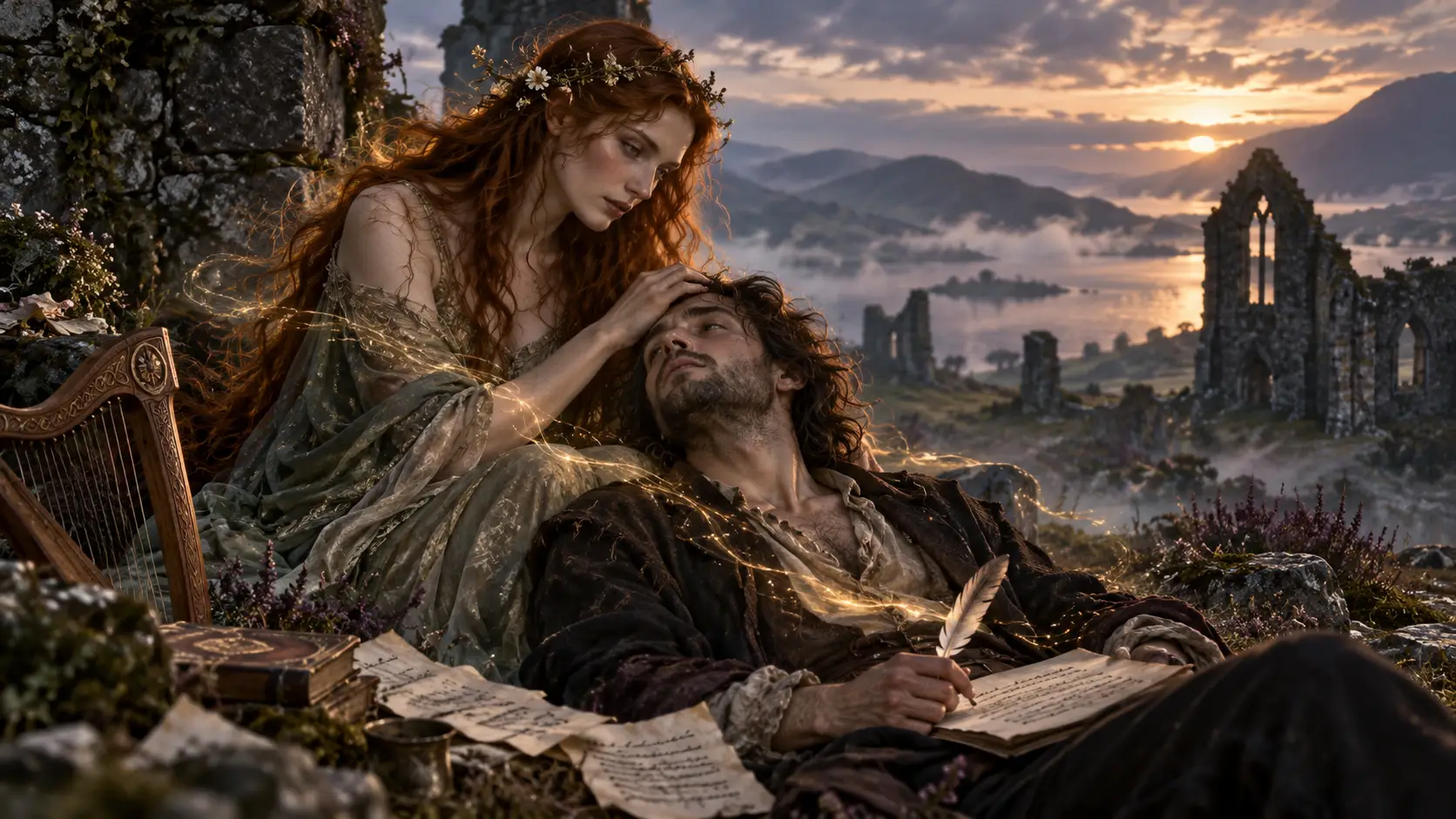
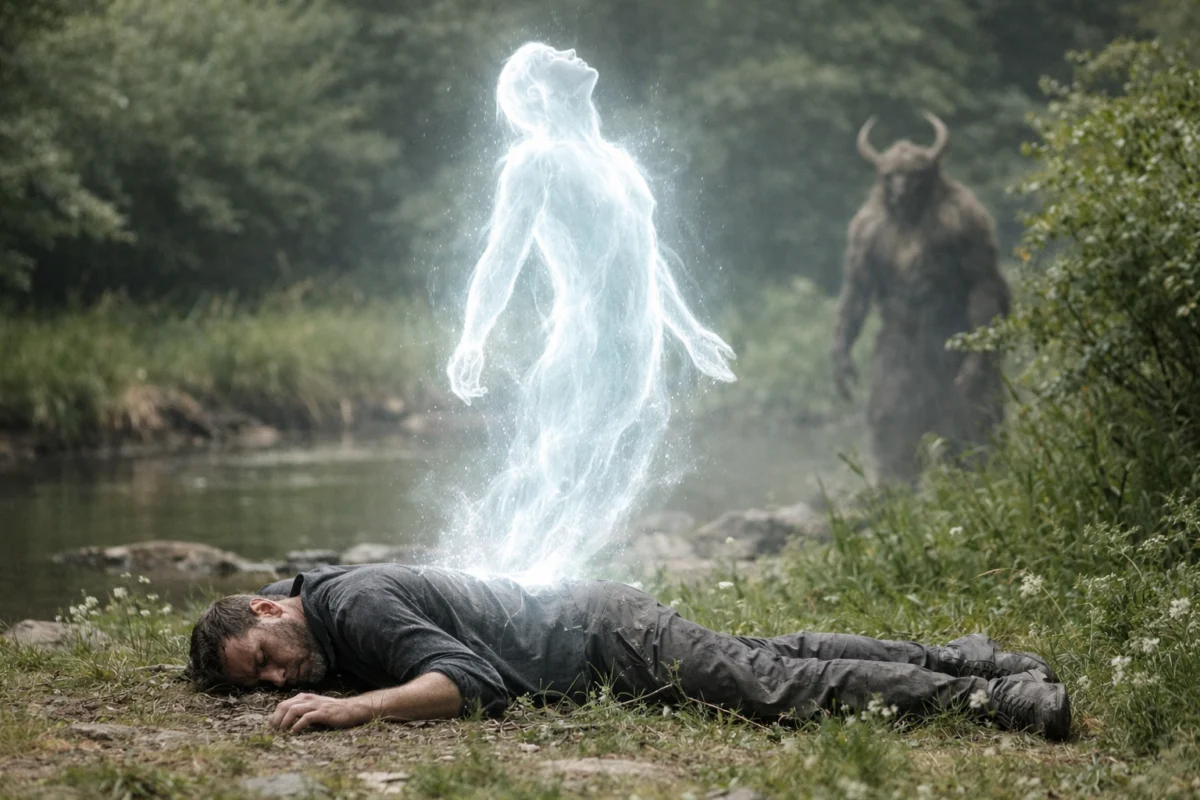
Yeats makes the bond especially consequential for the poet: inspiration accompanies decline, and the fairy may carry the dying mortal into another world. The creative gift cannot be separated from the attachment producing it.
This is the central narrative logic behind the familiar fatal-muse interpretation.
A broader danger appears in Encyclopedia.com’s account of the fairy lover, where offending the supernatural partner may cost the mortal’s life. That differs from simply being exhausted by inspiration.
It makes the danger depend on the relationship and the lover’s response, rather than on artistic activity alone.
These versions illuminate two connected concerns: the power of intimate attachment and the apparent cost of extraordinary talent. The Leanan Sidhe brings them together without requiring one universal story.
Her nineteenth-century literary shape is clear, while the earlier development and regional distribution of its individual motifs remain less certain.
Famous Folklore Stories
The surviving material does not preserve a large cycle of named Leanan Sidhe tales. Instead, nineteenth-century sources give several influential examples and descriptions of the fairy lover’s relationship with mortals.
The episodes below should therefore be read as documented literary-folkloric presentations rather than parts of one continuous traditional biography.
Eodain the Poetess
Jane Wilde connects the Leanan-Sidhe with Eodain, a poetess whose words give strength and guidance to King Eugene of Munster. Eodain first inspires courage in battle and later returns when Eugene’s rule has fallen into disorder, urging him to govern with strength and justice.
Wilde explains Eodain’s influence through the power of the Leanan-Sidhe, which she calls the “spirit of life.” The episode differs considerably from later portrayals of the fairy as a destructive supernatural mistress.
Here, inspiration strengthens both poetic expression and human action. It provides one of the clearest narrative examples of Wilde’s life-giving interpretation of the figure.
The Fairy Mistress and the Doomed Poet
W. B. Yeats presents a darker Leanhaun Shee who seeks mortal lovers. If a man accepts her love, he becomes bound to her, while the fairy lives upon his vitality.
The relationship brings artistic inspiration but also physical decline.
Yeats identifies her as the Gaelic muse and uses the relationship to explain why gifted poets supposedly die young. Even death does not necessarily end her hold over the mortal.
This influential description created much of the familiar modern image of the Leanan Sidhe as a beautiful but fatal muse.
It is not a named traditional tale about one historical poet, but an important nineteenth-century formulation of the supernatural-lover motif.
Cultural Impact
The Leanan Sidhe’s clearest documented cultural importance lies in the language of artistic inspiration. Wilde’s account gives poetry, singing, and music a supernatural source, treating exceptional creative ability as something received through a relationship rather than generated entirely by the individual.
Yeats’s presentation makes that relationship destructive as well as productive. Read symbolically, the fairy mistress gives memorable form to the idea that artistic achievement can consume its maker.
This interpretation follows the account’s imagery; it does not establish the actual causes of any poet’s death.
The contrast between Wilde and Yeats also shows how printed collections shape the reception of folklore. Their descriptions offer different emphases, even when discussing the same named figure.
Later summaries that retain only the deadly mistress obscure the more life-centered language associated with Wilde.
Within nineteenth-century Irish literary culture, the figure could connect imaginative achievement with the fairy Otherworld. Her significance differs from that of a monster defeated in combat: the central relationship concerns inspiration, attachment, and the uncertain boundary between a gift and a danger.
Modern descriptions often call her a vampiric muse. That phrase usefully captures the consuming relationship in Yeats’s version, but it is an interpretive shorthand.
Treating it as a complete traditional definition risks replacing a varied fairy-lover figure with a standardized supernatural predator.
Similar Beasts
Banshee

The Banshee is an Irish supernatural figure whose mournful cry foretells death. Wilde’s treatment associates her with death and forewarning, providing a useful contrast with the Leanan-Sidhe’s connection to inspiration and life.
Both connect the human world with supernatural knowledge or power. The Banshee announces mortality, while the fatal-muse version of the Leanan Sidhe participates in her companion’s decline.
Näcken
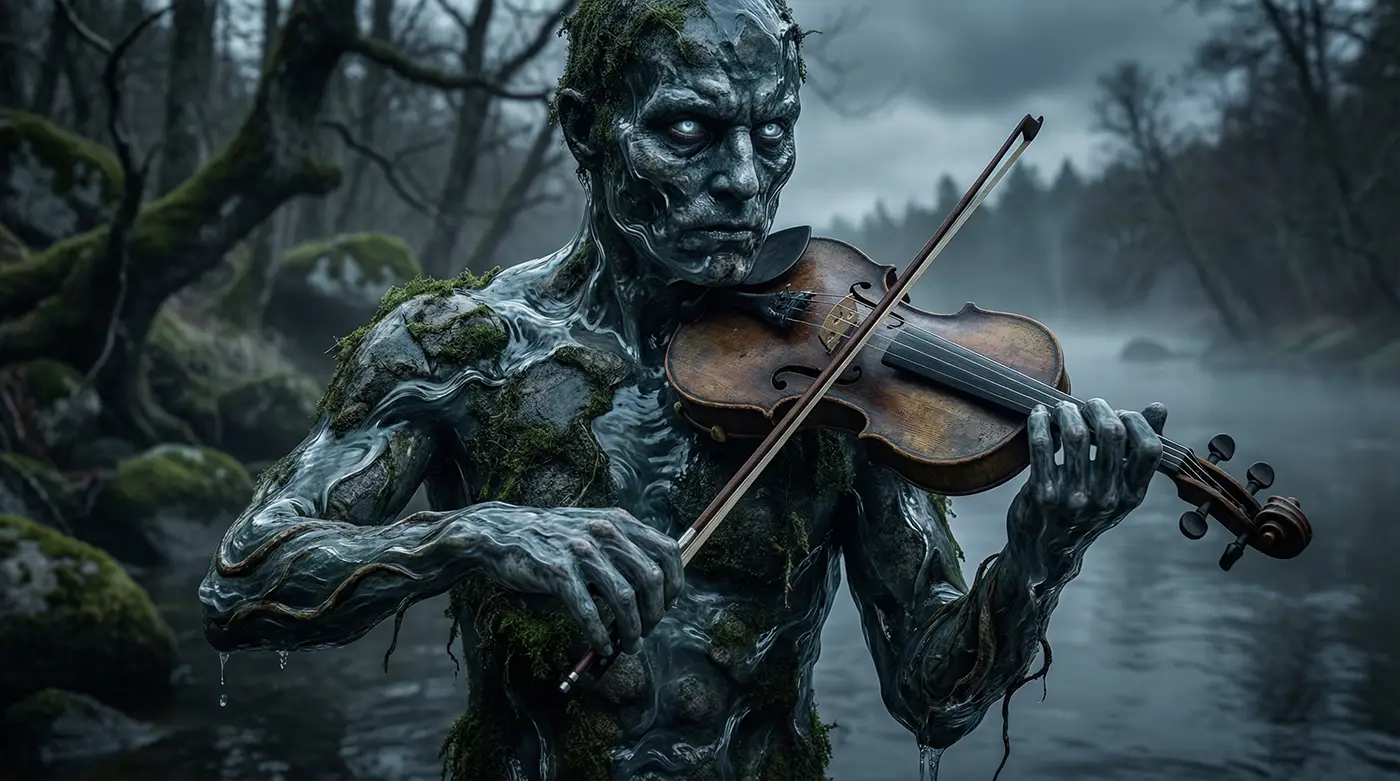
The Näcken is a Scandinavian water spirit associated with enchanting music and shapeshifting. Its musical identity makes it a closer functional comparison than beings linked only by supernatural appearance or danger.
Both place music within a supernatural relationship. The Näcken’s water association and shapeshifting, however, should not be transferred to the Leanan Sidhe’s less physically defined tradition.
Read more about Näcken
Baobhan Sith

The Baobhan Sith is a Scottish vampiric fairy associated with seduction and predation. The supplied account describes beings that attract travelers before feeding, making intimacy part of their danger.
This resembles the threatening fairy-lover motif, but not Wilde’s emphasis on artistic inspiration. The comparison concerns seductive danger, not interchangeable identities or a shared narrative biography.
Gancanagh
The Gancanagh is an Irish male fairy associated with seduction and dangerous romantic encounters. Like the Leanan Sidhe, he places supernatural attraction at the center of contact between fairies and mortals, but lacks her distinctive artistic-muse role.
Religion/Ritual
The consulted accounts describe a fairy lover or spirit, not a deity with an established cult. They do not document dedicated worship, prescribed offerings, festivals, or a verified invocation ritual for obtaining artistic inspiration from the Leanan Sidhe.
The offended-lover motif supplies a narrative warning about supernatural relationships, but not a practical ritual procedure. Likewise, Wilde’s language of life and inspiration should not be converted into evidence for priesthoods, initiation ceremonies, or historical devotional practices that the briefing does not establish.
Scientific or Rational Explanations
The available evidence concerns folklore and literature, rather than an empirically verified being. The most useful rational inquiry therefore asks how these accounts express human experiences and how publication shaped the figure, instead of searching for an animal behind her humanlike appearance.
A literary interpretation can read the fatal muse as a personification of creative exhaustion. Inspiration and depletion become partners in a single relationship.
This reading fits Yeats’s account, but remains an interpretation of its symbolism, not a demonstrated explanation for the tradition’s origin.
A related psychological reading concerns attachment: something experienced as desirable or enriching may also become consuming. The fairy-lover motif can express that tension without describing an actual supernatural encounter.
It would be unjustified, however, to diagnose unnamed storytellers or poets from such generalized material.
Historical source comparison provides firmer ground. Wilde emphasizes life and artistic inspiration, while Yeats foregrounds the chosen poet’s decline.
These differences show why the surviving printed descriptions must be examined separately before modern summaries combine them into one supposedly uniform ancient belief.
No medical cause can responsibly be assigned to the wasting described in Yeats’s passage without individual case evidence. Disease, exhaustion, or mental distress may suggest modern analogies, but none is established here.
The documented subject is the meaning of a consuming supernatural relationship, not a clinical history.
Modern Cultural References
Modern adaptations place the Leanan Sidhe in games, television, film, and fiction. These works demonstrate the figure’s continuing appeal, but their character designs and invented narratives should not be mistaken for traditional evidence.
Several retain the connection between supernatural intimacy and artistic inspiration.
Persona 5: The Phantom X, video game
This game includes a Leanan Sidhe design documented in Creative Uncut’s dedicated artwork gallery.
The image represents a contemporary franchise interpretation rather than an established traditional portrait.
(creativeuncut.com)
The Ancient Magus’ Bride, Episode 14: “Looks breed love”, television episode (2018)
This anime episode features the Leannán Sídhe seeking Chise’s help concerning Joel.
The streaming synopsis explicitly names her, documenting the fairy figure’s presence within the series.
(imdb.com)
Muse, film (2017)
John Burr’s film follows a painter whose muse and lover is a Celtic spirit. Its cast identifies Elle Evans’s character as Leannán Sí, directly connecting the film to the figure.
(imdb.com)
Leana, published fiction
Jaclyn Weist’s fiction presents a romance involving Leana and an artist. The author’s description identifies Leana as a Leanan Sidhe, explicitly adapting the supernatural artist-lover relationship.
(jaclynweistauthor.com)
Night Bound, novel (2014)
Winter Pennington’s novel features Avaliah within its fictional supernatural world. The catalog description identifies her as Queen of the Leanan Sidhe, a role belonging to this adaptation.
(books.google.com)
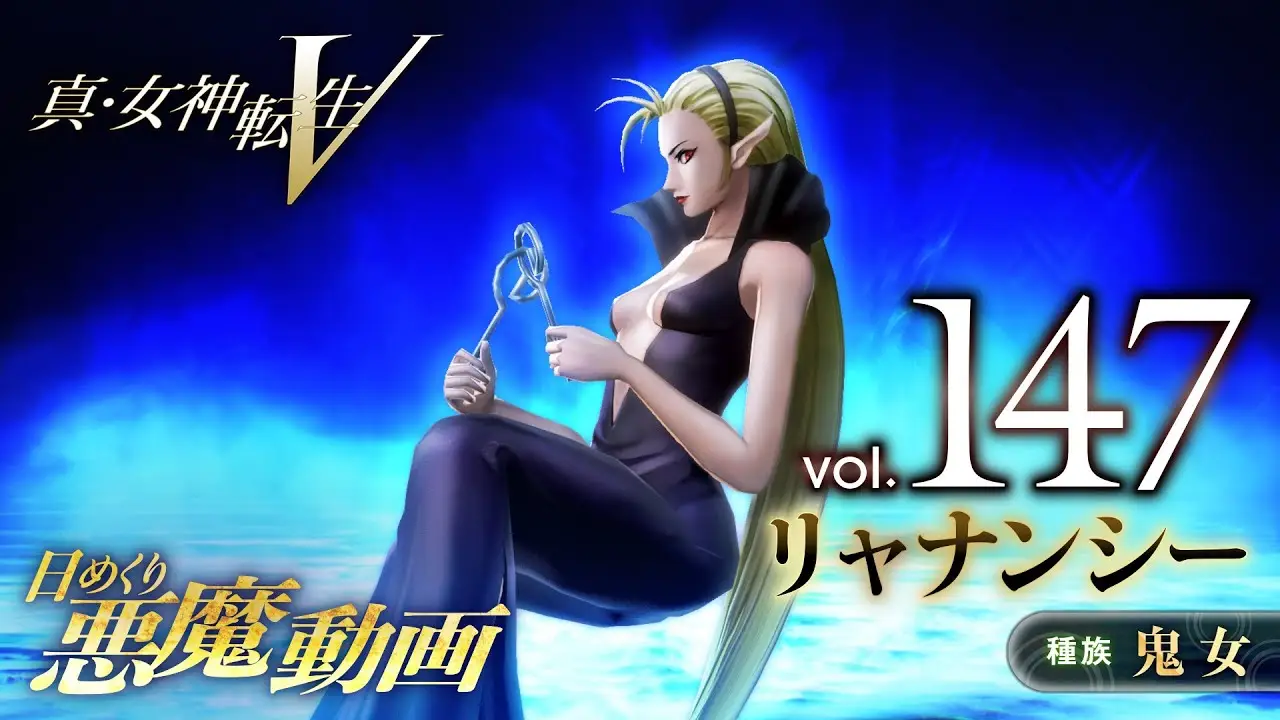
Shin Megami Tensei Liberation Dx2, video game
SEGA’s game incorporates mythological figures into its roster of supernatural characters.
An official update names Leanan Sidhe as a Femme demon, confirming this particular creative franchise appearance.
(sega.com)
Conclusion
The Leanan Sidhe belongs to the overlapping worlds of fairy belief and literary imagination. Her familiar identity as an inspiring but destructive lover draws particular force from nineteenth-century accounts, especially the contrast between Wilde’s emphasis on life and inspiration and Yeats’s consuming fairy mistress.
Those presentations preserve important evidence without establishing one uniform, timeless tradition. Understanding the figure therefore requires distinguishing the broader supernatural-lover motif from the narrower image of a muse whose gifts shorten an artist’s life.
Her lasting symbolic power lies in that uneasy relationship between creativity, desire, and mortal vulnerability. Inspiration becomes both a gift and a source of danger, while intimacy crosses the boundary between human life and the fairy world.
Modern fiction and screen adaptations continue to reshape these themes, sometimes retaining the artistic bond and sometimes borrowing chiefly the name. The most useful reading preserves those distinctions, recognizing a documented folklore figure while resisting the temptation to treat every later invention as inherited belief.
Further Reading
Jane Wilde, Ancient Legends, Mystic Charms, and Superstitions of Ireland (1887)
Wilde’s collection preserves the life-giving interpretation of the Leanan-Sidhe and the Eodain episode, making it essential for understanding the figure beyond the later fatal-muse stereotype.
W. B. Yeats, Fairy and Folk Tales of the Irish Peasantry (1888)
Yeats gives the influential description of the Leanhaun Shee as a fairy mistress who inspires poets while consuming their vitality, central to the modern fatal-muse interpretation.
W. B. Yeats, “The Ganconer or Gancanagh” in Fairy and Folk Tales of the Irish Peasantry (1888)
Useful comparative material on another Irish supernatural lover, particularly the male fairy associated with courtship, seduction, misfortune, and dangerous relationships with mortals.
Katharine Briggs, An Encyclopedia of Fairies (1976)
Major folklore reference work covering fairy lovers, dangerous supernatural women, regional fairy traditions, and comparative material useful for separating Leanan Sidhe from superficially similar beings.