Overview of the Unknown Period Period
Unknown Period is not a historically established chronological era in the supplied classification. No dates, geographic boundaries, or defining historical events identify it as a distinct period.
No verified sources describe this for this context. Consequently, attributing particular civilizations, mythologies, or supernatural beliefs to Unknown Period would imply evidence that is presently unavailable.
The label therefore functions as an unresolved chronological category rather than a documented cultural setting. Its historical content cannot be reconstructed without an identified place, date range, or source tradition.
Mythological material depends on cultural and historical context for responsible classification. Without that context, similarities among creatures or stories cannot establish their membership in this period.
Cultural and Religious Worldviews
Dominant Belief Systems
No dominant religious system can be assigned to Unknown Period because its geographic and chronological scope remains unspecified. Distinct societies cannot be combined into one evidenced worldview.
Historically documented communities have understood divine powers, spirits, ancestors, and natural forces in culturally specific ways. Those broad categories cannot establish beliefs for an unidentified period.
Unknown Period cannot support a reliable account of cosmology. No verified sources describe this for this context, leaving the relationship between natural and supernatural worlds undetermined.
Role of Myth in Daily Life
Myths have served varied social purposes in documented societies, including explaining origins, expressing communal values, or situating human conduct within sacred histories. Their particular roles require contextual evidence.
No verified sources describe this for this context. Therefore, claims that myths shaped Unknown Period’s laws, moral expectations, rituals, or community identity would exceed available evidence.
Historical interpretation must distinguish general observations about myth from claims concerning a specific society. The missing chronology prevents that distinction from being made here.
Mythological Beasts and Supernatural Entities
Common Types of Mythical Creatures
No creature category can be identified as characteristic of Unknown Period. Such classification requires evidence connecting named beings or recurring motifs to a defined historical community.
Dragons, monstrous animals, spirits, and hybrid beings appear in different documented traditions, but their forms and meanings vary. Their broad occurrence does not establish period-specific prominence.
No verified sources describe this for this context. Accordingly, this entry cannot associate any beast or supernatural entity with Unknown Period as a historical classification.
Symbolism and Meaning
The symbolism of a mythical creature must be interpreted within the texts, images, and practices of its particular culture. No such evidence is assigned to this period.
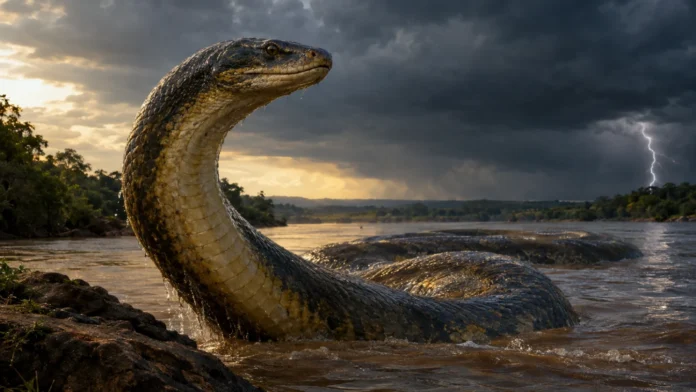
Similar animal forms can signify different things across societies. A serpent, for example, cannot be given one universal meaning without erasing historical distinctions between traditions.
Unknown Period is central to no verifiable creature identity here, because no sources connect a specific being to its chronology. Assigning one would misclassify the evidence.
Folklore Traditions and Storytelling
Oral and Written Transmission
Oral performance, inscriptions, religious writing, and later manuscripts preserve folklore in different historical settings. Their presence in a particular tradition must be established through identifiable evidence.
No verified sources describe this for this context. The means by which stories circulated during Unknown Period therefore cannot be specified as oral, written, or both.
Surviving manuscripts may record traditions long after their presumed origins. Without dates and provenance, a text cannot securely demonstrate storytelling practices belonging to this classification.
Regional Variations
Regional folklore varies through language, environment, religious institutions, and historical exchange. Unknown Period has no established regions against which such differences could be reliably compared.
For example, ancient Mesopotamian and Greek traditions contain distinct divine and monstrous figures. Their comparison is meaningful only within their documented histories, not an undefined shared period.
This divergence illustrates why cultural boundaries matter: comparable beings do not necessarily share origins, functions, or moral significance. No regional mapping is possible for Unknown Period.
Relationship Between Humans and the Mythical World
Fear, Protection, and Reverence
Documented traditions portray supernatural beings variously as dangerous, protective, authoritative, or ambivalent. Those relationships cannot be attributed to Unknown Period without evidence identifying its communities.
No verified sources describe this for this context. Claims that people feared, revered, or sought protection from particular beasts would therefore be unsupported historical assertions.
Belief should also be distinguished from narrative representation. A creature appearing in art or literature does not alone prove that every audience regarded it as real.
Influence on Art and Material Culture
Mythological motifs appear on objects and buildings in many historical societies. Their interpretation depends on archaeological context, dating, placement, and comparison with relevant textual evidence.
No verified sources describe this for this context. Consequently, no architecture, sculpture, clothing, manuscript, tool, or ceremonial object can be assigned to Unknown Period here.
An image resembling a mythical creature cannot independently identify a belief system. Researchers must evaluate its material setting before inferring religious or folkloric meaning.
Transition and Legacy of the Unknown Period Period
A period’s legacy can be traced only when its chronology and cultural materials are identifiable. Unknown Period has no documented boundary from which to assess continuity or change.
No verified sources describe this for this context. It is therefore impossible to establish whether any creature, story, or belief declined, transformed, or persisted beyond it.
Later folklore may preserve older motifs, but resemblance alone does not demonstrate direct transmission. Claims of inheritance require historical links between communities, texts, or material forms.
Historical Reliability and Interpretation
The label Unknown Period signals absent or unresolved chronological information, not evidence for a lost civilization or a shared age of supernatural belief.
Reliable analysis would require dated sources, identifiable cultural settings, and clear distinctions among contemporary evidence, later retellings, and modern interpretation. None are specified for this entry.
Historians treat mythological narratives as evidence for cultural meanings, not straightforward records of supernatural events. Applying that method here remains limited by missing context.
Until a geographic region, date range, or source corpus is supplied, this taxonomy entry should remain unassociated with specific beasts, traditions, or religious systems.