Introduction
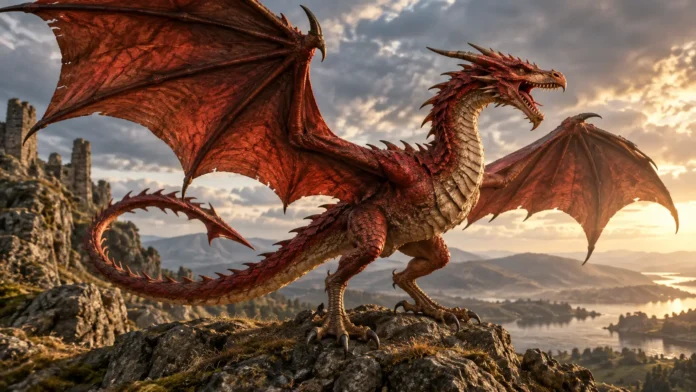
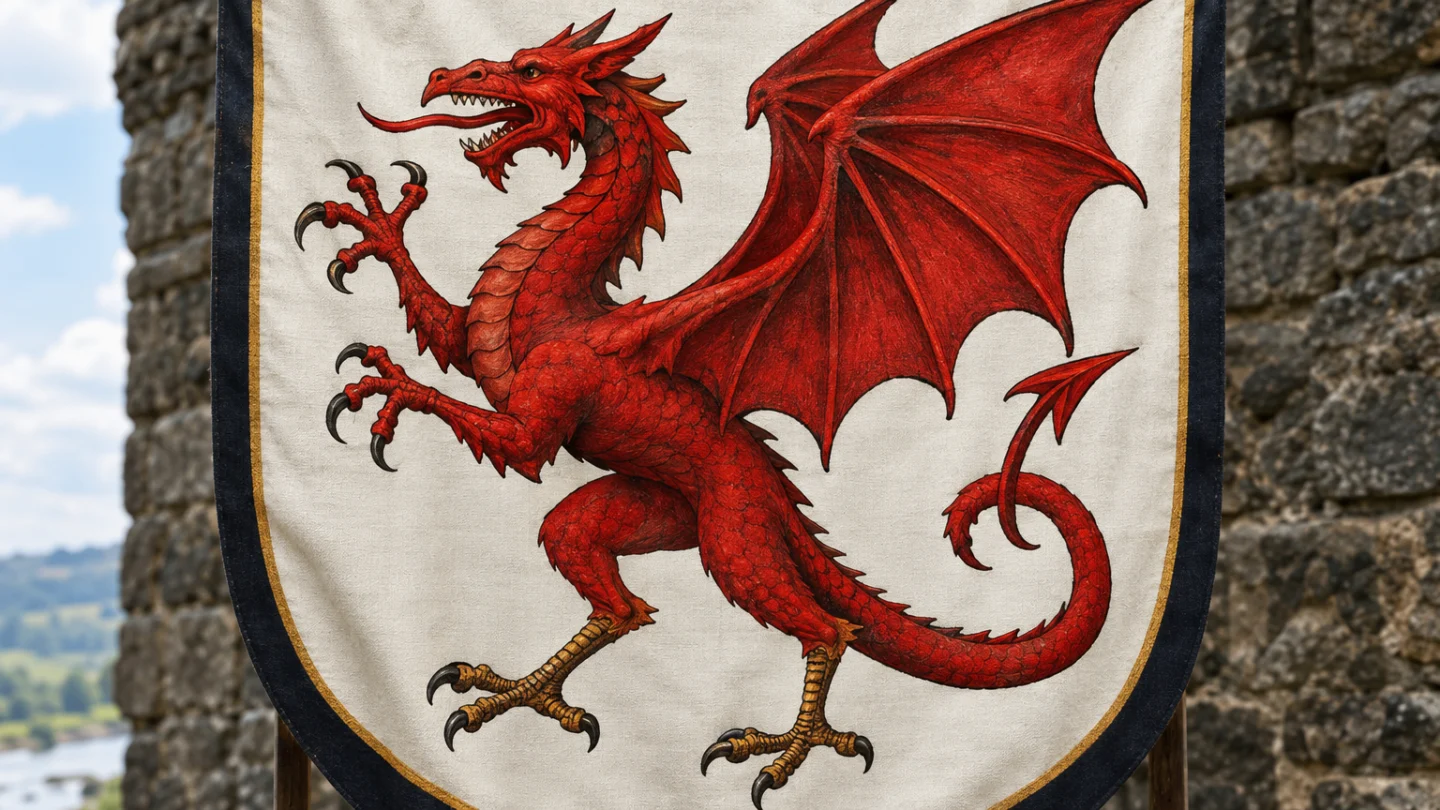
The wyvern is a winged, two-legged dragon-form best documented in English heraldry. Its long, serpent-like tail, often ending in a barb, helps distinguish its silhouette.
Rather than a single monster with a fixed biography, it is principally an emblematic creature represented in coats of arms.
In conventional English heraldic terminology, a wyvern has two legs, while a dragon has four. This distinction is useful when describing arms, but it is not a universal rule governing European mythology.
Earlier dragon images and names do not always follow the later classification.
The creature combines serpentine and bird-like features. Historical descriptions give it eagle-like feet, wings, and a twisting tail.
These features belong to a tradition of stylized heraldic representation, where recognizable combinations of animal parts matter more than the anatomy of a plausible living animal.
Later fantasy often treats wyverns as a separate kind of dragon. Their historical importance, however, rests on the intersection of medieval imagery, heraldic vocabulary, and serpent-related language.
Local dragon legends provide useful comparisons, but should not automatically be relabeled as stories specifically about wyverns.
History/Origin
The wyvern’s documented history is clearest within medieval English heraldry. A two-legged dragon-form appears in an English roll of arms around 1312, providing an important reference point for its use as an armorial figure.
This establishes medieval representation, not the creature’s first invention.
Adrian Ailes’s specialist discussion places the four-legged dragon in English heraldry later, around 1400 or earlier. The sequence complicates the assumption that the wyvern was simply a reduced version of an already standardized heraldic dragon.
The two forms developed within a changing visual vocabulary.
A potentially earlier example appears in Steven Ashley’s study of a twelfth-century armorial weight. Its identification remains uncertain because the worn seal impression might represent a dragon, a griffin, or another beast.
It therefore cannot securely establish an earlier, unmistakable wyvern.
Such objects also reveal the difference between recognizing a shape and recovering its historical name. A modern viewer may classify a two-legged winged creature as a wyvern, but that identification alone does not show that its maker or owner used the same term.
By 1610, John Guillim’s heraldic writing supplied a description preserved in historical lexicography. This evidence connects the word with a recognizable armorial creature.
It also marks a different kind of documentation from an image: a written explanation of how the figure was understood.
Later heraldic usage made the two-leg distinction conventional, while broader reference works and fantasy increasingly treated it as a creature classification. The resulting modern category draws on genuine historical imagery, but its apparent precision should not be projected unchanged onto every medieval dragon.
Name Meaning
The name wyvern has a serpent-related history. It is traced through Middle English wyver and French forms including Anglo-French wivre and Old French guivre, ultimately connected with Latin vipera, meaning viper.
Its linguistic ancestry therefore concerns snakes rather than a literal description of wings or legs.
This connection helps explain why the creature retains such strongly serpentine features despite its wings and clawed feet. The word belongs to a history in which snake and dragon terminology could overlap, rather than to an original naming system that consistently separated imaginary animals by anatomy.
Wyver and wivern are documented alternative forms. Historical spelling variation should not be mistaken for evidence of separate creatures: these forms belong to the word’s development and usage.
The familiar spelling wyvern is only one stage in that longer lexical history.
The viper connection does not, by itself, establish that every wyvern was believed to possess venom. Nor does it prove descent from a particular ancient snake myth.
Etymology explains the ancestry of the name; heraldic descriptions provide the firmer evidence for the creature’s conventional appearance.
Appearance
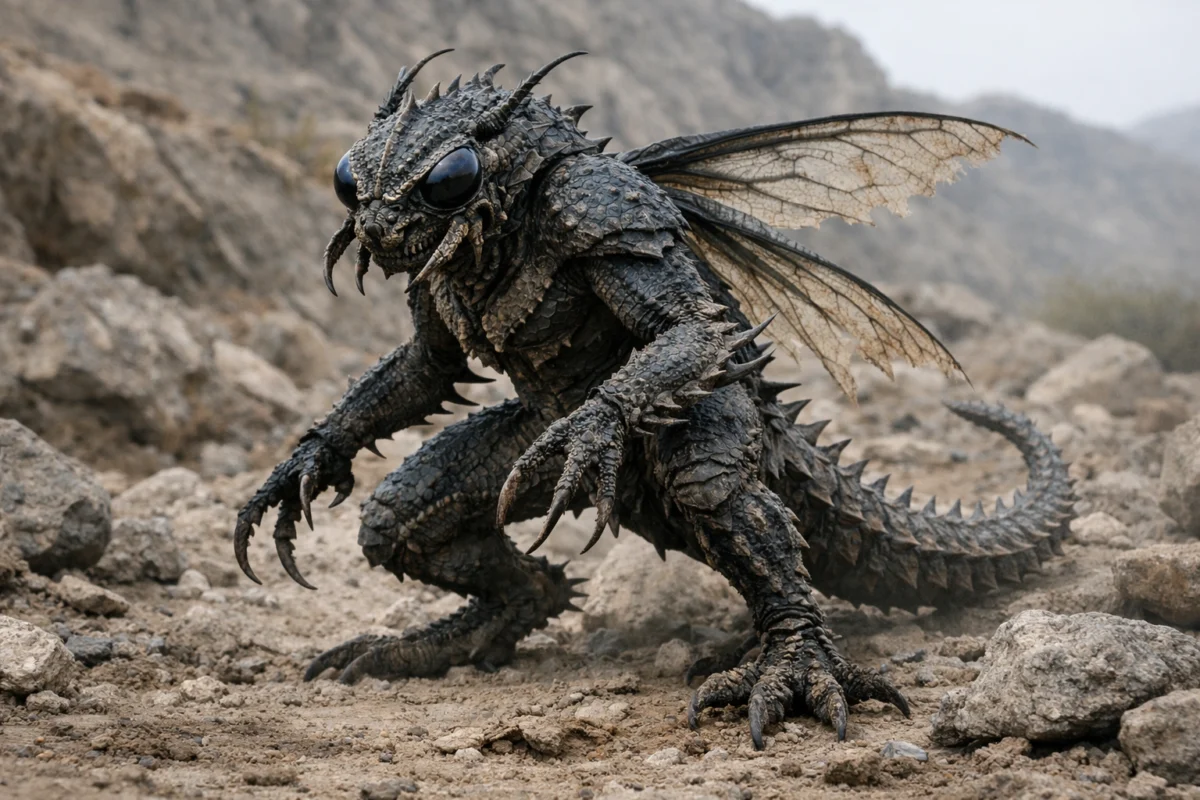
The standard English heraldic wyvern has a dragon-like body, two legs, wings, and a long serpentine tail. Its outline is the most dependable identifying feature.
The body belongs to an emblematic design, not to a consistently described animal observed within a shared folklore tradition.
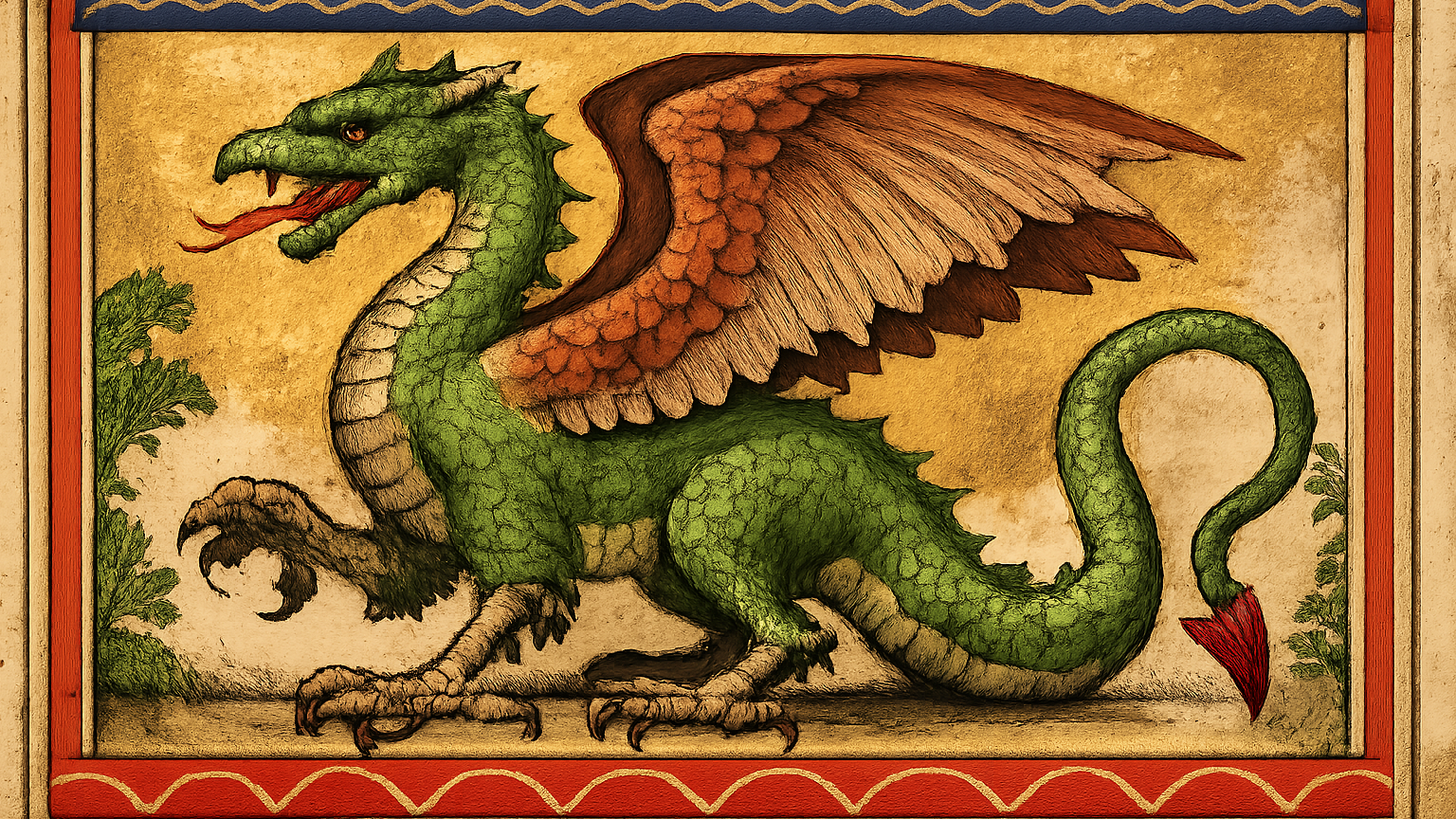
Historical lexicographic descriptions specify eagle-like feet and a serpent-like, barbed tail, while older heraldic language also gives it bird-like wings. These details show how the figure combines different animal forms.
A wholly reptilian reconstruction is therefore less faithful to some historical descriptions than its modern familiarity suggests.
The tail is especially important to the design, extending the creature’s serpentine character beyond its winged body. A terminal barb is well supported, but its presence should not automatically be read as a venom-delivering weapon.
Shape and imagined biological function are separate questions.
Individual heraldic examples could depart from the familiar pattern. A historical dictionary records a 1780 description of a wyvern with a human face.
This unusual example demonstrates the flexibility of heraldic combinations without making a human face part of the creature’s standard appearance.
No single color, habitat, or fire-breathing ability defines the historical form established here. A shield or emblematic field provides a more appropriate setting than an invented ancestral wilderness.
Likewise, the differing images of Mordiford’s local dragon should not determine how every heraldic wyvern is drawn.
Background Story
The background that shaped the wyvern is primarily visual and symbolic rather than biographical. Heraldry made imaginary beasts into identifiable figures associated with armorial identities.
The wyvern belongs to this practice of combining familiar animal features into a distinctive and repeatable emblem.
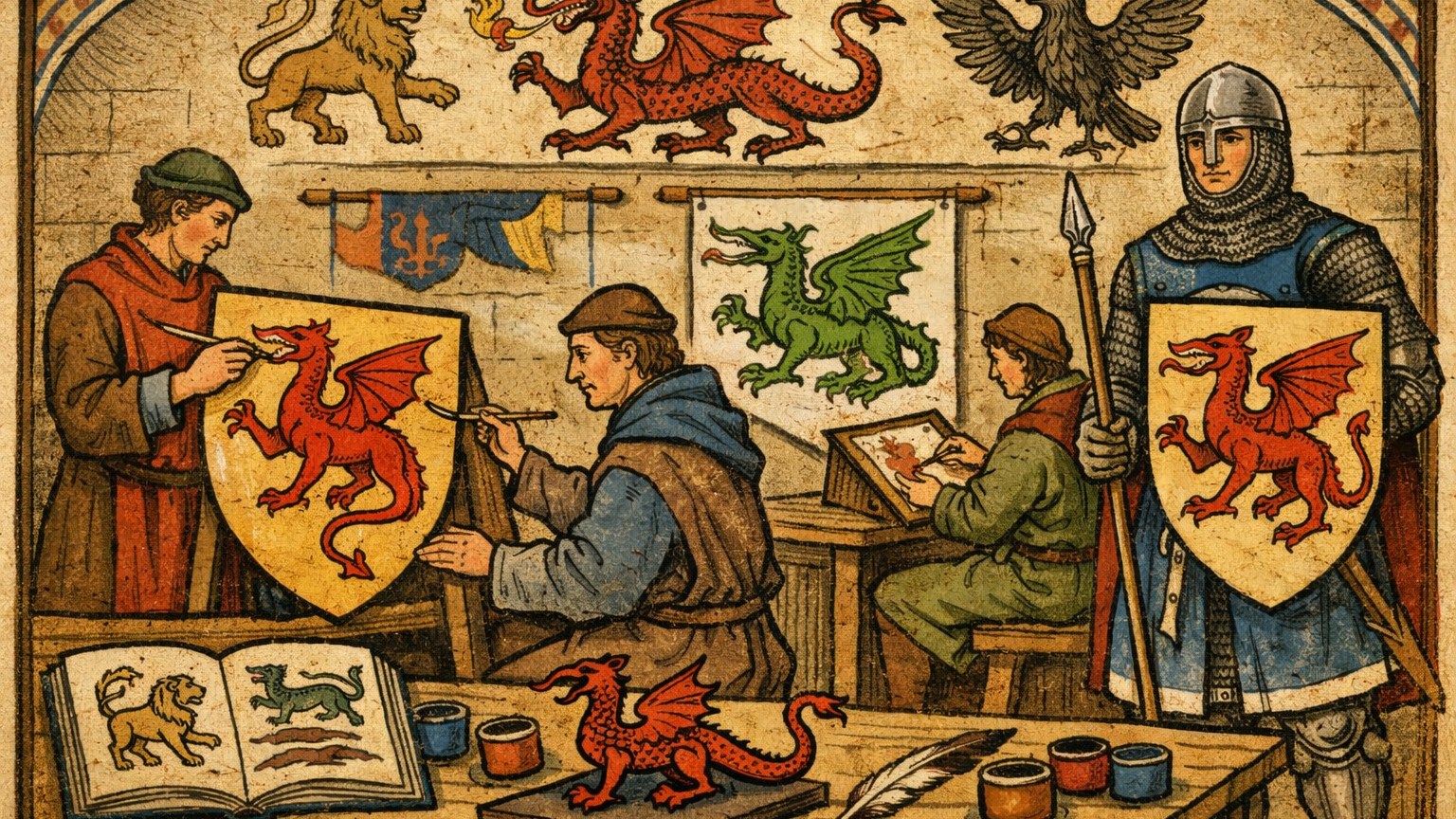
Broader medieval dragon imagery supplied another part of that background. Bestiary traditions could associate dragons with the Devil and evil, giving dragon-like forms a powerful moral resonance.
That context does not mean every wyvern in a coat of arms carried one fixed religious meaning.
Local storytelling offers a related but distinct setting. At Mordiford in Herefordshire, dragon traditions connect a dangerous creature with the surrounding landscape and community.
The Herefordshire Council account preserves variants involving a girl who keeps a small creature and a condemned man offered freedom for killing the monster.
The local documentary history also includes a reported seventeenth-century inscription accompanying a church image of a serpent or dragon. Later antiquarian descriptions of the painted figure differ.
These changing descriptions matter because they prevent one reconstruction from becoming the unquestioned appearance of the legendary beast.
Mordiford consequently illustrates how local narrative, public imagery, and later interpretation can overlap without forming a single stable wyvern tradition. The heraldic figure and the village dragon share a wider imaginative world, but the local accounts do not consistently identify their monster by the name wyvern.
Famous Folklore Stories
Mordiford in Herefordshire preserves a local dragon tradition relevant to the wyvern’s wider cultural setting. Its tellings concern a dragon or serpent, not consistently a creature called a wyvern.
The descriptive headings below distinguish two documented variants rather than reproduce authenticated traditional story titles.
Mordiford’s monster and the condemned man
In one version, a monster threatens the community by preying on cattle and people. A condemned man receives an offer of freedom if he can kill it.
The episode makes the destruction of a public menace the condition of an individual’s release.
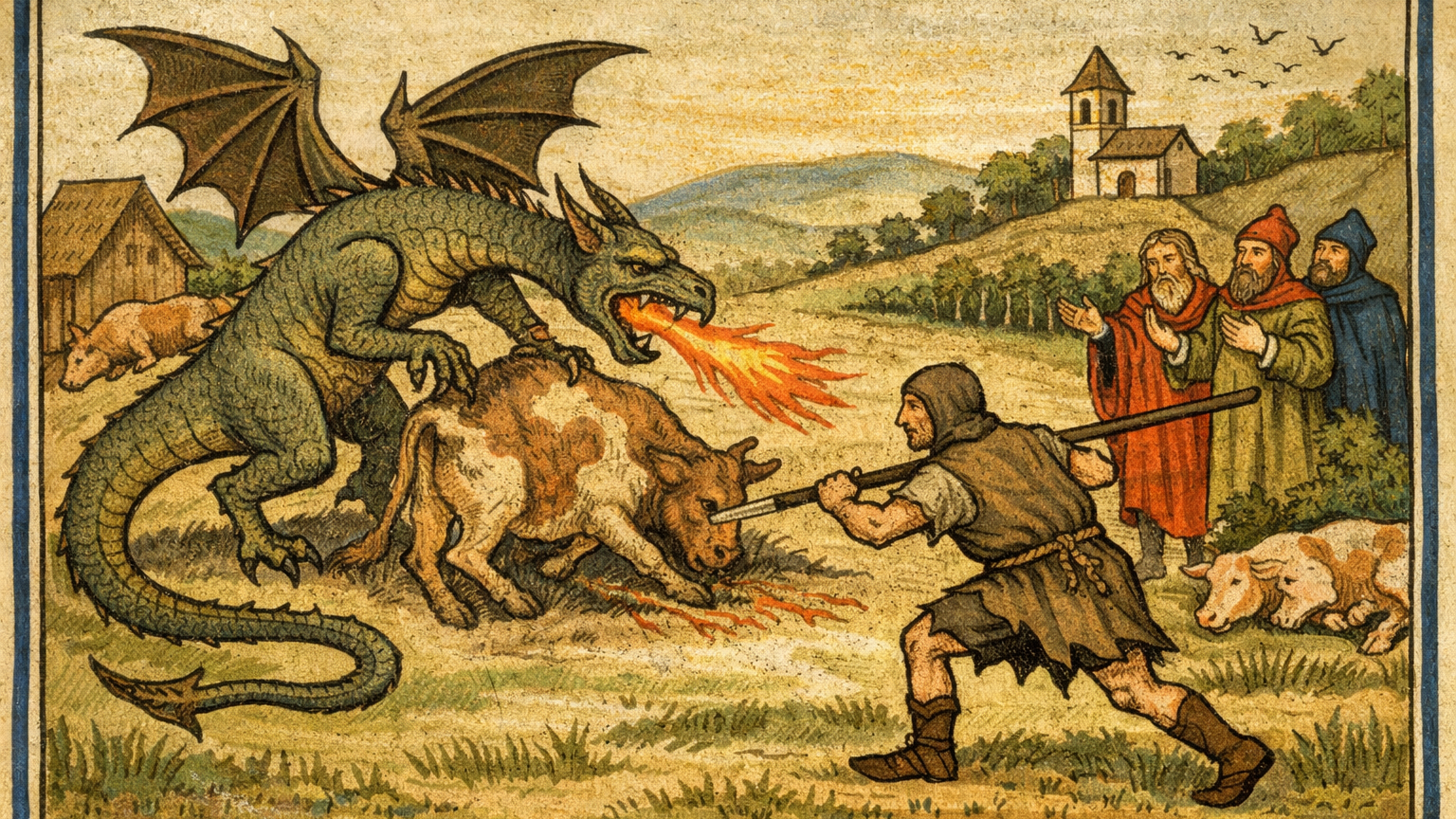
This version is preserved in Herefordshire Council’s account of the local legend. Its central bargain is clear, but the tradition has differing details.
It should not be expanded into a supposedly definitive wyvern-slaying adventure with a fixed weapon, strategy, or outcome unsupported by that account.
Maud and the creature that grows
Another Mordiford version concerns a girl named Maud who finds and keeps a small creature. It grows into a dragon, transforming an apparently manageable discovery into something monstrous.
Here, the narrative begins with personal attachment rather than a community’s search for a slayer.
The contrast between the creature’s small beginnings and its later growth gives this variant its distinctive shape. It belongs to the same local dragon tradition as the condemned-man episode, but neither account establishes a canonical origin story for wyverns as a class of beings.
The local tradition also has a visual history. A serpent or dragon image at Mordiford’s church was associated with a reported seventeenth-century inscription, while later antiquarian descriptions differed.
That changing record prevents any single later depiction from settling the identity of every narrative version.
Cultural Impact
The wyvern’s strongest historical cultural role is heraldic. As a charge or other armorial figure, it served within a system of visual identification.
Its significance therefore depended partly on the arms in which it appeared, rather than on a single story shared by everyone using the image.
Heraldry gave the creature a durable visual identity without requiring a detailed mythology. Wings, two legs, and a curling tail could distinguish an emblem even when no accompanying legend explained its origins.
This helps account for the difference between the wyvern’s recognizable appearance and its comparatively sparse narrative record.
Its heraldic use should not be reduced to a universal symbolic translation. A fierce-looking beast does not automatically prove that every bearer intended the same message about courage, destruction, or guardianship.
Particular meanings require evidence from the individual emblem and its historical setting.
At Mordiford, the dragon tradition remains part of how the locality presents its landscape and past. Its inclusion in a council walking guide connects storytelling with places visitors can explore.
This is documented heritage use, not evidence that the village consistently classified its monster as a wyvern.
Modern fantasy often turns the wyvern into a distinct creature category, treating anatomy as a rule for separating it from other dragons. Historical scholarship instead emphasizes changing terminology and images.
The modern classification is culturally influential, but it is not a reliable guide to every medieval representation.
Similar Beasts
Dragon
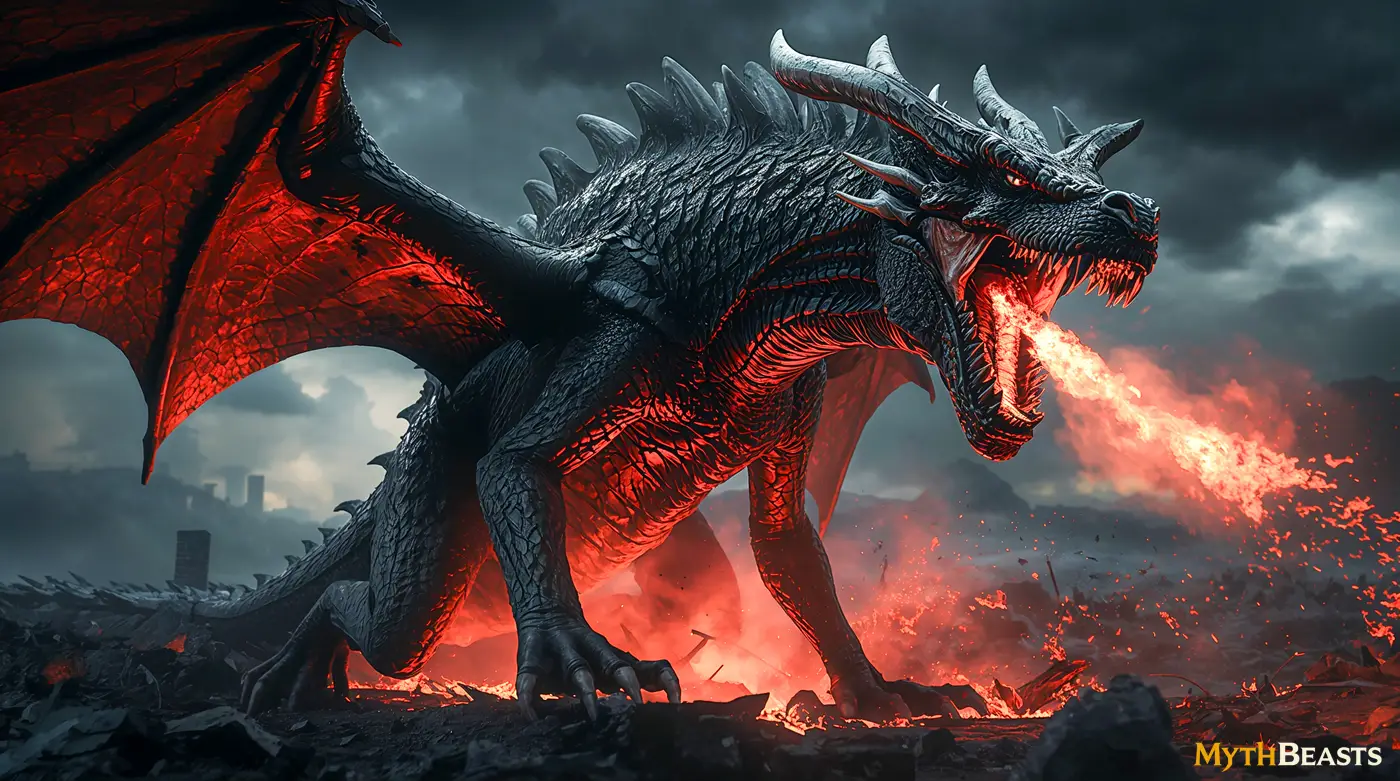
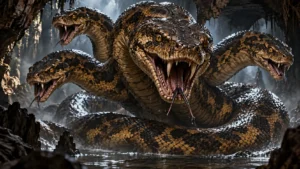
Dragons encompass a broad range of legendary beings, often combining serpentine bodies with other animal features. European traditions include dangerous monsters, treasure guardians, and adversaries in heroic narratives.
The dragon is the closest comparison. English heraldry conventionally distinguishes four-legged dragons from two-legged wyverns, but this distinction does not govern all historical dragon traditions.
Long
Long is the Chinese dragon, rooted in ancient Chinese tradition and associated with water, rainfall, and imperial authority. Its familiar form has an elongated, scaled body and four clawed limbs, usually without wings.
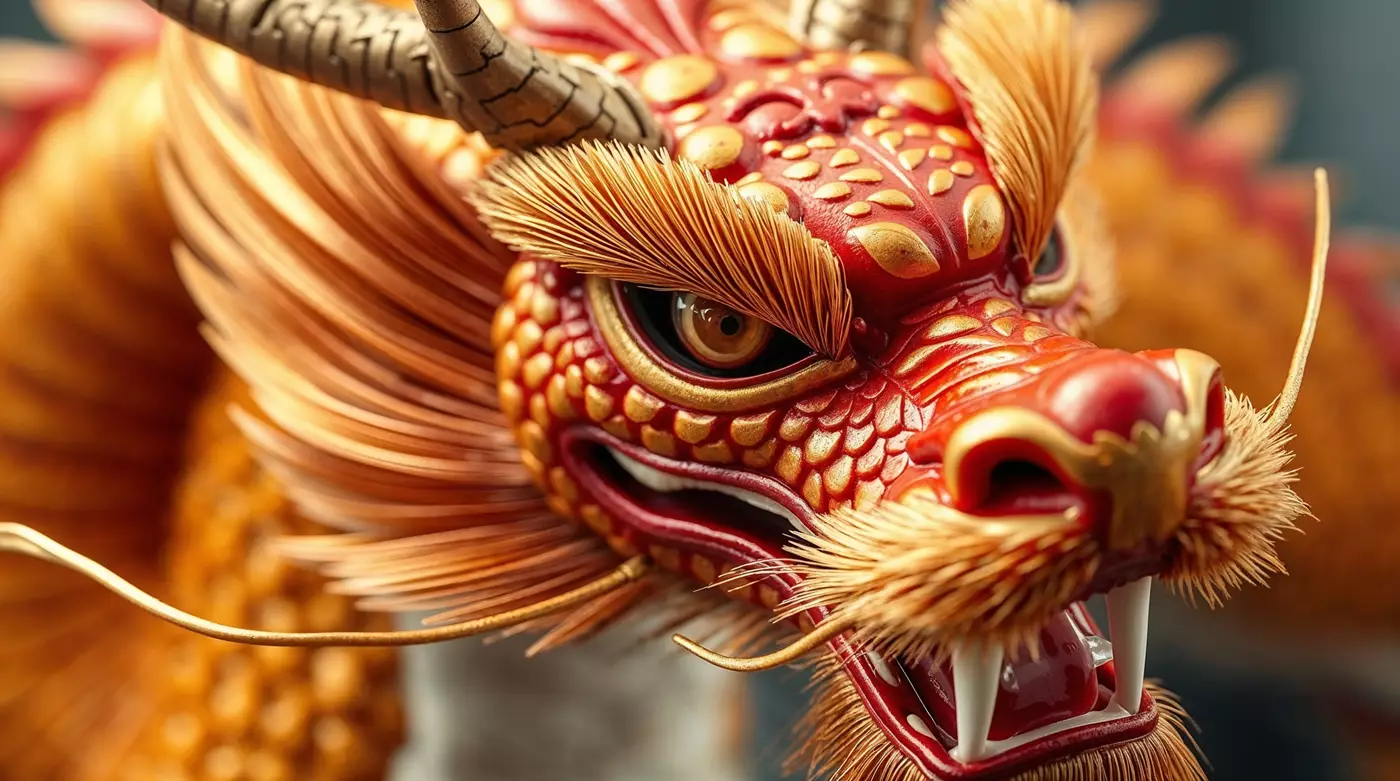
Both Long and the wyvern combine serpentine bodies with other animal features. Long’s rain-related powers and usually wingless form distinguish it from the winged, two-legged English heraldic wyvern; neither tradition follows a universal dragon classification.
Read More About Long
Cockatrice
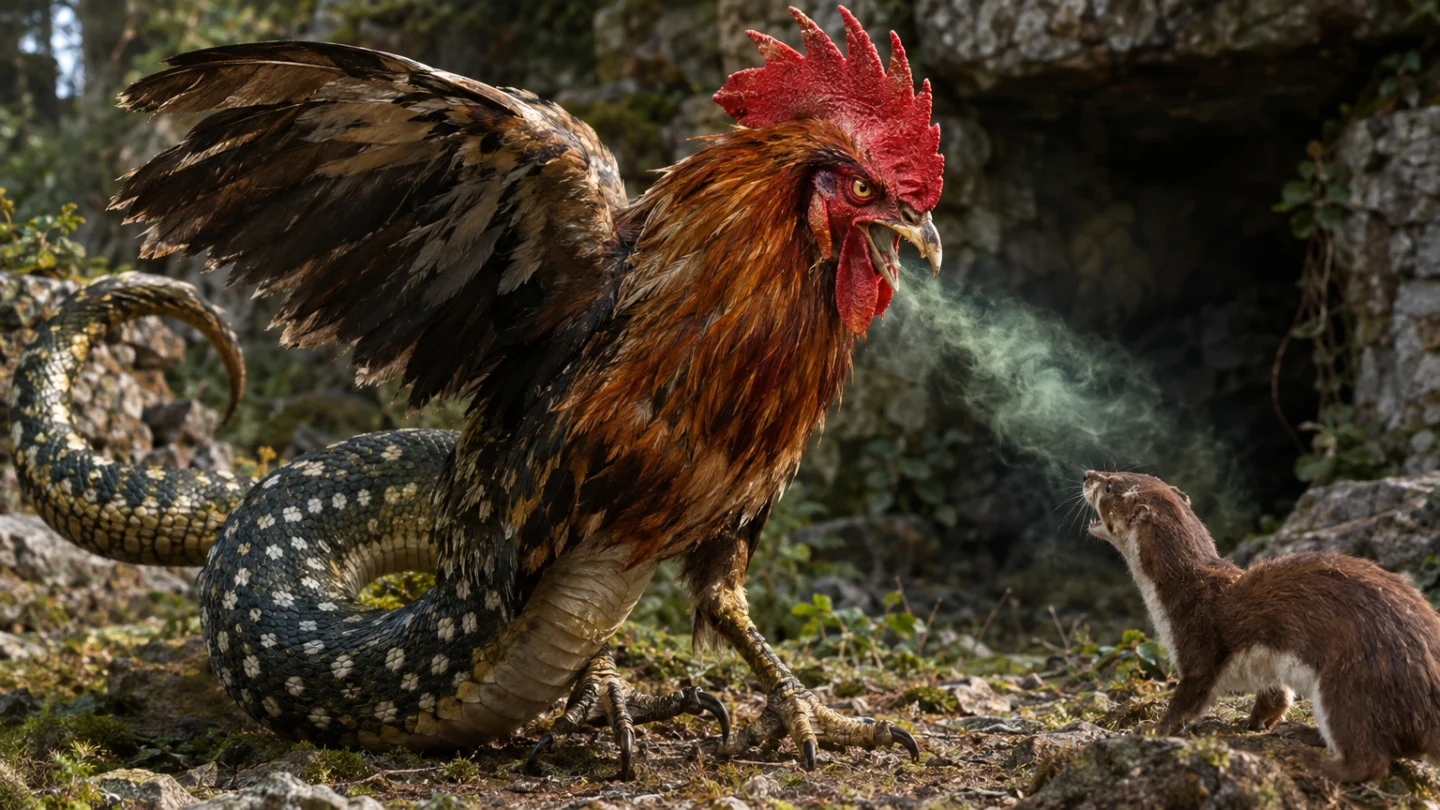
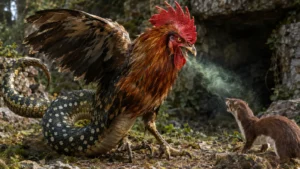
The cockatrice belongs to medieval European bestiary and literary traditions. Usually a rooster-and-serpent hybrid, it is associated with a deadly gaze or breath, although descriptions vary.
Both creatures combine bird-like and serpentine features. The cockatrice’s lethal powers and rooster associations distinguish it from the wyvern’s primarily heraldic identity.
Cuelebre
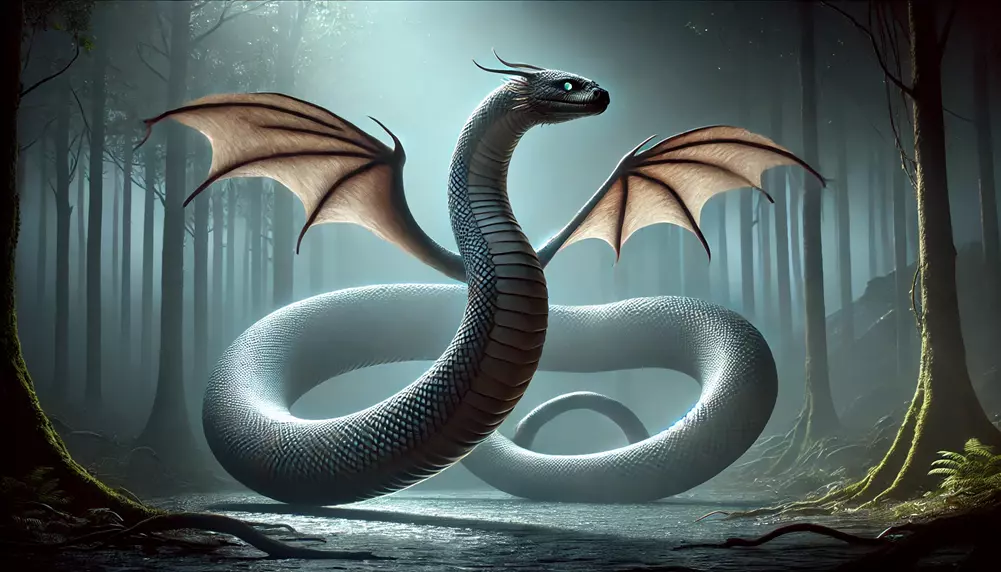
The Cuelebre is a dragon-like serpent in Asturian folklore, associated with guarding treasure in caves. It offers a comparison grounded in a regional monster tradition rather than armorial classification.
Its serpentine, dragon-like form resembles the wyvern broadly. Treasure guardianship, however, belongs to the Cuelebre’s documented role and should not automatically be transferred to wyverns.
Griffin
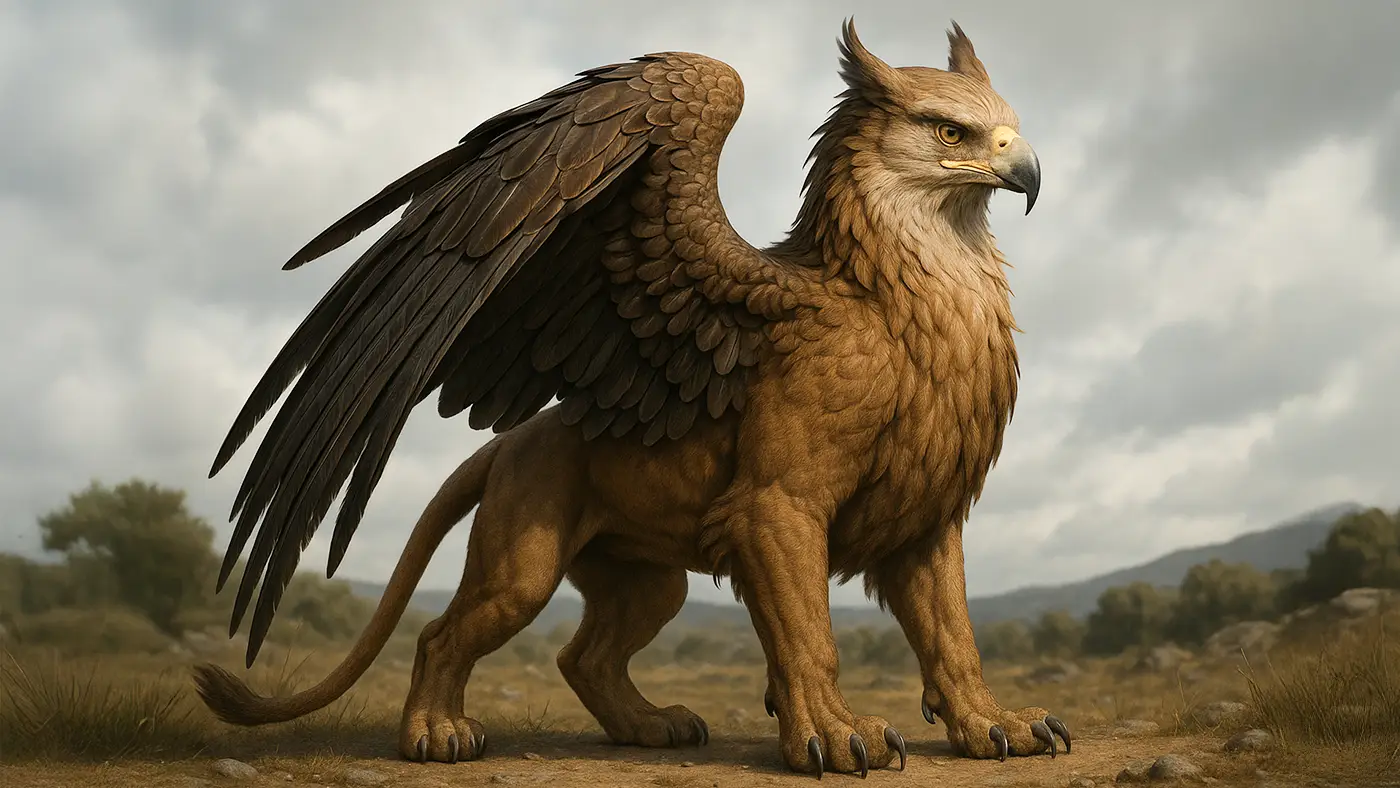
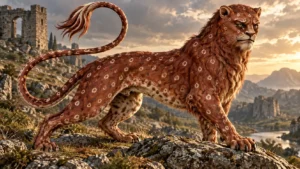
The griffin is a separate hybrid creature familiar in heraldry, combining eagle and lion features. Its comparison with the wyvern is especially useful when interpreting small or damaged images.
A worn early armorial object proposed as showing a wyvern might instead depict a griffin or another beast. Visual resemblance alone cannot settle its identification.
Religion/Ritual
No wyvern-specific religious rite, offering, taboo, or observance is established by the evidence reviewed. Medieval bestiaries did associate dragons with the Devil and evil, but that broader Christian symbolism does not demonstrate a separate religious practice centered on the heraldic wyvern.
The reported dragon image at Mordiford’s church places local monster imagery in an ecclesiastical setting. Its location is significant to the tradition’s history, but it does not by itself establish worship, a protective ritual, or a ceremony performed in the creature’s honor.
Scientific or Rational Explanations
The most useful rational explanation begins with the kind of evidence involved. Heraldic descriptions document a designed image, not a zoological specimen.
Questions about its recognition, naming, and artistic transmission are therefore better supported than attempts to reconstruct the biology of a real wyvern.
A composite body can be understood as an artistic combination rather than an anatomical report. The historical descriptions join bird-like and serpent-like features.
That observation explains the image’s construction without requiring a claim that one particular animal inspired every representation of the creature.
Historical identification also has material limits. In Steven Ashley’s study of a proposed twelfth-century wyvern, wear leaves several possible readings, including a dragon or griffin.
The uncertainty concerns what the surviving object shows, not merely which modern label an observer prefers to apply.
Words and pictures provide different kinds of evidence. A modern caption calling an old image a wyvern does not establish that its maker used that name.
Likewise, the name’s connection with words for snakes is linguistic evidence, not proof of descent from an actual animal.
Mordiford illustrates another interpretive problem: accounts and images can change while remaining attached to the same place. Differing descriptions should be retained as evidence of the tradition’s development, rather than combined into a single eyewitness-style account of a creature with stable physical characteristics.
The available evidence does not establish a specific fossil discovery, escaped exotic animal, or mistaken sighting behind the wyvern. Its documented heraldic setting offers a firmer explanation for its conventional form.
Local dragon legends require separate investigation rather than serving as biological confirmation of the emblem.
Modern Cultural References
Modern fantasy uses the wyvern both as a threatening monster and as a creature with its own narrative role. These examples belong to later creative reception: their plots and invented worlds should not be treated as evidence for medieval beliefs or heraldic conventions.
Wyvern, video game (2021)
Ghost Track Inc’s Wyvern is a fantasy role-playing game released on Steam. Its title carries the creature’s name into contemporary gaming rather than presenting a historical account.
(store.steampowered.com)
Wyvern, television film (2009)
Directed by Steven R. Monroe, this television horror film follows a monster attacking a town.
The wyvern becomes a physical antagonist rather than a heraldic figure.
(imdb.com)
Wyvern (Book 1: The Coin), novel (2016)
Kyle McGiverin’s fantasy novel includes a quest to help wyverns break a curse.
The creatures participate directly in the narrative rather than serving only as decorative emblems.
(books.apple.com)
A War of Wyverns, novel (2026)
S. F. Williamson’s novel follows a protagonist seeking out Hebridean Wyverns. These creatures belong to the book’s fictional conflict, not an independently established regional folklore classification.
(books.apple.com)
Conclusion
The wyvern is best understood first as a heraldic dragon-form, conventionally winged, two-legged, and serpent-tailed in English usage. Its history joins a snake-related name to a distinctive visual tradition, rather than establishing a separate ancient species with a fixed mythology.
The familiar contrast between two-legged wyverns and four-legged dragons remains useful within that heraldic convention, but it cannot reliably classify every medieval image or European dragon tale. Recognizing this boundary makes the creature’s documented history clearer without diminishing its imaginative appeal.
Its lasting importance lies in the movement from emblem to imagined creature. Heraldry gave the wyvern a recognizable form; later fiction, film, and games gave that form new settings, conflicts, and narrative purposes.
Local dragon traditions such as Mordiford’s add valuable context, provided their variant names and stories remain distinct from a supposedly universal wyvern legend. Read in this way, the wyvern illustrates how a powerful image can endure while its meanings change, linking historical symbolism with the inventive creature classifications of modern fantasy.
Further Reading
Wyvern
Encyclopedia Mythica offers a concise mythology entry that can help with background framing and comparison for Wyvern.
(pantheon.org)
Wyvern
Wikipedia provides a broad overview and a useful reference trail for Wyvern, but it works best as a starting point rather than a final authority.
(en.wikipedia.org)
Herefordshire Council, “Mordiford Circular Walk”, Herefordshire.gov
In a version of the Mordiford local legend, a monster preyed on cattle and people; a condemned man was offered freedom if he killed it.
Accounts vary in.
(herefordshire.gov.uk)
Wyvern, store.steampowered.com
video game 2021 A documented modern fantasy role-playing game released under the exact name; the store listing describes its game world and genre.
(store.steampowered.com)
Wyvern, imdb.com
film 2009 Made-for-television horror film whose plot features a wyvern attacking a town.
(imdb.com)
Wyvern (Book 1: The Coin), books.apple.com
published fiction 2016 Fantasy novel featuring wyverns as creatures in the story; the plot centers in part on helping them break a curse.
(books.apple.com)
Wyvern, World English Historical Dictionary
A historical dictionary entry gives the heraldic definition, spellings, and dated examples of usage.
(wehd.com)
The Coat of Arms, The Heraldry Society
Specialist discussion of the historical development and use of dragons and wyverns in English heraldry, including the approximate early roll-of-arms evidence.
(theheraldrysociety.com)