Mothman belongs to modern American folklore rather than ancient mythology. The legend began around Point Pleasant, West Virginia, in 1966, when residents reported a tall, winged figure with striking red eyes near the abandoned wartime industrial landscape north of town.
Early witnesses described something that seemed partly human and partly birdlike, yet their accounts never produced a single stable anatomy. Reports emphasized height, broad wings, unusual flight, and eyes that reflected red in headlights, creating the creature’s lasting visual identity.
The story grew because sightings arrived during a concentrated period and quickly entered newspapers, police reports, local conversation, and later paranormal writing. Mothman became more than an unexplained animal report, developing into a regional legend about fear, warning, disaster, and uncertainty.
Today, Mothman remains closely tied to Point Pleasant and the surrounding Ohio River Valley. Books, festivals, tourism, statues, films, and online communities keep reshaping the creature, but the core legend still points back to eyewitness reports from late 1966 and 1967.
History/Origin
The best documented starting point came on November 15, 1966. Roger and Linda Scarberry and Steve and Mary Mallette were driving near the former West Virginia Ordnance Works, locally called the TNT area, several miles north of Point Pleasant itself.
The couples reported seeing a large gray figure near an abandoned power plant. Contemporary reporting described it as six or seven feet tall, with a wingspan near ten feet and red eyes.
The witnesses said it rose into the air and pursued their car.
Steve Mallette gave the earliest reports one of their simplest descriptions. “It was like a man with wings.”
The sentence matters because it captures the original uncertainty: witnesses reached for familiar human and bird forms without claiming they knew what the creature actually was.
After the couples reached Point Pleasant, they contacted local authorities. Sheriff’s deputies and city police went to the TNT area around two o’clock that morning but found nothing.
Newspapers still treated the witnesses as frightened and serious, and coverage spread rapidly.
Within days, additional residents reported large birds, winged figures, or red-eyed creatures around Mason County. The descriptions varied, but repetition strengthened the legend.
Local roads around the TNT area filled with curiosity seekers, hunters, reporters, police, and residents hoping for another sighting.
A later Point Pleasant Register account quoted witness Tom Ury describing a daylight encounter north of town: “It came up like a helicopter and then veered over my car.” His report reinforced two recurring features, sudden vertical ascent and close movement above vehicles.
The original coverage also recorded belief without presenting proof. One witness told reporter Mary Hyre, “Believe me if you ever saw it, you’d be a believer.”
Statements like this reveal the emotional force of the sightings while remaining eyewitness testimony rather than independent confirmation.
Reports continued into 1967, while writers increasingly connected Mothman with UFOs, strange telephone disturbances, mysterious visitors, and other paranormal claims. John Keel later gathered these themes in The Mothman Prophecies, greatly expanding the legend beyond the earliest surviving newspaper accounts.
Name Meaning
The name Mothman did not come from the original witnesses’ first description. Early reports used terms such as bird, creature, thing, Mason County Monster, and man-sized bird.
These labels show that reporters initially struggled to classify whatever the witnesses believed they had encountered.
An important printed milestone appeared on November 17, 1966, when the Huntington Herald-Dispatch ran the headline Bird, Plane Or Batman? Mason Countians Hunt Moth Man.
That wording linked the new nickname to the superhero language already familiar in American popular culture.
The Batman reference explains the wordplay better than the creature’s anatomy, because witnesses did not describe moth-like antennae, scales, or insect wings. The name transformed a vague birdlike mystery into a memorable character, and newspapers soon helped standardize Mothman as one word.
Claims that a specific editor deliberately named the creature after the comic villain Killer Moth remain difficult to verify from surviving contemporary evidence. The safer conclusion is that Moth Man emerged through newspaper coverage, with the November 17 Batman headline providing clear cultural context.
Appearance
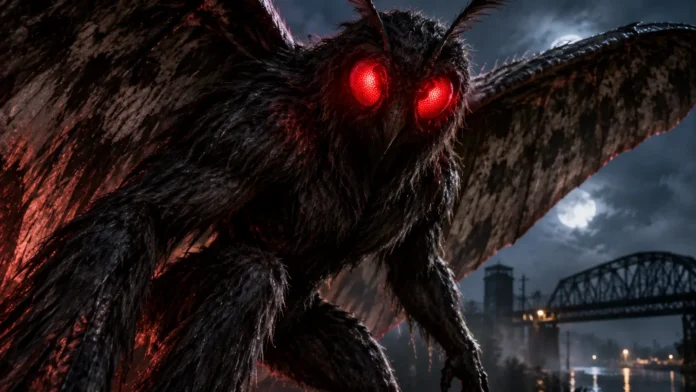
Descriptions of Mothman differ, so no single portrait represents every witness. The earliest reports generally describe a large gray or dark figure standing roughly six or seven feet tall, with broad wings and conspicuous red eyes that became visible when light struck them.
Some witnesses compared the body to a muscular man, while others called the figure an enormous bird. Accounts often place the wings against the back before takeoff, then describe wide gliding flight.
Several reports emphasize unusual speed rather than repeated wing flapping.
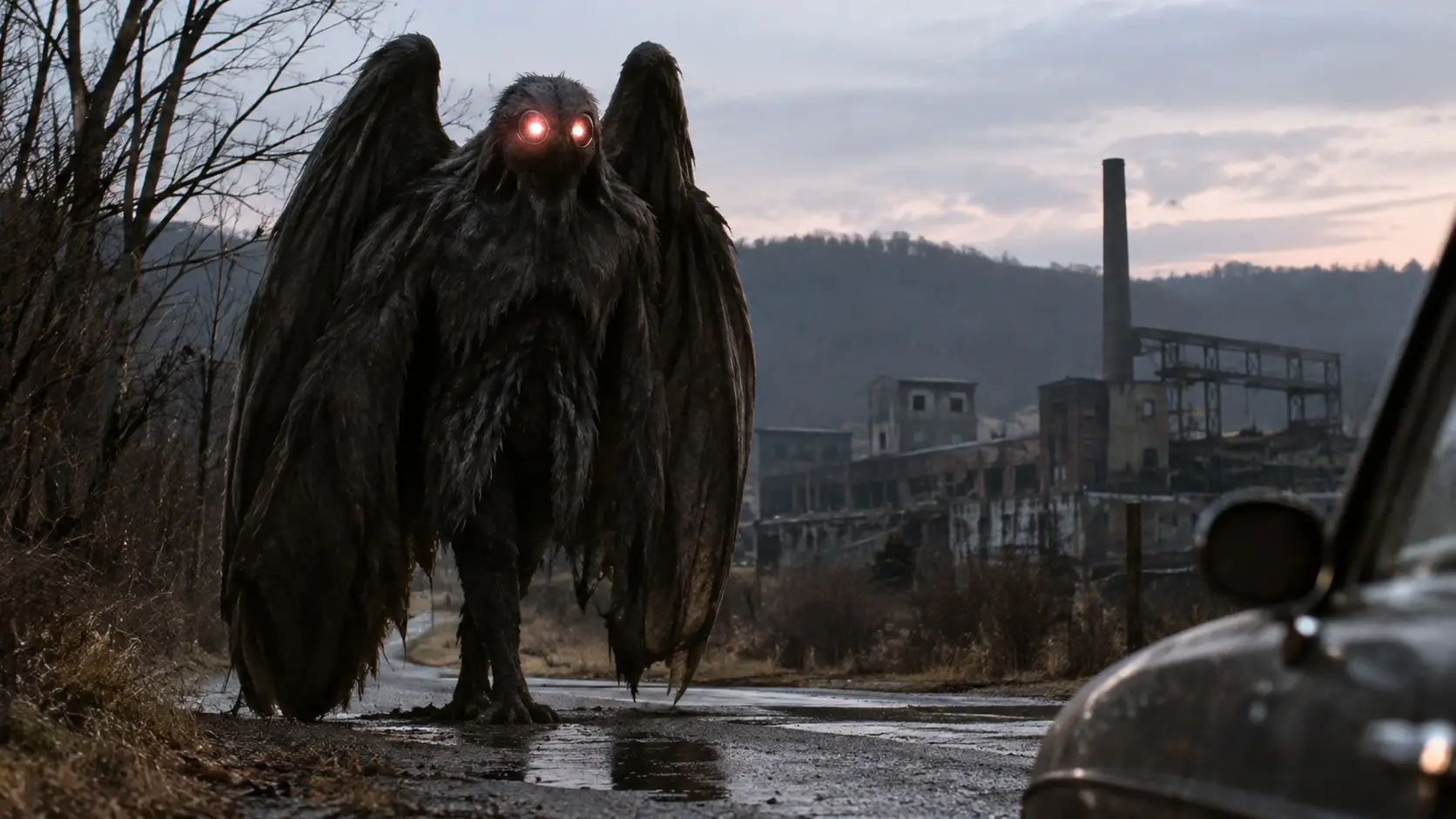
The red eyes became Mothman’s most famous feature, but early descriptions suggest reflection played an important role. Witnesses often noticed the color when headlights illuminated the figure.
Later artwork intensified this detail into permanently glowing eyes, strengthening the creature’s supernatural appearance.
Modern illustrations commonly add a headless silhouette, batlike wings, claws, and a strongly humanoid torso. Those features create a consistent monster design, but they combine and exaggerate different reports.
The historical record supports a less fixed, more ambiguous appearance than pop culture suggests.
Background Story
Mothman’s background story begins with a specific place as much as with a creature. The TNT area contained abandoned industrial structures, bunkers, wetlands, and woods left around the former West Virginia Ordnance Works, giving the 1966 encounters an already isolated and dramatic setting.
After the November 15 encounter, new stories accumulated around the same landscape. Residents described red eyes near homes, large flying forms above roads, and frightening encounters around the wildlife area.
Each report added details, while newspaper attention encouraged more people to watch the skies.
The legend soon expanded beyond sightings. Paranormal investigator John Keel visited the region and collected stories about UFOs, unusual phone calls, precognitive experiences, and mysterious men in black.
His later writing connected these separate reports into a broader pattern surrounding Point Pleasant.
On December 15, 1967, the Silver Bridge collapsed during rush hour between Point Pleasant and Gallipolis, Ohio, killing forty-six people. The disaster had an engineering cause, but later Mothman storytelling connected the creature’s appearances with warnings, premonitions, or approaching catastrophe.
That disaster changed the legend’s emotional meaning. Mothman could now function as a possible omen rather than merely an unknown flying creature.
Keel’s 1975 book strengthened this interpretation, although contemporary evidence does not establish that Mothman predicted or caused the bridge collapse.
As the story evolved, Point Pleasant became inseparable from Mothman. The creature now represents a mixture of eyewitness mystery, regional folklore, media amplification, tragedy, and tourism.
Its background remains powerful precisely because documented events and later supernatural interpretation overlap without becoming the same thing.
The historical core was cross-checked against the West Virginia Encyclopedia, West Virginia Archives and History, West Virginia Public Broadcasting, West Virginia environmental records, and federal documentation of the Silver Bridge investigation. These sources support the dates, original reporting, TNT-area setting, and documented bridge cause.
Famous Folklore Stories
The TNT Area Encounter
On November 15, 1966, Roger and Linda Scarberry and Steve and Mary Mallette drove near the abandoned West Virginia Ordnance Works outside Point Pleasant. Near the old power plant, they reported seeing a tall gray figure with broad wings and large red-reflecting eyes.
Roger accelerated toward Point Pleasant, but the witnesses said the creature rose almost vertically and followed their car along Route 62. They later reported the encounter to local authorities, who returned with them to the TNT area but found no creature there.
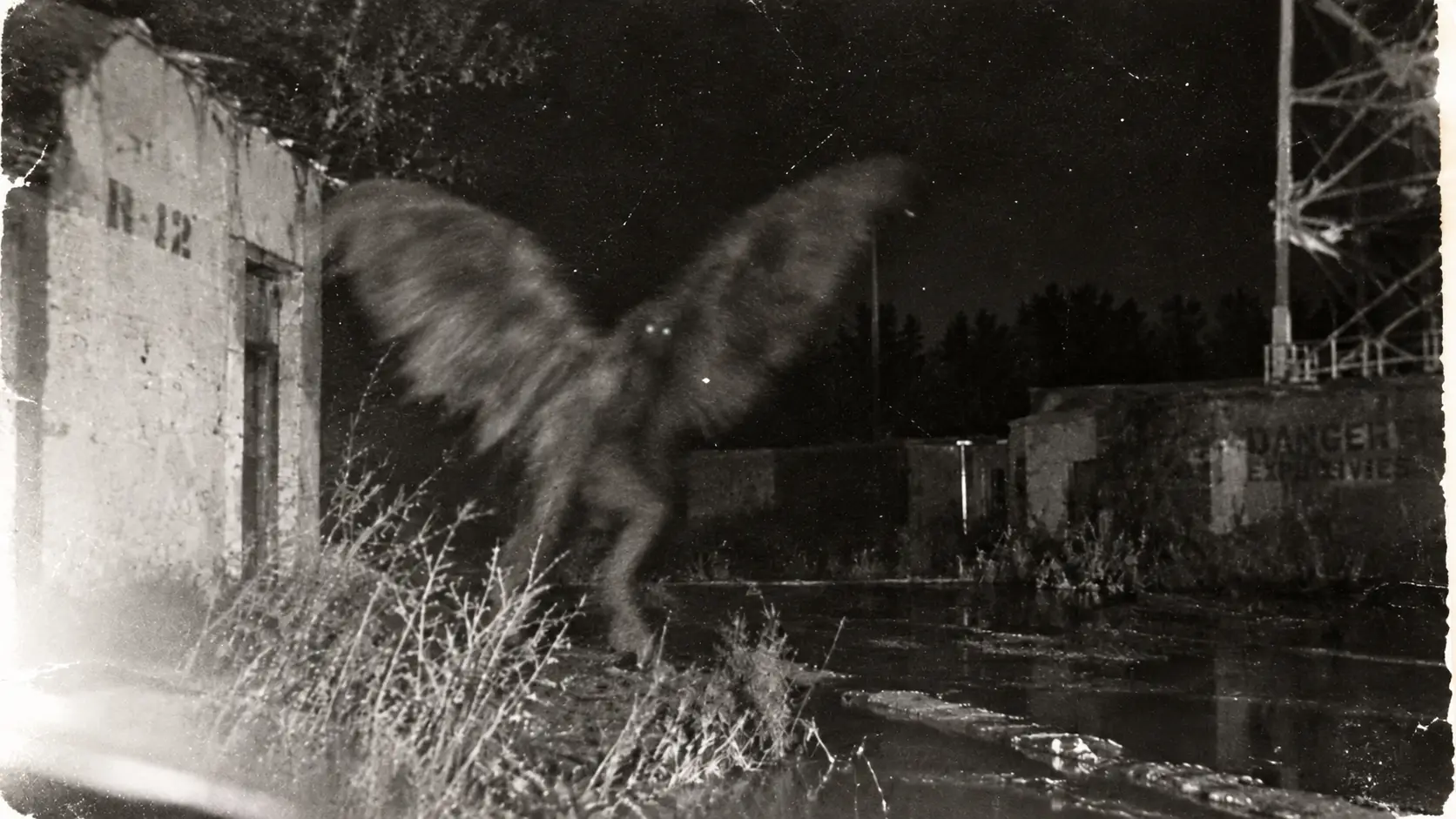
The next morning, the Point Pleasant Register captured the witnesses’ uncertainty in Steve Mallette’s description: “It was like a man with wings.” (Couples See Man-Sized Bird…Creature…Something, Point Pleasant Register, November 16, 1966) The phrase quickly became central to the legend.
The report gained attention because four people described the same encounter and spoke to police soon afterward. Contemporary coverage described the figure as roughly six or seven feet tall, with a wingspan near ten feet, although later retellings changed several physical details.
This encounter became the foundation of Mothman folklore. Later stories added prophecy, UFOs, and supernatural connections, but the November 15 chase remains the legend’s central episode because contemporary newspapers documented the witnesses, location, police response, and striking description almost immediately afterward.
Newell Partridge and the Disappearance of Bandit
One night before the famous TNT encounter, contractor Newell Partridge said his television suddenly developed strange interference at his home near Salem, West Virginia. Outside, his German shepherd, Bandit, began howling toward a barn where Partridge noticed two unusually large red reflections.
Partridge later told investigator Gray Barker that he illuminated the distant objects with a flashlight. Bandit reportedly snarled and ran toward them.
Partridge felt intense fear and stayed near the house rather than following, then kept a loaded firearm beside him overnight.
John Keel introduced the episode through a conversation involving Partridge’s young son: “Old Bandit’s gone… Mister, do you think you can bring him back?” (The Mothman Prophecies, Chapter 5, 1975) Keel used the missing dog story to deepen the surrounding mystery.
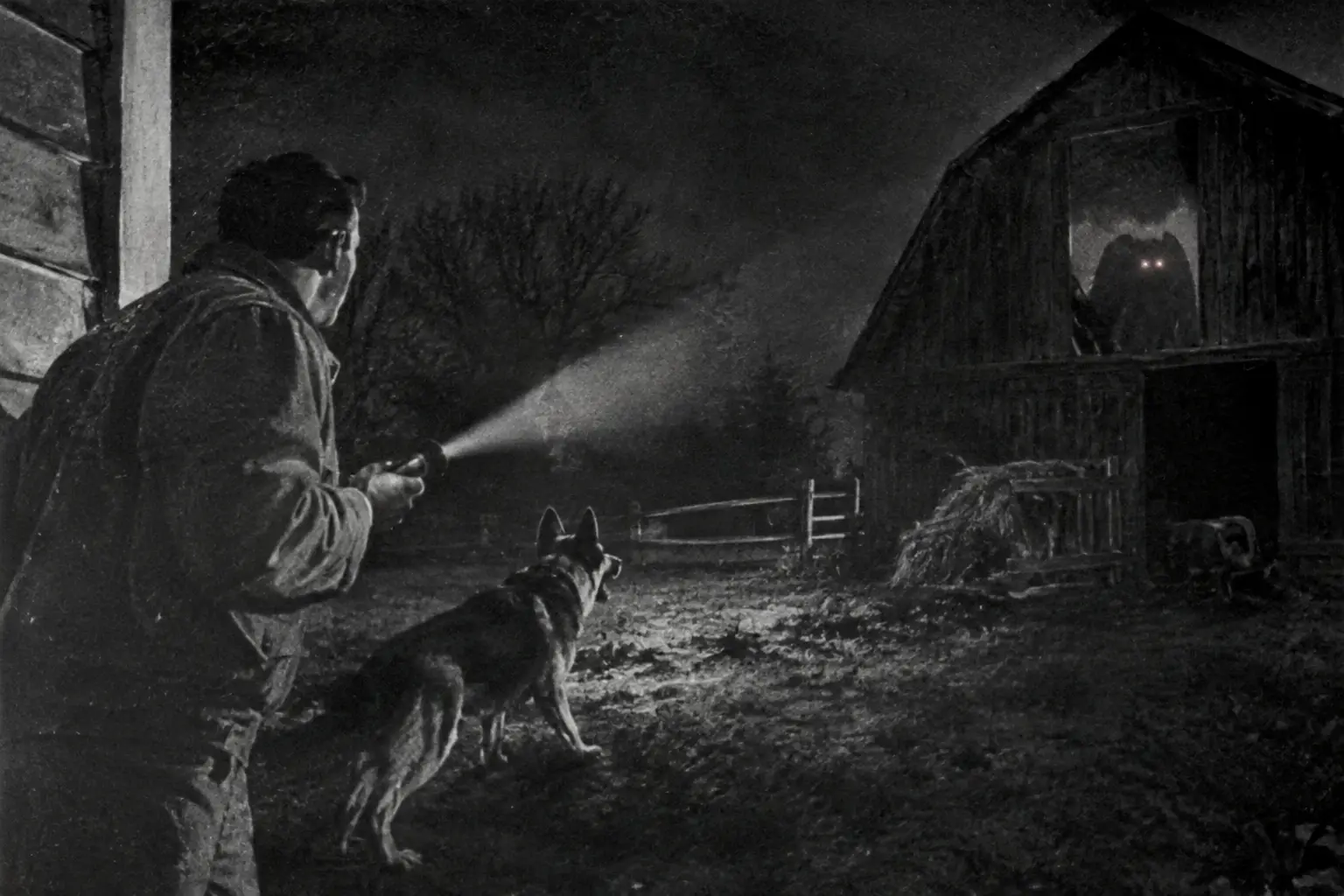
The next day, Partridge searched near the barn. According to Keel’s account, he found Bandit’s paw prints in the muddy ground, including tracks that appeared to circle repeatedly, but he could not identify a clear trail showing where the dog had gone.
Bandit never returned in the story as Keel recorded it. Later Mothman lore linked the red reflections to the creature reported near Point Pleasant, although Partridge never clearly identified what he saw.
The episode therefore remains folklore built from an unexplained disappearance.
Mothman and the Silver Bridge
On December 15, 1967, the Silver Bridge connecting Point Pleasant with Ohio collapsed during rush-hour traffic, killing forty-six people. The disaster occurred thirteen months after the best-known Mothman encounter and later became attached to the legend as its darkest supposed warning or prophecy.
John Keel’s 1975 book connected the bridge disaster with months of strange reports, alleged predictions, UFO experiences, and unsettling messages around Point Pleasant. His narrative helped transform Mothman from a mysterious winged creature into a possible omen associated with approaching catastrophe.
When Keel heard the breaking news, he described his reaction dramatically: “They’ve done it again… They knew this was going to happen … and when.” (The Mothman Prophecies, Chapter 18, 1975) That passage strongly shaped later interpretations of the disaster.
Keel’s supernatural interpretation became influential folklore, but official investigations found an engineering cause. Federal and state findings traced the collapse to failure of an eyebar in the suspension chain after a small crack developed through stress corrosion and corrosion fatigue over decades.
No verified evidence shows that Mothman caused the collapse or reliably predicted it. The legend instead grew by connecting a real local disaster with the earlier sightings.
That combination of documented tragedy and paranormal interpretation created Mothman’s lasting reputation as a possible harbinger.
Cultural Impact
Mothman has become one of West Virginia’s most recognizable folklore figures, giving Point Pleasant a distinctive cultural identity. The legend supports tourism, storytelling, local businesses, and public events while also connecting visitors with the town’s river history and broader Appalachian supernatural traditions.
The annual Mothman Festival turns the legend into a community event with speakers, vendors, tours, costumes, music, and visits to the downtown statue and museum. This celebration treats Mothman less as a threat and more as a shared symbol of local identity.
Folklorists also view Mothman as part of a wider cryptid revival, where mysterious creatures help communities preserve stories, attract visitors, and challenge stereotypes about rural places. In Point Pleasant, the legend now functions as local heritage regardless of whether anyone accepts the creature literally.
Similar Beasts
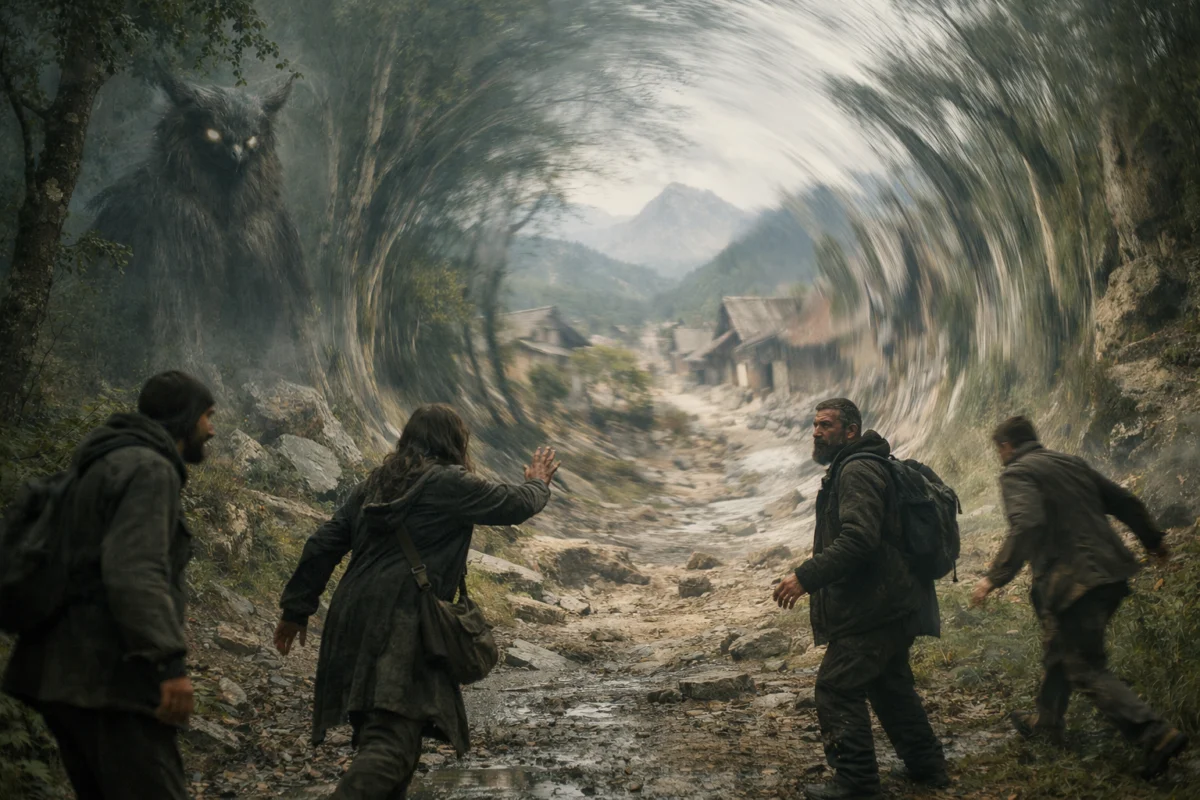
Owlman
Owlman is a modern Cornish legend associated with Mawnan in Cornwall, England. Reports and retellings centre on a large, owl-like humanoid or winged figure, first said to have been seen in 1976, and the story has persisted through local and paranormal folklore channels.
Like Mothman, Owlman blends human and birdlike traits and is strongly shaped by eyewitness uncertainty, especially around striking eyes and night-time perception. Both legends have also attracted sceptical readings that treat some reports as misidentifications, including of local owls.
Jersey Devil
The Jersey Devil is a long-running figure in New Jersey’s Pine Barrens folklore, typically described as a strange winged creature with mixed animal features. It is one of the best known regional “monster” traditions in the United States and remains part of local identity and storytelling.
Like Mothman, the Jersey Devil became closely tied to a particular landscape and community, and the legend’s endurance owes as much to repetition, publicity, and tourism as to any single report. Both work as place-based American folklore where “what it was” stays unresolved.
Thunderbird
Thunderbird traditions belong to multiple Indigenous cultures across North America, where the being appears in distinct community-specific forms and meanings. As a powerful spirit associated with the sky and supernatural flight, Thunderbird carries deep cultural, artistic, ceremonial, and spiritual significance.
Thunderbird should not be treated as a cryptid equivalent of Mothman. The limited similarity is thematic, involving an immense flying presence and the awe it inspires, while the traditions themselves are older, sacred, and not rooted in modern newspaper-driven sighting waves.

Flatwoods Monster
The Flatwoods Monster is a West Virginia legend that grew after a reported 1952 encounter involving strange lights and an unusual figure. The story quickly entered local memory and wider popular culture, becoming a key part of the state’s modern “monster” folklore.
Although its reported appearance differs from Mothman, both legends show how a concentrated event, community retelling, and media attention can create a durable regional myth. Each also sits in the space between explanation and mystery, where disputed interpretations become part of the tradition.
Religion/Ritual
Mothman has no documented traditional religion, ancient cult, priesthood, or historical ritual system. The legend began through twentieth-century eyewitness reports and later paranormal writing, so claims about old Mothman worship or inherited sacred practices lack credible historical evidence and should be treated cautiously.
Modern visitors sometimes approach Mothman with playful ritual language, especially through fandom, festivals, costumes, souvenirs, and internet jokes. These activities can resemble pilgrimage or offering traditions, but they function primarily as participatory folklore, tourism, and fan culture rather than an established religion.
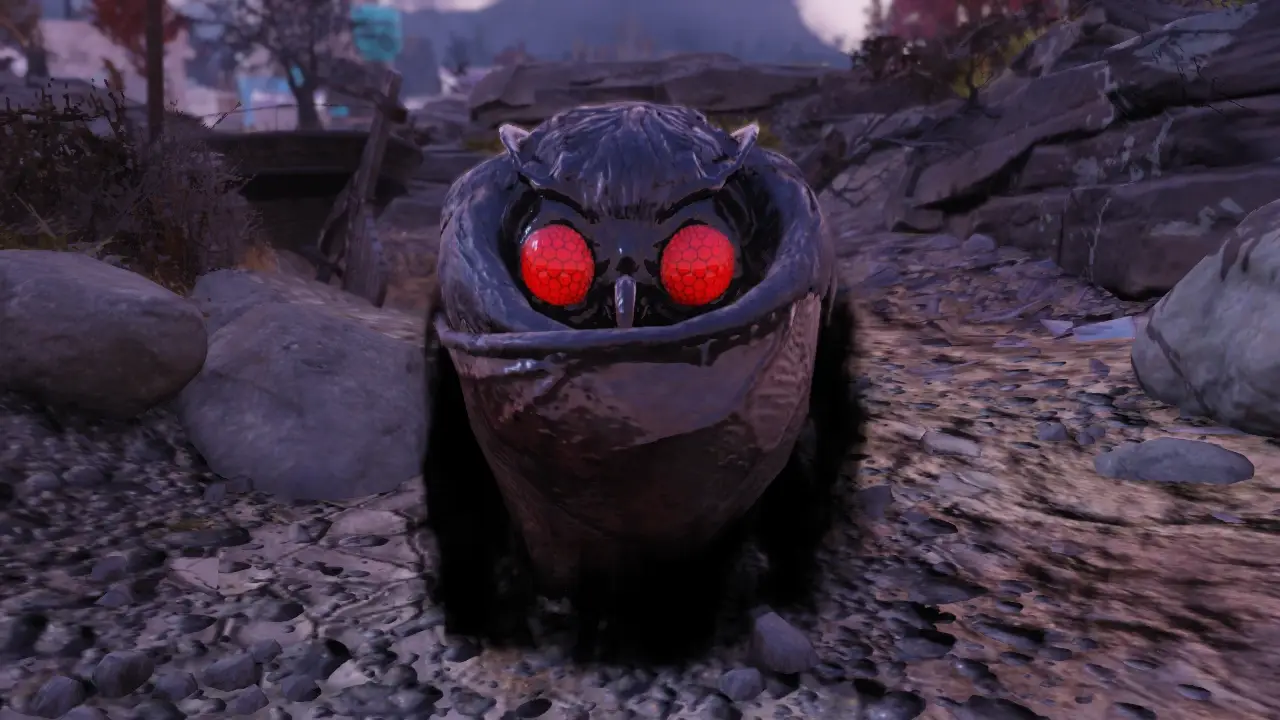
Fiction has pushed the religious imagery further. Fallout 76 portrays Mothman worshippers, shrines, summoning ceremonies, and a “Wise Mothman,” but these belong to the game’s invented setting.
They show how modern media can transform a regional cryptid into a fictional cult figure.
Scientific or Rational Explanations
No physical evidence has established Mothman as an unknown animal or supernatural being. Skeptical explanations generally focus on misidentified birds, darkness, distance, expectation, and memory.
Large birds can appear unusually humanlike when viewed briefly at night, particularly during stressful or surprising encounters.
Sandhill cranes have often appeared in explanations because they are tall, gray birds with broad wings and red coloration on the head. However, matching those features does not prove that a crane caused the original sightings, and the eyewitness descriptions remain too inconsistent for certainty.
Owls provide another possibility because reflective eyes, silent flight, sudden movement, and distorted size perception can produce unsettling nighttime encounters. Investigator Joe Nickell argued that owl misidentification offers a simpler explanation, although no single natural explanation can retrospectively identify every reported Mothman sighting.
Modern Cultural References
The Mothman Prophecies
John A. Keel’s 1975 book The Mothman Prophecies transformed the Point Pleasant reports into a broader paranormal narrative involving UFOs, unusual messages, mysterious visitors, and the Silver Bridge disaster. The book became one of the most influential sources shaping Mothman’s modern supernatural reputation.
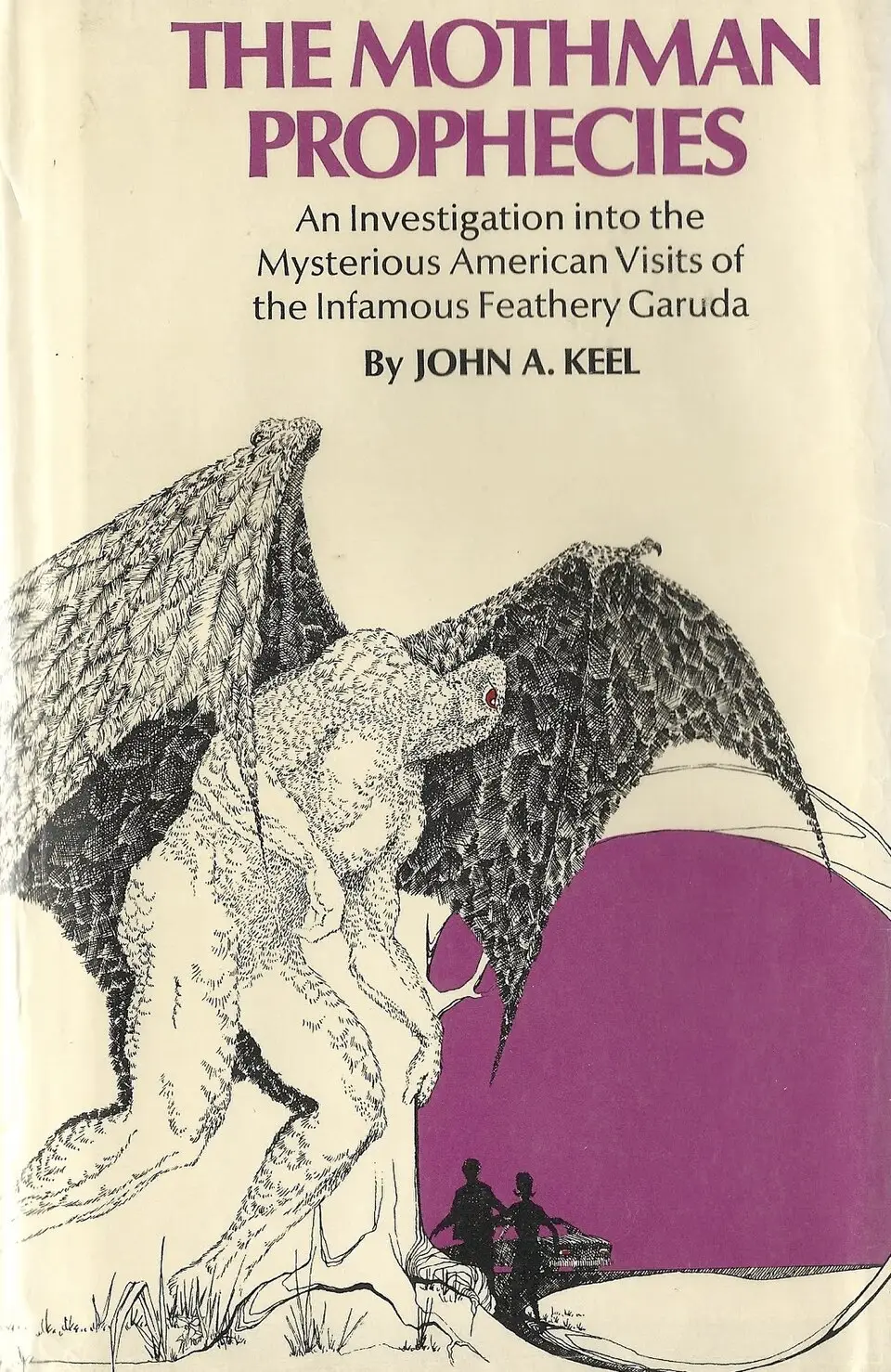
WorldCat record for The Mothman Prophecies
The Mothman Prophecies Film
The 2002 film The Mothman Prophecies, starring Richard Gere and Laura Linney, reworked Keel’s material into a supernatural thriller. The film presents the entity as connected with warnings of disaster, helping spread the omen interpretation of Mothman to a much larger audience.
Sony Pictures: The Mothman Prophecies
The Mothman of Point Pleasant
Small Town Monsters released The Mothman of Point Pleasant in 2017. Directed by Seth Breedlove, the documentary revisits the 1966 and 1967 reports, the surrounding paranormal stories, and the legend’s effect on Point Pleasant, using interviews, narration, illustrations, and historical material.
Small Town Monsters: The Mothman of Point Pleasant
Fallout 76
Bethesda’s Fallout 76 places Mothman within its fictional post-apocalyptic West Virginia. The game includes Mothman creatures, cultists, shrines, and the recurring Mothman Equinox event, where players assist the Enlightened in an elaborate ritual specifically intended to summon the Wise Mothman.
Horrified: American Monsters
Ravensburger’s cooperative board game Horrified: American Monsters includes Mothman among six American folklore creatures. Players defend the fictional town of Cross Creek from Mothman, Bigfoot, the Jersey Devil, Chupacabra, Ozark Howler, and Banshee of the Badlands using different creature-specific strategies.
Ravensburger: Horrified American Monsters
Mothman Festival, official Mothman Festival website, 2026.
Documents the annual Point Pleasant Mothman Festival, including its connection to the 1966 sightings, speakers, tours, vendors, cosplay, museum activities, and the legend’s modern role in local tourism and celebration.
Official Mothman Festival website
Conclusion
Mothman began with a concentrated group of strange reports around Point Pleasant, but decades of retelling turned those encounters into a much larger American legend. Newspapers, investigators, books, film, tourism, games, and festivals each added layers that the original witnesses never described.
Its endurance comes partly from uncertainty. Natural explanations remain plausible, paranormal interpretations remain culturally influential, and no decisive evidence resolves the sightings.
That unresolved space allows Mothman to function simultaneously as mystery, monster, warning figure, local mascot, tourist attraction, and storytelling tradition.
The strongest way to understand Mothman is to separate documented history from later folklore without dismissing either. The sightings created the mystery, while communities and creators built its legacy.
Together, those layers explain why Mothman remains one of America’s best-known modern cryptids.
Further Reading
An Ode to a Hometown Creature: Mothman of Point Pleasant, West Virginia by Gwen Mallow, Smithsonian Center for Folklife and Cultural Heritage, 2021.
Examines Mothman as Point Pleasant folklore, recounting the 1966 sightings, Bandit story, Silver Bridge association, museum, tourism, and the legend’s continuing role in West Virginia community identity and storytelling today.
Smithsonian Center for Folklife and Cultural Heritage
Mothman by Gordon Simmons, e-WV: The West Virginia Encyclopedia, revised 2024.
Provides a concise reference history of Mothman sightings, the TNT area, John Keel, Silver Bridge associations, skeptical explanations, literature, the Point Pleasant statue, festival, and later reported sightings in Chicago.
e-WV: The West Virginia Encyclopedia
Mothman, West Virginia Archives and History.
Catalogs books and contemporary newspaper clippings preserved by West Virginia Archives and History, including November 1966 reports that document early witness accounts, competing explanations, and development of the Mothman name.
West Virginia Archives and History
The Mothman Prophecies by John A. Keel, Saturday Review Press, 1975.
Keel’s influential 1975 book combines Mothman reports with UFOs, unusual messages, Men in Black, and the Silver Bridge disaster, making it essential for understanding the legend’s later paranormal interpretation worldwide.
WorldCat record for The Mothman Prophecies
Silver Bridge, West Virginia Department of Transportation.
Explains the Silver Bridge’s design, December 15, 1967 collapse, forty-six deaths, investigation, and official engineering findings, providing factual context for separating the documented disaster from later Mothman omen traditions today.
West Virginia Department of Transportation
Mothman Revisited: Investigating on Site by Joe Nickell, Skeptical Briefs, 2002.
Reports Joe Nickell’s on-site investigation of Point Pleasant and evaluates natural, folkloric, and prank explanations for Mothman, offering a skeptical counterpoint to paranormal accounts and supernatural interpretations of events there.
Skeptical Inquirer
The Mothman and the Crane: A Contemporary Perspective, Skeptical Inquirer, 2022.
Reassesses proposals that large birds, especially cranes, inspired Mothman sightings and compares witness descriptions with regional bird behavior, anatomy, perception, and historical reporting while emphasizing remaining uncertainties in specific encounters.
Skeptical Inquirer
Investigating Mothman’s Red Eyeshine by Benjamin Radford, Skeptical Inquirer, 2020.
Investigates Mothman’s famous red eyes through animal eyeshine, witness testimony, lighting conditions, and later artistic conventions, helping distinguish biological possibilities from features amplified through folklore and popular culture over time.
Skeptical Inquirer
The Mothman of Point Pleasant by Seth Breedlove, Small Town Monsters, 2017.
Official Small Town Monsters source for Seth Breedlove’s 2017 documentary, describing its focus on Point Pleasant sightings, surrounding paranormal reports, community impact, interviews, historical material, and recreated imagery for viewers.
Horrified: American Monsters, Ravensburger.
Official Ravensburger description of Horrified: American Monsters, confirming Mothman as one of six American folklore creatures players confront alongside Bigfoot, Jersey Devil, Chupacabra, Ozark Howler, and Banshee of the Badlands.
Ravensburger