Overview of the Pre-Colonial Africa Period
Pre-colonial Africa describes diverse societies before European colonial rule became established; it does not identify one uniform era, political system, or shared cultural tradition across the continent’s many regions.
Its chronology varies by region, since colonial expansion and local political transformations occurred at different times. The term therefore provides broad historical orientation rather than a precise continental boundary.
Ancient Egypt, Kush, Aksum, and numerous later kingdoms and city-states developed distinctive institutions and religious traditions. Their histories cannot be reduced to a single civilizational sequence.
Trade, migration, agriculture, pastoralism, and urban life shaped different communities in different ways. These varied conditions influenced the local settings through which religious ideas and folklore circulated.
Myth and folklore helped communities interpret consequential experiences, including illness, environmental change, birth, death, and political authority. Their meanings depended on particular social and historical contexts.
Cultural and Religious Worldviews
Dominant Belief Systems
There was no continent-wide religious system. Communities maintained distinct understandings of deities, ancestors, spirits, human obligations, and the natural world, documented unevenly across periods and locations.
In many African religious traditions, ancestors remained significant within social and spiritual relationships. The forms of that significance varied, so no single account describes ancestral belief across all communities.
Some societies recognized powerful creator deities alongside other spiritual beings. Available evidence does not support treating this pattern as universal or assigning it identical meanings between regions.
Egyptian religious traditions connected divine powers with kingship, cosmic order, and particular sacred animals. These historically attested associations differ from the localized spiritual frameworks found elsewhere.
Role of Myth in Daily Life
Stories could communicate expectations about kinship, leadership, hospitality, or conduct. Their social force depended on local narration and interpretation rather than a single standardized continental moral code.
Folklore also offered explanations for events that communities regarded as spiritually consequential. Such explanations reveal cultural understandings, but they do not independently establish the historical occurrence of supernatural events.
Shared narratives could reinforce community identity by preserving remembered origins and relationships. The surviving evidence rarely shows precisely how frequently particular stories were told in everyday settings.
Mythological Beasts and Supernatural Entities
Common Types of Mythical Creatures
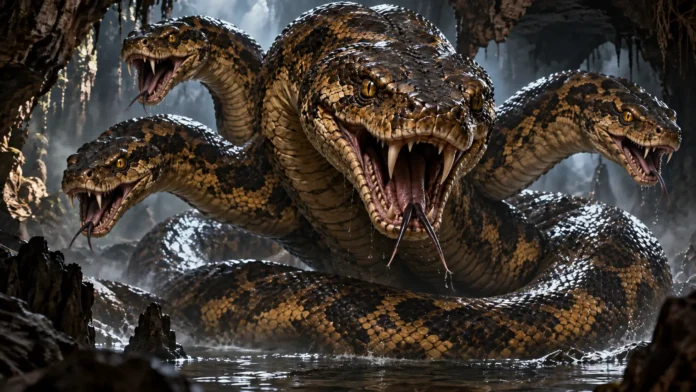
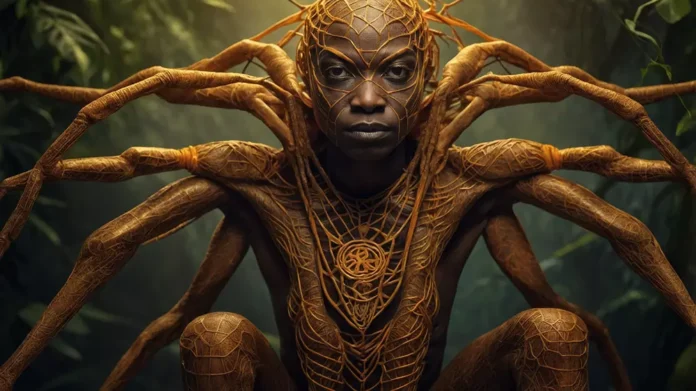
African traditions include accounts of spirits, extraordinary animals, shapeshifting beings, and dangerous supernatural presences. These categories are comparative descriptions, not a unified indigenous classification system.
Animals such as snakes, crocodiles, lions, and birds acquired religious significance in particular societies. Their symbolic roles differed, and their appearance alone cannot establish shared meaning.
Some documented traditions describe beings associated with water, forests, or other inhabited environments. Specific names and attributes belong to particular cultural settings, not to Africa generally.
Historical sources do not permit a reliable continent-wide catalogue of mythical creatures. Many oral traditions were recorded late, translated across languages, or incompletely documented.
Symbolism and Meaning
Animal imagery could express relationships between people, authority, and the nonhuman environment. Interpreting a creature requires contextual evidence, since similar animals carried different meanings across societies.
In ancient Egyptian visual and religious traditions, animal forms could signify particular divine powers. This specific convention should not be projected onto unrelated African iconographies.
In some folklore, threatening beings represented dangers or breaches of social expectations. Such readings are interpretations of particular narratives, not universal psychological explanations for supernatural figures.
Folklore Traditions and Storytelling
Oral and Written Transmission
Oral transmission preserved many stories through speech, performance, and repeated communal remembrance. Because versions could change, recorded tellings should not automatically be treated as original or fixed.
Writing preserves other religious and historical materials, including Egyptian inscriptions and manuscripts produced in African societies. These sources represent particular literate contexts rather than all folklore traditions.
Arabic manuscripts from parts of Africa record historical and religious knowledge, but their contents do not constitute comprehensive collections of local supernatural narratives.
European-era collection and translation introduced additional selection and editorial choices. Researchers therefore distinguish documented wording from later interpretation whenever the evidence permits.
Regional Variations
North African Egyptian traditions include extensive written and visual evidence about deities and sacred animals. This record differs markedly from societies whose beliefs survive chiefly through later oral documentation.
Across West Africa, diverse communities maintained distinct religious systems and narrative traditions. Regional comparison must preserve local names and contexts instead of merging their supernatural beings.
Southern African traditions likewise vary among communities and historical periods. Available records do not justify treating any one account as representative of the entire region.
Relationship Between Humans and the Mythical World
Fear, Protection, and Reverence
Supernatural beings could be approached as dangerous, protective, or worthy of reverence within particular traditions. These relationships depended on local beliefs and cannot be generalized across societies.
Some accounts associate spiritual forces with protection or communal wellbeing. The surviving evidence does not always clarify whether a being was understood literally, symbolically, or both.
Narratives about harmful beings could warn listeners about perceived dangers or prohibited conduct. Such interpretations require specific textual or ethnographic support rather than assumption.
Influence on Art and Material Culture
Religious imagery appears in African architecture, sculpture, and objects, but not every animal representation is supernatural. Interpretation depends on archaeological context and associated evidence.
Ancient Egyptian monuments depict gods in human, animal, or combined forms. Their meanings are grounded in that society’s religious evidence and should not be generalized to other regions.
Objects from other African contexts can bear symbolic or ritual significance, though their original uses may remain uncertain. No verified sources describe this for every object or setting.
Transition and Legacy of the Pre-Colonial Africa Period
Religious and narrative traditions changed through migration, political shifts, trade, and the spread of Islam and Christianity. Their effects differed across communities and historical periods.
Older concepts sometimes persisted within changing religious environments, while other practices were transformed or discontinued. Evidence rarely allows a simple account of uninterrupted survival.
Later folklore reflects both local continuities and historical encounters. Identifying these layers requires attention to dating, language, and the circumstances in which narratives were recorded.
Historical Reliability and Interpretation
Evidence includes archaeology, inscriptions, manuscripts, and oral accounts recorded at different times. Each source type answers different questions and carries distinct limitations for reconstructing belief.
Archaeological images establish that motifs were represented, but they do not by themselves reveal how every viewer interpreted them or whether all communities shared meanings.
Oral accounts preserve valuable cultural knowledge, yet their documented versions may postdate the periods they describe. Their historical use requires careful attention to transmission and context.
Scholars distinguish evidence for historical practices from claims about supernatural reality. Mythological classification concerns cultural representation and belief, not verification of supernatural beings as historical facts.
Uncertainty remains especially substantial where records are sparse or filtered through outside observers. Responsible interpretation identifies that limitation rather than filling gaps with unsupported reconstructions.