Introduction
Empusa is a shape-changing supernatural apparition in Greek tradition, capable of appearing as an animal or a woman. Her earliest surviving literary encounter presents her as a frightening, unstable presence rather than a monster with one fixed body or a continuous personal history.
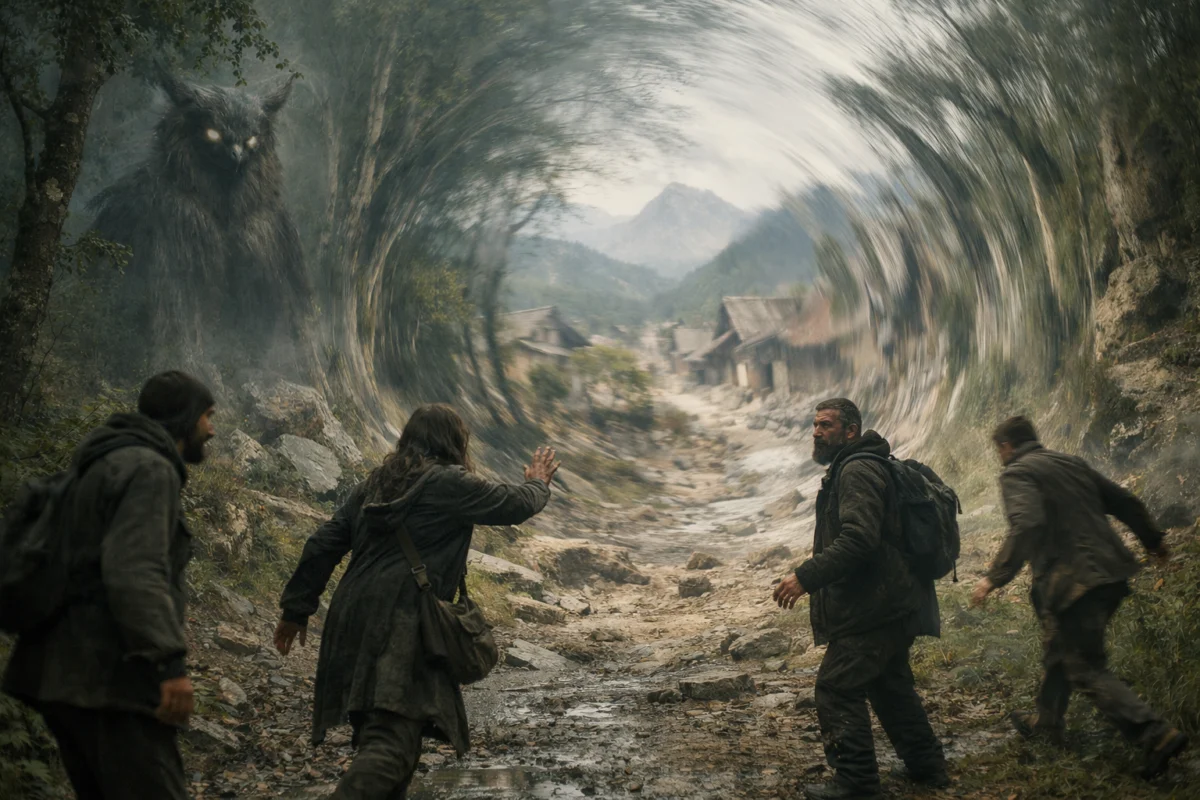
In Aristophanes’ comedy Frogs, a huge beast reportedly changes between several animal forms and a beautiful woman. The encounter belongs to a comic journey into the underworld, where supernatural danger becomes an opportunity for frightened reactions and theatrical humor.
A much later narrative gives the name a different emphasis. In Philostratus’ Life of Apollonius of Tyana, an apparently beautiful and wealthy woman entices Menippus toward marriage while secretly intending to devour him.
Here, attraction conceals a predatory ghost.
These versions share deceptive appearances, but they should not be combined into one standard account. Later lexicographic traditions add an association with Hecate and unusual bodily features.
Empusa’s importance lies partly in this adaptability, spanning comic terror, supernatural deception, and the danger hidden beneath beauty.
History/Origin
The earliest surviving literary episode specifically naming Empusa occurs in Frogs, produced in 405 BCE. This establishes her presence in late fifth-century Greek comedy, but it does not establish when the underlying belief began or whether the playwright inherited a single, clearly defined tradition.
The encounter unfolds through dialogue between Xanthias and Dionysus. Xanthias reports a huge creature whose appearance keeps changing, and Dionysus identifies it as Empusa.
The name supplies a recognizable category for the fright, without introducing a genealogy or explaining the apparition’s origins.
The comic setting matters. The audience receives the creature through a character’s alarming descriptions rather than an extended narrative about her activities.
This early witness therefore establishes a shape-changing underworld fright more securely than it establishes any fixed anatomy, appetite, or relationship to other supernatural beings.
Centuries later, Philostratus developed a substantially different encounter in Life of Apollonius of Tyana, written in the early third century CE. Its Empusa maintains a convincing female identity through courtship and preparations for marriage, making deception sustained and intimate rather than rapidly changeable.

The tenth-century Suda preserves another layer of interpretation. Its entry associates Empusa with Hecate and records bodily peculiarities alongside competing explanations of her name.
This later lexicographic evidence is valuable, but its collected details should not automatically be treated as features of the earliest account.
The religious background also remains interpretive. E. K. Borthwick’s specialist study examines the Frogs passage in relation to Dionysus and the mysteries.
Such scholarship opens a possible ritual context without turning the comic encounter into direct documentation of a particular initiation practice.
Name Meaning
The Greek name is Ἔμπουσα, commonly rendered in English as Empusa or Empousa. These are alternative spellings of the same name, not evidence for separate creatures.
Empousai is a plural form used when referring to more than one such apparition.
The name’s original derivation remains uncertain. The tenth-century Suda preserves an interpretation linking it to movement on one leg.
This connects the name with an unusual bodily feature, but it is a historical interpretation rather than a demonstrated linguistic derivation. “One-legged” should therefore not be presented as an established English translation of Empusa.
The name’s literary use is clearer than its origin. In Aristophanes’ Frogs, Dionysus identifies the creature as Empusa after hearing about its changing appearances.
Within that comic encounter, the name identifies a supernatural fright without establishing its literal meaning or supplying a personal biography.
In Philostratus’ later Menippus narrative, the name identifies the deceptive being concealed beneath a beautiful woman’s appearance. Across these accounts, its clearest continuity concerns supernatural identity and misleading form, not a securely recoverable literal meaning.
Appearance
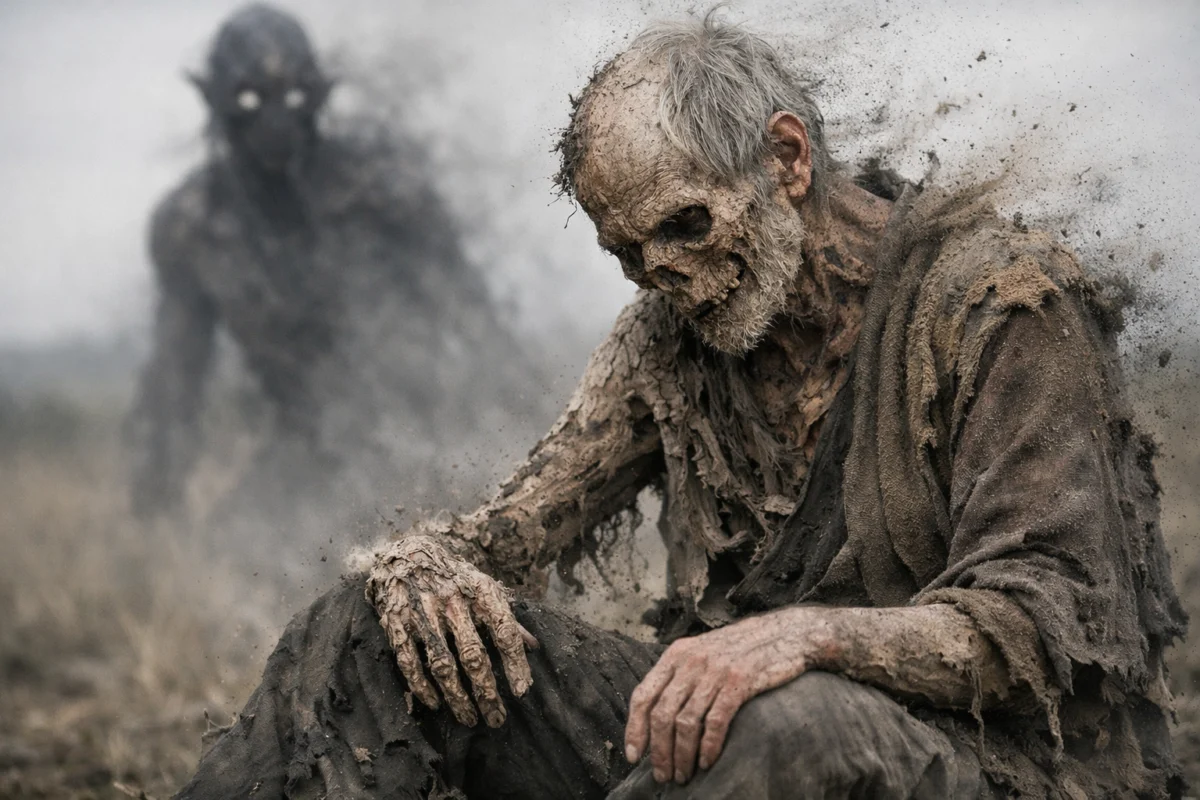
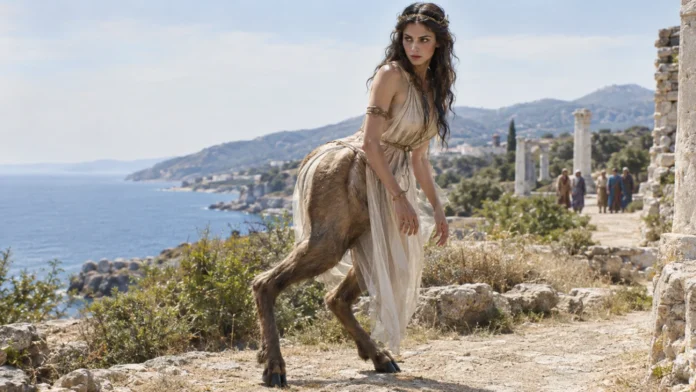
Empusa has no single fixed body across the surviving accounts. Her appearance ranges from a rapidly changing beast to a convincing human disguise.
The details vary with the literary setting, making outward form an unreliable guide to her supernatural nature.
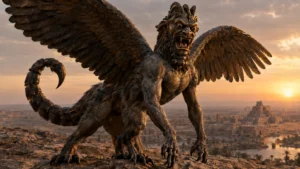
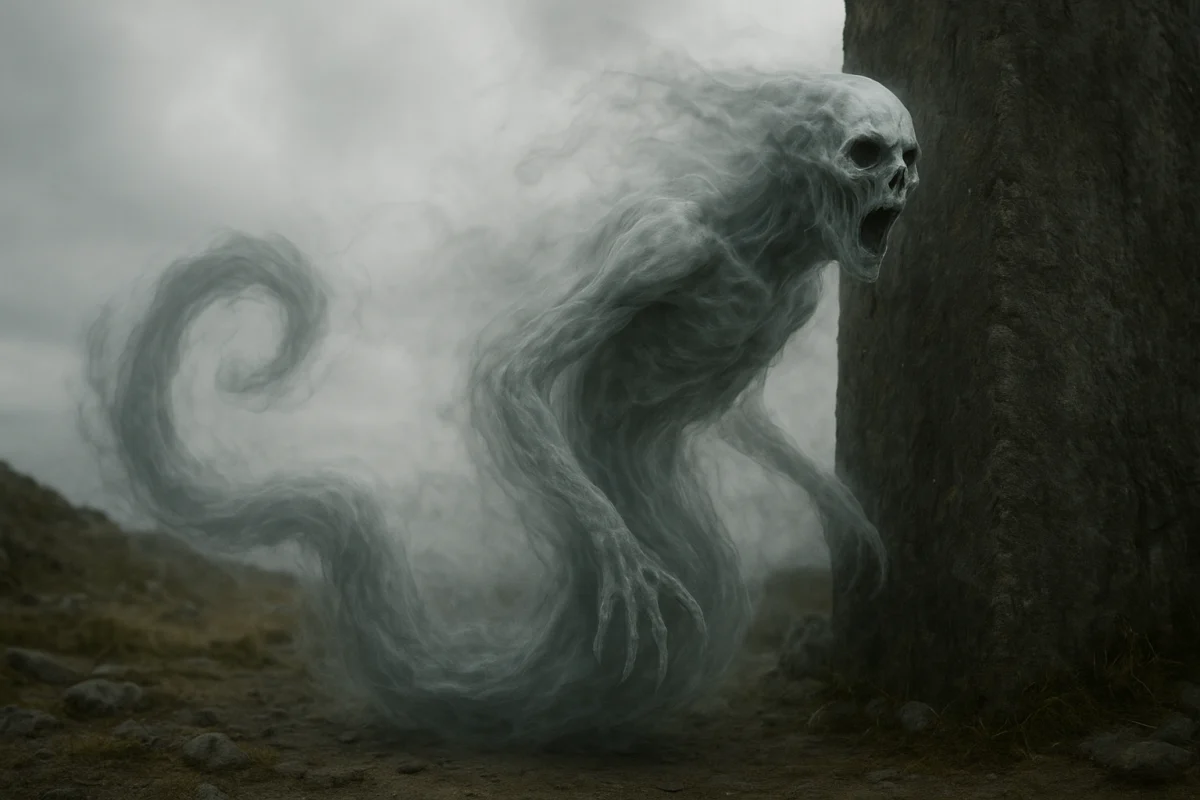
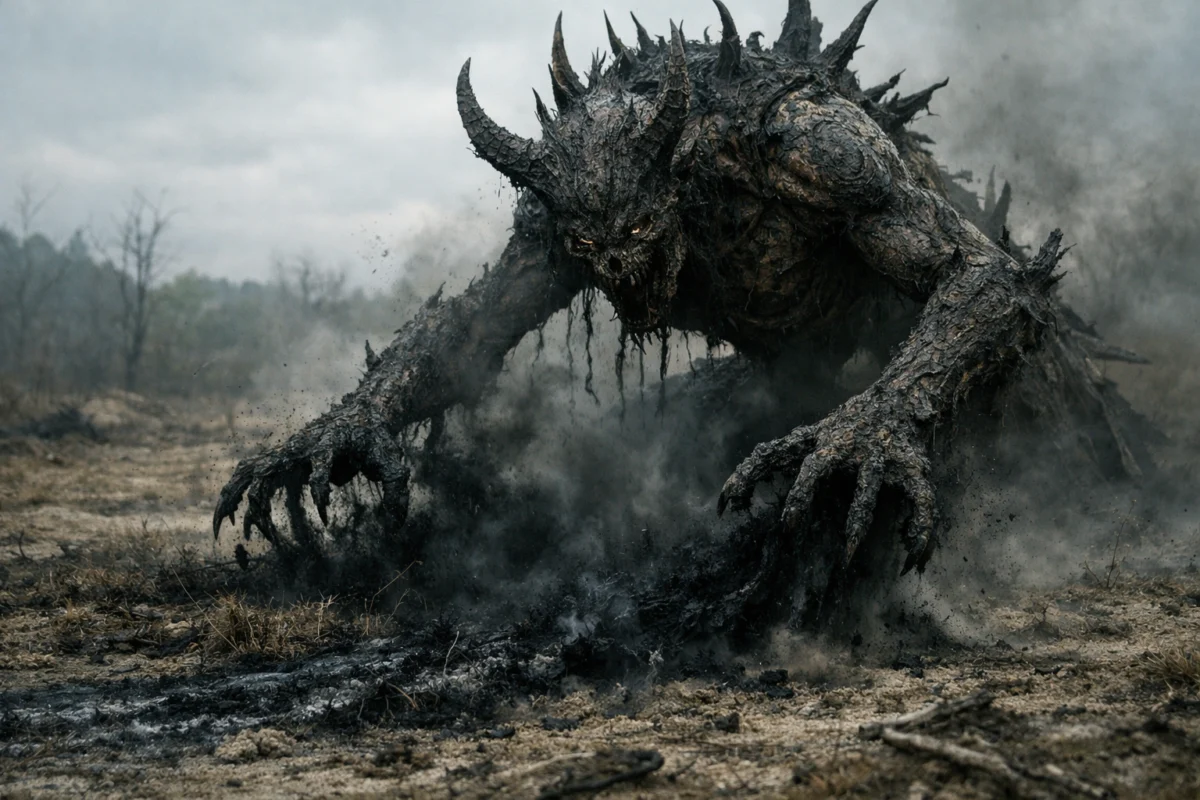
In Aristophanes’ Frogs, first performed in 405 BCE, Xanthias reports a huge wild beast whose appearance changes through an ox, a mule, a beautiful woman, and a dog. These are successive forms within the comic exchange, not separate animal parts assembled into one hybrid body.
A fiery face and mismatched legs are also part of this scene in Frogs. One leg is bronze, while the other is comically described as made of cow dung.
These grotesque details combine menace with absurdity as Dionysus reacts in fear. The fiery face and bronze leg are therefore attested centuries before the tenth-century Suda.
That later lexicon preserves and interprets earlier material rather than originating these traits.
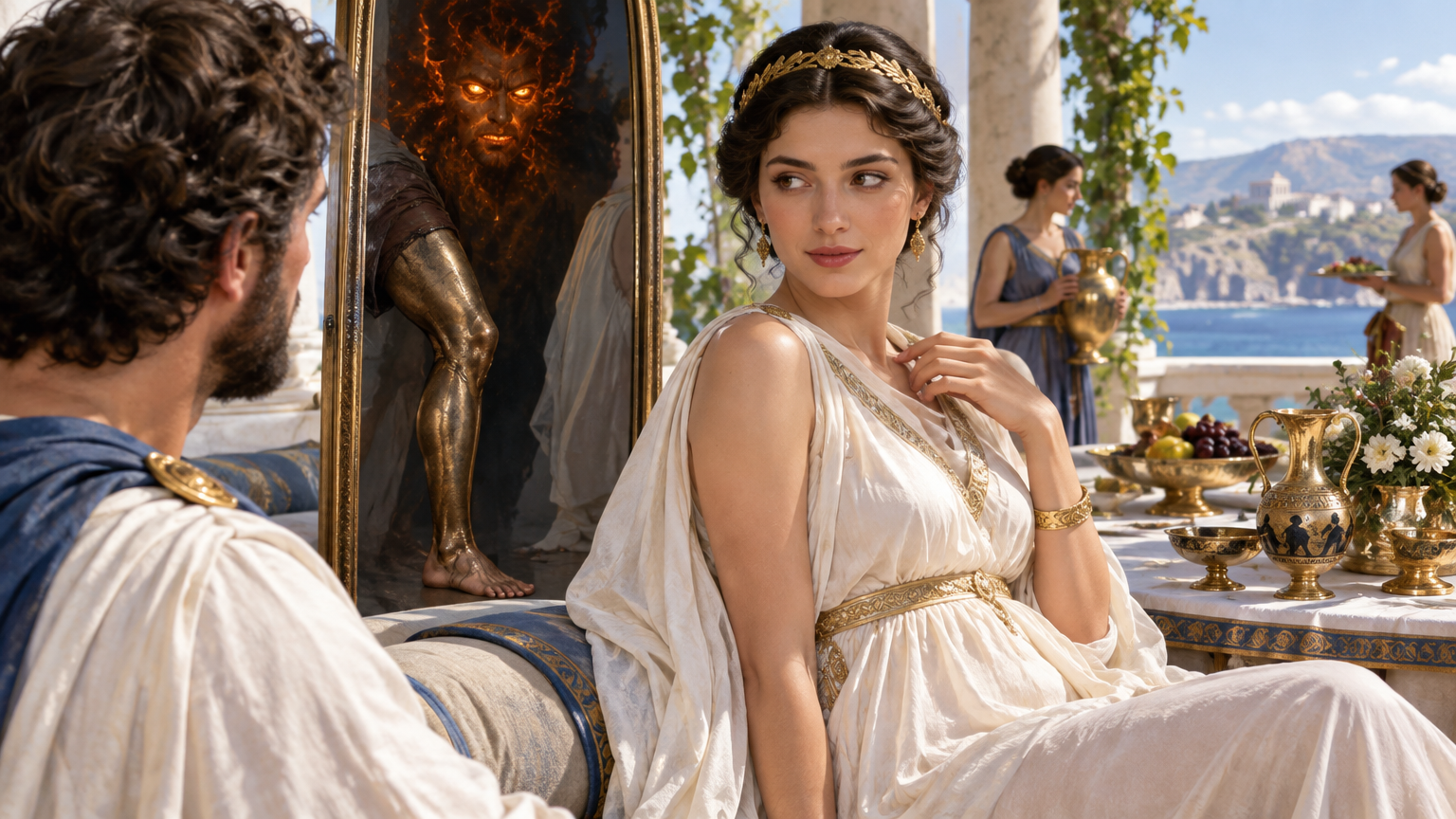
The beautiful woman is only one moment in this changing sequence. Her beauty does not establish a permanent or underlying female body, nor does the scene develop the sustained courtship found in the later Menippus narrative.
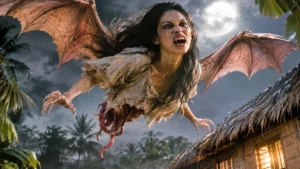
In Philostratus’ Life of Apollonius of Tyana, the apparition maintains a beautiful woman’s appearance through repeated meetings and preparations for marriage. Apparent wealth strengthens her disguise, and the deception extends beyond her body to the feast, furnishings, and attendants surrounding her.
Neither a fiery face nor mismatched legs defines this bride’s appearance.
The contrast is between conspicuous transformation and concealed identity. The comic apparition frightens through unstable shapes and grotesque bodily details; the later bride deceives through an attractive, apparently trustworthy exterior.
Both portrayals make visible appearance an uncertain guide to what Empusa is.
Background Story
Empusa’s background is better understood through changing narrative settings than through an invented life story. The surviving material places her in an underworld comedy, a story of deceptive courtship, and later explanations of supernatural beings.
Each setting emphasizes a different kind of danger.
In the comic setting, uncertainty itself produces fear. The reported creature crosses boundaries between animal and human forms before receiving a name.
Its instability supports the scene’s humor: an apparently threatening encounter becomes part of an exchange shaped by alarm and rapidly changing descriptions.
The Menippus episode shifts that uncertainty into intimate social life. Courtship, hospitality, wealth, and a wedding all appear desirable and familiar.
Their reversal into a scheme of bodily consumption makes the apparition threatening precisely because she initially seems to offer pleasure and security.
Apollonius’ exposure of the bride also gives the later story a particular purpose. The apparent riches and wedding arrangements vanish under challenge.
The episode presents discernment as a defense against deception, with the supernatural woman serving as the danger that the central holy man recognizes.
The association with Hecate belongs explicitly to later lexicographic testimony: the Suda calls Empusa an apparition sent by that goddess. This supplies a divine connection within that tradition, but it should not be silently inserted into either literary encounter as its stated explanation.
Related supernatural categories also overlap without becoming identical. Philostratus connects Empusae with beings commonly called Lamias and mentions Mormolyceia alongside them.
Such grouping helps explain the figure’s flexible boundaries: the name participates in a broader language of frightening apparitions rather than a consistently defined supernatural species.
Famous Folklore Stories
Two literary episodes provide the clearest surviving narratives involving Empusa. They belong to different periods and genres, rather than forming chapters of one continuous legend.
The descriptive headings below identify these encounters; neither is an authenticated title of an independent traditional folktale.
Xanthias and the Empusa in Frogs
During the underworld journey in Aristophanes’ Frogs, first performed in 405 BCE, Xanthias reports a terrifying beast. His description keeps changing: the creature appears as an ox, then a mule, then a beautiful woman, and finally a dog.
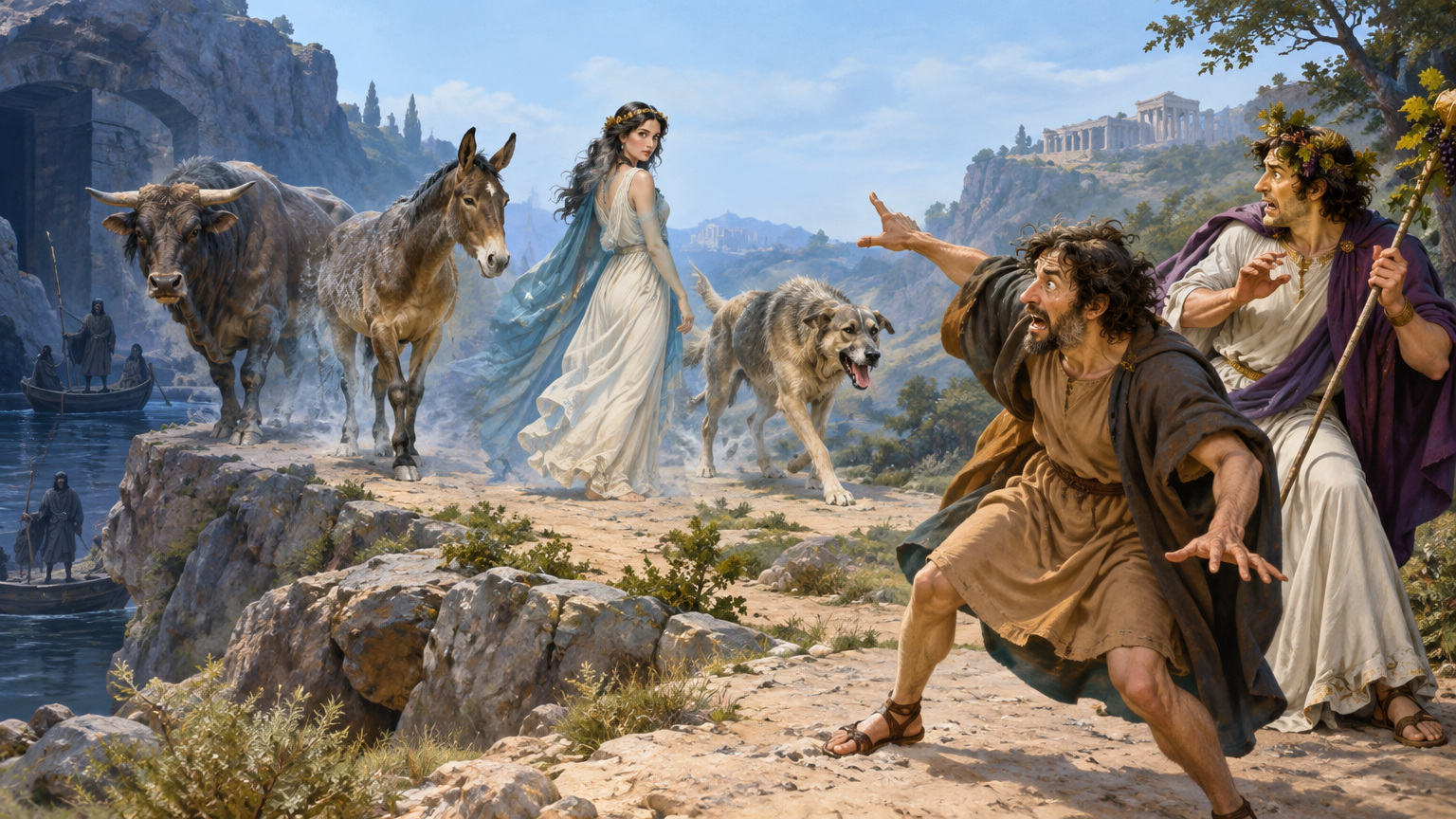
Dionysus identifies the apparition as Empusa. Instead of confronting it heroically, he becomes frightened, allowing the exchange between god and servant to drive the comedy.
Xanthias eventually reports that the danger has passed, but reassurance does not immediately overcome his master’s fear.
The encounter reaches the audience through dialogue, not a necessary visible monster entrance. A specialist study of the play’s underworld parody interprets Xanthias as inventing the sighting to frighten Dionysus.
That reading makes the episode a practical joke as well as supernatural comedy.
The Empusa Bride and Menippus
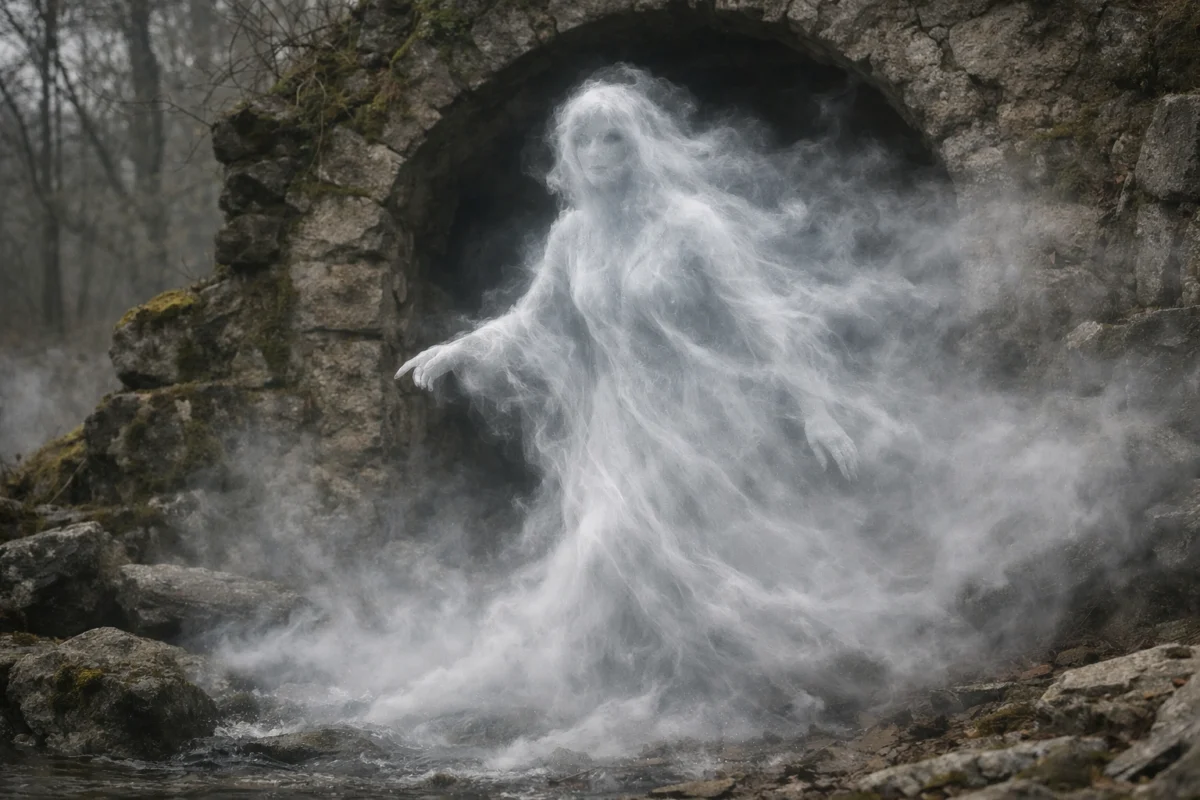
In Philostratus’ Life of Apollonius of Tyana, written in the early third century CE, a ghost encounters Menippus on the road to Cenchreae. Appearing as a beautiful woman, she professes love, attracts repeated visits, and persuades him to marry her.
At the wedding feast, Apollonius challenges the bride’s apparent wealth and exposes her supernatural identity. The golden and silver vessels prove insubstantial.
The feast, servants, cooks, and luxurious furnishings disappear, revealing that the impressive household was part of the deception.
Pressed further, the bride admits that she is an Empusa and intended to devour Menippus after enticing him with pleasure. The ending centers on exposure and rescue through discernment.
This flesh-eating bride belongs to the later narrative, not to Aristophanes’ comic encounter.
Cultural Impact
Empusa’s early theatrical role shows how supernatural fear could become public entertainment. In Frogs, naming the apparition does not restore confidence or establish control.
Instead, the god’s alarm creates a comic reversal in which his servant directs the encounter through words.
The Menippus episode gives the apparition a different literary function. Beautiful appearances, romantic promises, and apparent prosperity conceal consumption and death.
Apollonius’ ability to recognize the deception establishes his superior perception, making the monster’s exposure an episode in the sage’s characterization.
Later reference writing brought these differing roles together. William Smith’s nineteenth-century Dictionary of Greek and Roman Biography and Mythology summarizes the shape-changing spectre alongside associations with Hecate and travelers.
Such synthesis helped transmit a composite portrait, although its components require separate historical treatment.
A clearly documented modern reinterpretation appears in Rick Riordan’s The Battle of the Labyrinth, published in 2008. Its empousai disguise themselves as cheerleaders and confront Percy Jackson and Rachel Elizabeth Dare, transferring supernatural concealment into a contemporary young-adult adventure setting.
This modern portrayal labels the creatures Greek vampires and emphasizes mismatched legs. Those choices illustrate selective adaptation rather than an unchanged ancient classification.
The transformation from comic apparition to disguised contemporary predator demonstrates the figure’s adaptability without establishing a continuous, uniform popular tradition.
Similar Beasts
Lamia

Lamia is a distinct figure in Greek mythology associated with child-devouring horror. The name also occurs more broadly for frightening female beings, making its usage dependent on context.
Philostratus explicitly connects Empusae with beings commonly called Lamias. This establishes overlap within his account, not universal interchangeability between every Lamia and Empusa tradition.
Mormolyceia
Mormolyceia are frightening female apparitions in Greek tradition. They appear alongside Lamias in Philostratus’ discussion of the supernatural being exposed at Menippus’ wedding, providing a close textual comparison.
Their connection to Empusa rests on explicit grouping in that narrative. It does not establish that all three names originally denoted one precisely defined creature.
Rakshasa
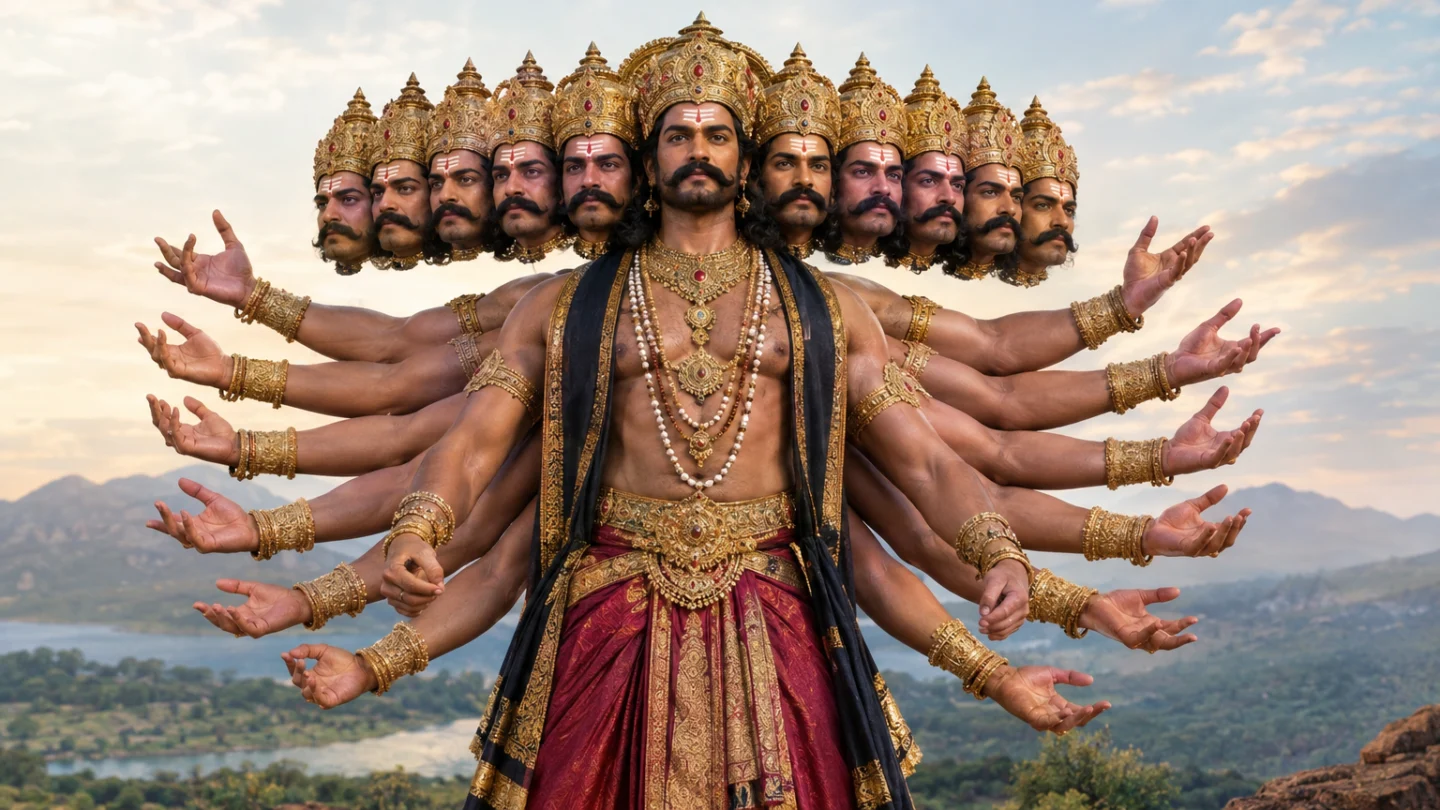
Rakshasas are supernatural adversaries in Hindu tradition, associated with shape-changing, deception, and illusion. Their roles vary across narratives, including prominent appearances as formidable opponents in the Ramayana.
Disguise and deceptive appearances provide the strongest comparison with Empusa. This is a narrative parallel across traditions, not evidence that either figure developed from the other.
Succubus

The succubus is a female demon of medieval European tradition, associated with sexual encounters involving sleeping men. Seduction and the depletion of vitality are central to its familiar portrayal.
It resembles Philostratus’ seductive Empusa more than Aristophanes’ shifting beast. Menippus’ encounter, however, involves courtship, a wedding, and threatened flesh-eating rather than a dream visitation.
Religion/Ritual
The tenth-century Suda describes Empusa as an apparition sent by Hecate. This is important testimony to the later transmission of Greek supernatural traditions, but it does not by itself establish a separate cult, priesthood, or regular observance dedicated to Empusa.
The same lexicographic tradition connects appearances with initiates and offerings to the dead. These notices preserve religious associations rather than a sufficiently detailed ceremonial account.
They should not be expanded into instructions for summoning, appeasing, or banishing the apparition.
A possible mystery-cult background to the Frogs episode has received specialist attention, notably in E. K. Borthwick’s 1968 study.
The proposed connection concerns the interpretation of theatrical imagery and context; the scene is not a straightforward record of an initiation ceremony.
Material evidence offers another, qualified possibility. The study A Gem to Counter the Empousa discusses a protective inscribed gem now in Bonn and proposes a Hekate-Empousa identification.
Its protective purpose is better supported than the precise identification of the image or its intended supernatural target.
Scientific or Rational Explanations
The strongest rational approaches begin with genre rather than a proposed animal or medical diagnosis. The principal evidence consists of comedy, a literary account of a sage, and later lexicography.
These sources explain how people represented supernatural danger, not a series of independently documented sightings.
For the theatrical episode, the suggestion that Xanthias fabricates the apparition offers a specific explanation grounded in dramatic action. Fear arises through a servant’s report and a listener’s response.
This interpretation concerns the scene’s mechanics, not proof that every ancient Empusa belief began as a joke.
The Menippus narrative supports a literary reading centered on deceptive desire. The threatened victim mistakes pleasure and luxury for security, while Apollonius sees their danger.
This reading explains the episode’s structure without treating the bride as evidence for an actual predatory species.
Historical comparison also helps explain the figure’s inconsistent attributes. A frightening name could operate differently in comedy, supernatural storytelling, and explanatory dictionaries.
Recognizing those settings is more useful than assembling every recorded detail into one supposedly stable anatomy or set of powers.
Calling Empusa a vampire can clarify the predatory quality of some later portrayals, but it is not an explanation of her origin. Likewise, the evidence does not establish hallucination, sleep paralysis, or a particular illness as the cause of these literary traditions.
Modern Cultural References
The Empusium – Empusa and the empousae, novel
In Olga Tokarczuk’s novel The Empusium – Empusa and the empousae, mysterious empousae watch from the shadows and lie in wait.
The title derives from Empusa, a shapeshifting female demon associated with preying on men, who is also invoked through a character’s recitation of a scene from Aristophanes’s The Frogs.
Source
Empusa – Empusa vampires, film
In the Spanish horror film Empusa – Empusa vampires, the Empusa are an ancient breed of vampire linked to a symbol on a severed hand discovered by Abel, a retired actor and occult enthusiast.
His investigation unfolds as more mutilated bodies appear.
Source
Conclusion
Empusa is best understood as a Greek supernatural apparition whose identity changes across literary settings, rather than a monster with one fixed anatomy or biography. The shifting beast reported in Aristophanes’ comedy and the predatory bride exposed in Philostratus belong to different periods and serve different narrative purposes.
Together, they reveal the versatility of an uncanny figure capable of making familiar appearances threatening. Preserving those differences gives a clearer understanding of the tradition than combining every recorded feature into a single creature.
The figure’s symbolic force lies in the uncertainty between appearance and reality: an animal becomes a woman, an attractive companion conceals danger, and apparent security gives way to fear. Associations with Hecate and proposed connections to religious mysteries add further dimensions, but require attention to their sources and chronology.
Modern adaptations such as Riordan’s novel continue this capacity for deceptive transformation. Empusa’s lasting interest rests not on a uniform mythology, but on the unsettling possibilities contained within a changeable supernatural presence.
Further Reading
Empusa, Dictionary of Greek and Roman Biography and Mythology, Wikisource
Historical reference summary that can be checked against the ancient texts cited in the entry.
(en.wikisource.org)
Empousa, Dionysus and the Mysteries: Aristophanes, Frogs 285ff., The Classical Quarterly, Cambridge Core
Specialist analysis of the play’s Empusa passage and proposed religious context.
(cambridge.org)
Empusa, Oxford Classical Dictionary, Oxford Academic
A concise specialist reference by J. D. Mikalson for checking the core ancient attestations and variant identifications.
It summarizes the sequence of forms in Aristophanes and the deadly Corinthian seduction episode in Philostratus, supporting a chapter comparing comic and later narrative portrayals.
(academic.oup.com)
The Frogs by Aristophanes, The Internet Classics Archive, Massachusetts Institute of Technology
The original comedy itself supplies the named supernatural figure and the scene’s action: Xanthias reports that the apparition changes from a cow to a mule, a beautiful woman, and a dog; Dionysus identifies it as Empusa and panics at its fiery face and mismatched legs.
Enriches a chapter on Empusa’s early stage reception; the text depicts the encounter through dialogue, not a visible stage entrance.
(classics.mit.edu)
Aristophanes, Frogs, 285–306, Greekdrama.johnhboyer
In Aristophanes’ Frogs, Xanthias reports a huge beast changing among animal and woman forms; Dionysus identifies it as Empusa, and the comic exchange continues as the apparition is said to have gone.
(greekdrama.johnhboyer.com)
Philostratus, Life of Apollonius of Tyana, 4.25, Jscholarship.library.jhu
Philostratus recounts how a ghost in the shape of a beautiful woman courts Menippus and arranges a wedding feast.
Apollonius exposes the unreal feast and presses the bride until she admits she is an Empusa who intended to eat Menippus.
(jscholarship.library.jhu.edu)
Empousa (Ἔμπουσα), Suda entry in English, ReadSuda / Suda On Line
A primary-source lexicon entry that gathers competing ancient explanations and traits: a ghost sent by Hecate, a shape-shifter, a bronze-legged being, and a figure seen during offerings to the dead.
Useful for a chapter on the ancient tradition and its variants.
(readsuda.org)
The Parody of the Katabasis-Motif in Aristophanes’ Frogs, Les Études Classiques
Specialist analysis of the Empusa episode in its theatrical and underworld context.
It argues that Xanthias feigns seeing the shape-shifting ghost to frighten Dionysus, who remains terrified after the supposed apparition is gone, useful for distinguishing the play’s comic action from later visual depictions.
(lesetudesclassiques.be)