Introduction
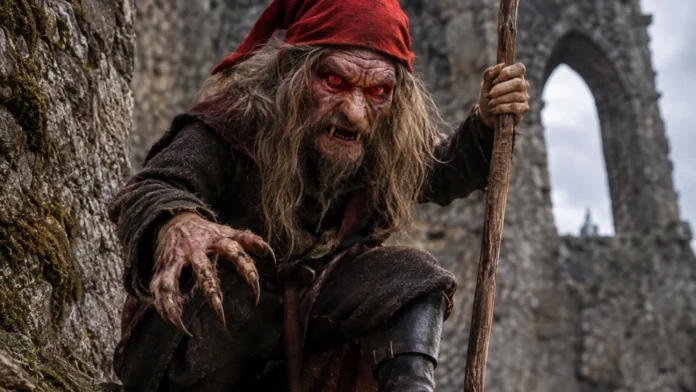
The Redcap is a malevolent supernatural creature originating in the folklore of the Anglo-Scottish Borders. Traditionally described as a murderous goblin inhabiting abandoned castles and fortified towers, it takes its name from the distinctive headwear stained with the blood of its victims.
Unlike many British fairy beings that reward kindness or punish inappropriate behavior, the Redcap presents an immediate threat to unfortunate travelers. Its association with violence, abandoned buildings and supernatural terror makes it one of the darker figures within traditional Scottish and northern English folklore.
The creature’s mythology closely reflects the cultural landscape of the Border region, where ruined fortifications preserve memories of warfare, feudal oppression and historical conflict. Within this environment, the Redcap embodies the disturbing possibility that places associated with human cruelty retain a supernatural presence.
History/Origin
The Redcap belongs to the regional folklore of southern Scotland and northern England, particularly the historical Border country. Although its legends frequently involve medieval castles and feudal rulers, surviving written records do not establish that the creature itself originated during the medieval period.
Research by Chera Cole at the University of St Andrews identifies 1764 as the earliest recorded use of Redcap meaning a supernatural goblin or sprite, based on Oxford English Dictionary evidence. However, earlier oral traditions may have circulated before the creature entered surviving literature.
One of the most influential early literary references appears in John Leyden’s ballad Lord Soulis, published in Walter Scott’s Minstrelsy of the Scottish Border in 1802. Leyden composed the ballad using regional traditions concerning Hermitage Castle and its reputedly wicked former lord.
Scott’s accompanying commentary establishes that the Redcap represented more than a single supernatural individual associated with Lord Soulis. He describes the name as a broader designation for spirits inhabiting abandoned Scottish fortifications, indicating that the creature belonged to an established regional tradition.
“Redcap is a popular appellation of that class of spirits which haunt old castles.”
Minstrelsy of the Scottish Border, Walter Scott, commentary accompanying Lord Soulis by John Leyden, 1802.
During the nineteenth century, antiquarian Thomas Wilkie collected supernatural beliefs from the southern counties of Scotland. His research preserved regional descriptions and terminology associated with Redcaps, subsequently providing material for William Henderson’s influential folklore collection, first published in 1866 and expanded in 1879.
Robert Chambers also documented Redcap traditions in Popular Rhymes, Fireside Stories, and Amusements of Scotland, published in 1842. His collection demonstrates that knowledge of the creature extended beyond literary audiences, surviving through children’s rhymes, local superstitions and the reputations of deserted buildings.
The twentieth-century folklorist Katharine Briggs subsequently incorporated the Redcap into her studies of British fairy traditions. Her work helped establish its position within the wider classification of British supernatural beings while preserving the creature’s distinctive association with violence and the Scottish Border landscape.
Name Meaning
The name Redcap combines the English words red and cap, directly referencing the creature’s characteristic headwear. Unlike supernatural names with obscure linguistic origins, its meaning remains relatively straightforward, connecting a recognizable physical attribute with the violent behavior recorded in traditional Border folklore.
Historical sources preserve several alternative names, including Redcomb, Bloody Cap, Red-cowl and Bloodie-cap. The Scottish National Dictionary also records Redcapie-dossie, a regional designation appearing in traditional rhymes addressed to supernatural inhabitants of abandoned buildings, including ruined castles and churches throughout southern Scotland.
One particularly revealing example appears in Chambers’s collection of Scottish popular rhymes. Children reportedly challenged the supernatural inhabitant of a deserted building by calling for it to emerge, transforming the creature’s frightening reputation into a traditional test of personal courage and daring.
“Redcapie-dossie, come out an ye daur,
Lift the sneck, and draw the bar!”
Popular Rhymes, Fireside Stories, and Amusements of Scotland, Robert Chambers, 1842.
The names Powrie and Dunter sometimes appear alongside Redcap in later descriptions of British folklore. However, Henderson discusses these beings separately, emphasizing their mysterious noises and associations with death omens. Their overlapping characteristics do not necessarily establish that all three names describe identical creatures.
Appearance
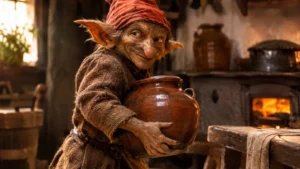
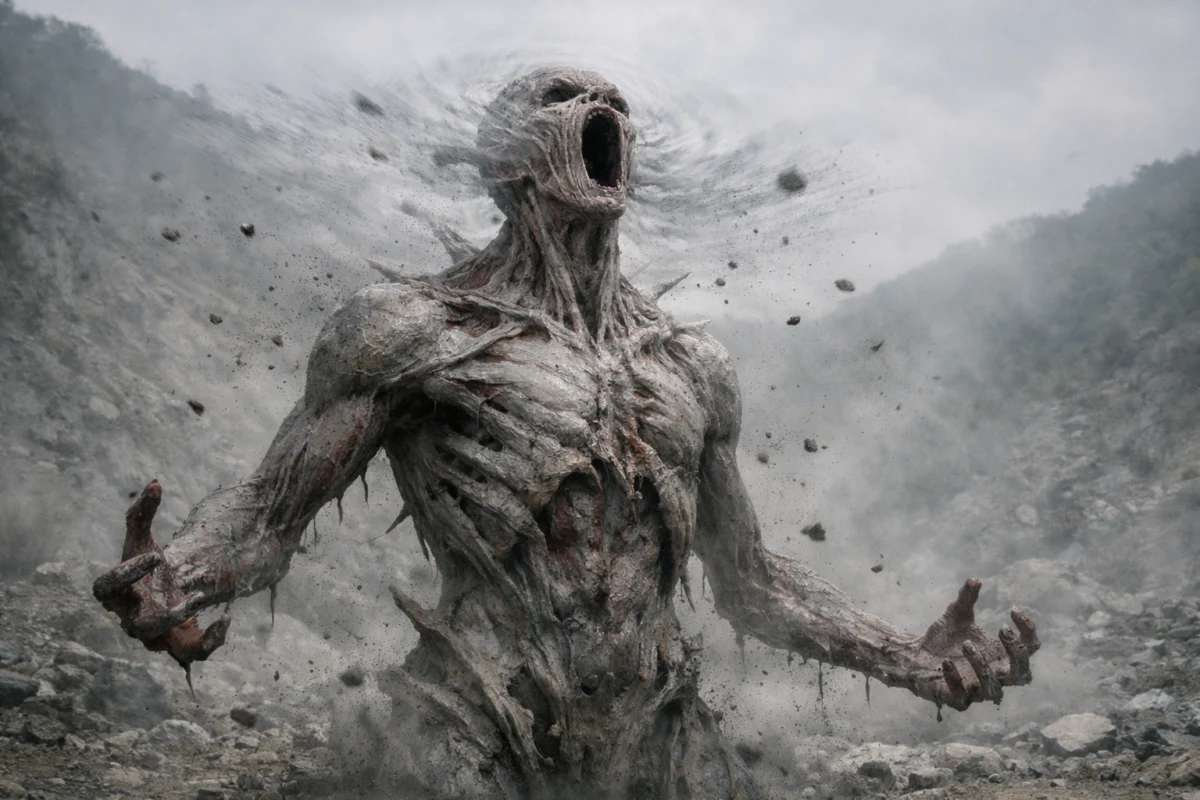
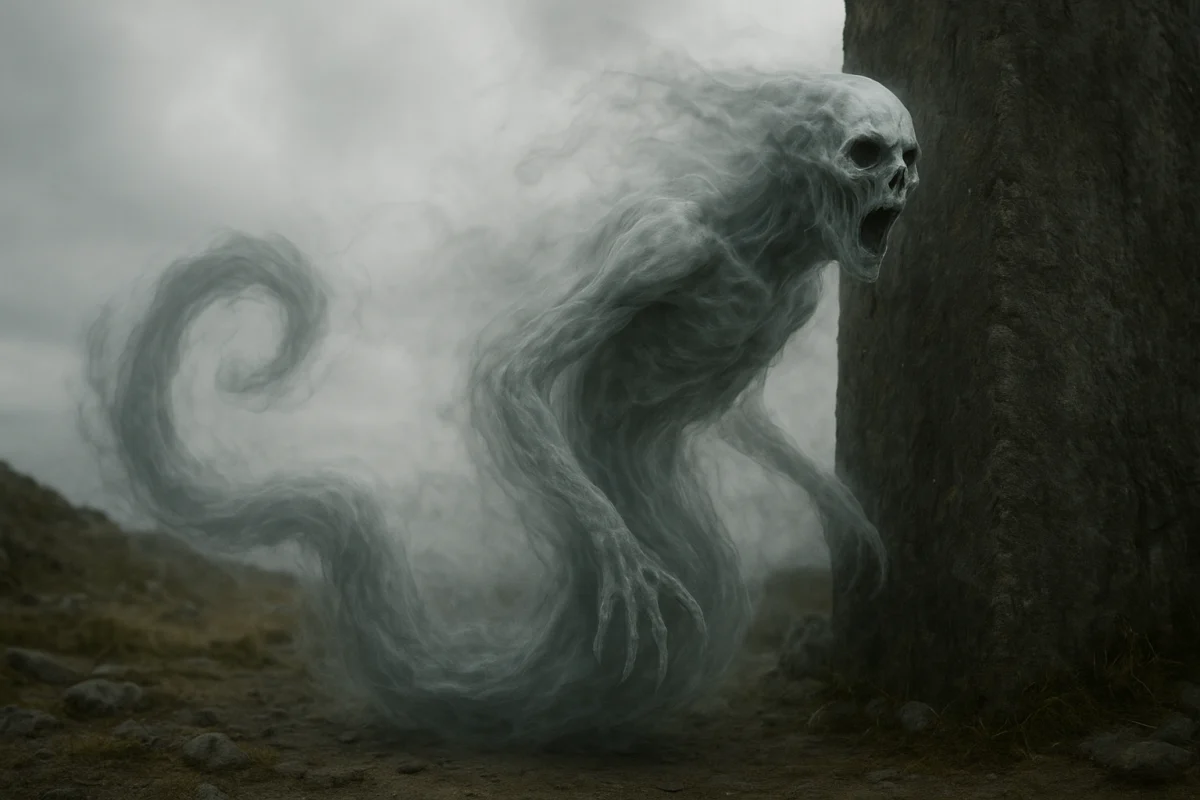
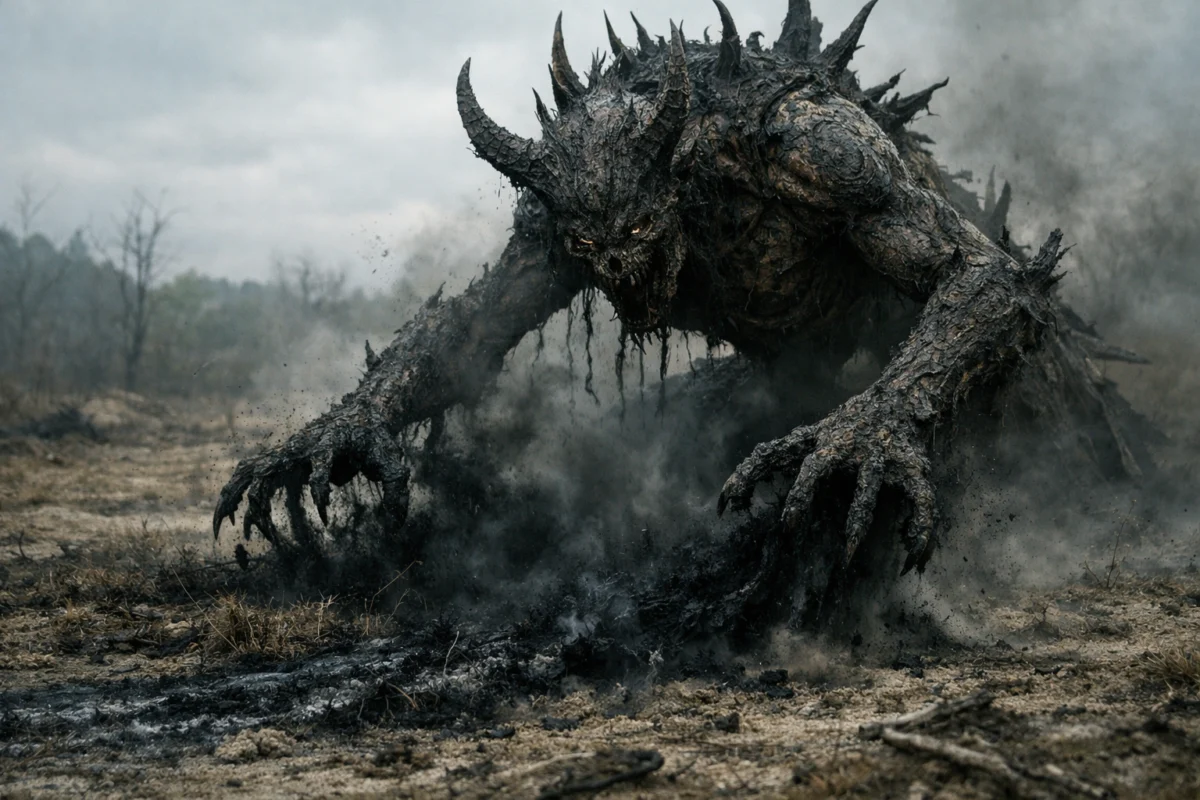
Traditional accounts portray the Redcap as a small but physically imposing humanoid resembling an elderly man. Rather than possessing the graceful features associated with certain fairy traditions, it displays an intimidating combination of exaggerated facial characteristics, animalistic fingers and an unusually robust physique.
William Henderson provides one of the most detailed historical descriptions of the creature. His account emphasizes its elderly appearance, prominent teeth, unusually large reddish eyes and long, disordered hair falling around its shoulders, creating a distinctly threatening figure despite its relatively short stature.
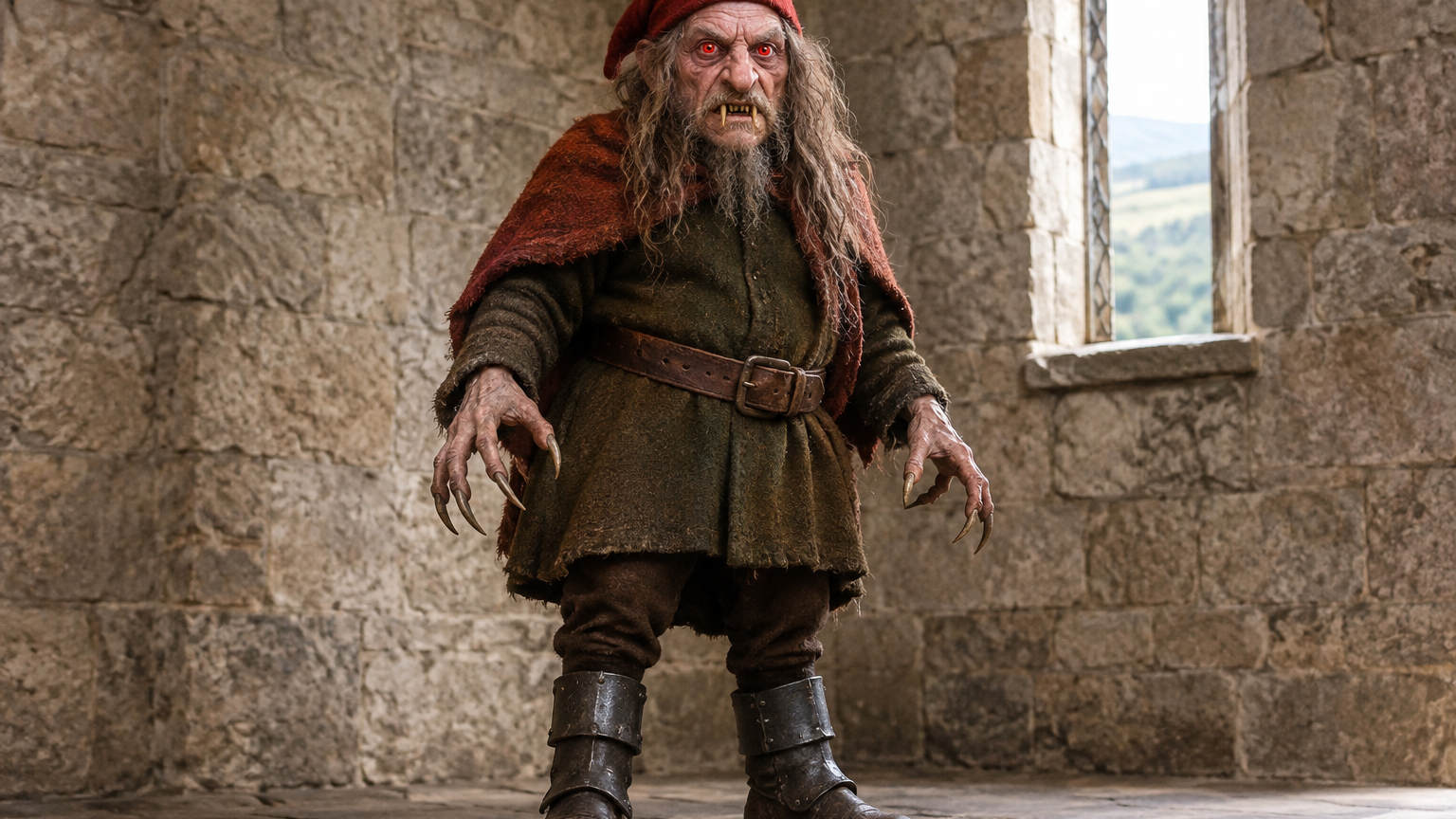
“A short thickset old man, with long prominent teeth, skinny fingers armed with talons like eagles.”
Notes on the Folk-Lore of the Northern Counties of England and the Borders, William Henderson, enlarged edition, 1879, Chapter VII, page 253.
Its traditional equipment includes heavy iron boots and a pikestaff carried in its left hand. These distinctive accessories contribute to its association with the fortified environments of the Border region, although historical descriptions do not establish a complete costume, uniform or specific armor.
The creature’s most recognizable feature remains its red headwear. Its crimson appearance results from contact with human blood rather than ordinary fabric dye, according to traditional descriptions. However, surviving accounts do not consistently establish whether the cap resembles a pointed hat or hood.
Modern artistic representations frequently introduce green skin, enlarged pointed ears and exaggerated monstrous anatomy. These features reflect broader fantasy conventions rather than established characteristics within historical descriptions, which instead emphasize a relatively humanlike figure possessing disturbing physical abnormalities and distinctive supernatural attributes.
Background Story
The Redcap possesses no documented creation myth explaining how its kind first entered the world. Traditional accounts present it as an existing supernatural inhabitant of particular buildings, without establishing whether these spirits originate from deceased humans, demonic forces or another supernatural population.
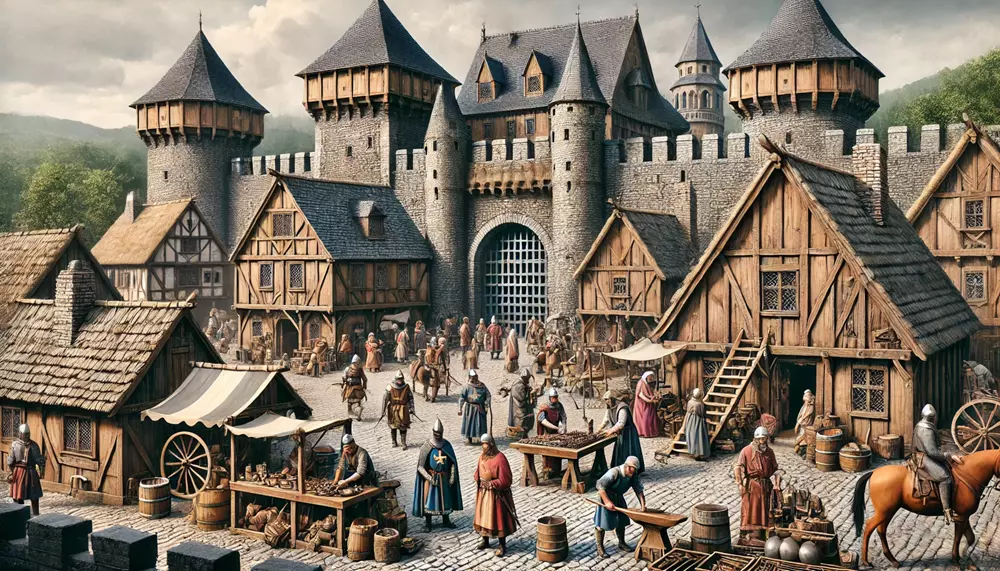
Its preferred dwellings include abandoned castles, fortified towers and peel houses, particularly locations associated with historical oppression. These structures distinguish the Redcap from supernatural beings traditionally connected with forests, rivers or agricultural land, placing its mythology within environments constructed and abandoned by humans.
The creature threatens travelers seeking temporary shelter within its territory. Henderson describes it attacking visitors with large stones and collecting blood from those it kills. This behavior establishes the Redcap as a predatory supernatural presence rather than simply an intimidating guardian of abandoned property.
Certain legends also present individual Redcaps as familiar spirits serving practitioners of supernatural magic. The figure associated with Lord Soulis possesses powers capable of protecting a human master against physical threats, demonstrating a relationship considerably different from the creature’s more familiar hostility toward strangers.
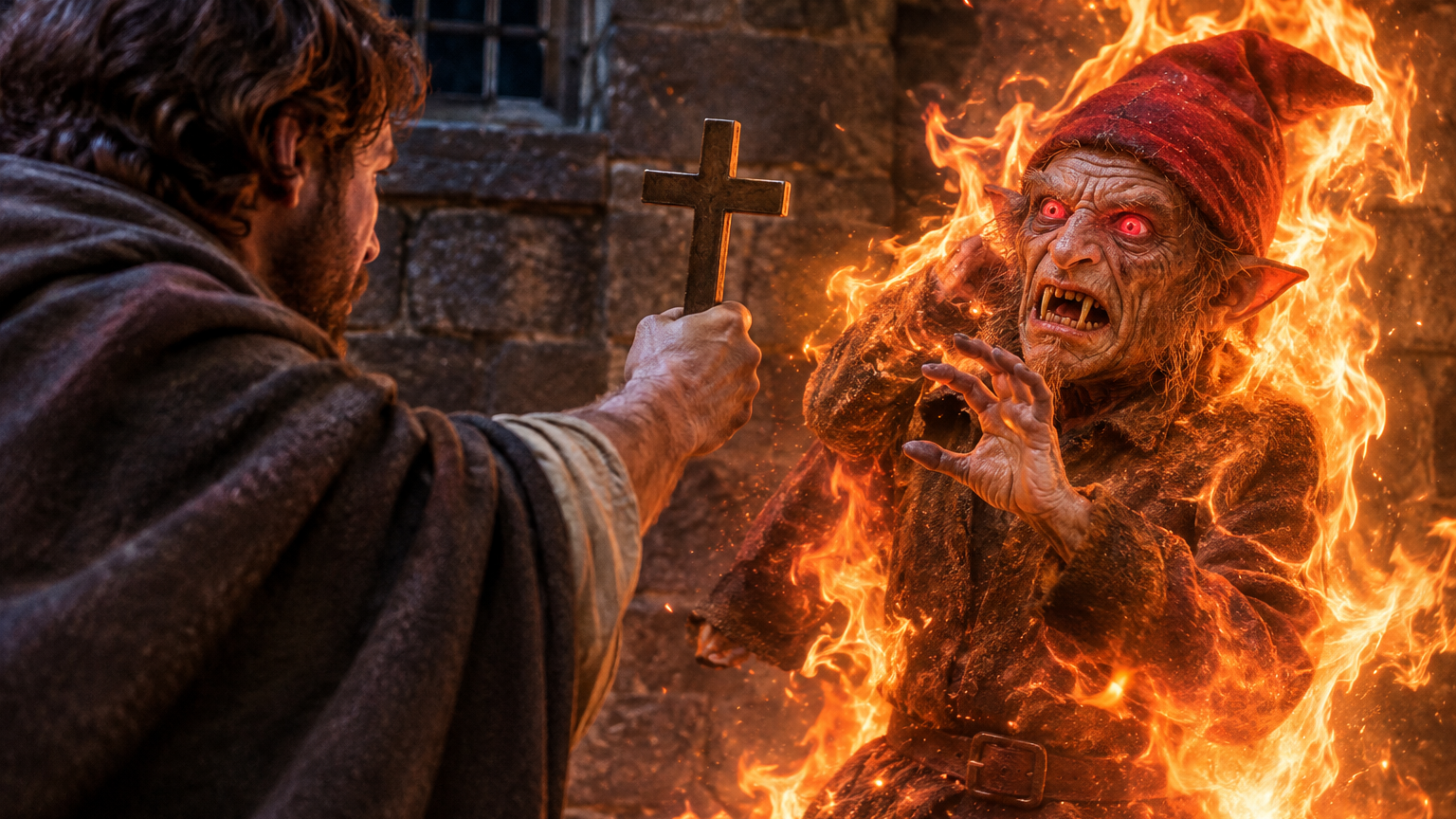
Despite its threatening nature, traditional folklore attributes specific supernatural vulnerabilities to the Redcap. Christian protective measures, including reciting passages of Scripture or displaying a cross, reportedly compel it to withdraw. Some accounts describe its departure through fire, leaving a single large tooth behind.
A frequently repeated modern claim maintains that Redcaps must continually replenish the blood staining their headwear or face death. However, the principal nineteenth-century descriptions establish the bloodstained cap without explicitly identifying its moisture as a necessary condition for the creature’s continued supernatural existence.
Famous Folklore Stories
Lord Soulis and the Redcap of Hermitage Castle
According to a traditional Scottish Border legend, Lord Soulis ruled Hermitage Castle through cruelty, oppression and supernatural magic. His extraordinary powers came from a mysterious familiar spirit called Redcap, which protected its master against physical harm and advised him during times of danger.
In John Leyden’s literary ballad, Soulis asks the spirit to reveal the circumstances of his eventual death. Redcap promises supernatural protection against conventional weapons and restraints, identifying an apparently impossible condition that must be fulfilled before anyone can successfully imprison its master.
“Nor forged steel, nor hempen band,
Shall e’er thy limbs confine,
Till threefold ropes, of sifted sand,
Around thy body twine.”
Lord Soulis, John Leyden, Minstrelsy of the Scottish Border, edited by Walter Scott, 1802.
Confident in his supernatural protection, Soulis continues terrorizing the surrounding population. His crimes include defying a royal messenger and abducting a young woman named May, whose beloved, the heir of Branxholm, subsequently becomes another unfortunate prisoner within the walls of Hermitage Castle.
The increasingly desperate situation eventually brings armed opponents against Soulis. However, their weapons cannot injure him, and conventional restraints prove equally ineffective. Even when his enemies force him to the ground, the magical protection granted by his supernatural familiar remains remarkably powerful.
Among his opponents stands Thomas of Erceldoune, better known as Thomas the Rhymer. Consulting a magical book attributed to the legendary Scottish scholar Michael Scott, Thomas discovers that ropes fashioned from sifted sand represent the only restraints capable of overcoming Soulis’s enchantment.
The men attempt to create these extraordinary ropes, eventually mixing barley chaff with the sand. However, Redcap remains invisibly present and interferes with their efforts, preventing the materials from binding together and demonstrating its continuing loyalty to its increasingly desperate human master.
Thomas consults the magical book again and discovers another method of defeating the sorcerer. Following its instructions, the men execute Soulis inside a heated cauldron at the Nine-stane Rig. Despite its supernatural abilities, Redcap ultimately proves incapable of preventing its master’s destruction.
The ballad concludes by connecting the legendary execution with recognizable geographical features of Liddesdale. Its supernatural narrative transforms the surrounding landscape into a reminder of Soulis’s downfall, while Redcap’s unsuccessful intervention establishes clear limitations to the protective powers attributed to the spirit.
Cultural Impact
The Redcap contributed to the distinctive supernatural identity of the Scottish Borders, where regional folklore frequently combined historical events with supernatural encounters. Its presence within traditional songs and proverbial expressions demonstrates how the creature entered the everyday language and imagination of local communities.
During the Romantic period, literary works transformed Border supernatural traditions into subjects of wider cultural interest. Walter Scott’s publications introduced regional legends to readers beyond Scotland, helping preserve the Redcap alongside other supernatural figures associated with the country’s historical and architectural heritage.
Hermitage Castle consequently became more than a surviving medieval fortification. Its associations with sorcery, tyranny and supernatural inhabitants contributed to its enduring reputation as a haunting historical landmark, demonstrating how folklore can influence public perceptions of architectural ruins and their surrounding landscapes.
Similar Beasts
Dunter (Powrie)
The Dunter is a supernatural spirit from Scottish Border folklore inhabiting abandoned fortifications. Its mysterious noises traditionally foretell death or misfortune, sharing the Redcap’s association with ruined buildings while possessing a distinct supernatural role.
Far Darrig
The Far Darrig is a solitary fairy from Irish folklore wearing distinctive red clothing and headwear. Its fondness for disturbing practical jokes resembles the Redcap’s threatening character, although it possesses its own cultural identity.
Boggart
The Boggart is a supernatural being from northern English folklore associated with frightening encounters and particular locations. Its unpredictable manifestations and threatening behavior resemble the Redcap’s capacity to transform familiar environments into places of supernatural danger.
Barghest
The Barghest is a monstrous supernatural dog from northern English folklore, particularly associated with Yorkshire. Its frightening appearance, prominent teeth, claws and associations with death parallel the darker characteristics of the Redcap.
Religion/Ritual
Traditional Redcap beliefs incorporate Christian ideas concerning protection against malevolent supernatural forces. Historical folklore presents sacred language and religious symbols as effective defenses, suggesting that communities understood encounters with dangerous fairy beings partly through the spiritual framework of their established religious beliefs.
An interesting variation appears in nineteenth-century accounts of children challenging supernatural inhabitants of deserted buildings. David Macbeth Moir’s Mansie Wauch mentions reciting prayers backward or drawing protective boundaries with chalk before calling upon Redcowl, illustrating the overlap between childhood traditions and supernatural practices.
The Redcap’s relationship with sorcery also reflects historical anxieties concerning forbidden magical knowledge and supernatural assistance. However, surviving records do not establish dedicated religious ceremonies, organized worship, traditional offerings or an independent spiritual cult associated specifically with this particular Border supernatural being.
Scientific or Rational Explanations
The historical environment of the Anglo-Scottish Borders provides a plausible framework for understanding Redcap beliefs. Centuries of territorial disputes, livestock raids and political instability encouraged the construction of fortified residences, many of which subsequently became abandoned reminders of the region’s violent past.
The historical William de Soules participated in a conspiracy against Robert the Bruce in 1320 and subsequently suffered imprisonment at Dumbarton Castle. His documented fate differs considerably from the supernatural execution described in folklore, illustrating how historical individuals can acquire legendary characteristics.
Architectural history provides another important distinction. Construction of the surviving stone castle began around 1360, several decades after William de Soules’s downfall. These historical discrepancies reveal the development of the legend without establishing a definitive rational explanation for the Redcap’s original emergence.
Modern Cultural References
Fantastic Beasts and Where to Find Them, J. K. Rowling, Bloomsbury, 2001
Red Caps appear as dangerous supernatural creatures inhabiting locations associated with bloodshed, including abandoned battlefields and dungeons, retaining important characteristics of traditional British Redcap folklore.
Source: https://www.hp-lexicon.org/creature/gnomes-and-other-small-human-like-creatures/red-cap/
Magic: The Gathering, Shadowmoor, Wizards of the Coast, 2008
The Murderous Redcap card portrays the creature as a goblin assassin possessing supernatural persistence, adapting its violent reputation into the mechanics of the fantasy trading card game.
Source: https://mtg.wtf/card/shm/192/Murderous-Redcap
Pathfinder Roleplaying Game, Bestiary 2, Paizo, 2010
Redcaps appear as dangerous supernatural adversaries wearing iron boots and bloodstained hats, retaining traditional vulnerabilities to religious symbols while acquiring additional magical abilities and combat characteristics.
Source: https://www.d20pfsrd.com/bestiary/monster-listings/fey/redcap
Dungeons & Dragons, Volo’s Guide to Monsters, Wizards of the Coast, 2016
The game classifies Redcaps as malevolent fey creatures, transforming their traditional appearance and violent behavior into an established monster category within its extensive supernatural mythology.
Source: https://www.dndbeyond.com/sources/dnd/vgtm
Redcap, Carrie Vaughn, Nightmare Magazine, 2017
This original horror short story reinterprets the traditional Redcap, exploring the disturbing physical implications of its bloodstained headwear and adapting familiar supernatural characteristics into contemporary horror fiction.
Source: https://www.nightmare-magazine.com/fiction/redcap/
Unwelcome, directed by Jon Wright, 2023
This supernatural horror film relocates Redcaps to rural Ireland, portraying them as dangerous woodland inhabitants whose willingness to assist desperate humans comes with disturbing supernatural consequences.
Source: https://wellgousa.com/films/unwelcome
Baldur’s Gate 3, Larian Studios, 2023
Redcaps appear as hostile supernatural creatures associated with the hag Auntie Ethel, retaining their murderous behavior, iron boots and distinctive appearance from earlier Dungeons & Dragons interpretations.
Source: https://bg3.wiki/wiki/Redcap_(creature)
Conclusion
The Redcap occupies a distinctive position within British folklore as a supernatural being whose identity reflects the darker associations of inhabited and abandoned landscapes. Its mythology connects regional storytelling with historical cruelty, religious protection and the enduring mysteries surrounding deserted medieval fortifications.
Rather than embodying the familiar image of playful fairy beings, the Redcap represents the threatening potential of the supernatural world. Its continued presence in contemporary storytelling demonstrates the lasting appeal of creatures that transform recognizable historical environments into places of extraordinary danger.
Further Reading
Minstrelsy of the Scottish Border: Lord Soulis, John Leyden, edited by Walter Scott, 1802
The principal literary source for the legend of Lord Soulis and his supernatural familiar, preserving Redcap’s protective enchantments, prophetic warning and unsuccessful intervention against its master’s enemies.
Source: https://www.cyberlibrary.org/en/books/minstrelsy-of-the-scottish-border-volume-3-of-3-consisting-of-h-42ac2609/chapters/2/
Notes on the Folk-Lore of the Northern Counties of England and the Borders, William Henderson, 1879
An essential historical folklore collection documenting the Redcap’s appearance, behavior, habitat, supernatural vulnerabilities, regional terminology and associated oral traditions collected from communities throughout the Border region.
Source: https://en.wikisource.org/wiki/Notes_on_the_folk-lore_of_the_northern_counties_of_England_and_the_borders/Chapter_7
Notes on the Folk-Lore of the Northern Counties of England and the Borders, Wellcome Collection, 1879
A digitized historical edition of Henderson’s influential folklore collection, providing access to the original publication and its descriptions of supernatural beings inhabiting northern England and southern Scotland.
Source: https://wellcomecollection.org/works/trqfq7fk
Scottish National Dictionary: Reid, Dictionaries of the Scots Language
Documents historical uses of Redcap and related Scots terminology, including early literary references, descriptions recorded by Thomas Wilkie and traditional rhymes associated with supernatural inhabitants of ruins.
Source: https://dsl.ac.uk/entry/snd/reid
Minstrelsy of the Scottish Border, Edinburgh University Library
Examines Walter Scott’s compilation of Border ballads, his collaboration with regional folklore collectors and the publication history of the collection containing John Leyden’s Lord Soulis.
Source: https://www.walterscott.lib.ed.ac.uk/works/poetry/minstrelsy.html
‘Fairy’ in Middle English Romance, Chera A. Cole, University of St Andrews, 2014
An academic investigation of supernatural terminology and medieval fairy traditions, providing linguistic and historical context for distinguishing later documented supernatural beings from earlier literary classifications.
Source: https://research-repository.st-andrews.ac.uk/handle/10023/6388
William Henderson: ‘A Folk-Lore Student before Folk-Lore Came into Vogue’, Andrew Teverson, Folklore, 2025
A scholarly examination of Henderson’s contributions to British folklore research, exploring his collection methods, manuscript sources and the preservation of supernatural traditions from northern communities.
Source: https://www.tandfonline.com/doi/full/10.1080/0015587X.2025.2501857
Hermitage Castle: History and Stories, Historic Environment Scotland
Provides authoritative historical information concerning Hermitage Castle, its architectural development, strategic importance and reputation for supernatural legends, distinguishing its surviving structures from earlier medieval residences.
Source: https://www.historicenvironment.scot/visit/all/hermitage-castle/history-and-stories/
William de Soules, Undiscovered Scotland
A historical biography contrasting the documented political activities and imprisonment of William de Soules with the supernatural legends surrounding his reputation and alleged association with Redcap.
Source: https://www.undiscoveredscotland.co.uk/usbiography/s/williamdesoules.html
Border Reivers, Future Museum
Explores the historical conditions surrounding the Anglo-Scottish Borders, including regional conflicts, fortified residences and social instability that provide cultural context for the development of castle-haunting legends.
Source: https://www.futuremuseum.co.uk/collections/people/lives-in-key-periods/renaissance–reivers-the-reformation/border-reivers
Border Ballads Brought to Life at Smailholm Tower, Historic Environment Scotland, 2022
Examines the preservation of Border storytelling through traditional ballads, Walter Scott’s literary contributions and the continuing importance of supernatural and historical narratives within regional cultural heritage.
Source: https://blog.historicenvironment.scot/2022/07/border-ballads-at-smailholm-tower/
Fairy and Folk Tales of the Irish Peasantry, W. B. Yeats, 1888
A historical collection providing comparative material concerning Irish supernatural beings, including the Far Darrig, whose red clothing and disturbing behavior offer parallels with Scottish Redcap traditions.
Source: https://classicslaunch.org/works/fairy-and-folk-tales-of-the-irish-peasantry/read/
The Boggart: Folklore, History, Place-names and Dialect, Simon Young, University of Exeter Press, 2022
An interdisciplinary scholarly investigation of northern English supernatural traditions, providing comparative context for understanding frightening supernatural beings, their geographical associations and their development within regional folklore.
Source: https://www.exeterpress.co.uk/products/the-boggart