Introduction
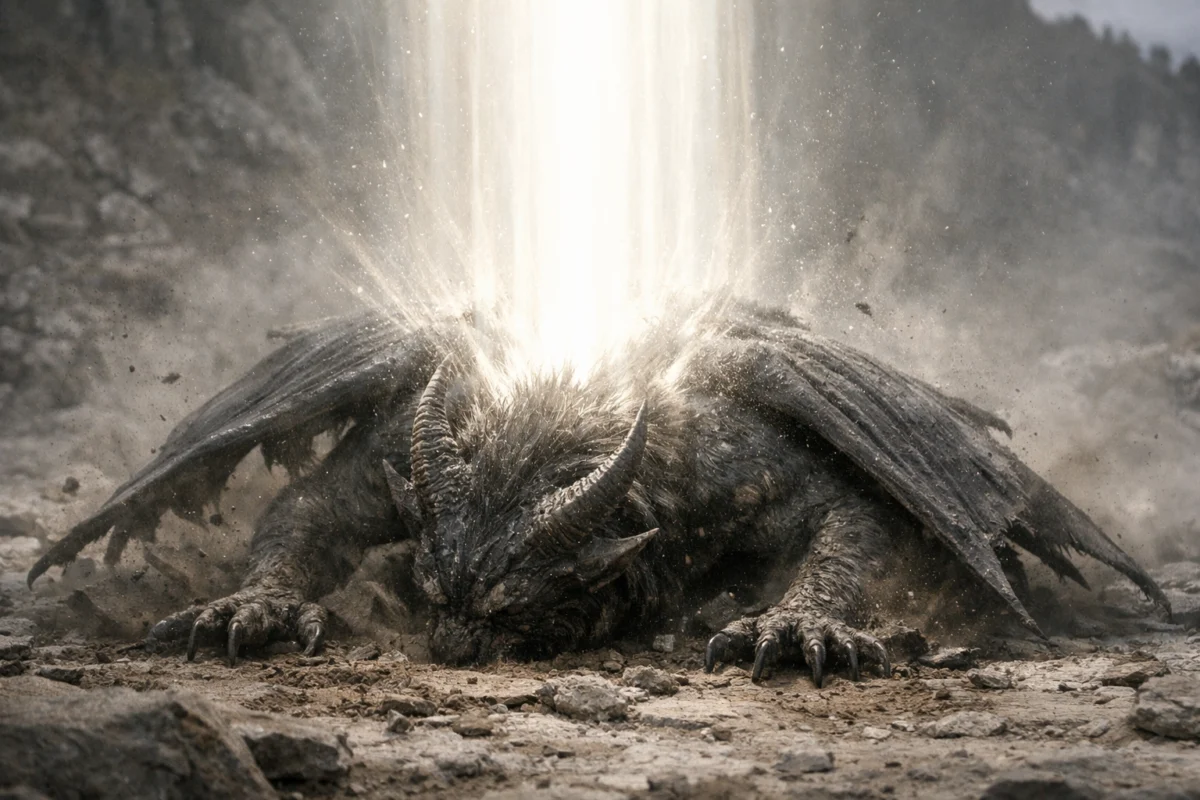
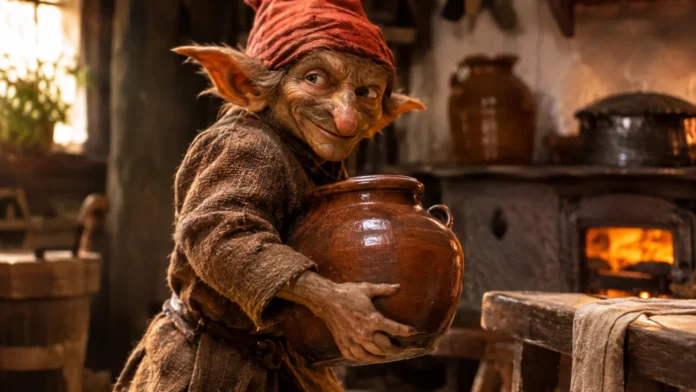
The Kobold is a supernatural spirit originating in German folklore, traditionally associated with households, farms and underground environments. Known for its mischievous personality and supernatural abilities, it can become a valuable companion to humans or a persistent source of trouble and misfortune.
Unlike creatures that actively seek human victims, the Kobold often establishes a lasting relationship with the people whose property it inhabits. It may perform demanding tasks, improve domestic prosperity and assist workers, yet respond aggressively when humans offend, neglect or disrespect it.
Although modern fantasy frequently depicts Kobolds as small reptilian monsters, traditional German accounts describe something considerably different. Their supernatural nature, unpredictable behavior and ability to remain invisible place them within a rich European tradition of spirits sharing everyday environments with human communities.
History/Origin
The earliest documented references to the Kobold appear in medieval German literature during the thirteenth century. Although household spirits existed in earlier European beliefs, surviving evidence does not establish precisely when the Kobold developed its distinctive identity or acquired its familiar characteristics.
The medieval poet Konrad von Würzburg refers to a Kobold made from boxwood, while other literary references describe similar figures fashioned from wax. These passages suggest that medieval audiences recognized physical representations associated with Kobolds, although their exact religious significance remains uncertain.
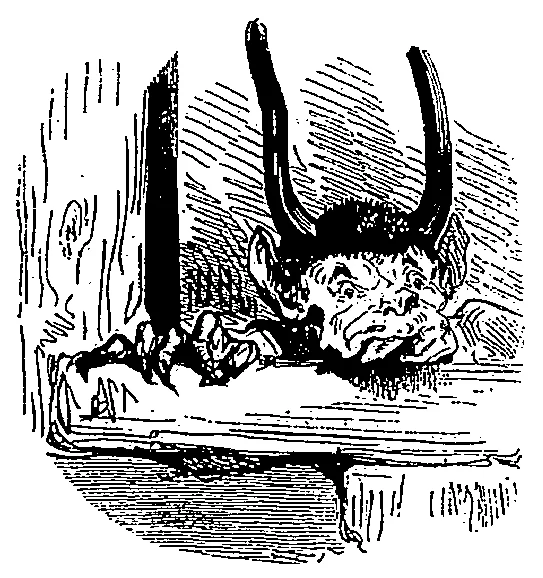
Around the beginning of the fourteenth century, the German poet Hugo von Trimberg associated Kobolds with pagan idols in his didactic poem Der Renner. His reference reflects a medieval Christian perspective on supernatural beings rather than providing direct evidence of an established Kobold religion.
“Their idols, as I have read, were Kobolds and Tatermen.”
Der Renner, Hugo von Trimberg, circa 1300, verses 10843-10844, translated from Middle High German.
During the sixteenth century, the writings of German scholar Georgius Agricola documented supernatural beings associated with Central European mining communities. His descriptions distinguished relatively harmless underground spirits from dangerous subterranean demons, demonstrating that miners recognized several different categories of supernatural inhabitants underground.
The Brothers Grimm collected numerous Kobold legends in Deutsche Sagen, published in 1816 and 1818. Ludwig Bechstein later documented additional regional traditions in his Deutsches Sagenbuch of 1853, preserving accounts associated with castles, rural households and settlements throughout the German-speaking world.
These collections established the Kobold as a recognizable figure within European folklore literature. However, they also brought together numerous locally named spirits under a broader classification, creating considerable overlap between individual household beings that communities had not necessarily regarded as entirely identical.
Name Meaning
The name Kobold derives from the Middle High German word kobolt, which referred to a supernatural household spirit. Historical spelling variations include Kobolt and Cobold, while modern German uses Kobold in the singular and Kobolde as the standard plural form of the noun.
According to Wolfgang Pfeifer’s Etymological Dictionary of German, the first component probably relates to Koben, a word associated with huts, houses and enclosed living spaces. The second component may derive from hold or walten, the latter referring to governing or exercising authority.
These linguistic interpretations suggest meanings such as household spirit, guardian of the house or ruler of the dwelling. Earlier scholars also proposed a connection with the Greek word kobalos, meaning a rogue or trickster, although this derivation does not represent an established consensus.
Regional terminology reflects the varied identities of German household spirits. Ludwig Bechstein recorded names including Knechtchen, Heinzchen, Heimchen and Kurd Chiemchen. Some emphasize the creature’s domestic function or familiar relationship with humans, while others belong to specific local traditions with overlapping characteristics.
Appearance
Traditional German folklore provides no single definitive appearance for the Kobold. Although many accounts describe a small humanlike being, its physical characteristics vary considerably between legends. Some resemble children or miniature adults, whereas others adopt animal forms, appear as objects or remain invisible.
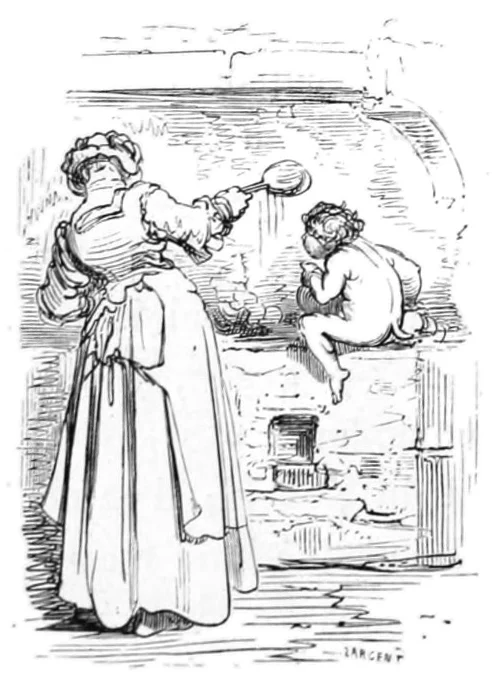
The Brothers Grimm recorded traditions describing Kobolds as small children wearing colorful garments. However, these apparently innocent appearances could conceal disturbing characteristics, particularly in accounts where the creature revealed injuries associated with the violent death of a previous inhabitant of the household.
“They believe them to be actual human beings, in the form of small children, wearing a colorful little garment.”
Deutsche Sagen, Volume I, Der Kobold, legend 71, Jacob and Wilhelm Grimm, 1816, translated from German.
Other descriptions associate Kobolds with miniature men wearing distinctive hats. Jacob Grimm recorded traditions involving red hair, red beards and pointed red caps, although individual accounts describe different clothing and colors. These characteristics belong to particular traditions rather than defining every household Kobold.
Underground spirits possess a different appearance reflecting their working environment. Agricola describes relatively harmless mining spirits resembling elderly men of diminutive stature, dressed similarly to contemporary miners. Their appearance emphasizes their association with underground labor rather than presenting them as entirely monstrous creatures.
“Moreover, they appear as old men clothed in the manner of miners.”
De Animantibus Subterraneis, Georgius Agricola, 1549, revised edition 1556, translated by Michele L. Aldrich, Alan E. Leviton and Lindsay A. Sears, 2009.
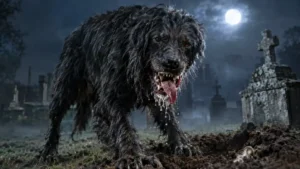
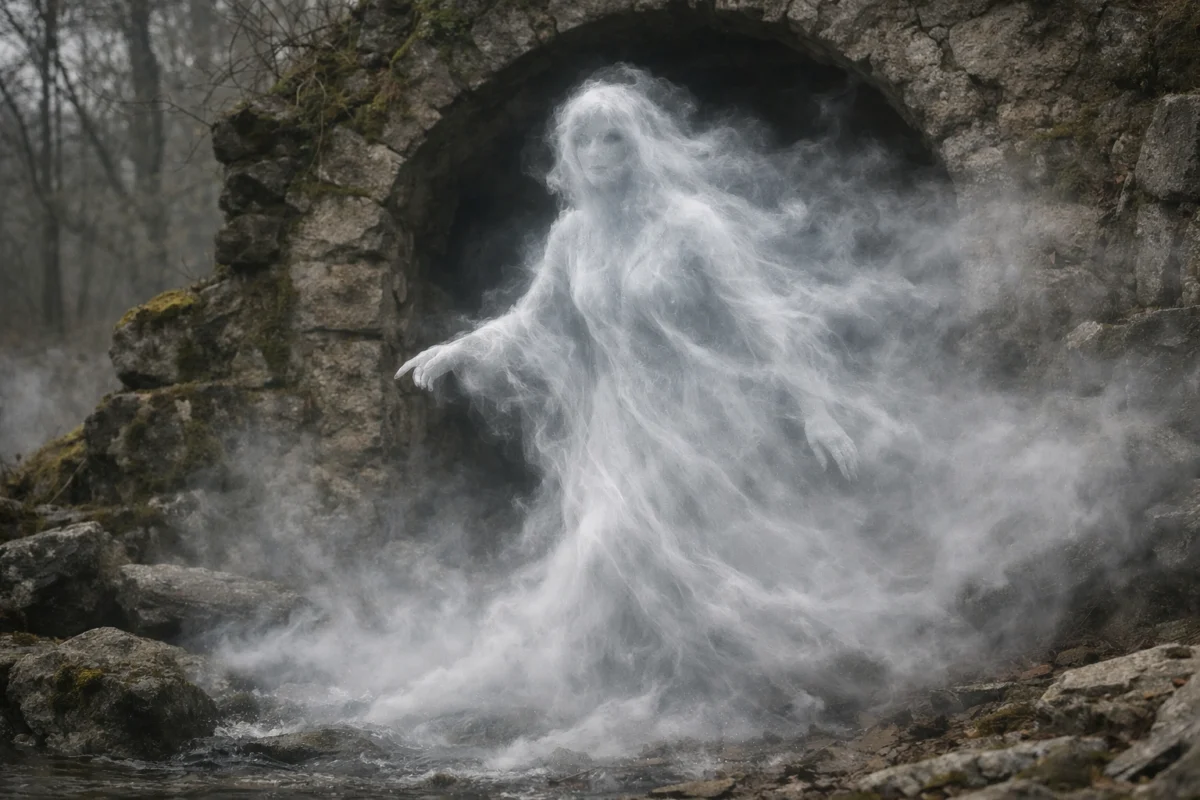
Some traditions describe Kobolds revealing only individual body parts, while others attribute animal transformations or appearances resembling fire to them. Their supernatural ability to change form prevents the establishment of a consistent anatomy, distinguishing traditional descriptions from modern fantasy portrayals with standardized physical characteristics.
Background Story
The Kobold possesses no universally established creation myth, divine ancestry or organized supernatural society. Instead, German folklore presents it primarily through relationships with particular households and their inhabitants, emphasizing its influence over domestic activities rather than assigning it a role within an elaborate cosmology.
Certain traditions associate household Kobolds with the spirits of people murdered within a building, particularly where their visible forms display injuries. Other accounts provide no human origin whatsoever, presenting them simply as supernatural inhabitants whose presence cannot be explained through a known past.
The domestic Kobold often assumes responsibilities normally performed by human servants. Folklore describes it carrying water, preparing food, chopping wood, caring for horses and completing demanding chores. Its assistance could contribute substantially to the prosperity and efficient functioning of a household or farm.

Nevertheless, this relationship contains an element of coercion. Once a Kobold attaches itself to a household, changes in domestic staff do not necessarily end its presence. Newly arriving servants may inherit obligations toward the spirit despite having played no part in establishing the arrangement.
The mining traditions present a related but distinct supernatural figure. Agricola describes underground spirits imitating miners by appearing to excavate tunnels, move extracted material and operate hauling equipment. Their apparent activity does not necessarily produce useful results, despite their resemblance to human workers.
These underground beings generally avoid harming miners unless provoked through ridicule or insults. However, Agricola distinguishes them from more aggressive subterranean demons, making it important not to attribute every supernatural mining disaster or dangerous underground encounter to the Kobold itself without further evidence.
Kobolds also possess a remarkable ability to resist attempts at removal. German legends describe spirits accompanying families when they relocate, while other traditions suggest that presenting clothing, uttering certain curses or demanding impossible tasks may persuade them to abandon their domestic responsibilities permanently.
The Kobold consequently occupies an ambiguous moral position within German folklore. Its willingness to assist humans does not make it entirely benevolent, just as its capacity for revenge does not make it inherently evil. Its behavior frequently depends upon the relationship humans establish with it.
Famous Folklore Stories
Hinzelmann of Hudemühlen Castle
According to a German legend, a mysterious spirit began haunting Hudemühlen Castle near the Aller River in 1584. Initially announcing its presence through unexplained noises, the creature eventually began speaking with servants and participating in conversations with members of the household.
The spirit introduced itself as Hinzelmann, claiming that its companions in the Bohemian Forest had rejected it. Although its friendly behavior gradually reassured the servants, the castle’s owner became increasingly uncomfortable and eventually decided to leave his property temporarily for Hanover.
During the journey, a white feather followed the carriage. After arriving in Hanover, the nobleman discovered that his valuable golden necklace had disappeared. Suspecting his host’s servants of theft, he became involved in an uncomfortable dispute that threatened his reputation.
“Did you not see me? I was the white feather that flew beside your carriage.”
Deutsche Sagen, Volume I, Hinzelmann, legend 75, Jacob and Wilhelm Grimm, 1816, translated from German.
Hinzelmann instructed the nobleman to search beneath his pillow, where he discovered the missing necklace. Realizing that distance offered no protection from the supernatural visitor, the nobleman returned to Hudemühlen and resolved to remain within his property despite the spirit’s presence.
Years later, when Hinzelmann prepared to depart, it presented the household with three unusual gifts: a woven cross, a straw hat and a decorated leather glove. It promised continuing family prosperity provided these objects remained together and received appropriate care.
Hütchen of Hildesheim
During the rule of Bishop Bernhard of Hildesheim, a supernatural spirit appeared at his residence wearing peasant clothing and a small felt hat. The inhabitants named it Hütchen, meaning little hat, and initially welcomed its friendly conversations and willingness to assist.
The spirit frequently warned the bishop of impending dangers and helped servants with their responsibilities. However, a kitchen boy began mocking Hütchen, throwing dirt and dirty washing water at it. The increasingly offended spirit demanded that the head cook discipline him.
The head cook dismissed the complaint, laughing at the idea that a supernatural being could fear a child. Hütchen responded angrily, promising to demonstrate that its request for intervention had not resulted from fear or an inability to defend itself.
“In a few days I will show you how much I fear him.”
Deutsche Sagen, Volume I, Hütchen, legend 74, Jacob and Wilhelm Grimm, 1816, translated from German.
Finding the kitchen boy asleep, Hütchen killed him and placed his remains inside a cooking vessel. Horrified by the discovery, the head cook condemned the spirit, provoking further retaliation that eventually resulted in the cook being thrown from a bridge.
Concerned that the increasingly dangerous spirit might destroy buildings or set the residence ablaze, Bishop Bernhard ordered additional precautions. He eventually banished Hütchen through supernatural invocation, ending a relationship that had transformed from mutual assistance into a threat to the household.

Cultural Impact
Kobold legends became an important component of German storytelling, reflecting traditional expectations surrounding domestic work, hospitality and mutual obligations. Their unpredictable behavior provided a narrative means of examining tensions between servants and employers, particularly within households where prosperity depended upon demanding physical labor.
German literature also incorporated the Kobold into broader supernatural symbolism. Johann Wolfgang von Goethe included the creature in Faust, published in 1808, where the protagonist invokes four supernatural beings, including a Kobold, while attempting to control the mysterious forces surrounding him.
Related household spirits also influenced German public art. Cologne’s Heinzelmännchen Fountain, inaugurated in 1899, commemorates August Kopisch’s poem about supernatural domestic helpers. Although these locally named spirits possess their own identity, their commemoration demonstrates the wider cultural importance of German household spirit traditions.
Similar Beasts
Brownie
The Brownie is a household spirit from Scottish and northern English folklore that performs domestic tasks, particularly during the night. Its association with unpaid labor, food offerings and sensitivity to disrespect closely resembles the German Kobold.
Nisse
The Nisse is a Scandinavian household and farm spirit responsible for protecting property and assisting agricultural workers. Like the Kobold, it expects respectful treatment and may retaliate when humans neglect their obligations toward it.
Domovoi
The Domovoi is a traditional Slavic household spirit associated with domestic protection and family prosperity. Its attachment to particular dwellings, influence over household fortunes and relationship with human inhabitants parallel several important characteristics of the Kobold.
Knocker
The Knocker is a supernatural mining spirit from Cornish folklore. Its association with mysterious underground sounds, mining discoveries and potentially dangerous encounters with disrespectful workers makes it particularly comparable to the German mining Kobold.
Klabautermann
The Klabautermann is a maritime spirit from Northern European seafaring folklore that inhabits ships and assists sailors. Its protective behavior, supernatural warnings and attachment to a particular vessel resemble the Kobold’s relationship with households.
Religion/Ritual
Traditional Kobold beliefs frequently involved domestic offerings rather than formal religious ceremonies. The Brothers Grimm documented accounts in which cooks regularly placed prepared food in a designated location, maintaining a reciprocal relationship with the supernatural spirit that assisted with their household responsibilities.
The Hinzelmann legend describes a particularly elaborate domestic arrangement. The spirit reportedly received sweet milk containing pieces of white bread, alongside its own small table, chair and sleeping place. These provisions illustrate the personal character of obligations surrounding certain household spirits.
Christian interpretations sometimes portrayed Kobolds as potentially demonic beings requiring spiritual intervention. Protective invocations and banishment appear within documented legends, although surviving evidence does not establish a unified religious tradition, organized priesthood or universally recognized ceremonial system specifically dedicated to the Kobold.
Scientific or Rational Explanations
The mining Kobold has a particularly well-documented connection with the history of chemistry. German miners encountered ores resembling valuable metallic deposits that failed to produce the expected metals during processing, sometimes releasing dangerous fumes associated with the presence of arsenic compounds.
These frustrating and hazardous experiences encouraged supernatural explanations involving troublesome underground spirits. The chemical element cobalt ultimately acquired its name from the German word Kobold, preserving an unusual linguistic connection between European mining folklore and the development of modern mineral science.
Researchers Christopher J. Duffin and Jane P. Davidson have examined Kobolds within the folklore history of geology, connecting their underground activities with the uncertainties of mining. Such interpretations explain aspects of mining beliefs without establishing a definitive origin for all domestic Kobold traditions.
Modern Cultural References
Meister Eder und sein Pumuckl, Ellis Kaut, Bayerischer Rundfunk, 1962
Originally introduced through a children’s radio series, Pumuckl is a mischievous, red-haired Kobold whose relationship with a carpenter preserves numerous characteristics of traditional German household spirits.
Source: https://www.dpma.eu/english/our_office/publications/milestones/comicip/pumuckl/index.html
Pittiplatsch, Deutscher Fernsehfunk, 1962
This popular German television puppet represents a playful Kobold whose mischievous behavior, humorous misunderstandings and affectionate personality introduce traditional supernatural characteristics to generations of young television viewers.
Source: https://www.sandmann.de/freundeinfos/pittiplatsch–schnatterinchen-und-moppi1.html
Dungeons & Dragons, Monster Manual, Wizards of the Coast, 2014
The role-playing game transforms Kobolds into small reptilian humanoids inhabiting underground environments, substantially departing from traditional German descriptions while retaining associations with subterranean dwellings and mischief.
Source: https://www.dndbeyond.com/monsters/16939-kobold
American Gods, Neil Gaiman, William Morrow, 2001
Gaiman directly adapts the legendary Hinzelmann into a supernatural guardian of an American town, exploring the disturbing consequences of exchanging human sacrifice for protection and prosperity.
Source: https://www.litcharts.com/lit/american-gods/chapter-20
Hearthstone: Kobolds & Catacombs, Blizzard Entertainment, 2017
This digital card game expansion portrays Kobolds as ratlike underground inhabitants wearing candles, protecting accumulated treasures and constructing elaborate tunnels beneath the fictional world of Azeroth.
Source: https://hearthstone.blizzard.com/en-us/news/21274276
Neue Geschichten vom Pumuckl, NEUESUPER and RTL, 2023
This continuation of the classic German television series introduces Pumuckl to a new carpenter, preserving the Kobold’s invisibility, mischievous personality and supernatural attachment to a human companion.
Source: https://www.betafilm.com/product/pumucklsnewadventures
Conclusion
The Kobold represents a distinctive supernatural presence within German folklore, transforming familiar domestic and occupational environments into places of mystery. Its legends reveal how communities understood prosperity, cooperation and unpredictable misfortune through relationships with beings that existed beyond ordinary human perception.
Its enduring appeal arises from the tension between helpfulness and danger. Neither entirely benevolent nor inherently malicious, the Kobold challenges the distinction between supernatural protectors and threats, revealing a folkloric world where human behavior often determines the consequences of supernatural encounters.
Further Reading
Deutsche Sagen: Der Kobold, Jacob and Wilhelm Grimm, Volume I, 1816
An essential original folklore collection documenting traditional Kobold appearances, food offerings, domestic responsibilities, supernatural manifestations and the consequences of attempting to witness the spirit’s physical form.
Source: https://de.wikisource.org/wiki/Der_Kobold_(Br%C3%BCder_Grimm)
Deutsche Sagen: Hinzelmann, Jacob and Wilhelm Grimm, Volume I, 1816
Preserves the extensive legend of the supernatural inhabitant of Hudemühlen Castle, including its arrival, conversations, transformations, domestic activities and eventual departure from the noble household.
Source: https://de.wikisource.org/wiki/Hinzelmann
Deutsche Sagen: Hütchen, Jacob and Wilhelm Grimm, Volume I, 1816
Documents the legendary spirit associated with Bishop Bernhard of Hildesheim, preserving accounts of supernatural assistance, prophetic warnings, violent retaliation and its eventual banishment through invocation.
Source: https://de.wikisource.org/wiki/H%C3%BCtchen
Deutsche Mythologie, Jacob Grimm, 1835
A foundational study of Germanic mythology examining supernatural beings, including Kobolds, their historical terminology, medieval literary references and relationships with other European household spirit traditions.
Source: https://projekt-gutenberg.org/authors/brueder-grimm/books/jacob-grimm-deutsche-mythologie/chapter/17/
De Animantibus Subterraneis, Georgius Agricola, 1549 and 1556, translated by Michele L. Aldrich, Alan E. Leviton and Lindsay L. Sears, 2009
An academic translation of Agricola’s Renaissance study of underground life, preserving historical descriptions of supernatural mining inhabitants alongside observations concerning animals and the subterranean natural environment.
Source: https://www.biodiversitylibrary.org/part/386468
Deutsches Sagenbuch, Ludwig Bechstein, 1853
A historical collection of German legends documenting regional household spirits, their alternative names, supernatural characteristics and the considerable variation found throughout German-speaking communities and local traditions.
Source: https://projekt-gutenberg.org/authors/ludwig-bechstein/books/deutsches-sagenbuch/chapter/276/
Die deutschen Volkssagen, Friedrich Ranke
A scholarly examination of German folk legends describing Kobold behavior, physical characteristics, regional terminology and traditional methods of removing unwanted supernatural inhabitants from domestic environments.
Source: https://projekt-gutenberg.org/authors/friedrich-ranke/books/die-deutschen-volkssagen/chapter/8/
The Tradition of Household Spirits: Ancestral Lore and Practices, Claude Lecouteux, Inner Traditions, 2013
A comparative study of European household spirits examining their medieval documentation, supernatural manifestations, domestic religious significance and relationships with the families whose homes they traditionally inhabit.
Source: https://www.innertraditions.com/books/the-tradition-of-household-spirits
Etymologisches Wörterbuch des Deutschen: Kobold, Wolfgang Pfeifer, 1989
An authoritative linguistic reference examining the historical development of the word Kobold and its possible derivation from German terms associated with dwellings, guardianship and supernatural authority.
Source: https://lautwandel.de/lemma/kobold/pfeifer_etym?formid=PF_Kobold
Stones and Spirits, Christopher J. Duffin and Jane P. Davidson, Folklore, 2012
A peer-reviewed investigation into geological folklore, examining supernatural mining inhabitants, mischievous Kobolds and historical beliefs connecting underground phenomena with the activities of spirits and demons.
Source: https://www.tandfonline.com/doi/abs/10.1080/0015587X.2012.643012
Cobalt: Element Information, Properties and Uses, Royal Society of Chemistry
Explains the chemical element’s historical discovery and the connection between its name, German mining folklore and troublesome mineral deposits that miners associated with supernatural Kobolds.
Source: https://periodic-table.rsc.org/element/27/cobalt
Faust: Der Tragödie erster Teil, Johann Wolfgang von Goethe, 1808
The original German literary text containing Goethe’s invocation of the Kobold alongside other supernatural beings, demonstrating the creature’s incorporation into influential nineteenth-century European dramatic literature.
Source: https://www.gutenberg.org/cache/epub/2229/pg2229-images.html
Voices in the Coalshed: Tommyknockers, National Coal Mining Museum for England, 2022
Explores traditional mining spirits through historical accounts and occupational folklore, providing comparative context for understanding the German mining Kobold and similar supernatural beings in Britain.
Source: https://www.ncm.org.uk/news/voices-in-the-coalshedtommyknockers/