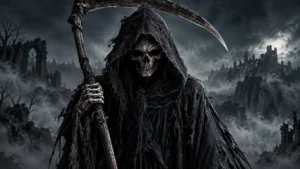
Who or What is Outside?
Ghosts, fairy women, dangerous visitors, and supernatural guardians appear throughout Irish, Scottish Gaelic, and Welsh folklore. Their stories illuminate how communities understood death, hospitality, marriage, nature, and unfamiliar places.
A mysterious cry outside an Irish home might be interpreted as a death warning, while an unexpected companion in a Highland shelter could conceal a serious threat. The meaning depended on local tradition.
The best-known Irish death-messenger is the Banshee, or bean sí, whose lament was associated with an approaching family death. Scotland’s Bean Nighe performed a related role by washing the clothes of those believed to be dying.
Other beings were less predictable. The Baobhan Sith appeared as alluring women in Highland hunting stories, whereas Welsh lake women might marry mortals and bring extraordinary prosperity under conditions that could not be broken.
Some traditions concerned entire landscapes rather than individual households. Scotland’s Cailleach helped explain winter and the arrival of spring, while Irish pilgrimage sites developed associations with miraculous protection and healing.
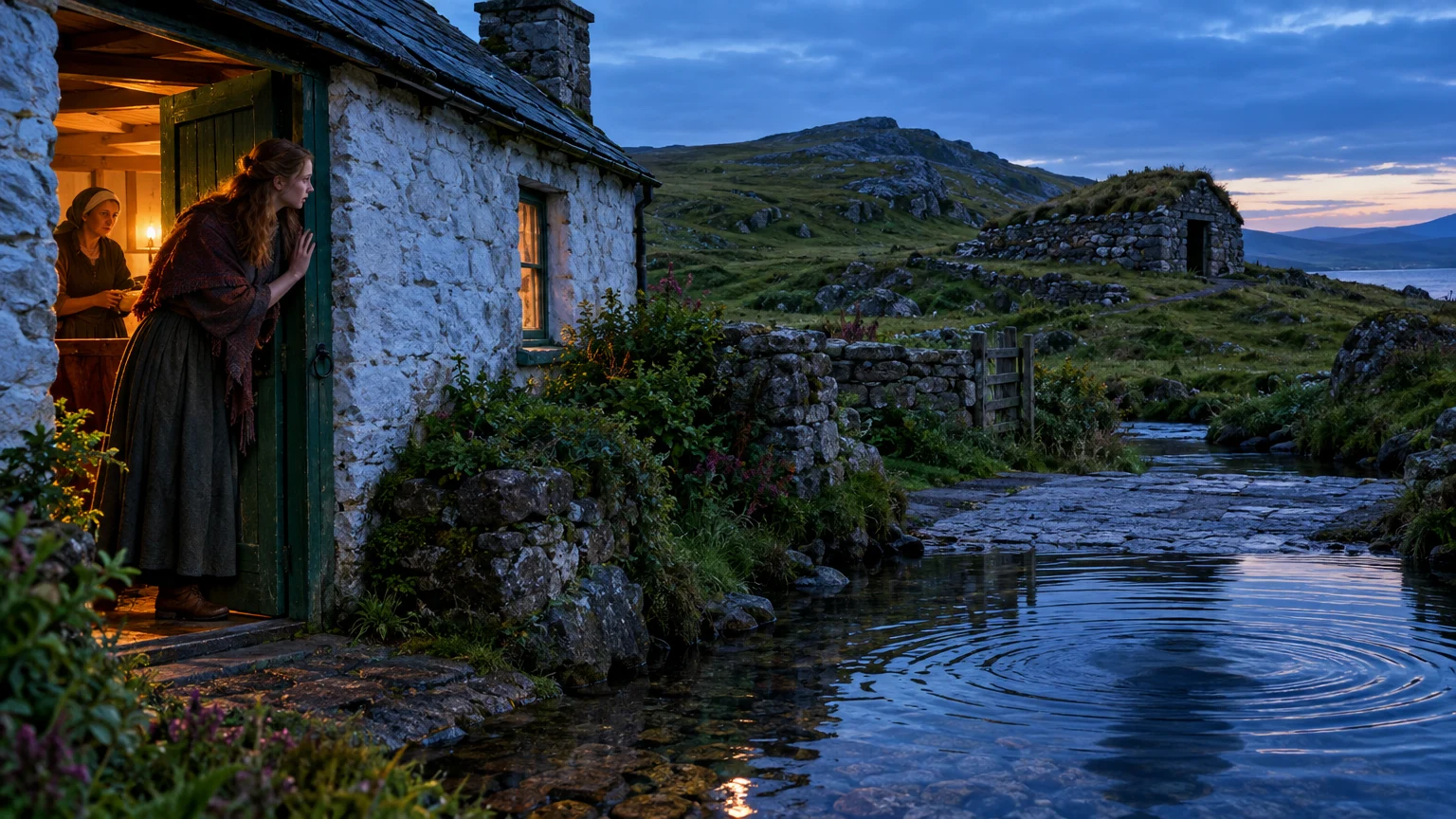
Image caption: In Irish folklore, the banshee’s lament may announce a death within a family, whether or not anyone sees the supernatural woman.
Ghosts, Fairies, and Local Traditions
These beings do not fit neatly into modern categories. The banshee’s name means “fairy woman,” yet certain accounts explain a particular apparition as the ghost of someone who died violently.
Nineteenth-century collectors also interpreted what they recorded. Lady Wilde’s Ancient Legends, Mystic Charms, and Superstitions of Ireland (1887) describes death omens and fairy beliefs alongside her own explanations.
Elliott O’Donnell’s The Banshee (1920) insisted on restrictive hereditary associations. That claim reflects his interpretation, not an agreed rule governing every Irish tradition or family.
Nor does “Celtic” describe one supernatural system. Irish, Scottish Gaelic, and Welsh traditions developed within different languages and communities; the Cauld Lad of Hylton belongs specifically to neighbouring northern English folklore.
Written records provide dates for particular tellings, not necessarily the origins of the beliefs. A story collected in the nineteenth century may be older, but its precise age cannot simply be assumed.
The following encounters therefore introduce supernatural beings through identifiable folklore accounts, while distinguishing their reported powers, regional settings, and the human experiences that made their stories memorable.
Death Gives Notice, But Can You Answer?
Death-messengers are prominent in Irish and Scottish Gaelic folklore, but they are not necessarily killers. Their frightening power usually involves knowledge of an approaching death and its connection to living people.
The Banshee and the O’Brien Household
The Banshee is typically associated with keening, a cry resembling mourning. Descriptions range from a pale young woman in white to an aged figure, while some accounts mention only a voice.
Irish traditions frequently attach banshees to particular families. That connection helps explain why a sound heard by several people might be interpreted as a warning intended for one household.

A well-known example comes from Ann Fanshawe’s Memoirs. Recalling a visit to Lady Honora O’Brien in 1649, Fanshawe described a red-haired woman dressed in white appearing at her bedroom window.
The woman uttered a repeated lament and vanished. The following morning, Lady Honora told her guest that an O’Brien relative had died and connected the apparition with the family’s customary death warning.
According to the hostess, the visitor was the spirit of a woman murdered by an earlier owner of the house and thrown into a river beneath the window.
That explanation joins two kinds of tradition: an apparition attributed to a dead woman and a banshee-like warning tied to family bereavement. Fanshawe recorded the encounter retrospectively, not as independently verified supernatural evidence.
Her account is especially valuable because it identifies the people, setting, alleged history, and interpretation involved. The household understood the apparition through knowledge the visiting witness did not possess.
The Bean Nighe and the Washing of Death
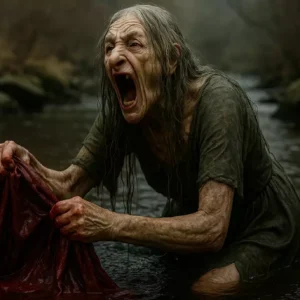
The Scottish Gaelic Bean Nighe, or washing woman, is encountered near water rather than outside a family’s window. Her distinctive activity is washing garments associated with someone approaching death.
John Gregorson Campbell preserved several versions in Superstitions of the Highlands and Islands of Scotland (1900). They differ in both the washer’s appearance and the response available to witnesses.

In traditions from Mull and Tiree, she possessed extraordinarily long breasts, thrown over her shoulders while working. A bold person might approach unseen and claim her as a nursing mother through an unusual ritual.
That claimed relationship entitled the questioner to seek information about the garments. Campbell’s account even allows for stopping the washing if the clothing belongs to a friend or the questioner.
On Skye, the washer could appear as a squat, sorrowful child. Another belief connected such women with mothers who died in childbirth, condemned to wash clothing left unfinished in life.
Perthshire accounts offered yet another form: a small figure in green spreading burial cloths beneath moonlight. These regional differences prevent any single description from defining all Bean Nighe traditions.
The banshee announces loss through lamentation; the Bean Nighe makes it visible through domestic labour. Both link death to familiar human relationships, but only some washer stories imagine obtaining answers or intervening.
Their role should also be distinguished from the Irish fetch, a supernatural double whose appearance could signify approaching death. Similar omens did not necessarily involve the same type of being.
The Guests You Wish You Had Never Invited
Not all supernatural visitors announce danger in advance. Scottish Highland stories of the Baobhan Sith describe apparently attractive women whose arrival among isolated men can turn an ordinary gathering deadly.
The Baobhan Sith and the Highland Hunters
These figures belong to Scottish Gaelic fairy tradition and are frequently compared with vampires because some accounts describe victims drained of blood. Their recorded identity, however, is not simply that of undead humans.
Charles Moncrieff Robertson included a relevant account in Folklore from the West of Ross-shire, published in 1910. Four hunters spend a night in a shieling, a temporary upland shelter associated with grazing.
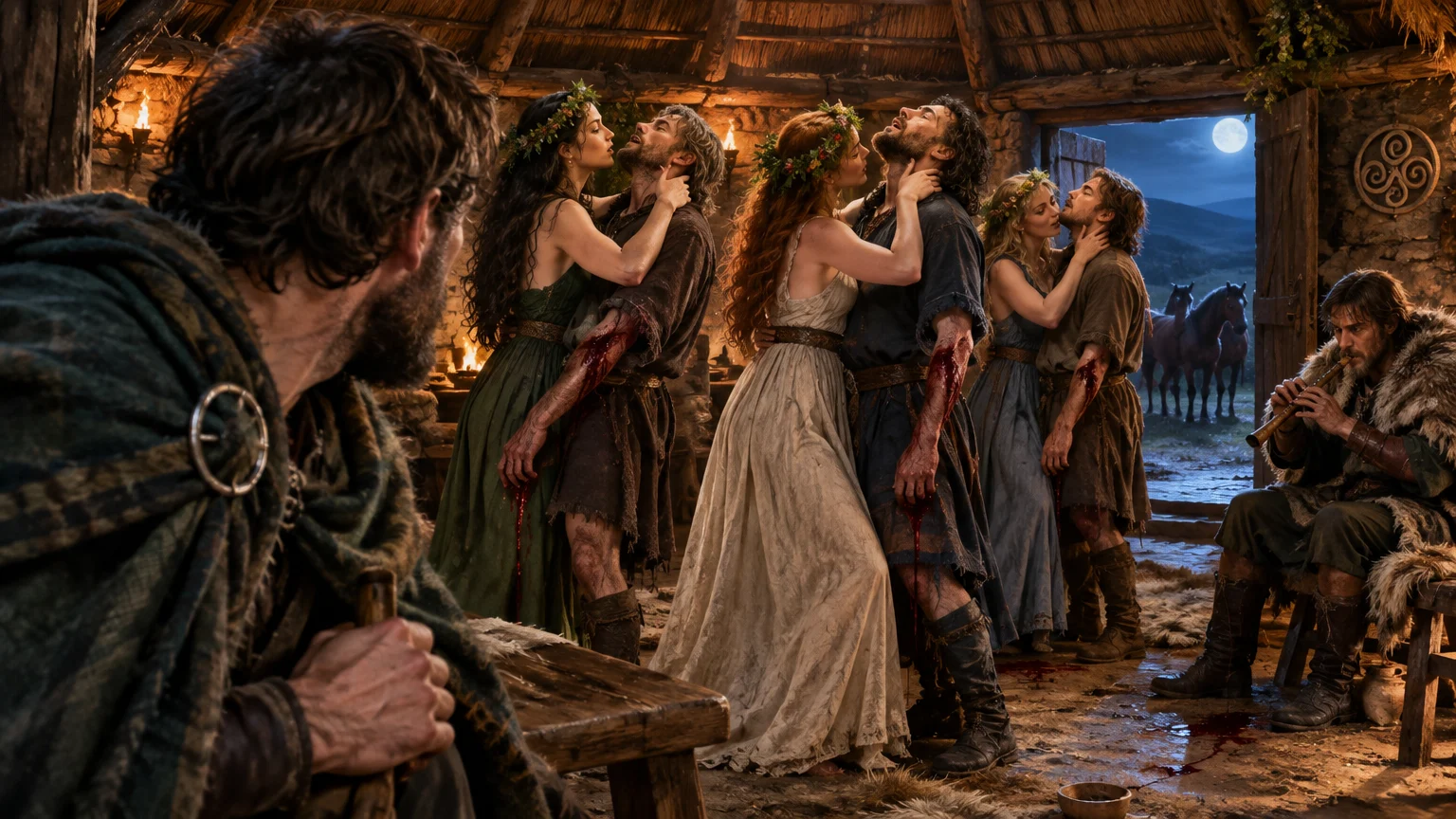
While one man provides Gaelic mouth music, the others dance and wish for female companions. Four women appear, apparently granting the wish, and join the men in their entertainment.
One hunter notices blood falling from a companion and realizes that the visitors are dangerous. Pretending to step outside, he leaves his plaid in the woman’s grasp, then fastens it to the shelter and escapes.
He reaches a horse enclosure where his pursuer cannot harm him. At daybreak the other hunters are discovered dead, their blood drained according to this recorded version.
Image caption: In a Highland hunting tale, a dancer notices blood falling from his companions and escapes the mysterious women who joined their gathering.
Robertson also recorded variants with three hunters, and another Highland telling identifies deerlike hooves as the sign of the women’s supernatural nature. The surviving man is not always the same character.
This variation matters. The protection of horses appears in the recorded story, but explaining that escape specifically through iron horseshoes would add a detail Robertson does not establish.
The Baobhan Sith’s principal danger is deceptive hospitality. Their appearance invites ordinary social behaviour, while their identity becomes recognizable only after the men have accepted their company.
The Cauld Lad of Hylton
A less violent, but equally unpredictable, visitor appears in northern English folklore. The Cauld Lad of Hylton haunted Hylton Castle in County Durham, according to William Henderson’s nineteenth-century collection.
The spirit reversed the work of servants: he disordered a clean kitchen and tidied one left untended. His behaviour resembles a brownie, although he was more troublesome than helpful.
To end the disturbances, the servants left a green cloak and hood near the fire. The Cauld Lad put them on, celebrated, and disappeared, declaring his work finished.
A separate local explanation identified him as the ghost of a servant boy supposedly murdered by a former lord of the castle. This is part of the legend, not established murder history.
The Cauld Lad is not a Scottish Gaelic fairy merely because neighbouring traditions contain similar household helpers. His story illustrates how ghost and domestic-spirit explanations could coexist within one locality.
Unlike the predatory Baobhan Sith, he was removed through an intentionally offered gift. The two accounts show different consequences of human contact with supernatural visitors, not one shared rule of hospitality.
The Marriage That Took the Cattle With It
Welsh folklore often presents supernatural women as potential wives whose relationships with mortals depend on extraordinary conditions. The Lady of Llyn y Fan Fach is among the best-known examples.
Her legend is attached to a mountain lake near Myddfai in Carmarthenshire. William Rees published a collected version in The Physicians of Myddvai (1861), later reproduced by John Rhys in 1901.
The Lake Woman and Her Conditions
The story concerns a young farmer who sees a beautiful woman sitting upon the lake. He offers her bread, but she rejects first an overbaked loaf and then underbaked dough.
Only a third offering, baked between those extremes, wins her acceptance. The woman agrees to marry him provided he never strikes her three times without cause.
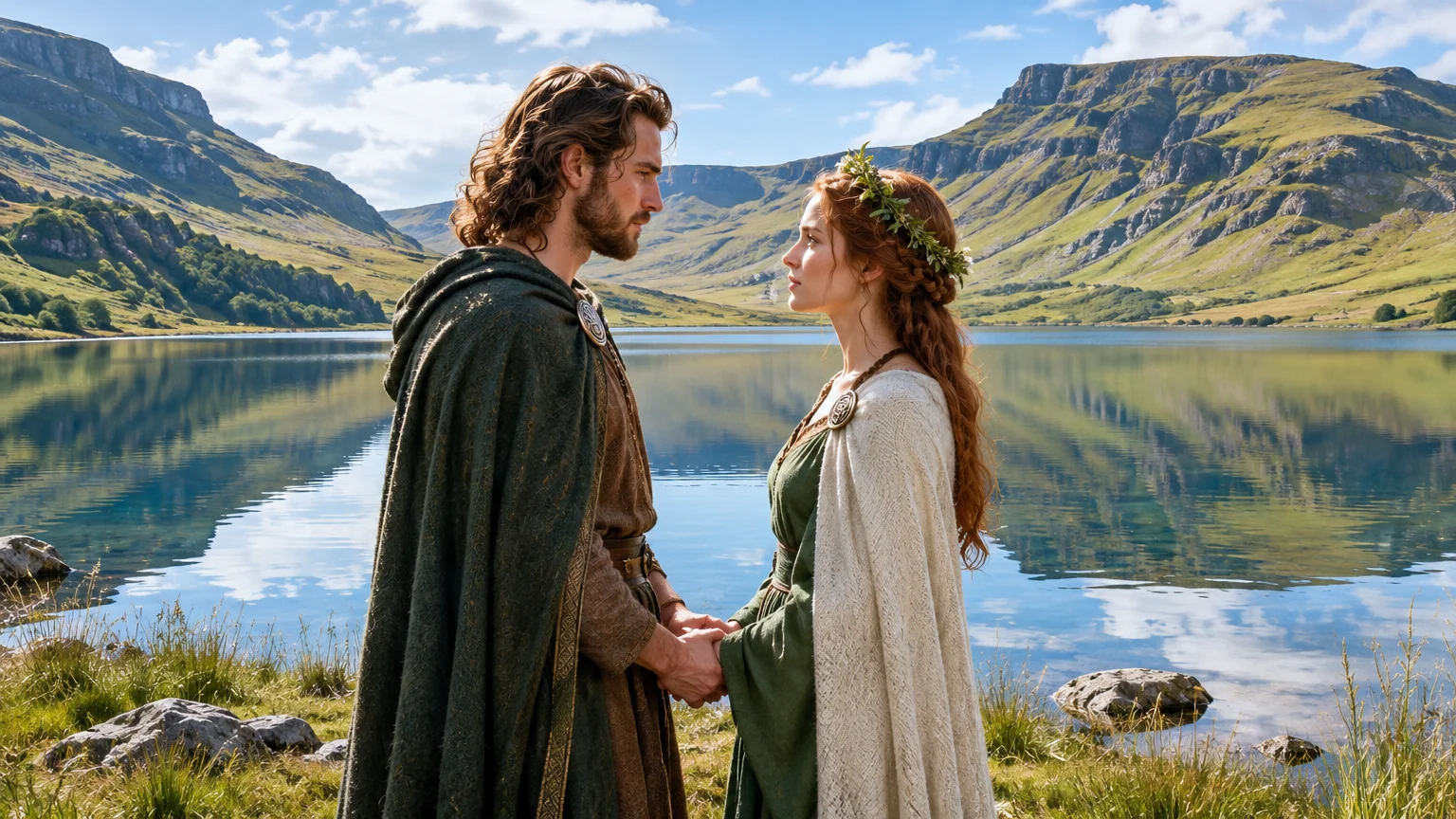
Her father tests the farmer’s ability to recognize his bride among nearly identical women, then grants a remarkable dowry of cattle, sheep, goats, and horses emerging from the lake.
The couple prosper near Myddfai and raise three sons. The animal wealth remains associated with the woman’s otherworldly family, even while it supports an ordinary agricultural household.
The prohibition is broken through three gestures that the husband considers minor. He urges her onward with a glove before a christening, touches her when she weeps at a wedding, and touches her again when she laughs at a funeral.
Her reactions suggest unusual knowledge: marriage introduces difficulty, while death releases a person from worldly troubles. She nevertheless counts each gesture against the agreement and leaves after the third.
The Cattle Return to the Lake
The woman summons her animals back towards Llyn y Fan Fach. They obey even after years on the farm, and the legend says that a slaughtered black calf returns to life.
Four working oxen also abandon their ploughing and follow the herd into the water. The furrow associated with their departure ties the supernatural episode to the surrounding landscape.
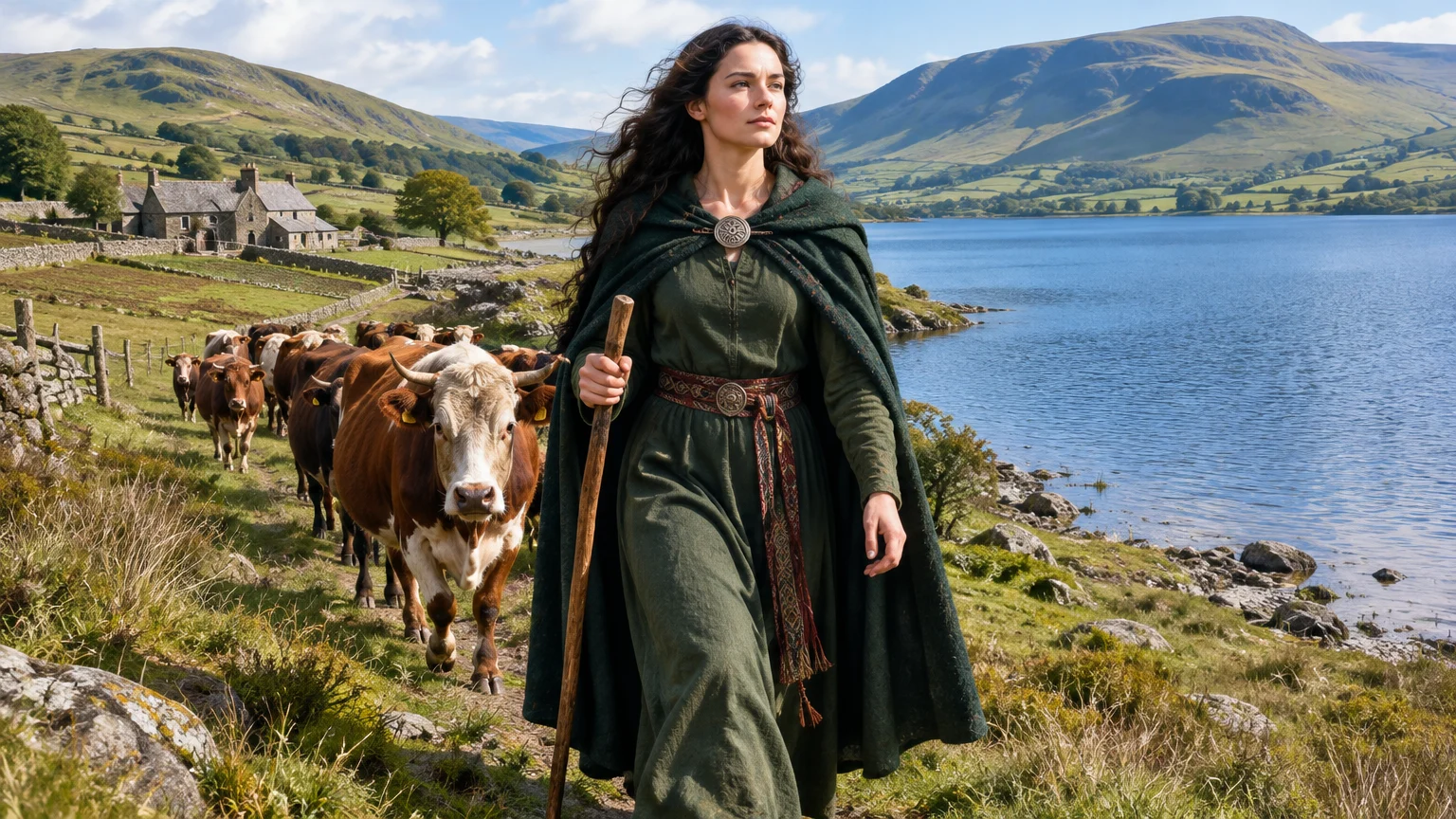
For an agricultural household, the loss meant more than the end of a marriage. The cattle represented livelihood and prosperity, yet their ownership remained subject to the lake woman’s conditions.
The account belongs to a broader group of supernatural marriage legends, but its details should not be generalized to every Welsh lake woman. Different local stories contain different prohibitions and outcomes.
The Physicians of Myddfai
The tradition gives the lake woman another important role after her departure. She returns to her sons, especially Rhiwallon, and teaches them remedies and the healing properties of plants.
This provides a legendary origin for the Physicians of Myddfai, associated with medieval Welsh medical manuscripts. The historical texts preserve real medical learning, but cannot establish that a supernatural mother taught it.
The difference is essential: a tale explaining the origin of knowledge is not evidence that the tale occurred. Nevertheless, the medical connection makes this more than a cautionary marriage story.
The lady withdraws her animals but passes on skills intended to help others. Her supernatural identity encompasses both material prosperity and knowledge that outlasts her marriage to a mortal.
When Winter Has Hands
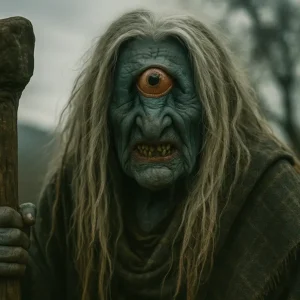
In Scottish traditions, the Cailleach is an old supernatural woman associated with winter, harsh weather, vegetation, and sometimes the shaping of mountains. Her identities and powers differ across regional accounts.
The name is often translated as “old woman” or “hag.” Cailleach Bheur and Beira are prominent forms, but they should not be treated as characters in one unchanged ancient biography.

The Hammer That Delays Spring
John Gregorson Campbell’s Witchcraft and Second Sight in the Highlands and Islands of Scotland (1902) records the Cailleach attempting to prevent grass from growing as spring approaches.
She strikes the ground with a hammer, but vegetation eventually grows faster than she can suppress it. Frustrated, she throws the hammer beneath a holly tree where grass does not grow.
The account makes seasonal change understandable through human labour. In grazing communities, the arrival of grass affected animals and the resources needed to support households after winter.
Campbell also records an agricultural belief linking the Cailleach with the last person to finish harvesting, who might be burdened with feeding her until the next harvest.
These accounts connect winter with both environmental hardship and the social fear of scarcity. They do not require the Cailleach to possess one fixed appearance or set of powers.
Beira and the Washing of Winter
Donald A. Mackenzie’s Wonder Tales from Scottish Myth and Legend (1917) develops Beira into a Queen of Winter, using collected folklore and his own literary arrangement.
In his account, Beira washes an immense shawl in the dangerous waters of Corryvreckan, between Jura and Scarba. When she spreads the whitened cloth across mountains, snow covers the land.
The whirlpool’s violent currents suit a tale that magnifies household washing into a landscape-changing act. This episode should remain distinct from Campbell’s hammer story, rather than becoming a continuous ancient narrative.
Mackenzie’s connected stories of Beira, Angus, and Bride are influential, but his literary synthesis is not proof of one universally accepted Highland mythology about the seasons.
The Cailleach can represent winter, grazing hardship, mountain landscapes, or authority over wild animals, depending on the tradition. Her significance lies in these local associations, not a standardized goddess biography.
A Sacred Place You Learn by Walking
Not every powerful presence in Irish tradition is a ghost or fairy. Saint Gobnait, venerated at Ballyvourney in County Cork, belongs to Christian devotion shaped by local legends and centuries of pilgrimage.
Her traditional biography places her in early medieval Ireland, although much of her life remains historically uncertain. A medieval Life of Saint Abbán connects her with a religious foundation at Ballyvourney.
White Deer, Bees, and Protection
A well-known foundation legend says Gobnait was directed to settle where she found nine white deer. After encountering smaller groups elsewhere, she reportedly found all nine at Ballyvourney.
The deer identify the chosen religious place rather than describing an animal-like saint. Other stories connect Gobnait with bees, which she releases against raiders attempting to steal cattle.
Her association with bees also reflects their practical importance for honey and wax. Devotional traditions connect the saint with healing and protection, particularly against sickness.
The miracles belong to religious folklore, yet the associated sites and observances have their own documented history. Ballyvourney became a recognized destination for people seeking the saint’s intercession.
What Pilgrims Actually Did
A papal indulgence issued in 1601 provides early modern evidence of organized devotion. Reports of Donal Cam O’Sullivan Beare’s journey in 1603 also connect travellers with prayers at Ballyvourney.
Later accounts describe an important medieval wooden statue, traditionally kept by the O’Herlihy family. John Richardson’s hostile 1727 description nevertheless records prayers and devotional movement around the figure.
The Turas Ghobnatan, or pilgrimage rounds, remain especially associated with Gobnait’s feast on 11 February. Pilgrims move between stations around the church remains, reputed grave, associated structures, and holy well.
A documented modern route begins near the statue by Séamus Murphy, unveiled in 1951, and the nearby structure called Saint Gobnait’s House or Kitchen.
Pilgrims perform clockwise circuits around these monuments while reciting prayers. At designated stations, the observances include seven Our Fathers, seven Hail Marys, and seven Glorias.
The route continues through the graveyard, where the reputed grave of Gobnait receives prayers and offerings, before reaching the medieval church and its distinctive devotional objects.
On the church’s southern exterior wall is a carved female figure, identified by some local pilgrims as Saint Gobnait but classified by archaeological researchers as a sheela-na-gig.
Historical accounts recorded pilgrims touching the carving with cloth or devotional objects. A 2024 account in Irish Heritage News describes a related practice involving ribbons or rosary beads.
Another object is Saint Gobnait’s Bowl, or bulla, a rounded agate stone lodged in the church’s western gable and traditionally associated with protection and healing.
Recorded customs include touching the stone, making the sign of the cross, and rubbing a ribbon or handkerchief against it. These actions express devotional beliefs, not medically established healing effects.
The final major station is Tobar Ghobnatan, Gobnait’s holy well, where pilgrims offer prayers and sometimes drink water believed to possess healing properties.
Nearby trees and stations carry ribbons, pieces of cloth, and small devotional offerings. These objects represent personal petitions and beliefs concerning illness, protection, and the saint’s intercession.
Another tradition, Tomhas Ghobnatan, involved measuring a ribbon against the medieval wooden statue and keeping it for protection. This practice has been documented historically and in contemporary accounts.
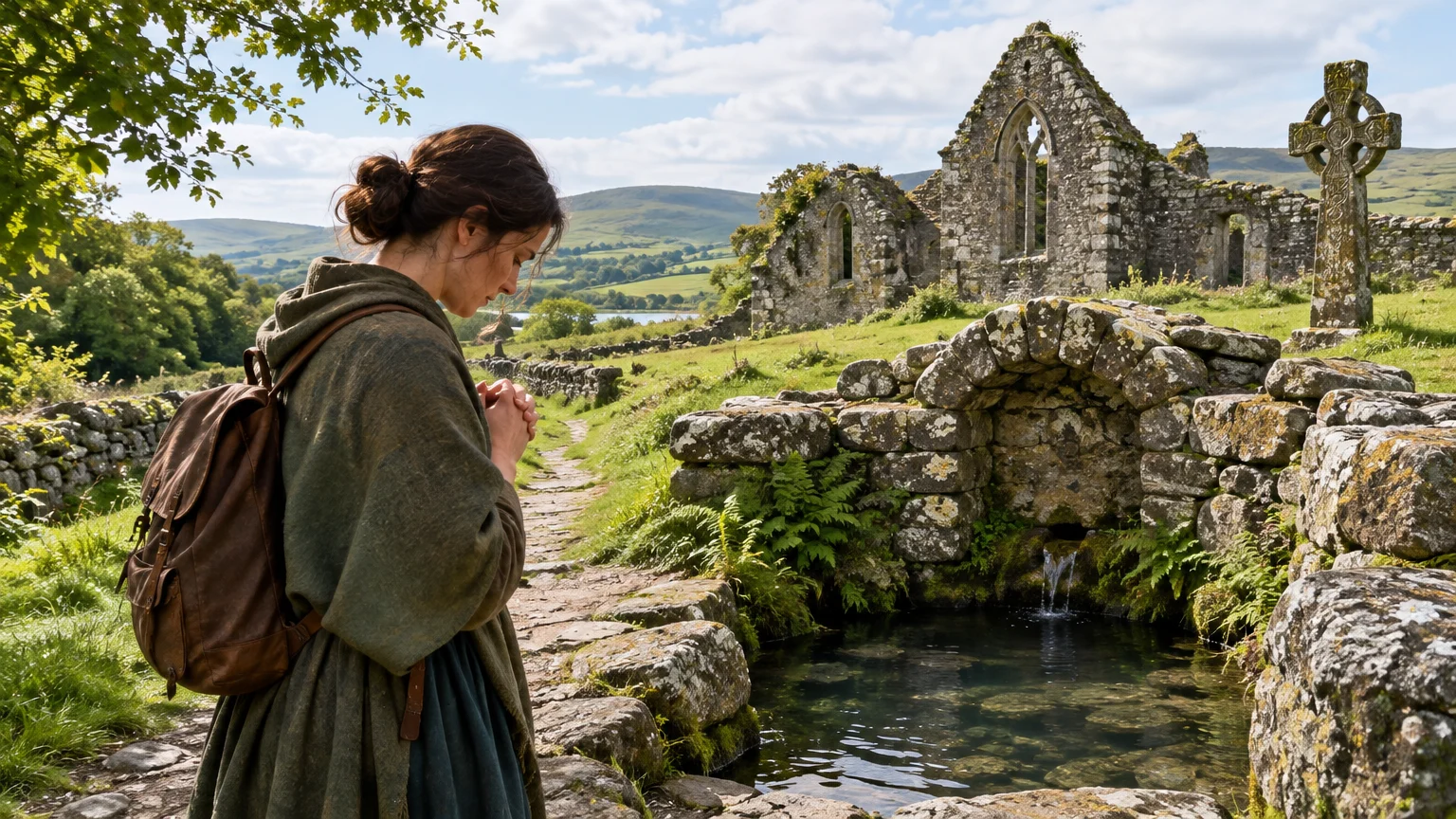
Excavations by Michael J. O’Kelly in 1951 also revealed earlier structures and ironworking activity at the site. These finds document occupation, not Gobnait’s personal involvement in metalworking.
The pilgrimage combines archaeological remains with living Christian observance. Unlike an unexpected meeting with a fairy or death-messenger, visitors approach this sacred landscape deliberately, following established religious customs.
Knowing How to Live Beside Them
Celtic folklore did not always portray supernatural beings as enemies to be defeated. Some could be approached, bargained with, or even compelled to serve humans, although such relationships carried risks.
Scottish kelpie traditions provide particularly revealing examples because the same creature could appear as a deadly predator or a powerful animal forced into human service.
Water Spirits and Changing Beliefs
The Kelpie was commonly associated with rivers, deep pools, and dangerous crossings. Walter Gregor’s Notes on the Folk-Lore of the North-East of Scotland (1881) describes it appearing as a black horse that lured travellers into the water.
Yet Gregor also recorded methods for capturing the creature. A bridle marked with a Christian cross could supposedly subdue the kelpie, allowing people to employ it in demanding physical labour.
In one tradition, a captured kelpie carries stones for construction before being released. Its extraordinary strength becomes useful, although the creature remains fundamentally different from an ordinary working horse.

James Murray Mackinlay’s Folklore of Scottish Lochs and Springs (1893) preserves another account involving the River Don at Corgarff, where flooding had destroyed a wooden bridge.
A mysterious man offers to carry a traveller across the river. Halfway over, the supposed helper attempts to drown him, but the traveller escapes and reaches the bank.
The kelpie throws a boulder after him. According to the account, the stone became known as the Kelpy’s Stane, and passers-by contributed stones to a cairn beside it.
This detail connects the supernatural encounter with a recognizable local landmark. The story offered both an explanation for a feature of the landscape and a warning about dangerous river crossings.
Scottish writers interpreted these beings in different ways. Robert Burns associated water-kelpies with the devil in Address to the Deil (1786), while an 1887 Celtic Magazine article acknowledged both harmful and potentially beneficial aspects of supernatural water.
What These Encounters Reveal
The kelpie stories share an interesting principle with other traditions examined here: supernatural power could sometimes be negotiated or controlled, but only through particular conditions.
The Lady of Llyn y Fan Fach brings wealth through marriage, provided her husband respects their agreement. The Cauld Lad of Hylton performs household work until clothing changes his relationship with the servants.
Neither relationship guarantees lasting human control. The lake woman’s cattle return to their original world, while the household spirit departs once the conditions governing his presence change.
Ballyvourney offers a different model. Pilgrims approach Saint Gobnait’s holy well and religious monuments through established Christian prayers, pilgrimage rounds, and devotional offerings rather than attempting to capture or command a supernatural being.
The distinction is important. A kelpie might be subdued through a protective object, a supernatural spouse might impose obligations, and a saint might be approached through religious intercession.
These are different beliefs and practices, not interchangeable magical rules.
They also reveal different ways of understanding human limitations. A river crossing could become a dangerous encounter, a prosperous marriage could depend on an unfamiliar agreement, and a sacred place could require recognized forms of devotion.
The historical accounts preserve more than descriptions of unusual creatures. They show how particular communities understood the terms under which people might encounter powers beyond ordinary human experience.
For readers today, the value of these traditions lies partly in those differences. Their supernatural figures were shaped by particular landscapes, social relationships, religious beliefs, and the circumstances of the people who told their stories.
Further Reading
Ancient Legends, Mystic Charms, and Superstitions of Ireland | Lady Wilde | 1887. Irish banshees, fairy women, and hereditary death-warning traditions.
https://www.gutenberg.org/cache/epub/61436/pg61436-images.html
Memoirs of Lady Fanshawe | Ann Fanshawe | First published 1829. The apparition at Lady Honora O’Brien’s window and the household’s explanation.
https://www.gutenberg.org/cache/epub/6064/pg6064.html
The Banshee | Elliott O’Donnell | 1920. A historical interpretation emphasizing Irish family attachments; useful when read critically.
https://www.gutenberg.org/cache/epub/34263/pg34263.txt
Superstitions of the Highlands and Islands of Scotland | John Gregorson Campbell | 1900. The Bean Nighe’s regional forms and death-washing traditions.
https://www.gutenberg.org/cache/epub/61730/pg61730-images.html
Folklore from the West of Ross-shire | Charles Moncrieff Robertson | 1910. “The Hunters and the Maidens,” including variations and the blood-draining visitors.
https://electricscotland.com/history/articles/folklore_ross.pdf
Notes on the Folk-Lore of the Northern Counties of England and the Borders | William Henderson | 1879 edition. The Cauld Lad of Hylton and the clothing episode.
https://en.wikisource.org/wiki/Notes_on_the_folk-lore_of_the_northern_counties_of_England_and_the_borders/Chapter_7
Celtic Folklore: Welsh and Manx | John Rhys | 1901. The Lady of Llyn y Fan Fach and the Physicians of Myddfai legend, Volume I, Chapter I.
https://tianmu.org/good-work-library/celtic/welsh-and-manx/celtic-folklore-welsh-and-manx-john-rhys
Medieval Welsh Medical Texts, Volume One: The Recipes | Diana Luft | 2020. Scholarly context for historical Welsh medical manuscripts.
https://www.ncbi.nlm.nih.gov/books/NBK558253/
Witchcraft and Second Sight in the Highlands and Islands of Scotland | John Gregorson Campbell | 1902. The Cailleach’s hammer, spring vegetation, and harvest traditions.
https://www.gutenberg.org/files/58894/58894-h/58894-h.htm
Wonder Tales from Scottish Myth and Legend | Donald A. Mackenzie | 1917. Literary treatments of Beira, winter, and Corryvreckan.
https://tianmu.org/good-work-library/celtic/scottish-and-highland/wonder-tales-from-scottish-myth-and-legend-donald-a-mackenzie
St Gobnait: Patron Saint of Ironworkers, Beekeepers and Ballyvourney | Irish Heritage News | 2024. Gobnait’s history, pilgrimage stations, and religious objects.
https://irishheritagenews.ie/st-gobnait-patron-saint-of-ironworkers-beekeepers-and-ballyvourney/
Three Wells Dedicated to St Gobnait, Baile Mhúirne | Amanda Clarke | 2016. Observations of Ballyvourney wells and devotional rounds.
https://holywellscorkandkerry.com/2016/02/12/three-wells-dedicated-to-st-gobnait-ballyvourney/
Notes on the Folk-Lore of the North-East of Scotland | Walter Gregor | 1881. Regional kelpie accounts and water-horse traditions.
https://tianmu.org/good-work-library/celtic/scottish-and-highland/folk-lore-of-the-north-east-of-scotland-walter-gregor
Folklore of Scottish Lochs and Springs | James Murray Mackinlay | 1893. River and loch spirits, including threatening supernatural helpers.
https://www.gutenberg.org/cache/epub/56034/pg56034-images.html
Address to the Deil | Robert Burns | 1786. A poetic Christian framing of water-kelpies.
https://en.wikisource.org/wiki/The_Poetical_Works_of_Robert_Burns/Address_to_the_Deil
Tales of the Water-Kelpie | The Celtic Magazine | September 1887. A wider discussion of Scottish water spirits and their varied behaviour.
https://books.google.com/books?id=bFFJAAAAMAAJ&pg=PA511
Explore Related Beasts
 BansheeThe Banshee is a legendary figure rooted deeply in Irish mythology, recognized primarily for her mournful wail that is…
 Baobhan SithBaobhan Sith are predatory fairy women of the Scottish Highlands who lure hunters with alluring appearances. Recorded tales describe…
 Bean NigheThe Bean Nighe is a Scottish spirit from Celtic lore, known as a harbinger of death who washes bloodied…
 Cailleach BheurCailleach Bheur, the ancient winter hag of Celtic lore, ruled storms and sculpted mountains with frost and stone, embodying…