Introduction
Simargl is an obscure figure named among the gods worshipped in Kyiv under Prince Vladimir at the end of the tenth century. The earliest textual evidence presents Simargl as a deity, not explicitly as a mythological animal, and provides no surviving account of the figure’s character.
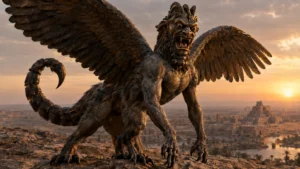
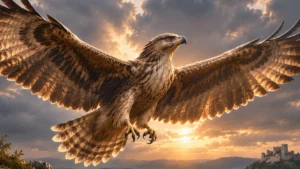
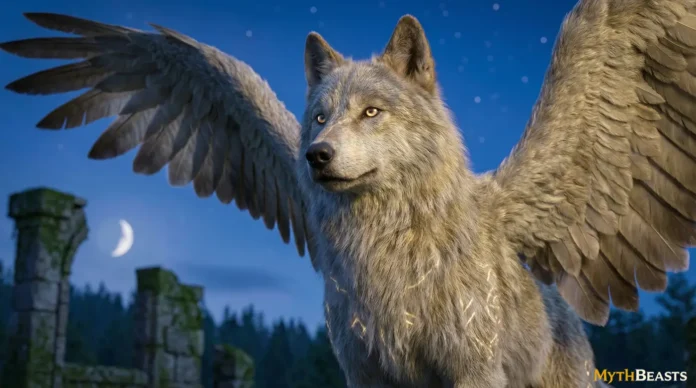
Modern illustrations often portray Simargl as a winged dog or griffin-like guardian. That familiar image rests largely on a proposed relationship with the Iranian Senmurv and on scholarly interpretations of medieval animal ornament, rather than on a description preserved in an early East Slavic narrative.
This distinction matters because Simargl’s identity has repeatedly been reconstructed from limited evidence. The figure has been interpreted as an imported Iranian divinity, a protective creature associated with vegetation, or even a scribal combination of two otherwise unknown divine names.
Simargl therefore occupies an unusual position in discussions of pre-Christian Rus. The name is historically attested, but almost everything beyond that name remains debated.
Its importance lies partly in what it reveals about cultural exchange, political religion, and the difficulty of reconstructing Slavic belief from Christian-era texts.
History/Origin
Simargl enters the historical record in the account of Vladimir’s religious reforms in the Primary Chronicle. Under the year 980, the prince is said to have established idols on a hill outside his residence in Kyiv, including Perun, Khors, Dazhbog, Stribog, Simargl, and Mokosh.
The chronicle was compiled more than a century after the reported event, within a Christian literary environment. Its list is nevertheless the central evidence for Simargl’s recognized place in the princely cult.
The text records neither an idol’s appearance nor a myth explaining the deity’s powers.
Vladimir accepted Christianity in 988, after which the chronicle describes the public destruction and humiliation of pagan images. Simargl disappears from the main narrative.
Unlike Perun, the figure does not receive a separate account of an idol being dragged away or of popular resistance to its removal.
Other medieval denunciations of non-Christian observance preserve forms that have been read as referring to Simargl. Some textual traditions appear to divide the name into Sim and Rgl, creating uncertainty over whether the chronicler intended one divine name, two names, or a compound already imperfectly understood.
The leading historical explanation connects Simargl with the Iranian Senmurv, a fabulous composite creature represented in Sasanian art. Contacts across the Eurasian steppe, including those involving Iranian-speaking peoples, provide a plausible route by which a name or supernatural conception could have entered the religious world of early Rus.
That explanation remains influential but does not establish a complete transfer of myths or functions. No surviving East Slavic text says that Simargl came from Iran or assigns the deity the Senmurv’s characteristics.
The connection depends on linguistic comparison, historical contact, and interpreted visual parallels rather than a continuous written tradition.
Name Meaning
The medieval form is commonly rendered in English as Simargl or Semargl. Differences in transliteration reflect the spelling and vocalization of Old East Slavic forms, while the surviving textual record also contains variants that complicate any attempt to recover a single original pronunciation.
The most widely discussed etymology relates the name to Middle Persian Senmurv, the name of a supernatural creature known from Iranian tradition and Sasanian imagery. Later Persian Simurgh belongs to the same Iranian name history, although the literary Simurgh should not automatically be treated as identical to Simargl.
A proposed Iranian derivation explains the broad resemblance among the names, but the precise linguistic route is disputed. Transmission may have involved intermediary Iranian-speaking communities of the steppe, and changes in pronunciation could have occurred before the name entered the East Slavic written record.
An alternative reading emerged because certain medieval passages can be interpreted as naming two beings, Sim and Rgl. This division has not produced securely identified deities with independent traditions, however, and it may reflect scribal uncertainty about an unfamiliar or archaic name.
No dependable literal East Slavic meaning for Simargl survives. Interpretations such as “winged dog,” “seed guardian,” or “protector of crops” describe later theories about form and function, not demonstrated translations of the name.
The safest conclusion is that its meaning was already obscure to medieval copyists.
Appearance
No early East Slavic written source provides a physical description of Simargl. The Primary Chronicle confirms that an idol bearing the name stood in Vladimir’s sanctuary, but it does not record the material, facial features, posture, animal attributes, or ceremonial equipment of that image.
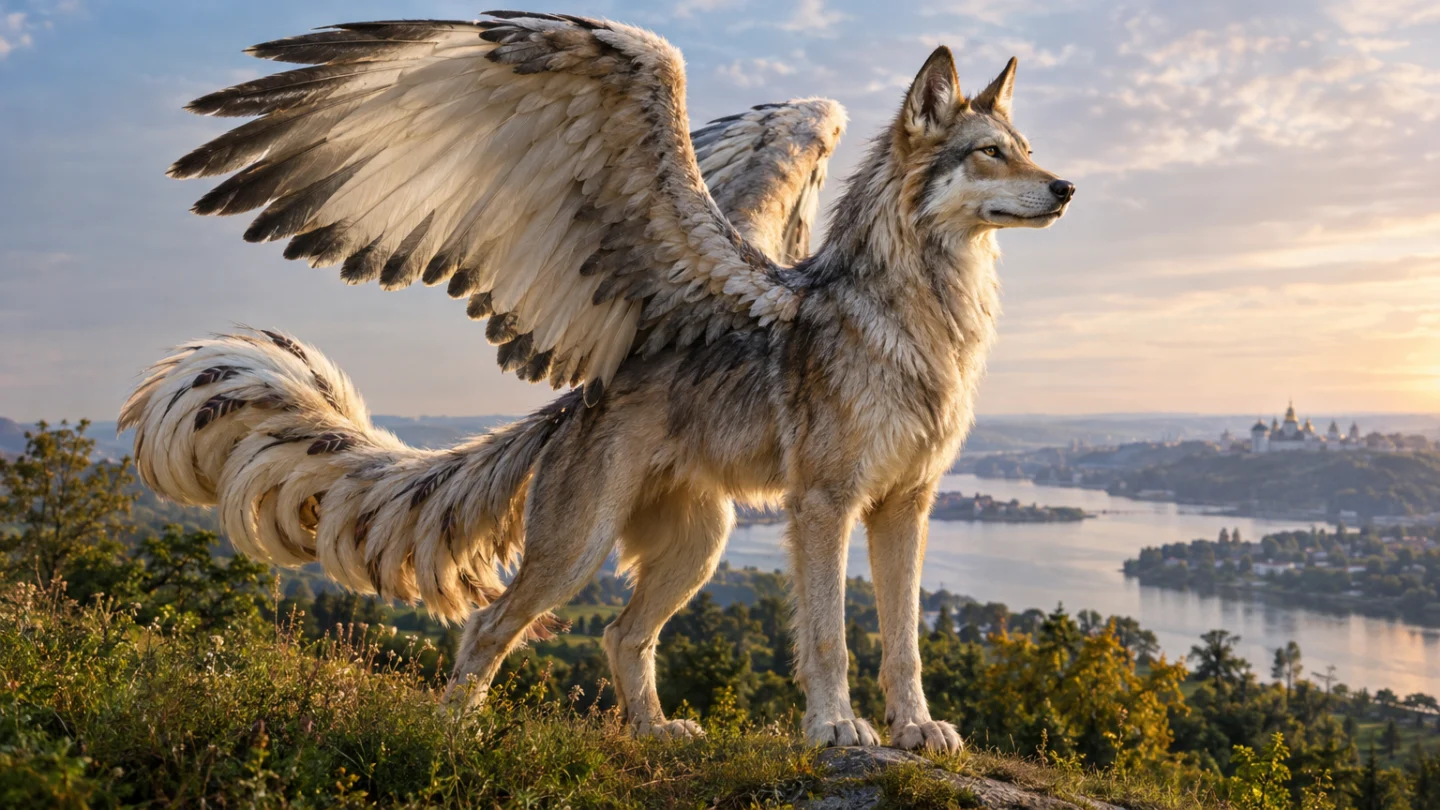
The best-known modern form, a winged canine, comes from identifying Simargl with the Iranian Senmurv. In Sasanian visual art, the Senmurv commonly appears as a composite quadruped with canine features, wings, and an elaborate tail.
These traits belong securely to Iranian imagery, not directly to Vladimir’s lost idol.
Later Persian literature transformed the related Simurgh into a majestic bird. This literary bird and the Sasanian composite animal represent different stages or expressions of Iranian tradition.
Combining both forms into a single fixed portrait of Simargl creates an attractive image, but obscures the historical distinctions.
Medieval Rus produced bracelets, architectural carvings, and other ornaments decorated with winged quadrupeds, intertwined beasts, birds, and vegetal patterns. Some scholars have identified particular winged animals as Simargl, especially where the creature appears entangled with shoots or foliage.
Such identifications remain interpretive rather than confirmed by inscriptions.
Animal ornament circulated widely through Byzantine, Iranian, steppe, and northern European artistic networks. A winged dog-like figure on an object from Rus therefore cannot be labeled Simargl solely from its appearance.
It might represent imported decorative vocabulary, a generalized guardian, or another fabulous beast.
Accordingly, Simargl’s historically defensible appearance is undefined. The winged canine remains a plausible reconstructed form if the Iranian relationship is accepted, and it has become dominant in modern art.
It should be presented as a scholarly and artistic reconstruction, not as an explicit description from Slavic mythology.
Background Story
Simargl has no surviving personal mythology. There is no securely documented East Slavic account of the deity’s birth, adventures, enemies, family, or intervention in human affairs.
Its background must instead be reconstructed from the political setting of Vladimir’s pantheon and from possible cross-cultural connections.
The sanctuary established in Kyiv appears to have gathered several divine powers under princely sponsorship. Rather than proving the existence of a uniform Slavic pantheon, the list may reflect an attempt to organize diverse cults and constituencies within an expanding polity connected to forest, steppe, river, and international trading worlds.
Within that setting, Simargl and Khors are often treated as possible evidence of Iranian influence. Iranian-speaking Scythian, Sarmatian, and Alan communities had long participated in the cultural history of the Pontic steppe.
Yet deep regional contact does not identify the specific date, community, or mechanism behind Simargl’s adoption.
The Senmurv hypothesis gives the figure a broader Eurasian background. In Iranian religious and artistic contexts, composite winged creatures could carry royal, protective, or cosmological associations.
These meanings help explain why such an image might travel, but they cannot be transferred wholesale to the Kyiv deity without local testimony.
Vegetal ornament surrounding winged beasts encouraged interpretations of Simargl as a guardian of seeds, shoots, or cultivated growth. This agricultural role became influential in twentieth-century reconstructions of Slavic paganism.
The evidence is indirect, since ornamented foliage does not by itself prove a named deity’s function or ritual domain.
Simargl is best understood as a historically attested but poorly explained member of Vladimir’s cultic program, possibly shaped by Iranian and steppe traditions. Its later identity as a winged guardian arose from comparative scholarship and visual reconstruction, filling gaps left by the remarkably terse medieval record.
Famous Folklore Stories
The Kyiv Pantheon Episode
No independent traditional tale centered on Simargl is securely preserved. The closest surviving narrative is the account of Prince Vladimir’s pagan sanctuary in Kyiv, where Simargl appears among several divine figures whose idols were established on a hill near the princely residence.
The chronicle names Simargl alongside Perun, Khors, Dazhbog, Stribog, and Mokosh, but gives no speech, deed, genealogy, or supernatural encounter involving him. His role in the episode is therefore collective: he belongs to a deliberately assembled pantheon rather than acting as a developed narrative character.
Sacrifice at the Sanctuary
The same chronicle passage says that offerings were made to the gods at Vladimir’s sanctuary. Its Christian author condemns these observances and alleges that sons and daughters were brought in sacrifice, presenting the old cult as spiritually dangerous and destructive.
Nothing in the account assigns a particular offering, priesthood, season, or ritual responsibility to Simargl. The episode establishes only that his image participated in public princely worship.
Treating the chronicle’s polemical description as a detailed record of Simargl’s individual cult would exceed the evidence.
The Abandonment of the Idols
After Vladimir’s conversion, the chronicle describes the destruction or removal of Kyiv’s idols. Perun receives a detailed humiliation and is dragged toward the river, while the other figures are not given equally distinct endings.
Simargl’s image disappears from the narrative without an individual episode.
This silence is significant. Later retellings sometimes supply Simargl with adventures, cosmic duties, or dramatic conflicts, but these do not come from the medieval account.
The authenticated narrative pattern is instead one of installation, collective worship, and abrupt displacement during the Christianization of Rus.
Cultural Impact
Simargl’s historical importance rests less on a surviving mythology than on his inclusion in the Kyiv pantheon. His presence demonstrates that the religious program associated with Vladimir incorporated a divine name whose background may have differed from those of better-understood East Slavic gods.
The figure also illustrates the difficulty of reconstructing pre-Christian Rus religion from Christian literary witnesses. Medieval chroniclers preserved the name while supplying almost none of the beliefs surrounding it.
This imbalance has made Simargl unusually dependent on linguistic, archaeological, and comparative interpretation.
Images of winged, dog-like, or leonine animals in medieval Rus decorative art have often been identified as Simargl. Such identifications influenced museum descriptions, popular illustration, and historical reconstruction, although the ornaments themselves generally lack inscriptions proving that the depicted creatures carried this name.
Modern representations commonly make Simargl a guardian of vegetation, seed, fire, or the household. These roles are largely interpretive reconstructions built from proposed Iranian connections, animal ornament, and broader agricultural symbolism.
They should not be mistaken for a complete mythology directly preserved in medieval narratives.
The unresolved identity has itself become culturally productive. Artists and popular writers can portray Simargl as a god, sacred beast, winged dog, or intermediary between worlds.
Scholarship remains more restrained, treating these forms as competing attempts to explain a securely attested name with an insecurely known function.
Similar Beasts
Simurgh
The Simurgh is a great bird of Iranian tradition, associated in different texts with wisdom, protection, healing, royal legitimacy, and the marvelous tree bearing the seeds of plants.
Its name is frequently compared with Simargl, but linguistic relationship does not prove that the Rus figure retained the Simurgh’s appearance, stories, or functions.
Longma
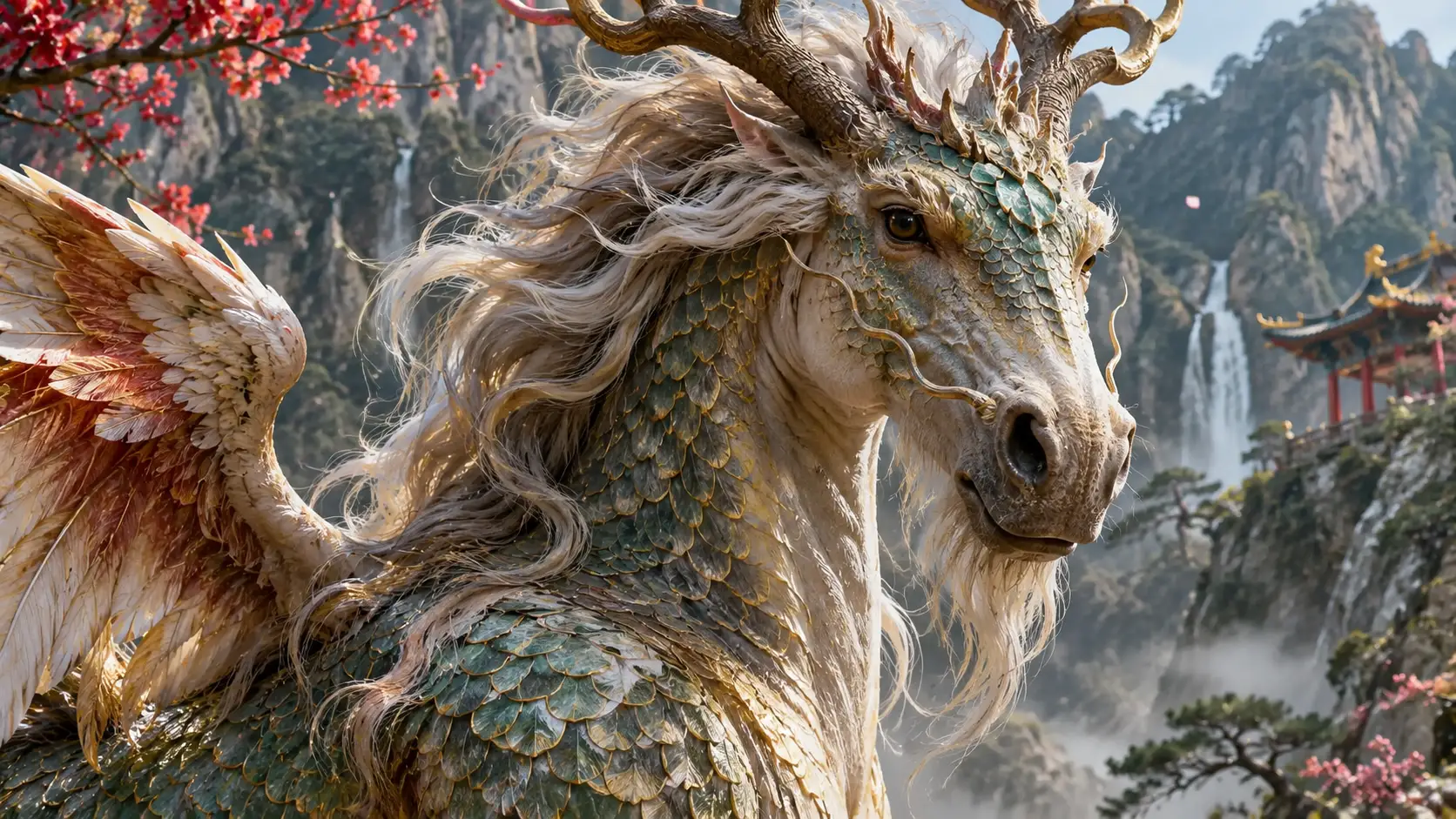
Longma is the Chinese dragon-horse, an auspicious hybrid connected with sage rulers, sacred order, and the legendary transmission of the Yellow River Map.
Like reconstructed images of Simargl, it combines animal traits with supernatural significance, although no historical connection between the Chinese and Rus figures is established.
Tianlu
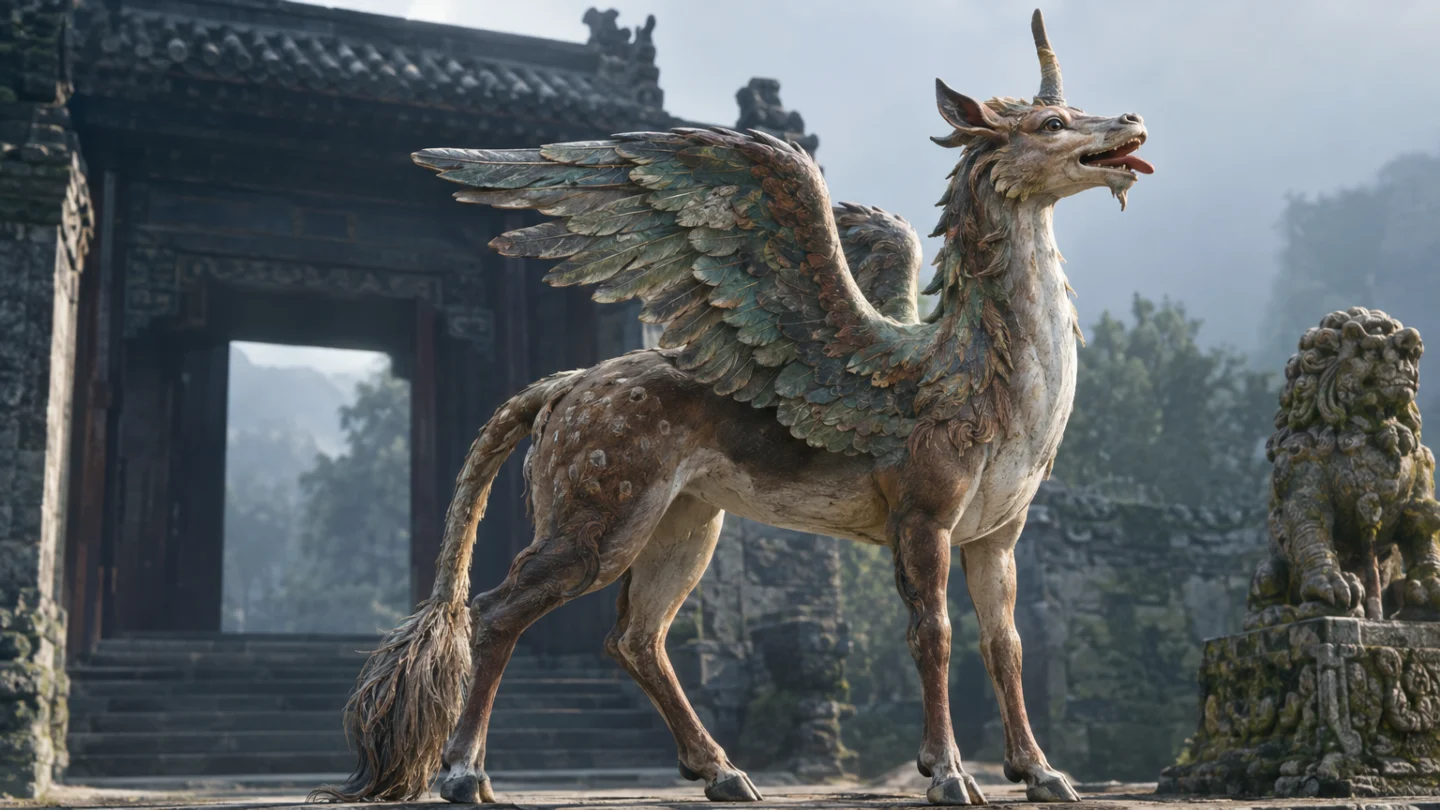
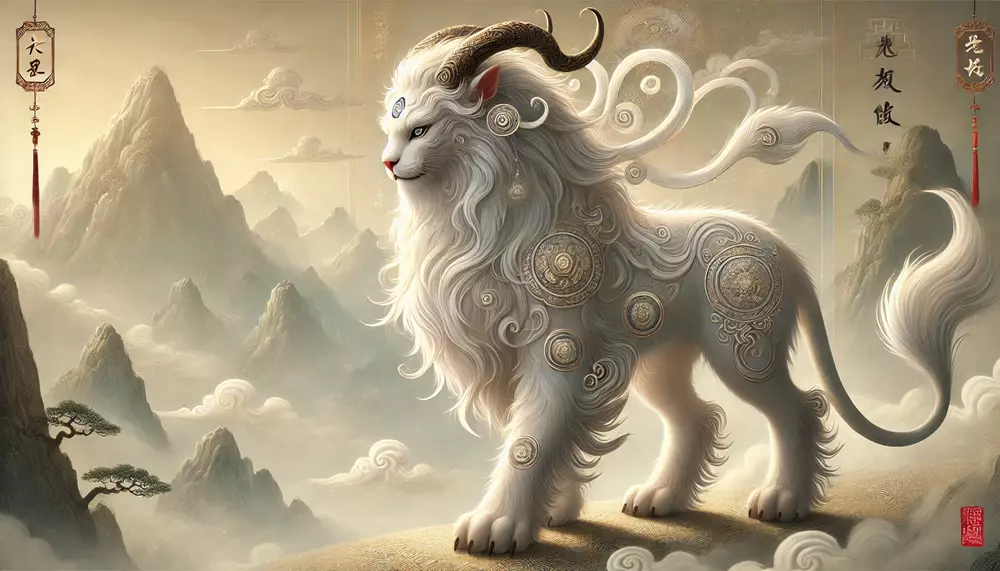
Tianlu belongs to Chinese traditions of auspicious horned animals and appears in historical commentary, omen literature, and funerary art without possessing one universally consistent form.
It resembles modern conceptions of Simargl as an ornamental guardian beast, but Tianlu has its own Chinese history and cannot explain Simargl’s disputed identity.
Makara
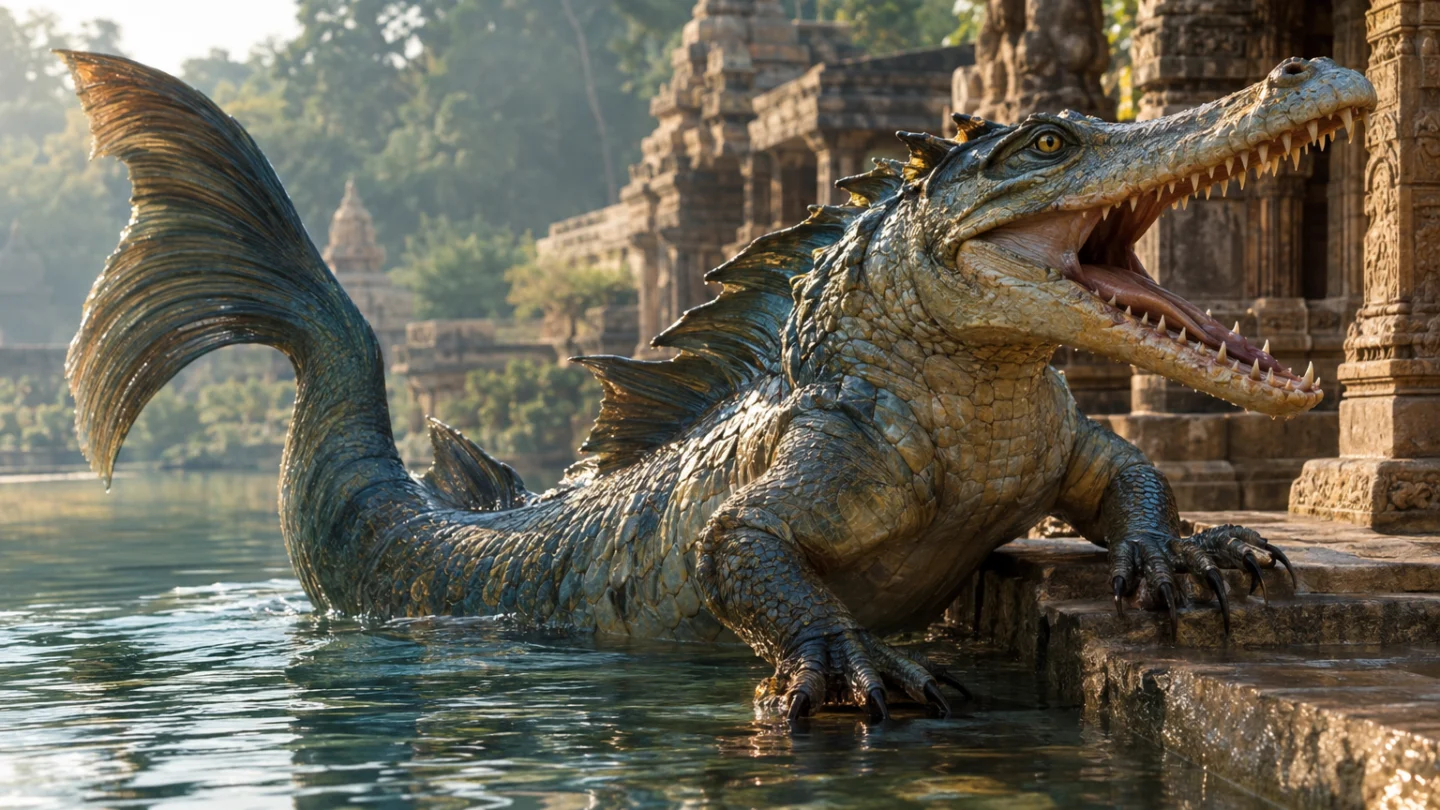
Makara is a sacred composite animal in South Asian tradition, closely associated with water, divine authority, protection, and the visual language of temples and sacred architecture.
Both figures demonstrate how hybrid animals may acquire guardian interpretations through art, though Makara’s iconographic tradition is much better documented than Simargl’s supposed form.
Religion/Ritual
The only relatively direct ritual context places Simargl within the public sanctuary established by Vladimir in Kyiv. The chronicle associates the pantheon collectively with idols, offerings, and communal veneration, but it does not isolate any ceremony conducted specifically for Simargl.
Claims about festivals, sacred fires, crop blessings, seed protection, priestly offices, or offerings dedicated solely to Simargl are not securely demonstrated by the surviving medieval passage. Some may reflect modern reconstruction or comparison with other traditions rather than recoverable Rus practice.
The chronicle’s hostile Christian framework also requires caution. It confirms that its author understood Simargl as an object of pagan worship, yet its denunciation was not an ethnographic description.
The text provides evidence for cultic inclusion, not a complete ritual calendar or theology.
Scientific or Rational Explanations
Simargl does not require a zoological explanation in the manner of an alleged unknown animal. The earliest evidence concerns a named object of worship, not a reported creature encountered in nature.
The beast-like identity arises chiefly from later interpretation of language and imagery.
One influential historical hypothesis derives the name from the Iranian Simurgh, possibly through cultural contacts connecting the steppe, Iranian-speaking peoples, and medieval Rus. This could explain an unfamiliar divine name, but the exact route and degree of religious adaptation remain disputed.
If an Iranian connection existed, the borrowed figure may have changed substantially. Religious names can travel without preserving their original narratives, appearance, or status.
A renowned bird in one tradition could become a divine name, protective emblem, or misunderstood cult figure elsewhere.
A different textual problem concerns later forms that appear to divide the name into elements resembling Sim and Rgl. These forms have encouraged theories that the chronicle compressed two beings into one.
Scribal misunderstanding is possible, although the surviving evidence does not conclusively establish either one deity or two.
The familiar winged-dog reconstruction depends heavily on medieval animal ornament. Winged quadrupeds were widespread decorative forms and could function as guardians, symbols, or inherited artistic motifs without representing a named god.
Identifying every such image as Simargl creates certainty that the objects themselves do not provide.
Agricultural explanations likewise draw on comparative symbolism rather than direct narrative testimony. Associations with seeds, vegetation, and fertility may reflect the plant symbolism attached to the Iranian Simurgh or the placement of animal motifs among vines and foliage.
These remain hypotheses, not recorded attributes.
The most economical historical interpretation is that Simargl was a cult name known to the compiler or source behind the Kyiv pantheon account, while much of its meaning had already become obscure or was left unexplained. Modern disagreement results from genuine evidentiary scarcity rather than from a single lost story that can be confidently reconstructed.
Modern Cultural References
Caliber: Simargl – Simargl Mythic Outfit for Volk, video game
This downloadable content for *Caliber* gives operator Volk a Simargl-themed outfit whose silhouette is described as a winged wolf.
The outfit references the Simargl god with flames around Volk when his ability activates; the accompanying emblem describes Simargl as swift as a flame.
Source
Conclusion
Simargl remains one of the most difficult figures in the recorded pre-Christian religion of the eastern Slavs. The surviving evidence securely places the name among the divine figures honored at Kyiv, but it does not preserve a clear mythology, stable appearance, or independent cycle of stories.
Interpretations linking Simargl with a winged canine, vegetation, fertility, fire, or the Iranian Senmurv illuminate possible cultural connections, yet none should be mistaken for a complete native account.
This uncertainty is central to Simargl’s importance. The figure demonstrates how religious names can survive after the stories, images, and ceremonies that once explained them have disappeared.
Simargl also reflects the cultural exchanges connecting medieval eastern Europe with neighboring Iranian and Eurasian traditions, although the precise route and meaning of any borrowing remain disputed. Rather than presenting a fully recoverable mythological beast, Simargl represents a fragmentary divine identity reconstructed from chronicles, comparative imagery, linguistic arguments, and later interpretation.
Further Reading
Simargl
An encyclopedia of mythology and folklore has a direct Simargl entry describing the winged-dog and seed-protection interpretation and connecting the name to the Persian Simurgh; useful as a concise introductory account.
Source
Simargl, A Compendium of the Ancient Gods
A dedicated entry summarizes Simargl’s appearance in Vladimir’s pantheon, the proposed Iranian Simurgh connection, possible seed or crop associations, and the uncertainty around whether the name referred to one or two figures.
Source
Simargl: Slavic Deity
A reader-friendly, creature-specific overview distinguishes what the medieval record attests, the name in the 980 chronicle, from later proposals about an Iranian Simurgh connection and crop-guardian role, while flagging uncertainty.
Source
The Rusalii and the God Simargl-Pereplut (a)
B. A. Rybakov’s article directly links Simargl with Pereplut and investigates their place in medieval Russian anti-pagan sermons and ritual traditions; it represents an influential interpretation rather than settled fact.
Source
Gods of the Ancient Slavs: Eastern Slavic Sources
Provides a scholarly presentation of the Primary Chronicle’s 980 account, which names Simargl among the idols erected by Vladimir, and explains the chronicle’s place among the surviving sources for East Slavic religion.
Source
Simurg or Rarog: To the Interpretation of “Prince Vladimir’s Pantheon”
This research article directly examines Simargl’s identity and proposes that the chronicle name reflects Simurg while the Slavic figure was Rarog, a firebird-like helper of Perun; it presents this as a hypothesis.
Source
A history of the Cossack assembly and its Arthurian connection
citeturn442818search9 [wordlim: 200] Published: 14.6 years ago; Crawled: last month; 23 In ancient Slavic mythology, Simorg is referred to as Simargl, and, having very similar attributes to its ancient Iranian counterpart, was even depicted in “a group of idols” erected on a hill near the palace of Prince Vladimir o
Source
Simargl: Winged Guardian | Mythic Archive
cite turn442818search11 [wordlim: 200] Crawled: last month; Simargl is a Slavic Mythology figure associated with seed protection, fire, guardianship, winged motion, and liminal defense, remembered as mythic guardian figure, often interpreted as a winged dog or hybrid.
Source