Introduction
The Knucker is a water-associated dragon or monster in Sussex folklore, best known as the inhabitant of the Knucker Hole at Lyminster, West Sussex. Its identity rests on this connection with a particular pool rather than on a single, consistently described body.
The surviving tradition combines a local landscape with dragon-slaying stories. In one version, a wandering knight defeats the creature and is offered a king’s daughter.
In another, a local man uses a poisoned pie, replacing heroic combat with an ingenious but ultimately fatal stratagem.
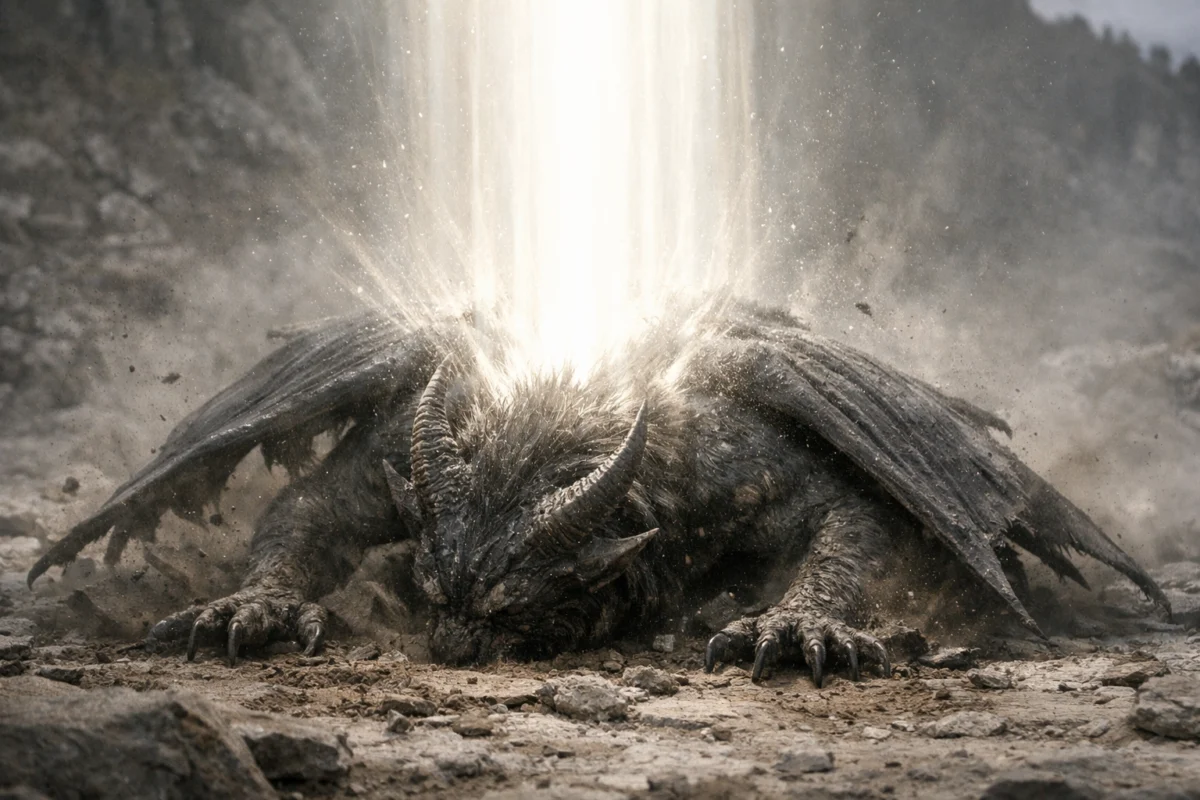
Descriptions vary between a water demon, a great serpent, and a dragon. Wings are especially uncertain: one account is summarized as describing flight, while later regional material presents Sussex knuckers as wingless.
Neither form should be treated as the creature’s universally accepted appearance.
Lyminster is the principal setting, but Knucker Hole traditions also occur elsewhere in West Sussex, including Binsted and Sompting. Together, these associations make the Knucker both a distinctive village monster and part of a wider regional vocabulary for uncanny pools and their imagined inhabitants.
History/Origin
The origins of the Lyminster legend cannot be dated securely. Its recorded history must be distinguished from the history of its name: an older word for a water-being does not establish when Sussex storytellers first connected a dragon with the local Knucker Hole.
Samuel Evershed’s “Legend of the Dragon-Slayer of Lyminster,” published in Sussex Archaeological Collections in 1866, is identified by the modern reference Draconika as the earliest printed account it located. This is a qualified bibliographical finding, not proof that no earlier record exists or that the tale originated in that year.
The detailed contents of Evershed’s article are not independently established here from its original text. Later summaries therefore need to retain their own attribution, particularly where they supply a description or ending.
A nineteenth-century publication date is a reference point in the legend’s documentation, not a date for every element now associated with it.
The tradition survives through more than one narrative route. The University of Chichester’s regional folklore map, drawing on work associated with Jacqueline Simpson and Chris Hare, preserves both the knight-and-princess version and the poisoned-pie version.
Their coexistence demonstrates variation, but does not establish which ending developed first.
The contrast between those endings also prevents a simple division between an allegedly original heroic tale and a later comic replacement. The recorded summaries establish different plots; they do not supply a dependable sequence of revision.
Neither the social status of the slayer nor the tone of an ending can, by itself, date a version.
The geographical evidence extends beyond Lyminster. Binsted’s community history preserves its own Knucker Hole lore, while regional accounts include Sompting.
These places broaden the setting of the tradition without proving that every pool shared the same monster description, dragon-slayer, or sequence of events.
This distinction between regional usage and local narrative is important. A recurring name can connect several water features within Sussex folklore while the best-known story remains attached to one village.
The regional pattern and the particular Lyminster adventure are related evidence, but they are not interchangeable histories.
Name Meaning
The name is commonly connected with an older English term for a water-monster. World Wide Words explains “knucker” as a modern spelling of Old English nicor, also giving the form nicker, for an imaginary being that lived in water.
This reported derivation fits the Knucker’s best-established role: a supernatural inhabitant of a pool. Its linguistic meaning concerns a water-being broadly, however, rather than specifying the complete anatomy or behavior of the dragon encountered in the later Lyminster stories.
Word history and story history remain separate questions. The proposed Old English connection does not date the poisoned pie, the wandering knight, or the association with Lyminster to the Anglo-Saxon period.
Those particular narrative elements require evidence of their own transmission and recording.
“Knucker Hole” is the place-name through which the creature’s association with water becomes locally specific. Its application to pools in several Sussex communities is important evidence of regional usage, but it does not by itself reveal when each place acquired its accompanying legend.
Appearance
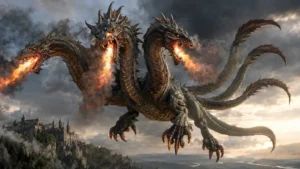
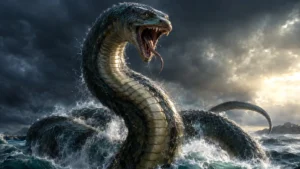
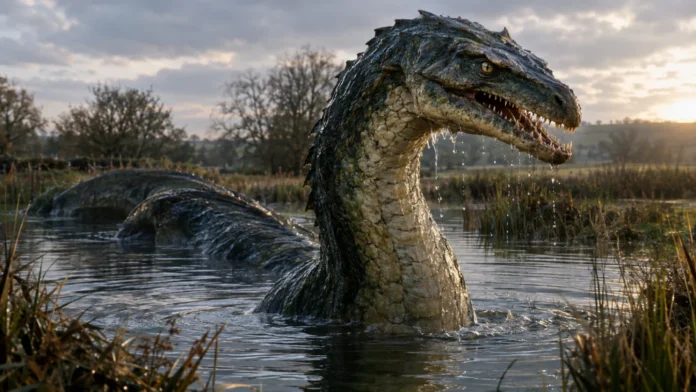
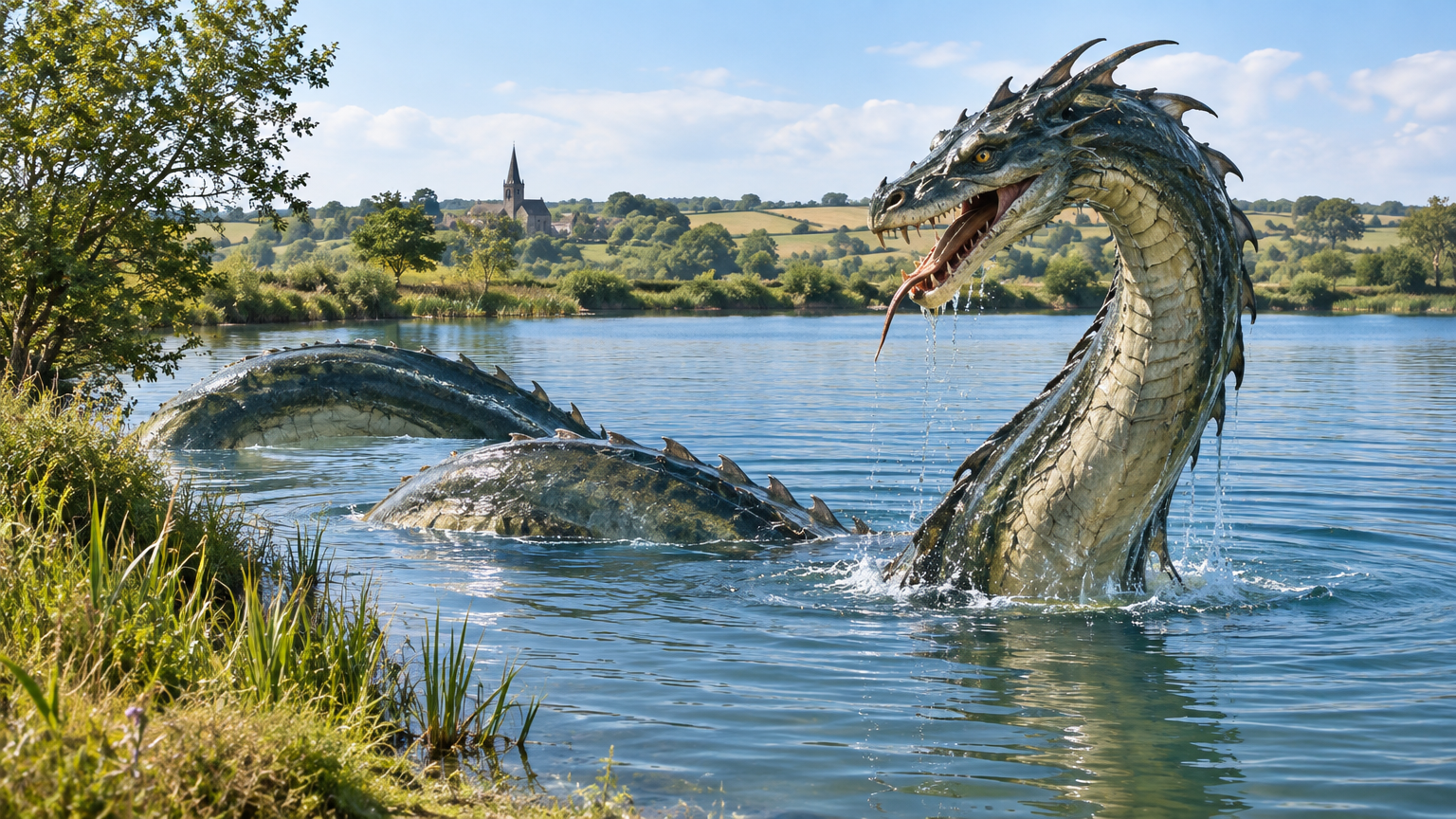
The most secure description is a water-associated dragon or serpentine monster. Available accounts use overlapping labels, including dragon, water demon, and great serpent.
These terms establish its monstrous character and aquatic setting more clearly than they establish a precise or uniform physical form.
The principal disagreement concerns flight. Draconika’s summary of Evershed’s 1866 account reports a flying creature, whereas a later Sussex regional account describes knuckers as wingless water dragons.
The difference is substantive: a wingless form is documented, but cannot simply replace the competing version.
Conversely, reported flight should not become a license to supply an elaborate winged anatomy. The available evidence does not settle wing shape, limb count, or other structural details.
A description can acknowledge the flying variant without presenting a fully standardized dragon body as traditional.
The pool is a more consistent identifying feature than the creature’s silhouette. At Lyminster, the Knucker belongs to the deep water of the Knucker Hole.
The relationship between monster and dwelling remains central whether a particular retelling emphasizes a serpent, a dragon, or a less precisely defined water-being.
This makes setting especially important to its visual identity. A dragon beside the named Sussex pool expresses something securely associated with the tradition; an isolated dragon with an elaborate collection of horns, wings, and armor may communicate little that is specifically Knucker-like.
The landscape supplies recognition where anatomy remains variable.
The available accounts do not establish a standard color, measured size, scale pattern, or arrangement of horns. Fire-breathing and treasure-guarding are likewise not secure defining traits here.
The recognizable Sussex figure is the monster of the named pool, not a collection of generic fantasy-dragon features.
Background Story
The Knucker’s background is primarily local and environmental. A deep pool supplies the dwelling, while the surrounding community supplies the setting for its defeat.
This anchors the legend in an identifiable Sussex landscape rather than in a developed account of the creature’s birth, ancestry, or supernatural kingdom.
The water is consequently more than scenery. The name of the dwelling helps identify the monster, and the monster gives that dwelling an extraordinary significance.
This reciprocal relationship between place and inhabitant explains why the pool remains central even when the identity of the slayer and the outcome of his victory change.
The wider distribution of Knucker Hole lore places Lyminster within a regional pattern. Binsted’s community account preserves another association between a pond and local legend.
Such connections show how a named water feature could remain a focus for storytelling beyond the best-known dragon-slaying account.
The two Lyminster endings give this landscape different narrative meanings. In the version preserved on the regional folklore map, a wandering knight kills the dragon and is offered the king’s daughter.
The episode frames the monster’s defeat through martial achievement and a royal reward.
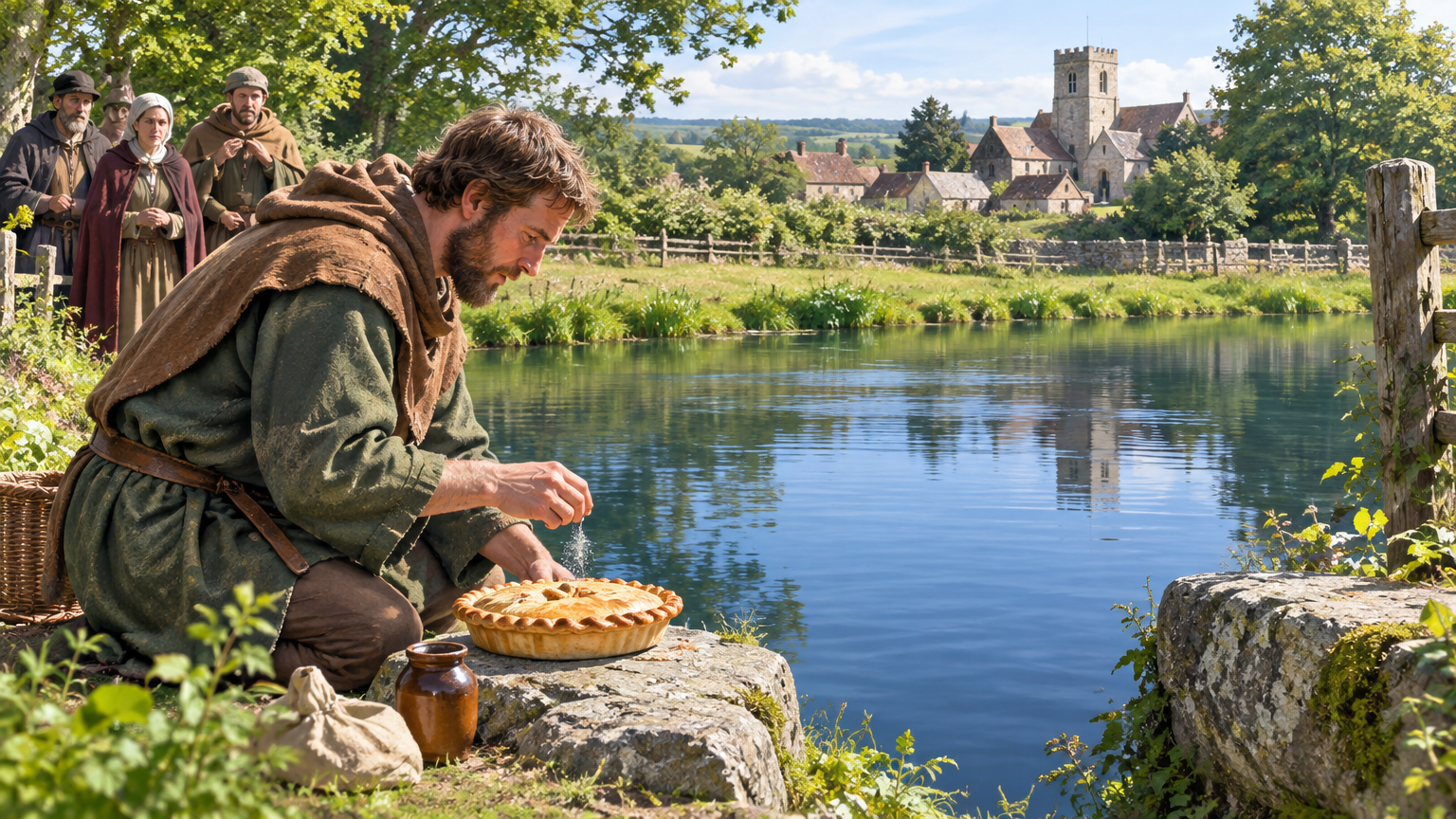
The poisoned-pie version instead centers on Jim Pulk, also recorded as Puttock. He prepares a poisonous pie for the dragon, but poison remaining on his hand later kills him when he wipes his mouth after a celebratory pint.
Victory therefore ends in an accidental second death.
These contrasting endings should remain separate rather than becoming stages in one composite adventure. One celebrates the successful outsider; the other gives a local victory a tragic reversal.
Their differences help explain the Knucker’s narrative flexibility, while leaving the actual process by which the versions developed uncertain.
Famous Folklore Stories
The Lyminster tradition preserves two contrasting ways of defeating the Knucker: a knight’s victory and a local man’s poisoned pie. These are alternative versions, not successive episodes.
The descriptive headings below distinguish their plots rather than claim authenticated traditional story titles.
The wandering knight’s victory
In one recorded version, a wandering knight kills the dragon associated with Lyminster’s Knucker Hole. A king then offers his daughter to the victor in gratitude.
The surviving regional summary establishes those actions without providing a detailed account of the combat.
This ending gives the story a recognizably heroic structure: an outsider defeats a monster and receives a royal reward. The king’s daughter belongs to that particular version; she should not be inserted into the poisoned-pie narrative or treated as a historical person.
The regional folklore map records the offer of the king’s daughter, but that brief wording does not establish a wedding or the knight’s subsequent life. The meaningful contrast is with the other ending, where defeating the creature brings its slayer no lasting happiness.
Jim Pulk/Puttock and the poisoned pie
In the other documented version, the dragon’s opponent is a local man named Jim Pulk or Puttock. He bakes a poisonous pie for the creature, killing it through food rather than a knight’s direct attack.
The variation in his name should remain visible.

The victory has a fatal aftermath. Some poison remains on Jim’s hand, and after a celebratory pint he wipes his mouth.
He dies from the poison that had enabled him to kill the dragon, turning an apparent triumph into an accidental self-destruction.
This sequence is explicitly preserved in the regional folklore map. Its distinctive feature is the reversal after success: the monster is dead, but its slayer is not safe.
The celebration belongs between the successful poisoning and Jim’s death, making the final accident especially pointed.
The account does not identify a particular poison or supply enough detail for a medical reconstruction. Its narrative force lies in the connection between the weapon and the fatal residue: the same substance brings down both the monster and the man who devised its defeat.
Cultural Impact
The Knucker’s clearest cultural importance lies in its attachment to a named landscape feature. At Lyminster, the Knucker Hole connects a local pond with a memorable monster story.
The setting gives the legend a geographical anchor beyond the changing details of its hero.
The two endings also offer different models of achievement. The knight wins through heroic action and receives royal recognition; Jim succeeds through an indirect method but dies afterward.
Read together, they show how one local monster could accommodate both heroic adventure and grim irony.
The difference in their protagonists also changes the scale of the story. A wandering knight and a royal reward place the encounter within a heroic world, while a local man, a pie, and a celebratory pint bring the action into more familiar social surroundings.
This is a contrast within the recorded storytelling, not evidence that either version describes an actual event.
The wider Sussex tradition is not confined to Lyminster. Local heritage accounts preserve Knucker Hole associations at Binsted and Sompting, with further place traditions around Worthing and Lancing.
These connections establish a regional distribution, not proof that every location shared an identical dragon story.
Modern preservation includes the University of Chichester’s regional folklore map, based on work associated with Jacqueline Simpson and Chris Hare. By presenting the knight and poisoned-pie versions separately, it retains variation that a single streamlined retelling could easily erase.
Mapping also keeps the relationship between tale and place visible. Rather than reducing the Knucker to a free-floating dragon character, regional presentation situates it among named Sussex locations.
Community history at Binsted adds another local perspective, allowing neighboring pond traditions to retain their own associations.
Regional newspaper coverage also keeps the subject accessible outside specialist folklore studies. These uses demonstrate continuing heritage interest, rather than continuous belief in an actual dragon or an unchanged ancient tradition.
Similar Beasts
Grindylow
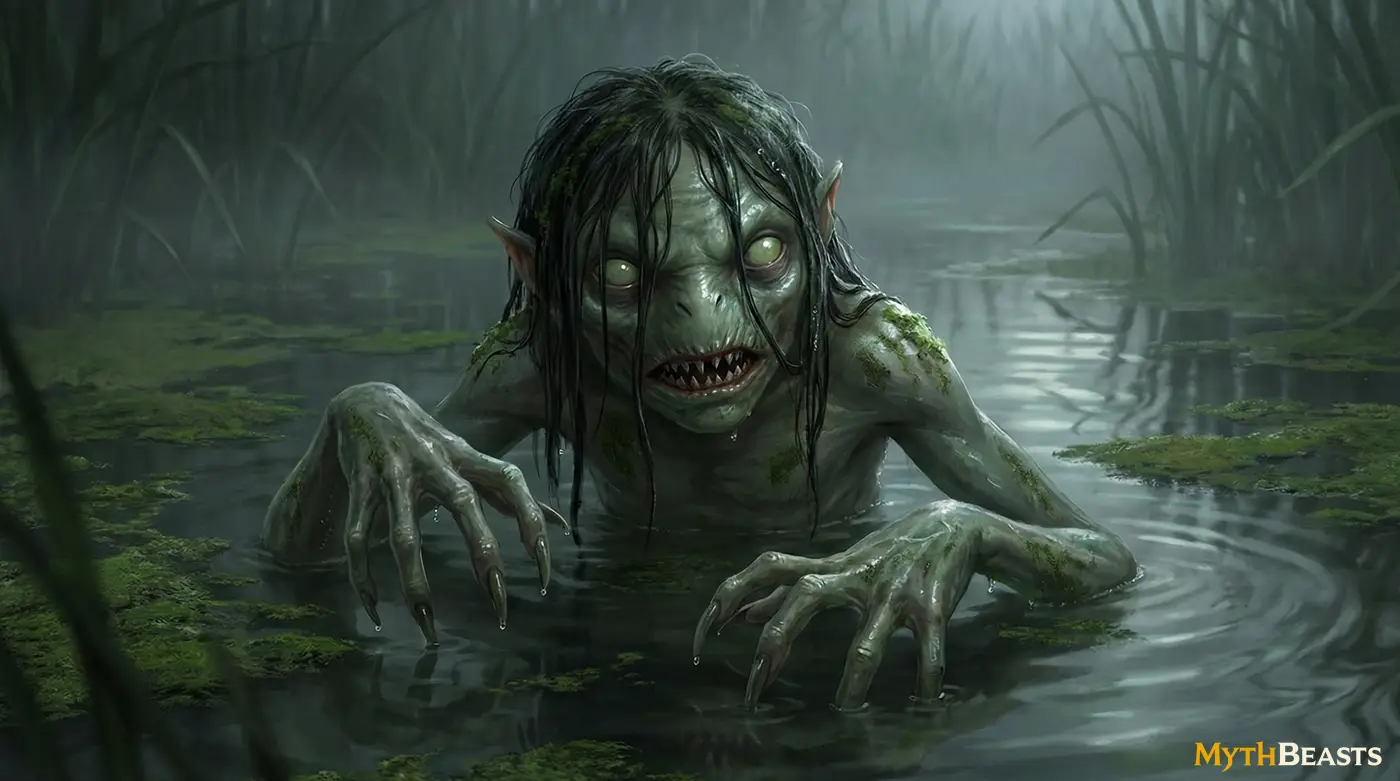
The Grindylow is an English water spirit associated with marshes and ponds. Stories portray it as a dangerous presence that seizes children approaching the water’s edge, rather than as a dragon.
Its strongest parallel with the Knucker is the threatening pond habitat. Child-snatching, however, should not be transferred to the Knucker without evidence from a specific version.
Wyvern

The Mordiford Wyvern belongs to a distinct Herefordshire dragon tradition. It provides a comparison with another locally associated monster rather than another name for the Sussex Knucker.
The parallel concerns the attachment of a dragon story to a particular place. It does not settle the Knucker’s anatomy: Sussex accounts do not consistently establish wings or a particular number of limbs.
Uktena

The Uktena is a powerful serpent in Cherokee tradition, distinguished by horns and a magical crystal on its forehead. Its stories connect encounters with danger and extraordinary power.
Both beings invite comparison as formidable serpentine monsters. Their cultural settings and distinctive attributes remain separate, and the Uktena’s crystal is not a Knucker feature.
Nyami Nyami

Nyami Nyami is a river deity in Tonga tradition, associated with the Zambezi. Descriptions combine a snake’s body with a fish’s head and connect the deity with protection and destructive river power.
The comparison concerns water and serpentine form, not equivalent religious status. The Knucker’s local monster tales do not establish it as a deity or protective river guardian.
Religion/Ritual
No specific Knucker ceremony, offering, taboo, or act of worship is established by the available evidence. The poisoned pie is a means of killing the dragon within a story, not evidence of ritual feeding.
A water-associated monster need not have been a worshipped being.
Scientific or Rational Explanations
A useful distinction separates the physical pond from its legendary inhabitant. Binsted community history reports that a farmer pumped out the local pond and saw its bottom, after which it refilled.
This is a reported observation about Binsted, not a measurement of Lyminster’s Knucker Hole.
The pumping account challenges a literal interpretation of bottomlessness at that particular pond. Refilling indicates a continuing water supply, but the anecdote alone does not establish its mechanism.
It is therefore more useful as local environmental testimony than as a complete hydrological explanation.
Two different questions are involved: whether a pond has a physically observable bottom, and why a community tells stories about it. An observation can address the first without resolving the second.
The farmer’s reported experience does not date the legend or explain the development of its dragon-slaying plot.
Persistent water and uncertain depth offer a plausible setting for monster lore. A pond whose bottom is normally hidden can invite speculation about what occupies it.
That is an environmental interpretation of the tradition, not a documented account of how the Knucker story first arose.
The contrasting endings also support a narrative rather than zoological reading. A knight rewarded with a king’s daughter and a pie-maker killed by residual poison organize events around victory, reward, and reversal.
Neither version functions as a detailed observation of an identifiable animal.
Descriptions of the creature likewise vary between a water monster, serpent, and dragon, with disagreement over flight or wings. Such variation makes a precise animal identification poorly grounded.
The record is better suited to studying local storytelling and landscape associations than reconstructing a biological species.
Modern Cultural References
The Knucker King, King Trewoofe, novel
King Trewoofe is a dragonesque Knucker who helps healer Avice care for two infants; after he is wounded, she takes him into her home.
The novel presents him as a dragon shifter and the romantic lead.
Source
Conclusion
The Knucker is best understood as a water-associated dragon or monster rooted in the Sussex landscape, especially the Knucker Hole at Lyminster. Its identity rests more securely on that relationship between creature, pond, and community than on any fixed anatomy.
Accounts differ over wings, while the knight’s victory and the poisoned-pie episode offer separate ways of ending the danger.
The legend connects an ordinary local place with extraordinary danger and memorable acts of resistance. Its proposed connection with Old English nicor adds linguistic interest without establishing an Anglo-Saxon date for the Sussex narrative.
Local heritage accounts and regional folklore mapping preserve this place-bound tradition while retaining its contrasting endings and unresolved history.
Further Reading
A Map of Folklore of the South Downs, Hampshire and Sussex, Chi
A version recorded in regional folklore sources says a wandering knight kills the Knucker and is rewarded with the king’s daughter.
The earliest printed account is identified as an 1866 article, but its readable original text was unavailable.
(chi.ac.uk)
Legend of the Dragon-Slayer of Lyminster, Sussex Archaeological Collections
Identified by a modern reference as the earliest printed Lyminster account; the original readable text was not retrieved here.
(sussexarch.org.uk)