Where Did Vikings Believe They Went After Death?
Imagine a Viking warrior falling in battle. As his companions carry his body away, an unseen valkyrie may already have chosen him for Odin’s hall.
There, he could join an army of dead warriors who fight, feast, and prepare for the world’s final battle.
But what happened to a fisherman lost at sea, a mother who died from illness, or an elderly farmer surrounded by his family? Did they enter another realm, remain near their ancestors, or continue existing somewhere within the landscape they knew?
Norse mythology offers several fascinating possibilities. Valhalla belongs to Odin’s chosen warriors, while the goddess Freyja receives others in Fólkvangr.
Hel rules a distant realm of the dead. Rán claims victims of the sea, and some Icelandic legends imagine deceased relatives gathering inside mountains.
These destinations do not form a perfectly organized system. The surviving stories sometimes contradict one another, and different communities maintained different traditions.
Yet together they reveal something far more interesting than a single Viking heaven: a world where death could mean honor, separation, reunion, danger, or transformation.
Valhalla: The Hall Where Warriors Prepare for Ragnarök
Valhalla, or Valhöll in Old Norse, remains the most famous destination in Viking mythology. The name means “Hall of the Slain.
” Odin presides over this enormous dwelling, where the warriors known as einherjar gather after their deaths.
Valkyries, whose name means “choosers of the slain,” play an important role in deciding the fate of warriors. Their connection with battle extends beyond collecting the dead.
In Norse poetry, these supernatural women also influence combat and participate in the dangerous affairs of gods and heroes.
The hall itself resembles an immense warrior’s stronghold. The Eddic poem Grímnismál describes its roof as shining with shields, while spears form part of its structure.
Its many entrances suggest a place capable of accommodating an extraordinary military force.
Life inside Valhalla offers neither peaceful retirement nor ordinary immortality. According to Snorri Sturluson’s Gylfaginning, the warriors put on their armor every day, enter the courtyard, and fight one another.
They fall in combat, yet return to feast together afterward.

Their meals are equally remarkable. The cook Andhrímnir prepares the boar Sæhrímnir, which provides meat for the warriors and becomes whole again.
Mead flows from the goat Heiðrún, while the valkyries serve the assembled company.
These endless battles and feasts have a serious purpose. Odin gathers warriors because Ragnarök approaches, the catastrophic struggle in which gods, giants, and monstrous beings will confront one another.
The dead become an army preparing for a conflict that threatens the entire cosmos.
Valhalla therefore promises honor, but not necessarily everlasting safety. Even the gods face destruction during Ragnarök. Its inhabitants possess a privileged place beside Odin, yet their final destiny remains bound to a world that cannot escape catastrophe.
Fólkvangr: The Other Hall of the Battle-Slain
Odin does not receive every warrior who dies in battle. One of the most frequently overlooked passages in Norse mythology gives the goddess Freyja an equally significant claim upon the fallen.
In Grímnismál, stanza 14, Freyja rules Fólkvangr, a name commonly interpreted as “Field of the People” or “Field of the Host.” The poem explains that she chooses half the battle-slain, while Odin receives the other half.
“The half of the dead each day does she choose, And half does Othin have.” (Grímnismál, stanza 14, translated by Henry Adams Bellows, 1923.)
Snorri later names Freyja’s hall Sessrúmnir, describing it as a magnificent dwelling. Beyond these details, however, the surviving texts reveal surprisingly little about what happens to the dead who enter her domain.
We do not know whether they train like Odin’s warriors, enjoy a peaceful existence, or serve another purpose entirely. Inventing a complete system would conceal the mystery that makes Fólkvangr important.
Its existence challenges the familiar idea that every honored fighter automatically enters Valhalla. It also shows Freyja, often remembered primarily for love and fertility, exercising authority over death and the aftermath of warfare.
Hel: The Realm Where Even a God Cannot Easily Escape
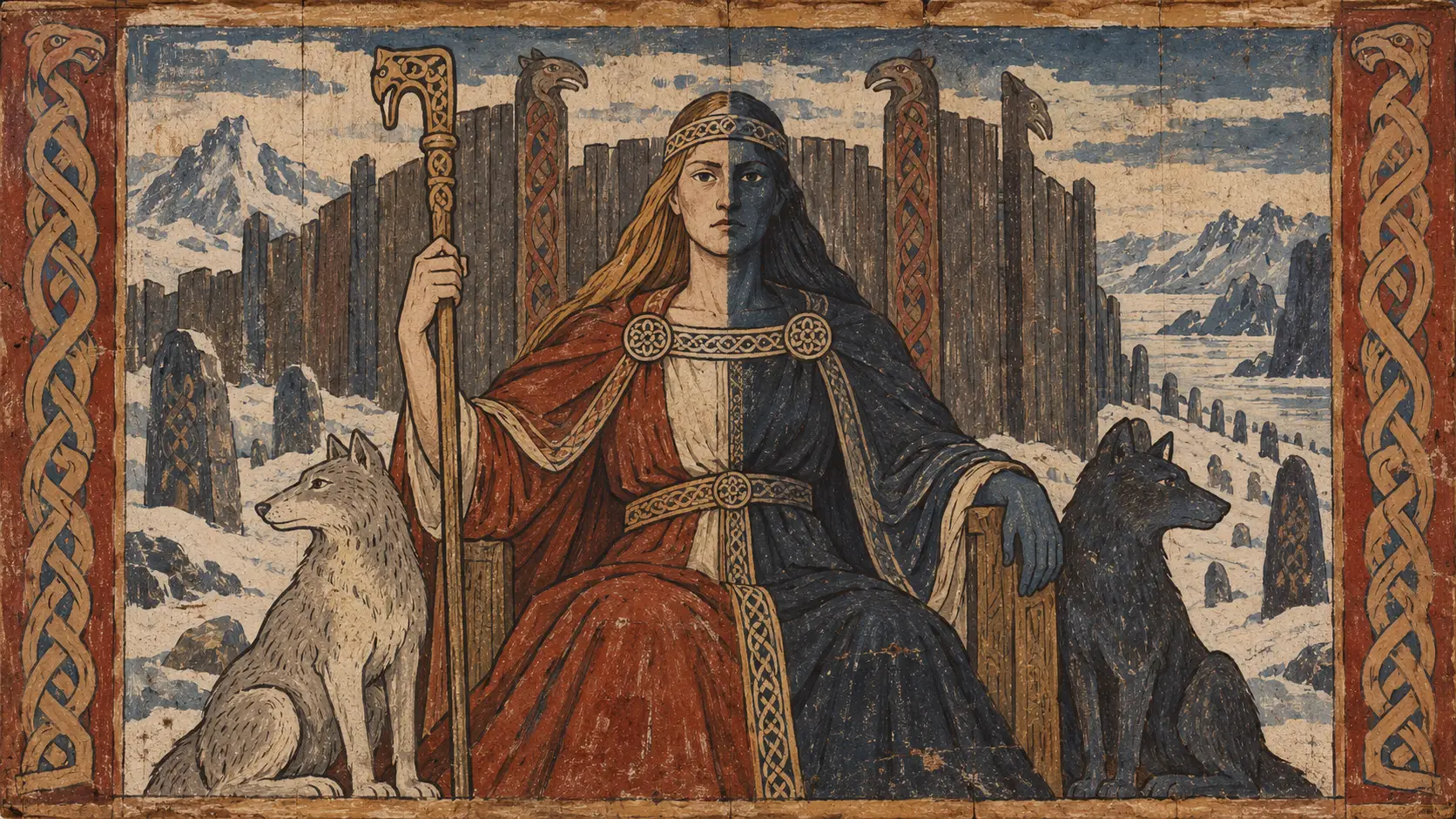
The name Hel refers both to a supernatural ruler and to the realm associated with her. In Snorri’s Gylfaginning, she is the daughter of Loki and the giantess Angrboða, and Odin grants her authority over those who die from sickness or old age.
Snorri describes her as having a body partly flesh-colored and partly dark. Her distant dwelling contains imposing walls and a hall whose furnishings bear ominous names associated with hunger, illness, and suffering.
Yet Hel should not simply be equated with the Christian Hell. Norse texts do not consistently present it as a punishment reserved for evil people.
Its inhabitants include figures whose deaths have nothing to do with moral wrongdoing.
The most powerful example is Baldr, the beloved son of Odin and Frigg. His death follows Loki’s manipulation of Höðr, Baldr’s blind brother, who unknowingly strikes him with mistletoe.
The gods mourn a figure whose loss appears almost unimaginable.
Hermóðr’s Journey Into the Land of the Dead
Frigg seeks someone willing to travel to Hel and negotiate Baldr’s return. Hermóðr accepts the mission and rides Odin’s extraordinary eight-legged horse, Sleipnir, through darkness for nine nights.
Eventually, he reaches the river Gjöll and its shining bridge. The guardian Móðguðr questions him because he does not possess the appearance of a dead person.
She directs him toward the realm where Baldr has already arrived.
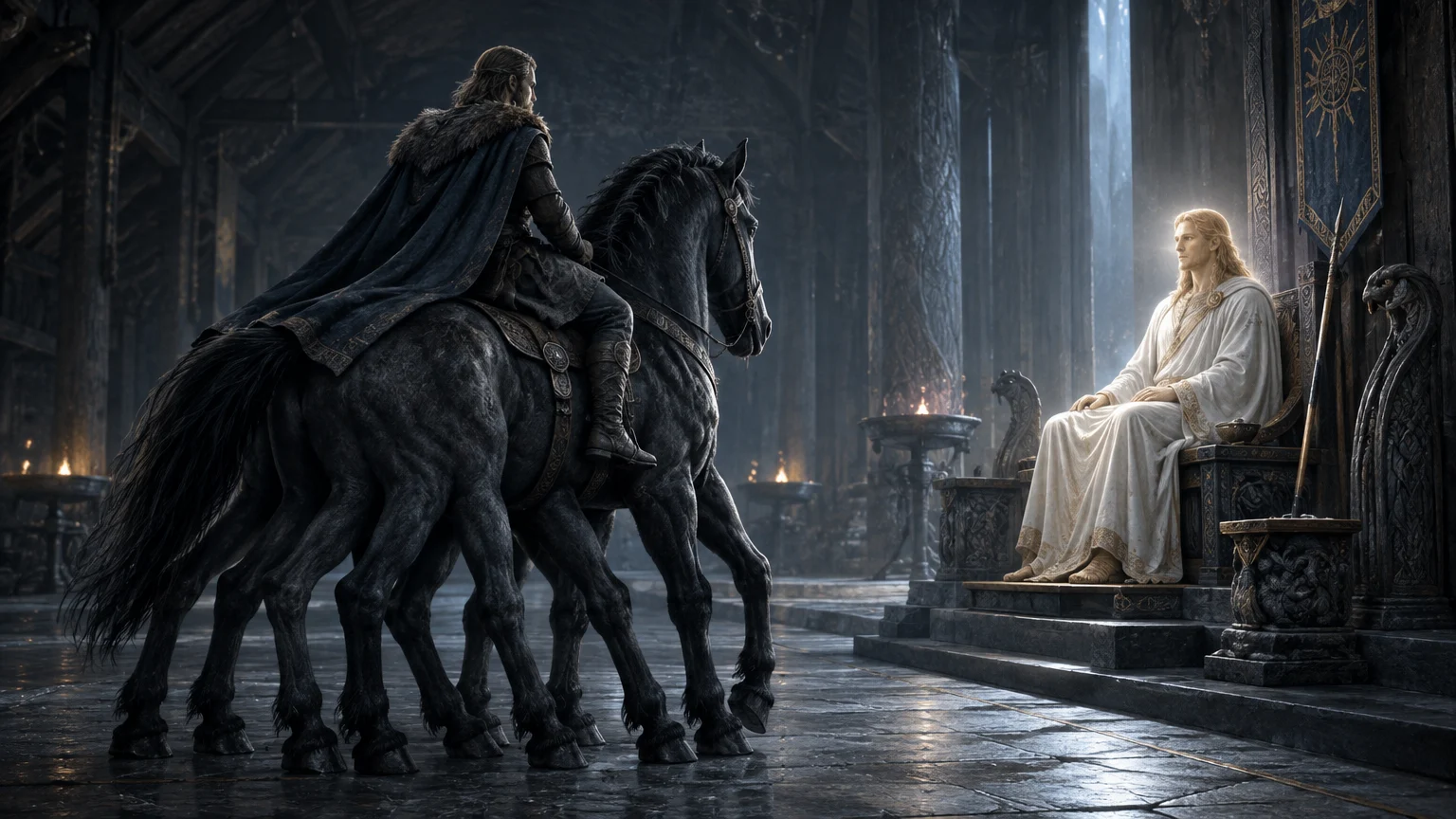
Hermóðr finds Baldr seated in a hall and spends the night there. The following morning, he asks Hel to release him.
She agrees to a remarkable condition: everything in existence, living and lifeless alike, must weep for the fallen god.
The gods send messengers throughout the world. People, animals, stones, and other things join the mourning. But a giantess named Þökk refuses to shed a tear.
The condition remains unfulfilled, and Baldr cannot return.
Snorri suggests that Þökk was Loki in disguise. The story’s emotional force comes from its impossible bargain. Even the gods cannot reverse death through power alone, and the refusal of one being defeats the grief of an entire world.
Beyond the Gods: The Sea, the Mountains, and the Ancestors
Not every account places the dead in a distant hall ruled by a major deity. Icelandic sagas preserve stories in which the boundary between the living and the deceased lies much closer to home, sometimes within the mountains, farms, and waters that shaped everyday life.
Rán and the Dead Beneath the Waves
For people whose survival depended upon ships, the sea held an especially powerful place in stories about death. Rán, the wife of the sea-being Ægir, appears in Norse tradition as a supernatural figure associated with drowning.
Her net symbolizes the sea’s ability to seize human lives. Some later narratives imagine drowned people entering her possession, giving a supernatural identity to one of the most unpredictable dangers faced by fishing communities, merchants, and seafarers.
An extraordinary episode in Eyrbyggja saga, Chapter 54, describes a man named Þóroddr and his companions drowning during a sea voyage. Their bodies are not recovered, leaving their relatives to prepare a funeral feast without them.
That evening, the drowned men enter the hall, dripping wet, and sit beside the fire. The saga explains that their appearance initially seems favorable: people regarded drowned men attending their own funeral feast as a sign that Rán had received them well.
The encounter soon becomes troubling. The dead return repeatedly, occupying the household’s fires and frightening its inhabitants. What begins as an apparently favorable sign develops into an increasingly disturbing haunting that threatens the ordinary routines of the living.
Helgafell: The Mountain That Welcomed the Dead
Another passage from Eyrbyggja saga, Chapter 11, connects the afterlife with Helgafell, a sacred mountain in western Iceland. After Þorsteinn Þorskabítr disappears during a fishing expedition, a shepherd witnesses something extraordinary while searching for sheep near the mountain.
Its northern side opens, revealing bright fires and a great gathering. The shepherd hears drinking horns and voices welcoming Þorsteinn and his companions.
The dead man receives a place of honor opposite his father, who had died before him.
The scene imagines death as a reunion with earlier generations. Unlike a remote kingdom reached through supernatural rivers, this gathering exists within a familiar landscape where the deceased retain their relationships and places within the family.
The mountain episode also connects with an earlier statement in the saga: Þórólfr Mostrarskegg, Þorsteinn’s father, had regarded Helgafell as sacred and expected his family to enter it after death.
Both episodes come from a saga probably composed in Christian Iceland during the thirteenth century. They preserve literary representations of older traditions, but cannot establish how widely Viking-Age communities shared these specific beliefs.
Their importance lies in presenting another possibility within Norse storytelling: the dead could remain connected to the places and people they had known, rather than disappearing permanently into an inaccessible supernatural kingdom.
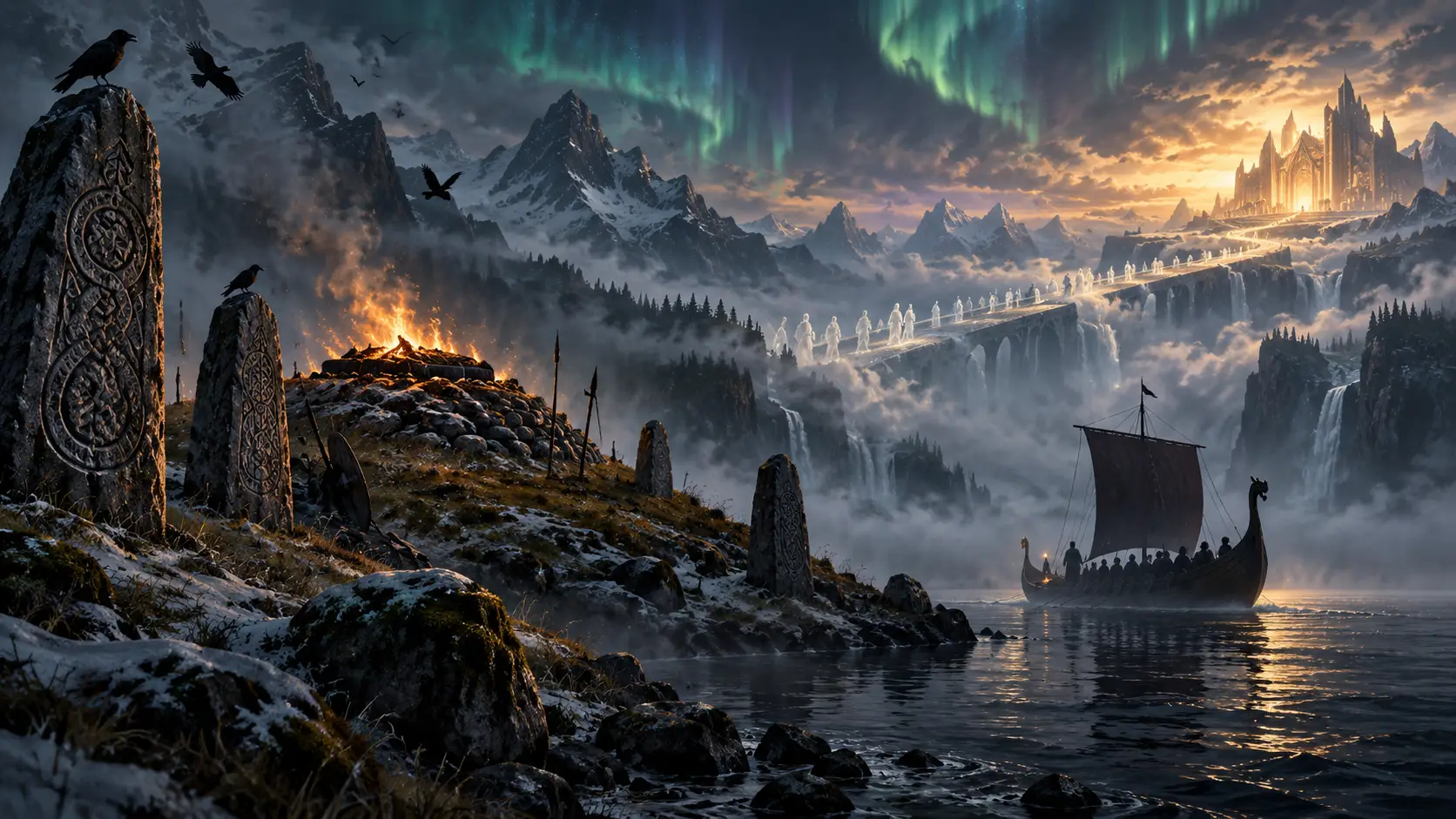
When the Dead Returned to the Living
Norse stories do not always keep the deceased within their appointed realms. Some return because of love, while others become dangerous presences that threaten the households they once inhabited.
Helgi and Sigrún: One Night Beyond Death
In Helgakviða Hundingsbana II, the warrior Helgi dies after a violent family conflict. His grieving lover Sigrún struggles with the loss, until a servant witnesses the impossible: Helgi and his companions riding toward his burial mound.
The servant informs Sigrún, who rushes to the mound and encounters the dead warrior. His hair carries the frost of death, and his body still shows the marks of his violent end.
Instead of fleeing, she embraces him.
Helgi tells her that her tears have fallen upon him like cold drops of blood. Their meeting joins love and suffering in a way that makes his supernatural return both comforting and painful.
Sigrún nevertheless prepares a bed beside him.
“Here a bed I have made for thee, Helgi, To rest thee from care.” (Helgakviða Hundingsbana II, stanza 46, translated by Henry Adams Bellows, 1923.)
They spend the night together, but their reunion cannot last. Before dawn, Helgi announces that he must ride away, and the narrative places his departure on the route back toward Odin’s hall, Valhalla.
Sigrún returns the following evening, hoping to see him again. Helgi never appears. The poem leaves her waiting for a reunion that does not happen, although its closing prose introduces the separate possibility of the lovers being reborn.
This tale offers an unusually intimate vision of the Norse dead. A warrior associated with Odin’s afterlife can briefly revisit the living, but even their extraordinary love cannot prevent another separation.
The Draugr: A Dead Person Who Refuses to Rest
Other Icelandic narratives portray the returning dead as frightening physical beings. These revenants, commonly discussed under the term draugar, may preserve their bodies, possess extraordinary strength, and attack people or animals.
In Eyrbyggja saga, Þórólfr Twist-Foot becomes a dangerous presence after death. His haunting spreads fear across neighboring farms, and his actions reportedly kill livestock and people.
Eventually, the living must confront the problem of his continuing existence.
The saga describes attempts to contain him, followed by the eventual removal and burning of his body. Unlike Helgi’s tender reunion, this story turns the return of the dead into a threat demanding physical action.
These accounts survive in medieval literature written after Iceland’s conversion to Christianity. They show how later storytellers represented the restless dead, although they cannot tell us how frequently people experienced or accepted such encounters during the Viking Age.
Together, the stories reveal opposing possibilities. The dead might briefly return to someone they love, or become hostile beings who disturb an entire community.
Their continued presence does not fit neatly into an afterlife divided into permanently inaccessible destinations.
Viking Funerals: Preparing Someone for the Unknown
What people actually did when someone died gives the mythology a different kind of depth. Viking-Age graves contain evidence of cremation, burial, monumental mounds, animals, weapons, tools, jewelry, and household possessions.
These practices differed between places, periods, and social groups. Not everyone received an elaborate ship burial, and the familiar image of a burning Viking vessel represents only a small part of the surviving evidence.
Oseberg: A Ship Burial for Two Women
In Norway, the Oseberg ship became the burial place of two women in 834 CE. Its exceptionally rich contents include carved sleighs, a wagon, textiles, beds, kitchen equipment, food, and animals.
The objects suggest that at least one woman held an important political or religious position. They also demonstrate that exceptionally elaborate funerary treatment did not belong exclusively to male warriors.
The precise meaning of every object remains uncertain, but the scale of the preparations reveals the importance of funerals as public statements of wealth, relationships, memory, and expectations surrounding death.
At Gokstad, another magnificent ship burial included shields, horses, dogs, smaller boats, and equipment for everyday activities. Such finds show the significance of material possessions in elite funerals without establishing a particular supernatural destination.
Kirke Hyllinge: The Funerals of Ordinary People
The cemetery at Kirke Hyllinge, on the Danish island of Zealand, presents a different picture. Archaeological investigations in 2000 uncovered 28 graves dating approximately from the middle of the eighth century to the beginning of the tenth.
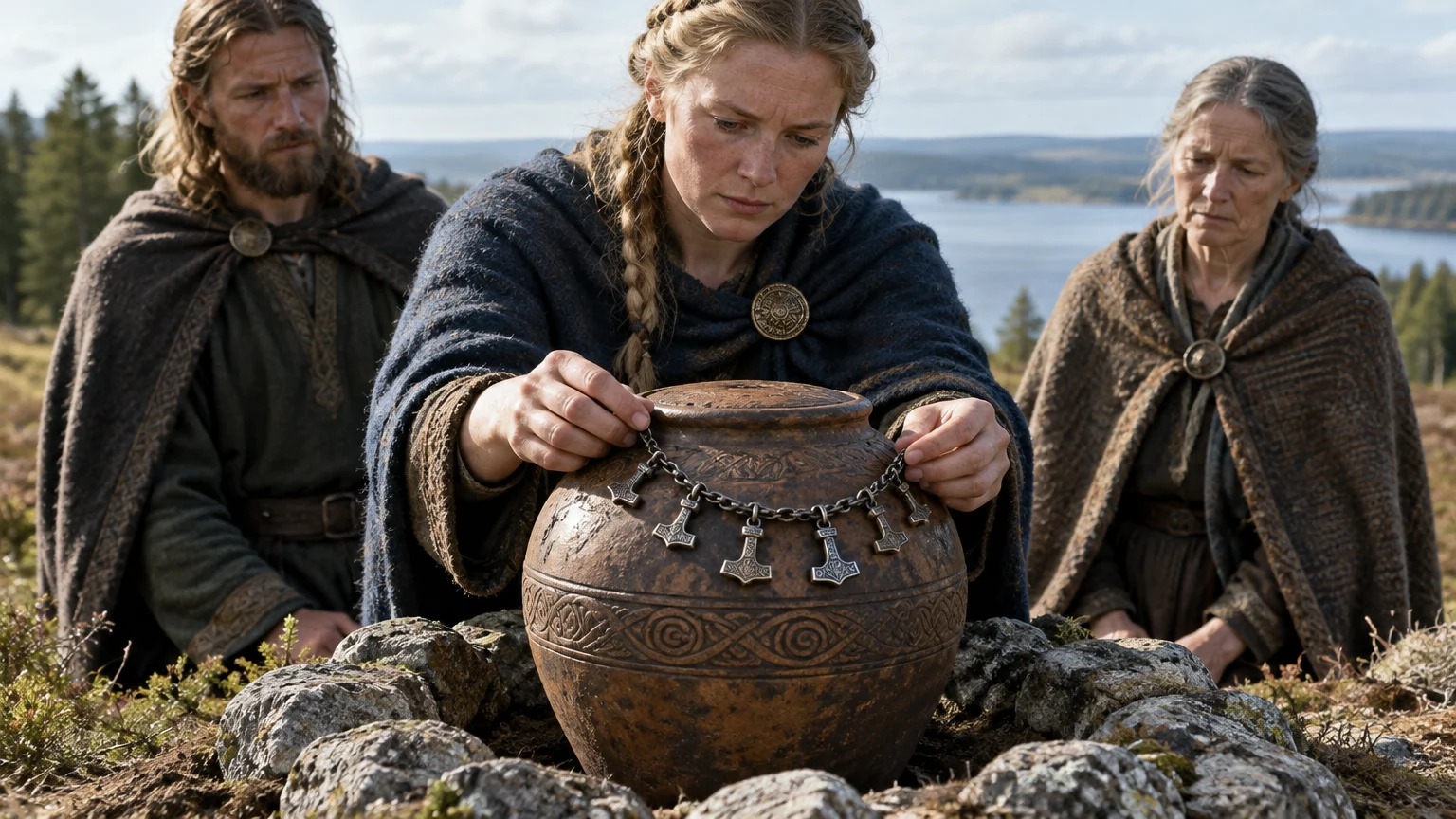
Unlike the extraordinary wealth of Oseberg and Gokstad, these burials contained more modest possessions. Archaeologists found knives, spindle whorls, whetstones, belt buckles, glass beads, and animal bones that probably represent food offerings.
These discoveries give a clearer picture of how ordinary communities treated their dead. Personal equipment, clothing accessories, and food could accompany burial without the spectacular ships, monumental architecture, or valuable furnishings associated with powerful individuals.
The contrast matters because archaeological visibility often favors wealth. Exceptional burials attract attention, but simpler graves provide essential evidence about the wider population whose beliefs and expectations seldom appear directly in surviving literature.
Grave goods can reveal social relationships, funerary customs, and the possessions mourners considered significant. They cannot, by themselves, establish whether a person was expected to enter Valhalla, Hel, an ancestral mountain, or another imagined destination.
Ibn Faḍlān’s Witnessed Ship Funeral
One of the most vivid descriptions of a Viking-Age funeral comes from Aḥmad ibn Faḍlān, a Muslim traveler who encountered the Rus near the Volga River in 922. These people belonged to Scandinavian-connected trading networks, although their customs cannot represent every Norse community.
He describes the funeral of a wealthy leader whose body initially rests in a temporary grave while preparations continue. The mourners eventually place him aboard a ship with clothing, weapons, food, and slaughtered animals.
The ceremony also involves an enslaved young woman who is killed and burned with the deceased. Ibn Faḍlān records her reported visions of dead relatives and a beautiful green paradise, as conveyed through an interpreter.
His account is especially valuable because it describes a ceremony he witnessed rather than a purely mythological episode. Yet his position as an outsider, his reliance on interpreters, and the exceptional status of the deceased require careful interpretation.
Taken together, Oseberg, Gokstad, Kirke Hyllinge, and the Rus funeral reveal striking differences in wealth, ceremony, and treatment of the dead. They provide evidence of funerary behavior, not a universal map of where Vikings believed their souls would travel.
Ragnarök: When Even the Afterlife Faces an Ending
The Viking otherworld becomes stranger when viewed against Ragnarök. Odin’s warriors prepare for a battle in which even their divine leader is destined to fall.
Their continuing existence serves a future struggle rather than guaranteeing endless security.
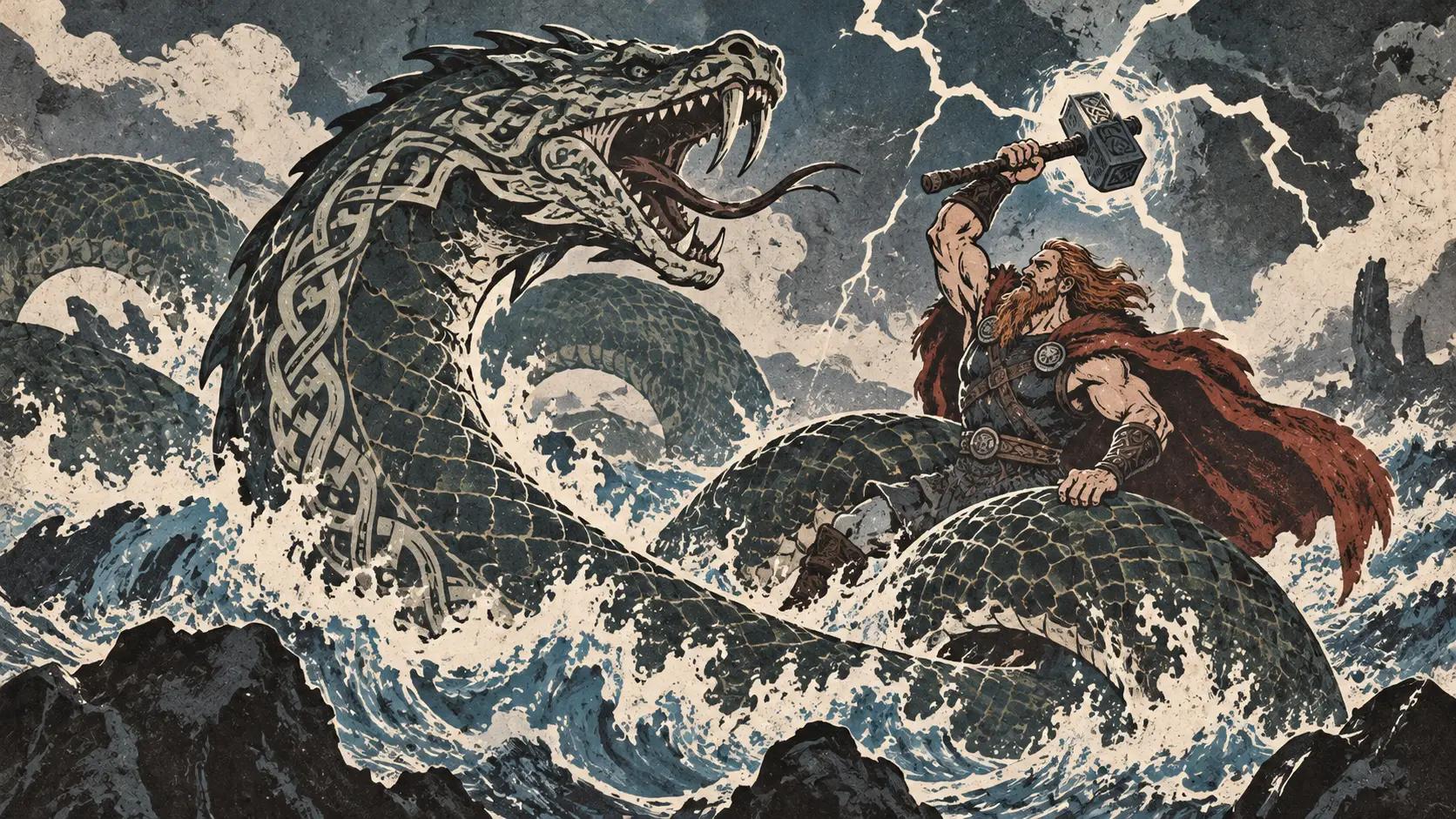
According to Völuspá, the world suffers destruction before emerging renewed. The earth rises again from the sea, fields grow without cultivation, and some surviving gods gather in a restored landscape.
Among the returning figures are Baldr and Höðr, the brothers whose earlier story ended in death and tragedy. They appear together in the renewed world, suggesting a future beyond the losses that once seemed irreversible.
Norse poetry also imagines another form of survival that requires no supernatural journey. In Hávamál, the speaker recognizes that people, animals, and possessions eventually perish, while the reputation someone leaves behind may continue.
“One thing I know that never dies, The fame of a dead man’s deeds.” (Hávamál, translated by Henry Adams Bellows, 1923.)
This idea gives remembrance an importance that stands alongside the supernatural afterlife. A person might disappear from the physical world, yet remain present through descendants, stories, monuments, and the judgment of those who remember their deeds.
From Norse Gods to Christian Heaven
During the Viking Age, Christianity gradually spread through Scandinavian communities already connected to Christian kingdoms through trade, travel, marriage, and political relationships. The transition happened over generations rather than through one sudden abandonment of older customs.
Around 965, Harald Bluetooth raised the famous Jelling rune stone announcing that he had made the Danes Christian. The monument expresses royal authority, but religious practices continued changing across different regions long after such declarations.
Christian burial introduced new expectations involving consecrated ground, churches, prayers, and salvation. These practices increasingly reshaped how families treated their dead, even as older stories survived through poetry and later Icelandic writings.
The transformation also affected how Norse mythology reached future generations. Christian-era scribes preserved many of the stories that now define our understanding of Odin, Hel, and Valhalla.
Their manuscripts remain indispensable, although they reflect transmission and interpretation rather than an unchanged Viking-era doctrine.
Conclusion: More Than One Journey Beyond Death
The Viking afterlife was never simply a choice between Valhalla and oblivion. Norse stories imagined warrior halls, a goddess who selected the slain, a remote kingdom ruled by Hel, the dangerous embrace of the sea, and mountains where ancestors gathered.
These possibilities offered different answers to the experience of losing someone. Some promised glory, others reunion or continued existence, while frightening tales warned that death might not prevent a hostile person from causing harm.
Perhaps the most enduring idea comes from the relationship between the living and the dead. Even where mythology describes distant realms, funerals, monuments, stories, and family memory keep the deceased connected to the world they left behind.
Further Reading
The Poetic Edda: Grímnismál, translated by Henry Adams Bellows, 1923.
Primary literary source describing Odin’s Valhalla, supernatural dwellings, and Freyja’s share of the battle-slain.
Source: https://en.wikisource.org/wiki/The_Poetic_Edda_(tr._Bellows)/Grimnismol
The Prose Edda: Gylfaginning by Snorri Sturluson, translated by Arthur Gilchrist Brodeur, 1916.
Medieval account of Hel, Baldr’s death, Hermóðr’s journey, Valhalla, and Norse cosmology.
Source: https://en.wikisource.org/wiki/The_Prose_Edda_(1916_translation_by_Arthur_Gilchrist_Brodeur)/Gylfaginning
The Poetic Edda: Helgakviða Hundingsbana II, translated by Henry Adams Bellows, 1923.
The original poem describing Helgi’s return from Valhalla and his emotional reunion with Sigrún.
Source: https://en.wikisource.org/wiki/The_Poetic_Edda_(tr._Bellows)/Helgakvitha_Hundingsbana_II
The Saga of the Ere-Dwellers (Eyrbyggja saga), translated by William Morris and Eiríkr Magnússon, 1892.
Thirteenth-century Icelandic saga preserving ancestral mountain traditions, drowned revenants, supernatural disturbances, and returning dead.
Source: https://www.sagadb.org/files/pdf/eyrbyggja_saga.en.pdf
By the River Volga, 922: Viking Ship-Burial by Aḥmad ibn Faḍlān, from the Risāla, tenth century, Ethics of Suicide Digital Archive.
Translated primary-source excerpt describing the funeral of a Rus leader, including ship cremation and human sacrifice.
Source: https://ethicsofsuicide.lib.utah.edu/selections/ibn-fadlan/
The Oseberg Ship: Get to Know the World’s Best-Preserved Viking Ship by Museum of the Viking Age, September 30, 2026.
Documents the burial of two women in 834 CE and the extraordinary collection of accompanying objects.
Source: https://www.vikingtidsmuseet.no/english/viking-age/viking-ships/the-oseberg-ship.html
The Gokstad Ship: Fast, Sturdy and Built for the Open Sea by Museum of the Viking Age, October 5, 2026.
Describes an elite Norwegian ship burial, its construction, the deceased individual, and the associated grave goods.
Source: https://www.vikingtidsmuseet.no/english/viking-age/viking-ships/the-gokstad-ship.html
Kirke Hyllinge by Viking Ship Museum, Roskilde, publication date unspecified.
Describes the excavation of 28 Viking-Age graves and the more modest equipment accompanying ordinary burials.
Source: https://www.vikingeskibsmuseet.dk/en/professions/education/viking-knowledge/the-viking-age-geography/runesten-og-billedsten/spor-efter-vikingerne/kirke-hyllinge
The Poetic Edda: Völuspá, translated by Henry Adams Bellows, 1923.
Describes Ragnarök, the destruction and renewal of the world, and the return of Baldr and Höðr.
Source: https://en.wikisource.org/wiki/The_Poetic_Edda_(tr._Bellows)/Voluspo
Christianity Comes to Denmark by National Museum of Denmark, publication date unspecified.
Explains missionary activity, Harald Bluetooth’s conversion claim, and the gradual transformation of religious practices.
Source: https://en.natmus.dk/historical-knowledge/denmark/prehistoric-period-until-1050-ad/the-viking-age/religion-magic-death-and-rituals/christianity-comes-to-denmark/
Valhalla: A Phantasm by Timothy Liam Waters and Basil Arnould Price, postmedieval, August 4, 2026.
Scholarly examination of Valhalla’s historically varied meanings, its elite associations, and its later ideological reinterpretations.
Source: https://link.springer.com/article/10.1057/s41280-026-00419-z