
When the Human Body Becomes Impossible
Imagine meeting a person whose face is completely blank, only to discover that their eyes are hidden on their feet. Or encountering a headless stranger whose face stares back from the middle of their chest.
These are not creatures invented for modern horror films. They belong to centuries of mythology, folklore, extraordinary travel accounts, and supernatural storytelling.
Ancient writers described one-legged people who sheltered beneath their enormous feet, mouthless inhabitants who survived by smelling flowers, and strangers whose ears were large enough to wrap around their bodies.
Other traditions imagined even more disturbing forms. Six-armed giants attacked Greek heroes, a skinless human-horse creature haunted the Orkney coastline, and a mysterious Japanese woman concealed a second mouth beneath her hair.
What makes these beings fascinating is not simply their appearance. Each impossible body creates its own strange existence, abilities, dangers, and limitations.
Some of these figures were portrayed as monsters. Others were imagined as entire communities of people living beyond the familiar world.
Their stories reveal as much about the fears and curiosity of those who described them as about the creatures themselves.
From the ancient Mediterranean to southern Africa, northern Scotland, and Japan, these are some of folklore’s most extraordinary humanoid beings, creatures that challenge the very idea of what a human body can be.
Monopod – the One-Footed Sunshade

The Monopod’s strangest feature is not merely its single leg. It is the enormous foot that turns its own body into a sunshade.
- Identity: Monopod, “one-footed”; also called Sciapod, “shadow-footed.”
- Tradition: Greek and Roman accounts of distant peoples, later inherited by medieval European encyclopedias.
- Appearance: A humanlike figure with one leg and an exceptionally broad foot.
- Attributed abilities: Remarkable hopping speed and sheltering beneath its raised foot.
In Book Seven of his Natural History, the first-century Roman author Pliny the Elder reports these people while drawing on the Greek writer Ctesias.
Pliny’s account places them in India. Despite having only one leg, they supposedly leap with astonishing agility, overturning the reader’s expectations of bodily limitation.
When the heat becomes oppressive, they lie on their backs and lift their foot overhead. The improbable limb becomes a portable canopy.
This is geographical marvel-literature, not evidence that such people existed. Its imagined inhabitants made distant countries seem places where ordinary human anatomy followed unfamiliar rules.
The setting also changed. In his seventh-century Etymologies, Isidore of Seville places the Sciapods in Ethiopia, preserving their speed and peculiar shade-making posture.
That relocation matters: the figure belonged to a traveling literary tradition, not one consistently documented local belief or a single, fixed mythology.
Blemmyes – Faces on Their Chests
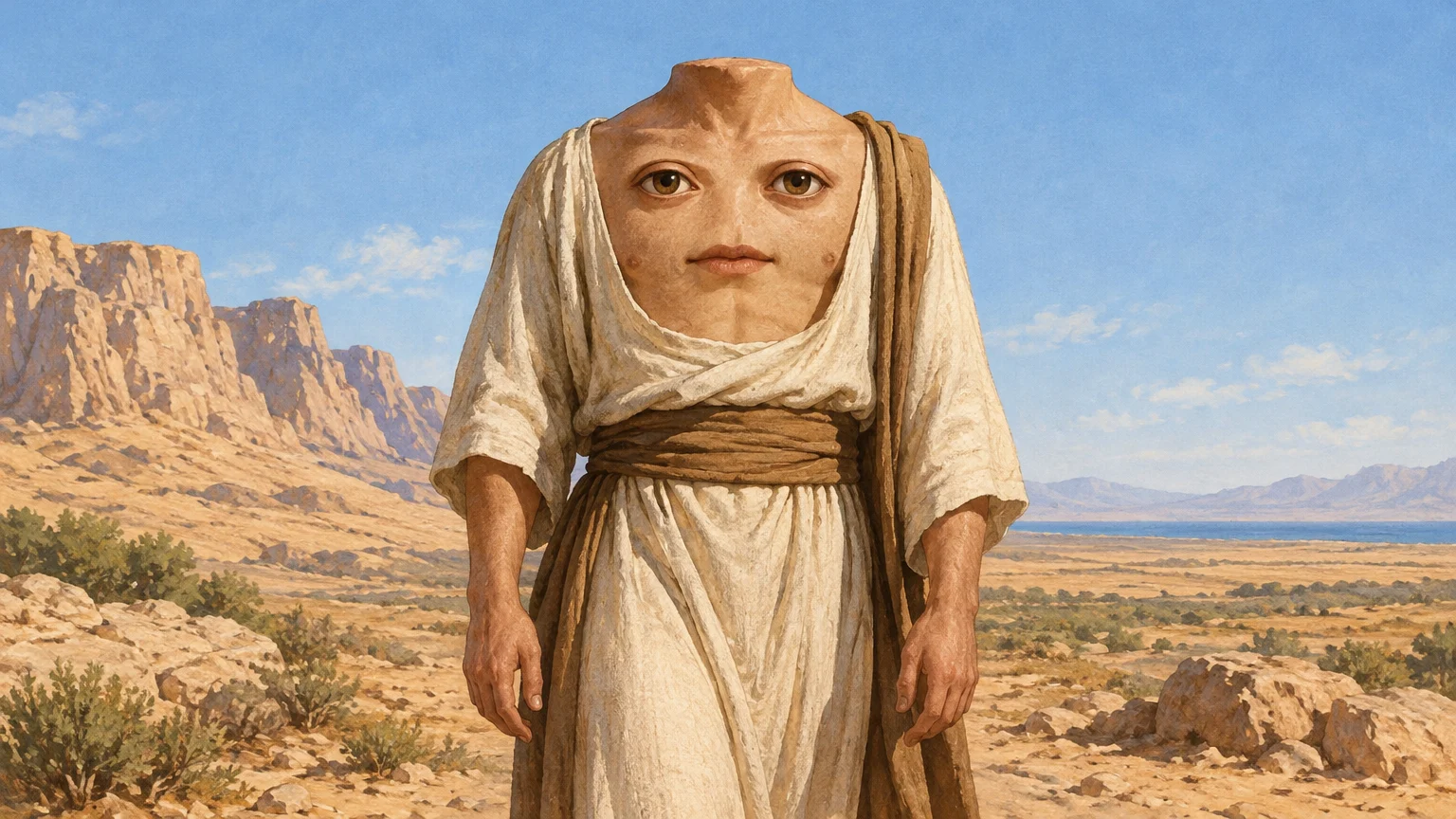
For the legendary Blemmyes, the unnerving detail is not a severed head. Nothing is missing: the face simply occupies the chest.
- Identity: Blemmyes, imagined headless people in classical geographical writing and medieval European marvel traditions.
- Period: Attested in Roman literature by the first century CE; repeated in medieval encyclopedias.
- Abilities: No special supernatural powers in the accounts discussed here. Their extraordinary feature is anatomical, not magical.
In Natural History, Book 5, Pliny the Elder reports that the Blemmyes supposedly lack heads, with mouths and eyes attached to their breasts.
His wording presents a reported marvel, not an eyewitness encounter. Nevertheless, an encyclopedia gave this startling body a place within descriptions of the world.
Writing in the seventh century, Isidore of Seville repeats the chest-face description in Etymologies, Book 11, placing these imagined people in Libya.
He separately mentions other neckless people whose eyes occupy their shoulders. Such neighboring descriptions explain why headless figures should not receive one standardized anatomy.
The historical distinction matters: real Blemmyes inhabited northeastern Africa, particularly the Eastern Desert, and appear in Roman and late antique records.
Their existence does not authenticate the monstrous anatomy. Here, a real people’s name became attached to a literary image of distant human difference.
Gegenees – the Six-Armed Earthborn Giants
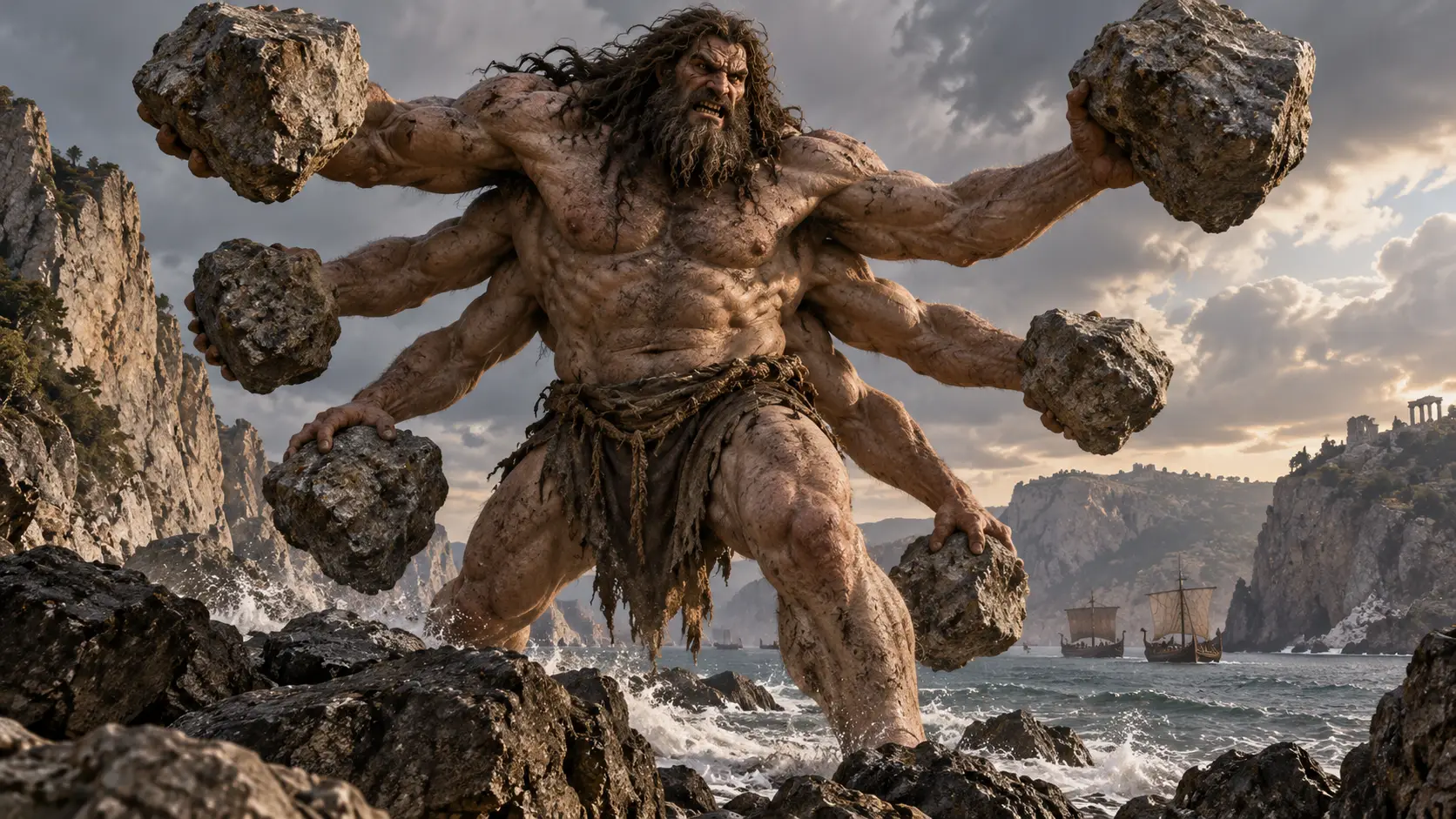
The Gegenees looked broadly human, but their bodies contained something impossible: six enormous arms, four of them emerging from their sides beneath the normal pair.
These were not many-armed gods holding sacred objects. They were monstrous Earthborn giants whose extraordinary limbs made them terrifying opponents.
Identity: Gegenees, meaning Earthborn, a group of monstrous giants in ancient Greek epic.
Origin and period: Greek mythology, specifically Apollonius Rhodius’s Argonautica, composed in the third century BCE. Their story is set near Cyzicus on the Propontis, in northwestern Anatolia.
Appearance: Huge humanoids with six powerful arms. Two extend from the shoulders, while four additional arms project from the flanks.
Attributed abilities: Exceptional physical strength and the ability to lift and throw immense stones. Their defining feature is anatomical rather than magical.
When Jason and the Argonauts reach the region of Cyzicus, they encounter the peaceful Doliones, whose king welcomes the travelers.
Nearby, however, dwell the Gegenees.
Apollonius describes them as formidable beings whose bodies astonish the surrounding inhabitants. Their extraordinary arms make them powerful enough to move enormous rocks.
While some Argonauts explore the mountains, the Gegenees descend toward the harbor and begin blocking its entrance with boulders.
Their aim is to trap the Argo, preventing the heroes from escaping by sea.
Heracles, who has remained near the ship, responds with his bow. The giants answer by hurling stones, but the other Argonauts return and join the battle.
The Earthborn monsters are defeated.
Their appearance is unusually specific. Apollonius does not merely call them giants or give them an enormous size. He describes the arrangement of six arms upon a recognizable human torso.
That detail gives the Gegenees their place among mythology’s strangest humanoid bodies. They remain human-shaped, but their anatomy permits an impossible multiplication of physical power.
Panotii – the Ear-Wrapped People
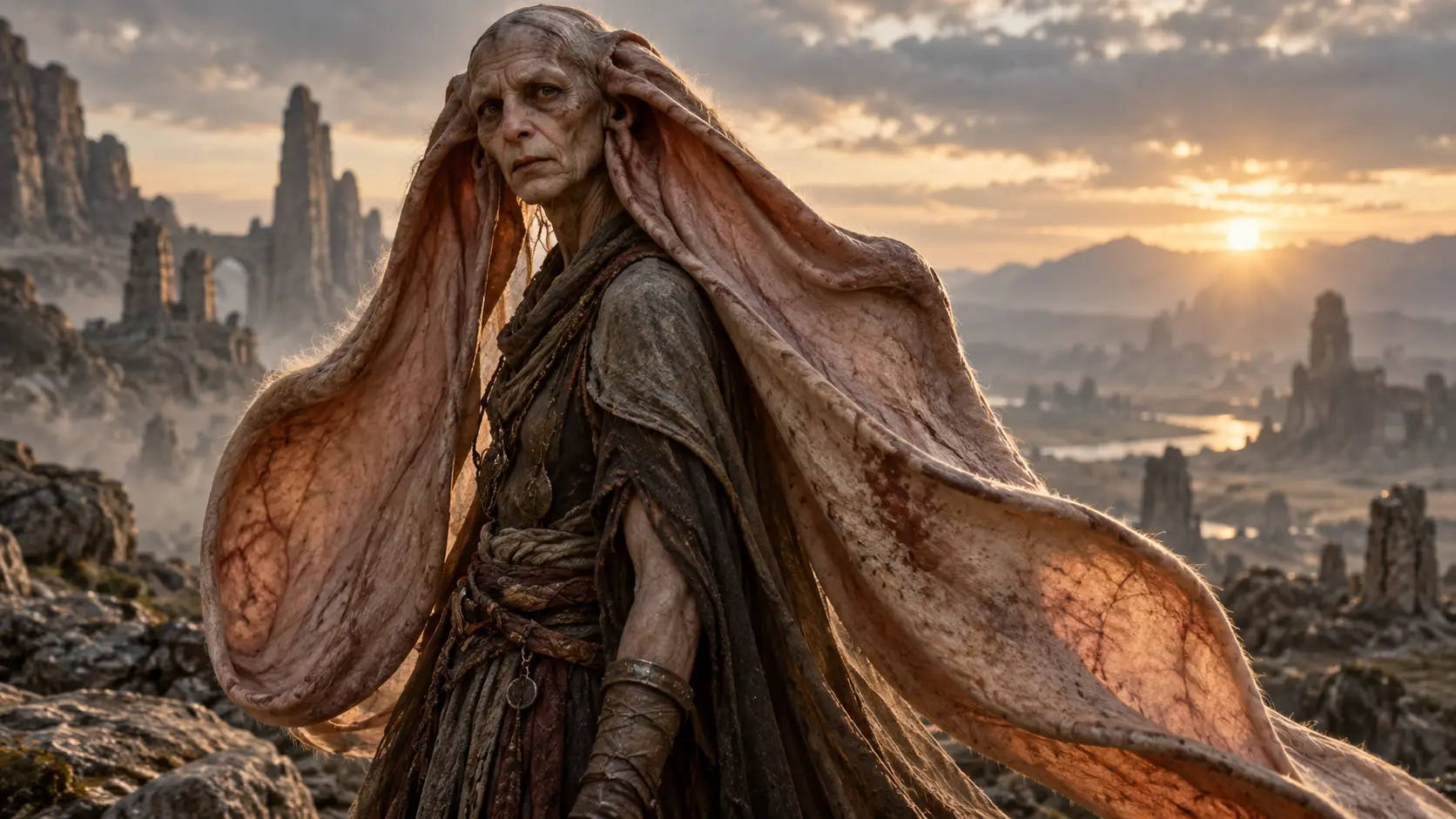
For the Panotii, the body supplies its own covering: ears so enormous that a person can wrap themselves inside them.
- Identity: Panotii, a legendary people distinguished by oversized ears, rather than a single named monster.
- Origin and period: Greco-Roman geographical marvel literature, recorded by Pliny the Elder in the first century CE and inherited by medieval encyclopedists.
- Defining ability: Using their ears as bodily coverings. This tradition does not, by itself, establish supernatural hearing or flight.
In Book 4 of his Natural History, Pliny places these extraordinary people among islands associated with the distant northern ocean.
He describes their immense ears as covering otherwise naked bodies. The unsettling detail is practical: human anatomy performs the work of clothing.
Unlike a predator’s claws, their distinguishing feature answers an ordinary human need. The marvel lies in imagining protection growing directly from the head.
Writing centuries later, Isidore of Seville includes them in Book 11 of his Etymologies, again explaining that their ears cover their bodies.
His explanation connects their name with Greek words for “all” and “ears,” making the extraordinary anatomy memorable through language as well as imagery.
These are literary descriptions of imagined distant humanity, not reliable ethnographic evidence that an ear-wrapped population existed.
Astomi – A Mouthless Life
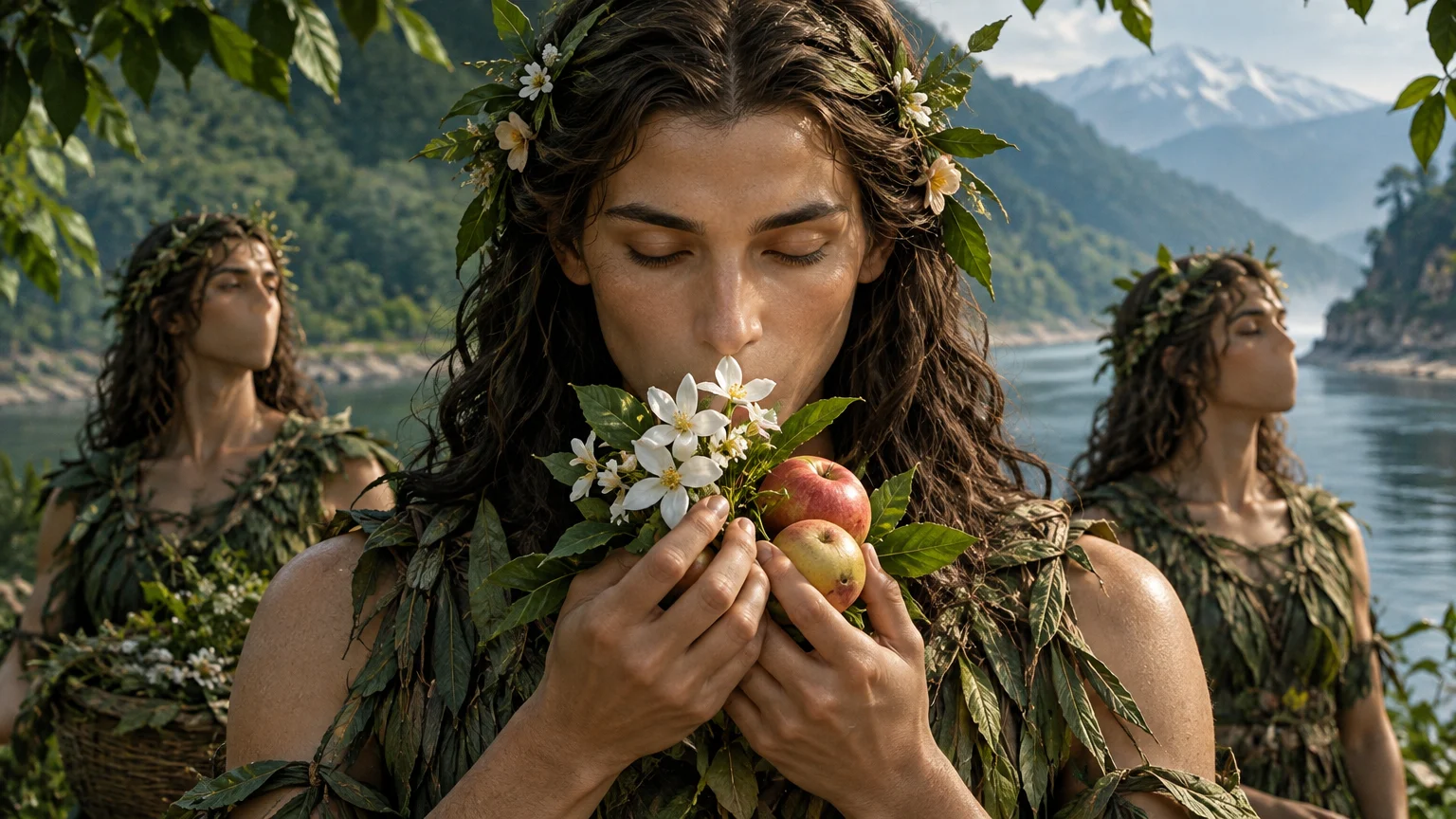
The Astomi take bodily strangeness somewhere quieter: a human face without a mouth, and a life supposedly sustained by fragrance instead of food.
- Identity: Astomi, a name meaning “mouthless,” imagined as a distant people rather than one individual monster.
- Origin and period: Greco-Roman geographical marvel literature; described in Pliny the Elder’s Natural History, Book 7, in the first century CE.
- Appearance: Mouthless, with hairy bodies; Pliny describes them wearing down gathered from leaves.
- Attributed abilities: Surviving without eating or drinking, nourished instead by breath and the scents entering their nostrils.
Pliny places them near the source of the Ganges. This is an outsider’s fabulous geography, not evidence of an actual Indian population or belief.
His account gives their impossible existence a practical routine: on longer journeys, they carry roots, flowers, and wild apples to provide sustaining smells.
That travelling provision makes the fantasy unusually intimate. Where another traveller packs bread, an Astomus needs something fragrant enough to keep breathing life.
Yet the same dependence creates a terrible vulnerability. According to Pliny, an overpoweringly offensive smell can readily kill them.
Their marvel is therefore also their danger: nourishment and death arrive through the same invisible channel, with no mouthful to swallow or refuse.
Cynocephali – the Dog-Headed Stranger
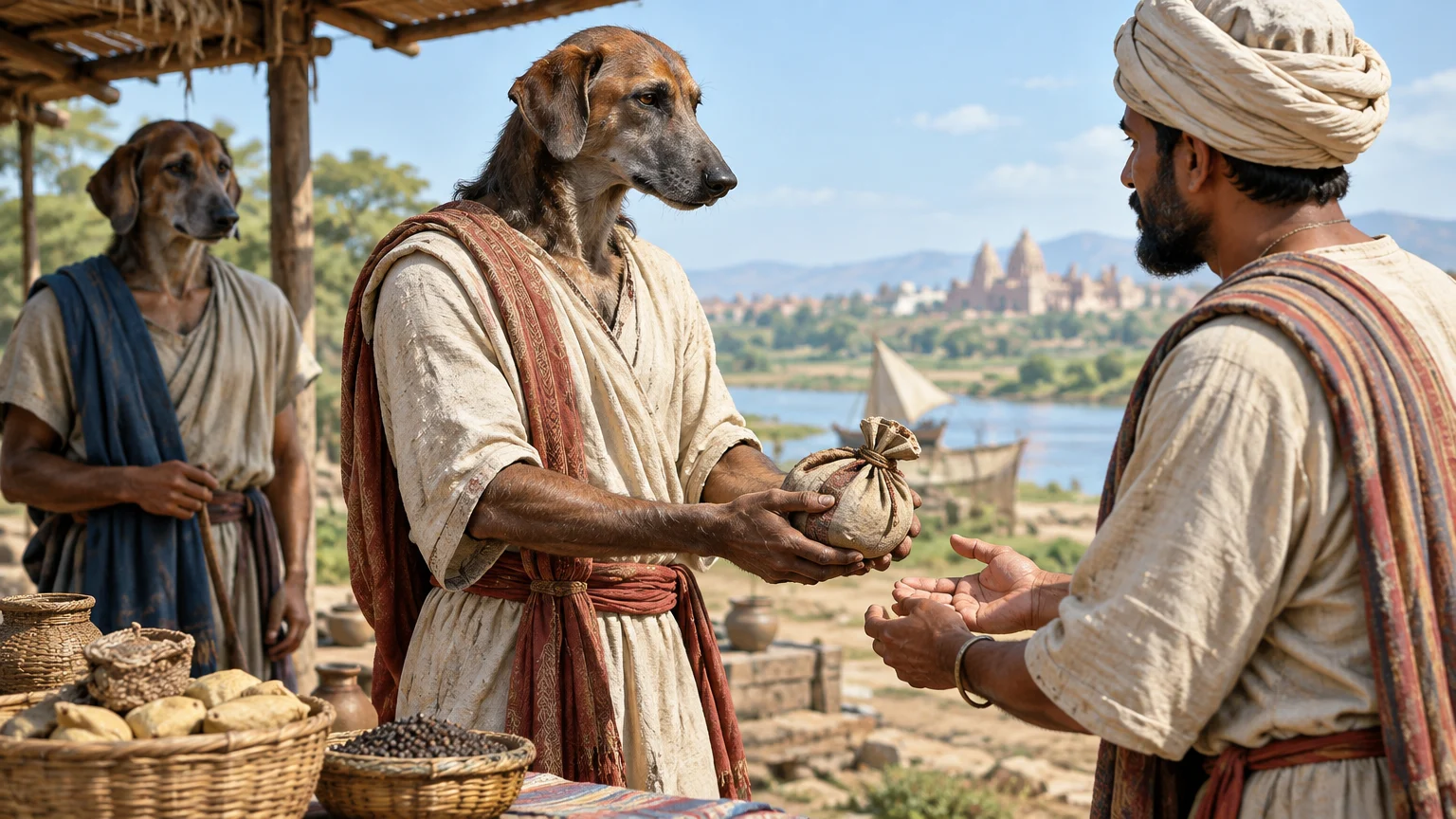
The Cynocephali make recognition uncomfortable: the body looks human, but above its shoulders sits a dog’s head, with a muzzle where speech should emerge.
Identity: Cynocephali means “dog-headed ones.” These are legendary peoples, not a single monster, and their appearance and conduct vary between traditions.
Origin and period: Greek accounts of distant lands, followed by Roman and medieval Christian discussions. Ctesias described them in his Indica, around 400 BCE.
- Appearance: Humanlike bodies with canine heads.
- Attributed abilities: Understanding human speech, hunting, and communicating through barking and gestures in Ctesias’s account.
- Behavior: Not universally savage; some accounts give them trade and organized social relationships.
Ctesias’s account, preserved through the ninth-century scholar Photius’s summary, places dog-headed people in India. This is Greek marvel-writing, not verified Indian ethnography.
His strangers cannot speak human languages, yet understand them. They exchange goods with other Indians, making their supposed animal voices compatible with economic cooperation.
That detail unsettles the easy monster label: a barking neighbor can still understand an agreement. The frightening face does not erase recognizable social behavior.
Augustine approached the problem differently in The City of God, Book 16, chapter 8, asking whether such reported peoples belonged within humanity.
His answer was conditional: any genuinely rational, mortal creature descended from Adam. Strange anatomy alone would not place someone outside the human family.
Aigamuxa – The Man-Eaters Whose Eyes Are on Their Feet
Imagine encountering a human-shaped creature with no eyes in its face. It seems to be watching you, but you cannot tell where its gaze is coming from.
The explanation is more disturbing than blindness: its eyes are located on its feet.
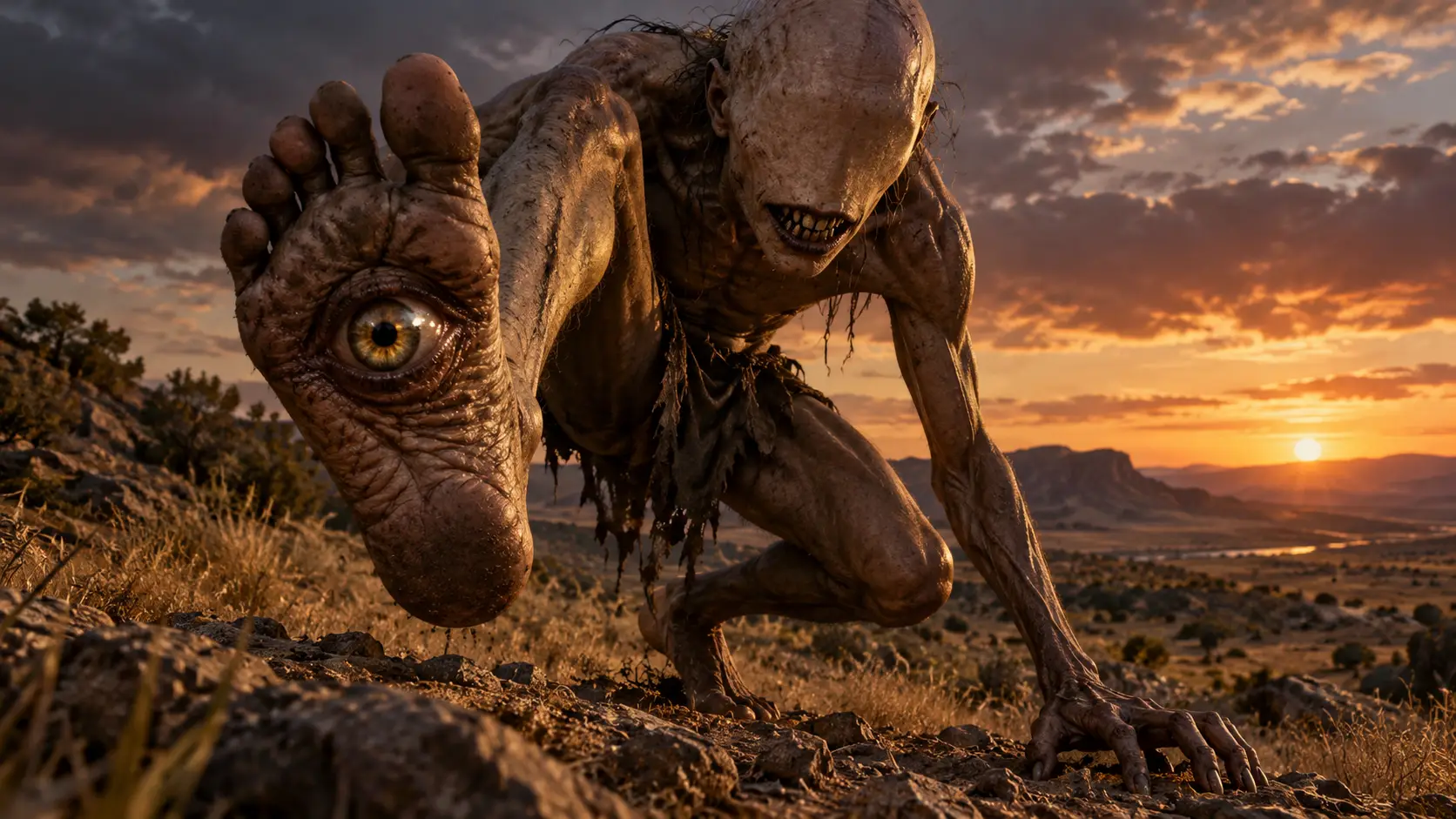
Identity: Aigamuxa, also recorded as Aigamuchab, a man-eating being in Nama oral tradition, part of the wider Khoekhoe cultural world.
Origin and period: Southern Namibia and neighboring areas of southern Africa. Stories were documented by Leonhard Schultze-Jena in Aus Namaland und Kalahari (1907), based on narratives collected earlier in the decade.
This publication date records the collection, not the beginning of the tradition.
Appearance: Humanlike, with eyes positioned on the upper surfaces or backs of the feet rather than in the face.
Attributed abilities: Eating humans and seeing through its unusually placed eyes. In the meal-sharing story below, those eyes allow it to inspect food despite its apparently eyeless face.
One Nama story in Schultze’s collection follows Jackal as he shares a meal with an Aigamuxa. Jackal arranges the meat so that the most desirable pieces should be difficult for his companion to distinguish.
Yet the creature consistently selects the best portions.
Jackal searches its face for eyes and finds none. Only when he looks toward the ground does he discover the terrible explanation: his companion has been watching the food with eyes positioned on its feet.
He tricks the creature into filling a pipe, then scatters tobacco into those exposed eyes and escapes.
The encounter reverses something humans take for granted. The Aigamuxa has a recognizable human shape, but its gaze comes from an entirely unexpected place.
Its grotesque anatomy also creates its weakness. A creature capable of devouring people may be defeated by someone clever enough to discover how it sees.
The story belongs to Nama oral tradition, not to evidence that such beings inhabited southern Africa. Schultze’s colonial-era collection preserves a written version of that storytelling tradition, rather than a definitive account of every version.
Nuckelavee – the Skinless Man-Horse
Imagine a horse moving across a desolate island road. From its back rises an enormous human torso, with long arms reaching toward the ground.
Neither the horse nor the human figure possesses skin.
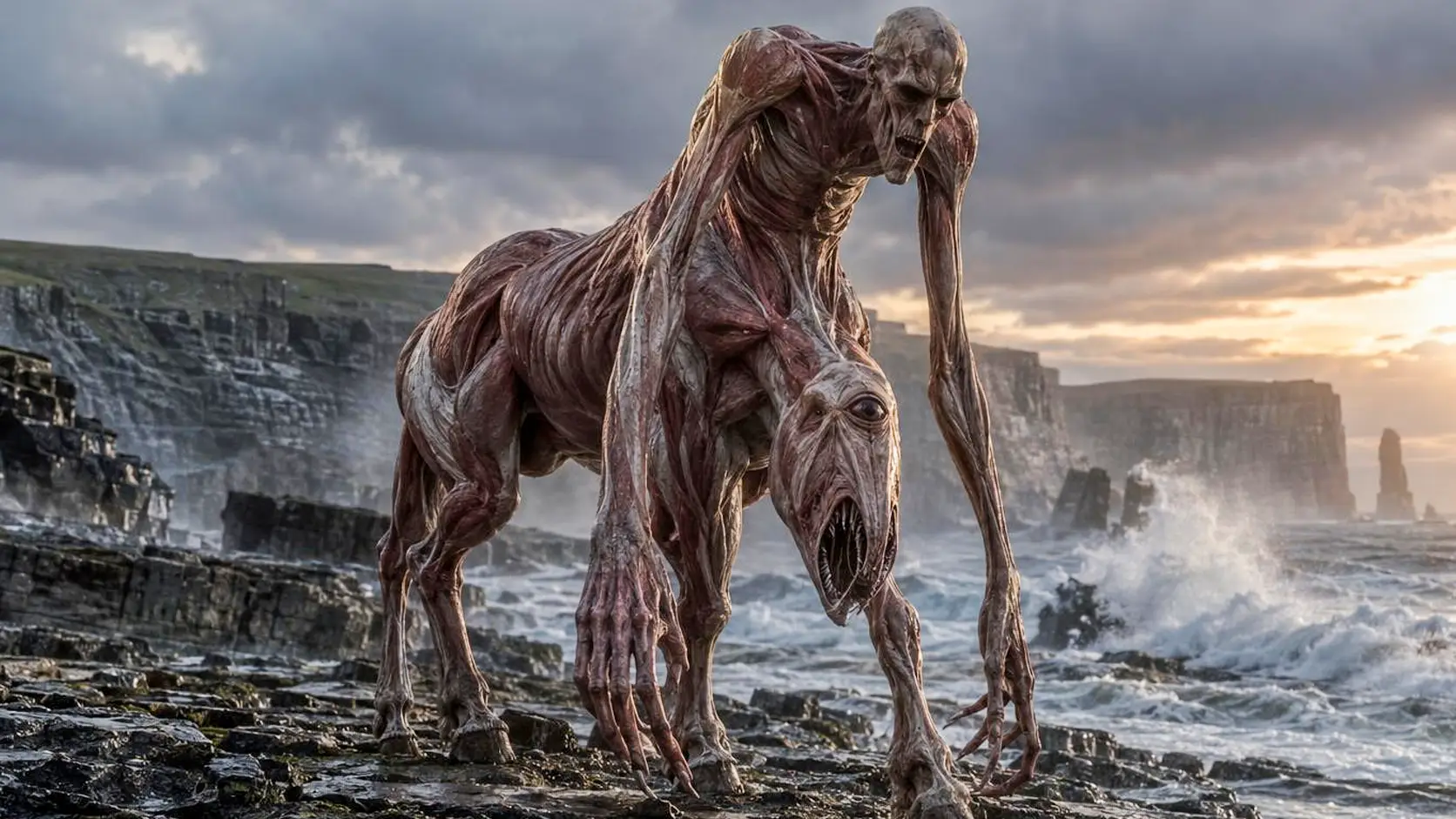
Muscles, veins, and sinews remain exposed, moving visibly beneath a surface that should have protected them. The entire creature appears impossibly alive despite its horrifying anatomy.
Identity: Nuckelavee, a malevolent sea-being from the folklore of the Orkney Islands.
Tradition and period: Orcadian oral tradition, recorded most influentially by Walter Traill Dennison during the nineteenth century and published in The Scottish Antiquary in 1891.
Appearance: A monstrous horse-like body with a huge human figure apparently growing from its back. Its most distinctive feature is the complete absence of skin.
Attributed abilities: Bringing disease, blighting crops, harming livestock, and pursuing humans. Fresh water repels it in the best-known encounter narrative.
In Dennison’s account, an islander named Tammas encounters the creature while traveling near the coast.
As the monstrous shape approaches, he realizes that the rider and horse seem to form one body. The human figure has a huge head and arms long enough to reach toward the ground.
The exposed flesh is the most frightening detail. Dark blood moves through visible veins, while great sinews stretch and contract as the creature advances.
Tammas remembers that the Nuckelavee fears fresh water. As he edges past beside a freshwater loch, his foot accidentally splashes water against the monster, making it recoil.
Tammas runs, but the Nuckelavee pursues him. He finally leaps across a stream, escaping the creature’s grasp and reaching a place where it cannot follow.
The Nuckelavee is particularly disturbing because its body combines two impossible conditions: a human and horse apparently joined into one being, and living flesh existing without skin.
Unlike a conventional centaur, the human torso is not merely a rider-like upper half replacing the horse’s neck. It appears as a grotesque addition growing from the animal’s back.
These descriptions belong to Orcadian folklore as documented by Dennison. The published account preserves a powerful regional legend, not evidence that the creature existed.
Empusa – the Shape-Changing Apparition
Empusa makes the human outline unreliable: the woman ahead may become an animal, while one mismatched leg betrays something no disguise can settle.
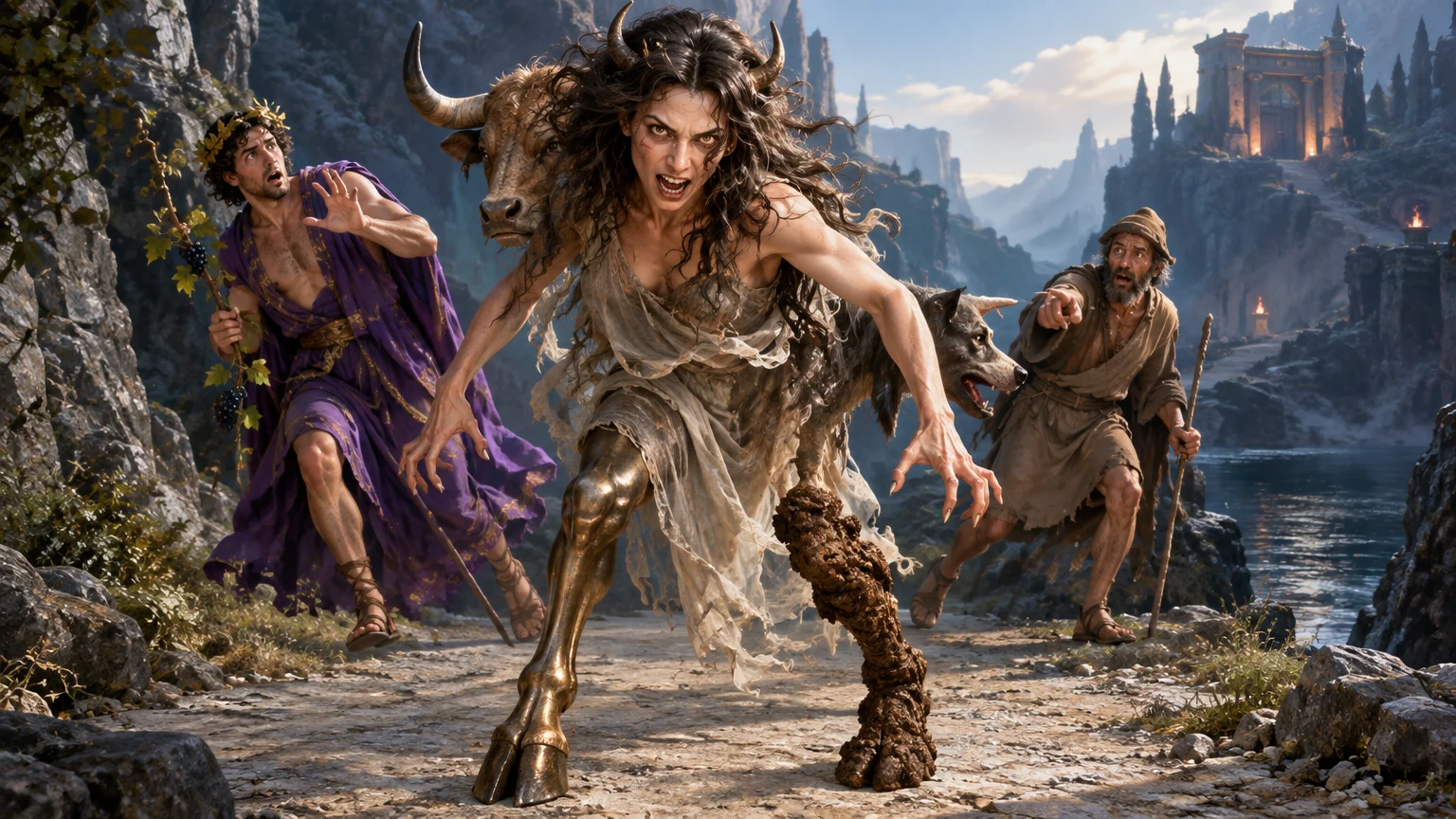
Identity: Empusa, a frightening, shape-changing apparition in Greek literature. The name can identify a particular bogey or a kind of predatory supernatural being.
Origin and period: Ancient Greek tradition, appearing in Aristophanes’ comedy Frogs, performed in 405 BCE, with different representations in later Greek literature.
Appearance and powers: Rapid transformation, terrifying bodily irregularity, and, in a later account, seductive illusion. These belong to distinct narratives, not one fixed biography.
In Frogs, during Dionysus and Xanthias’s underworld journey, Xanthias announces a monster that changes from an ox to a mule, woman, and dog.
He identifies it as Empusa: its face blazes, one leg is bronze, and the other, absurdly, is made of dung.
The scene turns terror into comedy. Dionysus, supposedly a powerful god, panics before a creature whose reported anatomy becomes increasingly ridiculous.
Centuries later, Philostratus’s Life of Apollonius of Tyana presents a different danger: a beautiful woman preparing to marry Menippus near Corinth.
Apollonius exposes her as an empusa. Her luxurious surroundings dissolve, and she admits intending to fatten and devour her young lover.
Here, the horror is misplaced trust: apparent affection conceals appetite, and the promised wedding becomes preparation for a meal.
The Long-Necked Woman: Rokurokubi
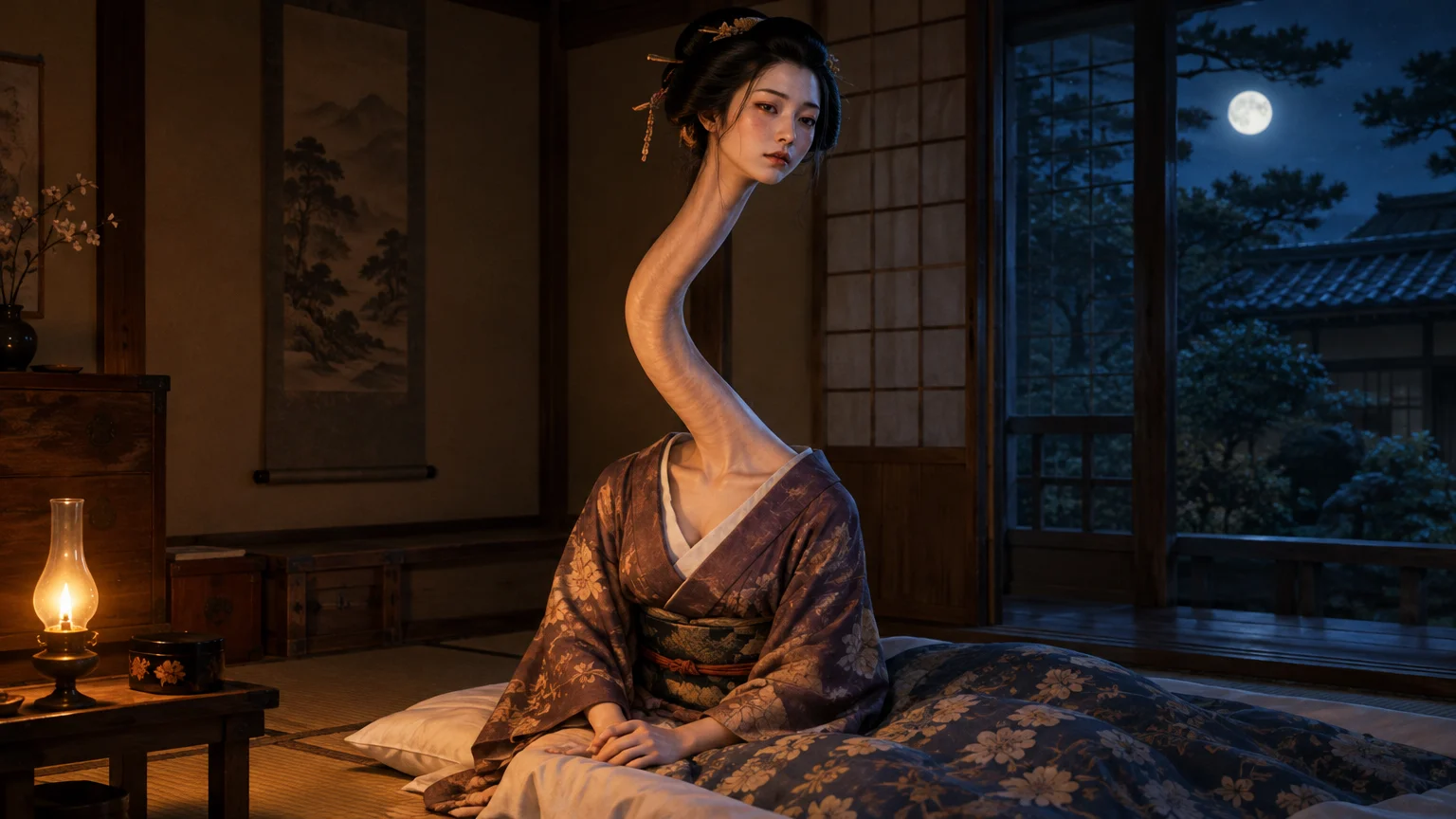
The rokurokubi brings bodily horror indoors: someone who looks ordinary by daylight may develop an impossibly lengthening neck while the household sleeps.
- Identity: A Japanese yōkai, commonly represented as a woman whose neck stretches far beyond human proportions.
- Period: Prominent in Edo-period supernatural imagery, including Toriyama Sekien’s illustrated Gazu Hyakki Yagyō of 1776.
- Abilities: Nocturnal neck extension and uncanny wandering; behavior varies between stories, rather than following one universal rule.
Sekien’s illustration makes the transformation domestic: a woman’s neck rises in a winding curve above her seated body. Familiar surroundings offer no protection.
The grotesque detail is continuity. Head and torso remain connected, but the small, reassuring distance between them becomes something serpentine and impossible.
Not every “rokurokubi” stretches its neck. The name has also covered detachable-headed beings, often distinguished as nukekubi in modern classifications.
Lafcadio Hearn’s “Rokuro-Kubi,” published in Kwaidan in 1904, concerns this second form. Its travelling priest, Kwairyō, discovers apparently headless bodies inside his hosts’ dwelling.
He moves one body, preventing its roaming head from rejoining it. Here, survival depends on recognizing the creature’s bodily vulnerability, not defeating an elongated neck.
Hearn’s literary retelling therefore illustrates overlapping names, not proof that every rokurokubi possesses both transformations. The distinction changes both the image and the danger.
The Second Mouth Hidden in Her Hair: Futakuchi-onna
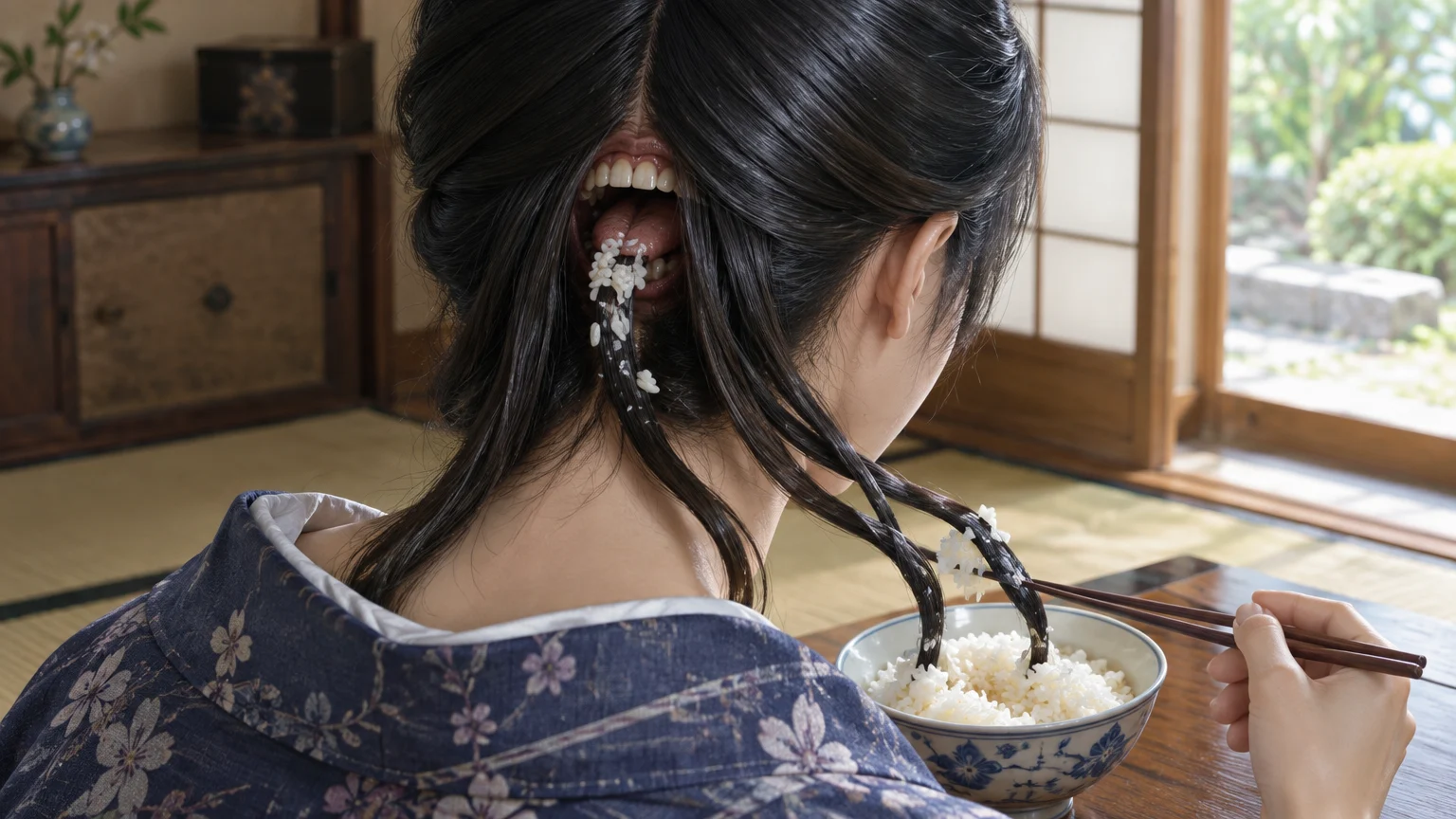
The futakuchi-onna hides her grotesque feature beneath an ordinary hairstyle: a second mouth opens at the back of her head, concealed by hair.
Identity: “Two-mouthed woman,” a Japanese yōkai. Her concealed appetite turns the familiar human body into something its owner may neither understand nor control.
Period: An origin story appears in the Edo-period collection Shokoku hyaku monogatari (1677). Toriyama Sekien later depicted her in Konjaku hyakki shūi (1781).
In the 1677 account, a stepmother feeds her own child while starving her stepchild. After the neglected child dies, her husband accidentally wounds her head with an axe.
The injury becomes a mouth. It demands food and voices her wrongdoing, making the hidden consequences of household cruelty horribly audible.
This is not simply a monster attacking a family. The family’s unequal distribution of food produces the horror: one child eats, another disappears.
Attributed abilities: A concealed, speaking second mouth and an insistent appetite. Familiar depictions also give her hair that grasps food and feeds it.
That hair-feeding image should not be mistaken for every tale’s exact mechanism. The wounded stepmother’s story supplies one particular origin, not a universal biography.
The Flying Head with Trailing Organs: the Penanggalan
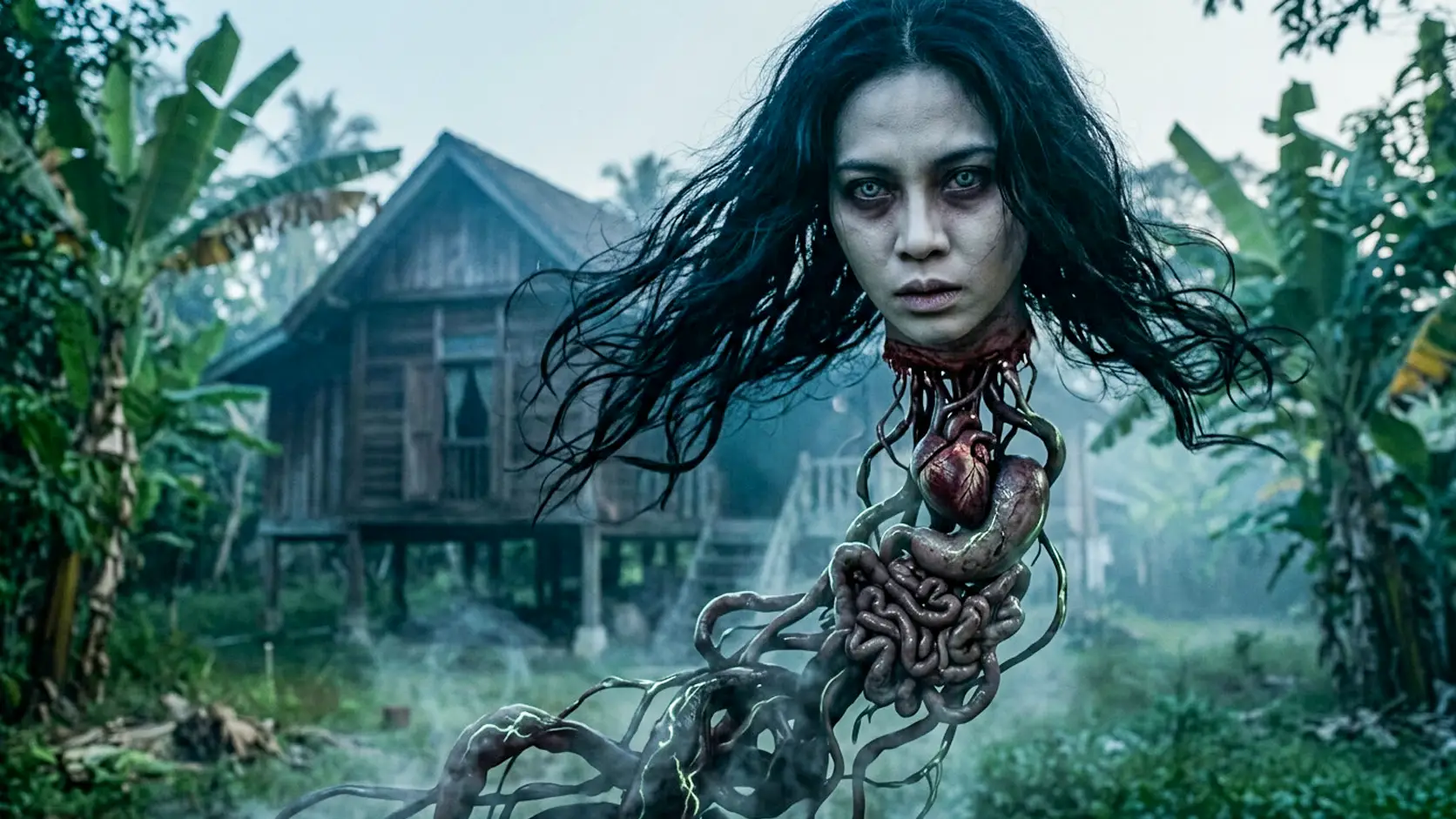
A woman’s head floats through the darkness. Beneath her neck hang the organs that should remain hidden inside a living human body.
There is no torso, no pair of shoulders, and no visible means of flight. Only the head and its trailing entrails move through the night.
Identity: Penanggalan, a nocturnal supernatural being from Malay folklore, sometimes associated with a woman who practices dangerous magical arts.
Origin and period: Malay traditions of the Malay Peninsula, documented in nineteenth-century literature, including Hikayat Abdullah, and discussed in Walter William Skeat’s Malay Magic (1900).
Appearance: A detached female head and neck, flying with internal organs hanging beneath them. Her ordinary body remains elsewhere.
Attributed abilities: Nocturnal flight, blood-drinking, and attacking vulnerable people, especially women during childbirth in some accounts.
In one account recorded in Hikayat Abdullah, a woman acquires supernatural powers through her involvement with forbidden magic.
Her head separates from her body, carrying her entrails into the air while the rest of her remains behind.
She flies toward the homes of people she wishes to harm and feeds upon their blood.
The legend gives this grotesque transformation a practical difficulty. Once the organs leave the body, they may swell, making it difficult for the head to return to its ordinary human form.
The solution is even stranger: the woman keeps vinegar in a vessel so that her exposed organs can be soaked and reduced before rejoining the body.
The same account describes a deadly vulnerability. Thorny branches placed near a house can entangle the hanging entrails.
One story tells of a Penanggalan caught in thorns during the night and unable to escape before daylight.
The horror lies in the division of a human body into two independently existing parts. By day, the supernatural being may resemble a recognizable woman.
By night, only her head and exposed internal organs travel through the air.
The Penanggalan belongs to a family of related but regionally distinct Southeast Asian supernatural figures. It should not automatically be identified with the Philippine Manananggal or other beings that separate from their bodies in different ways.
Image direction: Depict a woman’s floating head and neck with long hair and clearly visible internal organs suspended beneath them. There must be no shoulders, torso, wings, or complete body.
Place the figure above the roof of a traditional Malay stilt house at night, with enough light to make the impossible anatomy clearly visible.
Conclusion: The Human Shape Has No Limits in Folklore
The strangest humanoids are not necessarily those with the greatest strength or most frightening intentions. Sometimes a single impossible feature is enough to make an otherwise recognizable person profoundly unsettling.
The Monopod turns its foot into a shelter. The Blemmyes carries a face on its chest, while the Astomi survives through scent alone.
The Panotii wraps itself in enormous ears, and the Cynocephali combines a human body with the head of a dog.
Elsewhere, anatomy becomes more threatening. The Gegenees possesses six arms, the Aigamuxa sees through its feet, and the Nuckelavee combines human and equine bodies in a terrifying skinless form.
Empusa changes shape, while the Rokurokubi and Futakuchi-onna reveal impossible transformations concealed within apparently ordinary people.
These creatures come from different cultures, centuries, and kinds of evidence. They do not form one universal mythology, and their traditional meanings cannot be reduced to horror alone.
What unites them is their extraordinary reimagining of the human figure. Across the world, storytellers transformed familiar anatomy into something surprising, disturbing, and unforgettable.
Further Reading
1. Natural History, Book IV, Chapter 27 by Pliny the Elder, first century CE.
Relevant creature: Panotii. Pliny describes the legendary inhabitants of distant northern islands whose enormous ears supposedly covered their otherwise naked bodies.
This is one of the key ancient accounts of the Panotii.
Source: Natural History, Book IV
2. Natural History, Book V, Sections 44–46 by Pliny the Elder, first century CE.
Relevant creature: Blemmyes. An influential Roman account naming the Blemmyes as supposedly headless people whose eyes and mouths occupied their chests.
Earlier testimony to unnamed headless beings appears in Herodotus. Pliny’s description should be distinguished from the historically documented Blemmyes of northeastern Africa.
The linked edition provides the Latin text.
Source: https://penelope.uchicago.edu/Thayer/L/Roman/Texts/Pliny_the_Elder/5%2A.html
3. Natural History, Book VII, Sections 23–25 by Pliny the Elder, first century CE, translated by H. Rackham.
Relevant creatures: Monopod, Astomi, Cynocephali.
Describes one-legged people who shelter beneath their enormous feet, mouthless people sustained by fragrances, and dog-headed inhabitants of imagined India. This is primary evidence for ancient literary accounts of three of the article’s central subjects, not eyewitness confirmation of their existence.
Source: https://www.attalus.org/pliny/hn7a.html
4. Etymologies, Book XI, Chapter 3 by Isidore of Seville, seventh century CE, translated by Stephen A. Barney and colleagues, 2006.
Relevant creatures: Monopod, Blemmyes, Panotii, Cynocephali. Medieval encyclopedic descriptions showing how earlier reports of extraordinary human anatomy continued circulating through European scholarship.
Source: https://sfponline.org/Uploads/2002/st%20isidore%20in%20english.pdf
5. Histories, Book IV, Chapter 191 by Herodotus, fifth century BCE, translated by A. D. Godley.
Relevant traditions: Headless beings later associated with Blemmyes, and reports of dog-headed creatures.
Early Greek testimony reporting headless beings with eyes in their chests in Libya, without naming them Blemmyes. The passage also lists dog-headed creatures, but does not clearly establish that these are dog-headed human communities rather than animals.
Herodotus attributes the headless-beings report to the Libyans rather than presenting direct observation.
Source: https://www.perseus.tufts.edu/hopper/text?doc=Perseus%3Atext%3A1999.01.0126%3Abook%3D4%3Achapter%3D191
6. Indica by Ctesias, circa 400 BCE, preserved in Photius’s ninth-century summary, translated by J. H. Freese.
Relevant creature: Cynocephali.
Describes dog-headed people who understand human speech, communicate through barking and gestures, hunt, keep animals, and participate in trading relationships.
Source: https://www.livius.org/sources/content/ctesias-overview-of-the-works/photius-excerpt-of-ctesias-indica/
7. The City of God, Book XVI, Chapter 8 by Augustine of Hippo, early fifth century CE.
Relevant creature: Cynocephali.
Augustine discusses reported monstrous peoples and asks whether beings with extraordinary anatomy should be regarded as part of humanity. A late antique Christian discussion important to the later medieval intellectual reception of dog-headed people.
Source: https://www.newadvent.org/fathers/120116.htm
8. Marvels of the East, Cotton MS Tiberius B V/1, ff. 78v–86v, British Library, eleventh-century manuscript.
Relevant creatures: Blemmyes, Panotii and other extraordinary humanoids.
An illustrated medieval collection depicting headless people, figures with enormous ears, and other impossible bodies. The manuscript is especially valuable for studying historical visual interpretations.
The link leads to the catalogue record for the larger manuscript collection, which identifies the relevant folios.
Source: https://searcharchives.bl.uk/catalog/042-003311660
9. Marvels of the East: A Study in the History of Monsters by Rudolf Wittkower, Journal of the Warburg and Courtauld Institutes, Volume 5, 1942, pp. 159–197.
Relevant creatures: Monopod, Blemmyes, Panotii, Astomi and Cynocephali.
Influential historical study tracing the transmission of fabulous peoples from classical geographical writing into medieval manuscripts, literature, and art.
Source: https://doi.org/10.2307/750452
10. The Monstrous Races in Medieval Art and Thought by John Block Friedman, Syracuse University Press, 2000 edition.
Relevant creatures: Monopod, Blemmyes, Panotii, Astomi and Cynocephali.
Scholarly study explaining how Europeans represented extraordinary peoples, interpreted their humanity, and located them in distant parts of the imagined world.
Source: https://www.jstor.org/stable/j.ctv170x50r
11. Argonautica, Book I, lines approximately 936–1011 by Apollonius Rhodius, third century BCE, translated by R. C. Seaton.
Relevant creature: Gegenees.
The primary Greek epic describing six-armed Earthborn giants near Cyzicus and their attack upon Jason’s expedition. The physical description begins around line 942.
Source: https://www.theoi.com/Text/ApolloniusRhodius1.html
12. Gegenees: Six-Armed Mysian Giants by Theoi Project, classical source reference.
Relevant creature: Gegenees. A focused reference page collecting ancient testimony about the extraordinary giants, their six arms, geographical setting, and confrontation with the Argonauts.
This is a reference compilation rather than an independent ancient account.
Source: https://www.theoi.com/Gigante/GigantesGegenees.html
13. Aus Namaland und Kalahari by Leonhard Schultze, Gustav Fischer, 1907, particularly pp. 392–403.
Relevant creature: Aigamuxa. Early documentation of Nama oral narratives involving human-eating beings with eyes positioned on their feet.
Includes stories of encounters and escape through trickery. The colonial circumstances of collection should be considered when interpreting the text.
Source: https://books.google.com/books?id=oSIPAAAAYAAJ
14. In Namaland and the Kalahari by Leonhard Schultze, 1907, eHRAF World Cultures, Yale University.
Relevant creature: Aigamuxa.
Anthropological catalogue record identifying the original collection’s ethnographic and folklore content, including Nama narratives. Useful for locating and assessing the original work, although it is not independent testimony.
Source: https://ehrafworldcultures.yale.edu/cultures/fx13/documents/001
15. Aigamuxa: Khoekhoe Folklore by Umbrarium, modern source overview.
Relevant creature: Aigamuxa. A focused comparative guide discussing the unusual placement of the creature’s eyes, man-eating traditions, recorded Jackal narratives, and the early collection history.
Best used alongside the original Schultze material rather than in place of it.
Source: https://umbrarium.org/e/aigamuxa
16. Orkney Folklore: Sea Myths by Walter Traill Dennison, The Scottish Antiquary, Volume 5, 1891.
Relevant creature: Nuckelavee.
The foundational nineteenth-century account of the terrifying Orcadian sea monster, its skinless body, human-horse anatomy, and the encounter involving Tammas.
Source: https://www.jstor.org/stable/25516381
17. The Folklore of Orkney and Shetland by Ernest W. Marwick, B. T. Batsford, 1975.
Relevant creature: Nuckelavee.
Regional folklore scholarship providing a broader Orcadian and Shetland context for frightening supernatural beings, island beliefs, and the transmission of traditional stories.
Source: https://books.google.com/books?id=BBPaAAAAMAAJ
18. The Terrifying Myth of Orkney’s Horse Demon, Nuckelavee by The Scotsman, 2017.
Relevant creature: Nuckelavee. A modern account quoting Dennison’s historical description of the creature’s exposed musculature, its attack upon Tammas, and its inability to cross fresh water.
Useful as an accessible introduction to the older material.
Source: https://www.scotsman.com/whats-on/arts-and-entertainment/the-terrifying-myth-of-orkneys-horse-demon-nuckelavee-607848
19. Frogs, lines approximately 285–300 by Aristophanes, performed in 405 BCE.
Relevant creature: Empusa. The original comic scene in which Xanthias describes a frightening apparition changing forms, with a blazing face and grotesquely mismatched bronze and dung legs.
Source: https://classics.mit.edu/Aristophanes/frogs.html
20. Life of Apollonius of Tyana, Book IV, Chapter 25 by Philostratus, third century CE, translated by F. C. Conybeare.
Relevant creature: Empusa.
A later narrative describing a beautiful supernatural woman who intends to consume her intended husband, Menippus. Demonstrates a later literary representation of empusae distinct from Aristophanes’ comic apparition.
Source: https://www.livius.org/sources/content/philostratus-life-of-apollonius/philostratus-life-of-apollonius-4.21-25/
21. Lamia Korinthia by Theoi Project, classical source reference.
Relevant creature: Empusa. A source compilation examining the Corinthian supernatural predator exposed by Apollonius of Tyana.
Useful for understanding the overlapping terminology surrounding empusae and lamiai in later Greek literature, without treating them as universally identical.
Source: https://www.theoi.com/Phasma/LamiaKorinthia.html
22. Gazu Hyakki Yagyō by Toriyama Sekien, 1776, Smithsonian National Museum of Asian Art collection.
Relevant creature: Rokurokubi.
Historical Japanese illustrated sourcebook associated with the development of recognizable yōkai imagery during the Edo period. The museum record provides bibliographic and collection information for the work.
Source: https://collections.si.edu/search/detail/edanmdm%3Afsg_FSC-GR-780.621.1-3
23. Hyakkai Zukan by Sawaki Sūshi, circa 1737, YOKAI.JP illustrated collection.
Relevant creature: Rokurokubi. Historical picture-scroll tradition including the long-necked woman.
Provides an earlier visual comparison for studying how the creature’s appearance evolved in Japanese art.
Source: https://yokai.jp/en/collections/hyakkai-zukan
24. Kwaidan: Stories and Studies of Strange Things, “Rokuro-Kubi,” by Lafcadio Hearn, 1904.
Relevant creature: Rokurokubi. An influential literary retelling about a traveling priest encountering supernatural beings whose heads leave their bodies.
This represents the detachable-head tradition and must be distinguished from the continuously stretching-neck form.
Source: https://www.gutenberg.org/files/1210/1210-h/1210-h.htm
25. Rokurokubi by Matthew Meyer, Yokai.com, illustrated folklore reference.
Relevant creature: Rokurokubi. Modern reference discussing women whose necks extend during the night and the variations surrounding their supernatural behavior.
Useful for comparison with the historical illustrated and literary records.
Source: https://yokai.com/rokurokubi/
26. Nocturnal Procession of the Hundred Demons, collected works of Toriyama Sekien, Library of Congress, historical Japanese edition.
Relevant creature: Futakuchi-onna.
Digitized historical collection containing material from Sekien’s 1776 and 1781 illustrated yōkai books. For the two-mouthed woman, consult the material from Konjaku hyakki shūi (1781), rather than attributing her illustration to the 1776 book.
Source: https://www.loc.gov/resource/gdcwdl.wdl_20185_001/
27. Futakuchi Onna by Matthew Meyer, Yokai.com, illustrated folklore reference.
Relevant creature: Futakuchi-onna. Focused explanation of the woman with a second mouth concealed behind her hair, including narrative interpretations of hunger, domestic cruelty, and supernatural transformation.
Source: https://yokai.com/futakuchionna/
28. The Book of Yōkai: Mysterious Creatures of Japanese Folklore by Michael Dylan Foster, University of California Press, 2015; expanded edition 2024.
Relevant creatures: Rokurokubi and Futakuchi-onna.
Major scholarly treatment of Japanese supernatural beings, their cultural contexts, visual representations, and development through storytelling and popular culture. Particularly valuable for understanding how yōkai traditions change over time.
Source: https://www.ucpress.edu/books/the-book-of-yokai-expanded-second-edition/hardcover
29. Pandemonium and Parade: Japanese Monsters and the Culture of Yōkai by Michael Dylan Foster, University of California Press, 2009.
Relevant creatures: Rokurokubi and Futakuchi-onna, in the wider Edo-period yōkai tradition.
Academic study of supernatural imagery, early modern encyclopedias, storytelling, and Toriyama Sekien’s illustrated bestiaries. Provides historical context rather than an individual origin account for every creature.
Explore Related Beasts
 BlemmyesBlemmyes are legendary headless humanoids said to have eyes and mouths on their chests. Greek and Roman writers placed…
 CyclopsThe Cyclops are one-eyed giants known for their immense strength and hostility towards humans. Famous for encounters with heroes,…
 LamiaLamia from Greek mythology, known for her tragic transformation into a child-eating creature, often depicted with a serpent-like body.
 MedusaA cursed being with serpentine hair who turns those who gaze upon her into stone, Medusa was once a…
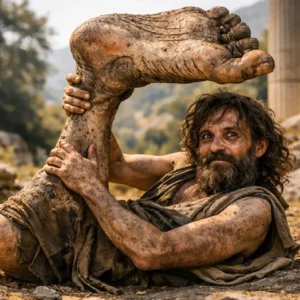 MonopodThe Monopod (Sciapod) is a legendary one-legged humanoid from Greek and Roman texts, known for using its giant foot…
 PegasusPegasus, the winged horse of Greek mythology, symbolizes freedom and divine inspiration, and has been revered for its strength,…
 PredatorPredator, a fictional alien species, is known for its exceptional hunting skills and advanced technology. It has been prominently…