Introduction
Pazuzu is a demonic figure from ancient Mesopotamia, especially associated with Assyria and Babylonia during the first millennium BCE. Linked with dangerous winds and illness, he also served a protective purpose: his image could be used to repel other supernatural threats.
This combination of danger and protection is central to his ancient identity. Pazuzu was not simply a benevolent guardian, but neither was he represented only as an attacker.
His threatening power could be directed against beings that people feared, notably the demon Lamashtu.
He survives principally through material objects and inscriptions, including bronze statuettes, head pendants, amulets, and seals. These objects place him within the practical world of Mesopotamian protection and exorcism, rather than preserving a continuous account of his life or adventures.
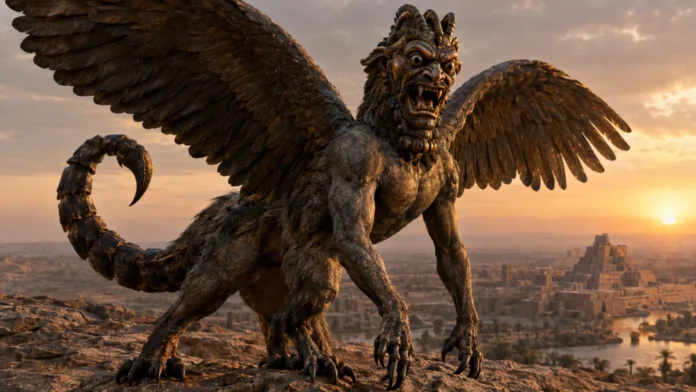
His appearance is equally distinctive. Complete representations combine a humanoid body with wings, a fierce face, and a scorpion tail.
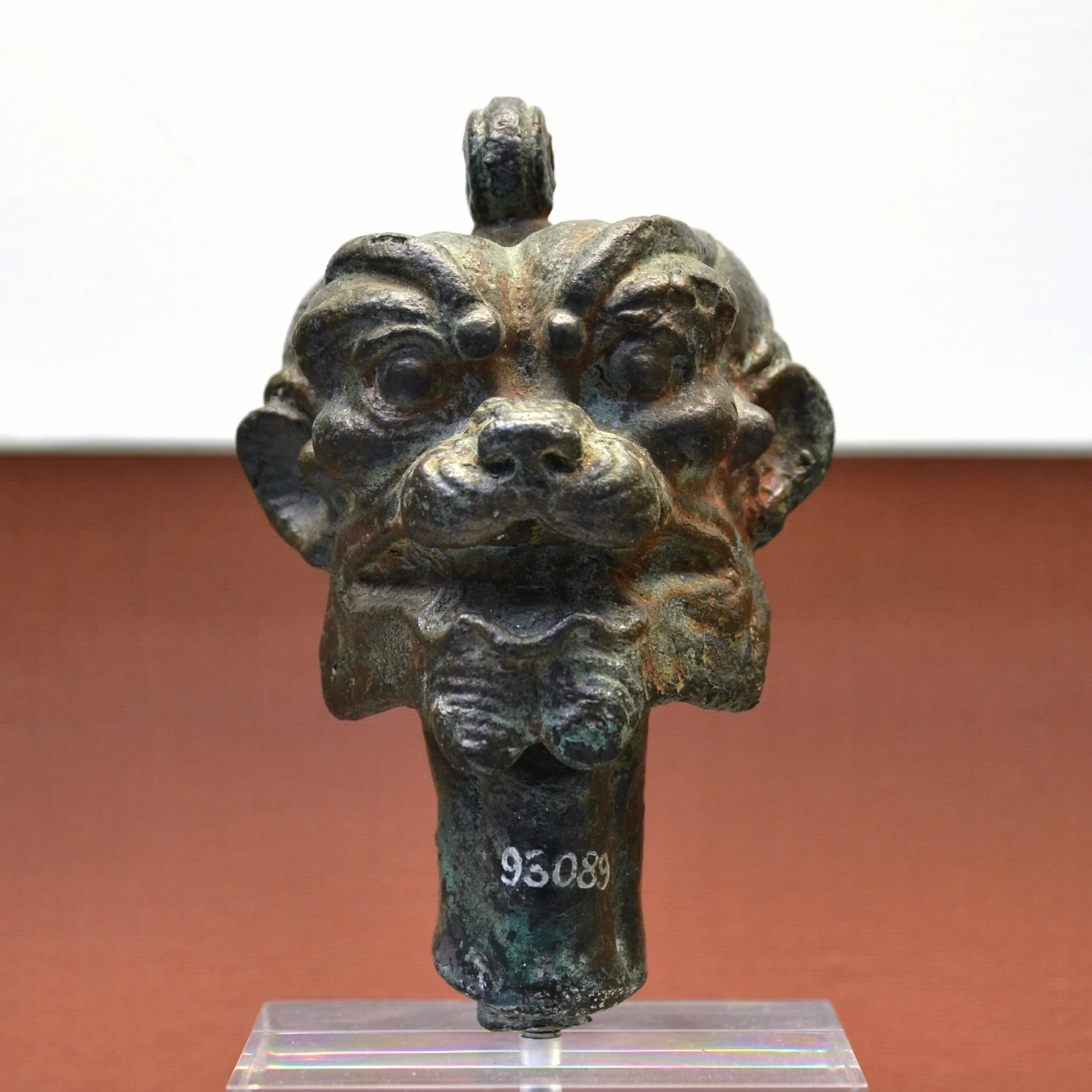
Smaller objects often reduce the figure to his head, preserving the intimidating features through which he could be recognized without depicting the entire body.
History/Origin
Pazuzu becomes securely visible in the surviving record during the eighth century BCE. The Metropolitan Museum of Art dates the earliest known image more specifically to the late eighth century.
This establishes a documented appearance, not necessarily the moment when belief in him began.
The earliest literary evidence identified in the specialist iconographic survey dates to around 670 BCE. Images and written references therefore provide related but distinct chronological anchors.
Neither supplies a complete account of how the figure first developed or entered Assyrian and Babylonian religious practice.
His imagery became particularly popular during the seventh and sixth centuries BCE. Most representations with recorded archaeological origins come from Assyria and Babylonia, although smaller numbers are known beyond Mesopotamia.
The distribution supports a Mesopotamian center for the tradition without confining every object to that region.
A major surviving example is the bronze statuette now in the Louvre, dated approximately to the seventh century BCE and attributed to Assyria. Its precise archaeological findspot is unknown.
Cuneiform writing on the backs of its wings identifies the figure and declares his authority over threatening supernatural forces.
The range of surviving objects reveals more than the development of a recognizable artistic design. Statuettes, wearable heads, and other amuletic representations show that Pazuzu belonged to protective practices as well as supernatural imagery.
His historical importance rests on this connection between a named demonic power and objects intended to avert danger.
Name Meaning
Pazuzu is the conventional modern rendering of an ancient name, also represented in transliteration as Pā-zu-zu. Its linguistic derivation is not established by the evidence presented here.
A translation based on a supposed word root would therefore go beyond what the documented passages support.
The clearest evidence concerns identification rather than etymology. In the French Ministry of Culture’s English rendering of the Louvre inscription, the figure announces: “I, Pazuzu, son of the god Hanpa, am king of the evil demons Lilû.”
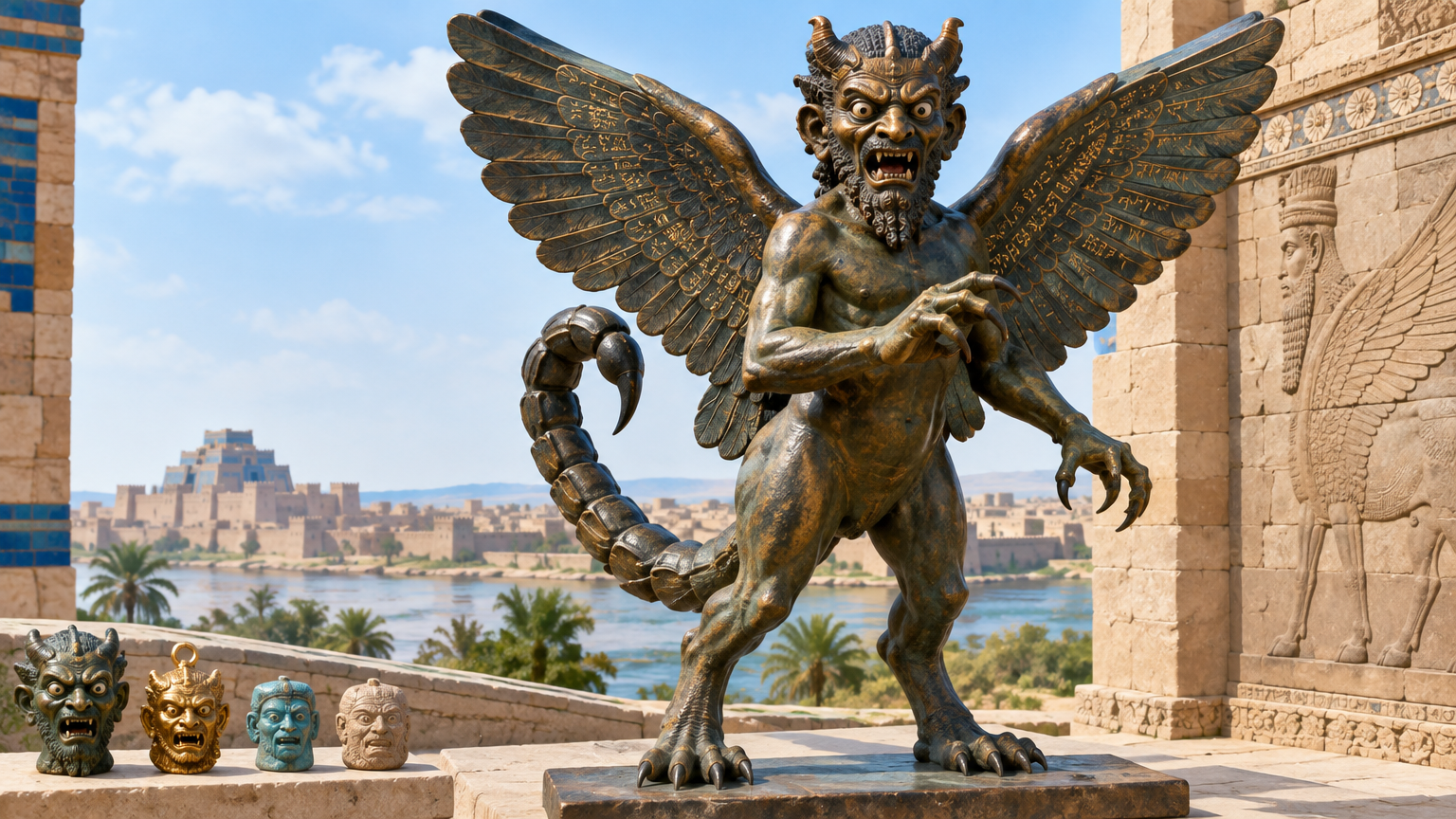 Pazuzu’s full form joins a fierce humanoid head to wings and a scorpion tail, creating a threatening hybrid figure.
That declaration supplies a personal name, a parentage claim, and a title of authority. “Son of Hanpa” does not explain what Pazuzu means, while the royal title describes his relationship to other supernatural beings rather than translating the name itself.
Descriptions such as “wind demon” or “king of evil air spirits” likewise summarize his identity and power. They should not be mistaken for literal definitions of Pazuzu.
The distinction matters because his documented functions are considerably clearer than the linguistic history of his name.
Appearance
Pazuzu’s complete form is a hybrid humanoid figure rather than an ordinary human or a single recognizable animal. Wings and a scorpion tail are characteristic elements of full-body representations.
These features belong alongside the fierce head when reconstructing his appearance from ancient objects.
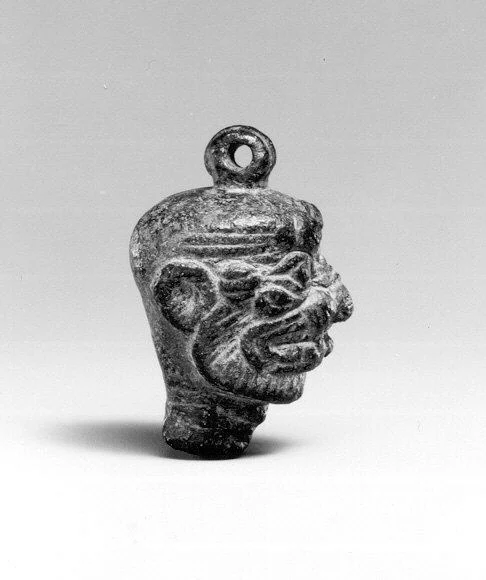
The face receives particular emphasis on smaller representations. The Metropolitan Museum’s bronze head pendant has bulging eyes, protruding features on the forehead, and a short beard surrounding a snarling, open mouth.
Together, these details create an unmistakably threatening expression on an object small enough to serve as a pendant.
Head-only representations were common, not exceptional fragments of an otherwise exclusively full-bodied image. They represented Pazuzu in abbreviated form.
Their existence does not imply a separate kind of being, a disembodied manifestation in a story, or a transformation from one bodily state into another.
These heads were made in several materials, including bronze, copper, gold, stone, clay, bone, and faience. Their variety shows that Pazuzu’s recognizable features could be reproduced across different kinds of objects.
His image was not restricted to the bronze statuettes through which he is especially familiar today.
The Louvre statuette also combines image and writing: its wings carry the inscription asserting Pazuzu’s identity and power. This makes the object more than a model of a frightening body.
Its physical form and written self-presentation work together to identify the supernatural authority being represented.
Background Story
Pazuzu’s background lies in Mesopotamian understandings of supernatural danger and the ritual means of resisting it. Harmful winds, illness, and hostile beings belonged to an interconnected field of concern.
His distinctive position was to embody threatening power while also making that power available for protection.
The Louvre inscription presents this authority through a forceful first-person declaration. In the museum’s translation, Pazuzu climbs a mighty mountain, imposes a direction upon the winds, and breaks their wings.
These statements assert mastery over dangerous forces rather than supplying a complete adventure narrative.
The mountain and winds belong to that inscriptional presentation of power. They do not establish a birthplace, a childhood, or an explanation of his name.
Likewise, the identification of Hanpa as his father provides a relationship but does not supply enough evidence to reconstruct a fuller family history.
His protective relationship to Lamashtu is especially important. Pazuzu’s image appeared on amulets intended to ward her off, while other representations served personal protection or guarded houses against supernatural intrusion.
These uses show why a frightening figure could be deliberately kept close rather than simply avoided.
Within Mesopotamian demonology and exorcistic practice, danger and protection were therefore not mutually exclusive categories. Pazuzu’s fearsome appearance and commanding language suited his defensive use.
The surviving evidence makes most sense when these aspects are read together: a dangerous supernatural power could be enlisted against another threat.
Famous Folklore Stories
Pazuzu’s surviving record does not provide a securely documented traditional adventure tale. Instead, inscriptions, amulets, and protective imagery preserve recurring motifs.
These concern his authority over dangerous winds and the use of his frightening power against other supernatural threats.
The Subjugation of the Winds
The inscription on the Louvre bronze statuette presents Pazuzu speaking in the first person. In the French Ministry of Culture’s English rendering, he climbs a mighty mountain, imposes a direction upon the winds, and breaks their wings.
These actions proclaim supernatural supremacy.
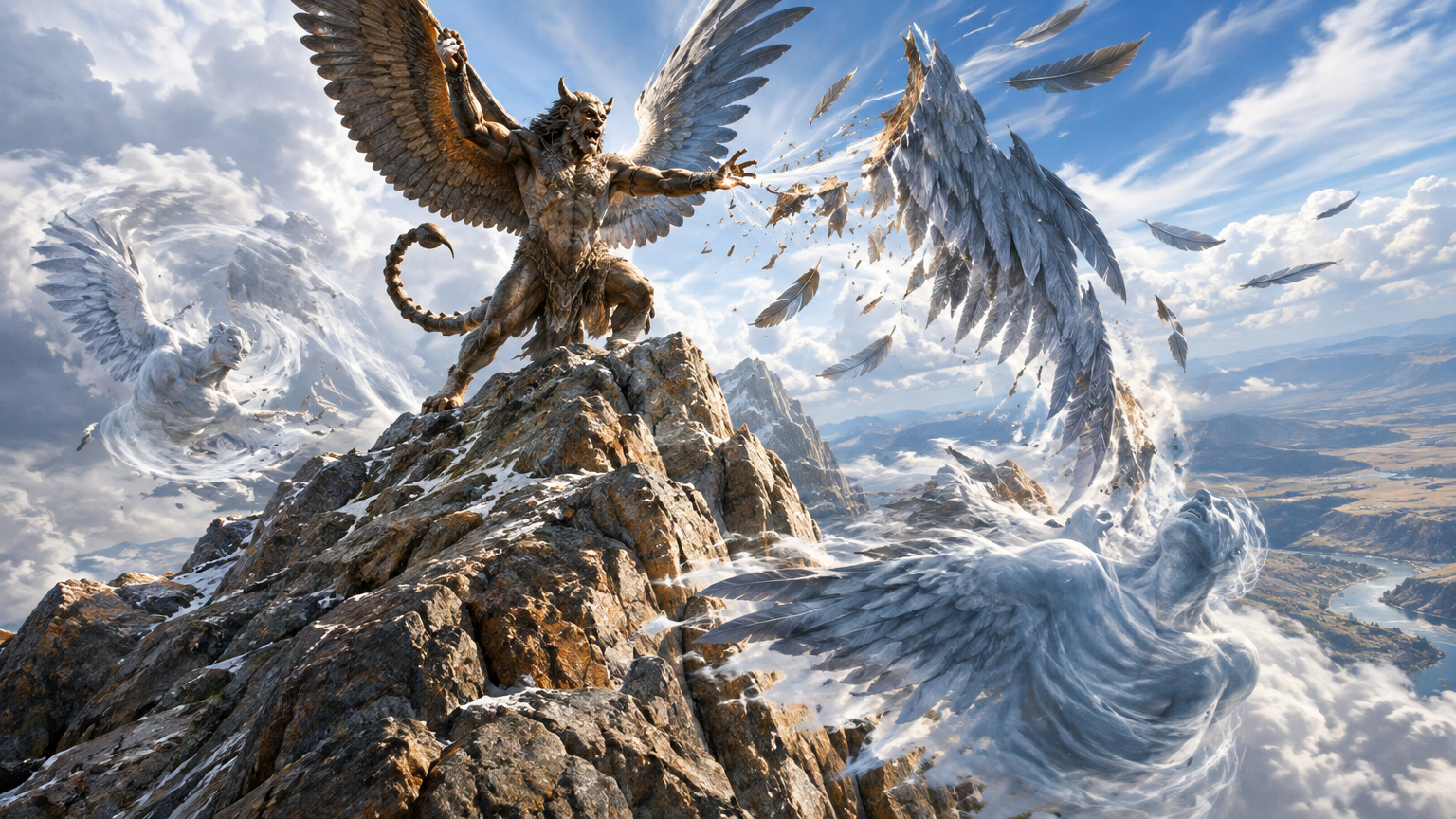
This is an inscriptional declaration, not a complete story with witnesses, a human protagonist, or a narrated resolution. Published translations differ in wording and emphasis, but the central motif remains his commanding relationship with the dangerous forces of the air.
The Frightening Protector
A second documented motif turns a threatening being into a defense against another danger. Pazuzu appears on amulets intended to repel Lamashtu, a distinct Mesopotamian demon associated with harm to mothers and infants.
His protective effectiveness depended on the power he embodied.
The relationship should not be expanded into an invented battle narrative. The objects establish opposition and protective purpose, rather than a sequence in which Pazuzu pursues, defeats, or permanently destroys Lamashtu.
Their importance lies in making supernatural resistance materially present.
Cultural Impact
Pazuzu’s ancient cultural presence extended beyond complete bronze figures. His image appeared on pendants, amulets, seals, and other personal objects, with representations especially popular during the seventh and sixth centuries BCE.
Such objects brought demonic imagery into settings of personal and household protection.
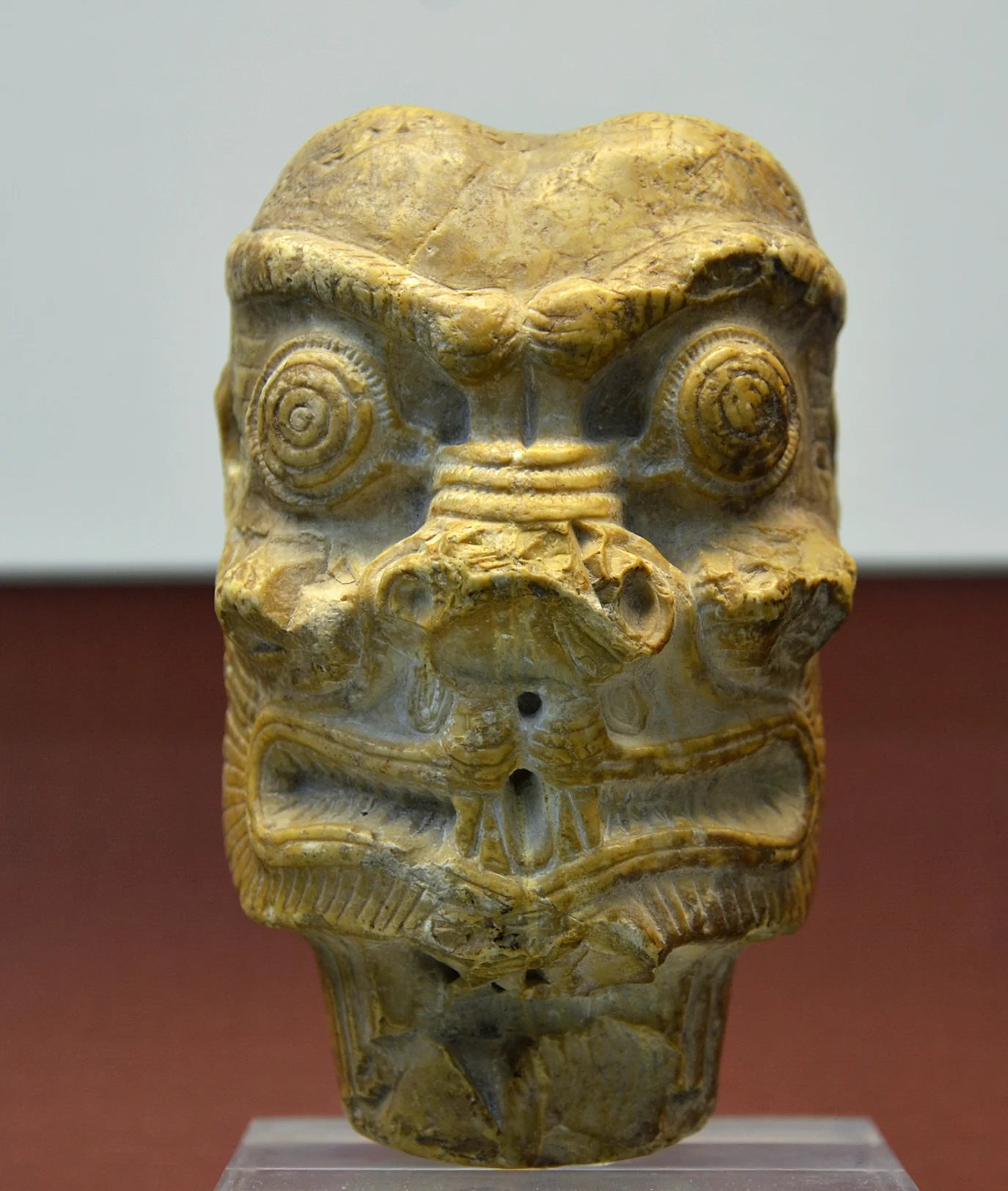
Head representations were particularly common and could be made from bronze, copper, gold, stone, clay, bone, or faience. A recognizable face could therefore stand for the complete being.
The abbreviated image was not a separate creature, but another way of representing the same protective power.
This use complicates a simple division between benevolent guardians and evil monsters. A frightening face could signal defense rather than attack.
Pazuzu’s cultural significance depended partly on that reversal: a being associated with danger could become an ally against a different supernatural threat.
Modern fiction substantially changes that emphasis. In William Peter Blatty’s 1971 novel The Exorcist, Pazuzu possesses twelve-year-old Regan MacNeil and speaks through her.
The narrative places him within a struggle involving Catholic exorcism, rather than the protective relationships documented by Mesopotamian amulets.
William Friedkin’s 1973 film adaptation likewise presents Pazuzu as the threatening force behind Regan’s possession. This is a modern reinterpretation, not a surviving ancient episode.
Its possession-centered role contrasts sharply with the household guardian represented by many historical objects.
Similar Beasts
Lamashtu

Lamashtu is a Mesopotamian demon associated with threats to mothers and infants. Her combination of human and animal features belongs to the same broad world of supernatural imagery.
She is Pazuzu’s closest documented counterpart here because his image was used against her. Their relationship is protective opposition, not identity or interchangeability.
Ugallu
Ugallu is a separate protective or demonic figure within Mesopotamian supernatural imagery. Some amulet depictions place this being alongside Pazuzu, providing a direct connection through ritual objects.
The comparison concerns participation in protective imagery. Their appearance together does not make Ugallu another name for Pazuzu or establish a shared narrative biography.
Shedim

Shedim are demons in Jewish tradition, described in the supplied comparative material as potentially malevolent or protective. They form a category of beings rather than one individual.
They offer a functional comparison with Pazuzu’s combination of danger and protection. That resemblance does not establish direct descent or a common ritual system.
Āl (Albastı)
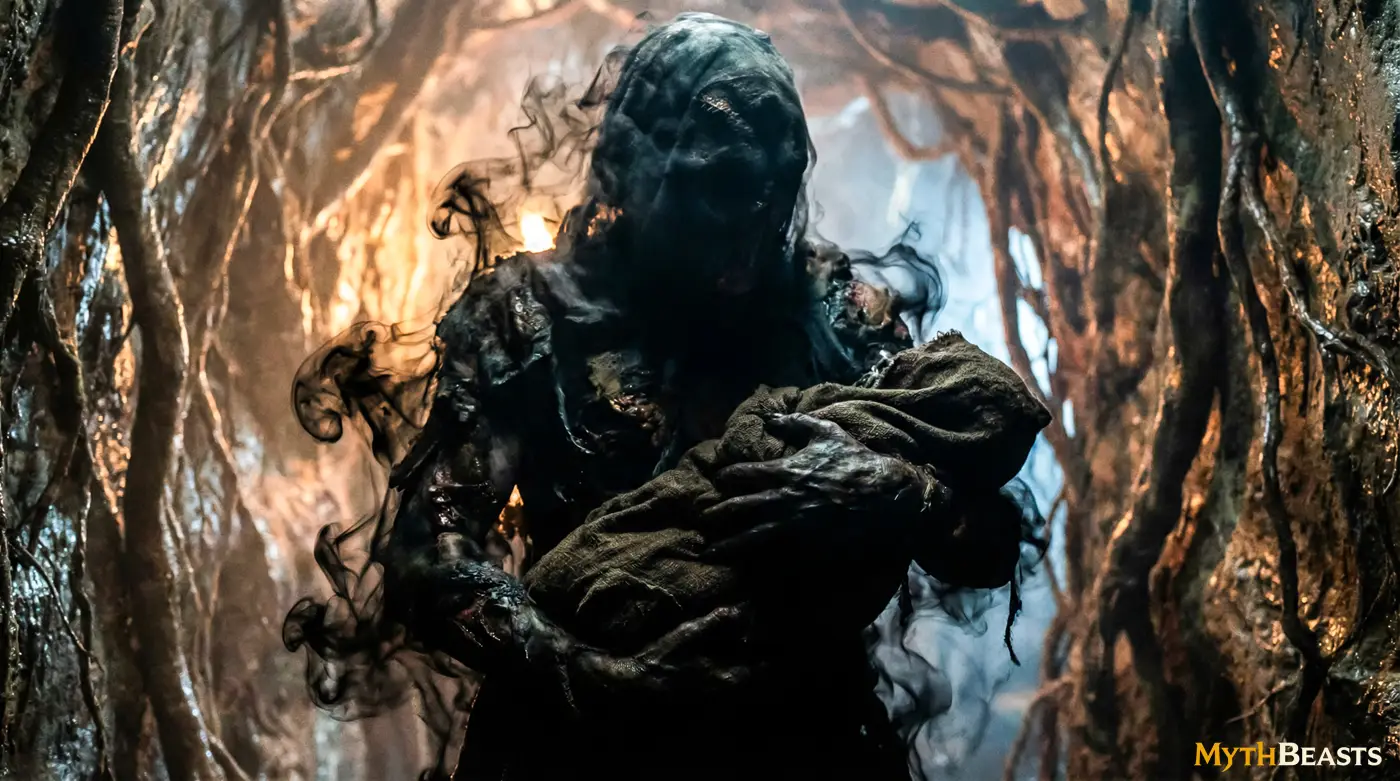
The Āl belongs to Iranian and Caucasian traditions concerning childbirth danger. The figure expresses fears surrounding the vulnerability of mothers and infants during birth and its aftermath.
The connection is indirect: the Āl resembles the danger against which Pazuzu could protect. It is not a wind-demon equivalent or an alternate identity.
Religion/Ritual
Pazuzu’s clearest ritual role was apotropaic, meaning intended to avert harm. His representations served as personal protective objects, appeared on amulets against Lamashtu, and guarded houses against the entry of other supernatural beings.
Protection operated at both bodily and domestic scales.
Amulet incantations also connect his authority with household defense. Here, image and verbal formula belong to the same protective setting.
The evidence supports invoking or representing his power, without requiring a reconstructed ceremony with invented offerings, gestures, or stages.
The threatening and protective aspects were complementary rather than contradictory. A being believed capable of directing harmful winds could also possess the strength needed to repel other dangers.
Using his image did not necessarily mean regarding him as harmless or universally benevolent.
These objects document particular protective practices, not a complete account of organized worship. They should not automatically be treated as evidence for a dedicated temple cult or a uniform festival calendar.
Their strongest testimony concerns the practical management of supernatural danger.
Scientific or Rational Explanations
Pazuzu is best studied through the history of religion, texts, and material culture, rather than as an unidentified animal. His existence as a represented and named supernatural figure is well documented.
That documentation establishes ancient belief and practice, not supernatural causation.
His association with harmful winds and illness offers an environmental dimension to interpretation. Within the ancient religious framework, threatening conditions could be understood through personal supernatural agency.
This does not demonstrate that one particular weather event or disease produced the figure.
An anthropological reading can understand protective objects as ways of responding to vulnerability. A portable amulet gave danger a recognizable opponent and protection a tangible form.
This interpretation explains a possible social function without claiming that every owner understood the object identically.
The frightening face also needs to be interpreted through its documented use. Modern viewers may instinctively read a snarling supernatural image as hostile to its owner.
Protective contexts show why appearance alone is insufficient: an intimidating representation could be directed against an imagined intruder.
Finally, archaeological context limits what can be reconstructed. The Louvre statuette’s original findspot is unknown, so it cannot establish a precise household arrangement or local ceremony.
Comparing inscriptions, object forms, and better-documented protective uses is more reliable than supplying a plausible but unrecorded ritual.
Modern Cultural References
Modern adaptations often emphasize possession, confrontation, and demonic violence rather than Pazuzu’s ancient protective function. These portrayals belong to their creators’ fictional worlds: they demonstrate the reuse of a Mesopotamian figure, not the survival of an unchanged ancient narrative.
The Exorcist, film (1973)
William Friedkin’s adaptation of William Peter Blatty’s novel centers on Regan’s possession and attempts to exorcise her.
Pazuzu appears as the threatening demonic presence behind her ordeal.
(churchlifejournal.nd.edu)
The original theatrical trailer for William Friedkin’s 1973 film includes the Iraqi excavation sequence, where Father Merrin encounters a statuette and a large statue of Pazuzu.
Digital Devil Story: Megami Tensei II, video game (1990)
This Atlus role-playing game incorporates demons into its narrative and encounters.
Pazuzu addresses the protagonists after his release, claiming divine service and directing them toward a mission.
(megatenwiki.com)
Cyborg 009 vs. Devilman, anime OVA (2015)
This three-part animated crossover brings together characters from the Cyborg 009 and Devilman series.
Pazuzu appears as a demonic combatant whose fight with Devilman is witnessed by 009.
(scifijapan.com)
Treehouse of Horror XXVIII, “The Exor-Sis,” television episode (2017)
This Halloween installment of The Simpsons includes an exorcism parody involving Maggie.
Pazuzu possesses her and speaks directly, identifying himself within the episode as a wind demon.
(transcripts.foreverdreaming.org)
Conclusion
Pazuzu’s importance lies in the coexistence of danger and protection. In Assyrian and Babylonian tradition, his association with harmful winds did not prevent people from using his image against other supernatural threats, especially Lamashtu.
Statuettes, pendants, inscriptions, and amulets preserve this relationship more securely than any continuous adventure story. His fearsome appearance was therefore not simply an illustration of evil: it could also express the power needed to repel danger.
Understanding that dual role is essential to interpreting the surviving objects.
Modern horror and other fictional adaptations have given Pazuzu a different narrative emphasis, particularly through possession and direct confrontation. Those portrayals are part of his later reception, but they should not replace the ancient evidence.
His name’s derivation remains uncertain, and the surviving inscriptions should not be expanded into an invented biography. Read together, the material and textual remains reveal a figure whose threatening authority could be enlisted for protection, showing why a simple division between benevolent guardian and malevolent demon does not adequately describe him.
Further Reading
Pazuzu: Work factsheet and related interpretive pages, Orient cunéiforme, French Ministry of Culture
This institutional resource presents the Louvre statuette alongside explanations of its inscription and identity.
It helps distinguish the surviving artifact from interpretations of Pazuzu’s supernatural authority.
(archeologie.culture.gouv.fr)
Pendant with the head of Pazuzu, The Metropolitan Museum of Art
This museum catalog entry documents a bronze head pendant and explains its protective significance.
Its dating and description provide a concrete foundation for understanding abbreviated Pazuzu imagery.
(metmuseum.org)
Pazuzu, Iconography of Deities and Demons in the Ancient Near East, University of Zurich, 2007
This specialist entry surveys representations, chronology, distribution, and object types associated with Pazuzu.
It is particularly useful for understanding his iconography and the protective uses of images.
(religionswissenschaft.uzh.ch)
Demons and exorcism in ancient Mesopotamia, Religion Compass / Wiley, 2020
This scholarly overview examines Mesopotamian demonology and exorcistic practice, including Pazuzu and Lamashtu.
It supplies broader religious context for interpreting their relationship without importing modern horror conventions.
(compass.onlinelibrary.wiley.com)
Figurine du démon Pazuzu, Louvre Collections
The Louvre’s collection record documents the bronze statuette, its inscription, material, dimensions, and acquisition history.
It anchors discussion in a surviving object rather than a later fictional portrayal.
(collections.louvre.fr)
Meet the Mesopotamian Demons, Jeffrey Spier, J. Paul Getty Museum, 2021
This museum article introduces Mesopotamian demons through objects and translated amulet incantations.
Its discussion explains how Pazuzu’s frightening power could protect households and counter threats from Lamashtu.
(getty.edu)
Pazuzu: Archäologische und Philologische Studien zu einem altorientalischen Dämon, Google Books (BRILL book record and preview)
Specialist Assyriologist Nils Heeßel’s monograph combines a catalogue of representations with transcriptions, translations, and commentary on Pazuzu incantations and references in other texts.
It is a focused scholarly source for the article’s philology, chronology, distribution, and object-use claims.
(books.google.com)
Babylonian and Assyrian Amulets and Talismans, Internet Sacred Text Archive / digitized book hosted by IGNCA (1930)
An early illustrated survey reproduces a Pazuzu figure and discusses the demon inscription alongside the reverse of a Lamashtu plaque.
Useful as a historical record of early twentieth-century scholarship and illustration; its terminology and interpretations should be checked against current Assyriology.
(ignca.gov.in)