Introduction
The Ifrit is a supernatural entity commonly found in Middle Eastern and Islamic folklore. Often depicted as powerful and malevolent spirits, Ifrits belong to a class of jinn, which are beings created from smokeless fire according to Islamic tradition.
They are typically associated with the underworld and are believed to possess immense strength and magical abilities. The Ifrit holds a significant place in mythology due to its complex nature, embodying themes of power, rebellion, and the supernatural.
The Ifrit’s portrayal in folklore is multifaceted, with variations in its characteristics and stories across different cultures and texts. These entities are often seen as symbols of chaos and destruction, yet they also represent the duality of jinn nature, which can embody both good and evil.
This duality makes the Ifrit a compelling figure in the rich tapestry of Middle Eastern mythological narratives.
History/Origin
The ifrit belongs to the wider world of jinn belief in Arabia, where stories of unseen spirits and haunted places circulated before Islam. Early Islamic teaching retained the existence of jinn as a distinct order of beings alongside humans and angels, and describes them as created from fire.
Within that broader framework, later storytellers and commentators developed more specific categories and character types for jinn, including the ifrit as an especially formidable example.
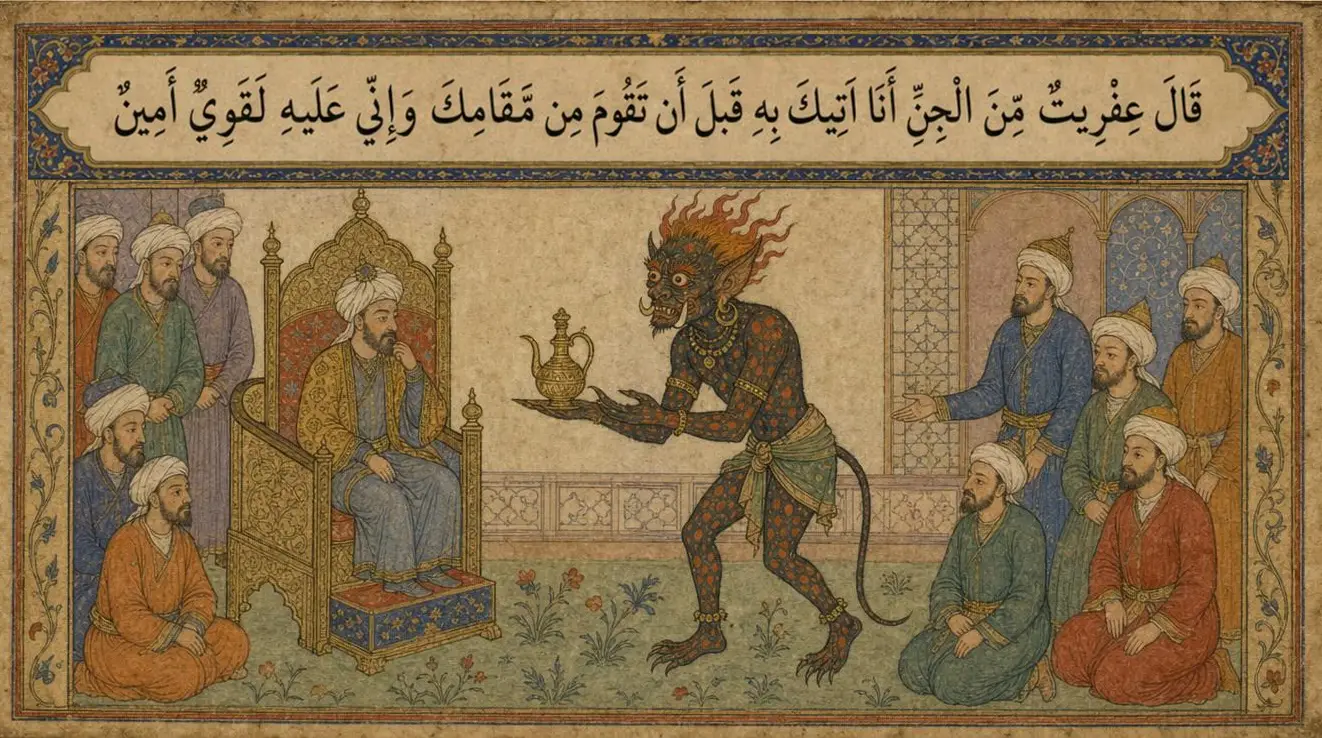
In practice, “ifrit” becomes most recognisable in Islamic-era Arabic folklore and literature as a label for a powerful, dangerous, and often defiant jinn. Rather than a single fixed character with one origin story, the ifrit functions as a type that can be adapted to different plots and local expectations, from frightening adversary to cunning supernatural force.
This helps explain why descriptions vary across regions and later retellings, and why the ifrit can appear in different roles depending on the story being told.
Seen in this light, the ifrit reflects a broader historical pattern: older spirit traditions continuing under an Islamic theological umbrella, then being reshaped by popular storytelling. The result is a figure that feels both rooted in religious cosmology through its connection to jinn, and highly flexible as a folkloric “powerful jinn” archetype in later narrative tradition.
Name Meaning
The term “Ifrit” is derived from the Arabic word “عفريت” (ʻifrīt), which can be translated to mean “rebellious” or “wicked.” This etymology reflects the Ifrit’s nature as a formidable and often malevolent entity.
The name emphasizes its role as a powerful and potentially dangerous being within the jinn hierarchy.
The linguistic roots of the word “Ifrit” also suggest a connection to themes of chaos and defiance. In various Arabic dialects, the term can imply a sense of being mischievous or unruly, further underscoring the Ifrit’s reputation as a disruptive force.
This semantic richness adds to the cultural and symbolic significance of the Ifrit in Middle Eastern folklore.
Appearance
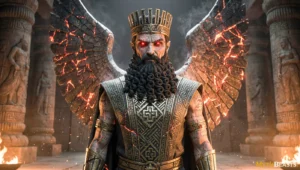
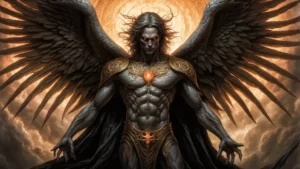
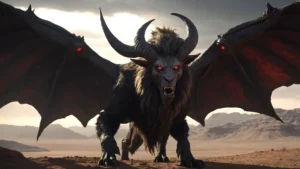
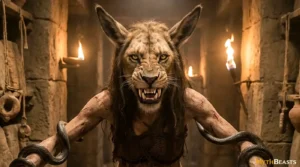
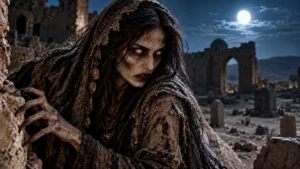
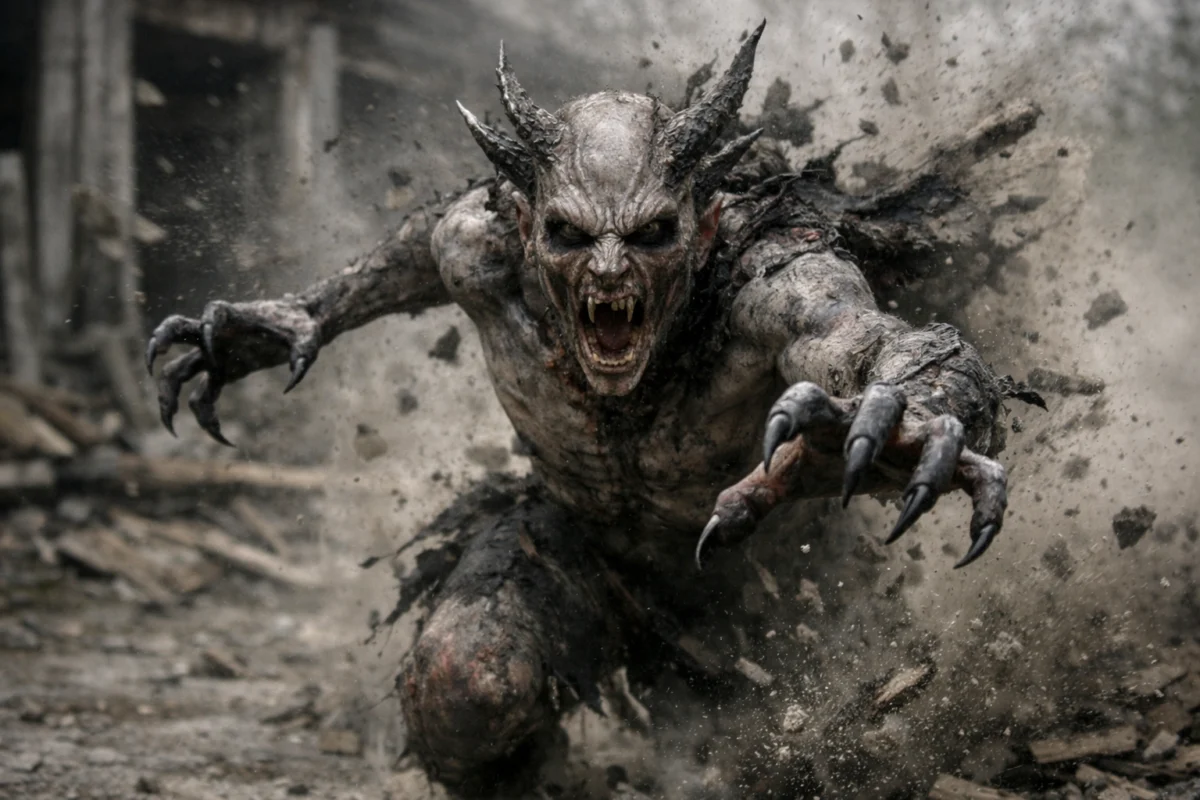
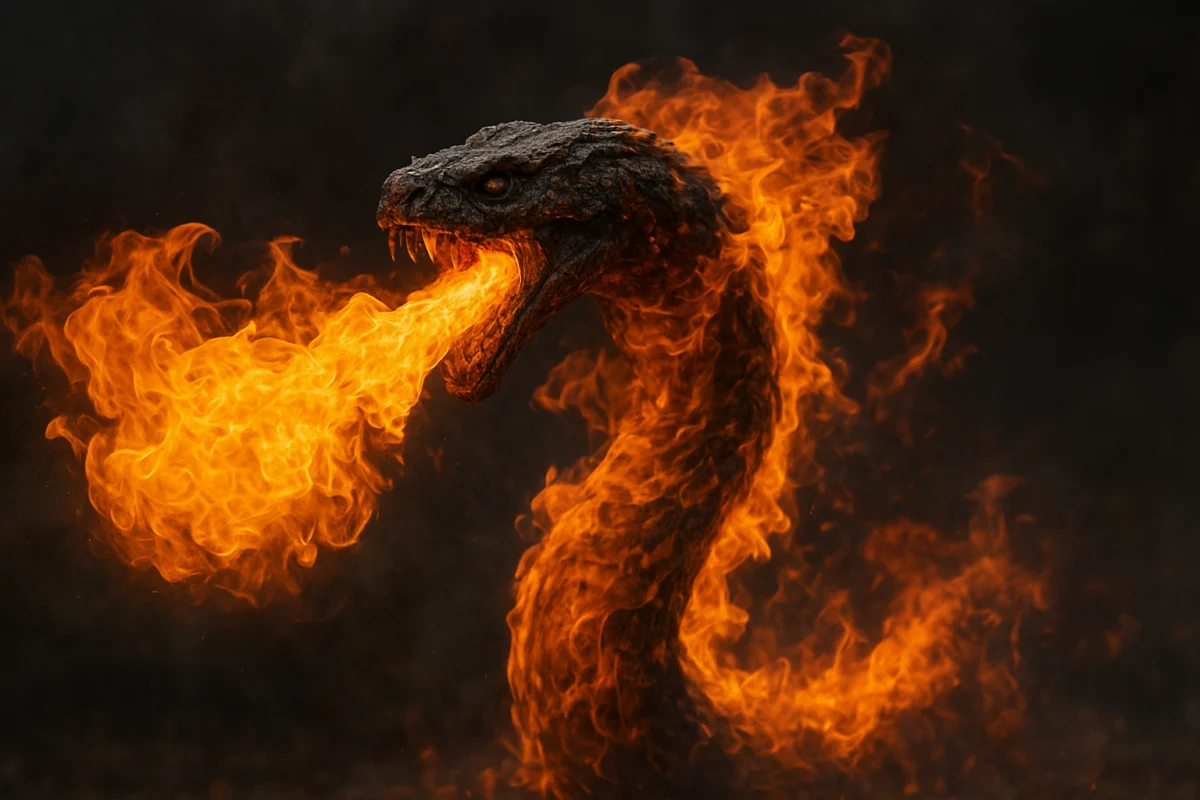
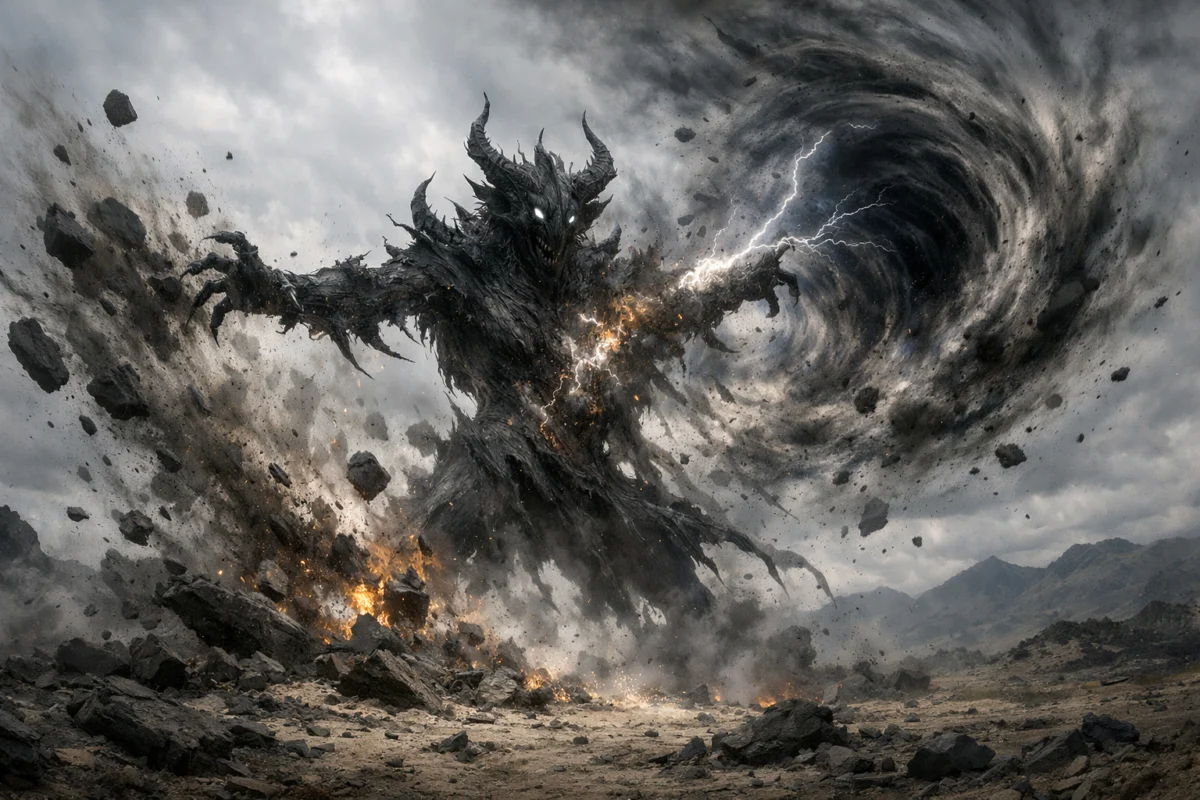
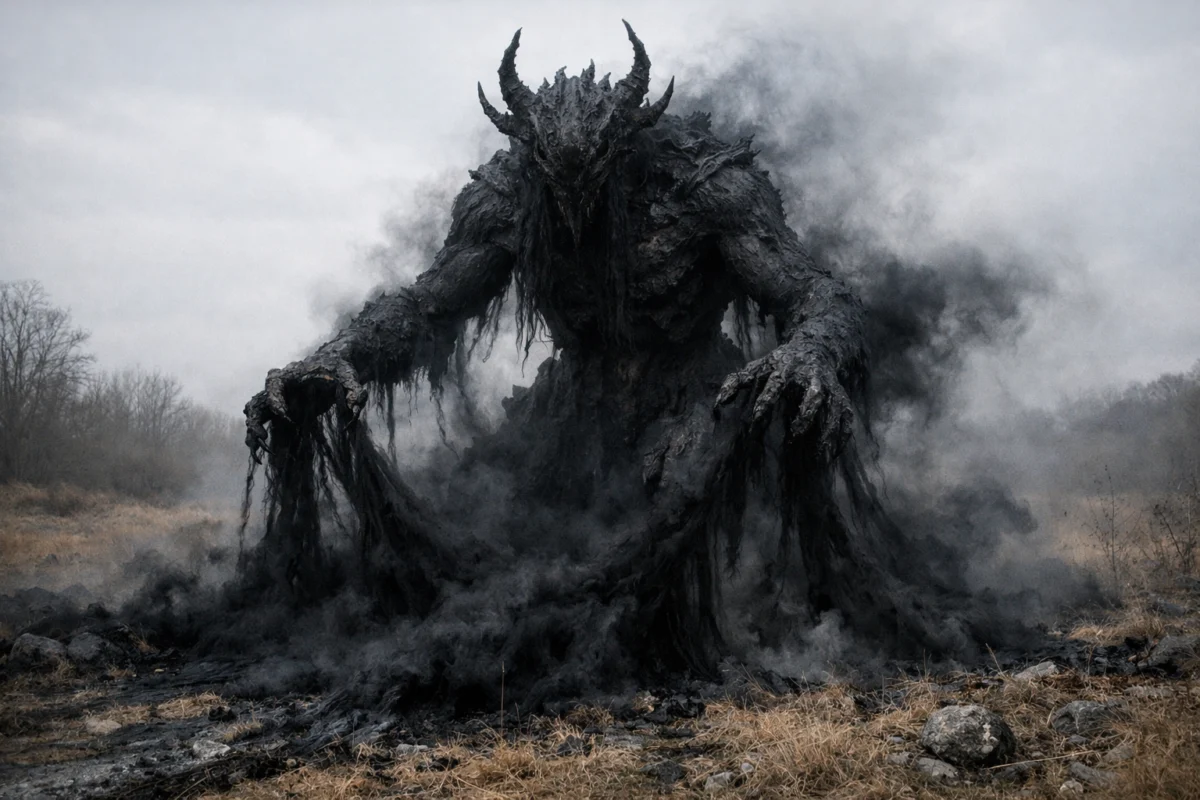
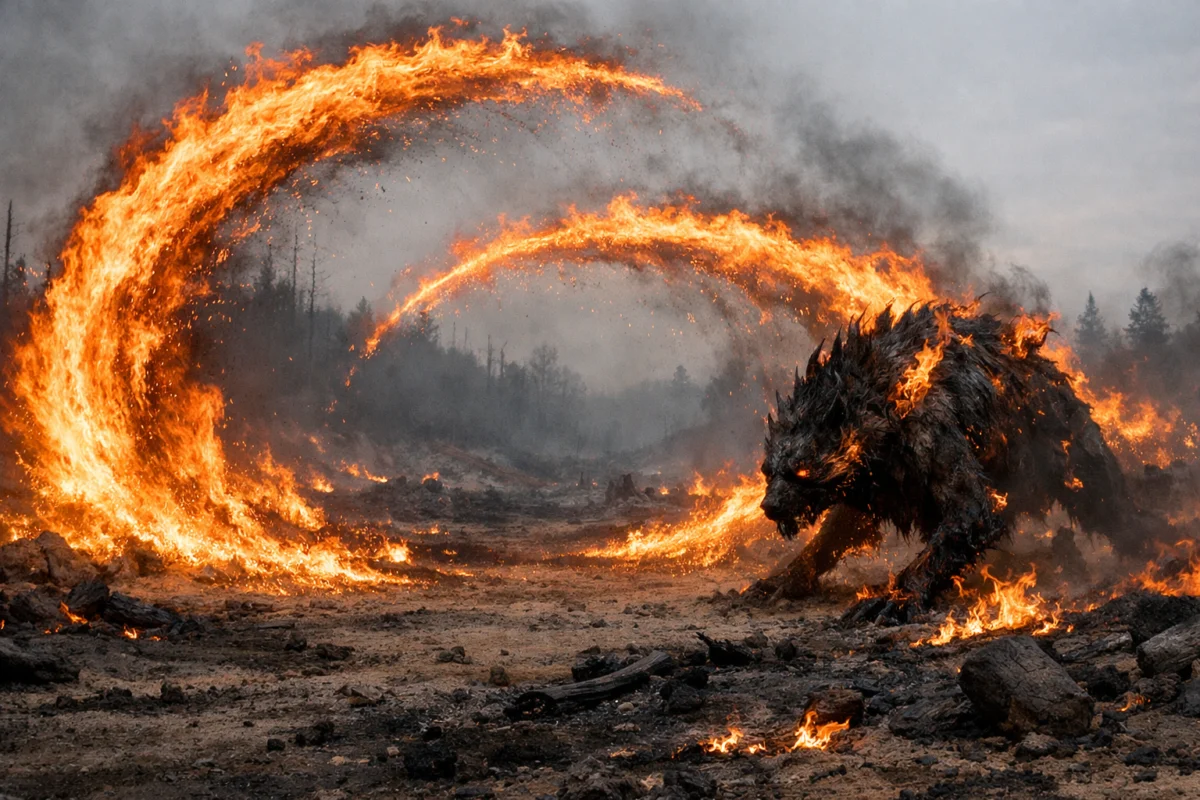
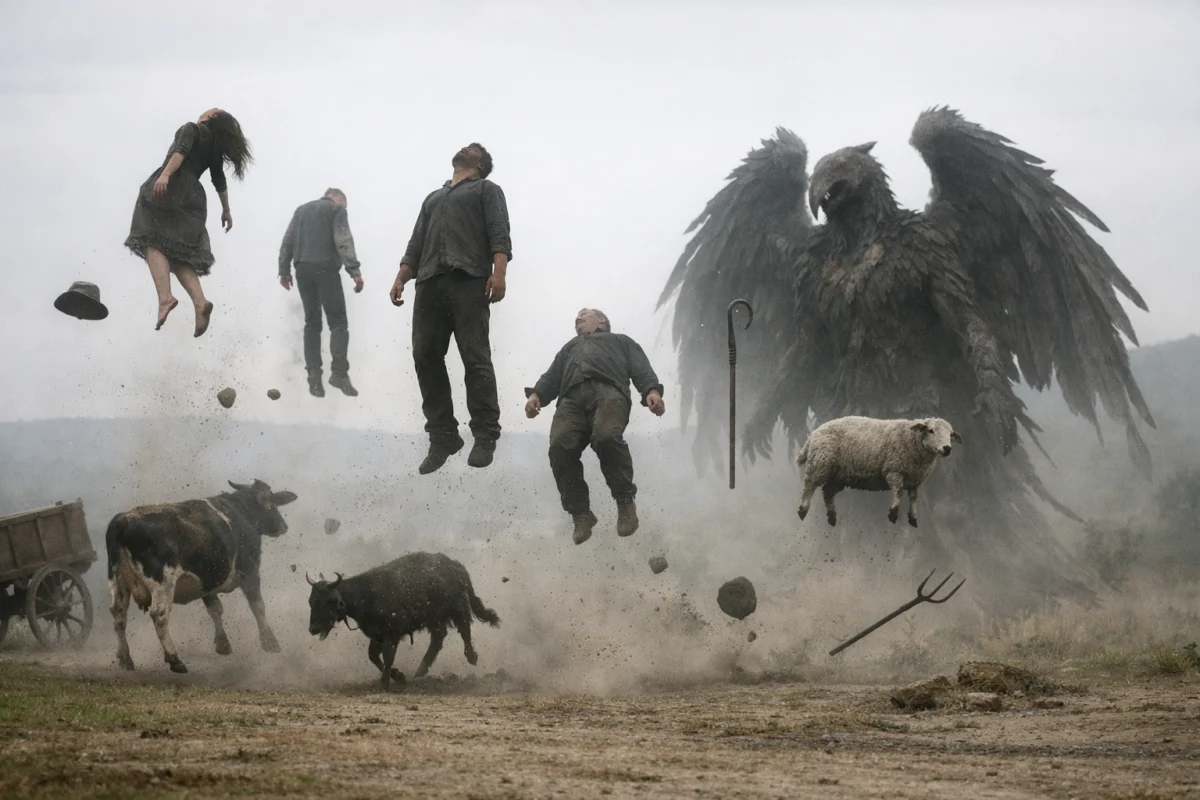
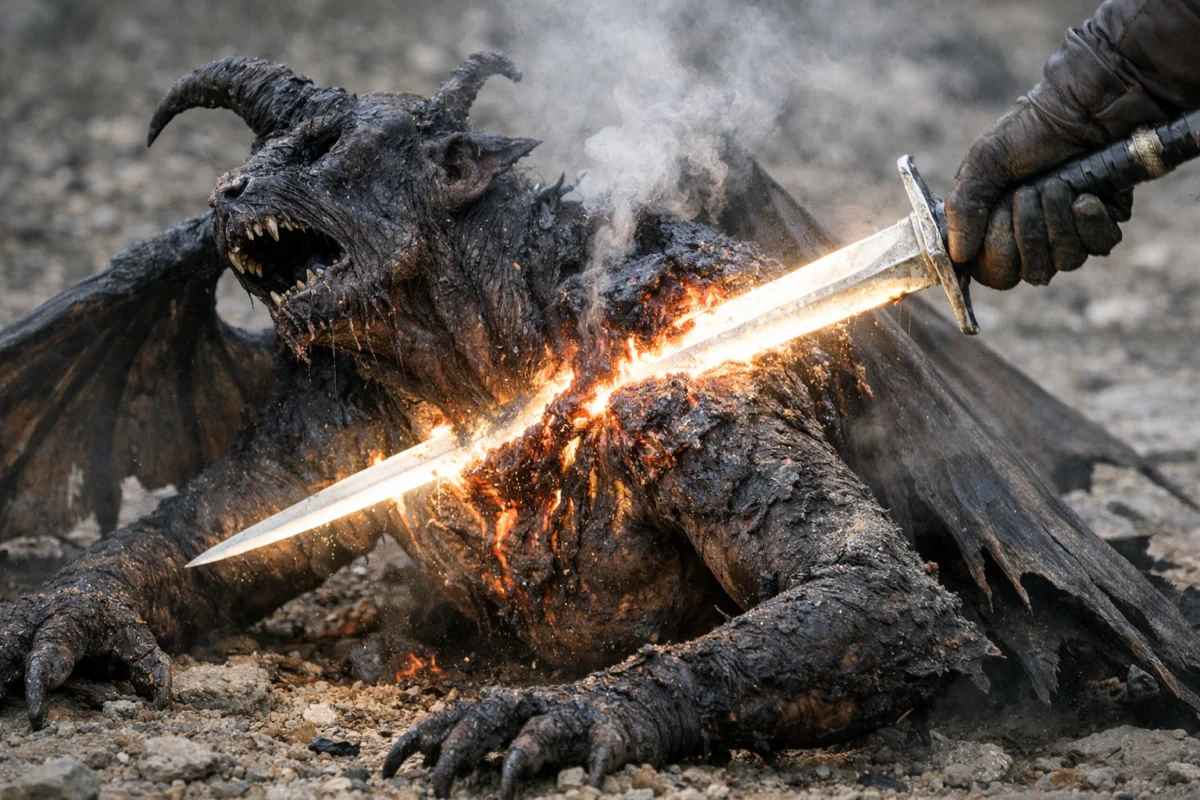
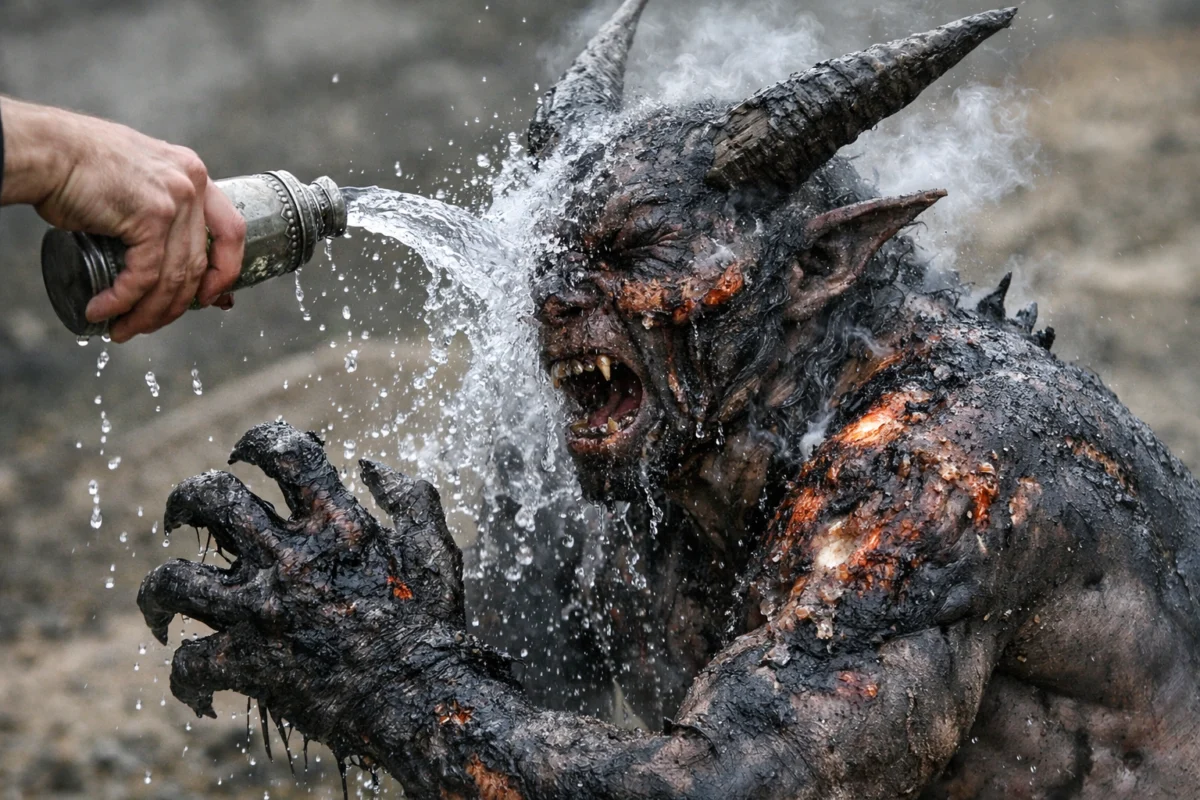
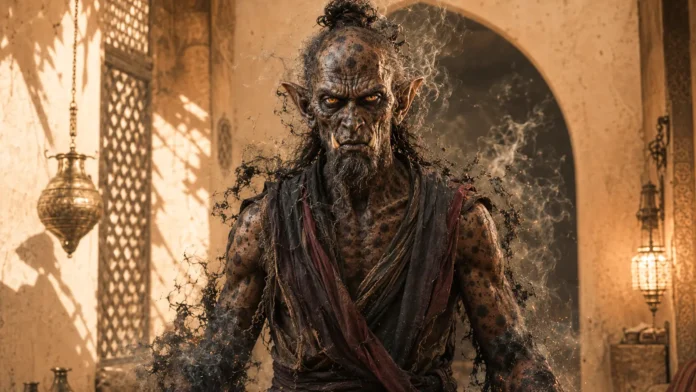
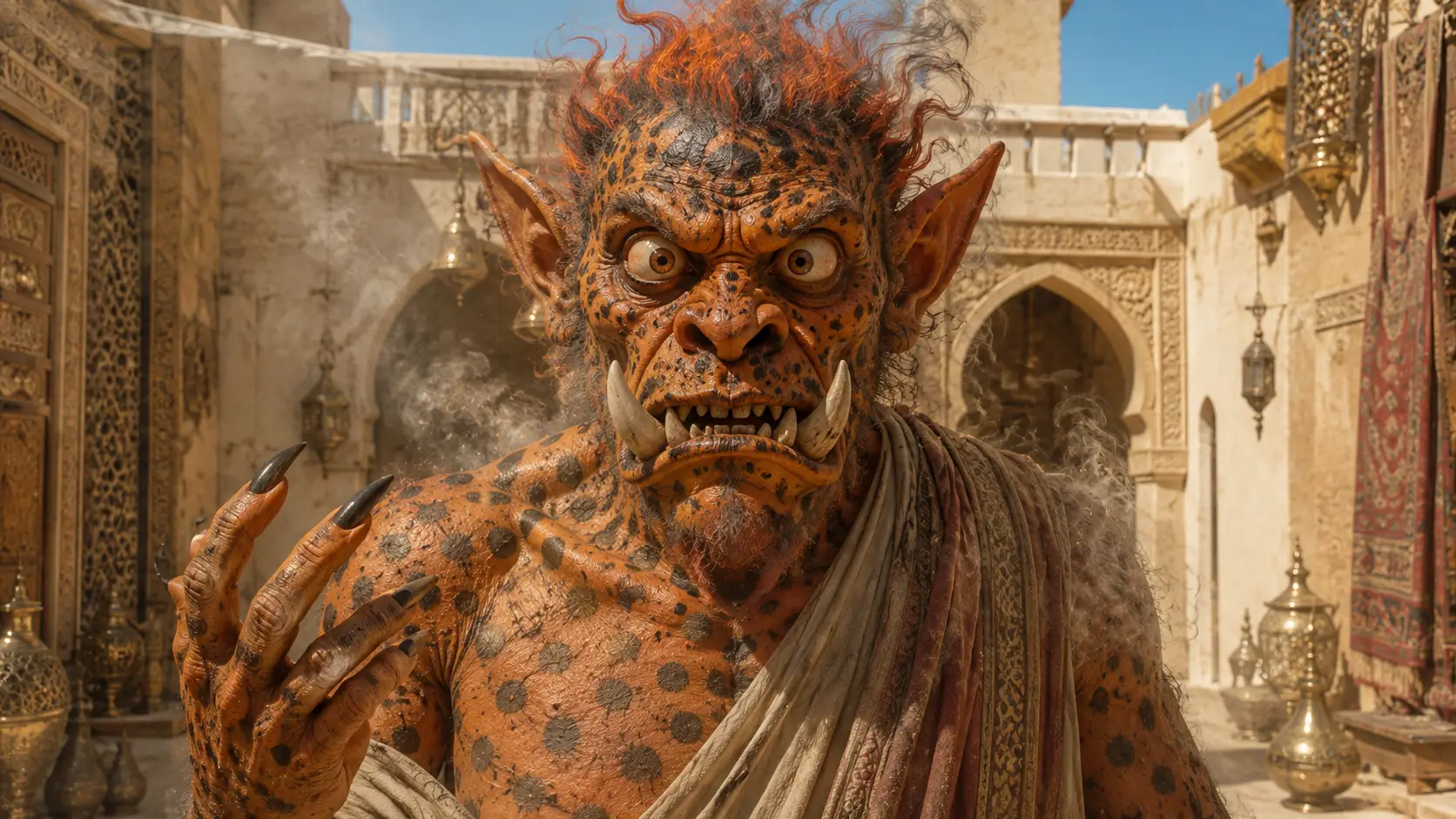
The appearance of the Ifrit varies across different accounts and cultural depictions. Generally, Ifrits are described as large and fearsome creatures, often enveloped in flames or smoke.
They are sometimes portrayed with animalistic features, such as wings, horns, or claws, emphasizing their supernatural and otherworldly nature.
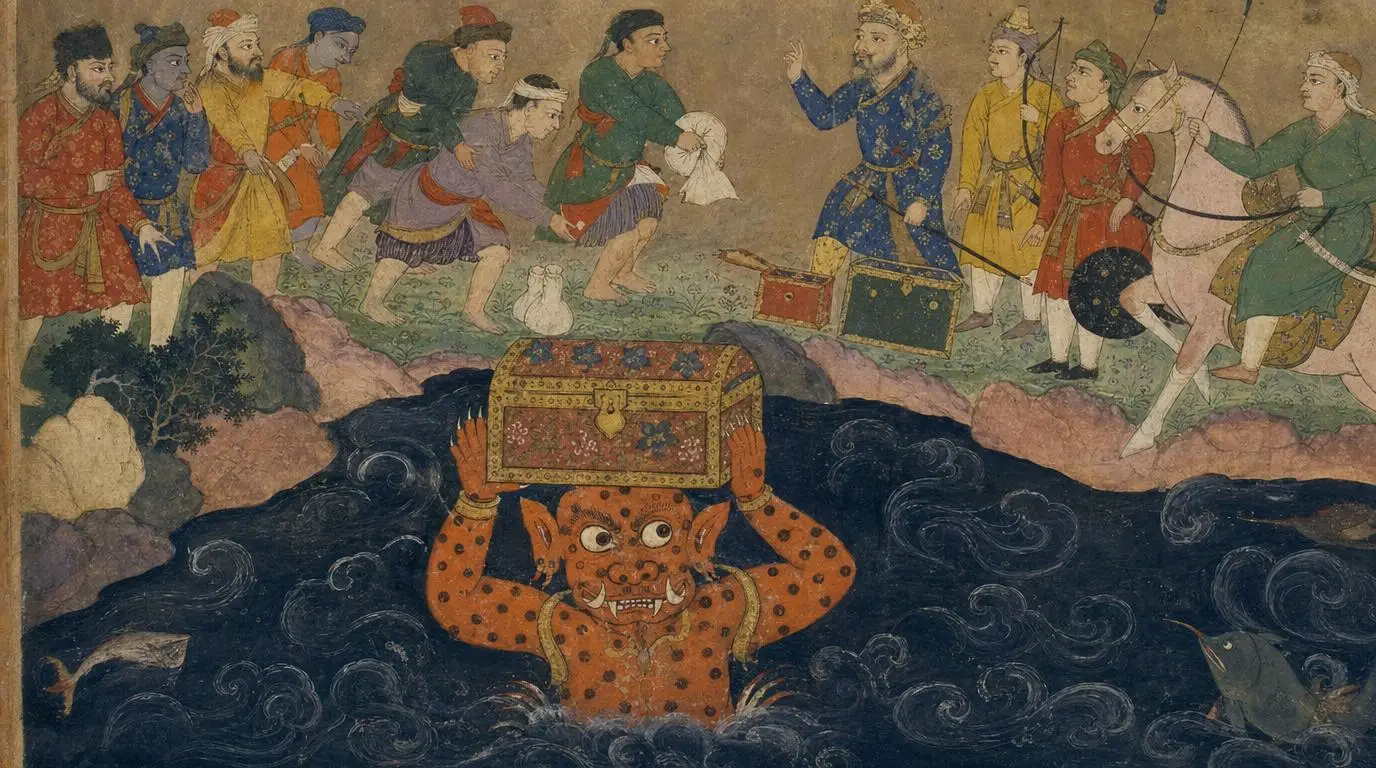
However, specific descriptions can differ, with some traditions depicting them as shapeshifters capable of assuming human form. This variability in appearance highlights the Ifrit’s role as a symbol of chaos and unpredictability within folklore.
In some narratives, the ability to change form allows the Ifrit to deceive humans, testing their wisdom and virtue.
The physical depiction of Ifrits often serves as a metaphor for their inner nature. The fiery imagery associated with Ifrits not only represents their origin from smokeless fire but also symbolizes their passionate and volatile temperament.
This duality of form and function enriches the Ifrit’s role in mythological storytelling.
Background Story
The Ifrit’s background is rooted in its identity as a jinn, a class of spirits believed to inhabit a parallel world to that of humans. In Islamic tradition, jinn were created by Allah from smokeless fire, granting them abilities beyond human comprehension.
The Ifrit, as a particularly powerful jinn, is often associated with rebellion against divine order, embodying themes of defiance and independence.
In many stories, Ifrits are depicted as adversaries to humans, often requiring cleverness or divine intervention to overcome. Their role as both a threat and a test of human morality reflects broader themes in Islamic and Middle Eastern folklore, where the struggle between good and evil is a central motif.
The Ifrit’s interactions with humans often involve themes of temptation, betrayal, and redemption, making them complex characters in the moral landscape of folklore.
Additionally, the Ifrit’s rebellious nature is sometimes portrayed as a reflection of human flaws, serving as a cautionary figure that warns against hubris and the misuse of power. This dual role as both villain and moral lesson underscores the Ifrit’s enduring presence in cultural narratives.
Famous Folklore Stories
The Guardian of Treasures
Specific, widely agreed named tales about ifrits are not consistently documented across sources, but ifrits often appear through recurring folklore patterns rather than a single fixed canon. One common motif casts the ifrit as a dangerous presence attached to a place, such as a ruin, tomb, or hidden cache, where it functions as a supernatural obstacle between a human seeker and forbidden wealth.
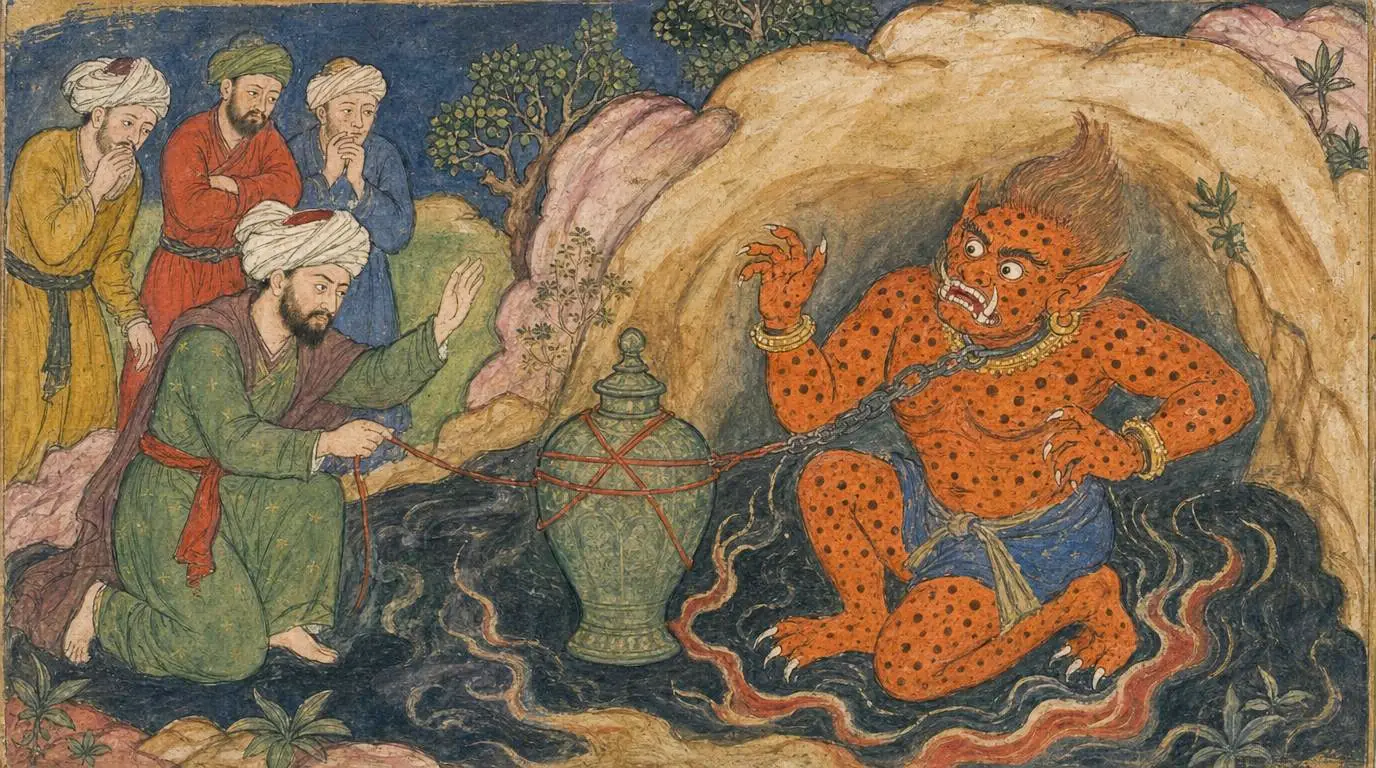
In these episodes, the point is usually not the treasure itself but the test it creates. The hero succeeds through caution, clever speech, or the right protective knowledge, while the ifrit embodies the risk of greed and the peril of crossing into spaces believed to be claimed by the unseen.
Servitude and Rebellion
Another widespread story pattern in jinn folklore involves powerful spirits being constrained by human action or sacred authority, sometimes through objects, written charms, or binding formulas. When an ifrit is placed in this role, it tends to be portrayed as especially resentful and difficult to control, turning “service” into a tense negotiation rather than a simple wish-granting arrangement.
These stories explore power and consequence. The human who tries to command an ifrit may gain short-term advantage, but the narrative often warns that domination invites backlash, and that dealing with a formidable, defiant jinn is never morally or practically risk-free.
The Test of Morality
Ifrit encounters also appear as moral trials, where the being’s menace is tied to temptation, pride, or the misuse of power. The ifrit may offer a bargain, provoke a rash decision, or exploit a character’s arrogance, turning the meeting into a measure of self-control and judgement.
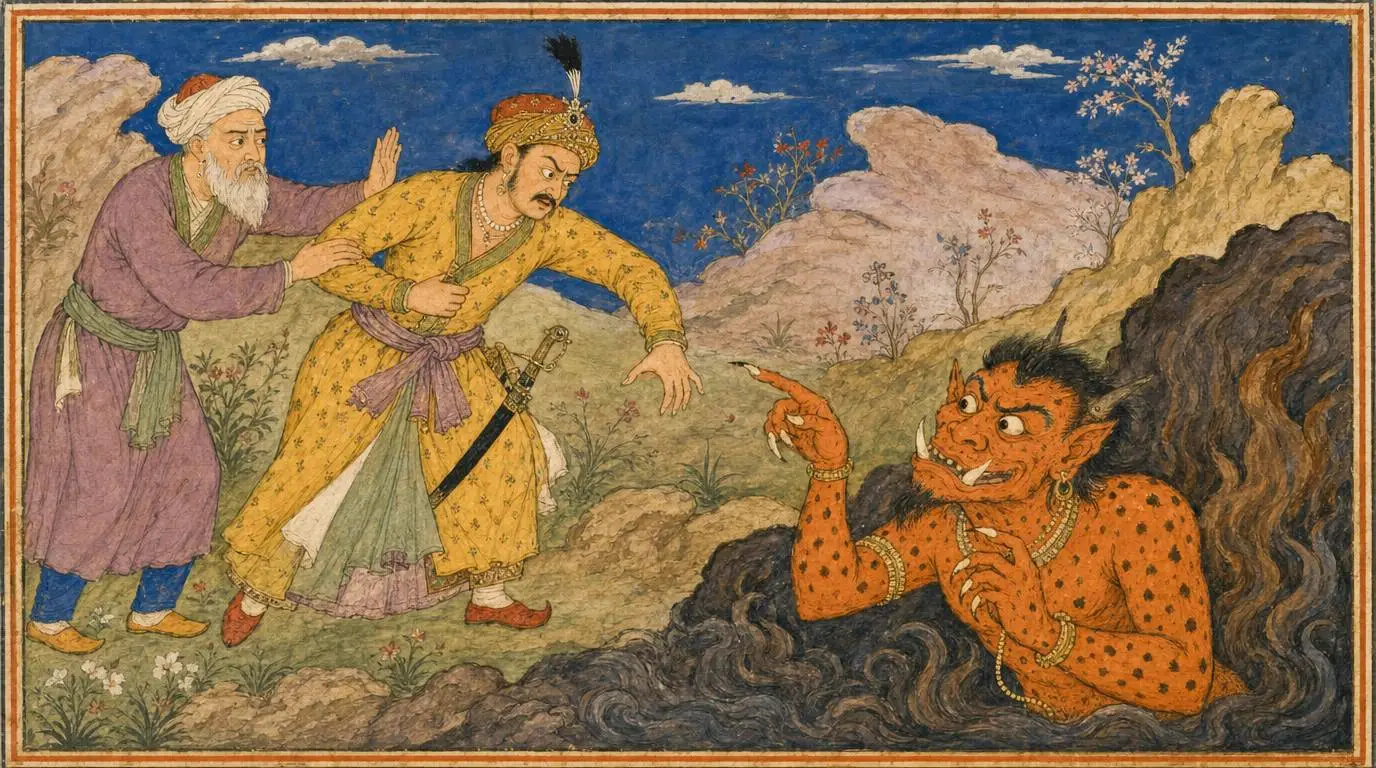
In this motif, victory is not simply physical. The story’s resolution tends to reward restraint, integrity, and humility, using the ifrit as a dramatic figure that exposes human weakness and reinforces the idea that strength without virtue leads to ruin.
Cultural Impact
The Ifrit has had a significant cultural impact, influencing literature, art, and popular culture across the Middle East and beyond. Its portrayal as a powerful and often malevolent spirit has made it a compelling figure in storytelling, symbolizing the dangers of unchecked power and the complexities of human morality.
In literature, the Ifrit has appeared in various forms, from classical Arabic poetry to modern fiction, reflecting its enduring presence in cultural narratives. Its influence can also be seen in visual art, where depictions of Ifrits often emphasize their fiery and formidable nature.
These artistic representations contribute to the Ifrit’s mystique, reinforcing its role as a symbol of both fear and fascination.
The Ifrit’s impact extends beyond traditional media, influencing contemporary expressions of identity and spirituality. In regions where folklore remains a vital part of cultural heritage, the Ifrit continues to be a subject of study and reinterpretation, demonstrating the dynamic nature of myth in shaping cultural understanding.
Related Figures
Jinn
Jinn are a broad category of supernatural beings in Islamic tradition and wider Arabic folklore. They are commonly described as beings created from smokeless fire, living in a world parallel to humans, and possessing free will.
Stories and later classifications often treat “jinn” as an umbrella term that includes many different temperaments and ranks.
The ifrit is usually presented as a particularly formidable kind of jinn. Placing it under the wider jinn category helps explain why ifrit stories vary, and why it can appear as anything from a violent adversary to a dangerous negotiator.
Marid
Marids are often described in later Arabic storytelling as powerful, proud jinn, sometimes linked with the sea or other watery settings. In many retellings they are portrayed as exceptionally strong and magically capable, and may be depicted as aloof, imperious, or difficult to command.
Marids and ifrits overlap as “high-powered” jinn types in folklore. Comparing them highlights a common narrative role: a dangerous spirit whose strength makes bargains, threats, or attempted control risky for humans.
Ghoul
Ghouls (ghūl) are monstrous beings in Arabic folklore, frequently associated with desolate places, graveyards, and predation on humans. They are often portrayed as deceptive or shape-changing in some traditions, but their defining role is usually that of a man-eating menace rather than a morally complex spirit.
Ghouls and ifrits both represent peril from the unseen world, but in different ways. The ghoul is typically a predator, while the ifrit is more often framed as a powerful jinn whose threat can involve pride, vengeance, or supernatural force.
Shayatin (Devils)
Shayāṭīn (singular: shayṭān) are “devils” in Islamic belief and related folklore, associated with temptation, misguidance, and hostility toward human wellbeing. In some traditions, shayatin are treated as a category distinct from ordinary jinn, while in others they are described as wicked jinn, which can blur boundaries in popular storytelling.
Ifrits are not automatically shayatin, but they are often portrayed as rebellious or dangerous, which creates thematic overlap. Both can function as adversarial figures who test human judgement, restraint, and spiritual resolve.
Angels
Angels in Islamic tradition are beings created from light and typically described as obedient servants of God, carrying out divine commands rather than acting from personal desire. They are not usually portrayed as morally conflicted, and they do not share the same folkloric “bargain and trickery” space as many jinn stories.
Angels are included here as a contrast that clarifies the ifrit’s place in the supernatural landscape. Setting obedient angels against free-willed jinn helps explain why the ifrit is so often framed as defiant, volatile, and narratively unpredictable.
Religion/Ritual
In religious terms, the ifrit is not treated as a deity or a being with an established cult. The word appears in the Qur’an in the phrase “an ifrit from among the jinn” (Q 27:39), in the story of Solomon’s court, where the ifrit is characterised as exceptionally strong and “trustworthy” in offering to bring the Queen of Sheba’s throne.
This anchors the ifrit within the broader Qur’anic category of jinn rather than presenting it as a separate object of worship.
Later exegetical and encyclopedic discussions expand on that scriptural moment by treating “ifrit” as a label for a particularly powerful kind of jinn, often emphasising force, boldness, and potential danger. In this framing, the ifrit functions as a way to talk about rank or capability among unseen beings, not as a figure tied to a standard set of offerings, festivals, or sanctioned rites.
Folklore about jinn sometimes includes protective actions, boundaries, or recitations intended to avoid harm from the unseen, but specific “ifrit rituals” are not consistently documented across the sources used for this article. Where later storytelling depicts an ifrit being constrained, it is usually through narrative devices such as sacred authority, written charms, or binding formulas, and should be understood as part of story tradition rather than a single, universally attested religious practice.
Scientific or Rational Explanations
From a scientific perspective, the belief in Ifrits and other jinn can be understood as a cultural response to unexplained phenomena. In pre-modern societies, supernatural explanations provided a way to make sense of natural disasters, mental illness, or other mysterious occurrences.
The Ifrit, with its association with fire and destruction, may have served as a metaphor for natural events that were beyond human control.
Anthropologists and historians often view the Ifrit as a symbol of the human struggle to understand and control the unknown, reflecting broader themes of power, fear, and morality in folklore. The narratives surrounding Ifrits can be seen as allegorical, offering insights into human psychology and societal values.
This interpretation highlights the role of myth as a tool for exploring existential questions and the boundaries of human experience.
Modern Cultural References
True Blood, S5E5 “Let’s Boot and Rally”, Ifrit as a smoke-and-fire curse/monster, episode
Terry Bellefleur learns that an Ifrit is hunting the surviving members of his former military squad after an Iraqi woman they killed placed a curse on them.
The series depicts the Ifrit as a supernatural entity of smoke and flame, responsible for unnatural fires and the deaths of the soldiers it pursues. The creature becomes a recurring threat across the fifth season.
Source
FINAL FANTASY XVI, Ifrit as the “Dark Eikon” bringing calamity, video game
In this Square Enix action RPG, Ifrit is treated as an Eikon (a towering summoned being); the story identifies Ifrit as a mysterious “Dark Eikon” whose appearance is associated with tragedy and calamity.
Conclusion
The Ifrit remains a fascinating figure within Middle Eastern and Islamic folklore, embodying themes of power, rebellion, and the supernatural. Despite the limited specific evidence about individual Ifrit stories, the entity’s broader cultural significance is evident in its recurring presence in literature and art.
As a symbol of the complex relationship between humans and the supernatural, the Ifrit continues to captivate audiences, serving as a reminder of the enduring power of myth and storytelling in shaping cultural narratives. The Ifrit’s dual nature as both a destructive force and a moral lesson ensures its place in the evolving landscape of mythological study and cultural expression.
Further Reading
Verse (27:39) – English Translation – Quranic Arabic Corpus
Direct Qur’anic locus for the term (ʿifrīt min al-jinn) with multiple parallel translations and links to morphological/lexical analysis; foundational primary-context reading for understanding what ‘ifrit’ denotes in scripture.
Source
Page:The Book of the Thousand Nights and a Night – Volume 1.djvu/48 – Wikisource
Page from an English public-domain edition of the Thousand Nights that uses ‘Ifrit’ in a narrative scene (the captive woman threatening to rouse her husband, an ifrit); concrete literary usage for how ifrits appear in Arabic story tradition.
Source
ALF LAYLAH WA LAYLAH.
Library-hosted digitized text where ‘Ifrit’ appears in well-known episodes (e.g., the fisherman-and-spirit/bottle cycle in some editions); provides searchable context for how ifrit is narrated in popular story corpora.
Source
Foreign vocabulary of the Qur’an
University-hosted full text of Arthur Jeffery’s classic philological study; includes the Qur’anic lemma عِفْرِيتُ (Q 27:39) and discusses proposed etymologies/semantic range used in early scholarship on the term.
Source
The Modern School and Global Modernity: The Example of an Egyptian Ghost Story of the mid-1920s (Mamūd Ṭāhir Lāshīn, Qiṭʿat ʿifrīt)
Academic article using an Egyptian ‘ifrit’ ghost-story title/genre as a case study; relevant for later/vernacular Middle Eastern senses of ʿifrīt/ʿafārīt as frightening spirits/ghosts in modern Arabic cultural imagination (beyond the Qur’anic epithet).
Source
İFRİT – TDV İslâm Ansiklopedisi
Dedicated encyclopedia entry (Turkish) on the mythic ifrit within Islamic tradition; summarizes Qur’an occurrence (27:39), major tafsir positions (e.g., al-Tabari, al-Razi), and related hadith narratives where an ifrit attempts to disrupt prayer.
Source
HĀRUT and MĀRUT – Encyclopaedia Iranica
Scholarly reference entry that explicitly discusses ʿEfrit/ifrit in relation to Avestan Āfriti as part of a broader argument about transmission and transformation of motifs/terms across Iranian and Islamic contexts.
Source
Tafsir Surah An-Naml, Ayat 39 (Tafseer Jalalayn) – Quran.com
Page-specific classical tafsir for Q 27:39 explaining the ifrit’s boast (“strong and trustworthy”) and narrative context (Solomon’s court); useful for moving from the bare verse to traditional interpretive framing.
Source