Introduction
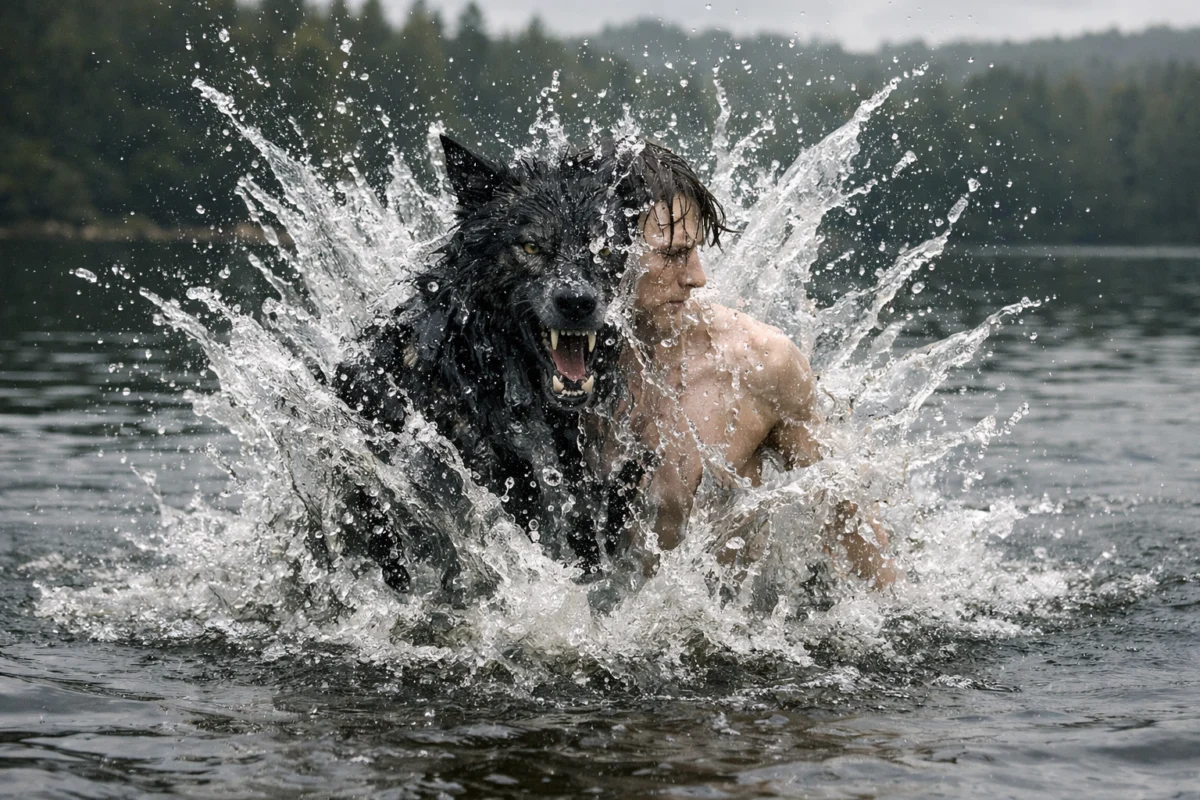
Luisõ, commonly written Luisón in Spanish, is a figure of Paraguayan Guaraní folklore associated with night, cemeteries, and the dead. In frequently recorded accounts, he is a human who becomes an enormous dog, rather than a wolf or a permanently animal-shaped monster.
The seventh son has a particular connection with this transformation. Some versions specify seven successive male births without an intervening daughter. The resulting creature leaves ordinary human surroundings for the cemetery, where its activities include digging up graves and feeding on corpses.
This familiar outline does not encompass every telling. An educational account includes Luisõ among the children of Tau and Kerana, while collected narratives describe the seventh son of a human family. These are different narrative frameworks, not interchangeable details of one fixed biography.
Luisõ therefore belongs both to a recognizable Paraguayan storytelling tradition and to a history of adaptation. His dog form and cemetery associations recur across published accounts, but his genealogy, powers, and symbolic role vary. Those differences are essential to understanding the figure.
History/Origin
Luisõ’s origins cannot be securely dated from the surviving published accounts. An early literary witness appears in the 1937 Spanish edition of Narciso R. Colmán’s Nuestros antepasados (Ñande Ypy Cuéra), published under the name Rosicrán. In this version, Luisón is the seventh child of Tau and Kerana, associated with night, death, cemeteries, and feeding on corpses.
This literary genealogy differs from narratives about the seventh son of an ordinary human family. The 1937 edition documents Rosicrán’s formulation, but does not establish when its elements first circulated orally or which genealogical framework developed first.
A 1968 scholarly review of Gustavo González’s work on Paraguayan Guaraní myths, legends, and superstitions records the human seventh-son and nighttime-dog motifs together. It specifies a seventh male child born without intervening girls who becomes a dog at night. The review establishes documentation by that date, not the belief’s beginning, and is not itself the original collected testimony.
Ramón Bogarín’s version, included in Francisco Pérez-Maricevich’s 1998 compilation Mitos y leyendas del Paraguay, follows a human who becomes a huge black dog and visits the cemetery. The compilation cautions that many included accounts are literary reworkings of oral tradition.
The bilingual Mitos y leyendas del Paraguay mestizo, published in 2010, preserves another detailed telling in Spanish and Guaraní. Its transformation episode connects the seventh son, bodily change, grave disturbance, and protective beliefs. Like the earlier publications, it records a version rather than a moment of origin.
Cultural transmission offers another perspective on this history. In his 2022 linguistic study, Domingo A. Aguilera Jiménez interprets Luisõ as an adaptation of the European werewolf concept within Paraguayan popular culture. The important local distinction is the transformed person’s dog-like rather than wolf-like form.
That interpretation does not establish a single route or date of transmission. Paraguay’s intangible-heritage study likewise treats legends as subject to adaptation and refashioning. Luisõ belongs within this changing cultural setting, where literary genealogy and collected transformation narratives overlap without forming one fixed biography.
Name Meaning
Luisõ is a documented Guaraní spelling, while Luisón appears in Spanish-language accounts of the same Paraguayan folklore figure. In collected narratives, the name designates the human shapeshifter or his frightening dog form, although descriptions and narrative emphasis vary.
Domingo A. Aguilera Jiménez’s 2022 linguistic study documents luisõ in formal Guaraní lexicography. This establishes its recorded use within the language, but registration alone does not demonstrate that the word originated in Guaraní or establish a literal translation.
A Portuguese-origin explanation is reported in the 2022 regional anthropological study “Un perro negro así grandote”. El lobisón criollo entre la historia clásica y los devenires indígenas en el este de Formosa (Argentina). This is a proposed etymology, not a settled derivation or a word-for-word Guaraní meaning.
The proposed history of the name remains distinct from the figure’s cultural development. Aguilera Jiménez’s interpretation of Luisõ as a local adaptation of European werewolf traditions concerns the transformation of a storytelling concept. That comparison does not, by itself, establish how the name developed. Likewise, the figure’s associations with night, cemeteries, and the dead are narrative features, not an established literal gloss.
Appearance
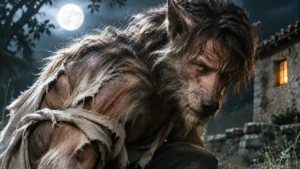
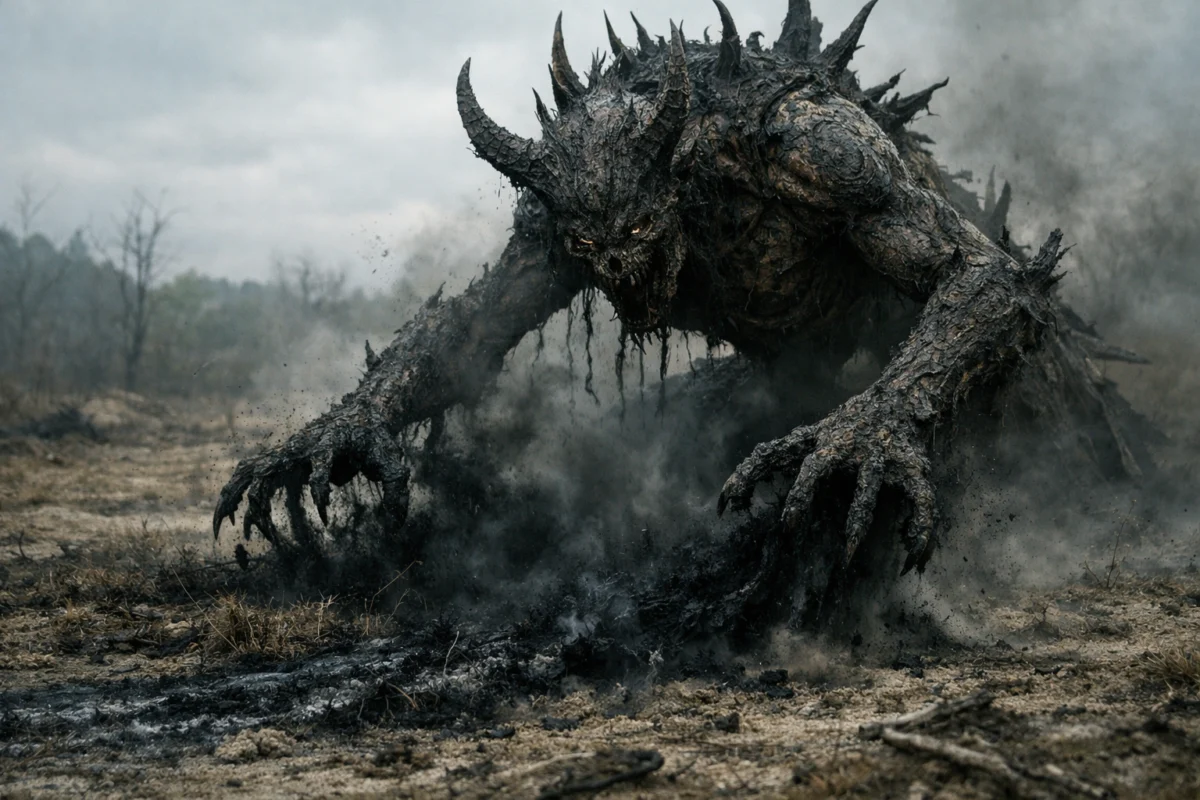
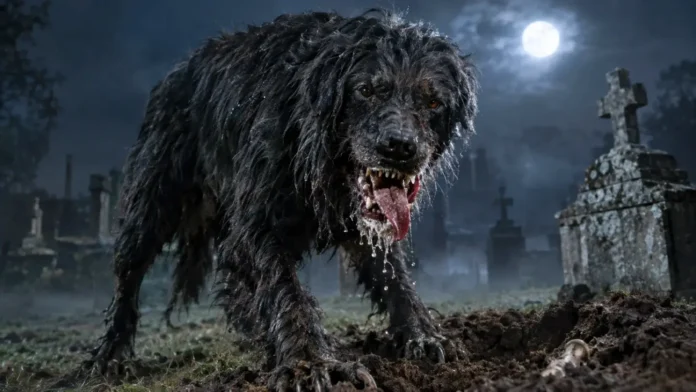
The strongest recurring description is an exceptionally large black dog. Both the 1998 Bogarín version and the 2010 bilingual collection use this animal form. A conventional European wolf-man would therefore misrepresent the principal appearance documented in these Paraguayan accounts, despite the comparative connection with werewolf traditions.
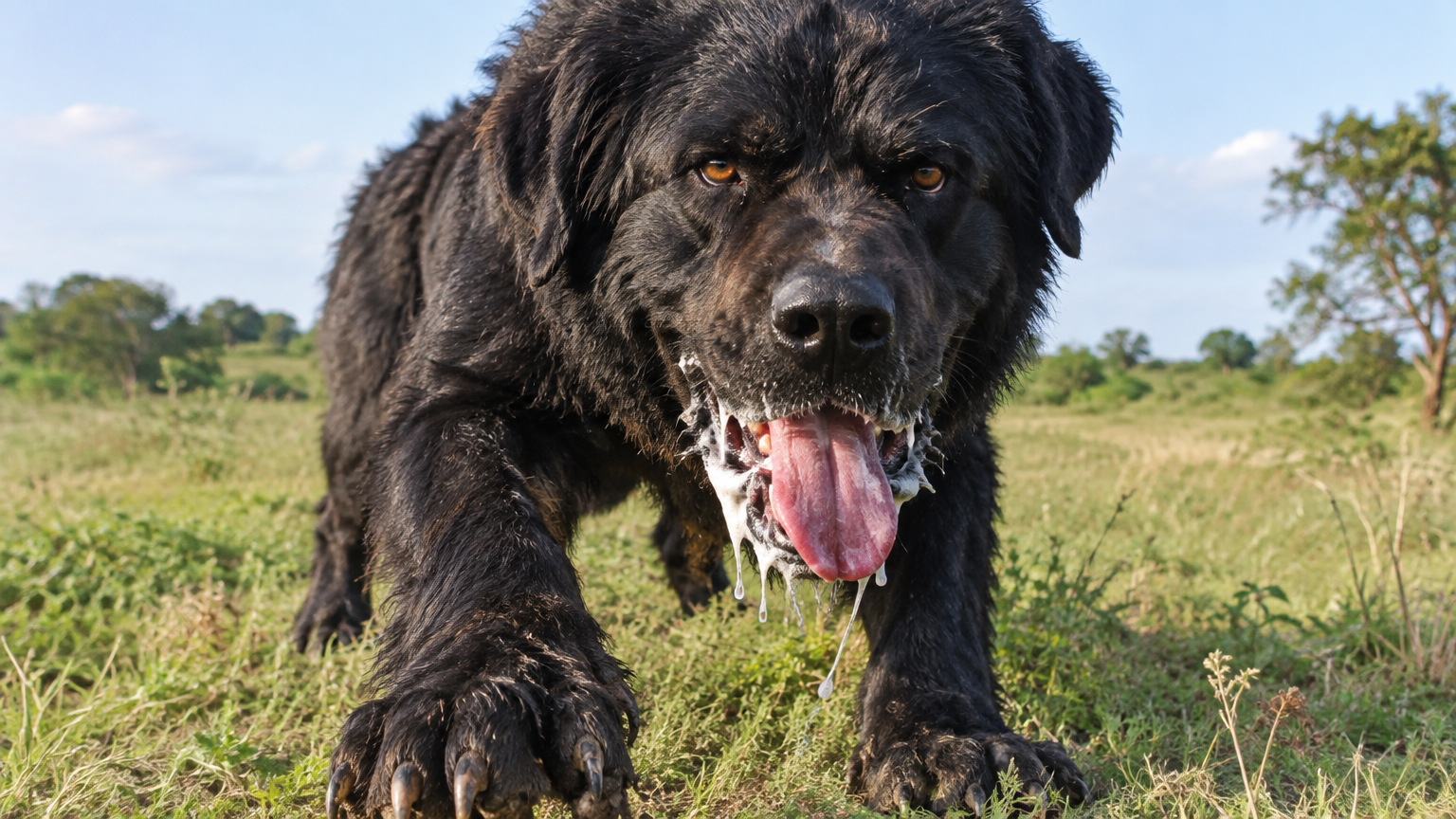
In Bogarín’s telling, the contrast between human and animal is pronounced. Before transformation, Luisón is pale, gaunt, and unkempt, with an odor associated with corpses. Afterward, he becomes a monstrous black dog. The deathly qualities thus extend beyond the cemetery into his human appearance.
The 2010 version gives the transformed body more elaborate features: a huge head, rough hair, claws, a hanging tongue, and foaming jaws. These details intensify the animal’s threatening presence, but they belong to this particular collected description rather than a universally prescribed portrait.
Transformation is itself a visible spectacle in that account. The man scratches the ground, his voice changes, and he rolls in the grass. As he rises, his eyes appear fiery, his nails become claws, and his skin becomes covered with hair.
A separate description in Avañe’ẽ Róku / Brote de Guaraní emphasizes a large dog-like being with long, dirty hair and a foul smell. Across these versions, size, neglected hair, and repellent odor reinforce the association with death, although the precise combination of bodily traits varies.
Background Story
Luisõ’s background brings together family relationships, bodily transformation, and the treatment of the dead. In the seventh-son narratives, the supernatural danger begins within an ordinary household. A particular sequence of births marks someone who may later cross the boundary between human life and animal existence.
In the 2010 collection, the vulnerable child is the seventh of seven successive brothers. The account also includes baptism in seven churches and presidential sponsorship as protection. This combination places the feared transformation within a narrative shaped by family obligation, Christian protection, and public authority.
The cemetery supplies the other central setting. Grave digging and corpse eating turn a place reserved for the dead into a site of disturbance. As a narrative interpretation, this makes Luisõ a figure of violated burial boundaries, not merely a dangerous animal encountered after dark.
Bogarín’s version adds a different symbolic emphasis by presenting Luisón as a guardian of the dwelling of the dead. That characterization coexists with his corpse-feeding behavior in the telling. It should not be generalized into a universal belief that Luisõ protects graves or serves as a deity.
The Tau and Kerana framework offers another way of organizing the figure. Avañe’ẽ Róku / Brote de Guaraní includes Luisõ among their seven children, placing him within a wider mythic family. This differs from the human-family setting and should remain a separately identified formulation.
These accounts preserve overlapping rather than identical explanations of the creature. European shapeshifting comparisons, Guaraní-language storytelling, Christian protective elements, and literary retelling all contribute to the documented tradition. None alone justifies reducing Luisõ to either an imported werewolf or an unchanged ancestral figure.
Famous Folklore Stories
Luisõ’s documented narratives include transformation scenes, cemetery visits, and encounters with frightened travelers. The headings below describe these episodes rather than reproduce authenticated traditional tale titles. Two published versions preserve overlapping events, but their details should remain distinct.
The seventh son’s transformation and cemetery visit
In the 2010 bilingual collection Mitos y leyendas del Paraguay mestizo, the seventh of seven successive brothers withdraws to an isolated place. He removes his clothes, scratches the ground, changes his voice, and rolls in the grass as his body begins to change.
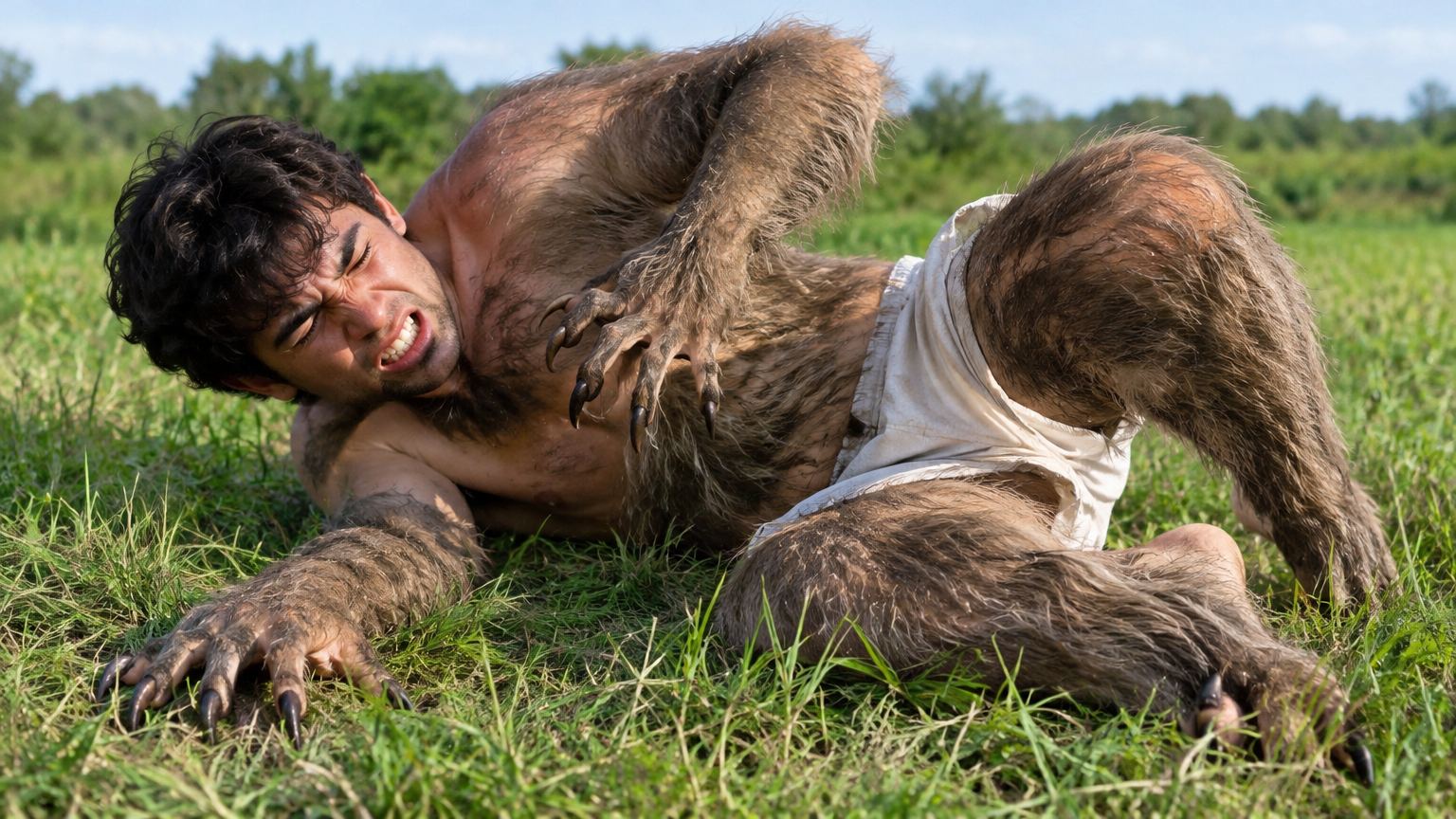
His nails become claws and his skin becomes fur. Now a large black dog, he travels to a cemetery and digs into recent graves. He tears at the buried bodies, rolls among the remains, and carries away a piece to eat.
The danger extends beyond the cemetery, although this version sets a specific limit on it. Luisõ may bite living people he encounters, but he cannot kill them. That restriction belongs to this collected account, not necessarily to every telling of the figure.
The nighttime traveler’s fright
Ramón Bogarín’s version, included in the 1998 compilation Mitos y leyendas del Paraguay, follows a human who becomes an enormous black dog at night. On a stormy night, he heads toward the local cemetery, opens a grave, and feeds on a corpse.
A traveler who meets him can become speechless and chilled with fright. The account then turns from encounter to remedy: earth from the meeting place is put beneath the sufferer’s tongue while Luisón’s name is repeated three times. No named traveler or securely located incident accompanies this episode.
Cultural Impact
Luisõ belongs to Paraguay’s recognized folklore heritage, not merely to imported monster imagery. His inclusion among common myths in the national intangible-heritage study establishes that cultural standing, although it does not measure how widely particular communities believe or recount each version.
Literary treatment has also given the figure a defined mythological role. In Narciso R. Colmán’s Ñande Ypy Cuéra, published under the name Rosicrán, Luisón is Tau and Kerana’s seventh child, associated with night, death, cemeteries, and feeding on corpses.
This authored genealogy differs from accounts about a human family’s seventh son. Its appearance in literature and educational material helps explain why readers encounter both formulations. Neither should erase the other, and literary publication alone cannot establish which formulation first circulated orally.
Later poetry reinterprets the figure rather than simply cataloguing his traits. Ramiro Domínguez’s Las cuatro fases del Luisón makes him the subject of a poem-cycle. The critical essay Las fauces de la luna discusses that reinterpretation against the creature’s traditional graveyard associations.
Performance offers a more explicit change of role. In the Guaraní-language adaptation Peru ha Luisón, reported in 2013, a boy seeks to capture Luisón with a pitogüé’s help. A horn represents the creature, translating a feared cemetery visitor into a character within musical storytelling.
Similar Beasts
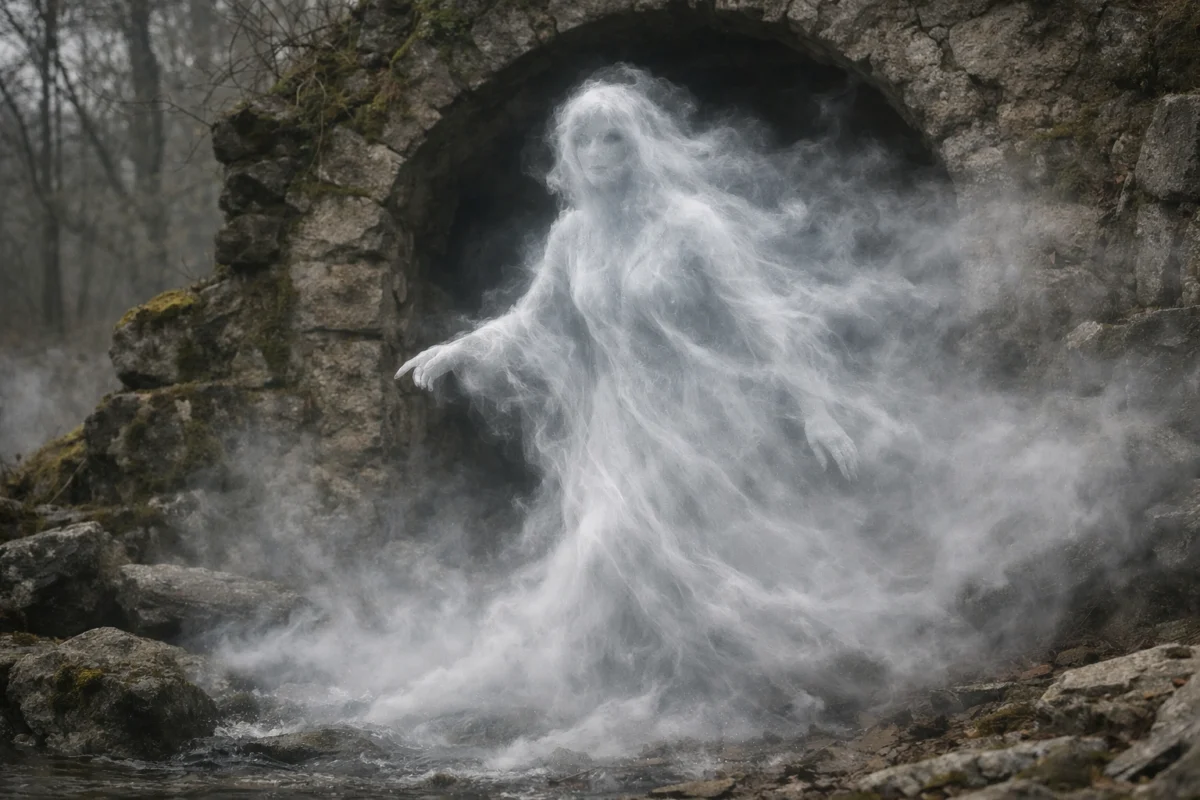
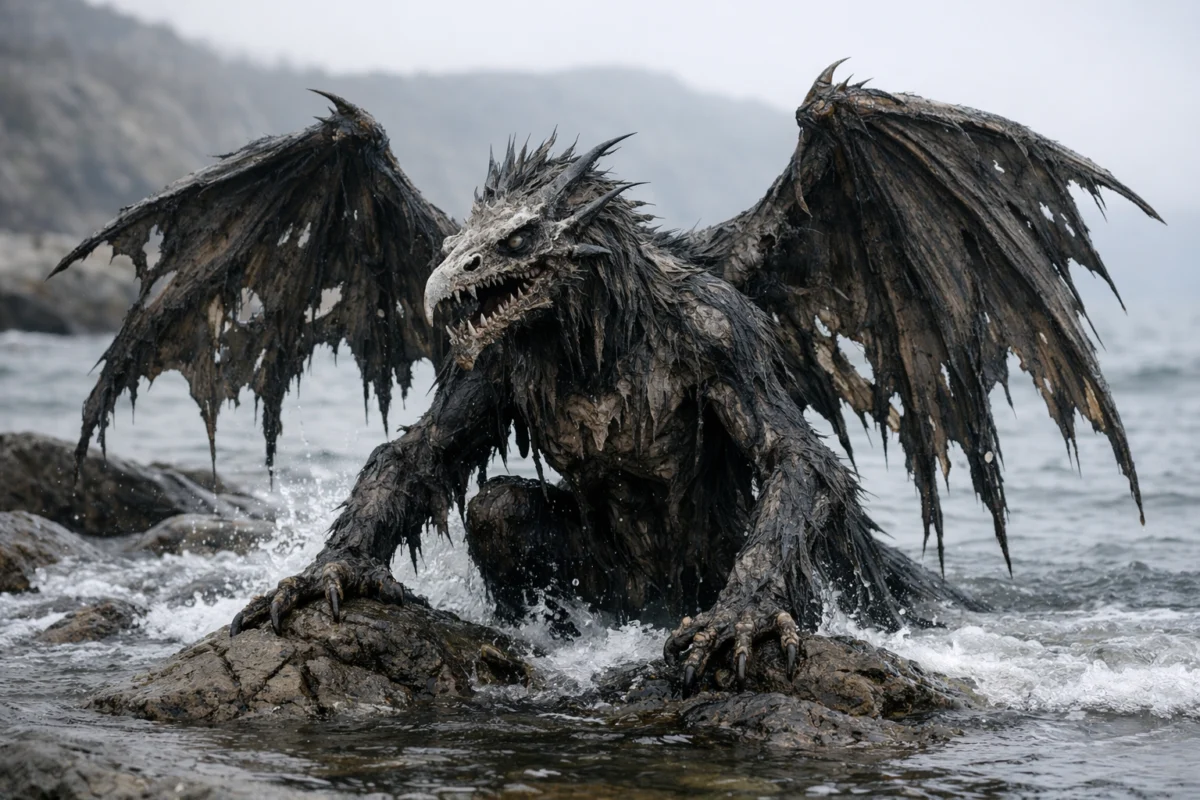
Ao-Ao
Ao-Ao is a separate being within the Tau and Kerana offspring cycle. Educational presentations describe and illustrate it independently, rather than treating it as another name for Luisõ.
The relationship is genealogical within that particular mythological arrangement. It does not establish that Ao-Ao shares the human seventh-son transformation found in other Luisõ accounts.
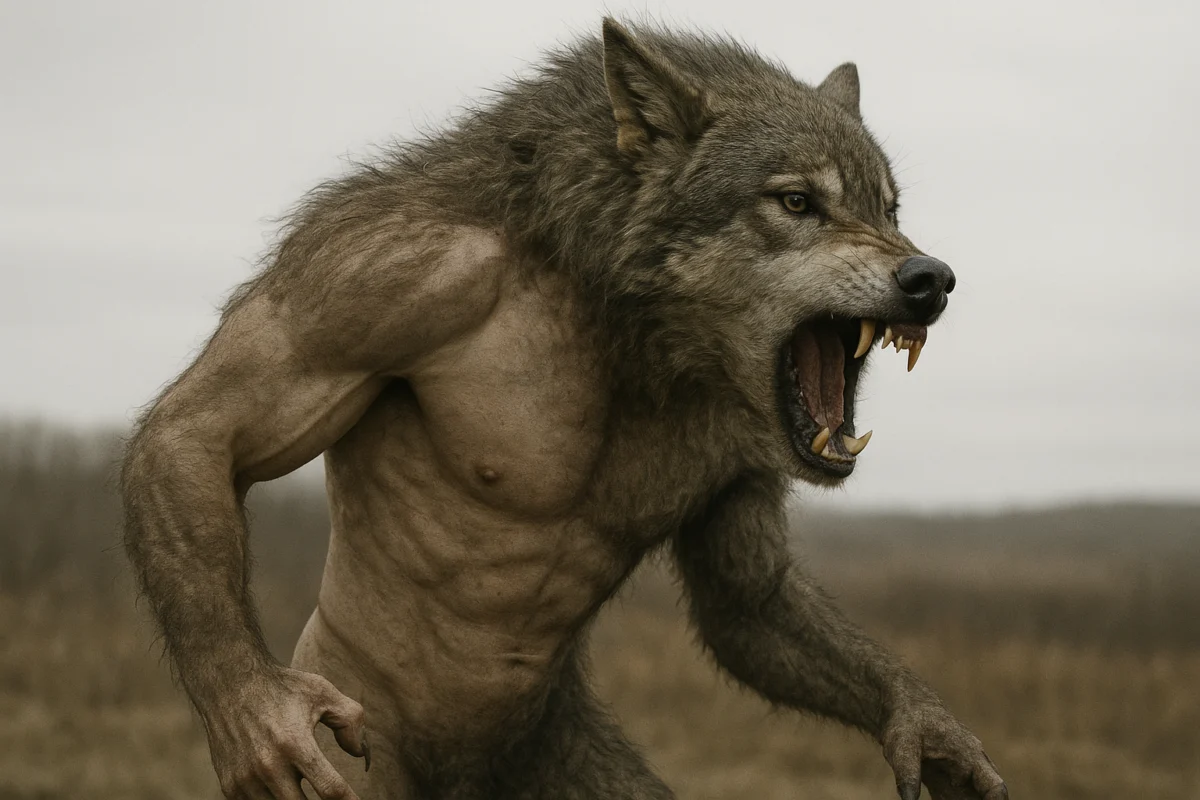
Werewolf
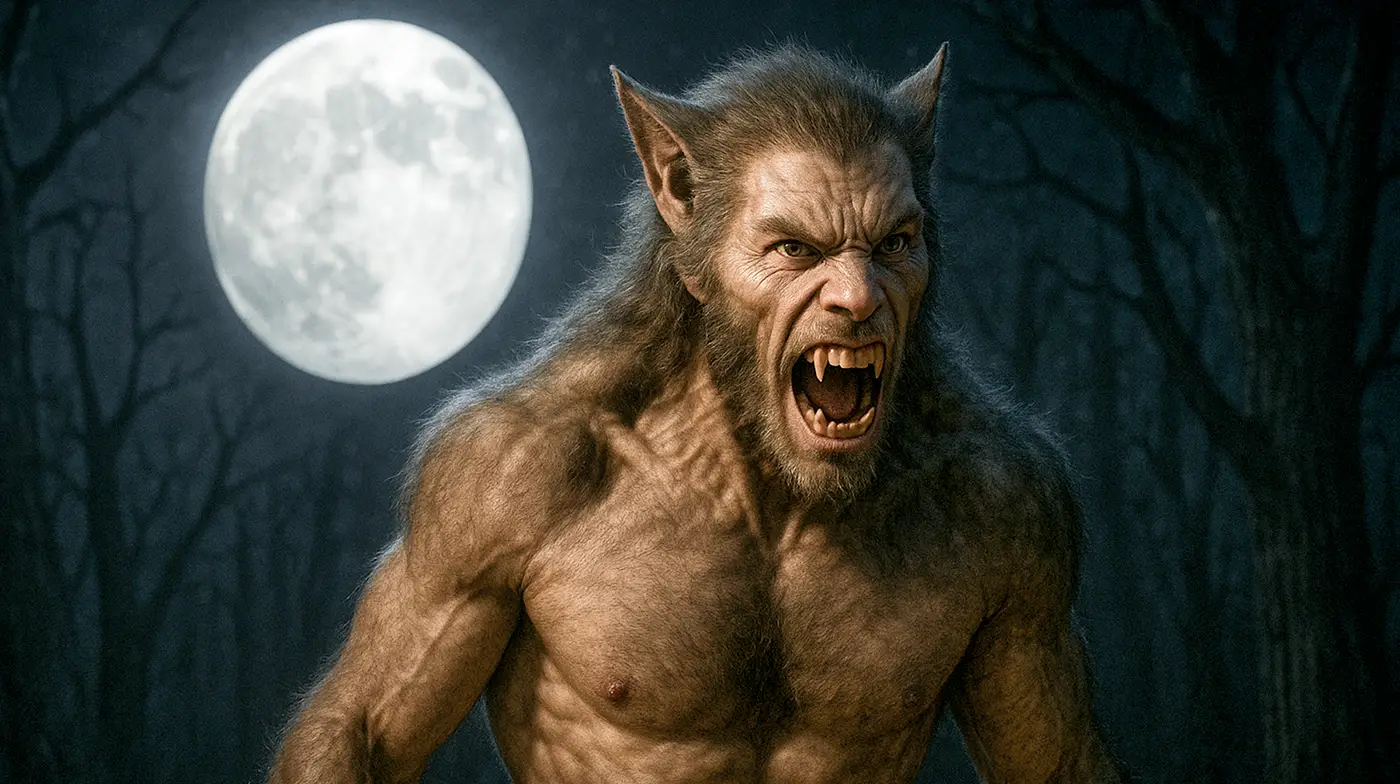
The Werewolf is a human-to-wolf shapeshifter in European folklore. Its central comparison here is the crossing between human and canine bodies, rather than any single transformation schedule.
Specialist scholarship connects Luisõ with werewolf traditions while emphasizing local adaptation. The recurring Paraguayan animal form is a large dog, not automatically a European wolf-man.
Dip
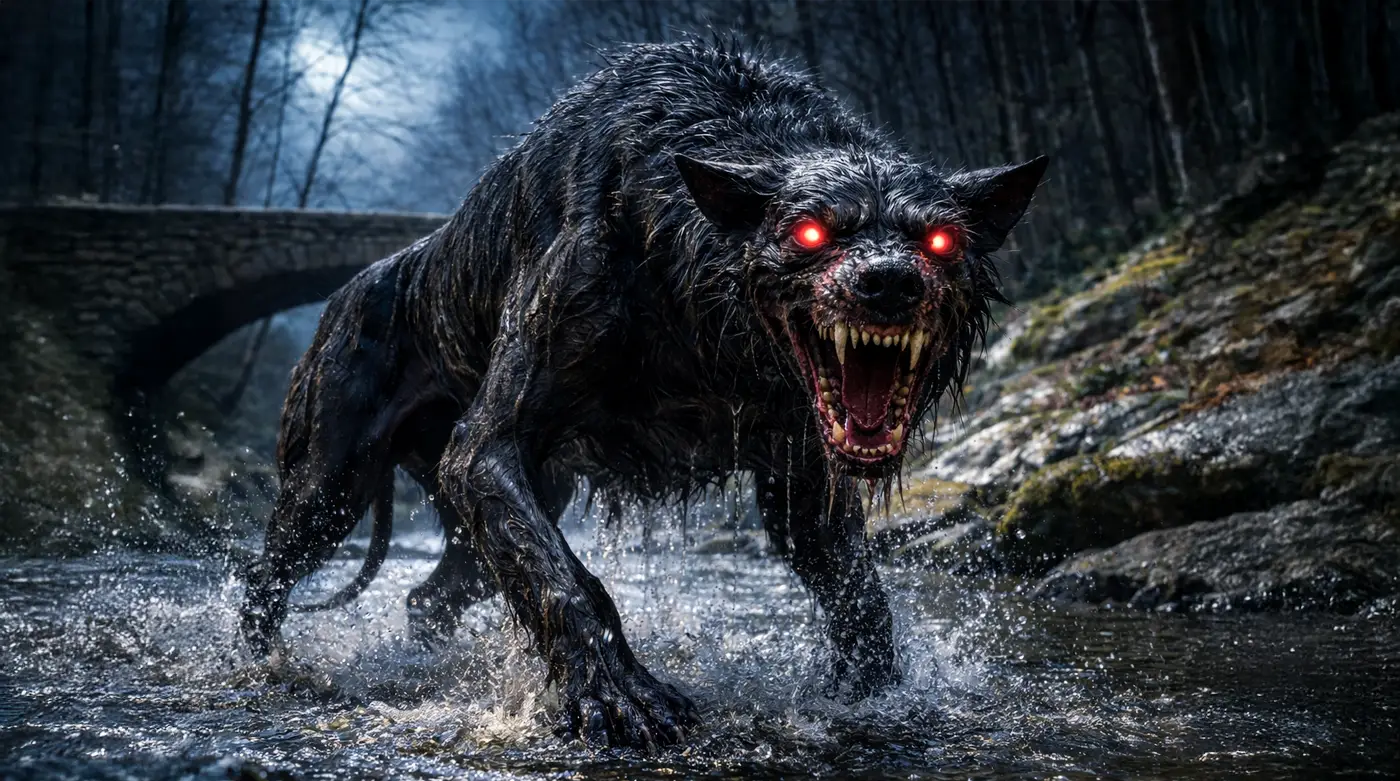
The Dip is a supernatural black dog in Catalan folklore, associated with sinister encounters and death. Its canine appearance makes it a useful visual comparison with Luisõ.
Both figures join a threatening dog form to mortality. That resemblance does not demonstrate shared ancestry or give the Dip Luisõ’s documented seventh-son transformation narrative.
Cerberus
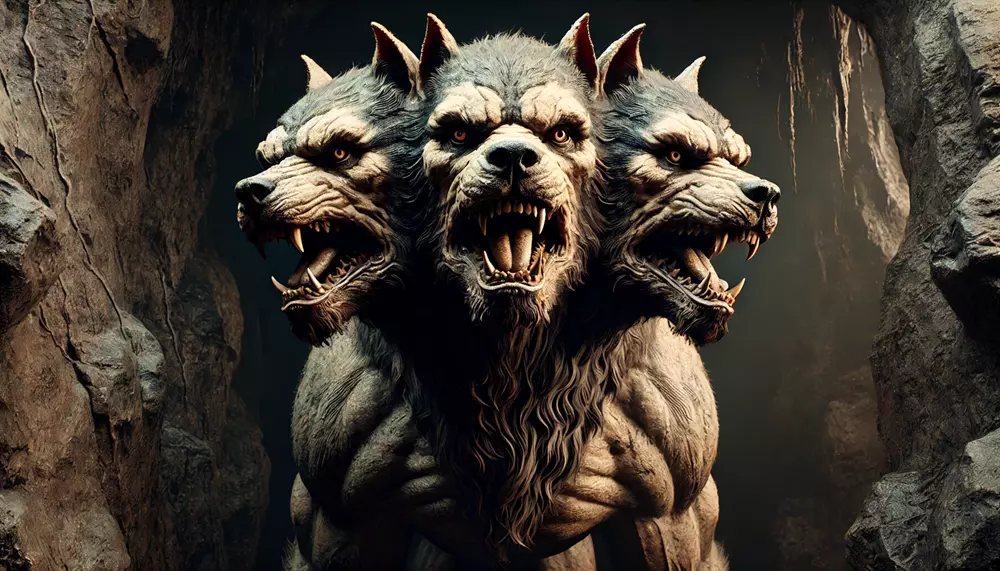
Cerberus is the multi-headed dog guarding the Greek Underworld. His task is to prevent the dead from escaping and to keep the living from entering its domain.
The comparison concerns dogs and the boundary of death. Bogarín’s guardian interpretation offers a limited parallel, but Luisõ’s cemetery scavenging differs sharply from Cerberus’s assigned guardianship.
Religion/Ritual
The 2010 collected account gives a preventive response to the seventh-son danger: baptism in seven churches and sponsorship by the President of the Republic. These are reported protective beliefs within that version, not evidence that every Paraguayan family followed such a procedure.
Protection during an encounter draws on Christian blessing as well. In the same account, blades and bullets must be blessed to injure Luisõ. The requirement belongs to the story’s supernatural rules; it should not be presented as an established religious prescription.
A separate capture method combines a branch of ruda, or rue, a cross gesture, and saying the creature’s name backwards. These details show several protective devices operating together within the collected narrative, rather than documenting a standardized ceremony shared across communities.
Bogarín’s remedy addresses the traveler’s resulting fright instead of preventing transformation. Earth from the encounter site and three repetitions of Luisón’s name connect treatment to the frightening event itself. This is historical folklore material, not medical advice or evidence of the remedy’s effectiveness.
Scientific or Rational Explanations
The strongest scholarly explanations concern how the tradition developed, rather than identifying a real transforming animal. Folklore collections document narratives and beliefs; they do not establish bodily transformation. Nothing in the cited scholarship demonstrates a biological process behind the human-to-dog change.
A cultural-linguistic interpretation appears in Domingo A. Aguilera Jiménez’s 2022 study of Portuguese-derived vocabulary in Paraguayan Guaraní. It understands Luisõ through the adaptation of a European werewolf concept into Paraguayan popular culture, with a dog taking the wolf’s place.
Regional anthropological scholarship similarly discusses dogs replacing wolves in documented Argentine and Paraguayan transformations. This offers an environmental context for the imagery. It explains how a traveling narrative might acquire locally familiar animal forms, not why any particular witness reported an encounter.
The distinction between oral tradition and published retelling also matters. The 1998 compilation cautions that many included accounts are literary reworkings grounded in oral material. Detailed scenes therefore cannot automatically be treated as verbatim testimony or as unchanged survivals from an ancient religious system.
The stories themselves support a narrower social reading: transformation threatens a family’s child, cemetery feeding violates treatment of the dead, and encounters leave travelers frightened. These are observable narrative concerns. Diagnosing the tradition through disease, hallucination, or mistaken animal identification would require evidence these accounts do not provide.
Modern Cultural References
Renacer de las sombras – short film about Luisón, film
A Paraguayan youth group made this horror short about Luisón, presenting the creature as one of Paraguay’s traditional mythic figures. The reported filming locations included San Lorenzo and Arroyos y Esteros.
Source
Peru and Luisón (Pedro and the Wolf) – Luisón as a musical character, music
In “Peru and Luisón (Pedro and the Wolf) – Luisón as a musical character,” Luisón is among the characters represented by instruments. This Guarani-language musical storytelling work adapts Sergei Prokofiev’s Peter and the Wolf.
Source
Conclusion
Luisõ is best understood as a Paraguayan Guaraní folklore figure whose recurring features are nighttime transformation, a large dog form, and an unsettling connection with cemeteries and the dead. Those shared elements do not make every recorded account identical. The seventh son of a human family and the offspring of Tau and Kerana belong to different narrative formulations, while particular descriptions, remedies, and symbolic interpretations require the same care. Preserving these distinctions gives a clearer picture than assembling every detail into one supposedly definitive legend.
The figure’s symbolic force lies in the crossing of boundaries between human and animal, familiar surroundings and dangerous nighttime space, and the living and the dead. Published retellings preserve those tensions while also reshaping them, and interpretations of European werewolf influence help explain cultural exchange without establishing a single origin for every version. Poetry, musical storytelling, and local horror filmmaking demonstrate different ways of reworking the tradition. Luisõ’s lasting cultural relevance rests in that documented capacity for retelling, not in an unchanging mythology shared uniformly by all communities.
Further Reading
Mitos y leyendas del Paraguay, Portal Guaraní, 1998
This compilation selected by Francisco Pérez-Maricevich includes Ramón Bogarín’s Luisón version. Its readable account documents black-dog transformation, cemetery feeding, a frightening encounter, and a reported folk remedy.
(portalguarani.com)
Mitos y leyendas del Paraguay mestizo, Portal Guaraní, 2010
This bilingual collection was compiled by Feliciano Acosta, Domingo Adolfo Aguilera, and Carlos Villagra Marsal. Its Luisón text supplies detailed transformation episodes and version-specific protective beliefs.
(portalguarani.com)
Lusismos en el guaraní paraguayo (en situación de contacto con el español), SciELO Paraguay, 2022
Domingo A. Aguilera Jiménez’s linguistic article examines Portuguese elements in Paraguayan Guaraní. It discusses luisõ’s lexicographic registration and interprets the figure through werewolf influence and local adaptation.
(scielo.iics.una.py)
Patrimonio Cultural Inmaterial del Paraguay, Secretaría Nacional de Cultura de Paraguay
This institutional heritage study surveys Paraguayan intangible culture and includes Luisón among familiar folklore figures. Its discussion of cultural adaptation helps contextualize differences between recorded legends.
(cultura.gov.py)
“Un perro negro así grandote”. El lobisón criollo entre la historia clásica y los devenires indígenas en el este de Formosa (Argentina), Repositorio CONICET, 2022
This anthropological study examines the regional lobisón tradition in eastern Formosa. Its comparative discussion helps distinguish South American dog transformations from the European wolf-centered model of lycanthropy.
(ri.conicet.gov.ar)
Nuestros antepasados (Ñande Ypy Cuéra), Narciso R. Colmán (Rosicrán), Portal Guaraní, 1937 Spanish edition
Rosicrán’s literary work presents an authored account of Guaraní mythology. Its Luisón entry documents the Tau–Kerana genealogy and associations with night, death, cemeteries, and corpse feeding.
(portalguarani.com)
Las fauces de la luna, ABC Color, 2018
This cultural essay discusses Ramiro Domínguez’s Las cuatro fases del Luisón. It is useful for literary reception, separating the poet’s reinterpretation from the figure’s established graveyard associations.
(abc.com.py)
Avañe’ẽ Róku / Brote de Guaraní, Ministerio de Educación y Ciencias de Paraguay
Educational Guaraní-language material placing Luisõ in the Tau–Kerana cycle and giving a concise cemetery-associated description.
(mec.gob.ar)