Introduction
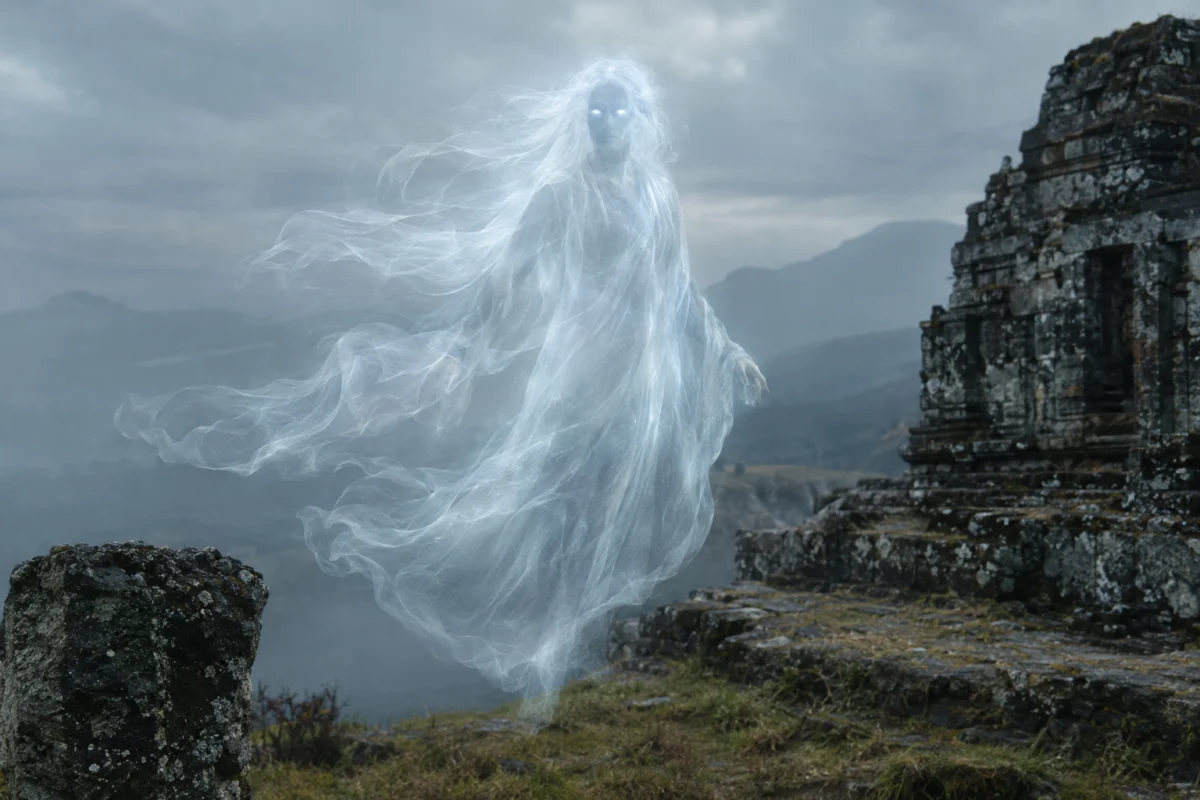
A sprite is, historically, a spirit or supernatural being rather than one precisely defined kind of creature. In British English, the word has covered apparitions and beings associated with fairies, goblins, or imps, with its meaning changing according to period and context.
The familiar modern description of a small, magical, sometimes mischievous creature represents only part of that history. Earlier usage was broader, and neither miniature size nor a fairy-like body can serve as a reliable definition across the surviving evidence.
Sprites therefore belong to the history of supernatural language as much as to folklore. Their significance lies partly in the way one flexible word could move between religious writing, dramatic dialogue, accounts of witchcraft, and later imaginative literature.
Understanding the sprite means keeping these settings distinct. An apparition in a sixteenth-century translation, an imp-like presence in a witch-trial pamphlet, and a figure within Victorian fairy culture need not share an appearance, character, or narrative role simply because the same label applies.
History/Origin
The documented English word reaches back to around 1300, with historical spellings including spreit, spryt, spreet, and sprite. These records establish a medieval linguistic history, not the birth of a single supernatural species or a securely identifiable local tradition.
A revealing sixteenth-century example occurs in William Tyndale’s 1526 translation of Mark 6:49. The word appears as sprete in a passage describing something perceived as an apparition. Its function here is closer to “spirit” than to the modern image of a little magical creature.
A dramatic quotation dated 1575 places fairies alongside an “ill spreet” as alternative supernatural explanations. The distinction matters: the wording brings the categories into proximity without making them identical, and the adjective marks this particular spirit as harmful rather than defining every sprite.
Early-modern usage also differed between genres. Some witch-trial pamphlets represented sprites acting like imps, whereas literary and demonological writing associated them with fairies, goblins, or devils. These are contextual relationships, not evidence that all those names designated the same being.
Richard Raiswell and David Watt’s 2014 study examines these differences through patterns of words occurring together. Its importance is methodological as well as historical: the surrounding vocabulary helps explain what “sprite” meant in a particular text, rather than assuming one definition fits every occurrence.
By the Victorian period, sprites also circulated within a flourishing enthusiasm for fairies in art, children’s picture books, and literature. This was a later setting for the term, distinct from its medieval documentation and its uses in early-modern religious or demonological writing.
Name Meaning
The name belongs to the word history of “spirit.” Historical lexicography connects it with Old French esprit, or with reduced forms associated with esperit and Anglo-French spirit. The entry preserves alternative linguistic routes rather than a single, uncomplicated sequence.
Oxford Learner’s Dictionaries gives a shorter account: sprite is a Middle English alteration of sprit, itself a contraction of spirit. Both explanations establish the central spirit-related connection, although they describe that development at different levels of detail.
The recorded spellings are therefore forms within a word’s history, not names for separate regional creatures. Their variation should not be converted into a taxonomy of sprites, or used to assign distinct personalities and powers to differently spelled examples.
This derivation also helps explain why older meanings extend beyond fairy-like beings. Nevertheless, etymology establishes a relationship between words, not a complete mythology. It cannot by itself determine a sprite’s appearance, moral character, dwelling place, or relationship with other supernatural beings.
Appearance
The historical sprite has no stable physical description across the documented uses. Because the term can mean a spirit or apparition, it does not inherently specify a body plan. Appearance must be established from the particular representation, rather than supplied from the name alone.
The sixteenth-century examples illustrate this distinction. Tyndale’s sprete expresses the perception of an apparition, while the 1575 “ill spreet” identifies a threatening supernatural possibility. Neither passage supplies wings, stature, clothing, facial features, or another identifying physical characteristic.
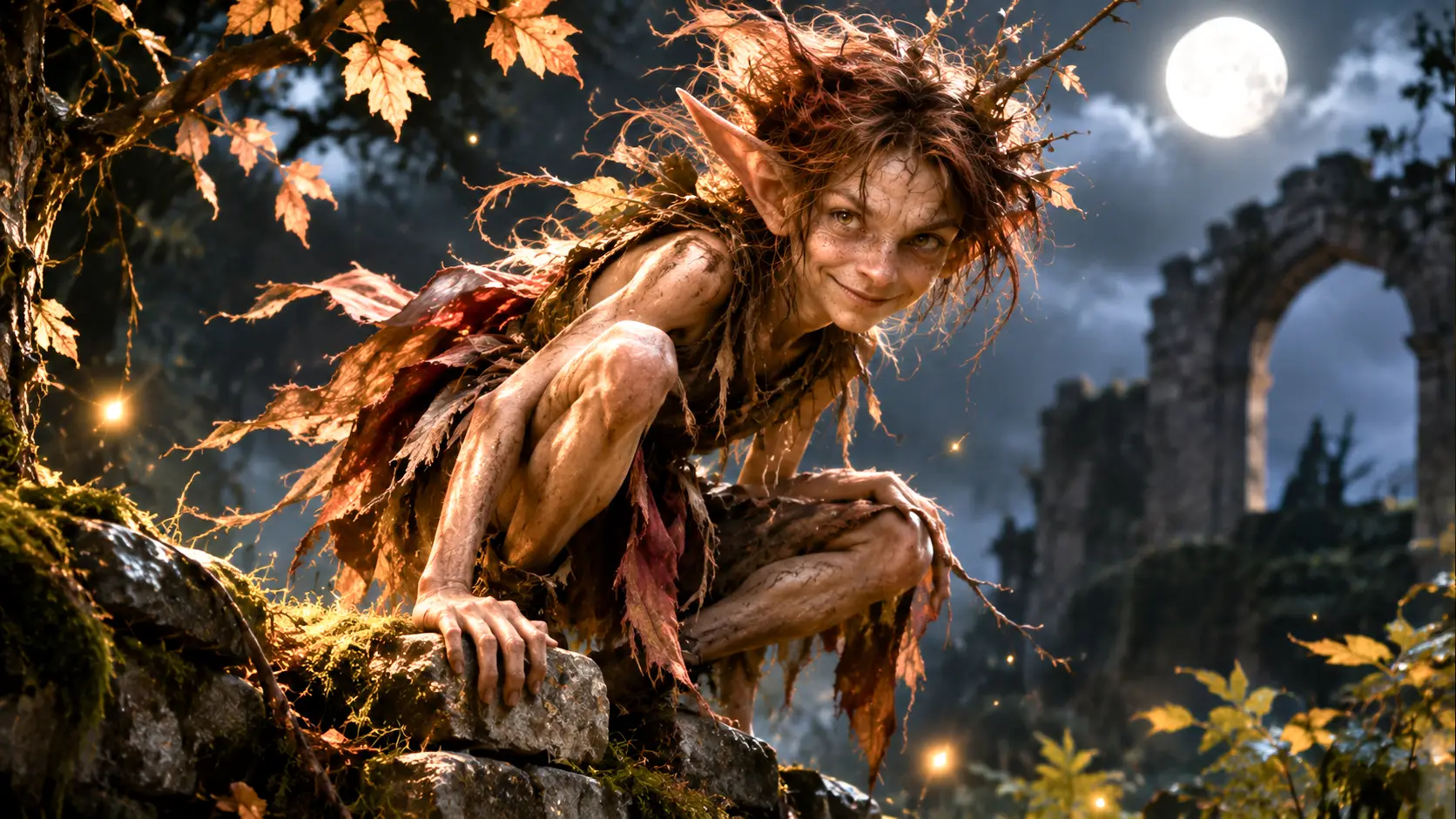
The fairy-like and imp-like associations found in early-modern writing concern classification and narrative behaviour, not necessarily anatomy. A sprite acting like an imp cannot automatically be given an imp’s presumed appearance; similarly, association with fairies does not establish a shared visual form.
A narrower modern image does have dictionary support. Oxford Learner’s Dictionaries defines a sprite as a small magical creature, especially a trick-playing one. This supports smallness within current general usage, but it should not displace the broader historical senses of spirit and apparition.
Victorian fairy art and illustrated literature provide another setting for visual interpretation. Francesca Bihet’s discussion places sprites within that cultural fascination, but does not establish a uniform design. Any specific pictured sprite belongs first to its own artwork or literary context.
Background Story
The sprite’s background is not a continuous biography but an overlap of supernatural vocabularies. Religious translation, drama, witchcraft narratives, and fairy literature each offered settings in which an unseen or extraordinary presence could be named, interpreted, and given a particular significance.
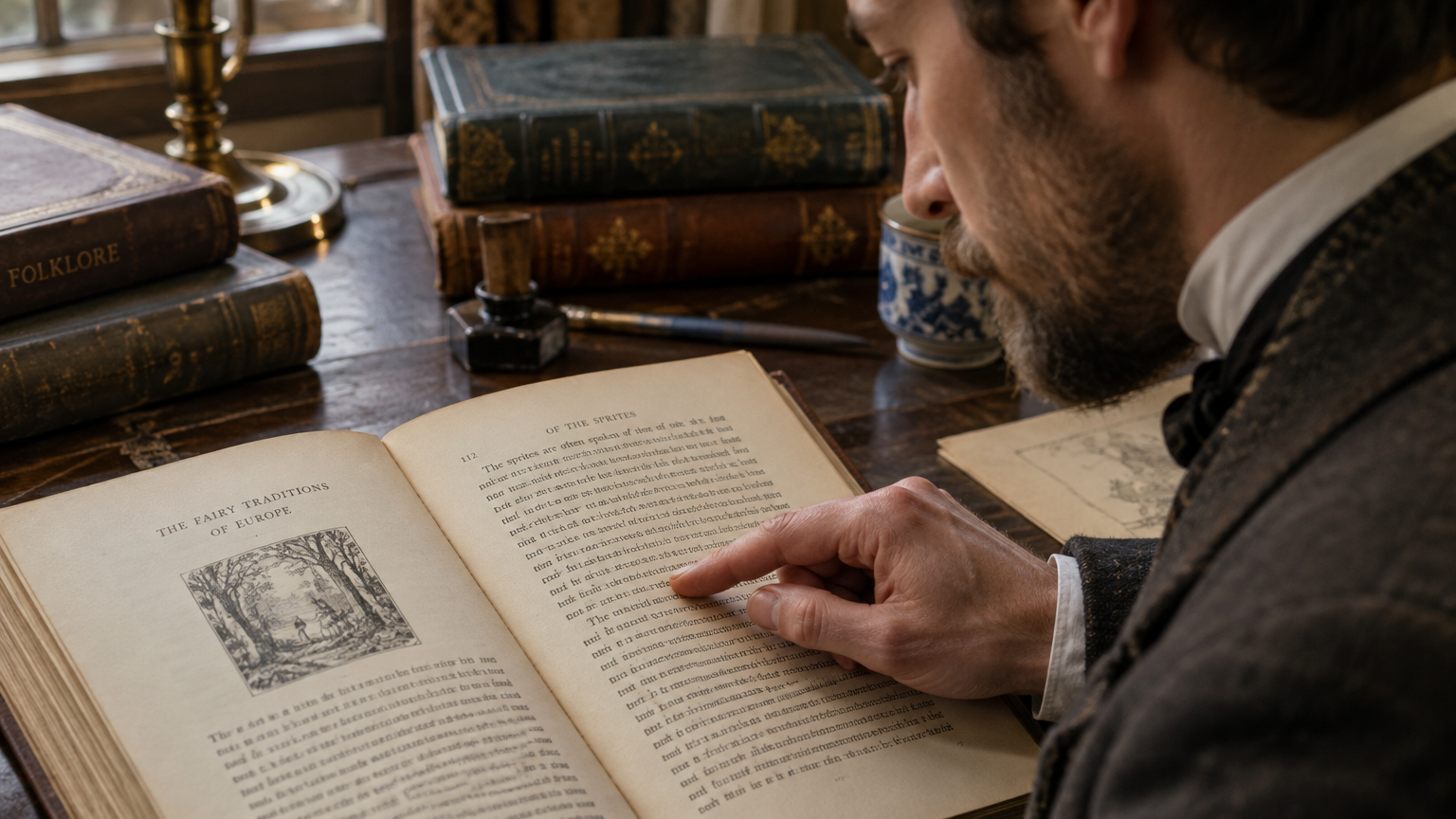
In religious language, the apparition sense made the word useful for expressing a perceived supernatural presence. In dramatic dialogue, a harmful spirit could appear beside fairies as an explanation for troubling circumstances. These examples show different applications of the word rather than episodes in one creature’s life.
Witch-trial pamphlets supplied another context, sometimes giving sprites imp-like roles. Literary and demonological texts could instead group them with other supernatural categories. Such variation reflects the concerns of the writing: a label’s associations changed with the kind of account in which it appeared.
Later fairy enthusiasm brought sprites into a different cultural environment. Victorian artwork, picture books, and literature offered spaces for imaginative representation, while late-Victorian fairy scholarship made fairy traditions a subject of investigation. These developments belong to the history of reception, not to an ancient sprite origin story.
The resulting figure is best understood through these successive contexts. The word’s continuity connects medieval and later usage, but does not guarantee continuity of character or form. What holds the evidence together is the supernatural label, while individual meanings remain dependent on their historical setting.
Famous Folklore Stories
The clearest stories attached to the word sprite concern particular named characters, especially Robin Goodfellow. These literary narratives preserve concrete supernatural actions, but they do not establish a shared biography or a standard collection of adventures for every being called a sprite.
A Midsummer Night’s Dream
In Act 2, Scene 1 of Shakespeare’s play, a fairy recognizes Robin Goodfellow as a troublesome sprite. Robin recounts his own tricks, including taking a horse’s likeness and deceiving another horse. Transformation belongs here to a particular dramatic character, not to a universal sprite anatomy.
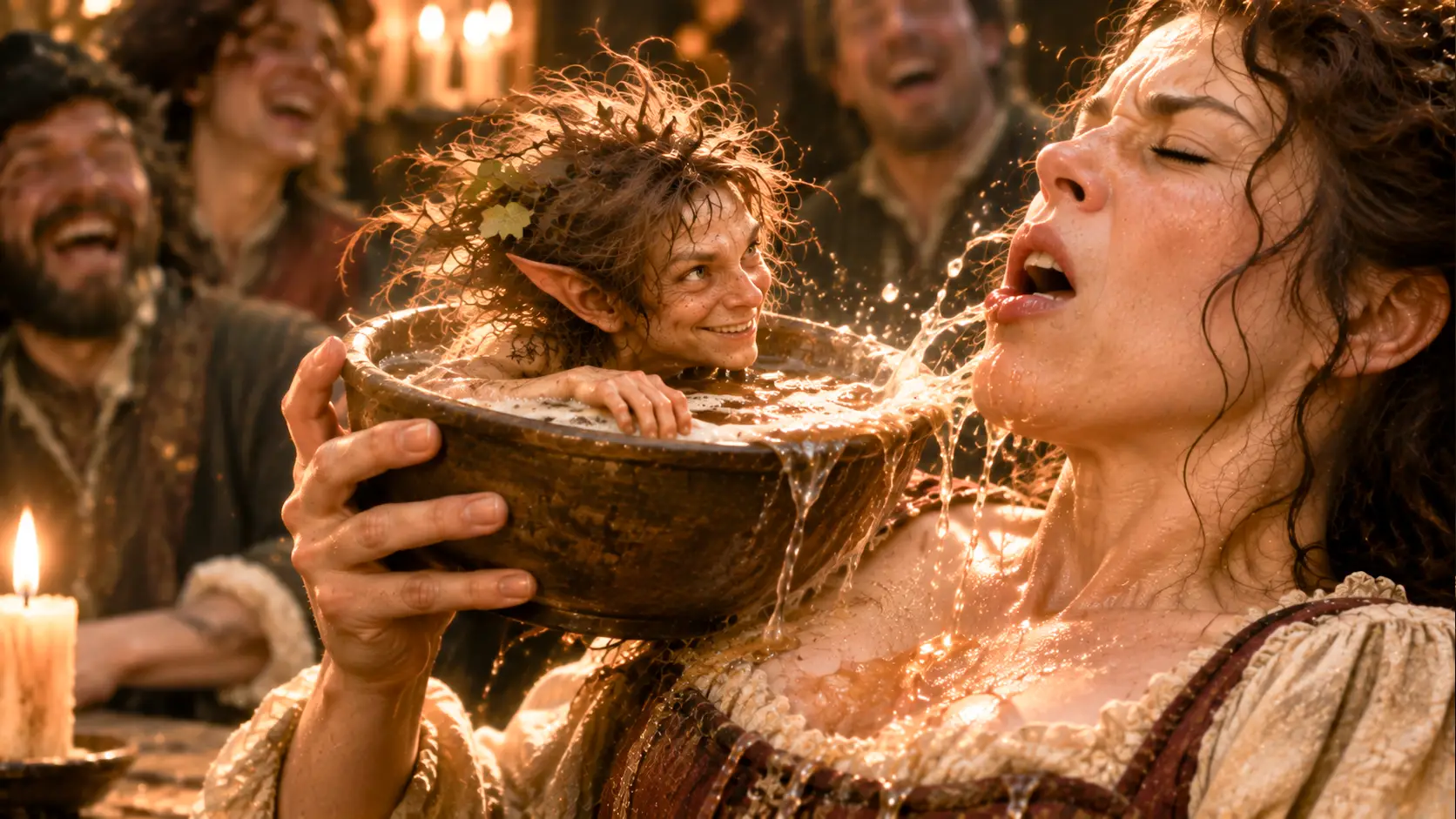
Another prank brings the supernatural into an ordinary drinking scene. Robin hides in a woman’s bowl in the likeness of a roasted crab apple. When she drinks, he bobs against her lips, causing the ale to spill over her neck.
He also impersonates a three-legged stool. When an older woman tries to sit, he slips away and she falls, prompting laughter from the company. These episodes turn familiar objects and social gatherings into opportunities for deception: apparent everyday stability gives way to supernatural practical joking.
The Merry Pranks of Robin Good-Fellow
The narrative associated with an edition of 1628 gives Robin a more developed personal history. He is presented as Oberon’s son, leaves home, and becomes a tailor’s apprentice. This is one published Robin Goodfellow tradition, rather than an origin story for sprites collectively.
Oberon grants Robin the ability to assume whatever shape he wishes. The narrative describes him becoming a neighing horse and a grunting hog, making transformation an explicitly bestowed power. His changing forms provide the means for subsequent tricks rather than revealing one permanent supernatural body.
At a wedding, Robin takes the form of a bear and frightens the guests. The incident shares Shakespeare’s interest in disrupted social occasions, but belongs to a separate narrative version. Its bear transformation should remain attached to that account, not added indiscriminately to every portrayal of Puck.
Cultural Impact
Robin Goodfellow helped give the otherwise flexible word sprite a memorable theatrical personality. Shakespeare’s character speaks, changes shape, and recounts recognizable domestic tricks. The effect is comic, although the possibility that ordinary appearances conceal an interfering spirit remains central to the humour.
The character also circulated beyond the surviving Shakespearean play. A lost work titled Robin Goodfellow was performed by the King’s Men at Hampton Court on 1 January 1604. That performance documents his presence in court entertainment, although the lost play’s plot cannot be reconstructed from the record.
Printed and visual portrayals did not always share the same tone. The Robin Goodfellow woodcut tradition could appear more troubling than Shakespeare’s comic Puck. Their contrast shows why a familiar character name cannot guarantee a uniform appearance or emotional meaning across different media.
Victorian fairy enthusiasm brought sprites into artwork, children’s picture books, and literature. Francesca Bihet’s study of late-Victorian fairy scholarship places this imaginative abundance alongside attempts to investigate fairy traditions. Artistic popularity and scholarly attention were related cultural developments, not proof of one unchanged ancient creature.
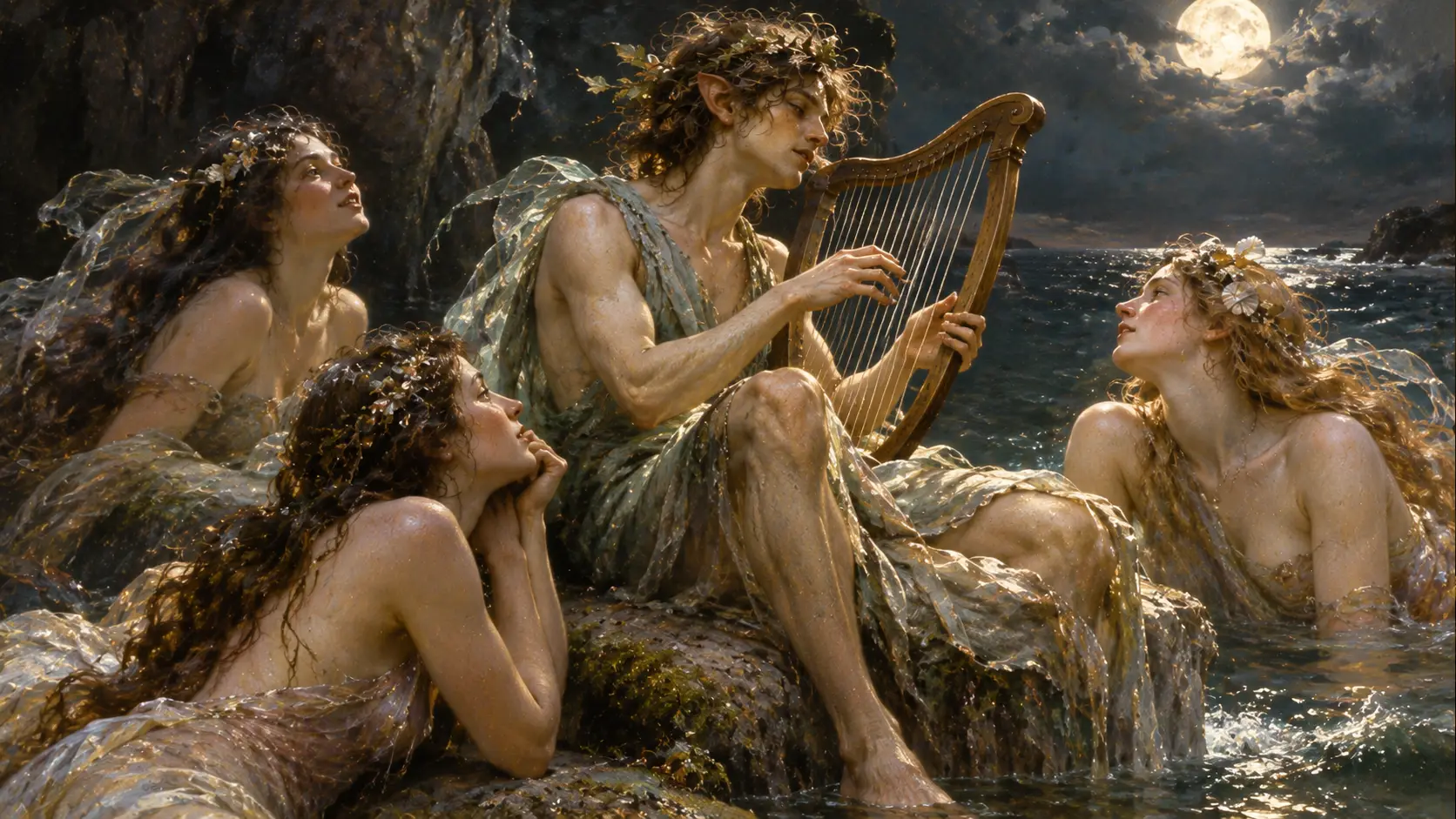
Nineteenth-century art also used the term outside specifically English settings. Nils Blommér’s 1850 painting The Water-Sprite and Ägir’s Daughters shows a harp-playing water-sprite surrounded by the sea god’s daughters. This named Romantic interpretation illustrates the word’s adaptability, rather than establishing water and music as universal sprite attributes.
Similar Beasts
Imp
Imps provide a closer comparison in certain early-modern witch-trial pamphlets. In those texts, beings called sprites can act like imps, placing them within a threatening rather than exclusively playful supernatural setting.
This resemblance concerns their role within particular accounts. It does not justify classifying every sprite as a witch’s attendant or assigning all sprites a demonic identity.
Trasgu
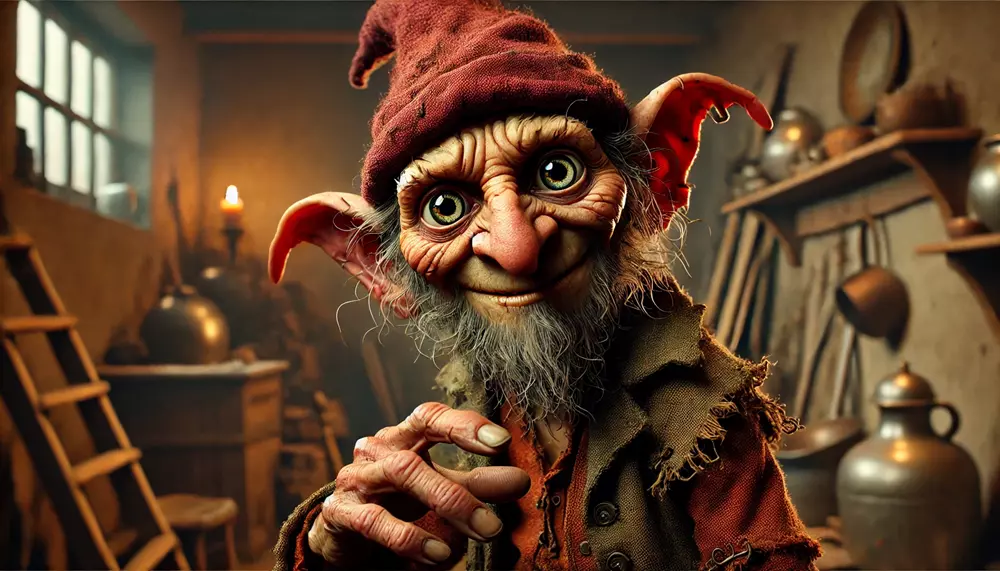
The Trasgu is a goblin-like prankster associated with Asturian folklore and domestic settings. Its household mischief offers a useful comparison with Robin Goodfellow’s interference in familiar human activities and gatherings.
The similarity lies in narrative function, not demonstrated common ancestry. Trasgu remains a distinct regional figure, while sprite is a much less specific English designation.
Gremlin
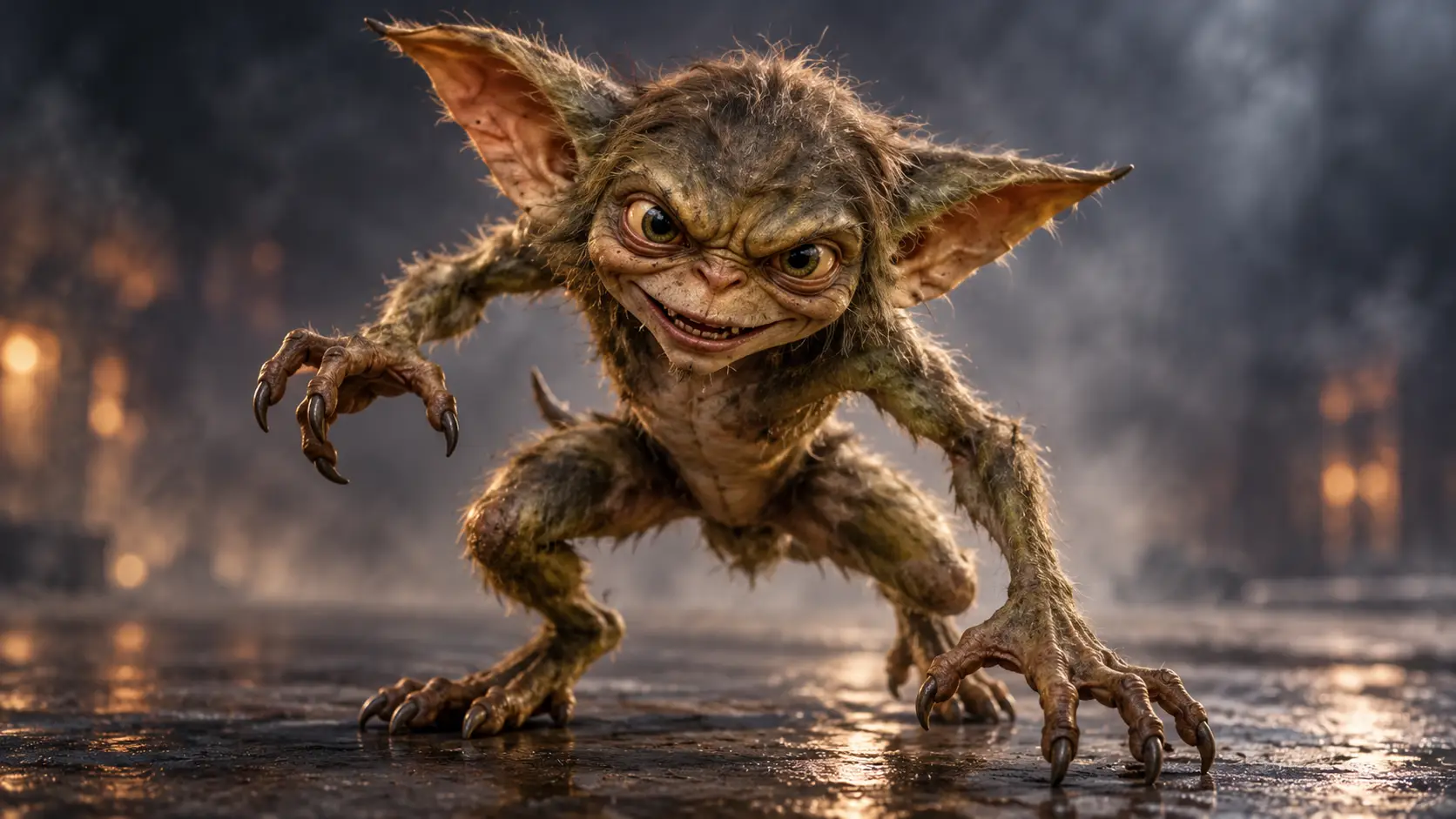
Gremlins belong to aviators’ folklore and are blamed for unexplained mechanical failures, particularly in aircraft. Their reputation became prominent during the Second World War, giving supernatural interference a distinctly technological setting.
Like Robin’s practical jokes, gremlin activity turns ordinary expectations into sudden disruption. This is a functional analogy, not evidence that aviation folklore preserved an unchanged sprite tradition.
Religion/Ritual
No established ceremony or general British cult devoted specifically to sprites is documented here. The word occurs in religious language, but its use for an apparition does not itself demonstrate worship, offerings, seasonal observances, or a distinct ritual community.
In Tyndale’s 1526 translation of Mark 6:49, the disciples mistake Jesus walking on the sea for a “sprete.” The passage illustrates a Christian use meaning an apparition. Elsewhere, imp-like associations belong to witchcraft discourse, which must not be mistaken for evidence of sprite worship.
Scientific or Rational Explanations
The most productive explanation begins with language rather than zoology. Historical uses of sprite encompass different supernatural meanings, so there is no single reported animal or physical phenomenon requiring identification. A literary shapeshifter and a feared apparition present fundamentally different kinds of evidence.
Richard Raiswell and David Watt’s 2014 study examines this variation through collocational analysis, comparing the words used around supernatural labels. Its findings show that genre matters: witch-trial pamphlets, literary works, and demonological discussions do not necessarily give sprites the same roles or associations.
This approach treats classification as a historical question. A label’s meaning depends partly on the company it keeps within a text, rather than on a modern catalogue of creature types. Similar wording across accounts therefore need not establish identical beliefs or experiences.
The Robin Goodfellow episodes also invite literary interpretation. A bowl, a stool, and a wedding become settings for overturned expectations. Reading these scenes as constructed comedy explains their narrative operation without treating their transformations as eyewitness observations or proposing unsupported medical explanations for fictional events.
Victorian fairy scholarship supplies another historical perspective: supernatural traditions became objects of investigation while sprites flourished in imaginative culture. Studying that relationship helps explain their changing reception. It does not establish that every artistic image records a belief held literally by its creator or audience.
Modern Cultural References
Fantasia 2000, film (1999)
Disney’s animated “The Firebird Suite” sequence presents forest renewal threatened by destruction. Its Spring Sprite embodies returning vegetation, giving this particular sprite a clearly defined nature-spirit role.
(vegalleries.com)
Mavka, ballet (2023)
This Lviv Opera production stages a supernatural forest drama involving Mavka and Lukash. Its Water Sprites imitate Mavka’s voice to lure Lukash into a dangerous marsh.
(opera.lviv.ua)
Guillermo del Toro’s Pinocchio, film (2022)
This stop-motion adaptation reimagines the wooden puppet’s story through encounters with supernatural powers. Tilda Swinton voices the blue Wood Sprite, whose intervention brings the puppet to life.
(netflix.com)
The Windvale Sprites, novel (2011)
Mackenzie Crook’s novel follows Asa after he discovers an unfamiliar creature in a pond. Initially mistaken for a dragonfly-like insect, the sprite draws him into a local mystery.
(readingzone.com)
Sprite’s Secret (Pixie Tricks #1), children’s fiction (2020 edition)
Tracey West’s children’s fantasy pairs Violet with a tiny fairy named Sprite. He recruits her to trick escaped pixies into returning to their own mystical fairy realm.
(scholastic.com)
The Sprite and the Gardener, graphic novel (2021)
Rii Abrego and Joe Whitt’s graphic novel explores gardening through cooperation between humans and magical beings. Wisteria, a garden sprite, helps a human girl cultivate her garden.
(thealabamian.com)
Conclusion
Sprite is best understood as a flexible English word for a spirit or supernatural being, not the name of a single, consistently defined folkloric species. Its historical meanings encompass apparitions and context-specific beings associated with fairies, goblins, or imps. That breadth explains why no universal body, habitat, personality, or signature story can adequately represent it. Particular literary characters and artistic portrayals give the word concrete forms, but those forms belong to their individual settings rather than to an unchanging shared mythology.
The sprite’s cultural significance lies partly in this adaptability. A troubling supernatural presence, a mischievous literary figure, and a restorative garden spirit can all occupy different parts of its reception without becoming interchangeable. Modern films, fiction, comics, and ballet continue to make distinct creative choices about what a sprite can be. Reading those portrayals alongside historical language preserves both their imaginative appeal and their differences, allowing the term’s varied meanings to remain visible rather than reducing them to one familiar fairy image.
Further Reading
“Sprite, sprit sb.”, World English Historical Dictionary, 2024
This historical dictionary entry gathers variant spellings, etymology, definitions, and dated quotations. It establishes the word’s broad spirit-related meanings before considering narrower fairy-like interpretations in later usage.
(wehd.com)
“‘Goblins, owles and sprites’: Discerning early-modern English preternatural beings through collocational analysis”, Richard Raiswell and David Watt, Folklore, 2014
This specialist article examines supernatural vocabulary through patterns of word association in early-modern texts. It explains why sprites cannot reliably be assigned one identity across different genres.
(tandfonline.com)
“The origin of the sprites: The Folklore Society’s late-Victorian fairy science”, Francesca Bihet, Sussex Centre for Folklore, Fairy Studies and Fantasy
This scholarly study examines late-Victorian fairy research and its intellectual setting. It helps distinguish historically situated fairy enthusiasm from claims about a timeless, uniformly defined sprite tradition.
(sussexfolktalecentre.org)
A Midsummer Night’s Dream, Act 2, Scene 1, William Shakespeare, Folger Shakespeare Library
The Folger edition provides Shakespeare’s dialogue identifying Robin Goodfellow as a sprite and recounting his pranks. It offers primary literary evidence without defining every sprite through Puck.
(folger.edu)
Folklore, Internet Shakespeare Editions, University of Victoria
University-hosted specialist commentary contrasts the more troubling Robin Goodfellow woodcut tradition with Shakespeare’s comic Puck, and quotes the play’s concrete pranks: Puck disguises himself as a stool, slips away, and causes an older woman to fall. Supports chapters on changing literary and visual portrayals of the sprite.
(internetshakespeare.uvic.ca)
The Merry Pranks of Robin Good-Fellow: Very Pleasant and Witty, from an Edition of 1628, Telling History
Readable transcription of an early Robin Goodfellow narrative, useful as collected literary testimony rather than a general folklore summary. Its chapters say Robin is Oberon’s son, show him fleeing home and apprenticing to a tailor, and describe Oberon granting him the power to take whatever shape he wishes.
(tellinghistory.co.uk)
The Water-Sprite and Ägir’s Daughters, Nationalmuseum, Sweden (1850)
Museum catalogue record for Nils Blommér’s oil painting, with artist, date, medium, and a description of the water-sprite’s role: it plays a harp while Ägir’s daughters float around it. Supports a chapter on nineteenth-century Romantic-era visual representations of water-sprites, based on the museum’s object record rather than a later reproduction.
(nationalmuseum.se)
Robin Goodfellow, Folger Shakespeare Library, Lost Plays Database
Specialist theatrical-history record of a lost play featuring Robin Goodfellow: it reports that the King’s Men performed it at Hampton Court on January 1, 1604, and summarizes the 1628 Robin narratives’ specific pranks. Supports chapters on early stage reception and the sprite’s documented actions in collected popular tales; the lost play’s plot itself is not recoverable from this record.
(lostplays.folger.edu)