Introduction
Inar, also written Inar, is an ancient Anatolian goddess of Hattian origin who became part of Hittite religious tradition. Associated with wilderness and wild animals, she is best known for helping the Storm-god overcome the serpent Illuyanka through a carefully arranged feast.
She is a deity rather than a mythological beast. In her principal surviving narrative, the monstrous serpent is her opponent, not her own form. Her importance lies in organizing the cooperation between a defeated god and a mortal helper.
Her cultural setting requires a distinction: Hattian identifies the older Anatolian tradition to which scholars attribute her, while Hittite identifies the language of the surviving mythological account. The documentary evidence places her in Anatolia, not in Egyptian or African mythology.
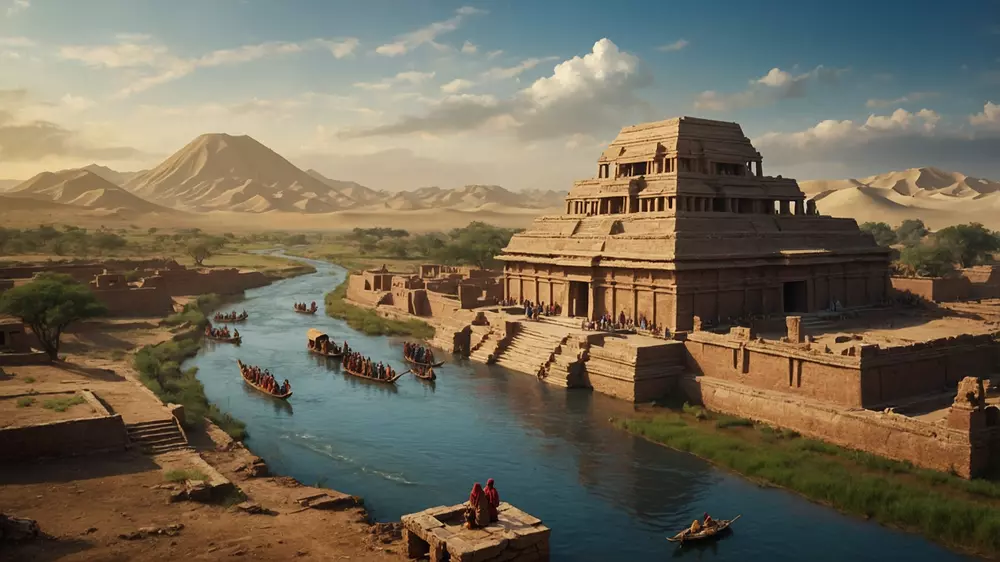
Inara also belongs to the religious world of Hattusa, the Hittite capital. Her associations with countryside, sacred animals, and protection connect her narrative role with broader cultic concerns, although these overlapping functions should not be reduced to a single, unchanging divine identity.
History/Origin
Inar’s background belongs to the meeting of Hattian religious traditions and Hittite institutions in ancient Anatolia. Her identification as a Hattian goddess concerns cultural inheritance; it does not mean that the surviving Illuyanka narrative is a Hattian-language text. Its textual witnesses are Hittite.
The Illuyanka tradition is assigned to the Old Hittite period in specialist scholarship. A dating attributed to Harry A. Hoffner Jr. places it approximately within 1750–1500 BCE. This supplies a broad historical setting for the tradition, not an exact date of composition.
An earlier stage of transmission is suggested by the goddess’s Hattian background, but its duration cannot be calculated from that attribution alone. Neither the beginning of her worship nor the formation of an earlier oral narrative can be assigned a defensible date from this evidence.
The surviving written evidence consists of clay-tablet witnesses catalogued as CTH 321. Multiple copies preserve the myth, making it necessary to distinguish the age assigned to the tradition from the dates of particular manuscripts. The evidence summarized here does not securely date the earliest surviving witness.
The narrative was also embedded in religious observance rather than preserved solely as entertainment. Its association with the Purulli festival places Inara’s intervention within a cultic account of divine defeat and recovery. That setting helps explain the preservation of the story in Hittite religious records.
Later textual developments complicate her history. In contexts associated with Inara, divine notation using LAMMA or KAL sometimes overlaps with tutelary-deity terminology. This reflects changing scribal and cultic identifications, rather than proving that every protective deity represented by those signs was originally Inar.
Name Meaning
Inar and Inara are established forms of the goddess’s name. They identify the Anatolian deity associated with the Illuyanka narrative, but the specialist evidence does not establish a secure English translation. Her religious functions are better understood than the original meaning of her name.
The distinction matters because a divine name is not automatically a descriptive title. Calling Inara a goddess of wilderness summarizes an interpretation of her religious role; it does not demonstrate that her name literally means wilderness, countryside, hunting, or wild animals.
S. Rizza’s linguistic discussion distinguishes Inara from the similar-looking Hittite form innar-. The resemblance is therefore not a sound basis for treating the two as one word or assigning the goddess a meaning borrowed from that separate form.
The Hattian attribution and the Hittite textual transmission must likewise remain separate questions. A goddess inherited from one cultural tradition can appear in another language’s religious texts without her name becoming transparently explainable in that language. Here, the responsible conclusion is an unresolved etymology.
Appearance
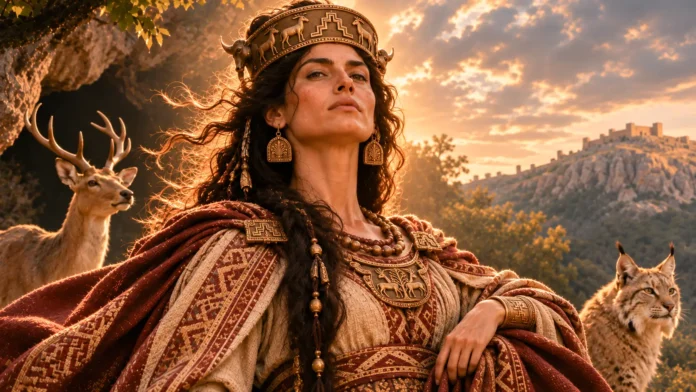
Inara has no securely established bodily description in the textual and specialist evidence considered here. She is identified as a goddess and acts as an individual within the narrative, but the account does not supply a standard portrait of her face, physique, or clothing.
One concrete visual detail occurs before the feast. In Hoffner’s translation, Inara dresses herself up before calling the serpent from its hole. This supports adornment within that particular scene, but it does not identify a distinctive garment, crown, color, or permanent attribute.
The animal imagery associated with her religious setting requires separate treatment. Alfonso Archi connects Inara with wilderness and with the KI.LAM festival’s procession of sacred wild-animal images. These images concern the represented animal world, not a description of the goddess’s own body.
Her clearest visual associations consequently come from actions and setting: the prepared feast, the concealed mortal helper, and the serpent emerging from its lair. These elements identify her place in the story more reliably than an invented combination of animal features or divine insignia.
A human-form illustration in ancient Anatolian-inspired dress would therefore be an interpretive reconstruction, not a recovered ancient likeness. The important distinction is between depicting the goddess as a participant in a documented episode and claiming that a particular appearance was prescribed by her tradition.
Background Story
Inara’s narrative background brings together wilderness, divine vulnerability, and human assistance. The Storm-god has already been defeated when she intervenes against Illuyanka. Her contribution changes the conflict from a direct contest of strength into an operation dependent on preparation, hospitality, concealment, and cooperation.
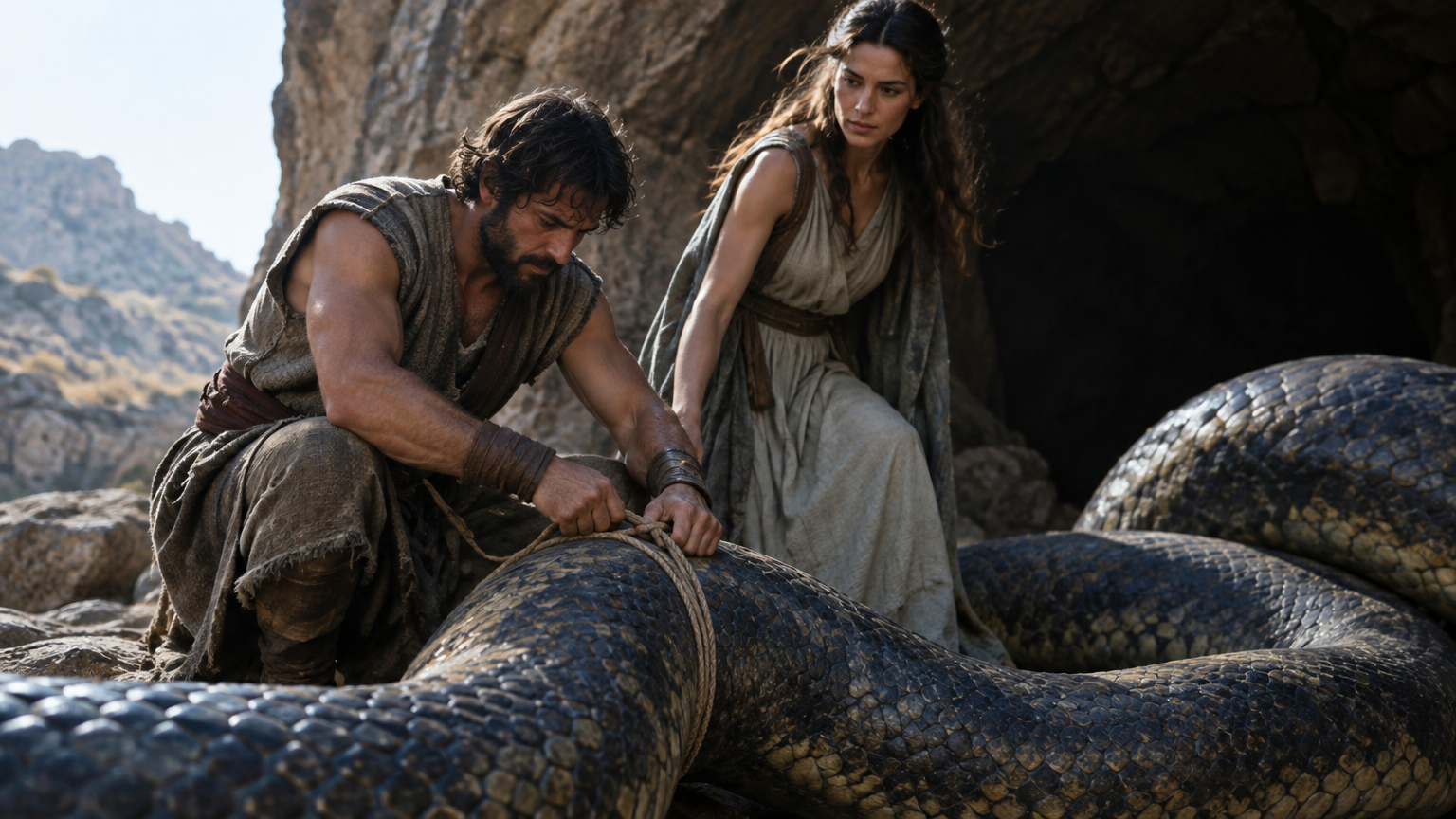
The feast is central to this change. Inara draws the serpent and its offspring into eating and drinking, creating the opportunity for the mortal Hupasiya to bind the opponent. The Storm-god then kills Illuyanka. Victory is distributed among planner, human helper, and divine combatant.
The human partnership is neither automatic nor impersonal. At Zigaratta, Hupasiya agrees to help on condition that he sleep with Inara. Their encounter makes the alliance a relationship with consequences, linking the public struggle against the serpent to the more private episode that follows.
Inara subsequently houses Hupasiya and forbids him to look out of a window. He disobeys, sees his wife and children, and asks to return to them. The episode introduces tension between association with a goddess and continuing obligations within an ordinary human household.
The ending is damaged, so Hupasiya’s ultimate fate cannot be stated confidently. Nevertheless, the surviving sequence supports a contrast between the successful alliance against Illuyanka and the unstable relationship afterward. It should not be converted into a complete biography or a certain punishment narrative.
Her wilderness associations add another dimension to this background. Sacred animals and the countryside beyond settlements belonged to the religious sphere with which she was connected. Alongside her place in Hattusa’s cult, this makes her more complex than either a woodland figure or a city protectress alone.
Famous Folklore Stories
Inara’s best-preserved narrative belongs to the first account of the Illuyanka myth, where she is usually called Inara. Two connected episodes show her arranging the serpent’s defeat and then attempting to keep her mortal helper apart from his family. The headings below describe these episodes rather than reproduce ancient titles.
The Feast That Traps Illuyanka
After Illuyanka defeats the Storm-god, divine victory depends on assistance rather than another immediate confrontation. Inara prepares a lavish feast and approaches Hupasiya, a mortal at Zigaratta, asking him to help. He agrees on condition that he sleep with her, and the encounter takes place.
Inara then conceals Hupasiya, adorns herself, and invites the serpent from its hole to eat and drink. Illuyanka comes with its offspring. Their consumption leaves the serpent unable to retreat into its hole, turning the apparent celebration into an opportunity for capture.
Hupasiya emerges and binds Illuyanka, allowing the Storm-god to kill it. The account distributes the victory among three participants: Inara devises the trap, the mortal restrains the enemy, and the defeated god delivers the killing blow. Her decisive contribution is planning, not direct combat.
Hupasiya and the Forbidden Window
Following the victory, Inara houses Hupasiya and forbids him to look through a window while she is away. The prohibition shifts the narrative from a public struggle between divine powers to the restrictions governing a mortal’s relationship with a goddess.
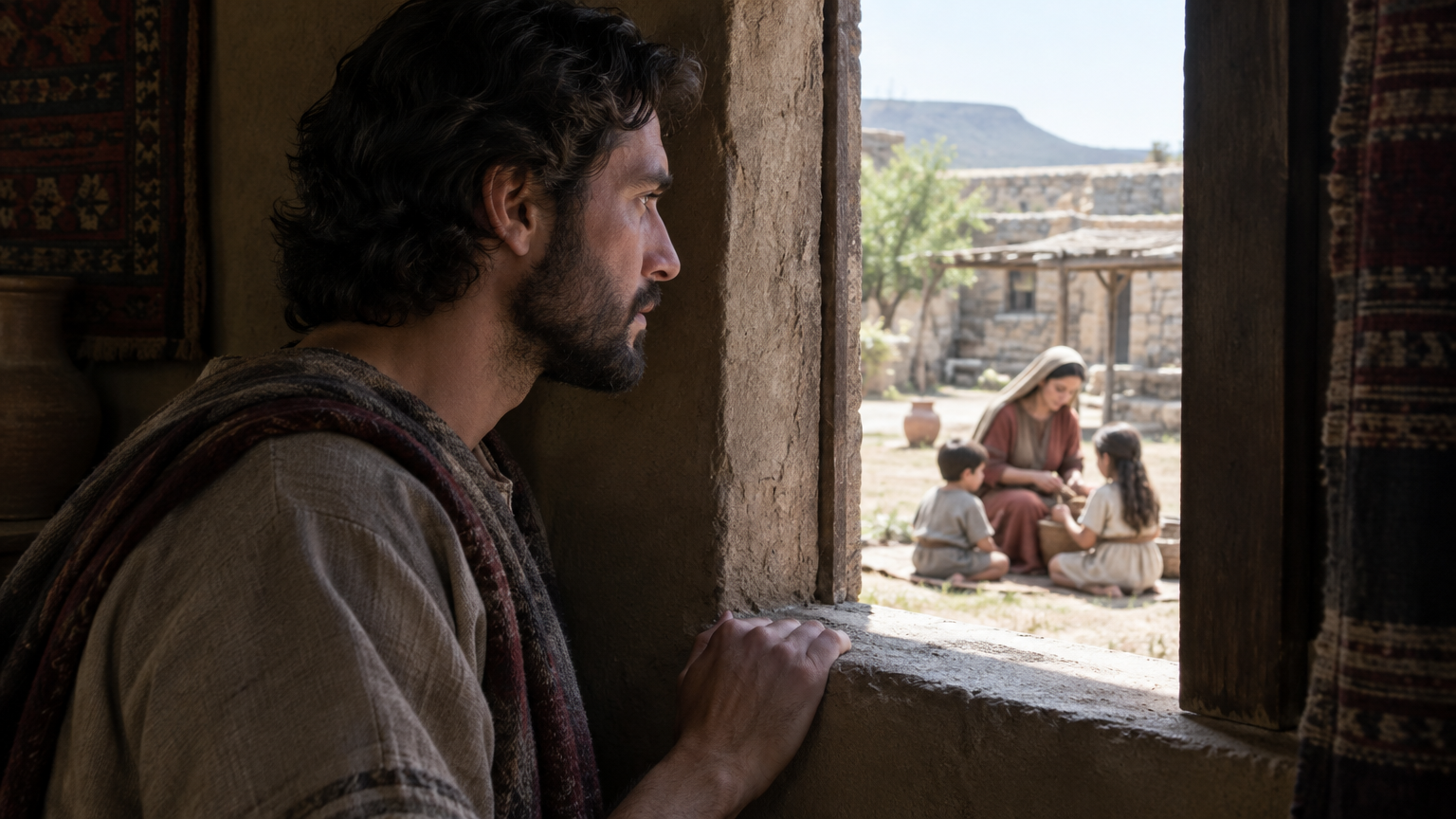
Hupasiya eventually looks out, sees his wife and children, and asks to return home. His attachment to his human household disrupts the arrangement with Inara. The surviving text is damaged at the crucial conclusion, so his ultimate fate cannot be narrated with confidence.
A reconstruction discussed in Ancient Myths and Legends of the Black Sea has Inara kill Hupasiya after the prohibition is broken. That ending must remain a reconstruction, not an unqualified event. The securely preserved sequence establishes the forbidden view, renewed family longing, and request to leave.
Cultural Impact
Inar’s historical importance lies in her presence within both mythological writing and organized religious life. Her Hattian cultural background and preservation in Hittite-language texts illustrate the incorporation of older Anatolian divine traditions into the religious world maintained by Hittite institutions.
Her literary record extends beyond the Illuyanka account. Separate fragments catalogued as CTH 336.1 preserve material concerning Inara, including tablet witnesses KUB 33.55, KUB 33.52, and KUB 33.56. Their fragmentary condition prevents treating them as a recoverable collection of complete adventures.
Later textual reception also complicates her identity. The tutelary-deity signs conventionally rendered LAMMA or KAL sometimes occur in contexts associated with Inara. Such overlap reflects changing identification or scribal treatment, but does not establish that every deity written with those signs was this goddess.
A specific modern reinterpretation appears in Inara’s Banquet, an immersive stage production created and directed by Jet Vellinga and presented by Side/Step Festival in 2025. Its performance synopsis makes Inara an active challenger of Illuyanka, adapting the ancient confrontation into participatory theatre rather than simply borrowing her name.
Similar Beasts
Inar is a goddess, not a species of monster. The closest comparisons therefore concern relationships within her own mythology and broader supernatural roles. Figures from other traditions offer limited thematic parallels, not evidence of shared origins or identical powers.
Illuyanka
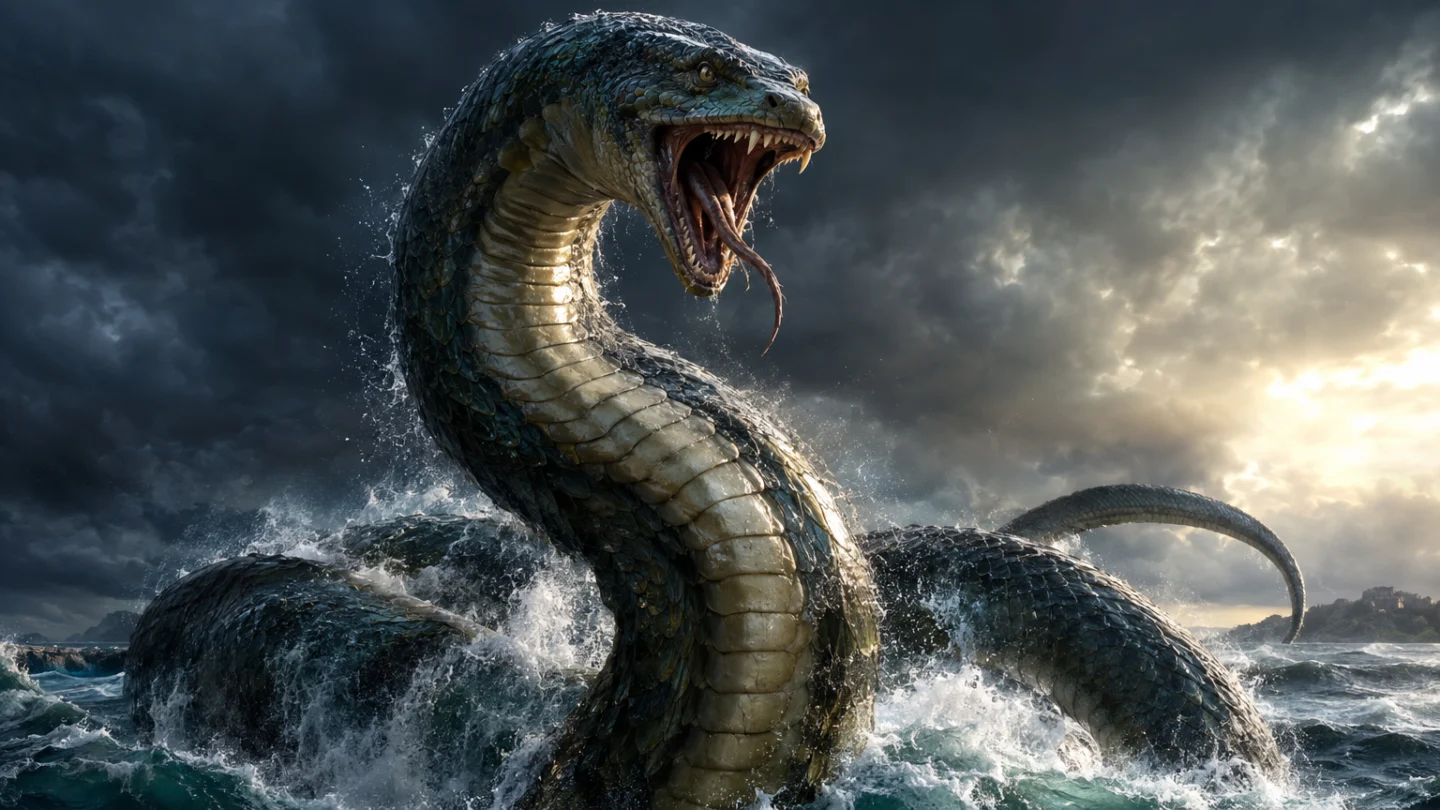
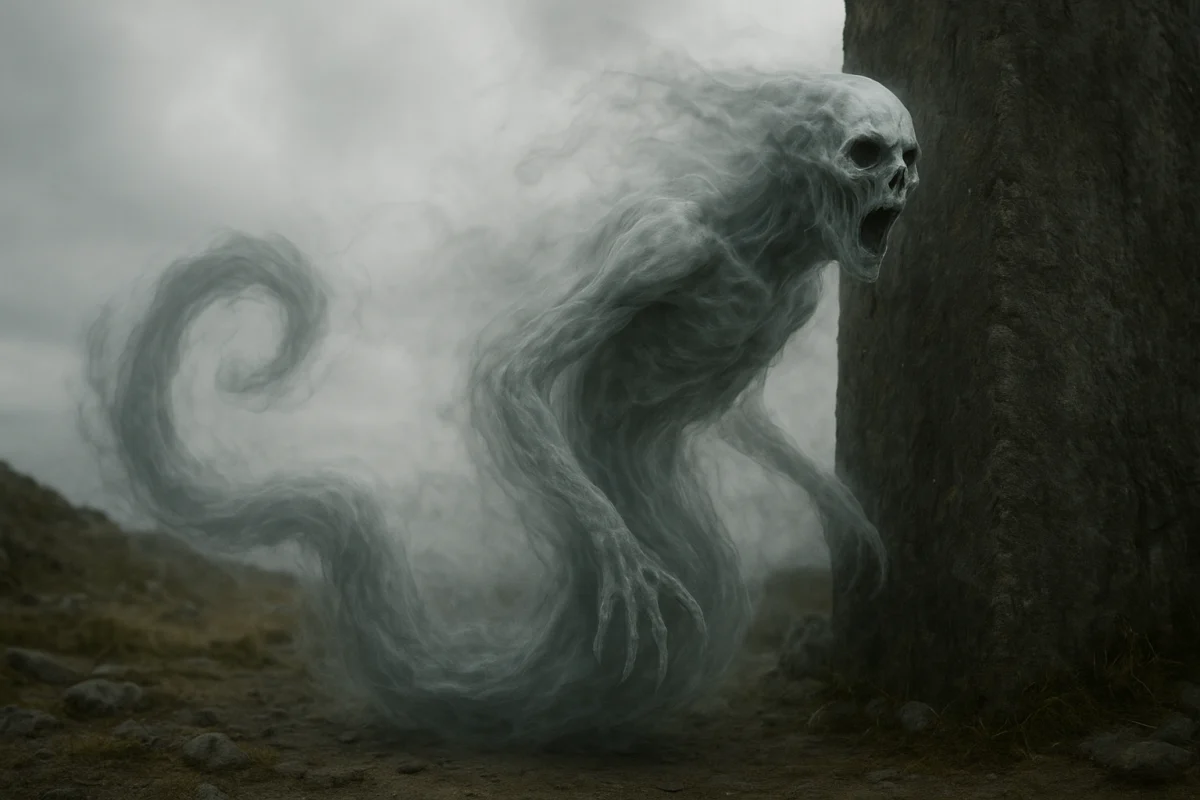
Illuyanka is the serpent opponent in the Hittite myth that preserves Inara’s best-known actions. It first defeats the Storm-god but later falls victim to the feast and binding.
Its connection to Inar is narrative rather than physical: she organizes its capture. The serpent’s body and vulnerabilities must not be transferred to the goddess.
The Storm-god
The Storm-god is a divine protagonist in the Illuyanka account. After an initial defeat, he receives assistance and ultimately kills the serpent once Hupasiya has bound it securely.
Like Inar, he belongs to the account’s divine community, but their functions differ. His final violence depends on the strategy and cooperation she has arranged.
Leshy
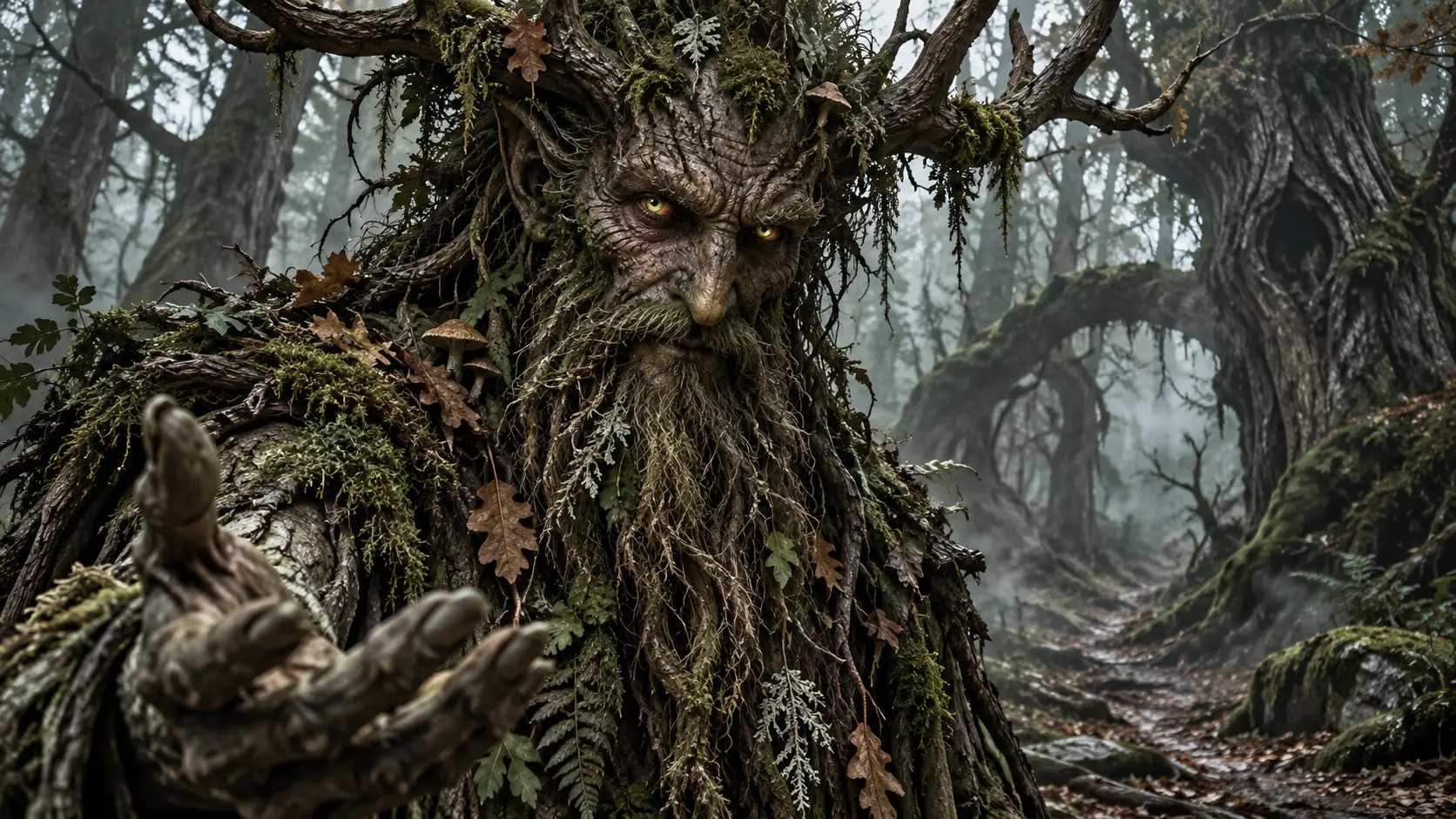
Leshy is a forest spirit in Slavic folklore, associated with guarding wild places and misleading woodland travelers. Shapeshifting belongs to its characterization, unlike the securely documented actions of Inar.
The useful parallel is their association with wilderness beyond settled human space. Leshy’s transformations and treatment of travelers do not establish equivalent abilities for the Anatolian goddess.
Nyami Nyami

Nyami Nyami is a river deity in Tonga traditions associated with the Zambezi. Common descriptions give the being a serpentine body and fishlike head, joining protection with destructive river power.
Both figures connect divine significance with environments important to human communities. Their habitats, narrative roles, and bodily traditions remain distinct; Inar has no established aquatic or serpentine form.
Religion/Ritual
The Illuyanka account is explicitly connected with the Purulli festival: the translated ancient text presents it as a festival cult legend. This places Inara’s intervention within a religious setting, rather than treating the surviving narrative as entertainment detached from ceremonial life.
A different body of festival evidence concerns KI.LAM and sacred wild-animal images. Alfonso Archi connects these representations with Inar’s association with countryside and wilderness. The images concern animals within a sacred landscape, not a documented animal body belonging to the goddess herself.
Inar also belonged to the cultic environment of Hattusa. Her wilderness associations and her place in an urban religious center need not be contradictory: a deity could connect the inhabited community with spaces outside it without possessing unrestricted control over nature.
The banquet and window prohibition are actions inside a myth, not instructions for worshippers. They do not establish ritual sexual obligations, household window taboos, or a ceremony reenacting Hupasiya’s confinement. Likewise, the documented festival connections do not justify inventing offerings or initiation practices.
Scientific or Rational Explanations
Inar is documented through ancient religious texts, not reports of an unidentified animal. Historical and philological methods therefore provide the relevant framework: the questions concern how a deity was represented, worshipped, transmitted, and reinterpreted, rather than whether a biological creature inspired sightings.
The feast episode supports a literary reading centered on cooperation and strategic reversal. An enemy who has defeated the Storm-god becomes vulnerable through eating and drinking. This explains the story’s mechanism without reducing Inara to an allegory or claiming a particular historical event behind it.
The Hupasiya episode can be read as a conflict between exceptional divine intimacy and ordinary human belonging. Seeing his family renews his wish to leave. This interpretation follows the preserved actions, while the damaged conclusion limits claims about the narrative’s final moral or punishment.
Inara’s identification also requires separating cultural background from textual language. A goddess attributed to Hattian tradition can survive in Hittite-language witnesses. The distinction helps explain religious transmission without assuming that the surviving wording directly reproduces an unchanged, recoverable Hattian original.
Finally, later overlap with tutelary-deity notation presents a problem of textual identification, not zoology. Divine names, scribal signs, and cult functions could intersect without being interchangeable. Careful interpretation preserves those distinctions instead of turning every protective or wilderness-associated figure into another manifestation of Inar.
Modern Cultural References
Inara’s Banquet, stage production (2025)
Created and directed by Jet Vellinga, this immersive, interactive performance appeared at Side/Step Festival in February 2025. It adapts the Illuyanka myth, with Inara actively challenging the serpent.
(everythingimmersive.com)
Conclusion
Inar belongs to ancient Anatolia’s religious history: a Hattian goddess incorporated into Hittite tradition, whose best-known story survives in Hittite-language texts. Her associations with wilderness and wild animals place her beyond the boundaries of settled life, while her intervention against Illuyanka makes her essential to restoring divine order. The feast episode gives that intervention a distinctive character. Victory depends not simply on the Storm-god’s strength, but on Inara’s planning, the serpent’s appetite, and the participation of a mortal helper.
Her surviving tradition also demands restraint. Neither a fixed bodily appearance nor a secure meaning for her name can be recovered from the evidence discussed here, and the damaged conclusion of Hupasiya’s story leaves his fate uncertain. These gaps do not diminish her significance; they define the limits within which interpretation must work. Read alongside the cultic evidence, the narrative preserves a goddess whose connections encompass wilderness, divine protection, and the precarious relationship between gods and mortals, a relationship that modern performance can reinterpret without replacing its ancient context.
Further Reading
The Myth of Illuyankas, Ancient Near Eastern Texts Relating to the Old Testament, 1969
This scholarly collection includes an English translation of the older Illuyanka account. It provides direct access to Inara’s feast, Hupasiya’s assistance, and the Storm-god’s eventual victory.
(e-edu.nbu.bg)
Old Anatolian Myths: Illuyanka, Harry A. Hoffner Jr., 1990
Hoffner’s translation presents the Illuyanka narrative within a collection of Hittite myths. It helps readers examine Inara’s actions and the fragmentary domestic episode involving Hupasiya more closely.
(e-edu.nbu.bg)
How a God of Nature Became a Tutelary God, Alfonso Archi, 2013
Archi’s specialist study examines Anatolian nature divinities and protective religious functions. Its discussion clarifies Inar’s Hattian background, wilderness associations, and relationship to festival representations of wild animals.
(oka.gov.tr)
Linguistic and cultural layers in the Anatolian myth of Illujanka, S. Rizza, 2011
This academic study examines linguistic and cultural questions surrounding the Illuyanka myth. It is especially useful for distinguishing Inar’s divine name from superficially similar Hittite vocabulary.
(iris.univr.it)
The Hittite State Cult of the Tutelary Deities, University of Chicago
This specialist monograph investigates protective deities within Hittite state religion. It contextualizes Inara’s earlier prominence and the later textual overlap that complicates identification of her cult.
(isac-assets.s3.amazonaws.com)
Corpus of Hittite Mythological Texts: CTH 336.1, “Mythen der Göttin Inara”, TITUS, Goethe University Frankfurt, 2010
This primary-text resource records fragmentary Inara material under CTH 336.1, identifying three tablet witnesses. It broadens the documentary picture without supplying a complete additional narrative about her.
(titus.uni-frankfurt.de)
“Inar/Hittite Goddess of Wild Animals and Hunting”, Ancient Myths and Legends of the Black Sea, De Gruyter Brill, 2022
This specialist chapter discusses Inar’s functions and her part in the Illuyanka narrative. It also helps distinguish the surviving Hupasiya episode from reconstructions of its damaged ending.
(degruyterbrill.com)
“The Illuyanka Myth in Hittite: Saturnalia”, University of Georgia, Department of Linguistics (2024)
Useful interpretive reading of the first Illuyanka account for a plot-analysis chapter: Inara hides Hupasiya, dresses for the feast, and lures Illuyanka and its children out; Hupasiya binds the serpent, and the Weather God kills it. This is an analysis of the Hittite myth, not evidence for a later literary or stage adaptation of Inar.
(linguistics.uga.edu)