Introduction
The ogre is a human-eating monster of French-language tales and legends, usually imagined as a giant or frightening human-like being. Its defining threat is an appetite for human flesh, especially children, rather than a fixed set of horns, claws, or other anatomical features.
This combination makes the ogre both recognizable and unsettling. It resembles a person closely enough to possess a household and family, yet treats other people as food. Its monstrosity lies as much in its behavior as in its size or appearance.
Charles Perrault’s 1697 version of Le Petit Poucet provides an influential literary example. The ogre pursues the young hero and his brothers, but the children survive through resourcefulness. His seven-league boots become part of the contest between overwhelming power and a smaller opponent’s intelligence.
The figure’s history extends beyond that single publication. Medieval word dating, early modern storytelling, and eighteenth-century definitions preserve different kinds of evidence. Together they establish a durable fairy-tale monster without establishing either one moment of invention or one appearance shared by every ogre.
History/Origin
The French word predates Perrault’s published fairy tales by several centuries. The Académie française dates the masculine noun to the fourteenth century. That dating concerns the word’s recorded history, however, and does not supply a complete medieval portrait identical to the later child-eating giant.
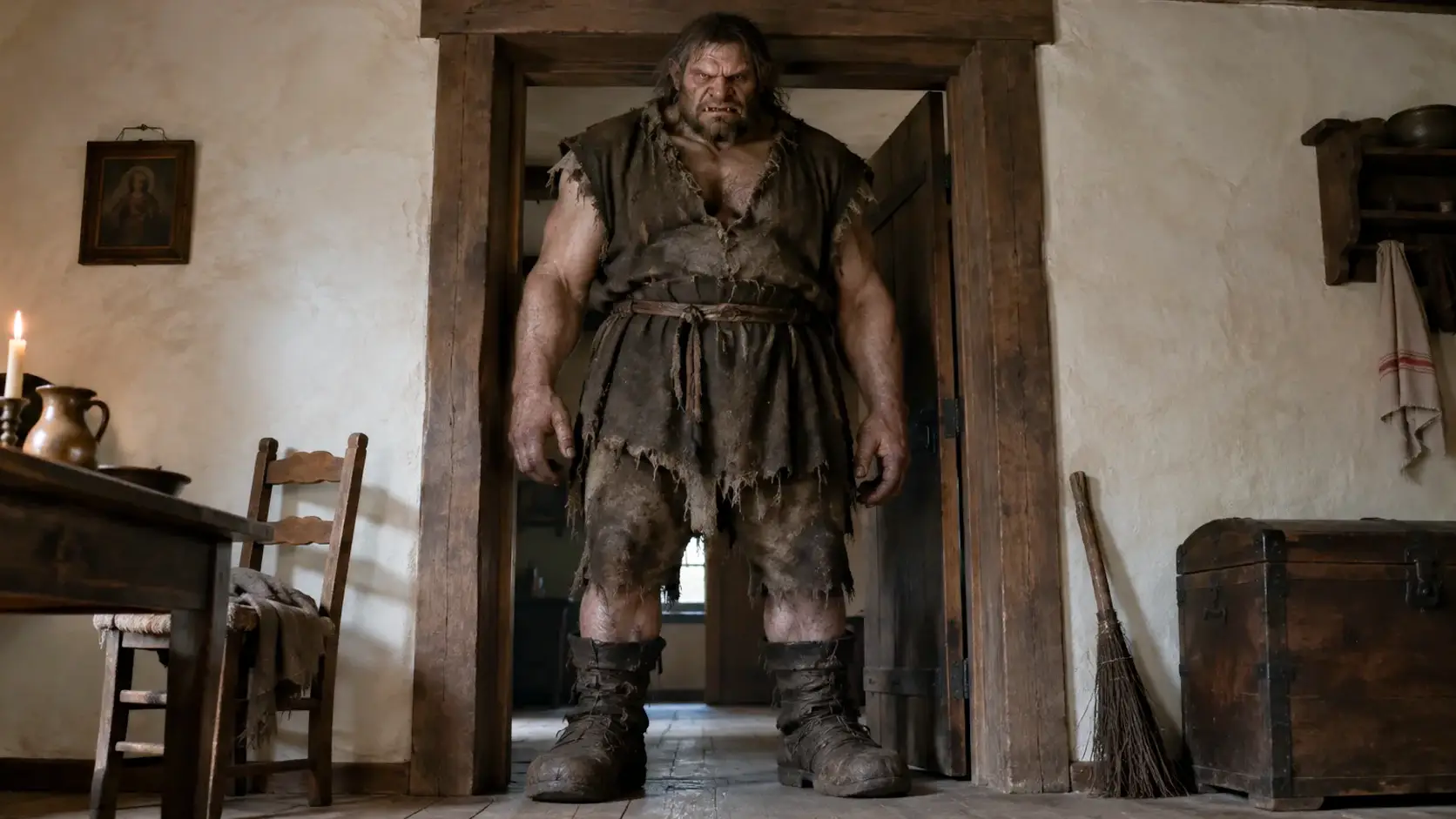
A substantial literary landmark followed in 1697 with Perrault’s Histoires ou Contes du temps passé. In Le Petit Poucet, the ogre is embedded in an extended adventure involving endangered brothers, a household, pursuit, magical footwear, and the eventual reversal of the children’s fortunes.
This published version gives the figure concrete possessions and relationships. The ogre has a wife and daughters, while his boots can pass into the hero’s possession. These details establish a particular narrative character, not a universal biography or an account of how ogres first appeared.
By 1765, L’Encyclopédie defined the ogre through overlapping categories: monster, giant, and wild man. Its entry also identified the eating of small children as the creature’s characteristic activity in tales. The definition shows that bodily description remained broader than the strongly recognizable narrative role.
The deeper origin remains disputed. The 2013 doctoral study Le mythe de l’ogre dans la prose francophone contemporaine reviews competing mythological and historical explanations. The documentary sequence therefore supports a medieval word history and a developed early modern literary presence, rather than a securely demonstrated single birthplace for the tradition.
Name Meaning
The Académie française derives ogre from Latin Orcus, the name of an underworld divinity. This is a specific lexicographic explanation of the French word. It should be distinguished from a claim that every feature of the fairy-tale monster descends directly from ancient religion.
The distinction matters because a name’s proposed ancestry and a creature’s cultural development are different questions. Even accepting the dictionary’s derivation does not establish how a child-eating giant acquired its household, its opponents, or the magical possessions found in particular stories.
In French, ogresse is the feminine form. The basic designation concerns a kind of legendary being rather than an individual’s personal name. An ogre in one tale need not therefore share the family relationships, equipment, or actions assigned to another.
In its established fairy-tale sense, the word identifies a monstrous eater of human beings, particularly children. Giant stature is closely associated with that meaning, but size alone is insufficient: the appetite distinguishes the ogre more clearly than a simple description such as “very large man.”
Appearance
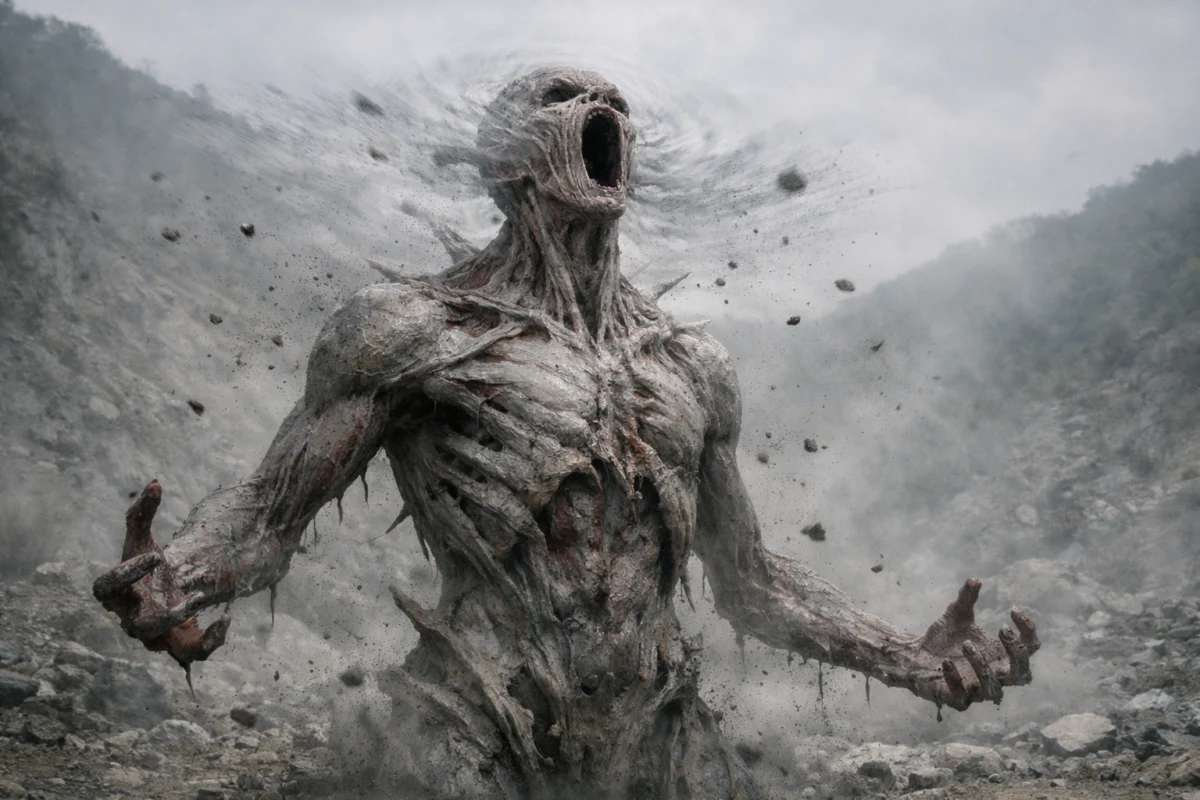
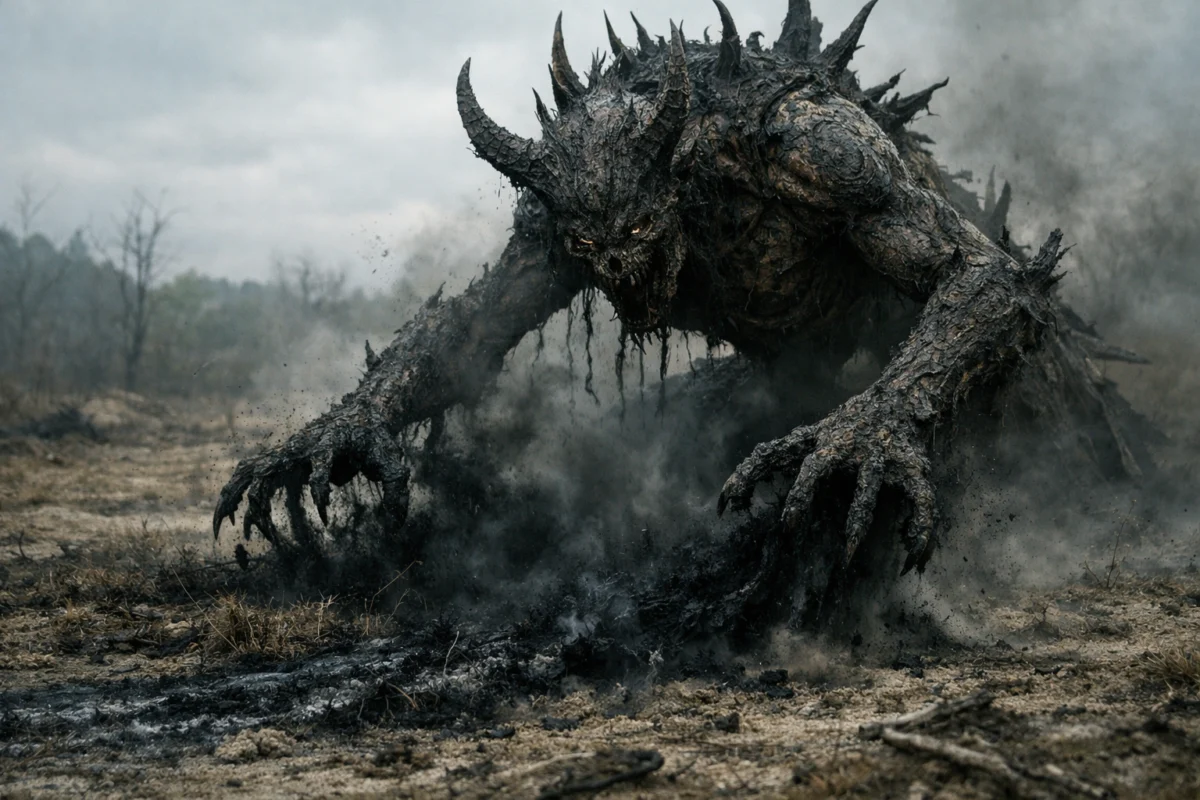
The best-supported general image is a large, threatening humanoid. Historical French definitions connect the ogre with giants and monstrous human figures, but do not establish a uniform anatomy. Its resemblance to humanity is important: this is a predator that can inhabit a recognizable household.
The alternatives preserved in the 1765 Encyclopédie are revealing. “Monster,” “giant,” and “wild man” do not describe exactly the same body. Together they leave room for different degrees of human resemblance, unusual scale, and an appearance understood as standing outside ordinary human society.
Giant stature creates a strong visual contrast with the children an ogre threatens. Nevertheless, the historical descriptions offer no standard measurement. The essential relationship is one of disproportionate physical power, not a height that can be applied consistently across the tradition.
Clothing and equipment require equal care. The seven-league boots belong to Perrault’s ogre in Le Petit Poucet and are central to that adventure. They are removable magical possessions: the young hero takes them while their owner sleeps, rather than acquiring an ability inherent in an ogre’s body.
That distinction affects how the creature should be imagined. Boots can identify a scene from this particular tale without becoming compulsory ogre attire. Likewise, the presence of a wife and daughters establishes the character’s family setting, not a standard visual arrangement for every depiction.
No particular skin color, facial structure, or costume emerges as compulsory from these descriptions. A historically grounded portrayal can emphasize human-like form, intimidating scale, and predatory behavior while leaving finer details to the chosen tale or illustration rather than presenting them as ancient rules.
Background Story
The ogre’s background is best understood through the relationships that organize its tales, rather than through an invented life history. In Le Petit Poucet, children face an adult-sized world made lethally disproportionate. The antagonist gives physical form to the danger of being small and vulnerable.
The household makes that danger especially disturbing. An ogre can have a wife, children, possessions, and wealth while remaining a human-eater. Domestic familiarity does not remove the threat; it places the threat inside a setting normally associated with family life and protection.
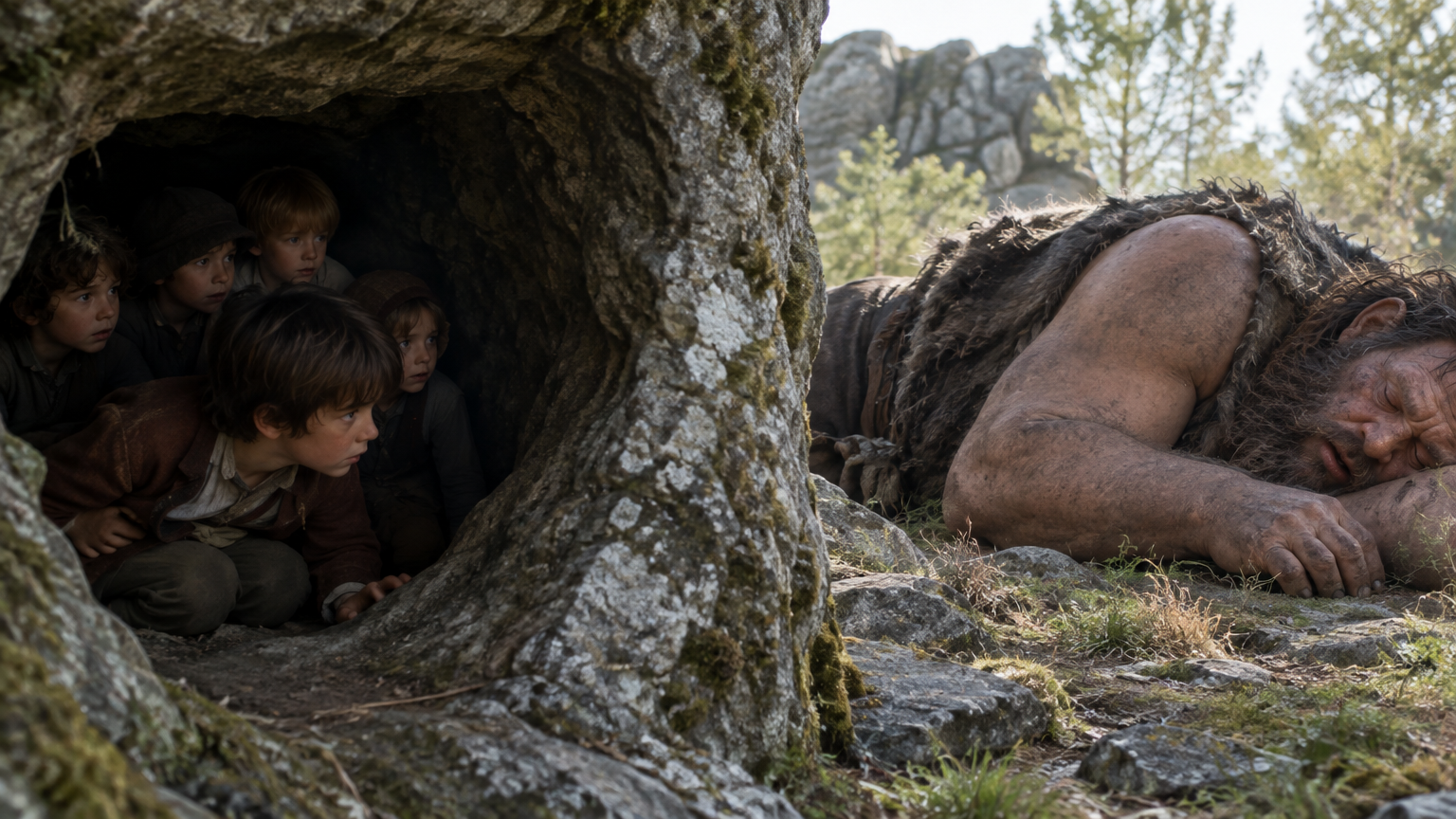
Within this narrative structure, intelligence can overcome a superior pursuer. Petit Poucet and his brothers hide in a hollow rock, and the exhausted ogre falls asleep nearby. The hero’s opportunity comes through observation and timing, not through becoming physically stronger than his enemy.
The boots sharpen this reversal. Once removed from the sleeping ogre, an instrument associated with the pursuer becomes available to the pursued child. The episode makes power transferable through action and cunning, rather than treating the monster’s advantages as permanently beyond human reach.
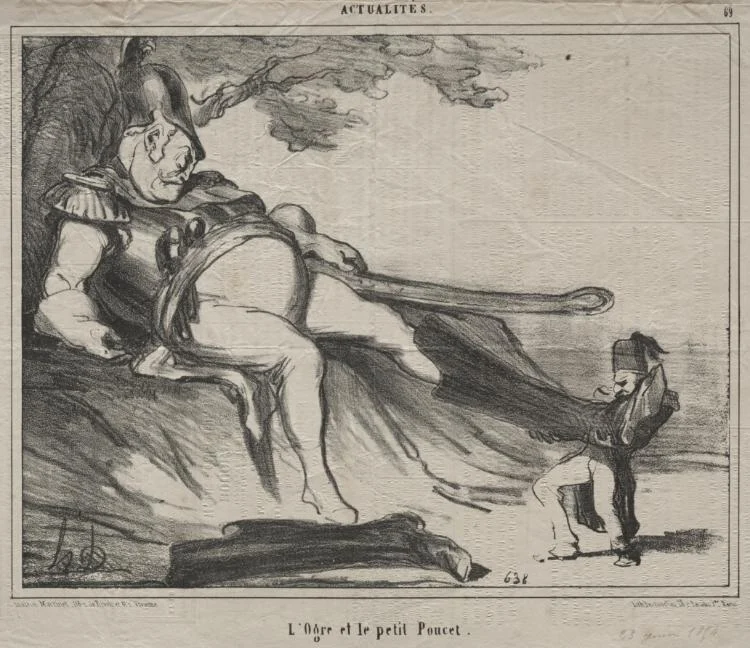
The subsequent acquisition of the ogre’s wealth extends the reversal beyond escape. Petit Poucet deceives the ogre’s wife with a story about her husband’s capture by robbers. Read as narrative interpretation, these events connect the ogre with dangerous power that can be defeated and redirected, without proving a single historical cause for the monster’s creation.
Famous Folklore Stories
Le Petit Poucet
In Charles Perrault’s 1697 tale, Petit Poucet and his six brothers encounter an ogre whose household becomes a place of mortal danger. Petit Poucet exchanges the boys’ headwear with that of the ogre’s daughters, causing their father to kill his own children instead of his intended victims.
The brothers escape, but the ogre pursues them in seven-league boots. They hide inside a hollow rock, and their exhausted pursuer sits above them and falls asleep. Petit Poucet sends his brothers home, then carefully removes the sleeping ogre’s boots and puts them on himself.
Petit Poucet subsequently tells the ogre’s wife that robbers have captured her husband and demand his wealth as ransom. She hands over the treasure. Through successive deceptions, the smallest brother turns the ogre’s advantages into resources for himself: first escaping his violence, then acquiring his magical equipment and riches.
Les trois frères et le géant
The tale Les trois frères et le géant, included in La France merveilleuse et légendaire in 1884, is identified by the Bibliothèque nationale de France as a variant of Le Petit Poucet. It documents the wider circulation of this narrative family beyond Perrault’s particular literary version.
The title names a giant rather than an ogre, illustrating the overlap between these categories in related storytelling. That relationship does not make the versions interchangeable: the identification as a variant alone does not establish that every trick, magical object, or ending appears in both.
Cultural Impact
The ogre became an everyday image of excessive appetite as well as a frightening fictional character. By 1740, the Académie française recorded the expression manger comme un ogre, meaning to eat excessively. The expression carries the monster’s defining hunger into ordinary descriptions of human behavior.
In Le Petit Poucet, that appetite gives a powerful adult a predatory relationship with vulnerable children. Yet the story also makes his strength defeatable. Its central reversal allows a small, resourceful protagonist to overcome an adversary who initially appears to possess every physical advantage.
Illustration gave these encounters a lasting visual presence. Gustave Doré’s treatment of Perrault’s threatening figures is noted for its theatrical staging in the Bibliothèque nationale de France’s discussion of frightening stories. Such images are artistic interpretations, however, rather than evidence for a single traditional ogre anatomy.
A surviving 1899 wood engraving for Le Petit Poucet, held by the Metropolitan Museum of Art, documents this illustrated reception. Engraved by Georges Léon Alfred Perrichon after Doré and published by J. Hetzel et cie, it shows how the tale continued circulating through illustrated editions.
The ogre also supplies theatrical action rather than merely atmospheric menace. In Yuri Shevchenko’s opera Puss in Boots, the ogre Zhuylo chooses among his courtiers for lunch. The Cat tricks him into becoming a mouse, eats him, and secures the castle for the Marquis.
This documented stage adaptation preserves the reversal of predator and prey while changing the means of defeat. Alongside the illustrated editions, it demonstrates the figure’s adaptability: an ogre’s overwhelming power can create suspense, spectacle, and an opportunity for a weaker opponent’s decisive trick.
Similar Beasts
Tartalo

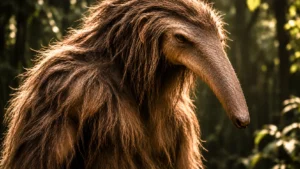
Tartalo is a cyclopean giant from Basque folklore, distinguished by a single eye, great strength, and a predatory character. These features make him a particularly close comparison.
Both figures place humans against a physically superior humanoid adversary. Tartalo’s single eye is distinctive, whereas the French ogre has no equivalent universal anatomical feature.
Black Annis
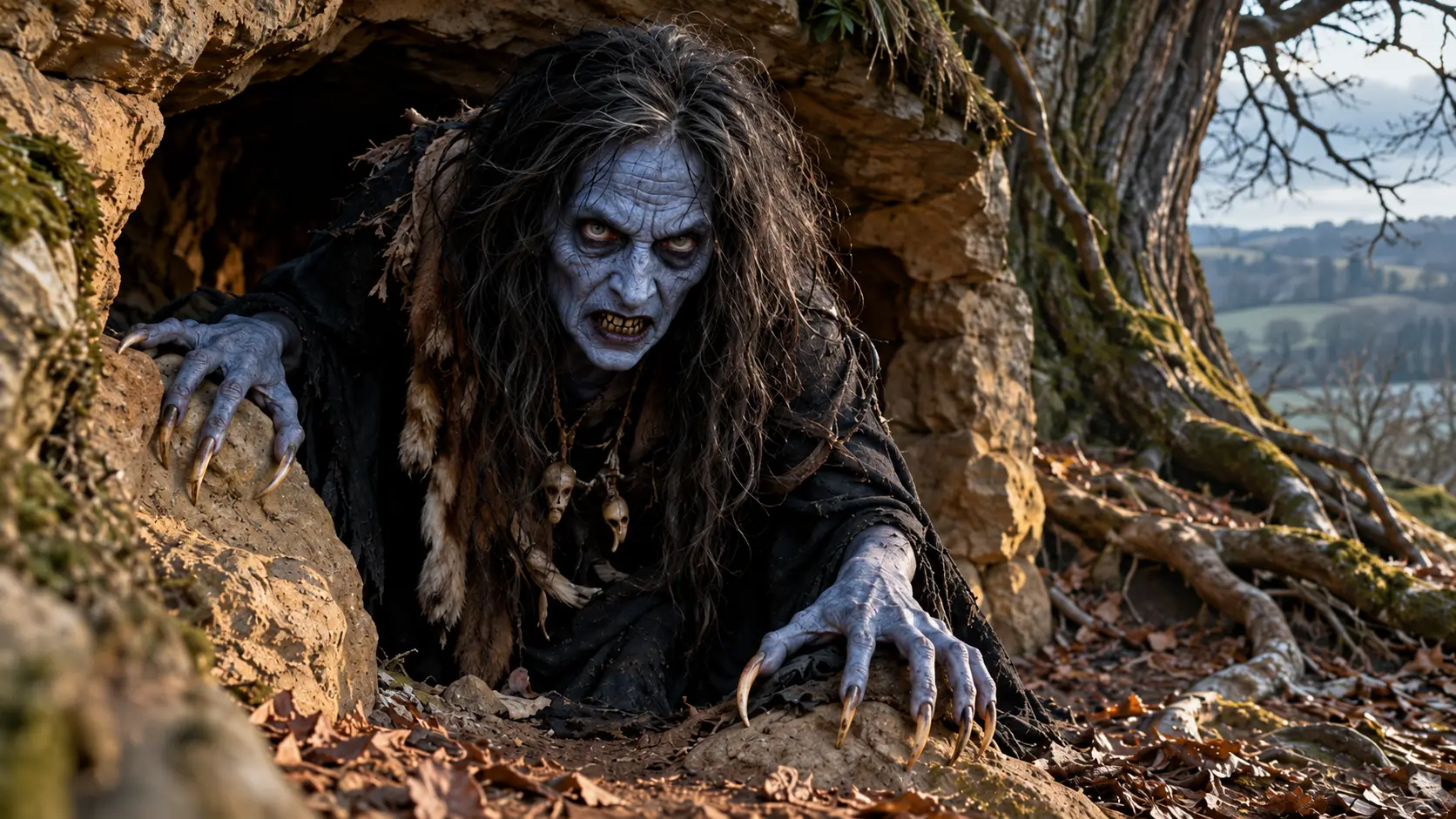
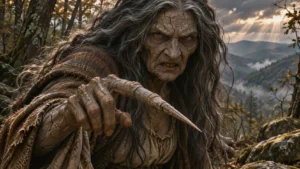
Black Annis is a blue-faced cave hag associated with Leicestershire. Her legend describes her seizing wandering children and lambs and hanging their skins beside her feared dwelling.
Her predation on children closely resembles the ogre’s threatening role. Unlike the broadly reusable fairy-tale ogre, she is a named figure with a localized legendary setting.
Oni

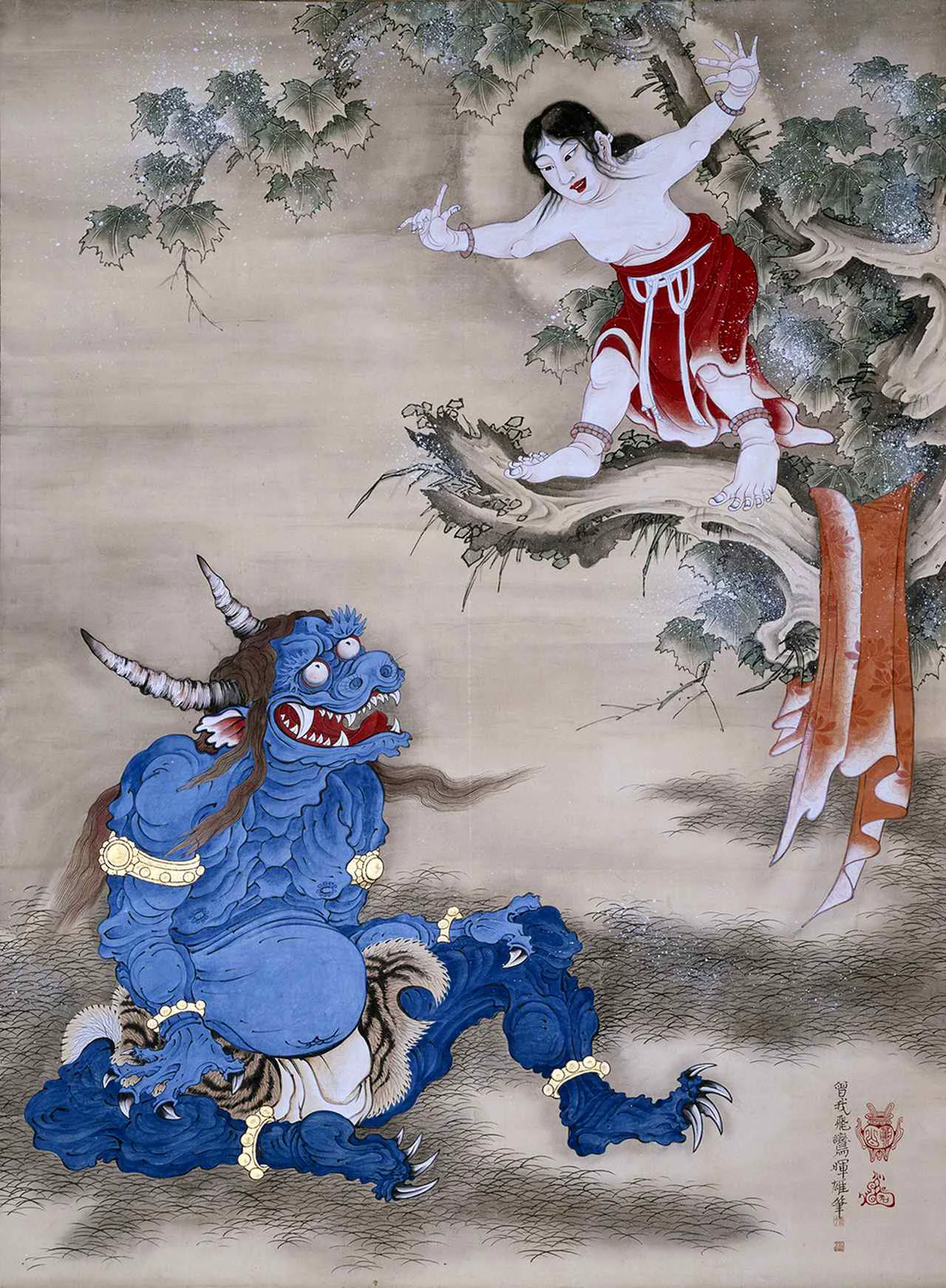
Oni are monstrous beings in Japanese folklore, associated with immense strength, fearsome appearance, punishment, and misfortune. They belong to a different cultural and religious framework from French ogres.
The comparison rests on intimidating humanoid form and overwhelming force. It should not erase the oni’s associations with punishment or imply that every oni is a child-eater.
One-Eyed Likho
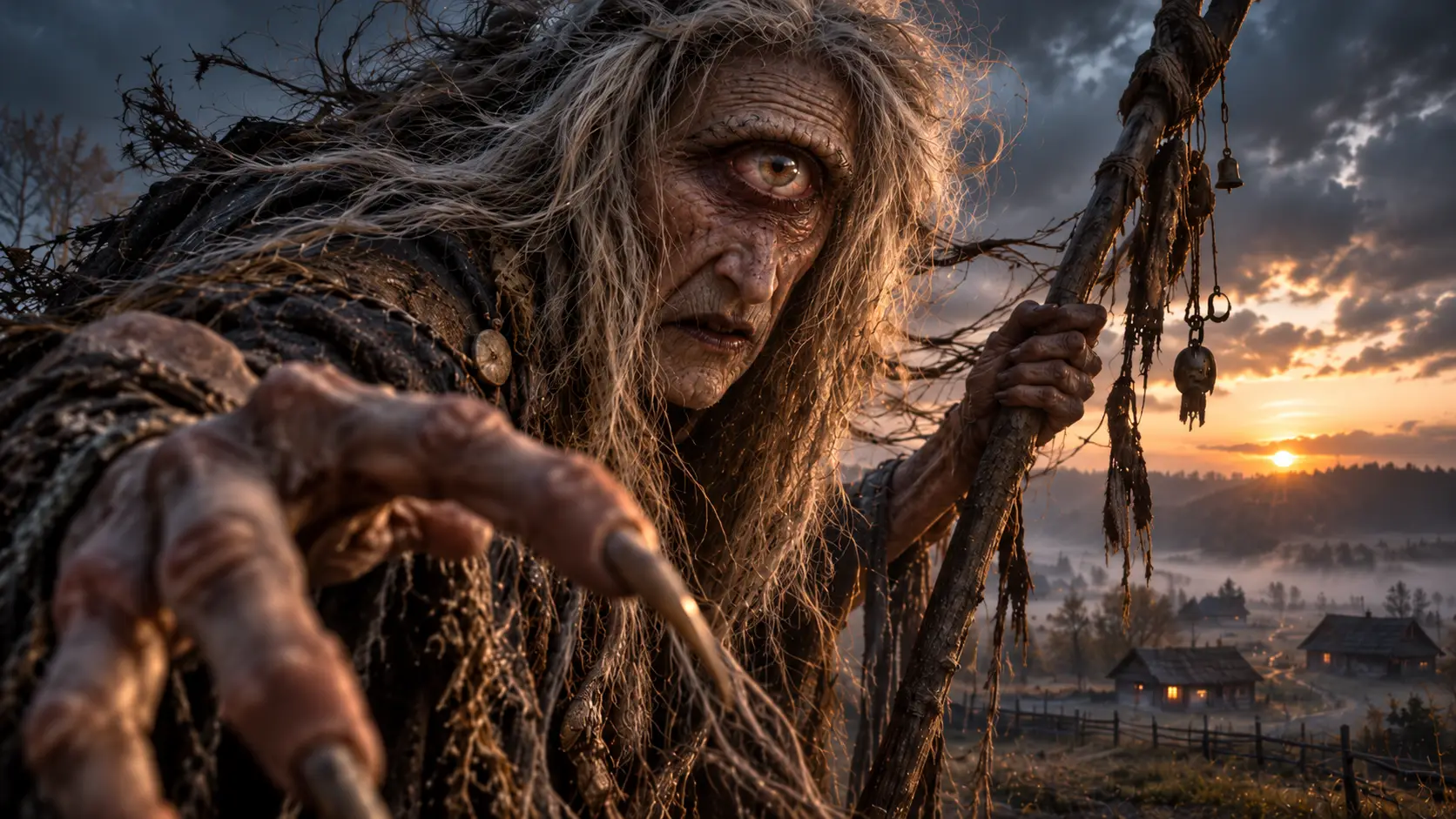
One-Eyed Likho is a frightening humanoid figure in Slavic folklore, marked by a single eye and associated with misfortune. Its encounter stories concern hardship and attempts at escape.
Like an ogre, Likho can confront a human protagonist with an apparently overpowering danger. Its defining connection to ill fate distinguishes it from the appetite-centered French monster.
Read more about One-Eyed Likho
Religion/Ritual
The documented ogre material concerns tales, language, illustration, and literary interpretation rather than a verified cult or ritual observance. It does not establish offerings, festivals, protective ceremonies, or religious specialists devoted to ogres. Magical objects within a story are not themselves evidence of ritual practice.
The Académie française’s derivation of ogre from Orcus, an underworld divinity, requires a separate distinction. A proposed linguistic ancestry does not demonstrate continuity of worship, nor does it establish that the fairy-tale child-eater was once a deity served through identifiable ceremonies.
Scientific or Rational Explanations
The strongest rational approach treats the ogre as a narrative and cultural figure rather than an unidentified animal. The historical descriptions concern imagined monsters in tales, while the surviving episodes organize danger around speech, deception, household relationships, pursuit, and magical possessions.
A social reading of Le Petit Poucet can focus on unequal power. Children face an adult capable of killing them, but the smallest child survives through observation and planning. This interprets the tale’s structure; it does not prove why the ogre tradition first developed.
The ogre’s appetite likewise permits an interpretation centered on consumption and vulnerability. Eating becomes an extreme expression of domination when human beings are treated as food. The documented expression manger comme un ogre shows that excessive appetite also became a familiar, nonliteral human comparison.
Specialist research offers broader frameworks without establishing one uncontested origin. The 2013 thesis Le mythe de l’ogre dans la prose francophone contemporaine discusses competing mythological and historical explanations. Those proposals should remain hypotheses rather than be converted into a definitive account of the monster’s beginnings.
Aaron Koehnemann’s 2010 dissertation The Ogre as Lycomorph examines relationships between the ogre’s human and wolf-like characteristics and its literary development. This is a comparative interpretive approach, not evidence that all ogres transform into wolves or possess a hidden canonical animal form.
The distinction between explanation and evidence remains important. A tale can illuminate anxieties about violence, hunger, or adult authority without preserving a literal historical event. Neither a recognizable human fear nor a proposed ancient connection is sufficient, by itself, to establish the ogre’s ultimate origin.
Modern Cultural References
Shrek, animated film (2001)
DreamWorks’ film follows a solitary green ogre whose quest with Donkey leads to romance with Princess Fiona. Its sympathetic hero reverses the traditional ogre’s monstrous role.
DreamWorks
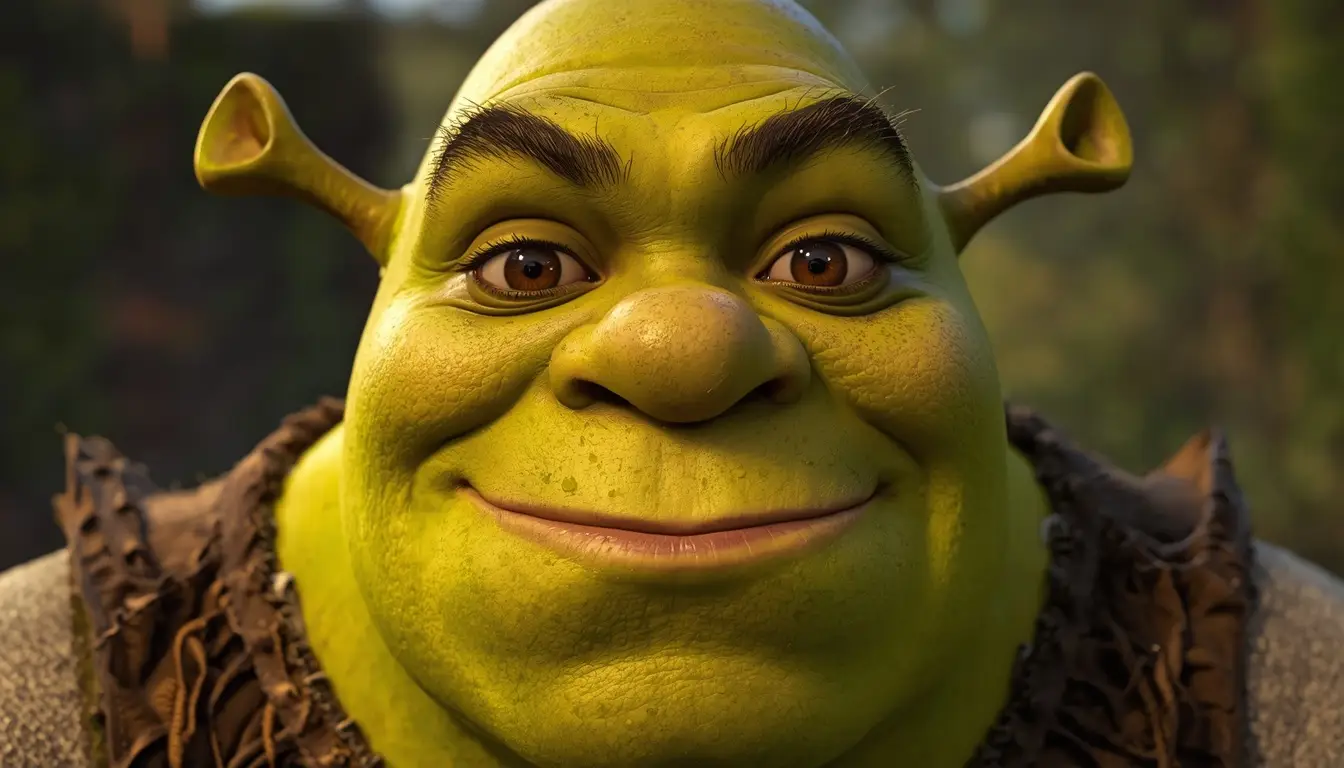
Shrek The Musical, stage production (2008)
This musical features music by Jeanine Tesori and book and lyrics by David Lindsay-Abaire. Its ogre protagonist becomes an unlikely hero rather than a child-eating antagonist.
(mtishows.com)
The Wrath of Mulgarath, novel (2004)
Holly Black and Tony DiTerlizzi’s novel belongs to The Spiderwick Chronicles. Its shape-shifting ogre, Mulgarath, preserves the threatening role familiar from older tales of dangerous supernatural adversaries.
(simonandschuster.com)
The Spiderwick Chronicles, television series (2024)
This television adaptation brings the Grace family’s encounters with supernatural creatures to the screen. Christian Slater plays Mulgarath, the story’s murderous ogre antagonist.
(paramountglobalcontent.com)
Tekken Tag Tournament 2, video game (2012)
This fighting game includes Ancient Ogre as a selectable combatant. The character represents a franchise-specific supernatural fighter, not a reconstruction of the child-eater found in French tales.
(blog.playstation.com)
Puss in Boots, opera performance (2025 listing)
Yuri Shevchenko’s opera stages the Cat’s triumph over the ogre Zhuylo. Tricked into becoming a mouse, the predatory ruler is eaten by his smaller, cleverer opponent.
(opera.com.ua)
Conclusion
The ogre is best understood as a flexible figure of French-language legend and fairy tale: a monstrous, often giant human-like being whose appetite threatens human life, especially children. Its power lies less in a fixed appearance than in the encounter it creates between vulnerable people and overwhelming strength. Perrault’s tales gave that encounter an enduring literary form, but they do not establish the beginning of the tradition. Likewise, a proposed linguistic ancestry cannot settle the creature’s broader cultural origins.
Across these stories, the ogre makes appetite, violence, and unequal power tangible. The small or apparently helpless character’s survival offers a counterweight: intelligence can overcome bodily strength, although individual tales reach that outcome differently. Later adaptations retain the monster’s menace, transform it into a combatant, or reverse expectations by making an ogre the hero. These contrasting uses show the figure’s narrative flexibility without erasing its older identity. No single modern image should therefore stand for every ogre in folklore and literature.
Further Reading
Le Petit Poucet, Charles Perrault, Wikisource, 1697
Wikisource provides the original French text of Perrault’s tale. It is essential for examining the ogre’s pursuit, seven-league boots, and defeat within this particular literary version.
(fr.wikisource.org)
Ogre, ninth edition, Académie française, 2024
The Académie française’s dictionary defines the ogre and dates the word. Its proposed Latin derivation helps distinguish lexical history from disputed explanations of the folklore figure’s origins.
(dictionnaire-academie.fr)
OGRE, L’Encyclopédie, Wikisource, 1765
This eighteenth-century encyclopedia entry survives in a readable Wikisource transcription. Its description of a monster, giant, or wild man documents the historical association between ogres and child-eating.
(fr.wikisource.org)
Le mythe de l’ogre dans la prose francophone contemporaine, Université de Limoges repository, 2013
This doctoral thesis examines the ogre in contemporary Francophone prose. Its discussion of competing origin theories helps contextualize Perrault without treating his tales as the tradition’s beginning.
(cdn.unilim.fr)
Untitled (illustration for “Le Petit Poucet”), from “Les Contes de Perrault”, The Metropolitan Museum of Art, 1899
The museum records a wood engraving by Georges Léon Alfred Perrichon after Gustave Doré. It documents the later printed circulation of imagery associated with Perrault’s ogre tale.
(metmuseum.org)
Puss in Boots, National Opera of Ukraine
The National Opera of Ukraine provides a detailed synopsis of Shevchenko’s opera. Its account of Zhuylo’s transformation and defeat demonstrates the ogre’s continuing adaptation for the stage.
(opera.com.ua)