
Modern American Mythical Beasts
Modern American monster folklore grew from many different places, including frontier storytelling, logging camps, desert encounters, UFO scares, roadside legends, horror media, tabletop games, and the internet. Together, these traditions created creatures that feel distinctly tied to the culture of the United States.
Some, such as Bigfoot, Mothman, and the Skunk Ape, developed through reported sightings and local legends. Others, like the Jackalope and Hidebehind, grew from humorous tall tales, while creatures such as the Beholder and Predator emerged through modern American entertainment.
This article focuses on beasts whose recognizable modern identity developed in the United States after independence. It does not treat older Indigenous beings as modern American creations, even when their traditions remain important within regions that later became part of the United States.
From the forests of the Pacific Northwest to the Mojave Desert, Florida swamps, Appalachian towns, and digital folklore, these twelve creatures show how American mythology continues to evolve. Each reflects a different era, landscape, fear, joke, or creative tradition within modern American culture.
Bigfoot
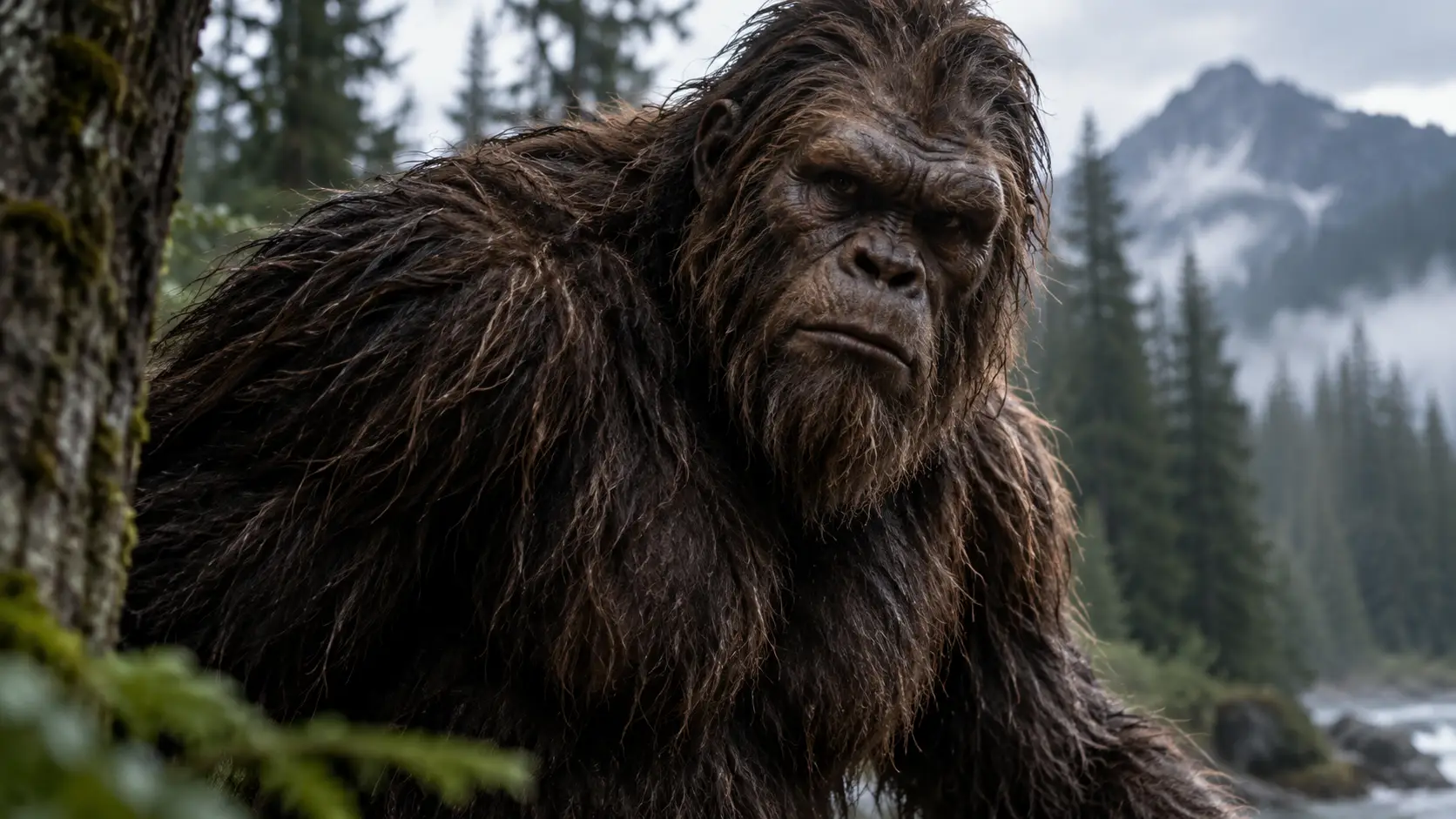
Bigfoot is the best-known modern American cryptid, usually described as a large, hairy, humanlike creature walking upright through remote forests. Its modern identity became strongly associated with Northern California and the Pacific Northwest during the twentieth century.
Stories about wild humanlike beings existed in North America long before the name Bigfoot appeared. Indigenous traditions involving beings later compared with Sasquatch have their own histories and should not simply be treated as early versions of the modern American cryptid.
The modern Bigfoot phenomenon changed dramatically in 1958, when enormous humanlike footprints appeared near Bluff Creek in Northern California. The Humboldt Times covered the tracks and helped popularize the name “Bigfoot,” turning a regional mystery into a national media story.
Beast ID
Also Known As: Sasquatch
Modern Origin: United States, especially Northern California and the Pacific Northwest
Major Modern Breakthrough: Bluff Creek footprint reports, 1958
Beast Type: Cryptid, Hairy Humanoid
Similar Beasts: Yeti, Skunk Ape, Yucca Man
Reported Traits: Great Size, Bipedal Movement, Physical Strength, Wilderness Stealth
Appearance
Bigfoot is generally described as an enormous bipedal creature covered in dark brown, black, or reddish hair. Reports portray it as broadly human-shaped, but considerably larger and heavier, with long arms, powerful shoulders, and an ape-like or humanlike face.
Anthropologist Grover Krantz, one of the few academics who seriously argued for Bigfoot’s existence, characterized the reported creature as a massive, hairy bipedal primate. He estimated a height of roughly six to eight feet, although eyewitness descriptions vary considerably.
Large footprints form the creature’s defining physical clue and inspired its modern name. However, alleged tracks vary greatly in size and quality, while hoaxes have complicated efforts to separate potentially unexplained prints from deliberately manufactured evidence.
Famous Stories and Sightings
The 1958 Bluff Creek tracks created the modern Bigfoot sensation. Construction workers reported huge footprints near a logging road in Northern California, and newspaper coverage rapidly spread the story.
Decades later, relatives of Ray Wallace claimed he had created the famous tracks as a prank.
The most famous visual evidence appeared at Bluff Creek in 1967, when Roger Patterson and Bob Gimlin filmed a hairy upright figure walking across an open area. The short film remains intensely debated, with believers and skeptics continuing to disagree about what appears on screen.
No body, skeleton, verified tissue sample, or other scientifically accepted specimen has established Bigfoot as an unknown species. The Smithsonian’s stated position remains that Bigfoot does not exist as a scientifically demonstrated animal. (Smithsonian Institution)
Cultural Impact
Bigfoot became much larger than an encounter legend. The creature now represents wilderness mystery, the possibility of undiscovered animals, and the tension between scientific skepticism and eyewitness belief.
It has appeared across television, movies, advertising, tourism, podcasts, and American popular culture.
The legend also helped establish the modern idea of the cryptid investigator, with enthusiasts searching forests for footprints, hair, sounds, photographs, and other evidence. Few American legendary creatures have influenced modern monster culture as strongly or remained recognizable for so long.
Fun Facts
- The name Bigfoot became famous through Northern California newspaper coverage in 1958.
- The Patterson-Gimlin film was recorded in 1967 near the same Bluff Creek region connected with the earlier footprint reports.
- Bigfoot researcher Grover Krantz was a trained anthropologist at Washington State University, although his conclusions about the creature never gained general scientific acceptance.
Mothman
Mothman is a modern American cryptid associated with Point Pleasant, West Virginia. The legend began during a concentrated series of reported encounters in 1966 involving a strange winged or birdlike humanoid with unusually bright red eyes.
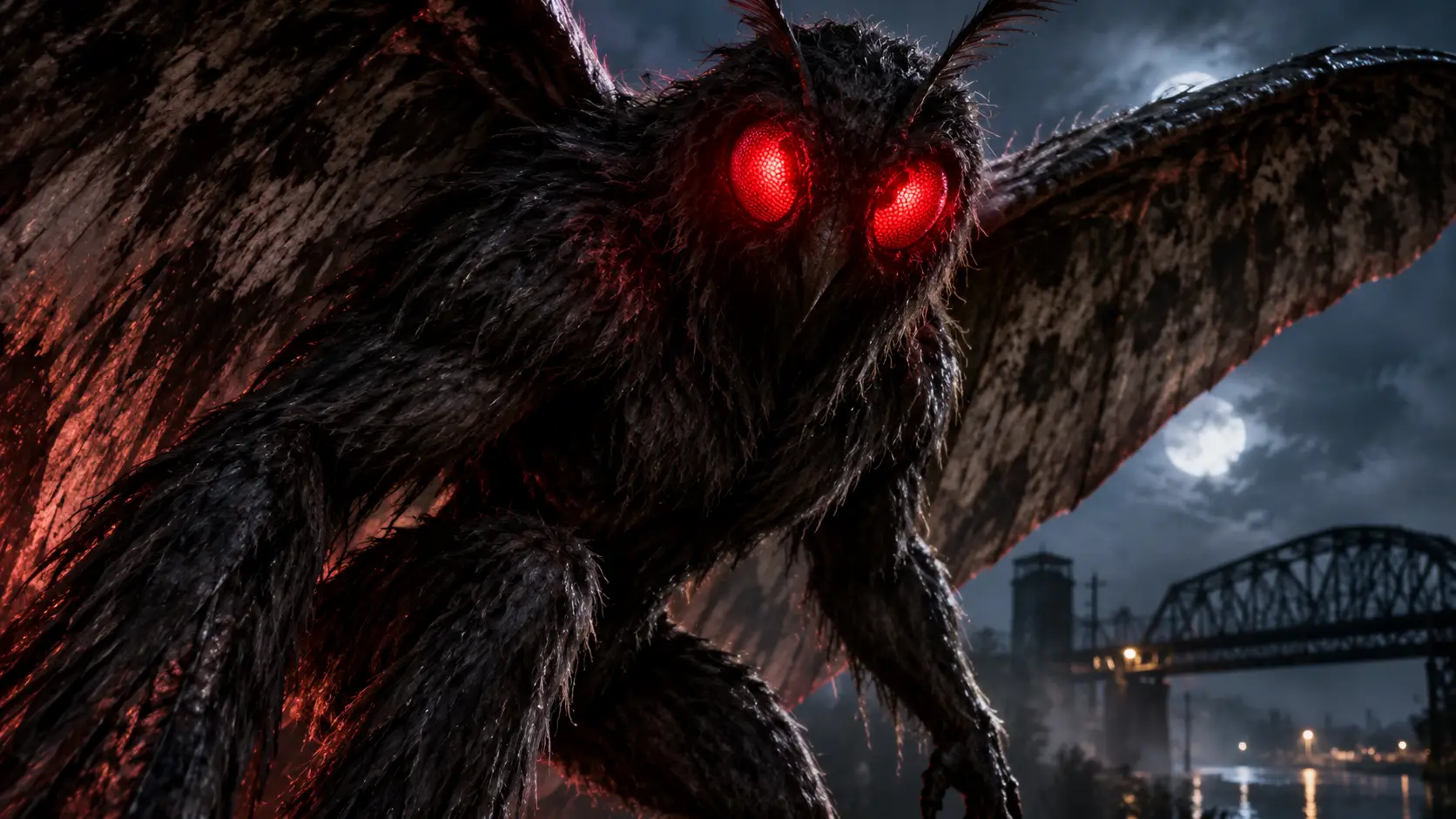
Unlike Bigfoot, Mothman did not develop from decades of reports spread across a huge region. Its identity became attached almost immediately to one community, especially the abandoned World War II industrial area north of Point Pleasant known locally as the TNT area.
Later books, paranormal theories, and popular culture expanded the story far beyond those original sightings. Mothman became associated with UFOs, mysterious visitors, prophecy, and disaster, although many of these elements entered the legend after its first eyewitness reports.
Beast ID
Also Known As: Point Pleasant Mothman
Modern Origin: Point Pleasant, West Virginia, USA
First Defining Encounter: November 15, 1966
Beast Type: Winged Cryptid, Humanoid
Similar Beasts: Owlman, Thunderbird, Jersey Devil
Reported Traits: Flight, Gliding, High Speed, Intimidating Red Eyes
Appearance
The defining witnesses described a man-sized or larger figure with prominent glowing red eyes. Reports commonly portray Mothman with large wings and a dark gray or brown body, although descriptions differed and did not establish one perfectly consistent anatomy.
During the famous November 1966 encounter, two young couples reported seeing a six-to-seven-foot figure near the abandoned power plant. They said its eyes reflected intensely red in their vehicle headlights and that it later rose into the air and followed their car.
Modern artwork frequently exaggerates the creature into a muscular moth-human hybrid. The original reports were less specific. The unsettling combination of unusual size, red eyes, wings, and apparently effortless aerial movement became the features that defined Mothman’s later image.
Famous Stories and Sightings
On November 15, 1966, Roger and Linda Scarberry and Steve and Mary Mallette were driving near the abandoned power plant when they reported encountering the strange creature. They fled toward Point Pleasant and said the flying figure followed their vehicle.
The Point Pleasant Register reported the incident the following day under the memorable headline describing a “man-sized bird… creature… something.” Additional reports followed, turning an isolated encounter into a rapidly developing local legend.
After the Silver Bridge collapsed on December 15, 1967, killing 46 people, later storytellers connected Mothman with the tragedy and sometimes portrayed it as a warning or supernatural omen. There is no evidence demonstrating that the creature and bridge collapse were connected.
Cultural Impact
Mothman has become one of West Virginia’s most recognizable folklore figures. Point Pleasant contains a Mothman Museum, a large metallic statue, and an annual festival that attracts visitors specifically because of the legend.
John Keel’s 1975 book The Mothman Prophecies dramatically expanded the mythology by combining eyewitness accounts with paranormal events and conspiracy themes. A later film adaptation helped introduce the legend to an even wider international audience.
Fun Facts
- The defining Point Pleasant encounter occurred on November 15, 1966.
- The famous Silver Bridge disaster happened more than a year later, on December 15, 1967.
- Point Pleasant now celebrates Mothman through a museum, statue, annual festival, tourism, and local merchandise.
Jackalope
The Jackalope is one of the clearest examples of a genuinely modern American legendary animal. It combines the body of a jackrabbit with antlers, creating a creature that looks almost believable at first glance but belongs firmly to Western tall-tale culture.
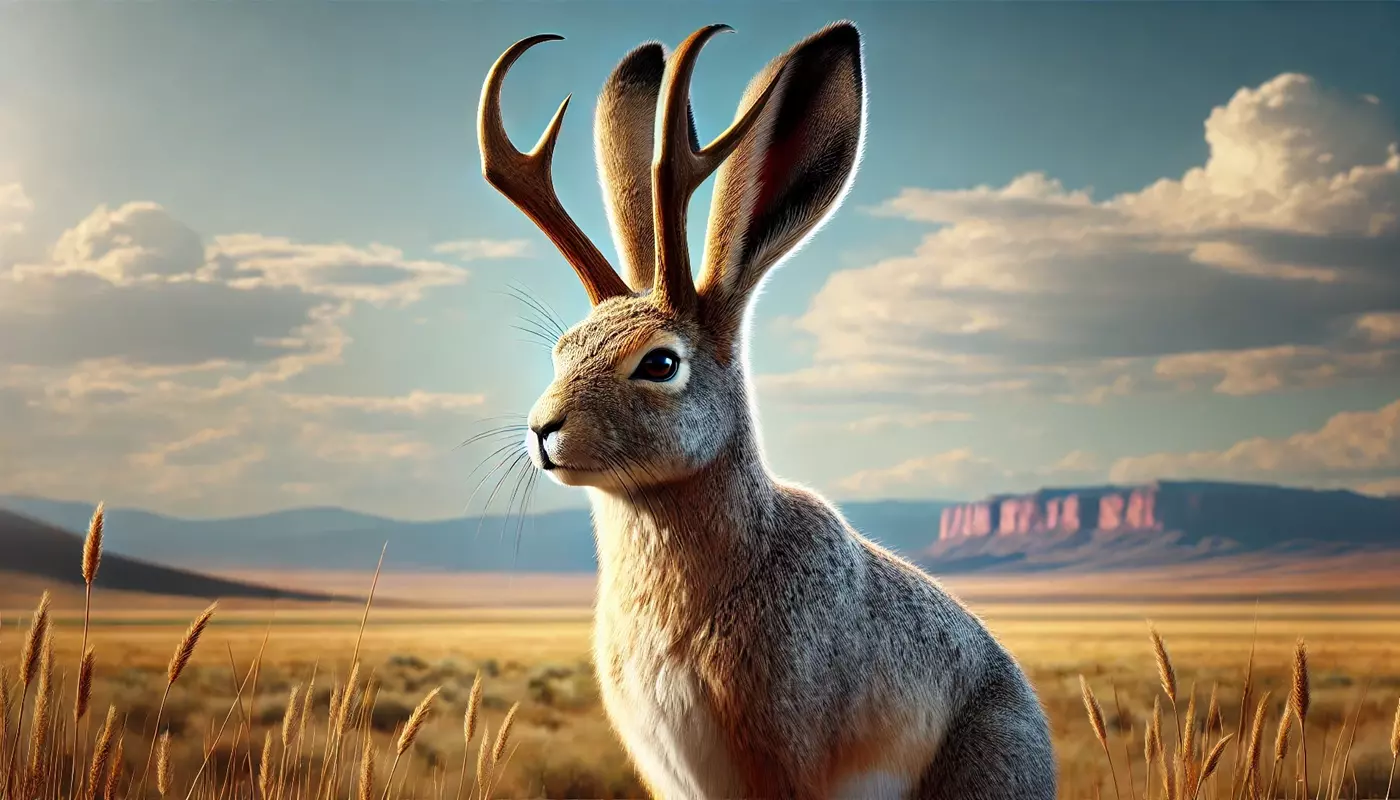
Its most famous modern origin lies in Douglas, Wyoming, where brothers Douglas and Ralph Herrick created a mounted jackrabbit fitted with deer antlers during the 1930s. Wyoming tourism records date their famous creation to 1934.
The joke quickly developed into something larger. Mounted Jackalopes appeared in bars, roadside businesses, postcards, souvenir shops, and tourist attractions, while storytellers invented increasingly ridiculous details about the animal’s habits, powers, and extreme rarity.
Beast ID
Also Known As: Antlered Rabbit
Modern Origin: Douglas, Wyoming, USA
Famous Modern Creation: Herrick brothers’ mounted Jackalope, 1934
Beast Type: Tall-Tale Animal, Hybrid Creature
Similar Beasts: Wolpertinger, Skvader, Fearsome Critters
Reported Traits: Speed, Elusiveness, Mimicry in later folklore
Appearance
The Jackalope has the body of a large jackrabbit with antlers growing naturally from its head. Unlike many American cryptids, its familiar appearance comes primarily from manufactured taxidermy mounts rather than from a consistent history of frightening eyewitness encounters.
The Herrick brothers created their version by combining a taxidermied jackrabbit with deer antlers. This physical joke proved extremely convincing as a souvenir and gave the legendary animal the visual form still associated with it today.
Later illustrations sometimes enlarge the antlers dramatically or make the creature more deer-like, but the classic Wyoming Jackalope remains essentially a normal-looking rabbit carrying an impossible set of antlers.
Famous Stories and Folklore
The best-known story begins when Douglas and Ralph Herrick, young Wyoming taxidermists, created an antlered jackrabbit mount. They sold the early specimen to Douglas hotel owner Roy Ball, helping transform the strange trophy into a local attraction.
As its popularity grew, the creature acquired playful folklore. Stories claimed Jackalopes could imitate human voices, move at extraordinary speed, become dangerous when threatened, or reproduce only during lightning storms.
These claims belong to humorous modern tall-tale tradition rather than older folklore.
Douglas eventually embraced the joke completely. Visitors can encounter Jackalope statues, purchase souvenirs, and even obtain novelty hunting licenses permitting the animal to be hunted on the nonexistent June 31, during a deliberately impossible two-hour window.
Cultural Impact
The Jackalope became an unofficial symbol of Wyoming humor and Western roadside culture. Douglas calls itself Jackalope City, maintains Jackalope Square downtown, and features an eight-foot statue celebrating the imaginary animal.
Its success shows how modern folklore does not always begin with genuine belief or frightening encounters. A joke, physical prop, tourism campaign, and repeated storytelling can gradually create a legendary creature with an identity strong enough to survive for generations.
Fun Facts
- Wyoming’s official tourism material dates the Herrick brothers’ famous mounted Jackalope to 1934.
- The original mount displayed in Douglas was eventually stolen and disappeared.
- Douglas still celebrates the creature with Jackalope Square, statues, events, souvenirs, and deliberately impossible hunting licenses.
Absolutely. Here is the corrected version of beasts 4-6 with no links inside the article body. I’m keeping the verification sources tracked for the single Further Reading chapter at the end of the complete article.
Yucca Man
Yucca Man is a modern American desert cryptid associated mainly with Southern California’s Mojave region. Reports describe a huge, hairy, upright creature encountered near military installations, desert roads, residential areas, and isolated wilderness around places such as Twentynine Palms and Antelope Valley.
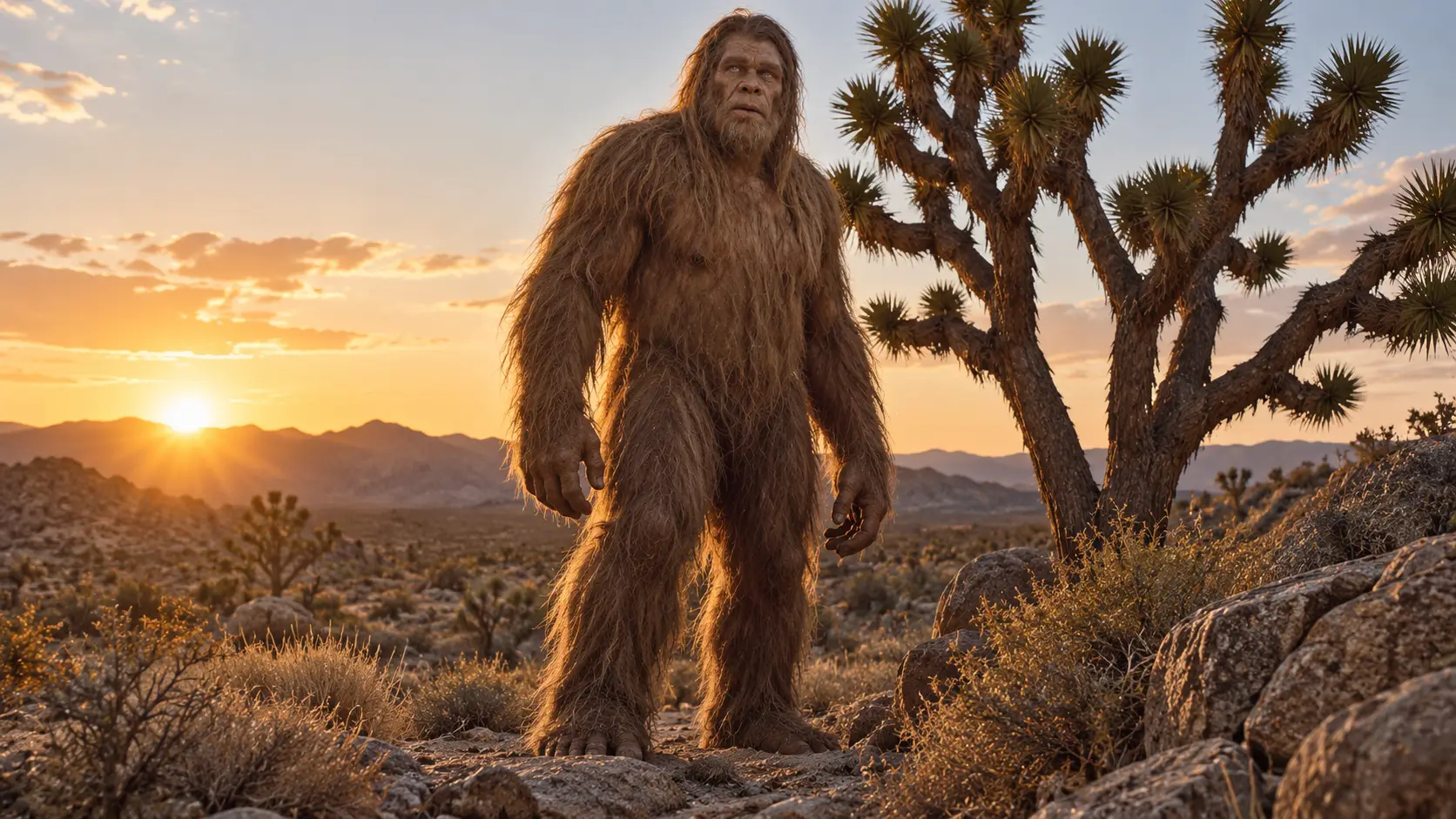
The legend developed within the broader American Bigfoot tradition but gained a distinct identity through the desert environment. Instead of disappearing into forests, Yucca Man appears in open scrubland, military territory, Joshua tree country, and communities bordering the Mojave wilderness.
Beast ID
Also Known As: Mojave Bigfoot, Sierra Highway Devil
Modern Origin: Southern California, USA
Major Early Reports: 1970s
Beast Type: Desert Cryptid, Hairy Humanoid
Similar Beasts: Bigfoot, Yeti, Skunk Ape
Reported Traits: Great Strength, Large Size, Bipedal Movement, Powerful Odor
Appearance
Yucca Man is generally described as an enormous humanlike figure covered in hair. Reported coloring ranges from dark brown to tan, while several stories emphasize extremely long arms, a massive upper body, and proportions noticeably different from an ordinary human.
A 1979 Desert Hot Springs account described a broad-chested hairy figure with arms hanging unusually low and long tan hair. Red or otherwise unusual glowing eyes also appear in some later retellings, although these features vary substantially between different reported encounters.
A powerful unpleasant smell forms another recurring element in the folklore. This connects Yucca Man with other American hairy-humanoid legends, but eyewitness reports remain inconsistent enough that no single description should be treated as a verified biological profile.
Famous Stories and Sightings
The best-known early story comes from Twentynine Palms in 1971. According to later retellings, a Marine standing night guard encountered a huge hairy humanoid.
The dramatic version claims that the guard was later found unconscious and that his rifle had been damaged.
No verified military documentation currently confirms that the confrontation happened exactly as later versions describe it. The story remains important because it became one of the central narratives through which Yucca Man gained its reputation as a powerful desert-dwelling creature.
More firmly documented folklore comes from Antelope Valley in 1973, when newspaper reports collected claims involving large footprints, nighttime disturbances, and a furry humanoid appearing near homes around Palmdale and Lancaster. These reports helped establish the creature as a recognizable regional legend.
Edwards Air Force Base also developed stories about a mysterious entity called Blue Eyes. Because those accounts use their own name and details, it is safer to treat Blue Eyes as related Mojave military folklore rather than automatically identifying it with Yucca Man.
Cultural Impact
Yucca Man has become one of Southern California’s recognizable regional cryptids. The legend combines Bigfoot-style mystery with the specific atmosphere of military bases, desert highways, isolated campsites, and the enormous open spaces of the Mojave landscape.
Museums, desert writers, podcasts, festivals, and local storytelling have continued developing the legend. Its survival shows how scattered encounter reports can gradually become a creature closely identified with one particular American environment and community.
Fun Facts
- Yucca Man stories are especially associated with Twentynine Palms, Palmdale, Lancaster, and Desert Hot Springs.
- Antelope Valley newspapers helped document the creature’s regional reputation during the 1970s.
- The nickname Mojave Bigfoot reflects its close relationship with the larger American Sasquatch tradition.
Hidebehind
The Hidebehind belongs to the strange family of creatures known as fearsome critters, imaginary animals circulated through American lumberjack storytelling. Unlike Bigfoot, the Hidebehind was not mainly treated as an unidentified animal waiting for scientific discovery.
It worked as an intentionally impossible woodland threat.
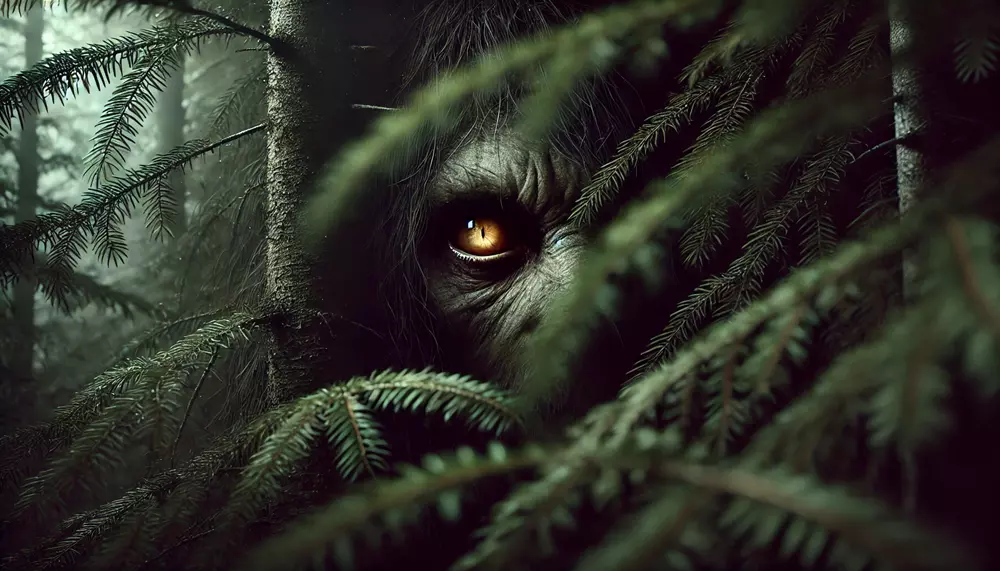
The creature’s defining joke is contained in its name. Nobody can properly see a Hidebehind because it supposedly moves behind a tree, object, or observer whenever someone turns toward it.
This simple idea made the creature perfectly suited to isolated logging camps.
Beast ID
Also Known As: The Hide Behind
Modern Origin: American Lumberjack Folklore
Major Printed Source: Fearsome Critters, 1939
Beast Type: Fearsome Critter, Woodland Monster
Similar Beasts: Squonk, Hodag, Splintercat
Reported Traits: Concealment, Stealth, Ambush, Rapid Movement
Appearance
The Hidebehind’s appearance is intentionally difficult to define because folklore claims observers can never look directly at it. Henry H. Tryon’s 1939 collection Fearsome Critters nevertheless preserves one of the clearest written descriptions of the creature.
Tryon’s version stands roughly six feet tall and walks upright. It has a slender body covered with long, thick black hair, a recurved tail, muscular forelimbs, and powerful claws.
Its narrow frame supposedly allows it to disappear behind surprisingly small tree trunks.
Other retellings make the creature more shadowlike and deliberately vague. That uncertainty strengthens the original joke because every failure to see the animal becomes supposed proof that the Hidebehind successfully moved out of sight at exactly the right moment.
Famous Stories and Folklore
Rather than having one famous encounter, the Hidebehind appears through a repeated lumber-camp scenario. A woodsman feels something following him and repeatedly turns around, only to find an empty trail, a tree trunk, or another piece of forest blocking his view.
The creature supposedly stays directly behind its victim regardless of how quickly the person turns. In darker versions, it waits for an opportunity to leap from concealment and attack, turning a humorous explanation for unseen noises into a genuinely threatening campfire monster.
Tryon’s written version becomes particularly gruesome, describing the Hidebehind attacking victims and feeding on their internal organs. He also gives the creature an intentionally comic weakness by claiming that it strongly dislikes alcohol and avoids people carrying it.
This detail fits fearsome-critter humor perfectly. A lumberjack could claim that alcohol provided practical protection from a monster nobody could see, allowing the tale to function simultaneously as a warning story, camp joke, and test for inexperienced newcomers.
Cultural Impact
The Hidebehind represents a distinctive form of American working-class folklore. Logging camps brought workers together in remote and dangerous environments where exaggerated stories offered entertainment, explained mysterious woodland experiences, and gave experienced lumberjacks opportunities to frighten new arrivals.
Printed collections preserved these creatures after traditional lumber-camp culture declined. Modern horror has rediscovered the Hidebehind because its central idea, a predator that always remains just outside your field of vision, still creates a simple and effective fear.
Fun Facts
- Henry H. Tryon’s Fearsome Critters from 1939 contains one of the best-known historical descriptions of the Hidebehind.
- The creature supposedly hides behind objects far narrower than its own body.
- Alcohol functions as its famous comic weakness in Tryon’s account.
Flatwoods Monster
The Flatwoods Monster is a modern American encounter legend born from a single extraordinary night in Braxton County, West Virginia, on September 12, 1952. It is also called the Braxton County Monster and became closely connected with America’s early UFO era.
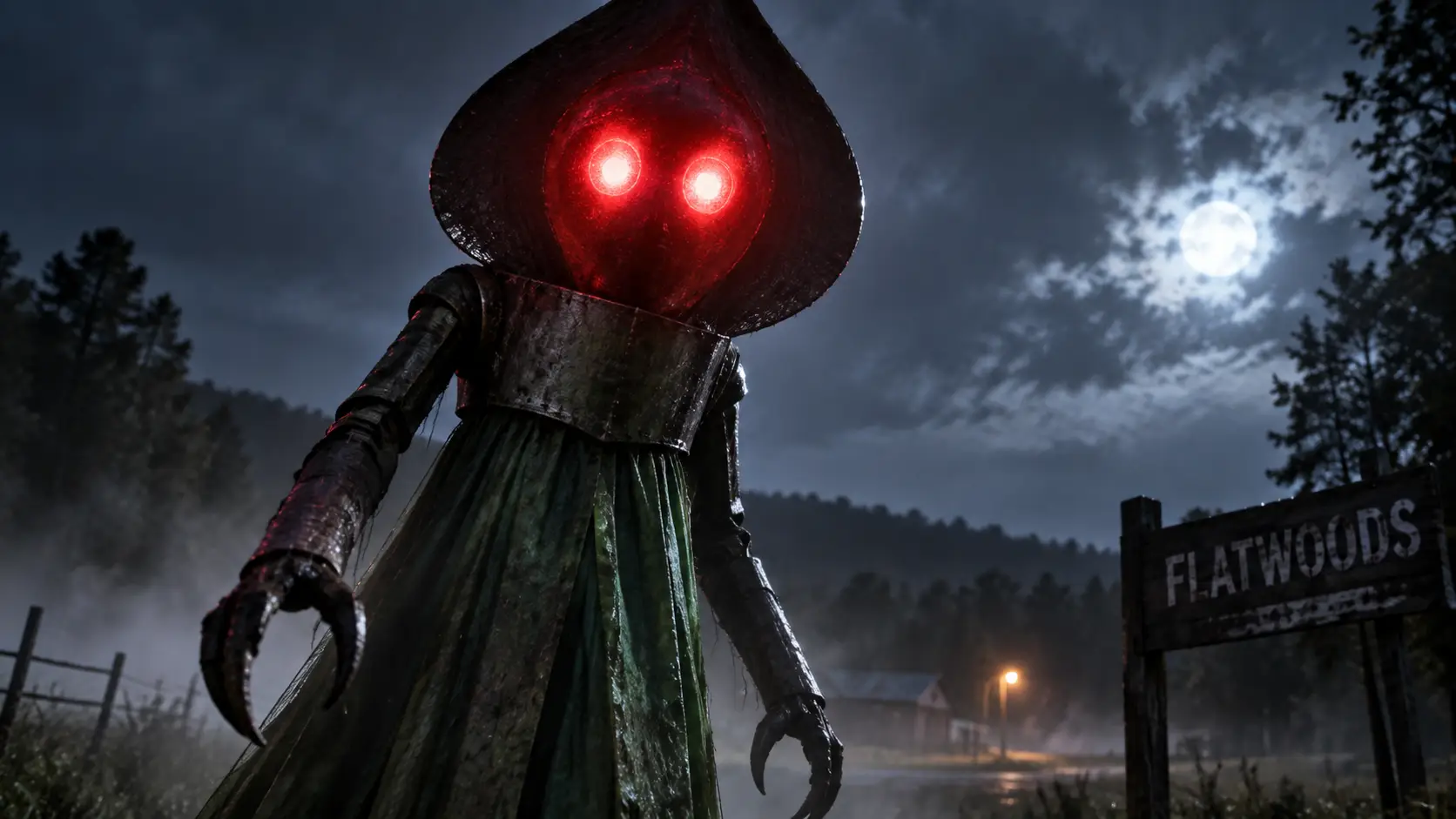
Unlike creatures supported by decades of similar reports, the Flatwoods Monster legend centers overwhelmingly on one event. Several witnesses investigated what appeared to be a fiery object descending near Flatwoods and then reported encountering a bizarre humanoid figure on a nearby hillside.
Beast ID
Also Known As: Braxton County Monster
Modern Origin: Flatwoods, West Virginia, USA
Defining Encounter: September 12, 1952
Beast Type: Encounter Entity, UFO Folklore Creature
Similar Beasts: Hopkinsville Goblins, Mothman, Dover Demon
Reported Traits: Gliding Movement, Intimidating Size, Strange Odor
Appearance
Witnesses described an unusually tall figure, often reported as approaching twelve feet in height. The creature had a reddish face and a large head or hood whose outline was compared with the ace of spades, producing the distinctive silhouette now associated with it.
Its lower body appeared covered by bright green material hanging in folds. Witnesses also described the entity moving toward them without obvious footsteps, which later inspired the familiar portrayal of the Flatwoods Monster floating or gliding above the ground.
A strong metallic or sickening odor accompanied the encounter. Modern illustrations frequently give the creature mechanical arms, claws, or a rigid spacecraft-like body, but these artistic additions can be much more elaborate than the original eyewitness descriptions.
Famous Story and Encounter
Shortly before dusk on September 12, 1952, local youths saw what they believed was a bright object crossing the sky and descending beyond a hill near Flatwoods. They gathered several people, including local resident Kathleen May, and went to investigate.
Near the hilltop, the group reported encountering unusual lights and then seeing an enormous strange figure after a flashlight illuminated the area. The witnesses became frightened and quickly retreated, turning the short encounter into one of America’s best-known UFO-era creature stories.
Investigators later examined the area, but no physical creature was recovered and no evidence established the existence of an unknown species. Unlike Bigfoot or Yucca Man, the Flatwoods Monster did not develop through a long sequence of comparable local encounters.
Cultural Impact
The Flatwoods Monster became one of West Virginia’s signature legendary creatures. Braxton County has embraced the story through tourism, artwork, displays, merchandise, themed attractions, and a dedicated museum that preserves the history and continuing cultural impact of the 1952 event.
Its unusual appearance also gives it an identity distinct from conventional aliens. The combination of UFO history, Appalachian setting, frightened eyewitnesses, and its distinctive ace-of-spades silhouette has kept the creature recognizable more than seventy years after the original encounter.
Fun Facts
- The defining Flatwoods encounter occurred on September 12, 1952.
- The witnesses described the creature as extremely tall and associated with a strange unpleasant odor.
- A museum dedicated to the legend operates in Sutton, West Virginia.
Hopkinsville Goblins
The Hopkinsville Goblins come from one of the strangest encounter stories in modern American folklore. The event took place near Kelly, Kentucky, on August 21, 1955, when several people at a rural farmhouse reported small humanoid creatures repeatedly approaching the property.
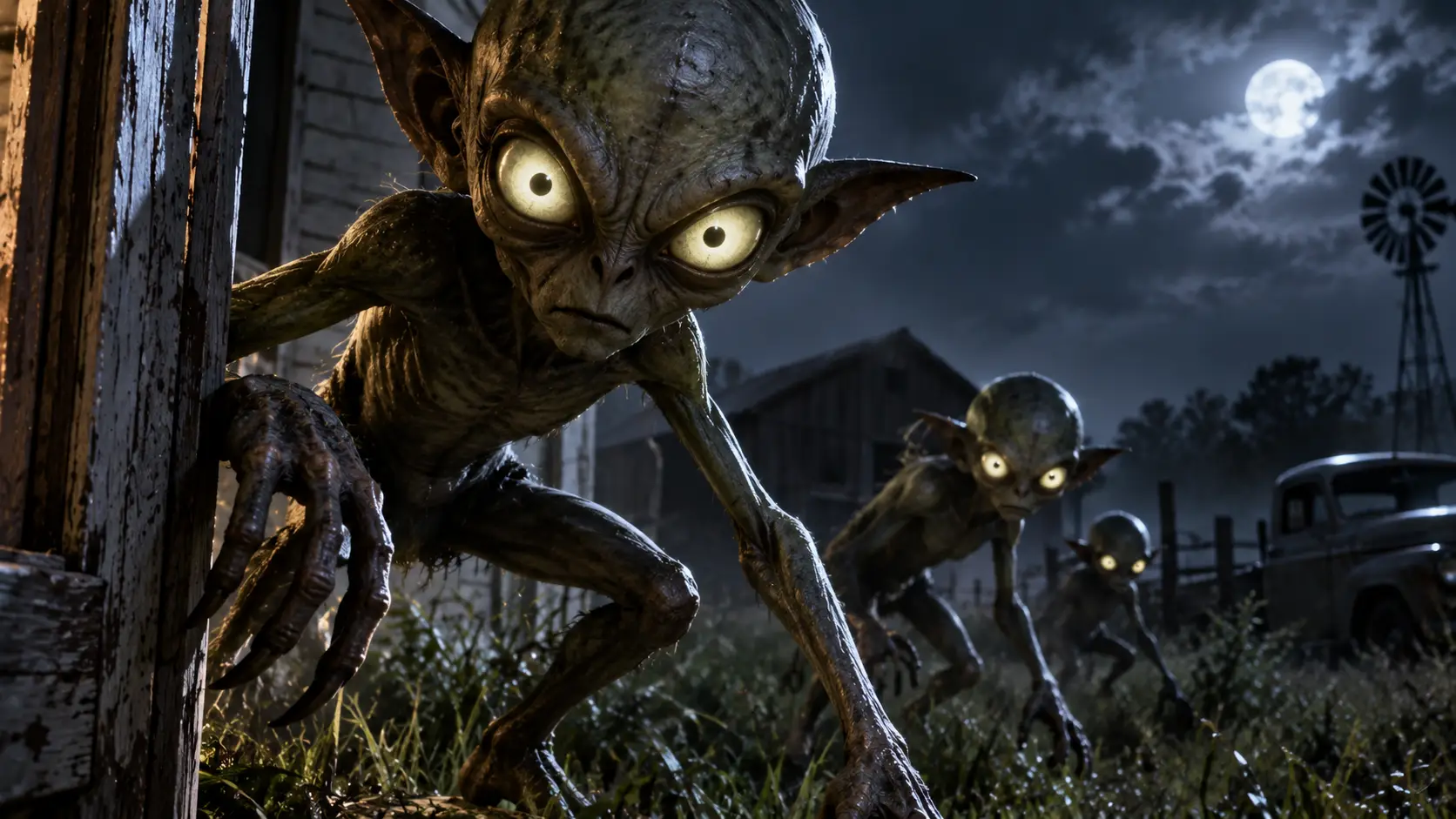
The story developed during the early UFO era, when reports of flying saucers already filled American newspapers. Because the witnesses also described a bright object crossing the sky before the creatures appeared, the incident quickly became connected with extraterrestrial theories.
Beast ID
Also Known As: Kelly Goblins, Kelly Little Green Men
Modern Origin: Kelly and Hopkinsville, Kentucky, USA
Defining Encounter: August 21, 1955
Beast Type: Humanoid Encounter Entity, UFO Folklore Creature
Similar Beasts: Flatwoods Monster, Dover Demon, Fresno Nightcrawler
Reported Traits: Gliding Movement, Large Eyes, Long Arms, Strange Agility
Appearance
Witnesses described small humanoid figures roughly three to four feet tall, with oversized heads, large luminous eyes, unusually long arms, and small bodies. Their hands appeared claw-like, while later drawings emphasized large ears and a strange almost weightless posture.
The creatures are now frequently called little green men, but the popular green coloring does not cleanly match every early account. Descriptions focused more strongly on their glowing eyes, unusual shape, long limbs, and strange movement than on one consistent skin color.
Later artwork often turns them into conventional aliens with smooth heads and large eyes. The original encounter produced a more unusual creature, combining goblin-like proportions, exaggerated ears, claws, and a movement witnesses found difficult to explain.
Famous Story and Encounter
Billy Ray Taylor, who was visiting the Sutton family farmhouse, reportedly went outside and saw a bright object travel across the sky before disappearing beyond the property. He returned inside and told the others that something strange had landed nearby.
Later, small figures reportedly approached the farmhouse, appeared near windows and doors, and repeatedly returned after being fired upon. The frightened group eventually left the house and drove to the Hopkinsville police station to ask authorities for help.
Police officers, state troopers, and other officials searched the property that night. They found a frightened group and signs that weapons had been fired, but they discovered no bodies or physical evidence proving that unknown creatures had actually attacked the farmhouse.
The lack of proof did little to weaken the story. The combination of multiple witnesses, gunfire, strange beings, a possible flying object, and immediate police involvement made the Kelly-Hopkinsville encounter one of America’s most enduring UFO-era legends.
Cultural Impact
Hopkinsville and nearby Kelly eventually embraced the incident as part of local identity. The story inspired events, tourism, merchandise, exhibitions, and continuing discussion about what the witnesses might have encountered during that August night.
The creatures also helped popularize the broader image of small alien visitors in American culture. Although the famous phrase little green men existed independently, the Hopkinsville story became one of the events most strongly associated with that visual idea.
Fun Facts
- The encounter occurred on August 21, 1955.
- Contemporary newspapers reported the story almost immediately.
- Kelly still celebrates the legend through Little Green Men themed events and tourism.
Dover Demon
The Dover Demon is one of the most localized creatures in modern American cryptid folklore. Its entire classic story comes from a short period in April 1977, when several teenagers reported seeing a strange small humanoid around Dover, Massachusetts.
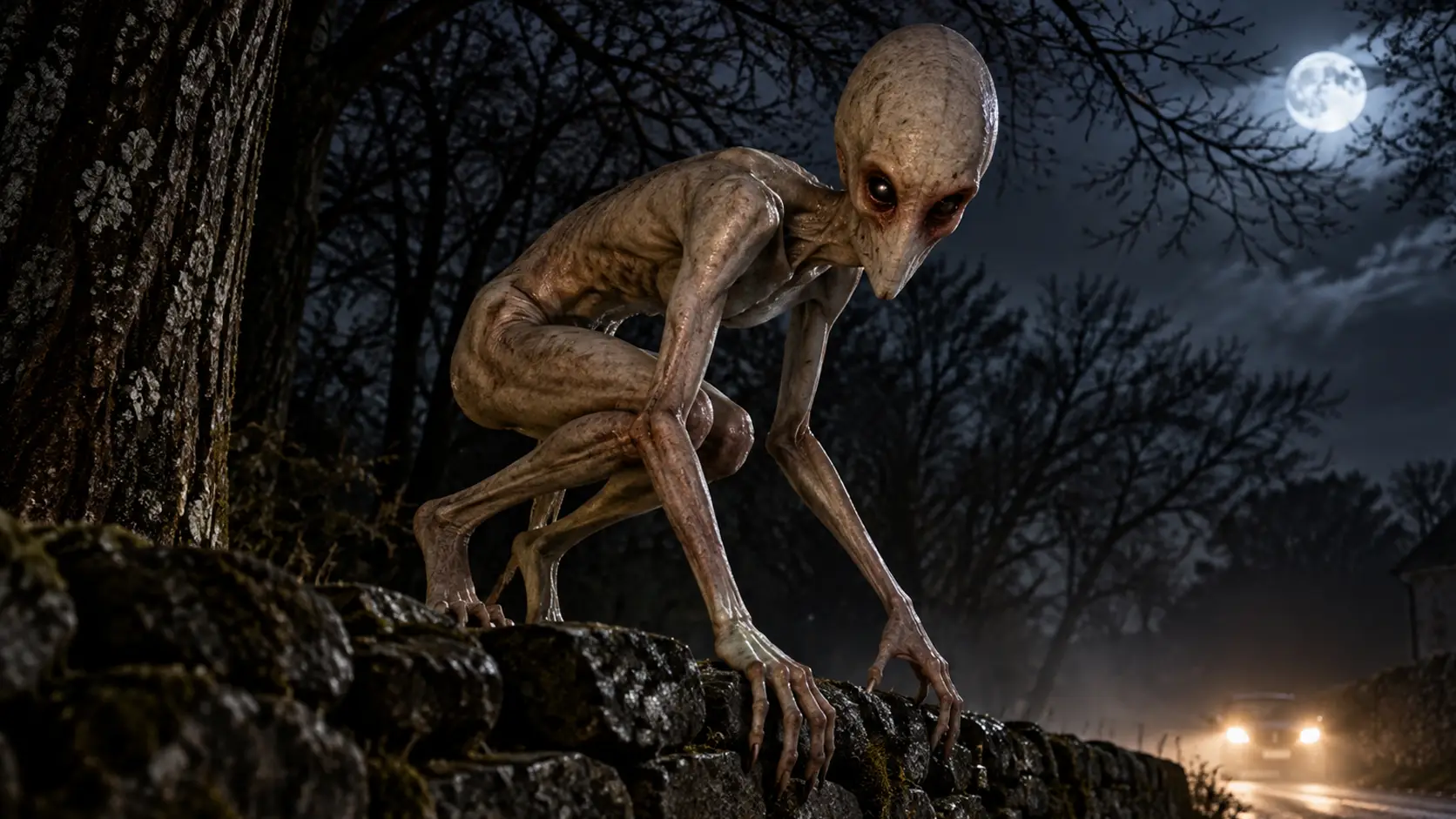
Unlike Bigfoot or the Skunk Ape, the Dover Demon did not produce decades of recurring reports. Three encounters over roughly one day created nearly the entire legend, giving the creature an unusual reputation built from a very limited cluster of sightings.
Beast ID
Also Known As: Dover Creature
Modern Origin: Dover, Massachusetts, USA
Defining Sightings: April 21-22, 1977
Beast Type: Cryptid, Humanoid Encounter Entity
Similar Beasts: Hopkinsville Goblins, Fresno Nightcrawler, Flatwoods Monster
Reported Traits: Large Reflective Eyes, Long Fingers, Unusual Agility
Appearance
The first witness, Bill Bartlett, described a small figure with a very large watermelon-shaped head, glowing orange eyes, a thin neck, and an extremely slender body. He estimated its height at roughly three and a half to four feet.
Its limbs appeared unusually long and thin, while the fingers seemed large enough to grip the stones of a roadside wall. Bartlett described the creature as peach-colored or nearly whitish in places, with no obvious nose, mouth, or external ears.
Later witnesses reported similar proportions but disagreed about some details. Abby Brabham, for example, remembered the eyes as green rather than orange.
These differences matter because the familiar modern Dover Demon design combines several eyewitness descriptions rather than one perfectly consistent account.
Famous Stories and Sightings
On April 21, 1977, seventeen-year-old Bill Bartlett was driving along Farm Street with friends when his headlights illuminated something beside a stone wall. He initially thought it might be an animal before noticing its oversized head and strange body.
Bartlett later drew what he had seen. His sketch became the most recognizable visual record of the Dover Demon and strongly influenced later illustrations of the creature.
A few hours later, teenager John Baxter reported encountering a small strange figure while walking home. He followed it briefly toward a wooded area before becoming uncomfortable and leaving.
The following evening, Will Taintor and Abby Brabham reported another brief encounter from a car. Their description shared several features with the earlier stories, although the reported eye color differed.
No photograph, body, hair sample, or other physical evidence established the creature’s existence. The sightings remain eyewitness claims, and proposed explanations have ranged from mistaken animals to hoaxing or simple misperception.
Cultural Impact
The Dover Demon became a classic New England cryptid precisely because its story remained unresolved and unusually compact. Unlike legends built through hundreds of reports, nearly everything associated with the creature comes from only a few young witnesses.
The Dover Historical Society still acknowledges the legend, demonstrating how a brief local mystery can become part of a town’s cultural identity decades after the original reports ended.
Fun Facts
- All classic sightings occurred during April 21 and 22, 1977.
- Bill Bartlett created the best-known drawing of the creature.
- No widely accepted later sighting established a continuing Dover Demon population.
Skunk Ape
The Skunk Ape is Florida’s regional version of the American hairy-humanoid legend. Reports place it especially in the Everglades and Big Cypress region, where witnesses describe a large upright creature moving through swamps, cypress forests, and dense subtropical vegetation.
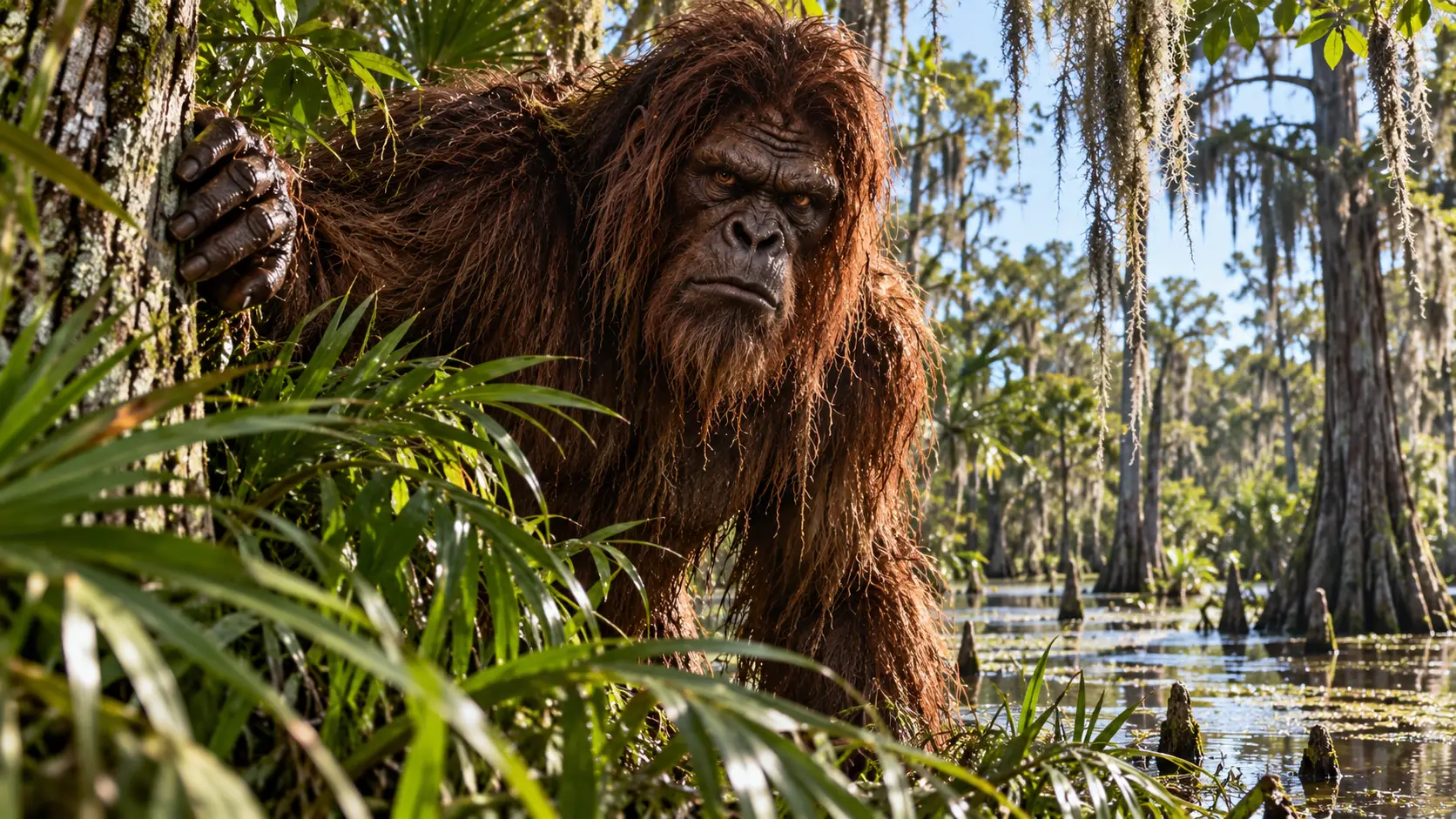
Its name comes from one of its most famous reported characteristics: a powerful foul odor. The creature became especially popular during the 1960s and 1970s, when Florida newspapers and residents increasingly discussed sightings of strange ape-like figures.
Beast ID
Also Known As: Florida Skunk Ape, Everglades Ape
Modern Origin: Florida, USA
Major Modern Reports: 1950s-1970s
Beast Type: Hairy Humanoid, Swamp Cryptid
Similar Beasts: Bigfoot, Yucca Man, Yeti
Reported Traits: Strong Odor, Bipedal Movement, Large Size, Swamp Adaptation
Appearance
Skunk Ape reports generally describe a six-to-seven-foot hairy humanoid with a heavy body, long arms, and dark or reddish-brown hair. Witnesses commonly describe it walking upright, although some accounts also portray it moving through vegetation with ape-like agility.
The strong smell became its defining feature. Reports compare the odor with skunk spray, wet animals, or rotting organic material, giving the Florida creature a recognizable difference from many Bigfoot accounts.
Modern photographs and recreations often portray the Skunk Ape as orangutan-like, partly because some alleged images show reddish hair. However, no scientifically verified specimen establishes a consistent anatomy or proves that an unknown primate inhabits the Florida wilderness.
Famous Stories and Sightings
One early widely publicized story involved hunters who claimed a strange ape-like animal entered their camp during the 1950s. Reports increased during the following decades as the name Skunk Ape became better known around Florida.
Dave Shealy became one of the legend’s most famous modern promoters after claiming several encounters beginning in childhood. He later photographed and filmed what he believed was the animal and established a Skunk Ape research attraction in the Big Cypress region.
In 2000, photographs mailed anonymously to authorities in Sarasota County showed a large reddish primate-like animal near a residence. These pictures became famous among Skunk Ape enthusiasts, although some wildlife specialists considered an escaped orangutan a plausible explanation.
The possibility of escaped exotic primates remains one rational explanation for some Florida reports. Established populations of introduced monkeys already live in parts of the state, while private facilities and exotic animal ownership have occasionally placed non-native primates in Florida environments.
Cultural Impact
The Skunk Ape turned Florida’s swamp landscape into a distinct branch of Bigfoot folklore. Alligators, dense vegetation, heat, insects, flooded terrain, and isolated roads give its stories a different atmosphere from the mountain and forest encounters associated with Sasquatch.
The legend now supports museums, roadside attractions, tours, merchandise, television programs, and ongoing amateur investigations, making the Skunk Ape one of the most recognizable creatures connected with Florida folklore.
Fun Facts
- The name Skunk Ape became widely used during the 1960s and 1970s.
- Florida lawmakers once considered a proposal concerning protection of unidentified humanoid animals.
- Some famous alleged Skunk Ape photographs may show an escaped or unidentified known primate.
Fresno Nightcrawler
The Fresno Nightcrawler is one of the youngest creatures in this article and represents a very different kind of American mythology. Instead of spreading first through newspapers or campfire stories, it emerged from surveillance footage and internet sharing.
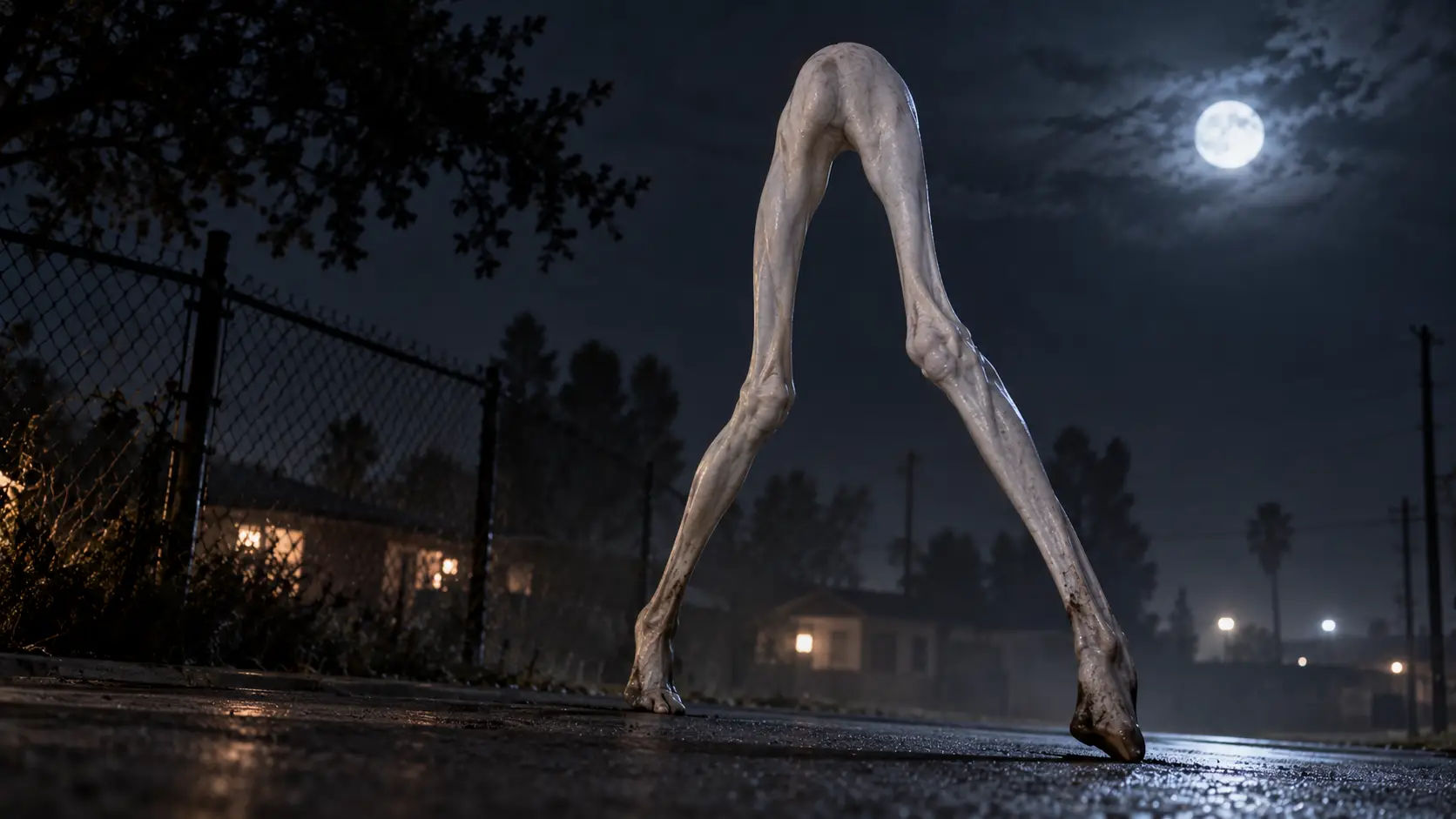
The legend began in Fresno, California, after a strange 2007 video appeared to show pale walking figures crossing a yard at night. Their bizarre proportions quickly turned a short grainy recording into a recognizable digital-era cryptid.
Beast ID
Also Known As: Fresno Nightcrawlers
Modern Origin: Fresno, California, USA
Defining Footage: 2007
Beast Type: Digital Cryptid, Humanoid Entity
Similar Beasts: Dover Demon, Hopkinsville Goblins, Flatwoods Monster
Reported Traits: Silent Walking, Extremely Long Legs, No Visible Arms
Appearance
The Fresno Nightcrawler has one of the simplest creature designs in modern cryptid culture. It appears almost entirely composed of two long pale legs connected to a very small upper body, creating the impression of walking trousers without a normal human torso.
No obvious arms appear in the famous footage. The head, if present at all, seems tiny and poorly defined.
This extreme simplicity makes the Nightcrawler look less like an animal and more like an impossible moving shape.
Later artwork often adds eyes, faces, skin texture, or detailed anatomy, but those additions go beyond what the original low-resolution footage clearly shows.
Famous Story and Footage
According to the story surrounding the footage, a Fresno resident known publicly as Jose installed a surveillance camera because his dogs repeatedly barked outside at night.
Reviewing the recording revealed two pale figures moving across the property. The brief footage spread online and generated theories involving aliens, unknown animals, spirits, puppets, costumes, and video manipulation.
Later videos claimed to show similar creatures elsewhere, but their authenticity and relationship to the original Fresno recording remain uncertain. The 2007 footage remains the central piece of the Nightcrawler legend.
Unlike older cryptids, the Fresno Nightcrawler did not need decades of oral tradition. A single unusual video, repeated sharing, discussion forums, fan artwork, and social media transformed it into a recognizable monster remarkably quickly.
Cultural Impact
The Nightcrawler demonstrates how the internet creates folklore. Viewers copied the video, debated explanations, created illustrations, produced plush toys, and turned an unclear surveillance image into a creature with a stable visual identity.
Its popularity also shows that modern mythical beasts do not always require elaborate stories. Sometimes an unexplained shape, memorable silhouette, and enough online attention can create a lasting legend.
Fun Facts
- The original famous footage dates to 2007.
- The creature’s design is defined mainly by extremely long legs and almost no visible torso.
- PBS’s Monstrum later examined how the short video became an internet cryptid phenomenon.
Beholder
The Beholder differs from the cryptids in this article because nobody originally claimed to encounter one in the real world. It is a deliberately created American fantasy monster introduced through the tabletop role-playing game Dungeons & Dragons.

The creature first appeared in Supplement I: Greyhawk in 1975, published by TSR in Lake Geneva, Wisconsin. Its strange appearance and dangerous powers quickly helped it become one of the most recognizable monsters created specifically for Dungeons & Dragons.
Beast ID
Also Known As: Eye Tyrant, Sphere of Many Eyes
Modern Origin: American Tabletop Gaming, USA
First Appearance: Supplement I: Greyhawk, 1975
Beast Type: Fantasy Monster, Aberration
Similar Beasts: Spectator, Gauth, Death Tyrant
Canonical Traits: Levitation, Antimagic, Magical Eye Rays, High Intelligence
Appearance
A Beholder looks like a floating spherical creature dominated by one enormous central eye and a wide mouth filled with sharp teeth. Multiple flexible stalks rise from the body, each ending in a smaller eye.
Its design deliberately avoids ordinary animal anatomy. There are no legs, conventional arms, or recognizable skeletal proportions. The creature simply floats through the air, turning its many eyes toward different threats.
The central eye and eyestalks are not merely decorative. They form the basis of the monster’s powers, making its appearance directly connected with how it functions during the game.
Famous Stories and Game Lore
The Beholder entered Dungeons & Dragons through the 1975 Greyhawk supplement, one of the earliest expansions to the original game. Later editions developed the creature into a highly intelligent, paranoid monster that commonly builds underground lairs and considers itself superior to other beings.
Different eye stalks produce different magical effects, while the central eye can suppress magic within its gaze. This combination makes Beholders dangerous because they can attack several opponents while simultaneously interfering with magical abilities.
Later Dungeons & Dragons lore expanded the species into multiple related creatures, including spectators, gazers, death tyrants, and other Beholder-kin.
One of the most famous individual Beholders is Xanathar, a title used by powerful Beholder crime lords connected with the fantasy city of Waterdeep.
Cultural Impact
The Beholder became an icon of American tabletop gaming because its design does not simply reuse a creature from older European mythology. It immediately signals the strange imaginative world created around Dungeons & Dragons.
Over decades, the creature has appeared in rulebooks, adventures, games, miniatures, merchandise, and other Dungeons & Dragons media. Its single giant eye and crown of eyestalks remain instantly recognizable to many fantasy fans.
Fun Facts
- The Beholder first appeared in print in 1975.
- Its central eye can create an antimagic effect in modern Dungeons & Dragons rules.
- Beholders are famous for extreme paranoia and hostility even toward members of their own kind.
Predator
Predator is another deliberately created modern American monster, first appearing in the 1987 science-fiction film Predator. Unlike the Beholder, its mythology comes from cinema rather than tabletop gaming, but it developed into an equally recognizable fictional creature.

The original film presented the creature as an extraterrestrial hunter stalking armed humans in a jungle environment. Later films, comics, games, and crossover stories expanded its species, technology, customs, and hunting culture far beyond the first movie.
Beast ID
Also Known As: The Predator, Yautja in later expanded media
Modern Origin: American Cinema, USA
First Appearance: Predator, 1987
Beast Type: Extraterrestrial Hunter, Science-Fiction Monster
Similar Beasts: Xenomorph, The Thing, Alien Hunters
Canonical Traits: Active Camouflage, Advanced Weapons, Tracking, Physical Strength
Appearance
The Predator is an extremely tall humanoid alien with powerful musculature, unusual skin texture, and a distinctive face built around four large mandible-like structures surrounding the mouth.
Long dark appendages resembling dreadlocks hang from its head. The creature commonly wears partial armor, a technological mask, and equipment designed for tracking and hunting dangerous prey.
Its weapons include wrist-mounted blades, ranged energy weapons, and camouflage technology that bends light around the body. The combination of organic monster design and advanced equipment makes the Predator different from both conventional aliens and supernatural creatures.
Famous Story
In the original 1987 film, an elite military team led by Dutch enters a jungle during a rescue mission and gradually realizes that something is hunting them.
The Predator remains nearly invisible through advanced camouflage while observing the soldiers, selecting targets, and attacking them one at a time. Its behavior reveals that it is not simply killing randomly.
It treats dangerous armed humans as challenging prey.
Dutch eventually becomes the final surviving opponent. After discovering ways to reduce the creature’s technological advantages, he uses traps, camouflage, and the jungle environment to fight back.
Later films expanded the idea into a species with recurring hunting customs and advanced extraterrestrial equipment, although not every detail introduced in later media appears in the original movie.
Cultural Impact
Predator became one of the most recognizable American science-fiction monsters of the late twentieth century. The combination of invisibility, alien technology, ritualized hunting, and its distinctive mandible-covered face gave the creature an identity far beyond a conventional movie villain.
The franchise expanded into sequels, comics, novels, video games, toys, and crossovers with the Alien franchise, helping establish the Predator as a continuing modern monster rather than a creature limited to one film.
Fun Facts
- Predator opened in the United States in June 1987.
- Kevin Peter Hall performed the creature inside the final suit.
- The monster design changed significantly during production before Stan Winston’s team created the famous final appearance.
Further Reading
Bigfoot
Why Do So Many People Still Want to Believe in Bigfoot? by Ben Crair, Smithsonian Magazine, 2018.
Explains the 1958 Bluff Creek tracks, the Bigfoot name, Patterson-Gimlin film, major hoaxes, scientific skepticism, and the creature’s continuing influence on American folklore and cryptid culture.
Smithsonian Magazine – Bigfoot
The Scientist Grover Krantz Risked It All…Chasing Bigfoot by Haleema Shah, Smithsonian Magazine, 2018.
Profiles anthropologist Grover Krantz, his attempts to investigate Bigfoot scientifically, his estimated creature dimensions, professional controversy, footprint research, and the absence of evidence accepted by mainstream science.
Smithsonian Magazine – Grover Krantz and Bigfoot
Mothman
An Ode to a Hometown Creature: Mothman of Point Pleasant, West Virginia by Gwen Mallow, Smithsonian Center for Folklife and Cultural Heritage, 2021.
Documents the 1966 Point Pleasant encounters, red eyes, winged appearance, newspaper coverage, Silver Bridge associations, John Keel’s influence, and Mothman’s transformation into a major West Virginia cultural symbol.
Smithsonian Folklife – Mothman
Jackalope
What Is a Jackalope? Creature Amazes Visitors of Douglas, Wyoming by Travel Wyoming, 2019.
Explores the Herrick brothers’ 1934 taxidermy creation, invented Jackalope abilities, Douglas tourism, the stolen original mount, hunting licenses, local celebrations, and the creature’s development into Western folklore.
The Legend of the Jackalope, City of Douglas.
Provides Douglas’s official account of the Herrick brothers, their 1934 creation, Ralph Herrick’s recollections, the original mounted specimen, tourist hunting licenses, and deliberately impossible June 31 hunting season.
City of Douglas – The Legend of the Jackalope
Yucca Man
Haunting the Mojave: The Yucca Man by Hannah Rogers, Lancaster Museum of Art and History, 2022.
Surveys Yucca Man reports from Twentynine Palms, Antelope Valley, Desert Hot Springs, and Joshua Tree while documenting appearance claims, footprints, odors, local newspaper reports, and Mojave cryptid folklore.
Hidebehind
Fearsome Critters by Henry H. Tryon, Idlewild Press, 1939.
Preserves a primary printed description of the Hidebehind, including its upright body, black hair, recurved tail, powerful claws, impossible concealment ability, gruesome diet, and humorous aversion to alcohol.
Fearsome Critters – The Hidebehind
Why Lumberjacks Never Look Behind Them, PBS Monstrum, 2025.
Explores the Hidebehind’s roots in American lumberjack storytelling, logging-camp culture, unseen-monster traditions, reported characteristics, alcohol folklore, and the psychological reasons invisible predators remain effective subjects for frightening stories.
Flatwoods Monster
Flatwoods Monster by Buddy Griffin, e-WV: The West Virginia Encyclopedia, revised 2024.
Documents the September 12, 1952 encounter, named witnesses, reported twelve-foot figure, unusual clothing, metallic odor, gliding movement, physical traces, and the creature’s later place in West Virginia folklore.
West Virginia Encyclopedia – Flatwoods Monster
Flatwoods Monster Museum, Braxton County, West Virginia.
Provides official information about the Sutton museum preserving the Flatwoods Monster story, historical materials, local artifacts, visitor resources, merchandise, and the encounter’s continuing importance to Braxton County identity.
Braxton County – Flatwoods Monster Museum
Hopkinsville Goblins
Kelly Encounter, Visit Hopkinsville.
Summarizes the August 21, 1955 Kelly encounter, the Sutton household’s reported attackers, several hours of gunfire, twelve alleged creatures, police involvement, and the story’s lasting role in Kentucky folklore.
Visit Hopkinsville – Kelly Encounter
Dover Demon
Do You Believe in the Dover Demon? Dover Historical Society.
Confirms the legend’s essential chronology, including three reported encounters in Dover, Massachusetts, during April 21 and 22, 1977, and documents the creature’s continuing place in local cryptid history.
Dover Historical Society – Dover Demon
Skunk Ape
On the Trail of Florida’s Bigfoot – the Skunk Ape by Joseph Stromberg, Smithsonian Magazine, 2014.
Examines Florida’s Skunk Ape tradition, early sightings, Dave Shealy’s investigations, the famous 2000 photographs, possible escaped primates, introduced monkey populations, and the lack of evidence establishing an unknown species.
Smithsonian Magazine – Skunk Ape
Fresno Nightcrawler
The Fresno Night Crawlers, PBS Monstrum, 2025.
Examines the original 2007 surveillance footage, its unusual walking figures, internet circulation, later alleged videos, hoax possibilities, merchandise, fandom, and the transformation of twenty seconds of footage into folklore.
PBS Monstrum – Fresno Nightcrawlers
Beholder
A Sight to Behold: Dungeons & Dragons’ Beholder Monster by Lindsey Barnick, The Strong National Museum of Play, 2024.
Traces the Beholder to the 1975 Greyhawk supplement, discusses Greg Bell’s early artwork, original statistics and eye powers, later editions, Xanathar, and its status as an original Dungeons & Dragons monster.
The Strong Museum – Beholder History
Beholders in Dungeons & Dragons and Why They Are Iconic by Todd Kenreck, D&D Beyond, 2018.
Explores official Beholder lore, eye beams, extreme intelligence, paranoia, aberrant origins, reality-changing dreams, individuality, Xanathar, and why Beholders remain among the most recognizable creatures created for Dungeons & Dragons.
Predator
Predator, AFI Catalog, American Film Institute, 1987.
Provides the authoritative production record for Predator, including its United States origin, June 1987 release, writers, director, cast, production companies, filming history, camouflage effects, and official story synopsis.
American Film Institute – Predator