Introduction: The Larger Mythology Question
One extraordinary animal carries a traveler toward a sacred destination; another prevents passage across the boundary of death. In Islamic tradition, Al-Buraq is the white mount brought by Gabriel for Muhammad’s Night Journey from Mecca to Jerusalem.
In ancient Greek mythology, Cerberus guards the Underworld, keeping the dead within and warding off the living. Their difference is not simply between two marvelous bodies.
It concerns what movement means: privileged passage in one tradition, a boundary enforced in another.
This comparison follows five figures: Al-Buraq in Arab Islamic tradition; Anzu in ancient Mesopotamian tradition; Cerberus in ancient Greek mythology; Black Shuck in English folklore; and the Almas in Mongolian and neighboring Central Asian folklore. Together, they make “mythical animal” useful as an editorial category, but inadequate as an explanation.
Their appearances already resist a single template. Al-Buraq is larger than a donkey and smaller than a mule, with strides reaching as far as it can see.
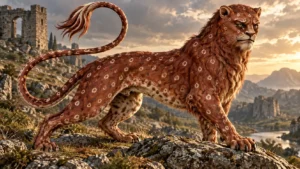
Anzu, a lion-headed eagle, steals Enlil’s Tablet of Destinies: here the extraordinary creature disrupts divine authority rather than serving sacred travel. Cerberus’s multiple heads belong to a fearsome guardian.
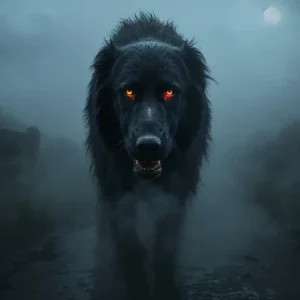
The spectral black dog Black Shuck brings the threat of a death omen into the English countryside. The hairy, humanlike Almas inhabits Central Asian mountain folklore, unsettling the distinction between human and animal rather than guarding an explicitly divine realm.
These profiles provide starting descriptions, not independent verification of ancient testimony. Source histories require separate attention. Michael Heaney’s historical reevaluation, for example, questions the familiar account that Almas research began with Baradiin’s reported 1906 sighting, drawing on archival material and unpublished diaries.
Documentation can complicate a creature’s modern history without establishing its existence.
Later reception adds another layer. The Asian Art Museum describes Haroon Mirza’s transformation of an Indian Night Journey painting into a light-and-sound installation, evidence of artistic reinterpretation, not an early narrative source.
The useful question, then, is not why these traditions imagined the same beast. They did not. It is how different communities gave extraordinary animal forms distinct narrative work, and how surviving texts, reports, and images shape what we can responsibly say about them.
Setting the Sources and Traditions
The surviving evidence speaks in different voices. Mesopotamian scribes, Greek poets, Islamic transmitters, Indigenous storytellers and modern folklore collectors did not preserve interchangeable kinds of testimony.
A written record dates a particular surviving account, not necessarily the beginning of the tradition behind it.
Anzu belongs to ancient Mesopotamia, where Sumerian and Akkadian textual traditions require distinction rather than compression into one timeless “Sumerian myth.” The Akkadian Anzu epic recounts the theft of Enlil’s Tablet of Destinies.
Its manuscripts preserve literary transmission, not an unmediated transcript of popular belief; ancient cultural and linguistic boundaries also differed from modern national borders.
Greek and Jewish examples demand different reading practices. Hesiod’s Theogony describes the underworld dog associated with Cerberus, but its fifty-headed description warns against projecting the familiar three-headed image onto every early witness.
Behemoth, meanwhile, appears in Job 40 within a poetic speech about divine power. The disputed composition and development of Job make a single confident “origin date” misleading.
For al-Buraq, Qur’anic narrative, hadith and later imagery must remain separate. The Qur’an’s Night Journey passage does not name the mount; hadith accounts supply its description.
Nor is “Arab” an adequate boundary for its later reception: the Asian Art Museum identifies an Indian Night Journey painting dated approximately 1800, evidence of a later visual tradition rather than the narrative’s beginning.
Oral traditions introduce another problem: the collector’s voice can obscure the teller’s. Azeban should be situated in Abenaki tradition, in northeastern North America, not assigned to Alaska through a catalogue label.
Welsh Ceffyl Dŵr likewise requires Welsh attribution, not an undifferentiated English setting. The supplied profiles do not establish either figure’s earliest attestation.
Modern reporting creates a different record again. Discussing the Borrego Sandman, Loren Coleman’s 2007 commentary traces material through twentieth-century collectors and paperbacks while questioning Warren Smith’s source reliability.
That is evidence about a legend’s circulation, not verification of the reported creature.
Comparison therefore begins with unequal archives: ancient compositions, transmitted religious reports, collected storytelling and modern publicity. Their differences determine whose perspective survives, and what remains uncertain.
Three Distinct Traditions, Three Different Roles
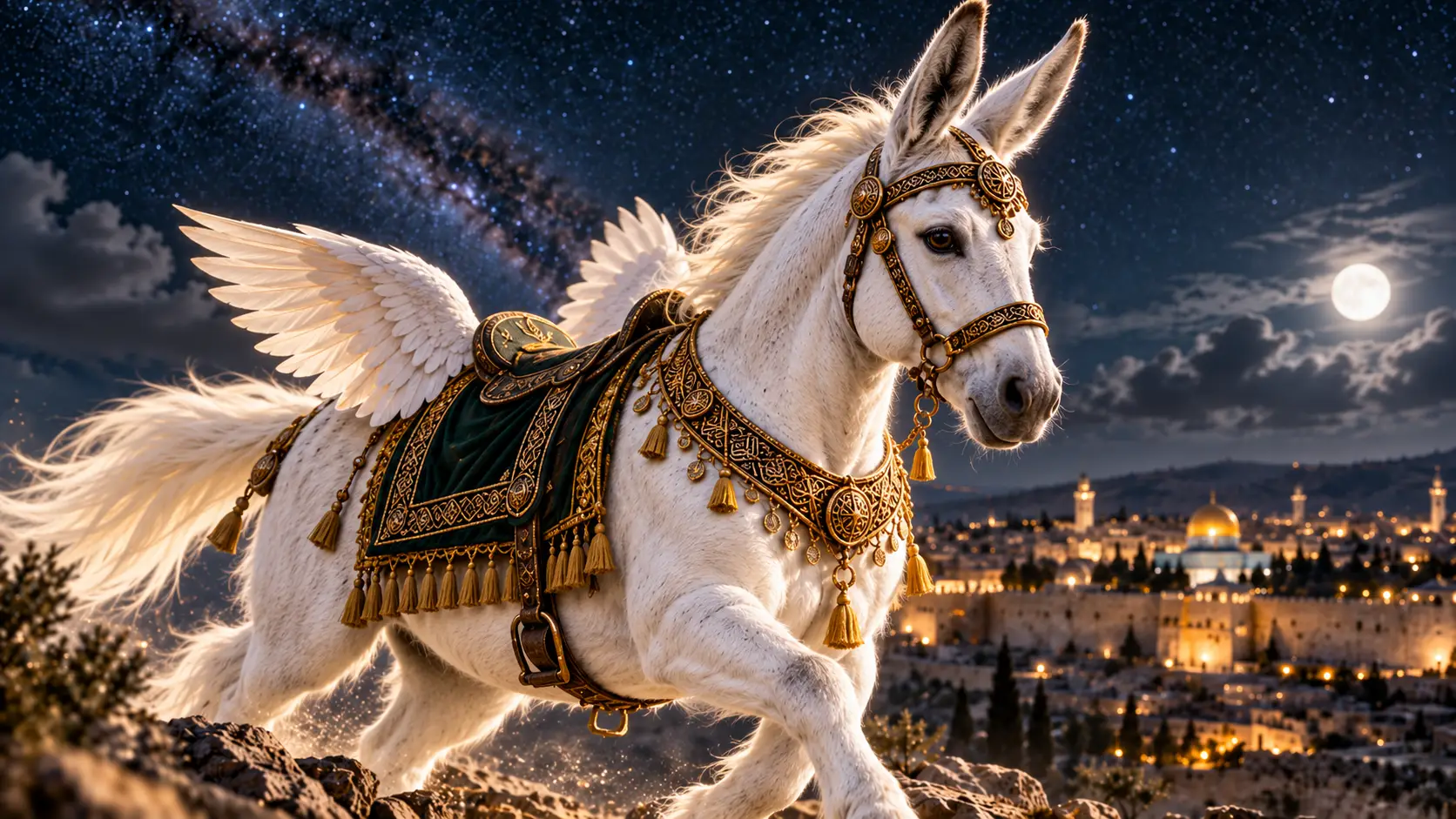
Al-Buraq’s role is conveyance within a sacred journey. In Islamic tradition, Gabriel brings Muhammad the white mount for the Night Journey from Mecca to Jerusalem.
Larger than a donkey but smaller than a mule, Buraq takes strides reaching as far as it can see. These details make extraordinary movement, not predation or combat, the defining power.
The Al-Buraq profile provides supporting orientation; it is not an independent edition of the religious accounts.
The supplied museum evidence documents a later artistic reception: an Indian miniature of Muhammad riding Buraq, dated approximately 1800, became the basis for Haroon Mirza’s light-and-sound installation. This establishes a particular visual afterlife, not the origin of the narrative or proof that every depiction follows one model.
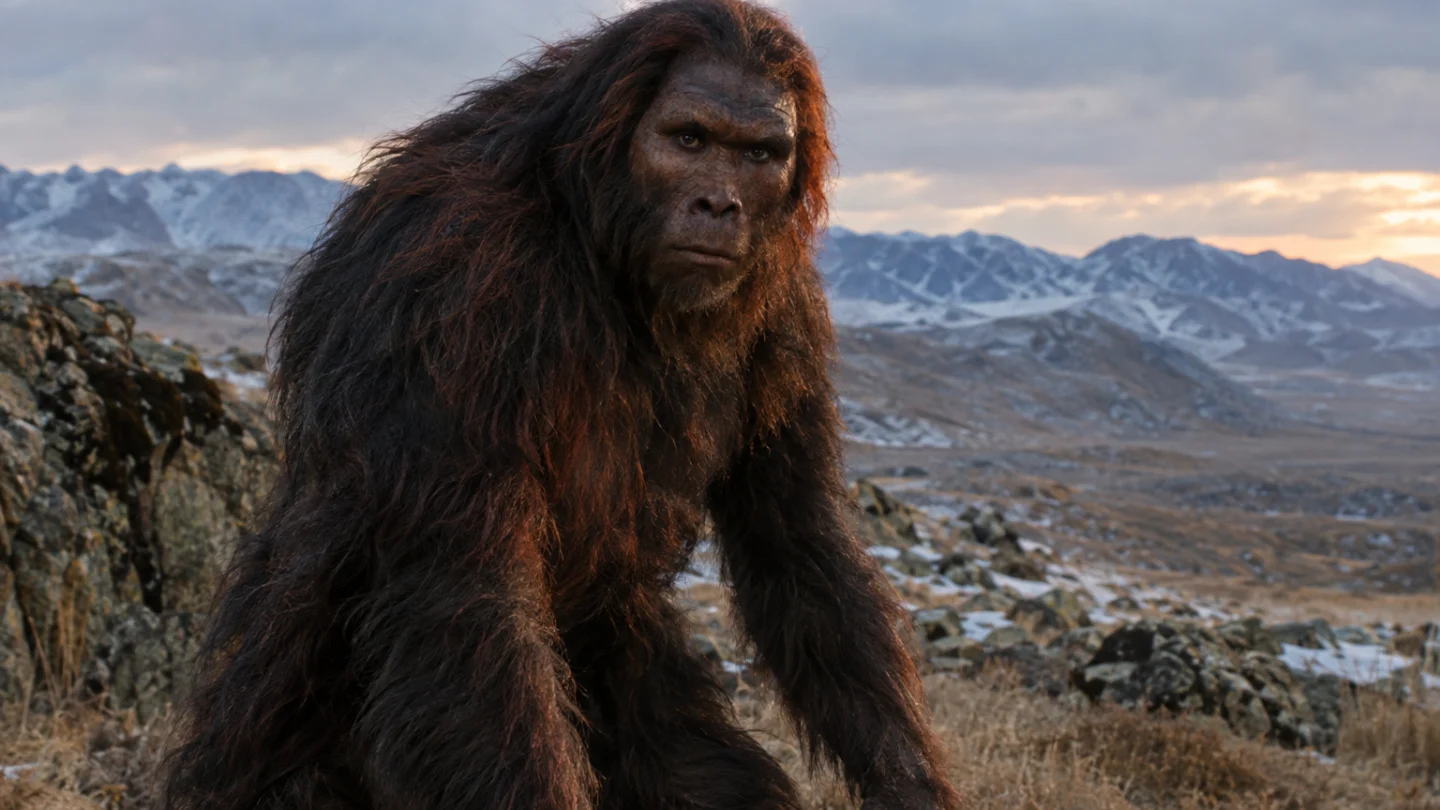
The Almas occupies a different terrain: the uncertain boundary between human community and mountain wilderness. The Almas profile describes a hairy, ape-like wild person associated with Mongolia and Central Asia.
Here the central motif is an encounter with a supposedly hidden inhabitant, rather than a mount enabling a sacred mission. The supplied evidence does not establish a supernatural power.
One reported episode also exposes the difficulties of its source history. Badzar Baradiin was said to have seen an Almas during a Tibetan expedition in 1906, prompting Tsyben Zhamtsarano’s research.
Yet Michael Heaney’s examination of archival material, including Baradiin’s unpublished diaries, casts doubt on that account. This is a modern historical reassessment of a reported encounter, not confirmation of the creature’s existence.
Anzu, by contrast, threatens divine authority. The Mesopotamian lion-headed eagle is associated with the theft of the Tablet of Destinies from Enlil: a concrete motif in which an extraordinary creature becomes an adversary through an act of seizure.
The Anzu profile summarizes that episode, but no ancient textual excerpt is supplied here; it cannot establish the wording, chronology or differences among versions.
The distinctions matter before any resemblance does. Buraq carries a prophet; the Almas eludes human certainty; Anzu steals from a god.
Grouping them as mythical animals is useful for comparison, but it neither makes their cultural functions interchangeable nor demonstrates a shared origin.
More Perspectives, Not More of the Same
Mischief and protection introduce a different contrast from divine transport or stolen authority. The supplied profile presents Azeban as an Abenaki raccoon trickster whose confusion-making is relatively harmless.
That characterization matters: trickery need not mean cosmic rebellion. Against Anzu’s seizure of divine power, Azeban offers a smaller scale of disruption in this comparison, rather than the role of a destructive divine adversary.
This does not establish that every Azeban narrative has harmless consequences.
Bai Ze, by contrast, makes supernatural danger more intelligible. The Chinese beast’s defining resource is extensive knowledge of supernatural beings, including advice on warding off evil.
Its lion-like appearance and multiple eyes, as described in the profile, distinguish it visually from the raccoon trickster, but should not be treated as a uniform description of every depiction. More importantly, its protective role depends on knowing rather than deceiving.
As an analogy, Azeban complicates the scene while Bai Ze helps people read it; this is a comparison of functions, not evidence of historical contact.
A second contrast concerns what overwhelming presence means. Behemoth brings colossal strength into ancient Jewish religious literature. In the biblical Book of Job, the creature appears within God’s speech, making it part of a confrontation with the limits of human power and understanding.
The supplied profile also identifies Behemoth as the land counterpart to Leviathan, but that pairing should not erase the particular literary setting of Job.
Black Shuck places fear elsewhere: in the English countryside, especially East Anglia, through accounts of a spectral black dog whose appearance can be interpreted as an omen of death. In those accounts, the consequential power is ominous significance, not Behemoth’s physical strength.
A death omen need not attack to terrify; its appearance can make an ordinary landscape feel charged with forewarning. This is one role within the folklore, not a description of every reported encounter.
These differences also expose unequal documentation. The profiles provide concise modern summaries, not independent primary-source verification. No Abenaki narrative, Chinese textual passage or English local account is supplied here to establish individual tellers, regional variants or dates.
Job offers an identifiable ancient literary context, but its passage is not among the supplied excerpts.
The comparison therefore remains deliberately bounded: relatively harmless disruption as characterized in the profile, protective knowledge, overwhelming strength and a death omen are four distinct roles considered here. Their animal forms do not make them versions of one universal creature.

What the Similarities Hide
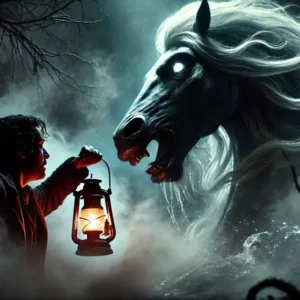
A mount that carries a prophet is not doing the same work as a horse that endangers its rider. In the supplied profiles, Al-Buraq carries Muhammad from Mecca to Jerusalem, its strides reaching as far as it can see; the Welsh Ceffyl Dŵr is presented as a dangerous water horse.
An extraordinary mount is the parallel. Sacred conveyance and perilous encounter are the differences that give it meaning.
Appearance likewise needs interpretation. The lion-headed eagle Anzu, associated with stealing Enlil’s Tablet of Destinies, belongs to a story about divine power.
The hairy, humanlike Almas inhabits Central Asian mountain folklore. Calling both “hybrids” would obscure more than it explains: one combines recognizable animal forms, while the other unsettles the boundary between human and animal.
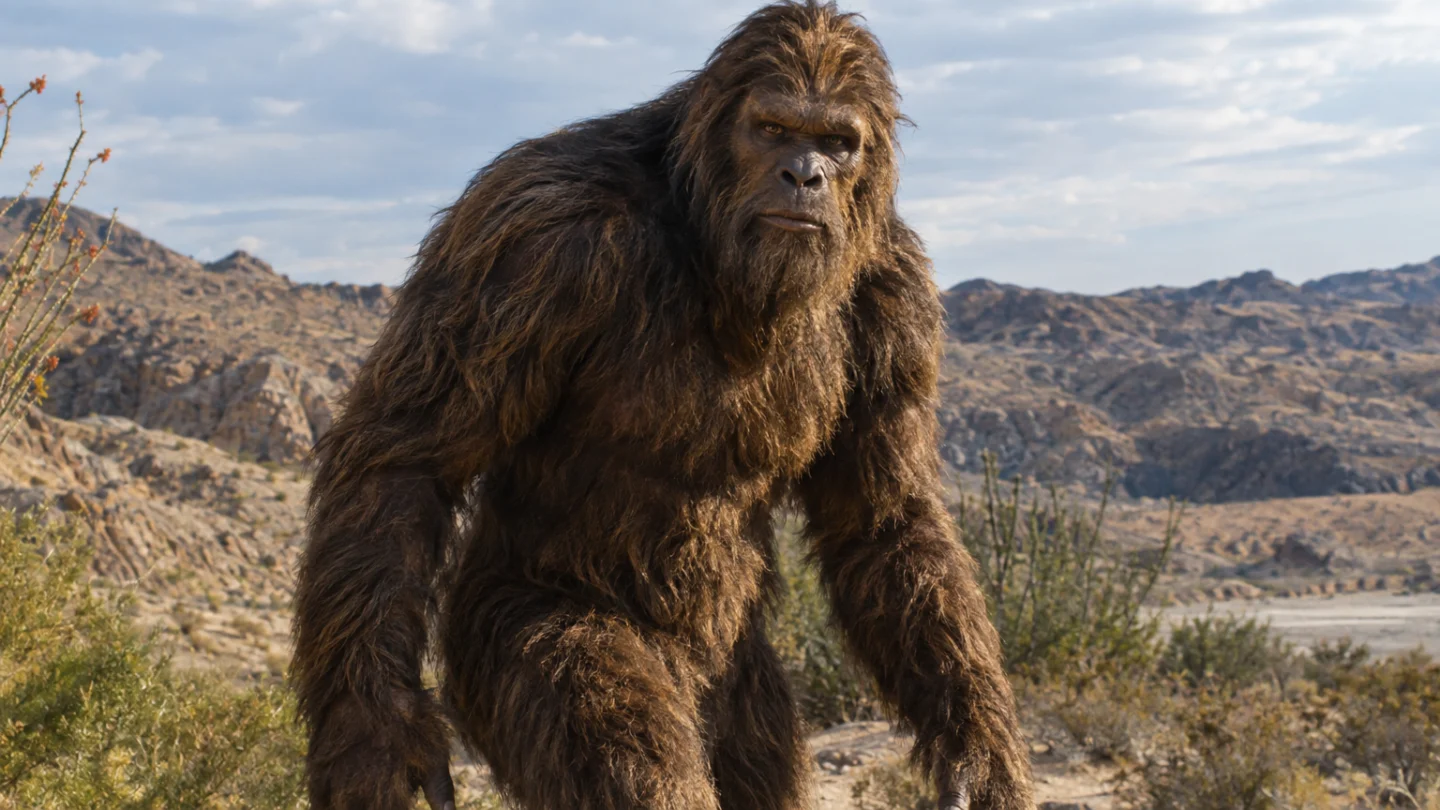
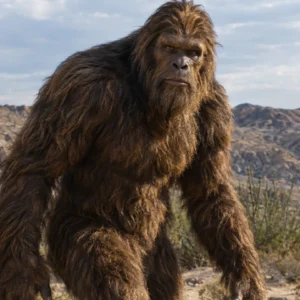
The Borrego Sandman offers a closer visual comparison with the Almas, but its Southern California desert setting and modern reporting history matter. Neither resemblance nor remote terrain establishes a shared origin.
Nor should sacred narrative, local folklore and purported eyewitness reporting be treated as interchangeable expressions of belief.
Modern source criticism sharpens that distinction. Michael Heaney’s article abstract reports that archival examination casts doubt on the familiar account that Baradiin’s alleged 1906 Almas sighting prompted Tsyben Zhamtsarano’s long-term research.
For the Sandman, cryptozoology writer Loren Coleman questions the reliability of Warren Smith’s published material. These are criticisms of particular reporting histories, not proof that either tradition has been explained away.
Audience can change without establishing an ancient connection. The Asian Art Museum describes Haroon Mirza’s installation as a transformation of an Indian Night Journey painting into sound and light.
That is documented artistic transmission between identified works. It does not show that the original narrative and a museum installation had identical purposes or audiences.
Comparison is not genealogy. Here, profiles establish the working contrasts; no ancient narrative passages are supplied to verify their details independently.
The excerpts also cannot establish specific ritual uses for these creatures. “Boundary crossing” may serve as our analytical analogy, but it is not a demonstrated shared doctrine.
Similarity becomes useful only after differences in authority, setting and transmission remain visible.
From Historical Records to Later Retellings
A creature’s story history is not a single date. An early surviving text, a reported encounter, a printed retelling and a contemporary artwork each document something different.
Their dates cannot be exchanged: a recent adaptation does not establish an ancient appearance, while an old setting does not prove an old account.
For Anzu and Cerberus, the supplied profiles preserve contrasting narrative roles: the lion-headed eagle steals Enlil’s Tablet of Destinies; the multi-headed dog guards the Underworld. These summaries are not ancient testimony.
Without relevant textual excerpts, this comparison cannot establish either creature’s earliest attestation or date particular changes in its appearance.
The evidence for Almas raises a different problem: the reliability of a frequently repeated research origin. Michael Heaney’s 2016 historical reevaluation questions the account that Baradiin’s supposed 1906 sighting prompted Zhamtsarano’s long-term investigation.
According to the abstract, archival evidence, particularly unpublished expedition diaries, casts doubt on that sequence. This challenges a modern research narrative, not the existence of the folklore itself.
The Borrego Sandman enters another documentary setting: popular cryptozoological publishing. In a 2007 discussion, Loren Coleman identifies Warren Smith’s Strange Abominable Snowmen (1970) as containing a Borrego account, but explicitly questions Smith’s sourcing and reliability.
The book therefore documents the story’s circulation; it does not independently authenticate the encounters it describes. Nor does its publication date establish when local storytelling began.
For Al-Buraq, the museum evidence supports a more specific artistic chronology. The Asian Art Museum identifies an Indian painting, The night journey of the Prophet Muhammad on the heavenly creature Buraq, dated approximately 1800, as the basis for Haroon Mirza’s 2018 installation The Night Journey.
That documented relationship concerns these two artworks, not the origin of the religious narrative.
These histories require different verbs: an ancient narrative is attested, an encounter is reported, a disputed account is reexamined, and an artwork is adapted. Keeping those distinctions visible prevents later popularity from masquerading as early evidence, and preserves the differences between sacred narrative, guardianship, divine conflict and elusive-creature reporting.
Conclusion: What the Comparison Changes
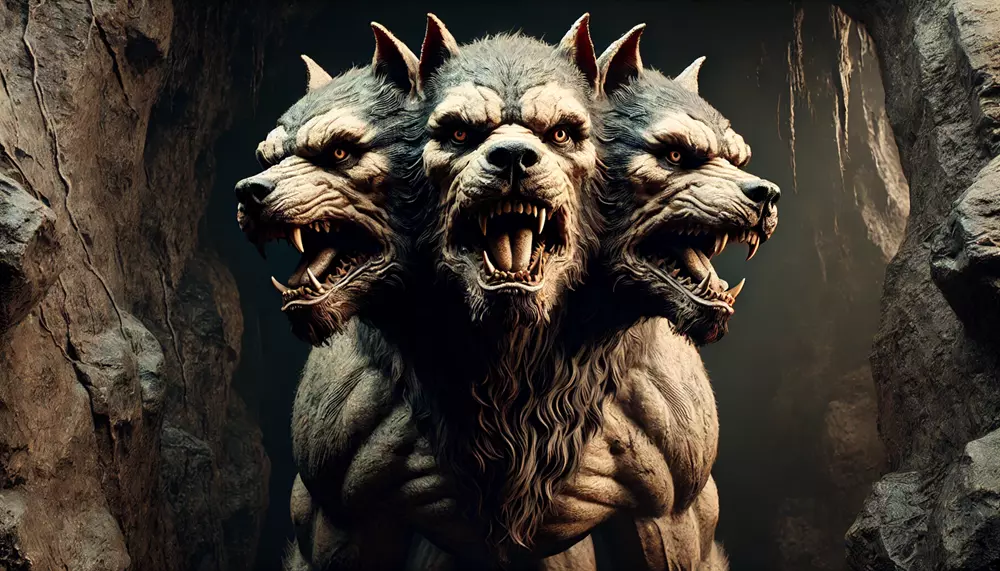
The differences become clearest when we ask what each creature makes possible within its story. In the profiles compared here, Al-Buraq carries Muhammad on the Night Journey from Mecca to Jerusalem; Cerberus controls passage at the Greek Underworld.
One enables an extraordinary journey, while the other prevents unauthorized movement. Calling both supernatural animals identifies a broad resemblance, but misses their contrasting relationships to passage and authority.
Power likewise serves different ends. The Mesopotamian Anzu, a lion-headed eagle, steals Enlil’s Tablet of Destinies; the Chinese Bai Ze, described here as lion-like and many-eyed, offers knowledge of supernatural beings and protection against evil.
Anzu’s theft and Bai Ze’s counsel do not express the same attitude toward extraordinary knowledge or power. Their shared animal features cannot establish shared meaning, much less shared ancestry.
Setting sharpens another distinction. The English spectral dog Black Shuck appears as a countryside omen of death, whereas the hairy, humanoid Almas belongs to Central Asian mountain folklore.
Neither landscape alone explains the creature. Read comparatively, however, their settings help distinguish an encounter understood as a portent from reports concerned with an elusive, supposedly living being.
That is an interpretive comparison, not proof of what every teller believed.
Source history limits the conclusions as much as narrative content enables them. These profile summaries are starting points, not independent verification of ancient testimony.
Michael Heaney’s archival reevaluation casts doubt on the familiar account of Baradiin’s alleged Almas sighting. For the Borrego Sandman, Loren Coleman questions the reliability of Warren Smith’s reporting.
Repetition therefore cannot substitute for a secure documentary chain.
These cases suggest a qualified answer to why roles differ: creatures acquire significance within particular narrative tasks, religious settings, landscapes and histories of transmission. Appearance is only one part of that process.
Readers can compare guardianship, transport, theft, protection and ominous encounter as analytical categories. They cannot infer a universal animal symbolism, a common origin, or cultural borrowing from resemblance alone.
The useful outcome is not one explanation for every beast, but a more precise account of what each comparison actually shows.
Further Reading
THE MONGOLIAN ALMAS: A HISTORICAL REEVALUATION OF THE SIGHTING BY BARADIIN – ORA – Oxford University Research Archive, ora.ox.ac.uk
THE MONGOLIAN ALMAS: A HISTORICAL REEVALUATION OF THE SIGHTING BY BARADIIN – ORA – Oxford University Research Archive CONTACT Name Email – Comment Send message FEEDBACK We welcome feedback about our service.
Source: https://ora.ox.ac.uk/objects/uuid:85d4d3f6-d0be-4c8d-839a-3a6736ceeec6
Cryptomundo » SoCal’s Abominable Sandpeople, cryptomundo.com
Ken Coon, a former deputy sheriff for Los Angeles County collected many stories during the 1960s and 1970s, and most source material goes back to him.
Source: https://cryptomundo.com/cryptozoo-news/socal-sandman/
Haroon Mirza: The Night Journey – Exhibitions – Asian Art Museum, exhibitions.asianart.org
This site-specific, immersive artwork arises from the artist’s interests in Sufi mysticism, meditation, trance music and other consciousness-altering practices as alternate ways to experience the world.
Source: https://exhibitions.asianart.org/exhibitions/haroon-mirza-the-night-journey/
Almasty, la dernière expédition – Film 2008 – AlloCiné, www.allocine.fr
This page provides a source record relevant to the article’s comparative subject.
Consult its original wording, publication context and supporting documentation before drawing historical conclusions.
Source: https://www.allocine.fr/film/fichefilm_gen_cfilm=206814.html
Borrego Sandman – Weird California, www.weirdca.com
This page provides a source record relevant to the article’s comparative subject.
Consult its original wording, publication context and supporting documentation before drawing historical conclusions.
Source: https://www.weirdca.com/location.php?location=310
168: The Almas – The Wild Peop… – The Mystery Kids Podcast – Apple Podcasts, podcasts.apple.com
A modern audio presentation of the folklore topic, useful for studying contemporary retellings and reception rather than establishing the tradition’s earliest historical evidence.
Source: https://podcasts.apple.com/nz/podcast/168-the-almas-the-wild-people-of-the-mountains/id1522936362?i=1000757504494
Explore Related Beasts
 Al-BuraqAl-Buraq is the white mount brought by Gabriel for Muhammad’s Night Journey from Mecca to Jerusalem; it is larger…
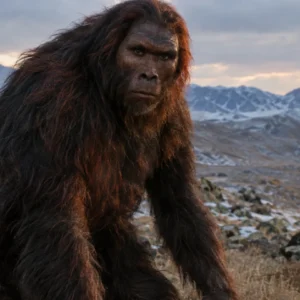 AlmasThe Almas is a mythical creature resembling a wild man, often described as a hairy, ape-like humanoid. It is…
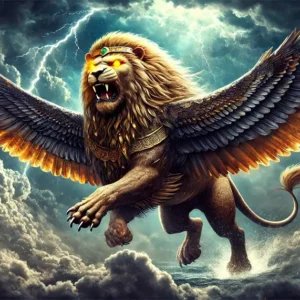 AnzuAnzu is a lion-headed eagle from Mesopotamian mythology, symbolizing chaos and power. Famous for stealing the Tablet of Destinies…
 AzebanAzeban is a trickster raccoon spirit from Abenaki folklore, known for creating confusion and mischief without harm.
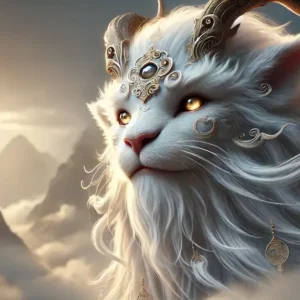 Bai ZeBai Ze, the wise beast of Chinese mythology, is known for its extensive knowledge of supernatural beings. With a…
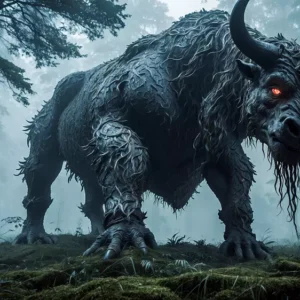 Behemotha colossal beast from ancient Jewish mythology, known for its incredible strength and its role as the land counterpart…
 Black ShuckBlack Shuck is a spectral black dog from English folklore, known for its terrifying appearance and as an omen…
 Borrego SandmanThe Borrego Sandman is a Bigfoot-like figure in Southern California desert folklore, linked to mysterious tracks near Harper’s Well.
 Ceffyl DŵrCeffyl Dŵr is a spectral water horse from Welsh folklore, known for its eerie, unpredictable nature, and for leading…