Introduction
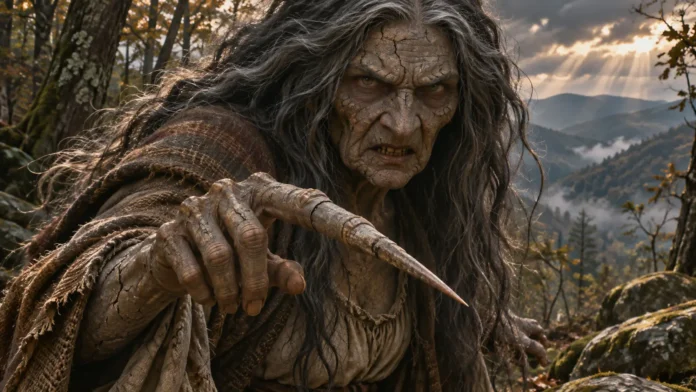
Spearfinger, known in Cherokee as U’tlun’ta, is a dangerous legendary being associated with the southern Appalachian homeland of the Cherokee. In James Mooney’s collected account, she is a shape-changing liver-eater who appears as an old woman, protected by stone-like skin and armed with a long, sharp finger.
Her defining weapon is also connected with her defeat. Although arrows cannot penetrate her protected body, a vulnerable point on her finger allows the community to overcome her. This combination of apparent invulnerability and concealed weakness gives the recorded narrative much of its tension.
Spearfinger belongs to a particular Cherokee cultural landscape, not an undifferentiated category of Native American monsters. Her associations include the Little Tennessee River country, while continuing local retellings connect her with mountain settings such as Whiteside Mountain and Nantahala.
The surviving accounts do not agree in every detail. Earlier printed variants include disease-bearing beings and an iron-fingered demon. Mooney’s fuller U’tlun’ta narrative provides the clearest baseline, but it represents a collected version of a continuing tradition rather than a single authoritative text.
History/Origin
Spearfinger’s oral beginnings cannot be dated from the surviving publications. The nineteenth-century printed record preserves related accounts with different names, bodily materials, and explanations of the danger. These publications document the tradition’s circulation, but they do not establish when Cherokee people first told such stories.
An 1883 account in Wilbur Zeigler and Ben S. Grosscup’s The Heart of the Alleghanies describes a being near the Tusquittee headwaters during a smallpox epidemic. Called a devil in human form, it resists arrows until a bird reveals a vulnerable place on one finger.
H. ten Kate’s 1889 account uses forms of the name Uilata or Utlunta and includes stone-clad beings. James W. Terrell’s 1892 version instead features an iron-finger demon associated with wasting sickness. These differences concern the being’s nature, not merely alternative spellings of an otherwise identical story.
The best-known extended account appears as myth 66 in Mooney’s Myths of the Cherokee. Commonly cited as a 1900 collection, the work is cataloged by the Smithsonian under the 1902 publication of the Bureau of American Ethnology report containing it.
Mooney credited John Ax for the version, with corrections and additions from Swimmer, Wafford, and others. Wafford was identified as a western contributor. The account therefore preserves named Cherokee contributions from eastern and western communities, rather than an anonymous narrative created by its collector.
Later scholarship, particularly Nathan Holly’s study of Cherokee historical geography, compares these versions without treating them as interchangeable. Contemporary Eastern Band-affiliated storytelling also keeps Spearfinger connected with Cherokee places. Her recorded history thus includes oral transmission, differing nineteenth-century publications, and continuing local interpretation.
Name Meaning
U’tlun’ta is the Cherokee name associated with the figure commonly called Spearfinger in English. Nathan Holly’s scholarship, following Mooney, renders it as “he or she has it sharp.” That documented gloss is more cautious and precise than translating the name literally as “spear finger.”
The English story-name emphasizes the conspicuous sharp finger that distinguishes the being. It provides a useful descriptive label, but it should not be mistaken for a word-for-word linguistic analysis. The recorded Cherokee gloss does not itself contain an explicit English equivalent of “finger.”
Published forms include Utlunta and Mooney’s more heavily marked U`tlûñ’ta. The nineteenth-century record also contains Uilata. These forms occur within a history of differing transcriptions and narratives; their presence does not establish that every associated account describes precisely the same form of the being.
A related-looking name, U’tluntun’yi, designates a place rather than another personal name for Spearfinger. Remembered as “sharp-finger place,” it identifies one of her associated haunts along the Little Tennessee. Keeping the figure’s name separate from this place-name preserves an important distinction in Cherokee narrative geography.
Appearance
In the Mooney-based account, Spearfinger’s characteristic presentation is an old-woman form concealing a predatory being. Her outwardly human appearance matters because it permits disguise and approach. She is therefore not simply a stone statue brought to life, but a dangerous figure whose appearance can mislead.
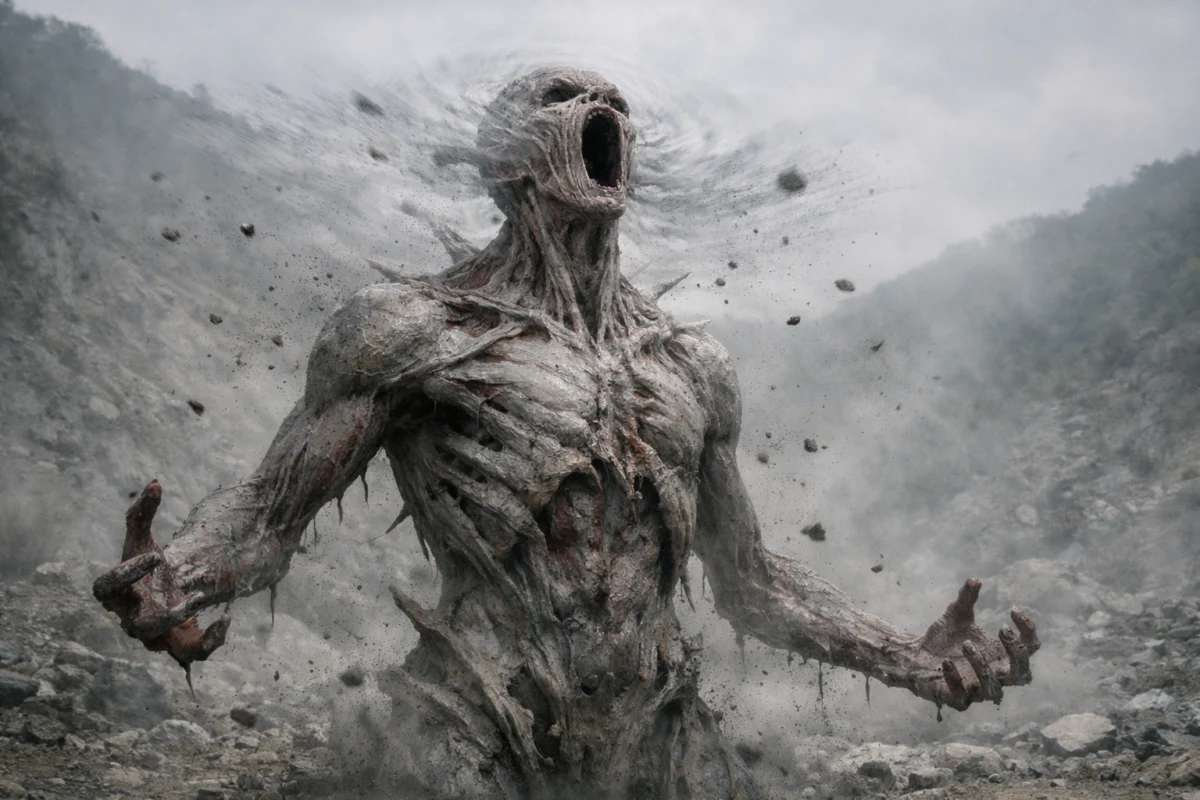
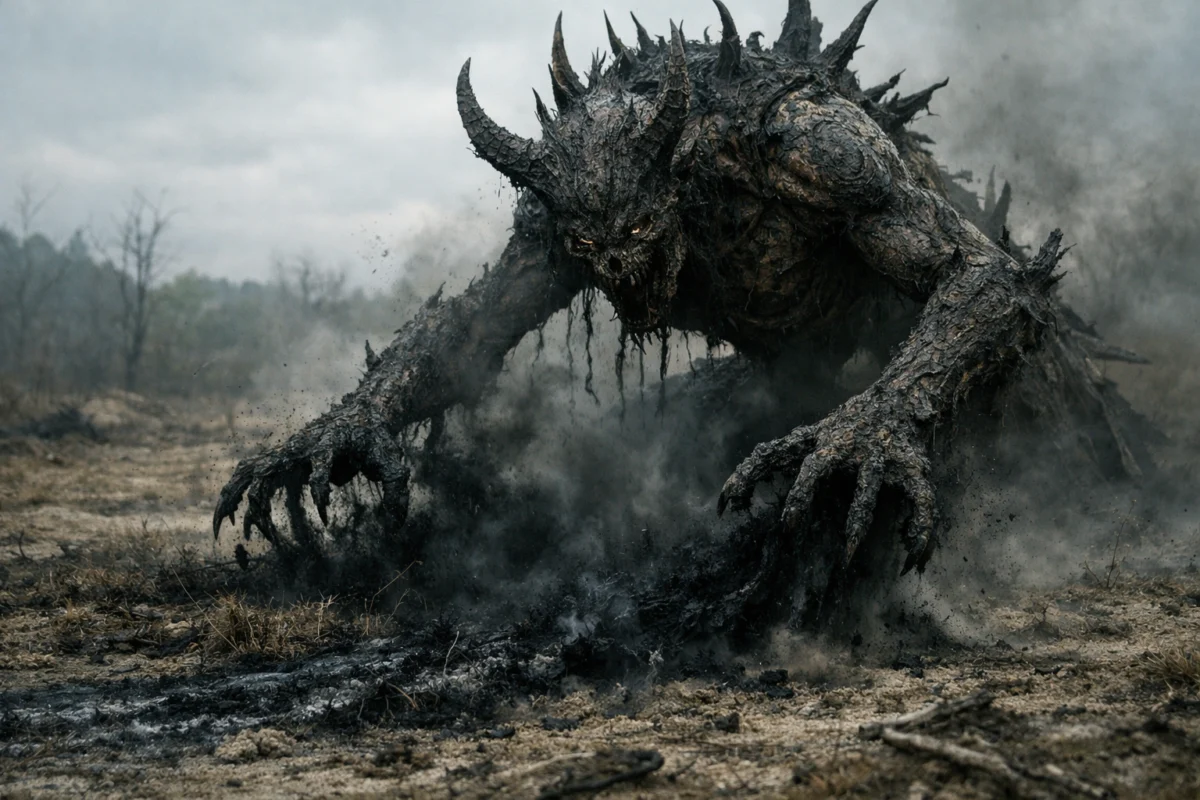
Stone-like protection distinguishes her body from an ordinary human body. Its narrative effect is explicit: arrows fail to penetrate it. The description establishes supernatural resistance to attack, without requiring the more elaborate mineral textures, colors, or anatomical details sometimes added in later visual interpretations.
A single long, sharp finger supplies her most recognizable feature and functions as a weapon. Yet the finger also contains the vulnerable place exposed during her defeat. This contrast makes her anatomy central to the plot: the feature associated with her power also permits that power to end.
Earlier versions require separate treatment. The 1883 Tusquittee account presents a human-shaped, arrow-resistant being without supplying the same old-woman characterization. Terrell’s 1892 account gives its demon an iron finger. Iron should therefore remain a feature of that version, rather than replacing the stone-associated appearance of Mooney’s account.
These differences also make it important to distinguish Spearfinger from Nûñ’yunu’wï, the Cherokee Stone Man or Stone-Coat. Particular tellings can combine related motifs, but stone-like protection alone does not make the two beings identical. Spearfinger’s old-woman disguise and distinctive finger belong to her own recorded characterization.
Background Story
Spearfinger’s background is rooted in Cherokee narratives about dangerous beings inhabiting a familiar homeland. Rivers, mountain country, and named places give the danger a local setting. The Little Tennessee association is especially concrete: a remembered “sharp-finger place” attaches the figure to the geography through which people moved.
The modern local telling presented by Visit Cherokee also connects her with Whiteside Mountain and Nantahala. These associations show the continuing importance of landscape to the story. They should be understood as documented place connections, not compressed into a single universally agreed dwelling or route.
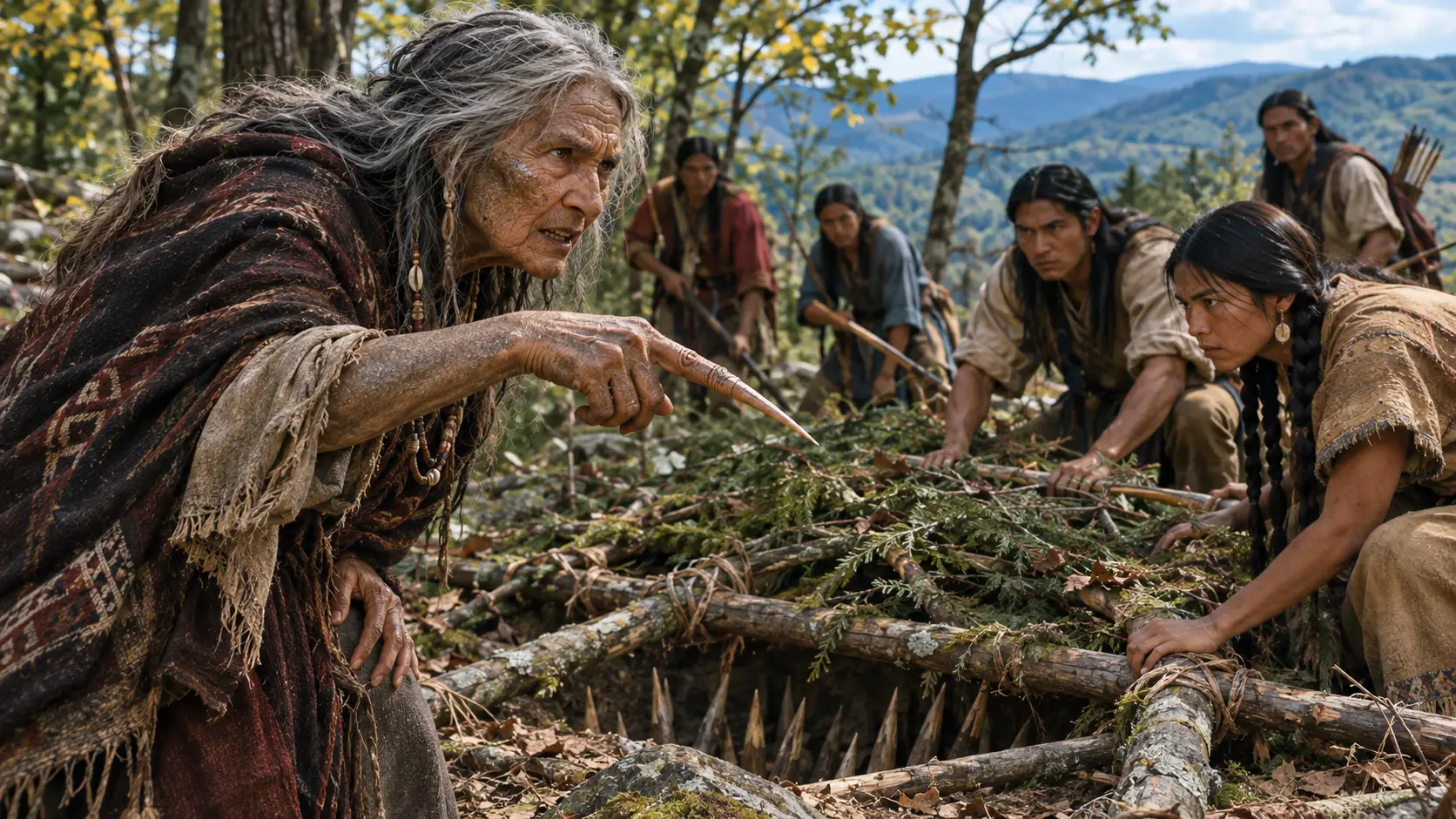
Within Mooney’s version, predation threatens people collectively, and the response is collective rather than purely individual. The community organizes against Spearfinger and prepares a trap. Her defeat depends on cooperation and the discovery of a weakness, not simply on a warrior possessing greater physical strength.
The bird’s intervention adds another relationship to that pattern. Human weapons initially fail, while information from a nonhuman participant makes an effective attack possible. Read as narrative structure, the episode gives knowledge a decisive role: resistance becomes successful only when the defenders learn where to strike.
The disease-linked variants place the danger within a different explanatory setting. In the 1883 account, the being’s death ends a smallpox outbreak; Terrell’s version associates its demon with wasting sickness. Those tellings connect bodily vulnerability and communal suffering more explicitly than the fuller liver-eater narrative does.
These differences do not establish that one disease or historical crisis created Spearfinger. They show related narratives giving different forms to predation, illness, and seemingly invulnerable danger. Her background is therefore best understood through the interaction of Cherokee place-based storytelling, distinct recorded versions, and their changing emphases.
Famous Folklore Stories
Spearfinger survives in several recorded tellings rather than one unchanging narrative. Mooney’s collected account provides the fullest baseline here, while earlier epidemic narratives and a separately recorded crystal-origin story preserve different endings and meanings. The episode headings below are descriptive, not traditional tale titles.
The community’s trap and the revealing bird
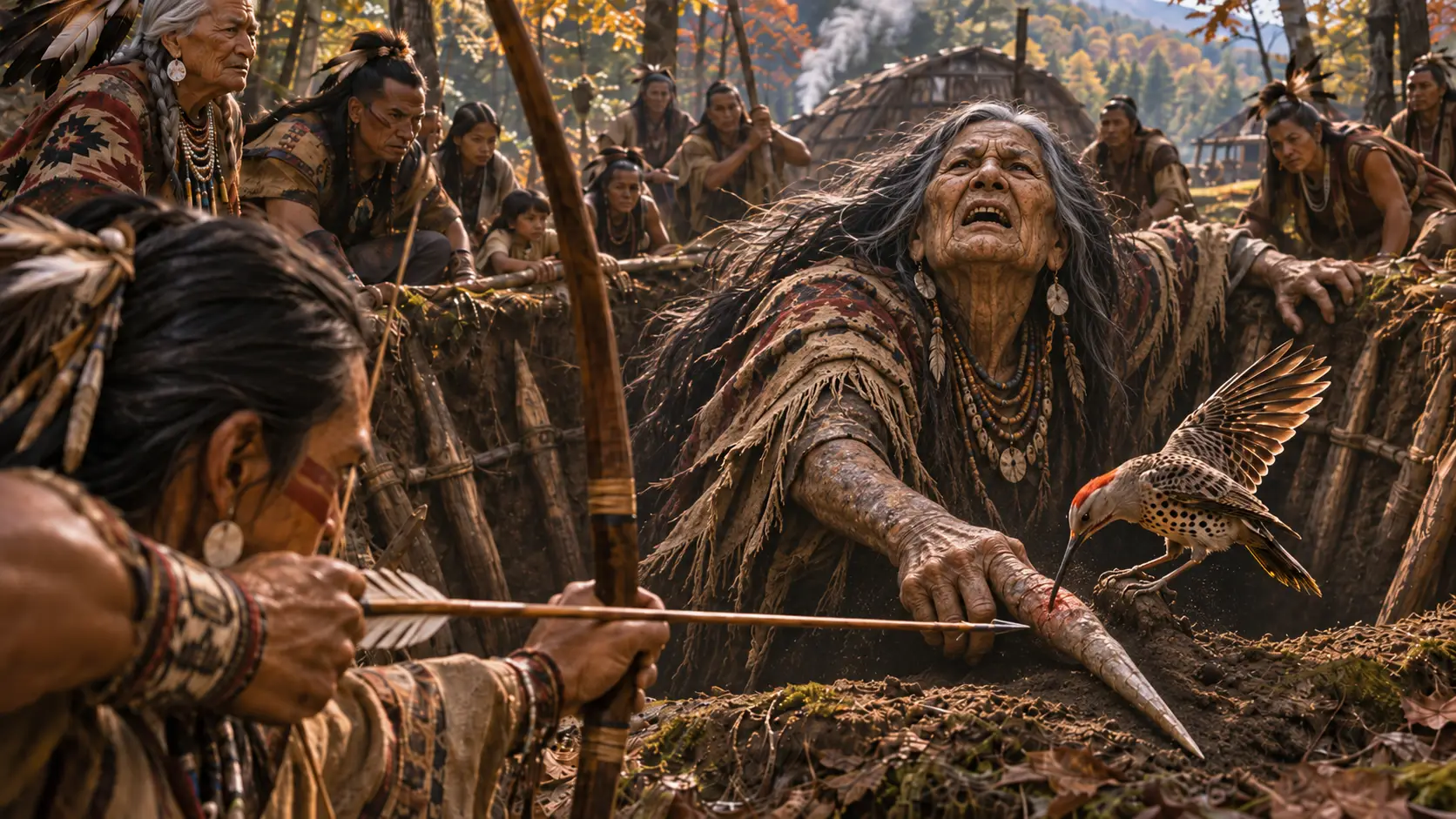
In Mooney’s recorded version, Cherokee people gather to plan an attack on Spearfinger. Instead of leaving individuals to face her alone, they prepare a trap. She falls into it, but the warriors discover that their arrows cannot penetrate her stone-like protection.
A bird then indicates the vulnerable place on her finger. An arrow finally strikes that spot, killing her. The episode makes the instrument of her violence also the location of her defeat: apparently overwhelming protection proves incomplete once the community receives the necessary knowledge.
This version was collected from John Ax, with corrections and additions from Swimmer, Wafford, and others. That shared provenance matters because even this familiar printed narrative incorporates several Cherokee contributors. Its particular trap, revelation, and ending should not replace the different sequences preserved elsewhere.
The Tusquittee epidemic variant
An earlier related account in Zeigler and Grosscup’s 1883 The Heart of the Alleghanies places an invulnerable being within a smallpox epidemic. Warriors track the human-shaped adversary to a cave near the Tusquittee headwaters, where their arrows initially fail against its skin.
A bird reveals a vulnerable point on one finger, allowing an arrow to kill the being. In this telling, the smallpox plague then ceases. The shared finger-and-bird sequence connects it with Spearfinger narratives, but its epidemic setting and description as a devil distinguish it from Mooney’s account.
The origin of divining crystals
A separate telling, attributed to King’s 1975 account in a study of Cherokee death customs, gives Spearfinger’s destruction another outcome. The liver-taking being is trapped and burned. When people scatter her ashes, they discover a small, solid, shining crystal among the remains.
A medicine man picks up the crystal, which falls and breaks into seven divining crystals. Here the ending explains the origin of objects associated with medicine and divination. It is a distinct narrative outcome, not an additional event to append automatically to the arrow-killing version.
Cultural Impact
Spearfinger’s cultural presence is tied to named Cherokee places, not simply to an interchangeable mountain wilderness. U’tluntun’yi, remembered as “sharp-finger place,” associates her with the Little Tennessee River landscape. Such names preserve narrative connections between a dangerous being and particular parts of the homeland.
Those connections remain visible in contemporary Cherokee public storytelling. The Eastern Band-affiliated Visit Cherokee presentation retells the legend through associations with Whiteside Mountain and Nantahala. This is continuing local reception, although its descriptive additions should not be treated as features shared by every historical telling.
Modern children’s literature also reshapes the confrontation. The 2017 bilingual English–Cherokee book Spearfinger, illustrated by Carrie Salazar, presents a boy named Chucha battling the witch and seeking her secrets. Its individual child protagonist differs from the collective action central to Mooney’s recorded version.
Visual art provides another specific form of reception. Luzene Hill’s commissioned illustration Spearfinger’s Deception, dated 2007, translates the narrative into a contemporary image. Together, illustration and bilingual fiction show the figure moving between storytelling, visual interpretation, and new reading audiences without establishing a single authoritative appearance.
Similar Beasts
Nûñ’yunu’wï (Stone Man/Stone-Coat)
Nûñ’yunu’wï is a distinct Cherokee dangerous being associated with stone-like protection. Specialist comparisons distinguish Stone Man from Spearfinger, even though some recorded tellings combine or blur their characteristics.
The closest connection is their protected bodies and predatory roles. That resemblance explains comparison, but does not make Stone Man another name for U’tlun’ta.
Aswang
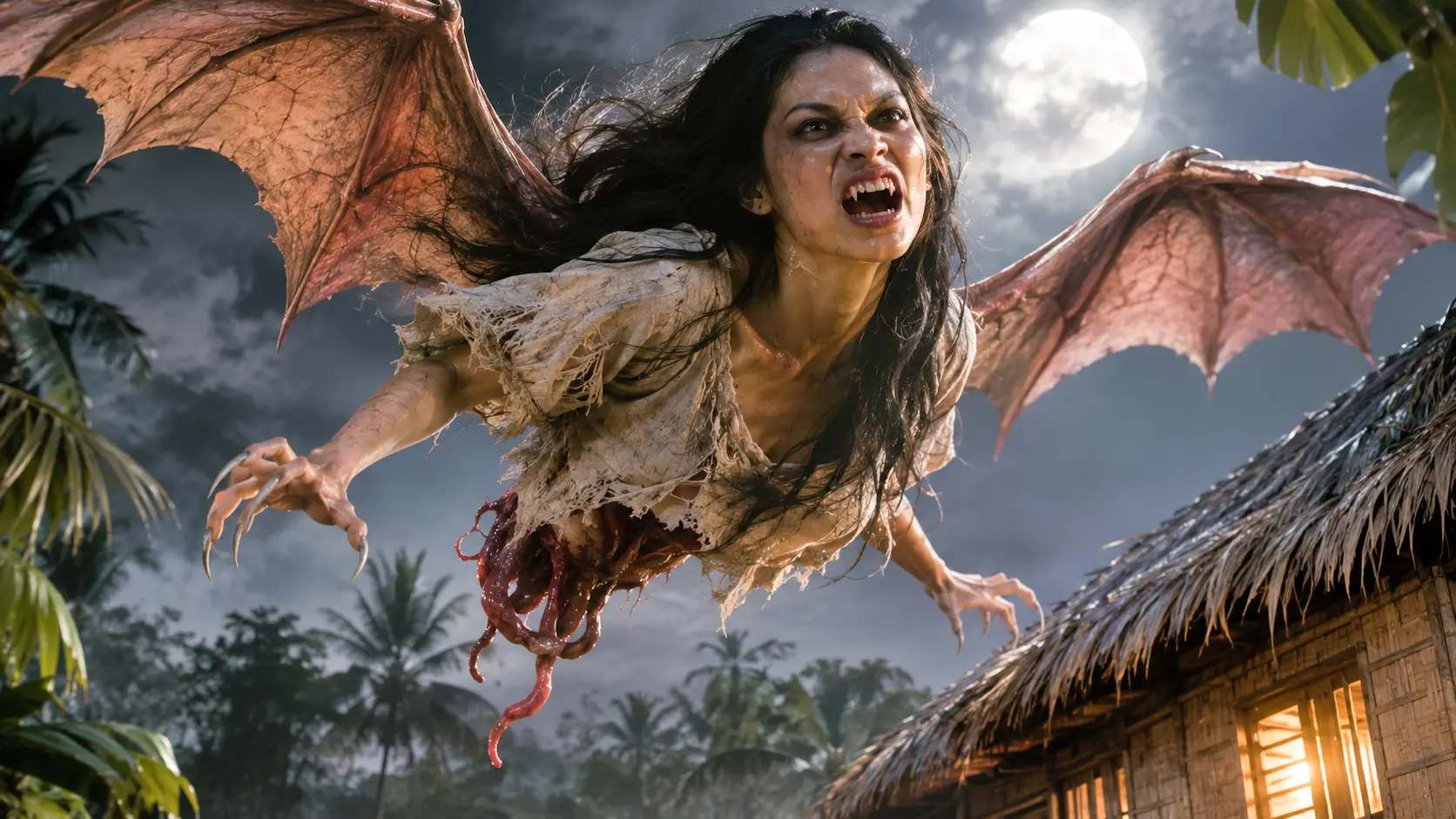
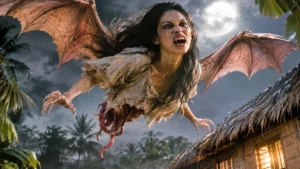
Aswang is a broad Philippine category encompassing different supernatural beings and feared people. Its traditions include predatory figures, transformations, and threatening appearances concealed beneath more ordinary forms of human identity.
The useful parallel is concealed supernatural danger, not identical anatomy. Spearfinger is a named Cherokee figure, whereas aswang covers a much wider range of beings.
Kishi
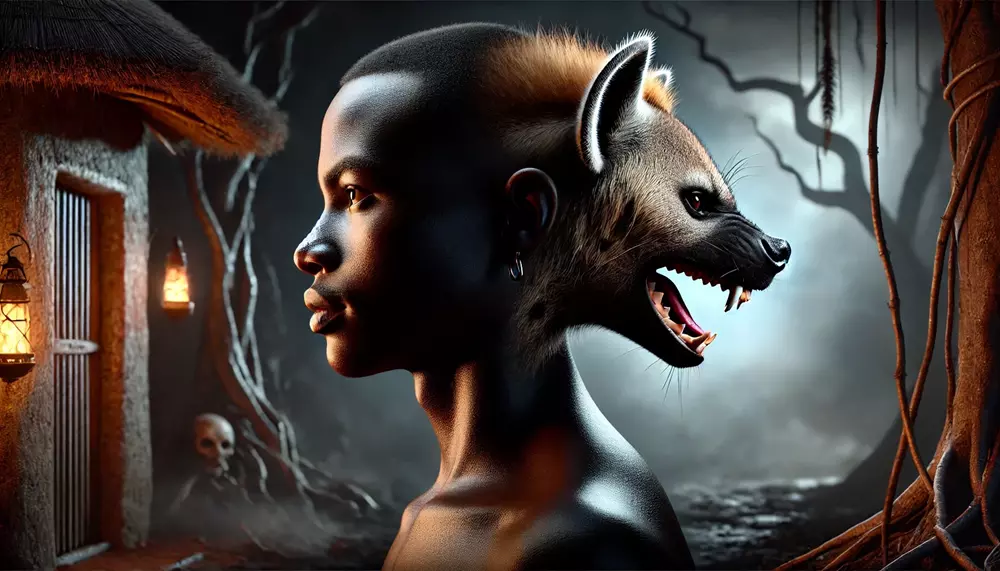
The Kishi of Angolan folklore presents a handsome human front while concealing a hyena face behind it. Its charm brings victims close before its concealed predatory nature becomes apparent.
Like Spearfinger’s deceptive human appearance, this contrast turns apparent safety into danger. The Kishi’s two-faced body, however, differs from her old-woman disguise and piercing finger.
Jenny Greenteeth
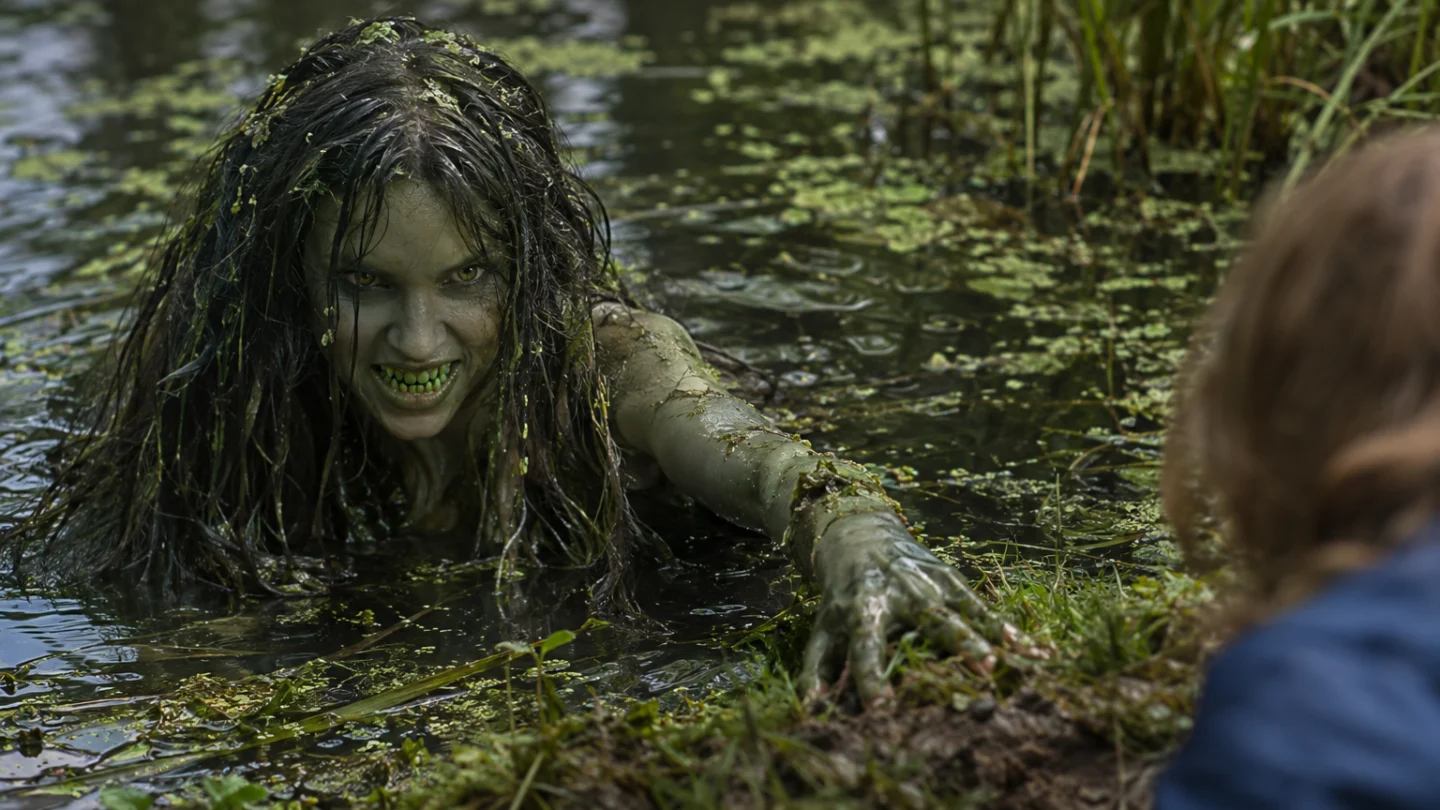
Jenny Greenteeth is an English water spirit associated with ponds and rivers. Tales describe her dragging people underwater, and her threatening presence serves as a warning about dangerous water.
Both figures make danger memorable through a person-like predator. Jenny’s aquatic setting distinguishes her from Spearfinger’s mountain-country narratives, despite their comparable potential as cautionary figures.
Read more about Jenny Greenteeth
Religion/Ritual
The documented material does not establish a ceremony, offering, or observance devoted specifically to Spearfinger. Her importance within Cherokee narrative should therefore be distinguished from claims that she received worship or that communities performed a standardized rite to repel her.
The divining-crystal variant nevertheless connects her story with medicine traditions. Its transformation of dangerous remains into useful crystals gives the narrative religious significance within that telling. An origin story about divination, however, does not by itself document how practitioners handled crystals or conducted consultations.
Scientific or Rational Explanations
Historical interpretation offers a firmer approach than attempting to identify a real animal behind Spearfinger. The recorded figure combines human disguise, stone-like protection, organ-taking, and supernatural vulnerability. These elements belong to narrative traditions; the evidence does not establish a zoological model for their combination.
Disease is relevant to particular versions, rather than a proven explanation for the entire tradition. The 1883 Tusquittee narrative explicitly links the adversary’s death with the end of smallpox. Terrell’s 1892 “The Demon of Consumption” instead connects an iron-finger figure with wasting sickness.
These variants can be read as ways of giving illness an identifiable agent and a decisive ending. That is an interpretation of their narrative structure, not evidence that either epidemic created Spearfinger. Their differences also caution against assigning one medical explanation to every telling.
A social reading emphasizes deception and coordinated protection. A threatening being approaches through a human appearance, while collective planning succeeds where ordinary weapons initially fail. This supports interpreting the story as an exploration of concealed danger and shared knowledge, without reducing it solely to a children’s warning.
Landscape scholarship offers another perspective: named places help stories remain connected to community memory. Spearfinger’s river-country associations make geography part of the narrative’s transmission. They need not be explained as mistaken sightings, nor do they establish that every modern location claim preserves the same historical tradition.
Modern Cultural References
The Hike – Spearfinger, a Cherokee legendary creature and antagonist, film
In the horror film The Hike, Spearfinger is a recently awakened evil spirit who can take the form of loved ones and kill people. The film takes creative liberties in adapting the Cherokee legend of this rock-like creature.
Source
The Legend of Spearfinger – Spearfinger, the shape-shifting witch in a short horror film, film
In the short horror film The Legend of Spearfinger, a friend tells Stefanya about an ancient witch from Cherokee legend who uses shape-shifting disguises to prey on victims. Stefanya investigates after thinking she hears something in her home.
Source
Conclusion
Spearfinger is a distinctly Cherokee legendary being whose best-known collected portrayal combines deceptive familiarity, stone-like protection, and a finger that is both weapon and weakness. In Mooney’s recorded version, her defeat depends on collective action and attention to a bird’s warning, not simply superior force. These elements support a reading concerned with recognizing concealed danger and overcoming apparent invulnerability through shared knowledge. Her associations with Cherokee places also keep the narrative rooted in a particular homeland rather than an interchangeable fantasy landscape.
The surviving accounts should nevertheless remain distinct. Earlier disease-linked narratives, Mooney’s fuller U’tlun’ta story, and later creative adaptations do not supply interchangeable details for one fixed biography. Their differences are part of the tradition’s documented history, not gaps to fill with invented explanations. Spearfinger’s continuing presence in Cherokee public storytelling, children’s literature, museum art, and film demonstrates several forms of later reception. Understanding those forms requires distinguishing inherited narrative elements from the choices of individual collectors, storytellers, artists, and filmmakers.
Further Reading
Myths of the Cherokee, James Mooney, Smithsonian Libraries and Archives, 1902
The Smithsonian provides a catalog record and digitized access to Mooney’s collection. Myth 66 preserves the foundational collected Spearfinger account and identifies the Cherokee contributors behind that version.
(repository.si.edu)
Visualizing the Cherokee Homeland through Indigenous Historical GIS, Nathan Holly, 2012
This university-hosted thesis examines Cherokee narratives alongside geography and collective memory. Its comparison of Spearfinger accounts clarifies differences in names, narrative episodes, and associations with particular places.
(libres.uncg.edu)
Legend of Spearfinger, Visit Cherokee NC
This Eastern Band-affiliated tourism presentation offers a contemporary local telling of Spearfinger. It helps readers understand continuing place associations while distinguishing modern narrative details from earlier collected versions.
(visitcherokeenc.com)
Cherokee death customs, University of Tennessee Trace Repository
This dissertation includes a Spearfinger telling attributed to King’s 1975 work. Its account connects her destruction with divining crystals, providing a substantive alternative to Mooney’s better-known narrative ending.
(trace.tennessee.edu)
Cherokee Myths (Manuscript 1876), Guide to the Collections of the National Anthropological Archives, Smithsonian National Anthropological Archives, 2024
This archival guide identifies manuscript material containing “Utlunta, the Spear Finger” and names Cherokee contributors. It is useful for tracing collection history rather than reading a complete narrative retelling.
(mads.si.edu)
“Fear as a Teacher” exhibit on display at Museum of the Cherokee People, The Cherokee One Feather, 2026
This Cherokee newspaper article documents the exhibition and Michell Hicks’s Spearfinger carving. It explains the educational framing of frightening narratives and provides context for a contemporary Cherokee artistic interpretation.
(theonefeather.com)