Introduction
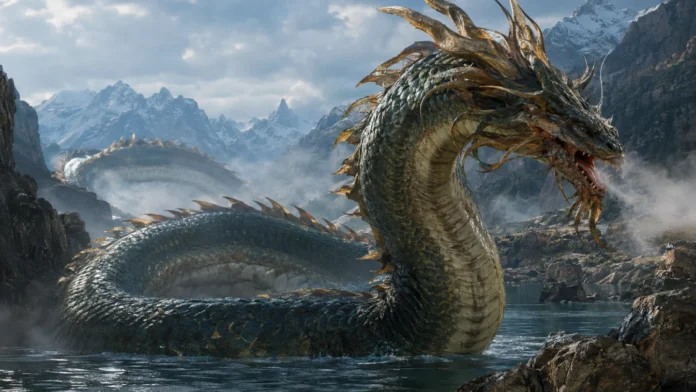
Azhdaha is the Persian dragon: an immense, usually serpent-like supernatural being found in Iranian religious tradition, heroic literature, and folktales. The name describes a broad category rather than one individual, so its appearance, behavior, and narrative importance change between stories.
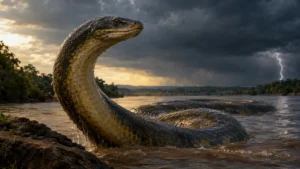
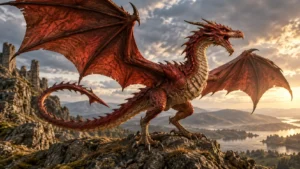
Its most representative form is a gigantic serpent, sometimes equipped with wings, horns, or other formidable features. In Persian epic, an azhdaha can confront a mounted warrior, emerge from a river, or threaten people through its overwhelming size and destructive powers.
The tradition has ancient Iranian roots, including the Avestan demon Aži Dahāka. That named adversary is historically and linguistically related to the later dragon tradition, but his distinctive identity and three-headed appearance should not be transferred to every creature called an azhdaha.
These dragons matter because their roles extend beyond supplying monsters for heroes to kill. They can embody destructive opposition, control access to water, guard treasure, or occasionally reward assistance.
Their varied functions connect religious ideas, royal testing, heroic achievement, and the changing demands of storytelling.
History/Origin
The earliest background belongs to ancient Iranian serpent and dragon traditions preserved in the Avesta, the sacred textual corpus of Zoroastrianism. The Avestan word aži could mean both snake and dragon, linking supernatural adversaries with the recognizable form of a serpent.
Aži Dahāka is one specific figure within that background, not the original identity of every later dragon. His defeat belongs to the ancient heroic tradition associated with the conqueror later known as Ferēdun or Faridun.
Later Zoroastrian accounts describe his confinement on Mount Damāvand.
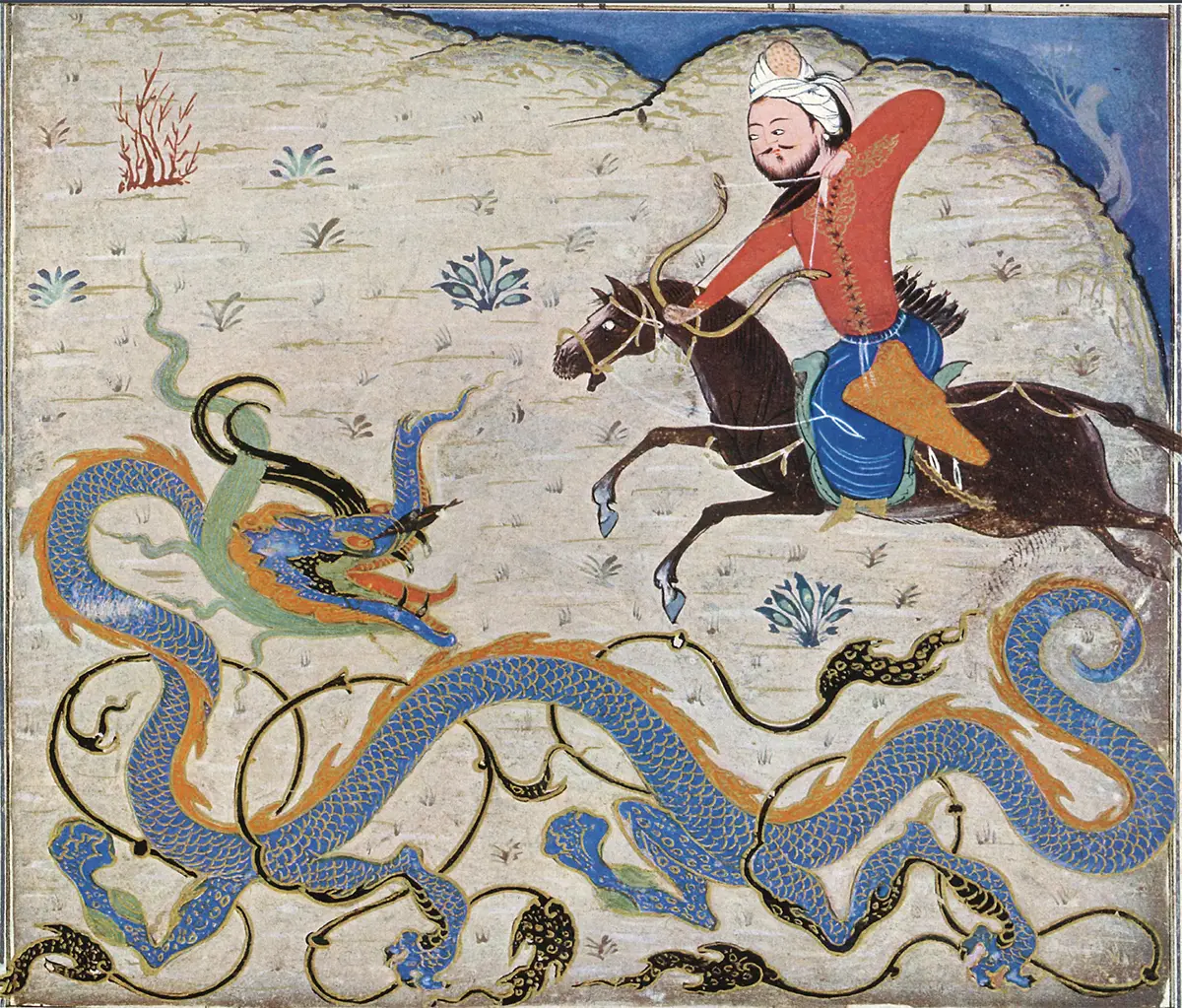
Other ancient monsters demonstrate that Iranian dragon lore was already diverse. The horned, poisonous Aži Sruuara, slain by Kərəsāspa, is distinct from Aži Dahāka.
Gandarəβa, associated with the Vourukaša Sea, likewise belongs to this wider supernatural landscape without being another name for the same adversary.
Middle Iranian and New Persian traditions inherited and reshaped this vocabulary and narrative material. Forms such as Middle Persian azdahāg and Persian aždahā preserve the linguistic connection, while later literature uses the dragon more broadly across different encounters, landscapes, and heroic careers.
By the time of Ferdowsi’s Shahnameh, composed around the late tenth and early eleventh centuries, dragons formed part of an extensive heroic repertoire. Sām and Rostam confront dragon adversaries, while the wider Persian epic tradition also celebrates the dragon-slaying exploits of Garšāsp.
Later folktale collections preserve further variations, including dragons that monopolize water or act as grateful helpers. These recorded tales document the continuing adaptability of the creature, but their collection dates do not establish when each motif began.
The history is layered rather than a single continuous biography.
Name Meaning
Persian aždahā means “dragon.” Azhdaha is an English rendering of that word, while the scholarly spelling aždahā marks sounds more precisely.
Other recorded forms include aždahāk, aždar, and aždār, reflecting variation within the wider Iranian linguistic and literary tradition.
The word is historically connected with the ancient name Aži Dahāka through intermediate Iranian forms, including Middle Persian azdahāg. The first element, Avestan aži, denotes a snake or dragon.
This connection explains the strong serpentine foundation of the later creature’s identity.
The element dahāka is less secure: its etymology is not settled in the specialist evidence used here. A precise translation of the whole ancient name would therefore imply more certainty than is justified, even though the meaning of its first element is clear.
The important distinction is between a named being and a general creature term. Aži Dahāka designates a particular ancient demonic adversary; aždahā in Persian can identify any of numerous literary or folkloric dragons.
Shared linguistic ancestry does not make all their stories interchangeable.
Appearance
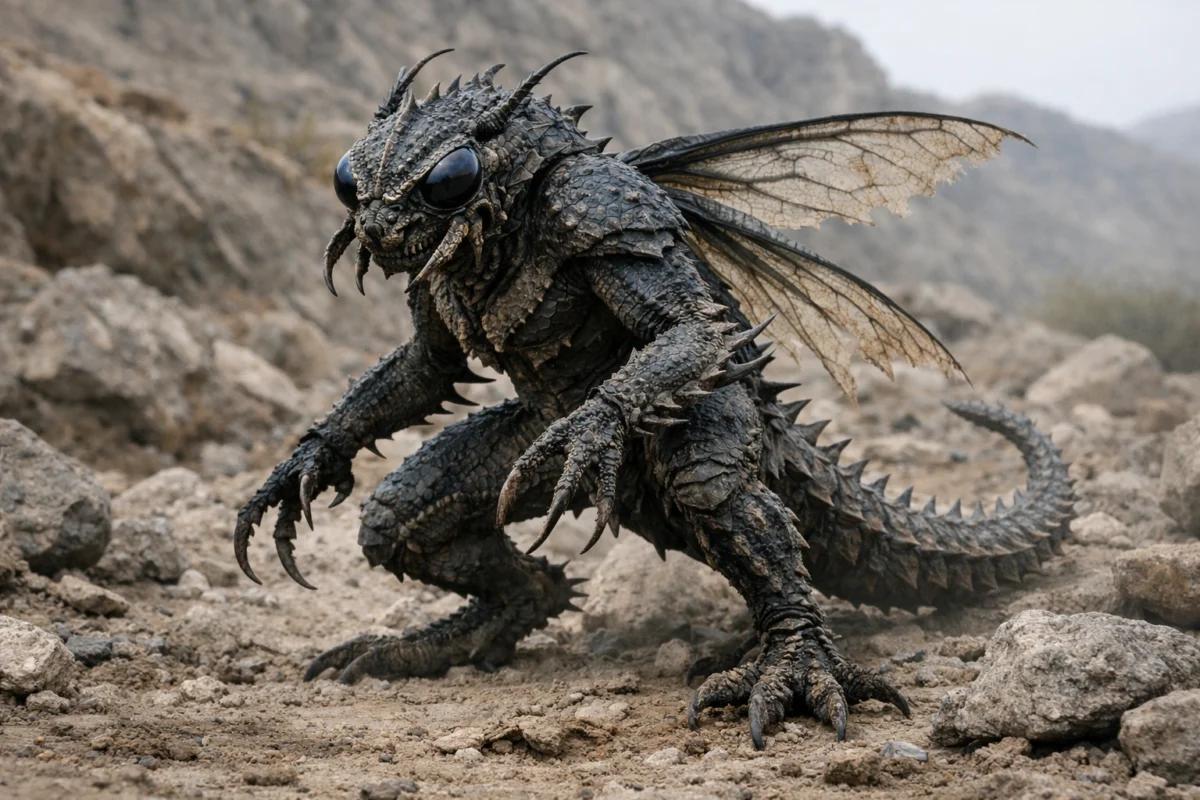
The clearest general image of an azhdaha is an enormous, elongated serpent-dragon. Persian literary descriptions also admit giant lizard-like bodies and winged forms.
No single arrangement of limbs, wings, or heads defines the entire tradition, although serpentine scale and shape provide its strongest visual baseline.
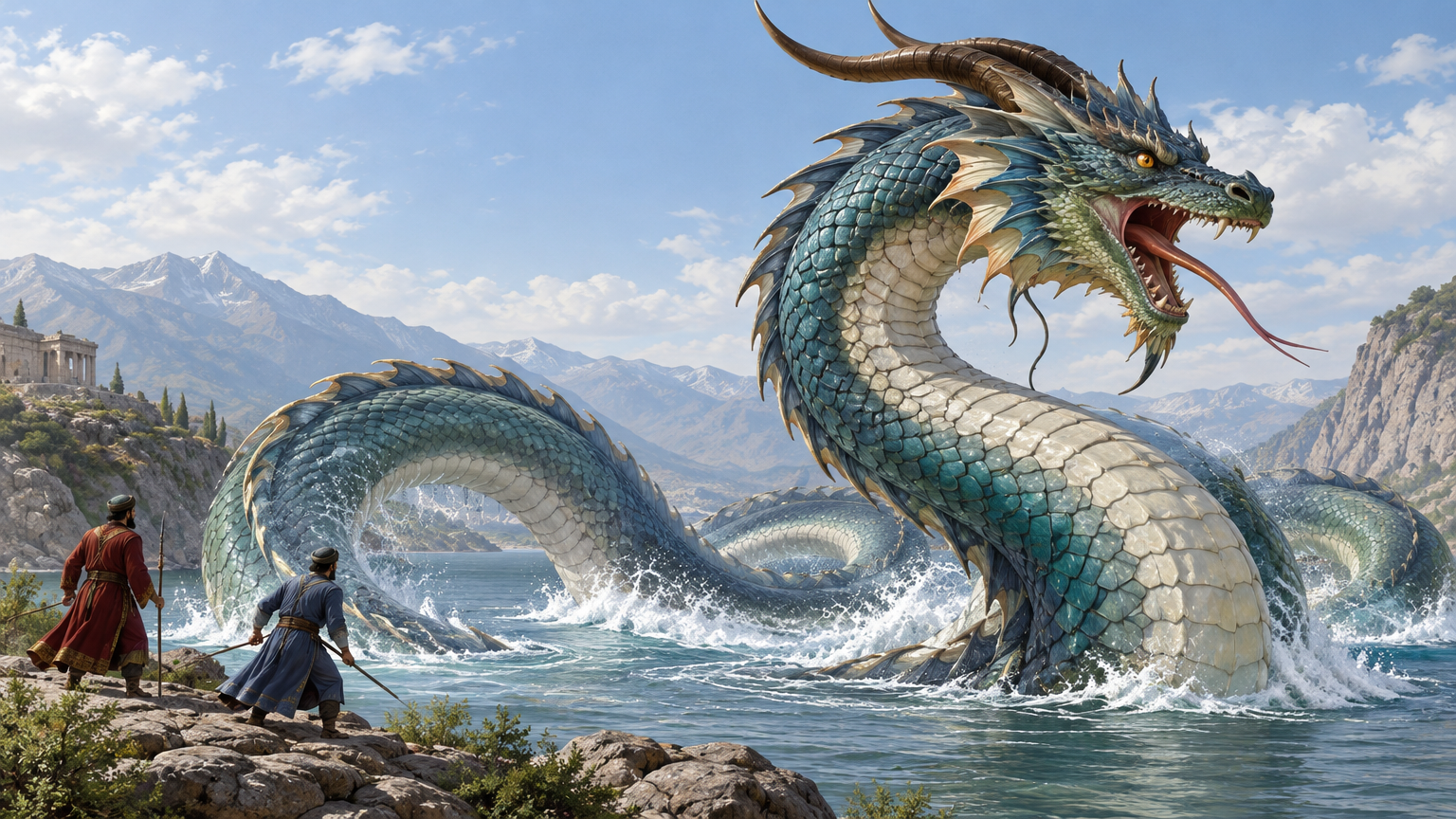
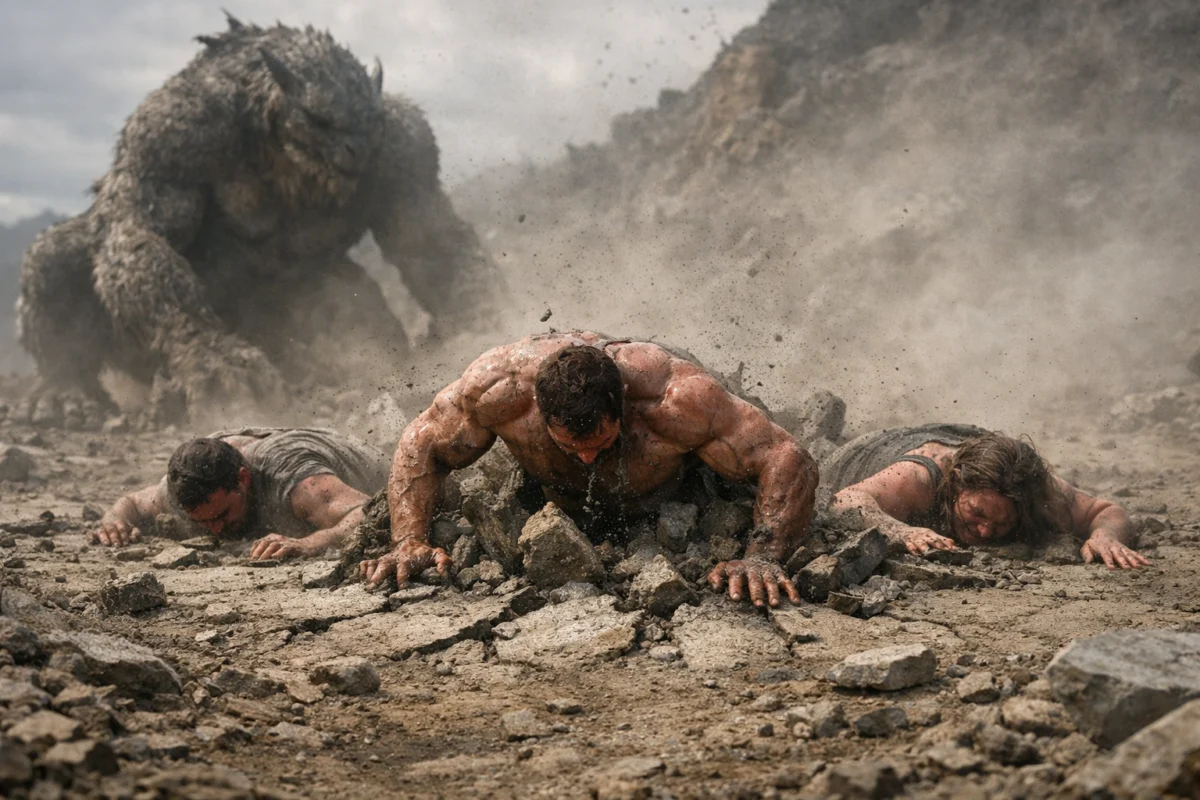
Size is often more important than anatomical precision. Epic dragons can appear mountain-like or large enough to threaten heroes and their horses.
Such comparisons establish an encounter beyond ordinary animal danger, making the creature’s defeat a demonstration of exceptional courage and power.
Scales, horns, poison, fire, and smoke occur in descriptions, but they are not a universal set of features. Some dragons possess extraordinary inhaling power, making their breath dangerous through suction as well as through destructive emissions.
Individual episodes determine which abilities matter.
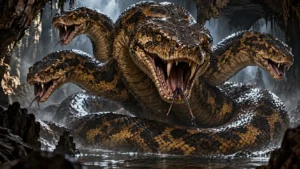
Head counts likewise vary. The three heads, three mouths, and six eyes of Aži Dahāka belong to that specific Avestan monster.
Other azhdahas may be single-headed or multiheaded, so the ancient demon’s distinctive anatomy cannot serve as a general portrait of Persian dragons.
In Ferdowsi’s account of Faridun testing his sons, the king assumes the form of a giant snake. The Aga Khan Museum’s discussion of the illustrated episode distinguishes this literary description from later pictorial conventions, showing why a painted dragon need not reproduce the text’s anatomy exactly.
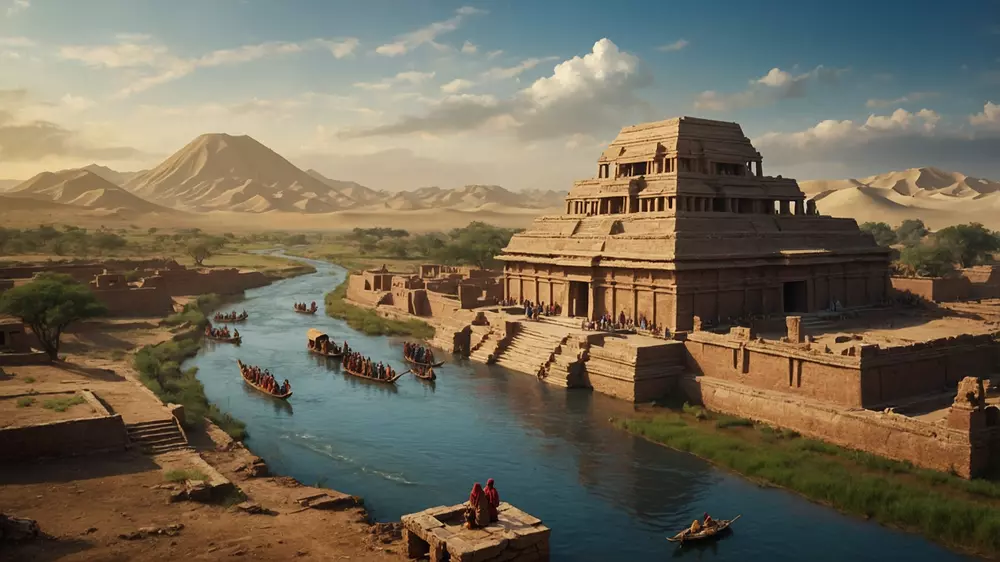
Settings also contribute to the visual impression. Dragons inhabit or emerge from rivers, seas, caverns, and mountainous places, depending on the story.
A water-associated azhdaha remains a supernatural dragon, however, rather than a separate fixed species with an independently standardized aquatic body.
Background Story
The azhdaha has no shared birth story or personal history. Its background lies in the meeting of ancient religious opposition, heroic combat, royal testing, and folktale motifs.
Each setting gives the dragon a different purpose while retaining its capacity to overwhelm ordinary human strength.
In the religious strand, Aži Dahāka represents a demonic threat whose defeat does not necessarily mean immediate destruction. Later Zoroastrian tradition places him bound in a cave on Mount Damāvand until the world’s final renovation.
This is a cosmic narrative, not a template for every dragon encounter.
Heroic literature gives dragon combat a more immediate social significance. When Sām kills the creature that emerges from the Kašaf-rūd, victory establishes the hero’s ability to confront a devastating menace.
Such encounters help define the exceptional standing of warriors within the epic world.
The wider Rostam tradition also allows ingenuity to supplement force. In the sea-dragon episode, ox hides filled with quicklime and stones become bait that destroys the creature after it swallows them.
The episode makes the dragon an adversary whose immense appetite can be turned against it.
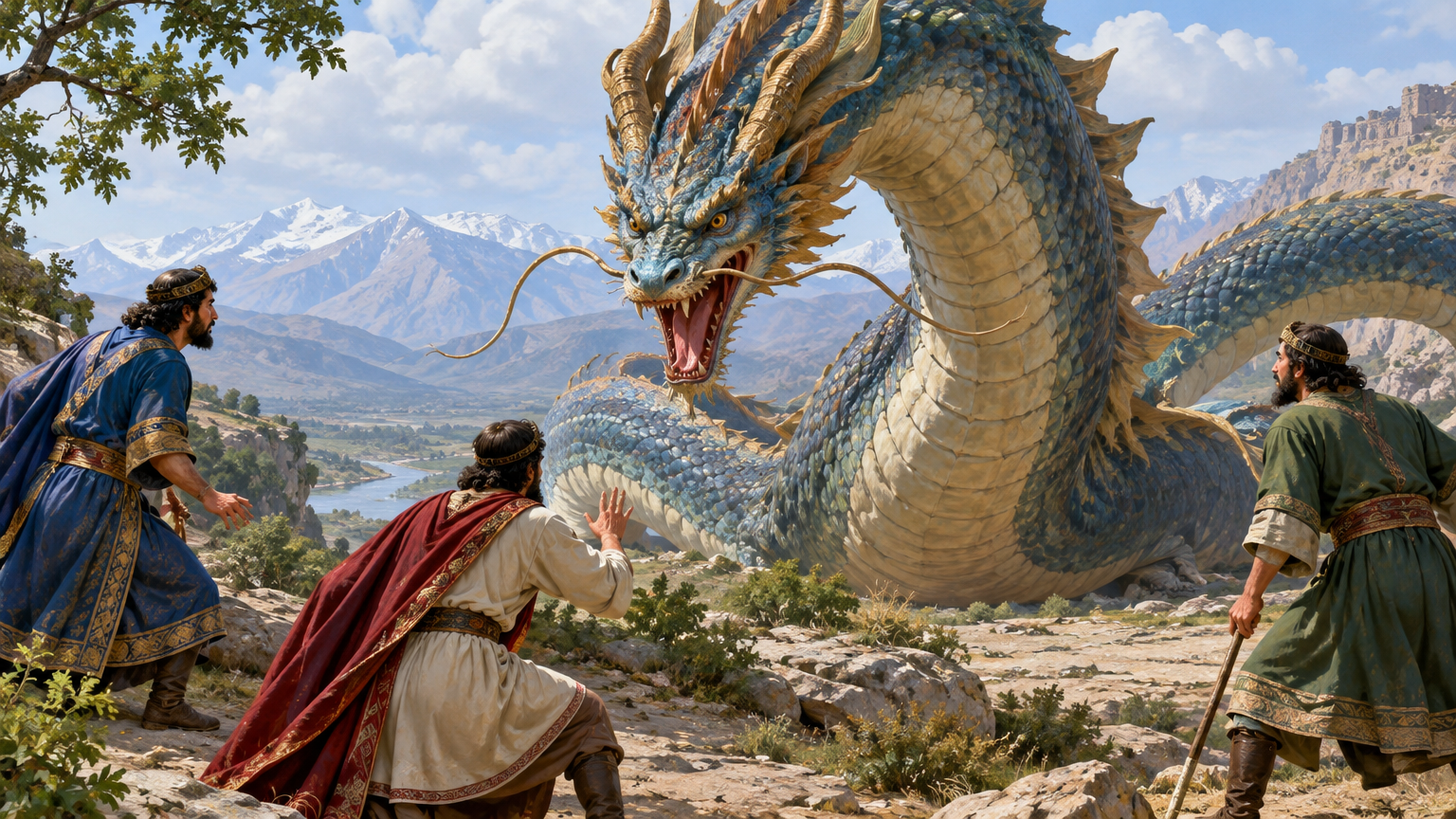
Dragon form need not indicate an evil identity. Faridun transforms himself into an azhdaha to test his three sons, using its terrifying appearance to expose their different responses.
Here the monster’s shape becomes an instrument of royal judgment rather than an independent enemy requiring destruction.
Folktales broaden these possibilities through water-controlling dragons, treasure guardians, threatened maidens, and occasional grateful helpers or gift-givers. Access to essential resources supplies a recurring source of conflict, but these stories should not all be reduced to a single explanation involving drought, rainfall, or ritual.
Famous Folklore Stories
Azhdaha narratives survive in religious mythology, Persian epic, and folktale motifs rather than as one unified biography. The headings below are descriptive labels for documented episodes, not authenticated traditional tale titles, and the dragons involved should not automatically be identified with Aži Dahāka.
Sām Slays the Dragon of the Kašaf-rūd
In the Shahnameh tradition, a dragon emerges from the Kašaf-rūd and becomes an adversary of Sām. His defeat of the creature belongs to the wider pattern in which an Iranian hero proves exceptional courage and strength by confronting a threat beyond ordinary human ability.
The episode presents dragon-slaying as more than the destruction of a dangerous animal. By overcoming the immense creature, Sām demonstrates the heroic fitness associated with legendary champions.
The azhdaha consequently functions as a measure of stature against which the hero’s reputation can be established.
Rostam and the Sea Dragon
One account of Rostam’s adventures places him against a sea dragon whose appetite becomes its weakness. Rostam prepares ox hides filled with quicklime and stones, then uses them as bait.
After swallowing the deceptive bundles, the monster’s stomach bursts and it dies.
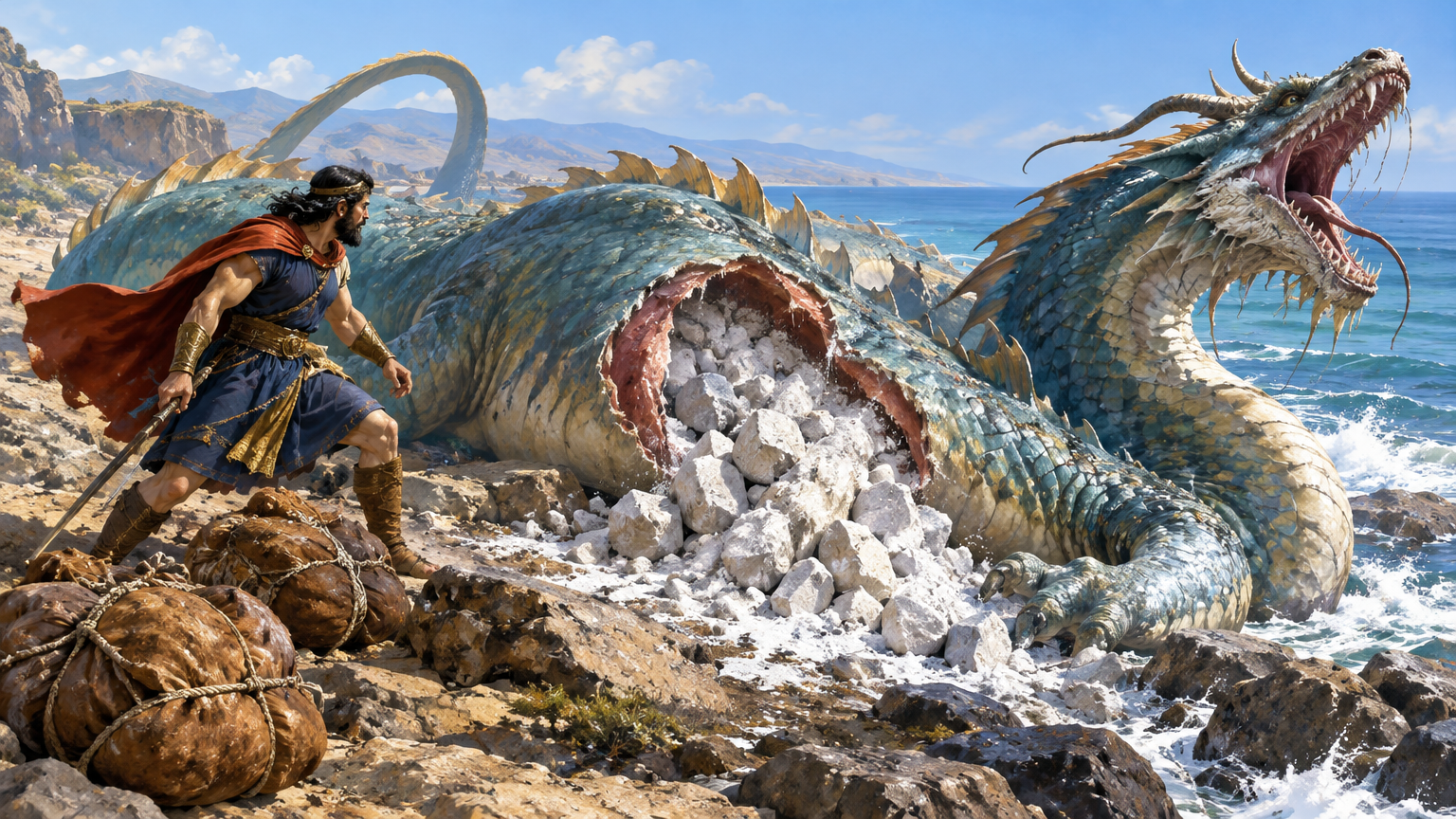
The episode differs from contests decided solely through direct combat. Rostam succeeds through preparation and cunning, turning the dragon’s enormous power of consumption against it.
The encounter is also associated with his acquisition of the protective hide known as the babr-e bayān.
Ferēdun Defeats and Binds Aži Dahāka
Ancient Iranian religious tradition makes Aži Dahāka a specific demonic serpent adversary rather than a generic azhdaha. Ferēdun defeats this monster, while later Zoroastrian accounts explain that he does not immediately destroy it but binds it within a cave on Mount Damāvand.
The imprisonment is temporary within the larger cosmic narrative. Aži Dahāka is expected to escape near the final renovation of the world and renew its destruction before being overcome.
This apocalyptic role belongs to the named demon and should not be transferred to every Persian dragon.
Faridun Tests His Sons in Dragon Form
In a Shahnameh episode, Faridun assumes the form of an azhdaha to test his three sons. Rather than serving as an independent enemy, the giant serpent form becomes a disguise through which the ruler observes how each son responds when confronted by overwhelming danger.
The episode reveals the dragon image’s broader narrative usefulness. It can expose character and judgment as effectively as it can threaten lives.
Later illustrated versions developed varying visual conventions, but the literary creature in this particular test is fundamentally described as a mythical giant snake.
Cultural Impact
Dragon-slaying became a durable sign of heroic distinction in Persian epic. An ordinary enemy could demonstrate martial competence, but an azhdaha tested whether a champion possessed almost superhuman courage, ingenuity, and force.
Victory therefore helped validate the standing of heroes and royal lineages.
The tradition was not limited to straightforward combat. Faridun’s transformation shows that dragon imagery could test judgment, while Rostam’s sea encounter rewarded cunning.
These differences allowed the azhdaha to represent whatever obstacle most clearly revealed a protagonist’s character, from physical terror to deception and uncertainty.
Iranian folktales broadened the creature’s functions further. Azhdahas could guard treasure, control access to water, or demand a maiden as a victim.
Such motifs made the dragon an embodiment of dangerous possession, concentrating wealth, natural resources, or vulnerable captives under one overwhelming supernatural power.
Not every folktale azhdaha is wholly malevolent. Some narratives permit a grateful dragon to assist a human or bestow a gift.
This variation distinguishes the broad folkloric category from Aži Dahāka, whose demonic character belongs to a more specific Zoroastrian cosmic conflict.
Persian manuscript illustration also gave the creature a changing visual life. Artists interpreted epic descriptions through different combinations of serpentine bodies, reptilian features, wings, and other animal traits.
Modern scholarship consequently treats azhdaha imagery as a variable tradition rather than evidence for one canonical design.
Similar Beasts
Comparable beings share selected traits with the azhdaha, but none should be treated as another name for it. Their similarities concern form, habitat, elemental associations, or narrative function rather than a common identity.
Div-e Sepid

Div-e Sepid is the White Demon of the Shahnameh, a powerful supernatural opponent whose defeat establishes Rostam’s courage, strength, and exceptional standing among heroes.
Like an epic azhdaha, it functions as a monstrous test of heroism, although it is a demon and giant rather than a serpentine dragon.
Leviathan
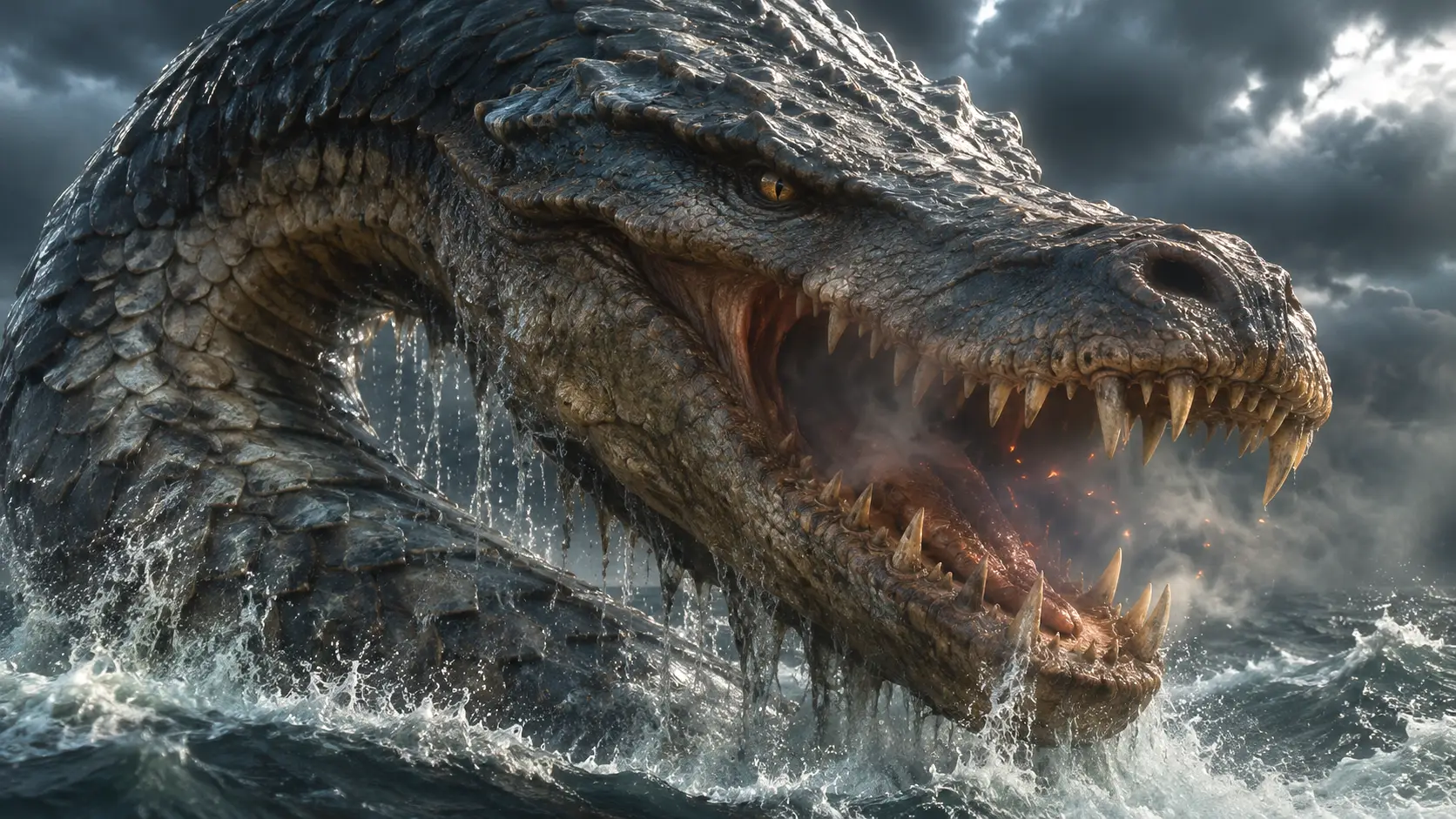
Leviathan is an immense sea serpent from Hebrew scripture, portrayed through armored strength and fiery imagery and developed further in traditions concerning creation and judgment.
Its aquatic, serpentine, and destructive qualities resemble some azhdaha accounts, but its scriptural and cosmological setting belongs to a distinct religious tradition.
Cuelebre
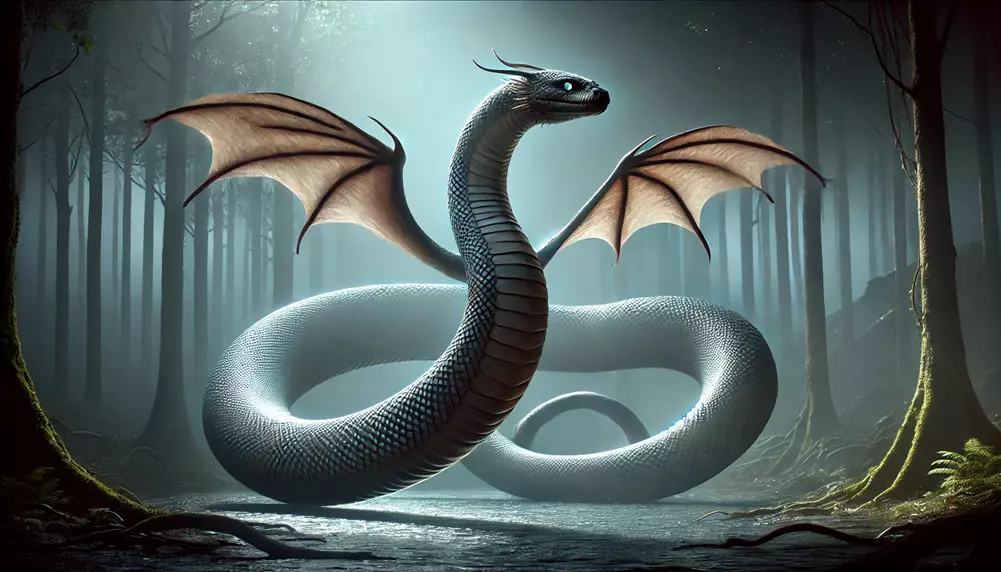
Cuelebre is a dragon-like serpent from Asturian folklore, especially associated with caves and the guarding of concealed treasures against those who might approach them.
It parallels treasure-guarding azhdahas in folktales, though the two figures arise from separate European and Iranian bodies of tradition and local storytelling.
Lóng (Dragon)
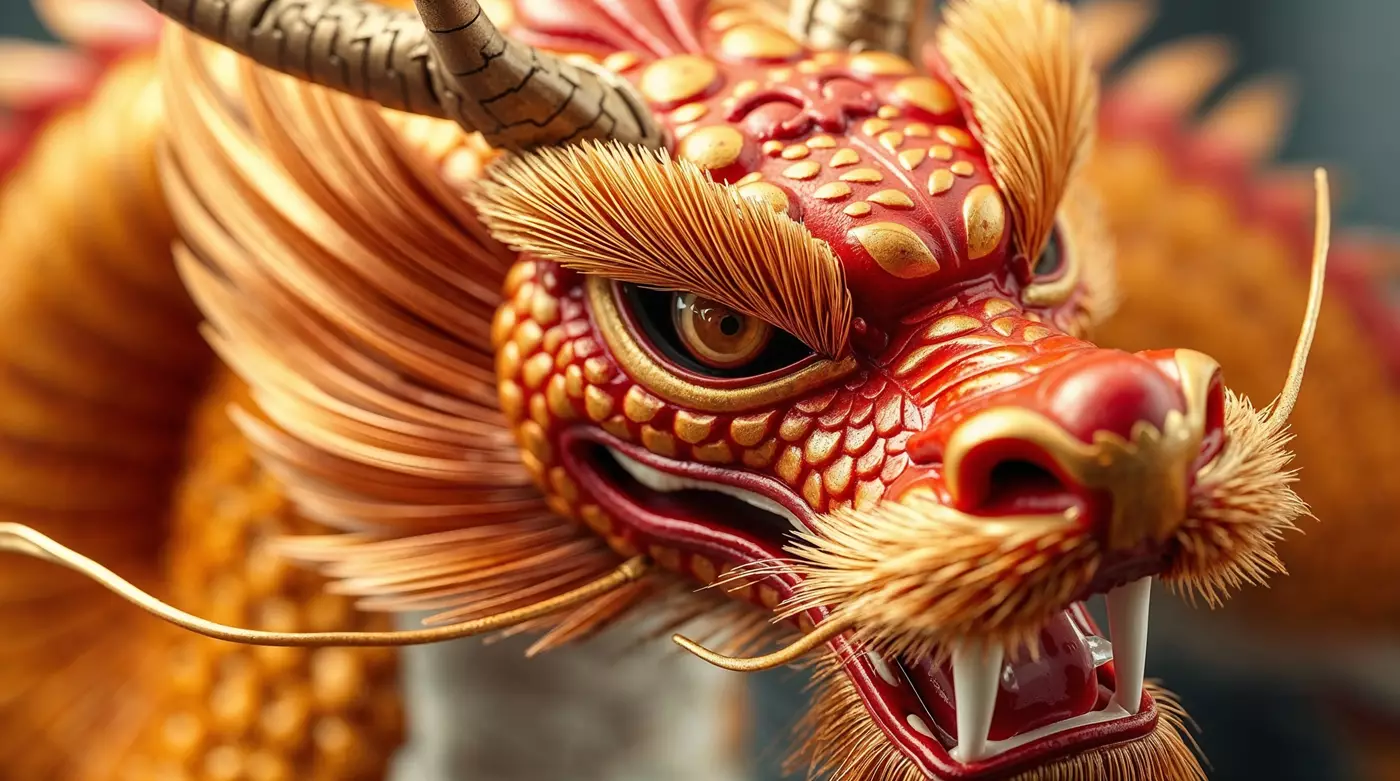
Lóng is the Chinese dragon, a celestial and generally auspicious being associated with water, storms, fortune, authority, and beneficial power within Chinese cultural traditions.
Both dragons can influence water and embody supernatural power, but Lóng’s revered celestial role contrasts with the commonly adversarial azhdaha of Persian epic.
Religion/Ritual
Within Zoroastrian literature, Aži Dahāka is a demonic opponent aligned with destructive evil. Ferēdun’s victory and the monster’s confinement belong to sacred history and eschatology, not to a general ritual pattern involving every creature called an azhdaha in later Persian narratives.
A historical Iranian eclipse belief attributed the disappearance of the sun or moon to a dragon swallowing the celestial body. People reportedly made noise and prayed for its release.
This practice reflects a particular cosmological explanation and should not be generalized across all Iranian communities or periods.
The eclipse response connected collective sound and prayer with the restoration of celestial order. However, the available record does not establish a standardized azhdaha cult, regular offering system, or universal dragon festival.
The strongest ritual evidence concerns reaction to a feared celestial event.
Some modern interpretations connect Iranian dragon-slaying with drought, withheld rainfall, or the release of water. Such readings fit the water-controlling role found in folktales, but the relationship is not consistently explicit in the surviving texts.
It remains an interpretive theory rather than a demonstrated uniform ritual origin.
Scientific or Rational Explanations
Azhdaha is documented as a mythological and literary category, not as a zoological species. Its changing number of heads, presence or absence of wings, supernatural breath, colossal scale, and variable moral behavior are characteristic of stories shaped for different religious, epic, and folkloric purposes.
The eclipse tradition can be understood as a premodern explanatory model for an alarming natural event. A luminous body appeared to be consumed and later released, making the image of a celestial serpent intuitively effective without requiring belief in an observable biological dragon.
Associations with rivers, lakes, and withheld water may preserve social concerns about access to essential resources. In folktales, defeating a water-controlling monster dramatizes the restoration of communal security.
This anthropological interpretation is plausible, although Iranian texts do not state one universal environmental meaning.
Dragon-slaying also has a political and social dimension. By giving heroes an impossibly powerful opponent, epic narrative can express legitimacy through victory.
The monster magnifies courage, intelligence, and authority, allowing an audience to recognize the champion as someone capable of restoring order.
The enormous inhalation, appetite, poison, smoke, and fire attributed to different azhdahas should be read as story-specific intensifications. These features make natural dangers dramatically visible and provide heroes with unusual challenges, but their inconsistency prevents reconstruction of a single creature behind every account.
Differences among religious demons, epic monsters, and folktale helpers are best explained through centuries of narrative adaptation. A familiar dragon term could be applied to multiple supernatural beings while storytellers altered anatomy and behavior.
This development accounts for the evidence more effectively than a single literal-creature hypothesis.
Modern Cultural References
Genshin Impact, video game (2021)
HoYoverse introduced Azhdaha as a named dragon character and boss in Version 1.5.
The adaptation recasts the Iranian name within the fantasy mythology of Teyvat.
(genshin.hoyoverse.com)
The Birth of a Dragon: A Behind the Scenes Look At the Creation of Azhdaha, production video (2021)
This official video examines the design and development of the game character.
It documents how HoYoverse created its modern visual interpretation of Azhdaha.
(youtube.com)
Episode Fifty-Six: Azhdaha, podcast episode (2024)
This episode of Tales of Teyvat discusses the character’s origins and in-game history. It reflects the detailed fan analysis inspired by Azhdaha’s adaptation.
(podcasts.apple.com)
Azhdaha Mvmt. 3: Rage Beneath the Mountains, orchestral performance (2024)
This movement appeared in the University of Maryland Gamer Symphony Orchestra’s spring concert.
The program places it within a musical suite recounting the game character’s story.
(umd.gamersymphony.org)
Genshin Impact Confused Azhdaha Plush Keychain, licensed merchandise
This officially licensed keychain presents the game’s formidable dragon as a small plush figure.
It demonstrates the character’s extension from digital storytelling into collectible merchandise.
(animonlifeofficial.com)
Azhdaha, artwork
Claire Mxj’s Genshin Chonk Collection includes an art print depicting Azhdaha. Its deliberately rounded style offers a playful reinterpretation of the game’s massive dragon.
(inprnt.com)
Conclusion
Azhdaha is best understood not as one creature with a fixed biography, but as the broad Iranian and Persian category of the dragon. Across religious tradition, epic literature, and folktales, its forms and roles change considerably.
It may appear as a colossal serpent, a winged or horned monster, a guardian, a controller of water, a heroic adversary, or even a helpful being. That variety is central to the tradition rather than an inconsistency requiring a single solution.
The historically related Aži Dahāka remains especially important, but its three-headed form and demonic identity should not define every later azhdaha. Together, these traditions make the dragon a flexible symbol of destructive power, cosmic disorder, natural danger, and the challenge through which heroes or rulers demonstrate worth.
Modern adaptations continue that flexibility, selecting the ancient name and immense draconic presence while developing new characters and narratives. Azhdaha therefore endures through adaptation rather than through one unchanging canonical image.
Further Reading
Encyclopaedia Iranica, “AŽDAHĀ ii. In Persian literature”, Iranicaonline
In the Shahnameh episode summarized by Encyclopaedia Iranica, a dragon emerges from the Kašaf-rūd and is slain by Sām.
(iranicaonline.org)
Aga Khan Museum, “Detail of ‘Faridun Tests His Three Sons’”, Remastered.agakhanmuseum
Ferdowsi describes Faridun transforming himself into an azhdaha to test his sons; the Aga Khan Museum characterizes the creature in this episode as a mythical giant snake.
(remastered.agakhanmuseum.org)
AŽDAHĀ i. In Old and Middle Iranian, Encyclopaedia Iranica
Specialist account of ancient Iranian dragon traditions, terminology, and the distinction between Aži Dahāka and other monsters.
(iranicaonline.org)
AŽDAHĀ iii. In Iranian folktales, Encyclopaedia Iranica
Documents Iranian folktale motifs and cites Persian tale collections behind its discussion.
(iranicaonline.org)