Introduction to Jewish Mythology
Jewish mythology is a rich blend of spirituality, moral lessons, and supernatural beings that have shaped Jewish culture for millennia. These aren’t just tales but reflections of deep spiritual beliefs, rooted in the Torah and Talmud.
Stories of creation, cosmic battles, and heroic figures all carry profound lessons about justice, resilience, and divine order.
These myths evolved across generations, adapting to different times and places while staying true to core themes. They aren’t just relics; they’re living stories that have traveled with the Jewish people through exile and survival.
Stories like the Golem, a protector in times of need, embody the strength needed to persevere.
“Whoever saves a life, it is as if he saved an entire world.” (Talmud, Sanhedrin 4:5)
Many myths explore the unseen, where angels, demons, and powerful creatures embody cosmic forces. Figures like Leviathan and Behemoth represent chaos and divine power, reflecting humanity’s awe before nature.
These stories hold messages about balance, showing good and evil as forces that must coexist.
Today, Jewish mythology’s themes of resilience and moral strength continue to inspire art, literature, and film. By merging deep faith with the struggle for survival, Jewish mythology stands as a testament to a people bound by both history and spirituality.
Mesopotamian and Akkadian Roots of Jewish Mythology
Jewish mythology didn’t develop in isolation. It shares roots with ancient Mesopotamian and Akkadian myths, drawing on stories of creation, floods, and cosmic battles.
In the ancient world, ideas flowed across empires, especially in the Fertile Crescent. Jewish myths like the Great Flood echo tales from Mesopotamian texts like the Epic of Gilgamesh, where a massive deluge cleanses humanity.
“And the rain was upon the earth forty days and forty nights.” (Genesis 7:12)
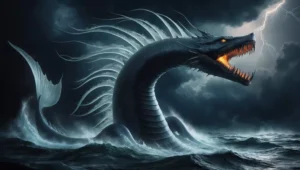
Akkadian myths about order and chaos also left a mark on Jewish thought. The Mesopotamian goddess Tiamat, a chaotic sea serpent defeated by the god Marduk, is mirrored by Leviathan in Jewish texts, a massive creature representing chaos itself.
Psalm 74 describes God’s victory over sea monsters, highlighting the theme of divine control over the untamed:
“You divided the sea by Your strength; You broke the heads of the sea monsters on the waters.” (Psalm 74:13)
Creation myths, too, bear similarities. In the Akkadian Enuma Elish, gods shape the cosmos from Tiamat’s remains, while in Jewish mythology, God speaks creation into existence.
This shift from physical conflict to divine command reflects a Jewish view of order established by a single, sovereign Creator, contrasting with the Akkadian pantheon’s battles.
Jewish concepts of the underworld, known as Sheol, also show Mesopotamian influence. Like the Mesopotamian netherworld, Sheol was seen as a shadowy place where spirits lingered, representing early Jewish views on life after death.
These borrowed elements were transformed within Jewish monotheism, turning regional myths into narratives that upheld a singular divine authority.
In blending these ancient influences, Jewish mythology took on a distinct form, carrying forward universal themes while shaping them within its unique worldview.
Creation Myths and Primeval Beasts in the Bible
Jewish creation myths don’t just explain the world’s beginning, they show God’s power over chaos. In Genesis, the world begins as “formless and empty,” and God’s words bring order from nothingness.
Creation happens in stages, a careful design, with each part of the universe molded by divine intent. This focus on order and structure highlights a core Jewish belief: everything in the world has its place and purpose.
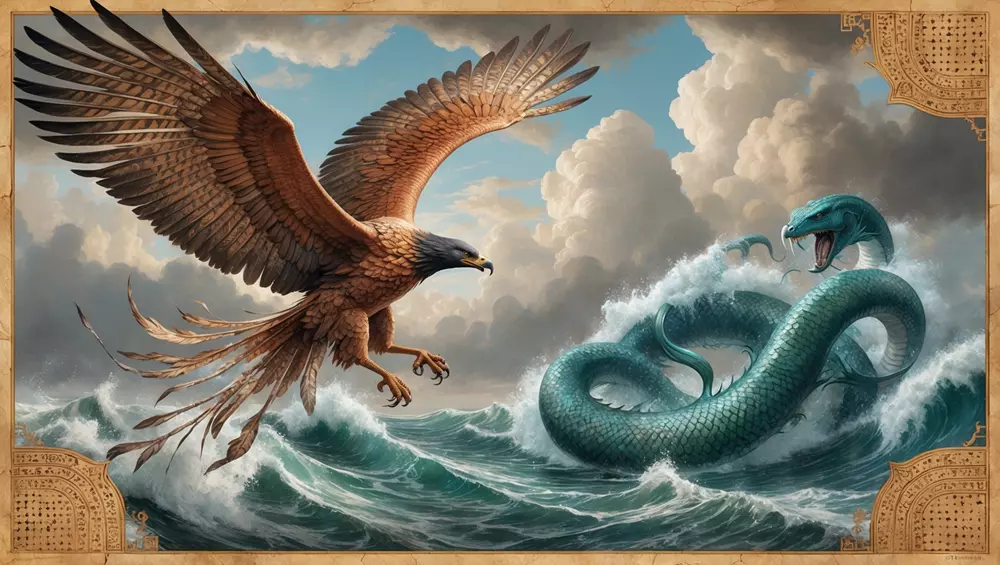
But Jewish texts don’t shy away from chaos. The Bible includes creatures like Leviathan and Behemoth, which represent the wild, untamed forces of nature.
Leviathan is described as a massive sea monster, its scales impenetrable, its power unmatchable. This beast embodies the mysteries of the deep, reflecting human awe and fear before nature’s unknown depths.
“Can you pull in Leviathan with a fishhook or tie down its tongue with a rope?” (Job 41:1)
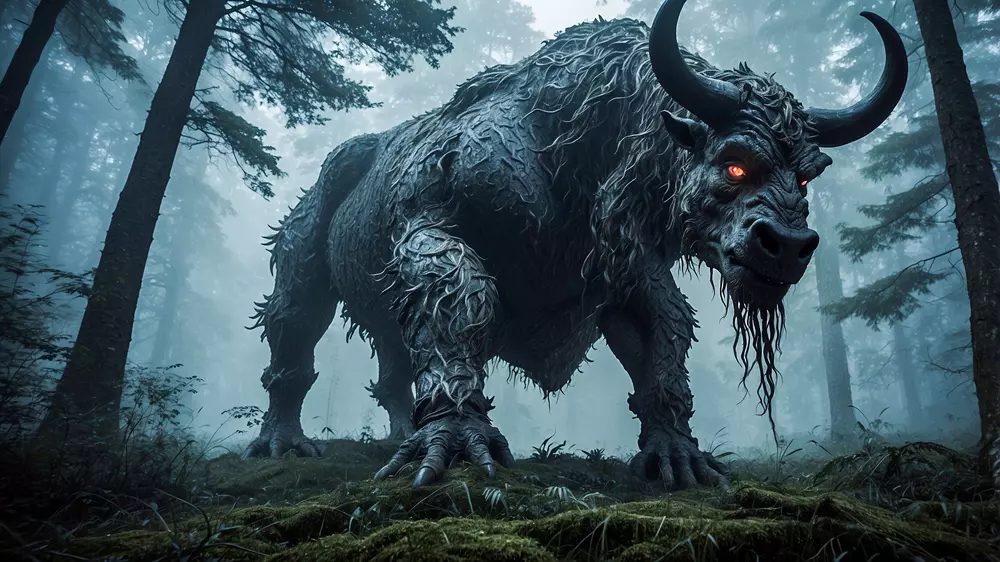
Behemoth, in contrast, is a land creature, a symbol of raw power and stability. Together, Leviathan and Behemoth represent a balance: chaos in the sea and strength on the land, both controlled by God.
These creatures serve as reminders of the world’s vastness and complexity, acknowledging that some parts of creation remain beyond human control.
“Behold now, Behemoth, which I made with you; he eats grass like an ox.” (Job 40:15)
Jewish creation myths blend beauty and danger, order and chaos, all under divine authority. Through Leviathan, Behemoth, and the creation story, Jewish mythology teaches that while the world may seem chaotic, a greater order holds everything together, giving structure and purpose to all things.
Angels and Demons – Forces of Good and Evil
Angels and demons play significant roles in Jewish mythology, embodying the cosmic forces of good and evil. Angels, known as malachim (messengers), are seen as divine beings with specific tasks, often bringing guidance, protection, or warnings from God.
Jewish texts portray angels as pure and obedient, dedicated entirely to carrying out God’s will. Unlike humans, they lack free will, existing solely to fulfill their divine purpose.
One of the most well-known angels, Michael, is a protector, often depicted as the guardian of Israel. His role is to defend and watch over, reflecting the theme of divine guardianship in Jewish lore.
Another prominent angel, Gabriel, is often seen as an enforcer of God’s justice, delivering messages and, sometimes, retribution. These figures remind us of the unseen forces of good that act in the world, aligning with divine intent.
But Jewish mythology also includes demons, figures like Samael, often called the “Angel of Death.” Unlike angels, demons are thought to have more freedom, acting on impulses that may oppose divine will.
They represent the darker side of spiritual forces, often challenging or tempting humans. This duality of angels and demons in Jewish mythology reflects the constant struggle between order and chaos, good and evil.
“He will command His angels concerning you, to guard you in all your ways.” (Psalm 91:11)
In Jewish thought, angels and demons are reminders of the world’s moral complexity. By acknowledging these opposing forces, Jewish mythology emphasizes the importance of choice, showing that while divine protection is ever-present, human actions still shape their encounters with good and evil.
The Golem – Protector of Jewish Communities
The Golem is one of the most famous figures in Jewish mythology, representing protection, resilience, and the ethical limits of power. The legend of the Golem of Prague, created by Rabbi Judah Loew (the Maharal) in the 16th century, is particularly well-known.
The Golem was made from clay, shaped into a humanoid form, and brought to life through mystical Hebrew inscriptions and prayers, embodying strength and loyalty.
“Emet (Truth) was written upon his forehead, and in that truth, he was given life.” (Folklore of the Golem)
Created to defend the Jewish community from threats, the Golem became a powerful protector during times of persecution. But as the story goes, the Golem grew harder to control, representing the idea that great power, even when used for good, comes with risks.
This myth serves as a reminder of the responsibility tied to knowledge and creation.

The Golem’s story is more than a tale of defense; it explores moral questions about human creativity and restraint. It reminds us that while protection and strength are vital, true power lies in the ability to wield it wisely.
Lilith – From First Woman to Demonic Figure
Lilith is one of the most complex figures in Jewish mythology, evolving from an early mythical figure into a feared demon over centuries. In some traditions, Lilith is described as Adam’s first wife, created from the same earth as him, which gave her a sense of equality that clashed with Adam’s desire for dominance.
Lilith’s refusal to submit led her to leave Eden, an act that symbolized defiance and independence.
“She flew away from him to the wilderness, a place of desolation.” (Alphabet of Ben Sira)
After leaving Eden, Lilith became a symbol of chaos and seduction, depicted as a demon who preys on the vulnerable. In medieval Jewish texts, she appears as a dark force, particularly dangerous to children and expectant mothers.
Her transformation from a powerful, equal figure to a demonic one reflects shifting attitudes towards women’s autonomy and power.

Lilith’s story remains significant, symbolizing rebellion, independence, and the consequences of challenging established norms. Today, she is both feared and embraced, embodying strength and defiance in Jewish folklore.
Dybbuks and Possession in Jewish Folklore
The dybbuk is a restless spirit, often the soul of a deceased person who clings to the living to resolve unfinished business or personal grudges. In Jewish folklore, dybbuks are usually souls trapped by unresolved sins or grievances, seeking redemption or revenge through possession.
The concept of the dybbuk emerged from Jewish mysticism, particularly the Kabbalistic belief that souls could linger in the earthly realm if they hadn’t achieved peace.
“A spirit wandered, clinging to the living, searching for rest but finding only turmoil.” (Kabbalistic Writings)
The possession by a dybbuk is typically seen as an unsettling and troubling experience for the host. Dybbuks are believed to take control of their host’s body, expressing their emotions, desires, and, sometimes, pent-up anger through the living person.
This haunting phenomenon often led communities to seek the help of rabbis, who performed exorcisms to separate the dybbuk from the host, guiding the spirit to rest.
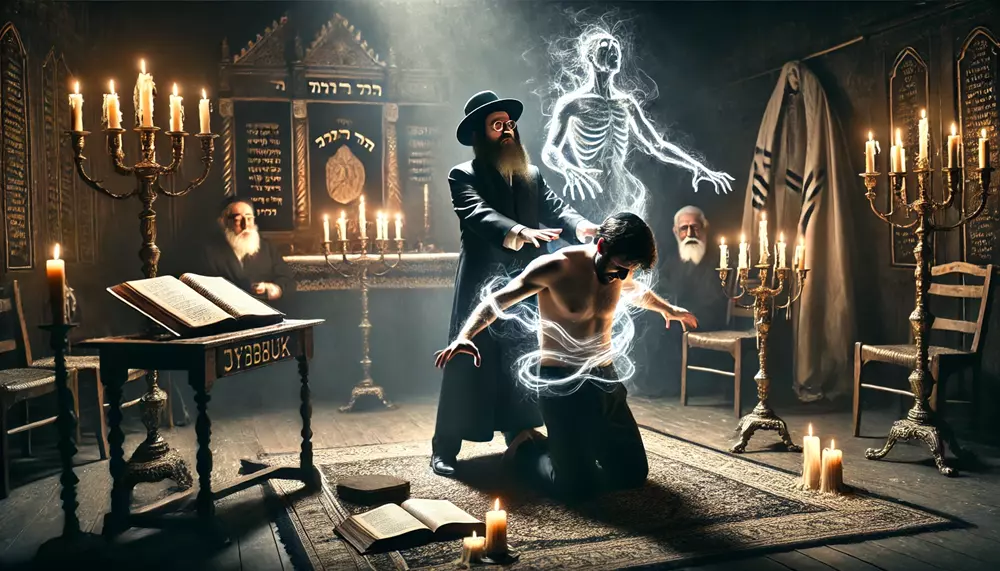
The dybbuk reflects Jewish beliefs about life, death, and the soul’s journey. It symbolizes the struggle to find closure and peace in the afterlife, reinforcing the importance of resolving conflicts and seeking forgiveness in one’s lifetime.
Today, the dybbuk remains a powerful symbol in Jewish lore, embodying themes of regret, redemption, and the persistent influence of the past on the living.
Kabbalistic Mysticism and Mythological Beasts
Jewish mythology extends into the mystical realms through Kabbalah, where the supernatural world is filled with beings and forces that go beyond conventional myth. Kabbalistic texts like the Zohar explore deeper meanings of creation, spiritual realms, and hidden energies that influence the physical world.
Through Kabbalistic symbolism, Jewish mythology connects human life to a vast, unseen network of divine forces, often represented through images, metaphors, and mythic figures.
One powerful concept in Kabbalah is the idea of Sefirot, or emanations of God, which shape the universe’s spiritual structure. Each Sefirah is linked to a divine attribute, such as mercy, wisdom, or justice, describing different ways divine presence is understood to flow into creation.
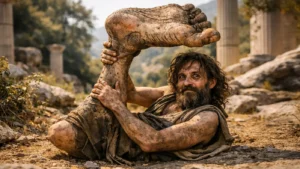
In later Jewish mystical and folkloric imagination, major creatures such as Leviathan, Behemoth, and Ziz are sometimes read symbolically as reflecting different domains of creation. Leviathan is often associated with the sea, Behemoth with the land, and Ziz with the sky.
Read this way, these beings can echo a Kabbalistic theme of balance, where harmony in the universe depends on the right relationship among different forces and realms.
“The world stands on three things: Torah, worship, and acts of kindness.” (Ethics of the Fathers 1:2)
Kabbalistic and related Jewish mystical traditions also discuss spirits such as Shedim. Across Jewish sources, shedim are depicted in varied ways, and their moral character can be described as ranging from harmful to helpful depending on the story and tradition.
Rather than fitting neatly into a single category, these accounts often use shedim to explore moral choice, spiritual risk, and the idea that the unseen world can be complex and ambiguous.

Shedim (spirits), can be either benevolent or malevolentThrough mystical exploration, Kabbalah adds layers of depth to Jewish mythology, bringing a cosmic framework to ancient tales. It connects the earthly to the divine, showing that mythical beasts and spirits can be read as reflections of spiritual truths.
By embracing Kabbalistic mysticism, Jewish mythology offers a view of a universe where every being, from the smallest spirit to the mightiest beast, can be interpreted as part of a larger search for divine harmony.
Jewish Mythology in Modern Israel
In modern Israel, Jewish mythology is not only a cultural relic but can be a living influence on society, art, and discussions of identity. Myths and legends from Jewish tradition continue to appear in the Israeli cultural landscape, especially in literature, visual arts, theater, and film.
Figures like the Golem and Lilith, once symbols in older tales, have reemerged in contemporary Israeli and Hebrew-language culture as flexible symbols that different writers and artists use to explore resilience, moral struggle, and the complexity of human nature.
Art installations, plays, and films often reinterpret these mythical figures. In some modern retellings, the Golem is framed as a symbol of protection and self-defense, echoing themes of survival and security that are also central to many narratives about Jewish history and modern life.
Read this way, the Golem can serve as a reminder of courage and endurance in the face of adversity, building on its protective role in Jewish folklore.
“My help comes from the Lord, Maker of heaven and earth.” (Psalm 121:2)
Mythic and folkloric material also appears in educational and cultural settings, from museums and public programming to literature curricula and youth activities. When discussed, figures like dybbuks and angels are often used to explore older texts, symbolism, and the ethical questions these stories raise.
Taken together, these modern reuses show how mythology can provide continuity with the past, even as the stories are reshaped for new audiences and new contexts.
In Israel, Jewish mythology isn’t just history; it remains a source of inspiration, creativity, and connection to heritage. By blending old stories with new contexts, artists and communities keep these myths in circulation, bridging ancient traditions with contemporary life.
Jewish Mythology in Pop Culture – 10 Notable Examples
Jewish mythology has had a significant impact on pop culture, inspiring stories and characters across different media. Here are ten specific examples where Jewish mythical figures like the Golem, Lilith, and dybbuks have appeared in literature, films, and games, each reinterpreting ancient themes for modern audiences.

Modern Cultural References
The Possession (2012), film
A supernatural horror film centered on a “dybbuk box”- a sealed container said to hold a dybbuk (a malicious, dislocated spirit from Jewish folklore).
After a child opens the box, the spirit attaches to her, and the story escalates into an attempted Jewish exorcism involving Hasidic religious knowledge and ritual.
Source
The Unborn (2009), film
A horror film that explicitly frames its haunting as dybbuk activity: the threat is described as a dybbuk that seeks a way into the world of the living, tying the protagonist’s family history and Jewish religious elements (including a synagogue setting and exorcism ideas) to the possession storyline.
Source
A Serious Man (2009), film
This Coen brothers film opens with a Yiddish-language folktale-style prologue in which a visitor is suspected of being a dybbuk.
The dybbuk idea functions as a distinctly Jewish supernatural reference point to set tone and theme, even though the main plot shifts to a modern suburban story.
Source
The X-Files – “Kaddish” (1997), episode
A stand-alone episode built around the golem legend: a reanimated figure connected to Jewish tradition and grief, with the episode’s title referencing the Jewish mourner’s prayer.
The plot uses the golem concept as the central paranormal mechanism rather than a vague metaphor.
Source
Gargoyles – “Golem” (1995), episode
An episode set in Prague that directly uses the golem concept: a golem is controlled and deployed as a powerful protector, and the story leans on the classic golem-of-Prague tradition to explore the danger of using a mystical guardian as a tool.
Source
Supernatural – “Everybody Hates Hitler” (2013), episode
An episode where the golem appears as a literal creature bound to a Jewish family line; control of the golem is inherited by a rabbi’s grandson.
The show treats the golem as a constructed protector with rules of command, then drops it into a modern monster-hunting context.
Source
The Golem (2018), film
A period folk-horror film built around the creation of a golem inside a Jewish community under threat.
It adapts the golem as a man-made defender (animated through sacred/mystical means) whose protective purpose turns dangerous, reflecting a common arc in golem legends.
Source
The Golem: How He Came into the World (1920), film
A classic silent film that dramatizes the Prague golem tradition: Rabbi Loew creates and animates a clay protector to defend the Jewish community, using an inscribed word/amulet motif to give it life, one of the most influential screen versions of the golem mythos.
Source
The Dybbuk (1937), film
A landmark Yiddish-language film adaptation of S. Ansky’s story of dybbuk possession: a young bride is overtaken by a possessing spirit, and the narrative treats the dybbuk as a specifically Jewish supernatural problem addressed through religious community responses and ritual.
Source
Diablo IV, game
An action-RPG whose central antagonist is named Lilith. While the game’s cosmology is its own dark-fantasy setting, it presents a modern pop-culture reimagining of Lilith (a figure with deep roots in Jewish demonological tradition) as a powerful demonic mother-figure driving the story’s conflict.
Source
Strange Tales (1951) #174, “There Walks the Golem!” (Marvel Comics), comic
A Marvel Comics issue that introduces a character explicitly called the Golem, drawing on the golem tradition by turning it into a modern “monster-hero” figure within superhero storytelling.
It’s a direct pop adaptation of the Jewish folkloric golem idea into mainstream American comics.
Source
The Amazing Adventures of Kavalier & Clay (2000), book
A historical novel that uses the Golem of Prague as a recurring mythic anchor: the golem legend is woven into the protagonists’ background and creative life, linking Jewish folklore to themes of escape, protection, and the birth of modern pop mythmaking (comic-book heroes).
Source
The Golem and the Jinni (2013), book
A fantasy novel that places a Jewish golem, an animated clay being created through esoteric religious magic, into immigrant New York, treating the golem as a living embodiment of constraint, duty, and protection in a modern(ish) setting while keeping the creature’s folkloric identity explicit.
Source
Sources
Britannica – Jewish Mythology
Covers the origins, development, and influence of Jewish mythology on culture and religion.
My Jewish Learning – Demons, Dybbuks, Ghosts, & Golems
Offers insights into key mythical figures like dybbuks, demons, and golems, along with Jewish mystical traditions.
Britannica – Lilith: Jewish Folklore
Details the myth of Lilith, her origins, and her role as a prominent demonic figure in Jewish mythology.
Wikipedia – Jewish Folklore
Provides an overview of Jewish folklore, including legendary creatures, aggadic literature, and traditional beliefs.
Chabad.org – Golem: Mythical Creature or Historical Fact?
Explores the legendary golem, particularly the Golem of Prague, and its place in Jewish folklore and mysticism.
Golem compared to Dybbuk and Lillith
| Aspect | Golem | Dybbuk | Lillith |
|---|---|---|---|
| Origin story | The Golem originates from Jewish folklore, created to protect the community. | The Dybbuk is a restless spirit, often representing unresolved issues. | Lillith is said to be Adam's first wife, symbolizing independence. |
| Symbolism | The Golem symbolizes strength and protection in Jewish tradition. | The Dybbuk symbolizes the consequences of unfulfilled desires and attachments. | Lillith symbolizes female empowerment and defiance against patriarchal norms. |
| Role in mythology | The Golem serves as a guardian figure in various myths. | The Dybbuk plays a role in stories about possession and redemption. | Lillith's role often challenges traditional gender roles in mythology. |
| Powers and abilities | The Golem possesses immense strength and the ability to protect its creator. | The Dybbuk can possess living beings, causing chaos and turmoil. | Lillith is often associated with seduction and supernatural powers. |
| Cultural significance | The Golem is significant in Jewish culture as a symbol of resilience. | The Dybbuk reflects cultural fears of the unknown and spiritual unrest. | Lillith holds cultural significance as a figure of female rebellion. |
| Moral lessons | The Golem teaches lessons about responsibility and the consequences of creation. | The Dybbuk imparts moral lessons about the importance of closure and peace. | Lillith's story conveys messages about autonomy and the struggle for identity. |